Cowboys' 2015 Run Game Is Ultimate Test of O-Line vs. Running Back
The Dallas Cowboys brought back an old-school style of football during the 2014 NFL season, using a big, physical, nasty offensive line to dictate the flow of the game.
It's a simple approach, a proven approach: Win up front, control the line of scrimmage and run the ball. That's how you wear down opposing defenses. Line up, hit them in the mouth and then do it again. Eventually, the defense will lie down and quit.
This dedication to running the football allowed Jason Garrett's team to manage the tempo, set up opportunities for quarterback Tony Romo and also create beneficial matchups in the passing game.

.jpg?w=2560 "Steelers Saints Football")
.jpg?w=2560 "Rams Raiders Football")
But after letting DeMarco Murray walk in free agency and opting not to draft a running back earlier this month, will the Cowboys still be able to produce on the ground with veterans Darren McFadden, Joseph Randle, Ryan Williams or Lance Dunbar carrying the ball?

Team owner Jerry Jones believes they can, but the reality is this is going to be a great case study in football: Does having a great running game depend on having a great running back, a great line or both?
While the Cowboys didn't add a star running back, they did add another first-round talent to an offensive line that was the best in the league last season, signing LSU's La'el Collins—who went undrafted for non-football reasons—as a free agent.
Collins, who has the athleticism and versatility to play guard or tackle at the pro level, should slide inside to the left guard position, next to tackle Tyron Smith. Not only will that line be even nastier now, but it will also have the depth to absorb an injury during the season.
The Cowboys' decision to pass on matching the overall cash the Eagles offered to Murray in free agency (five years, $42 million, with $21 million in guarantees) was understandable. That's a steep price for a back with durability concerns coming off a season with more than 400 touches. As a team, you have to weigh the risks with the investment at a position that carries a short shelf life in the NFL.
However, with a deep draft class at running back, the Cowboys could have added a Day 2 or even early Day 3 talent to carry the ball behind this offensive line. Instead, they played the board, drafted the best prospect available and now head into offseason workouts with a plan to use a committee to replace Murray's production.
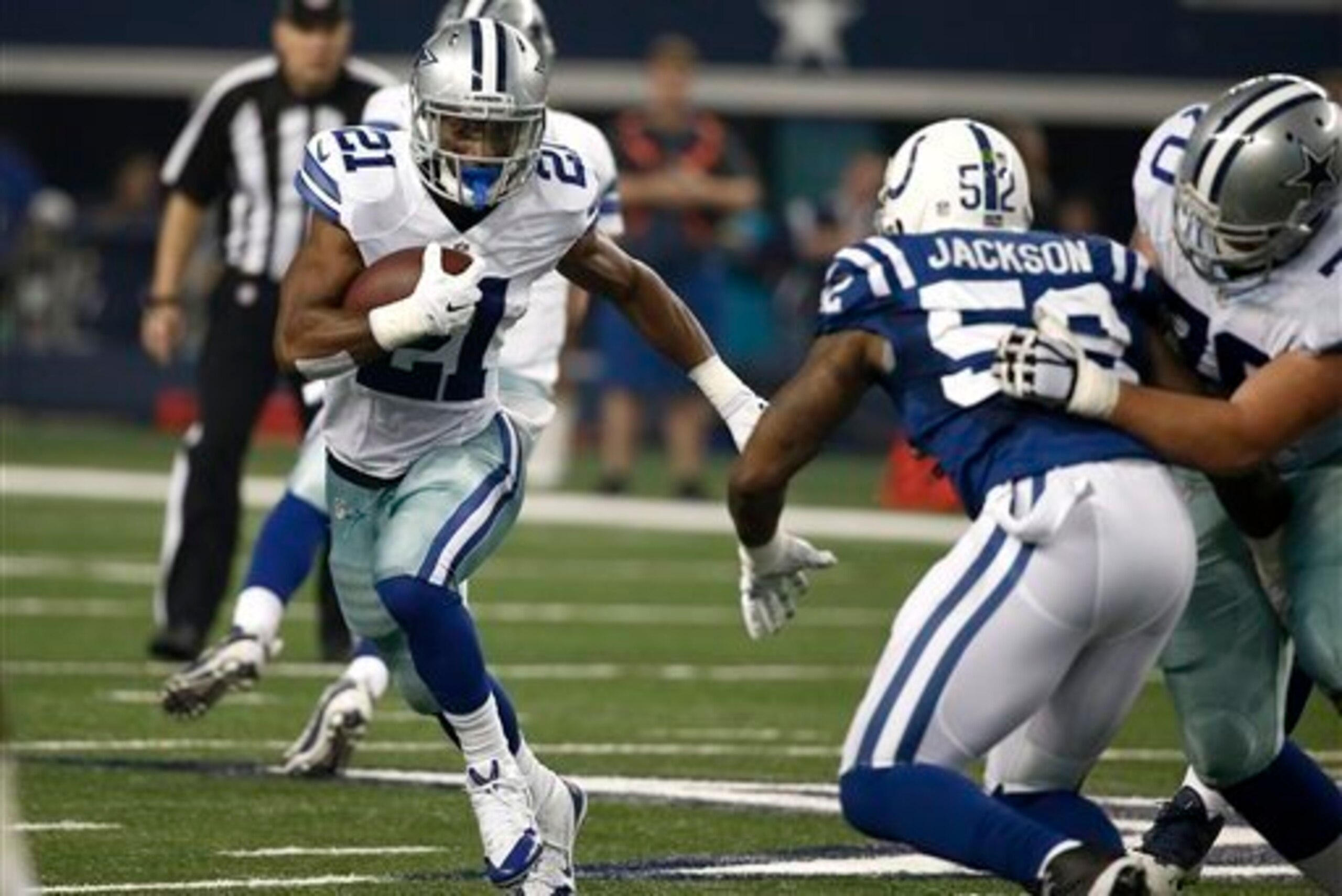
The idea will be to open running lanes for McFadden and hope he can use that straight-line speed to push the ball through the second level of the defense. But we are also talking about a player who has failed to live up to the hype and has experienced a lot of injuries out in Oakland. He doesn't have the patience or vision that Murray consistently showed on tape last season, and he averaged just more than four yards per carry in seven seasons with the Raiders.
Does that number rise—dramatically—behind this offensive line? Sure, it's possible. McFadden can press the edge of the formation and find daylight behind this unit in the zone-based schemes. There will be room for him to produce.
Randle has the burst and change-of-direction skills to get up the field. That's a positive. He can accelerate with the ball in his hands. Randle averaged 6.7 yards per carry for the Cowboys in '14, and his style is a fit for the system in Dallas. Don't hesitate—pick a hole and go.
Or maybe it's Williams or Dunbar who emerge during camp to grab the majority of the carries this season. We don't know that. And neither do the Cowboys. This will all play out when the pads go on later this summer and throughout the preseason schedule as the team looks for the top backs in this group to stand out when it's time to compete.
There is always the possibility that the Cowboys land another veteran free agent before (or during) camp to add to the mix, but again, this still starts and ends with the offensive line. That's the real story here. The Cowboys are banking on the idea that this offensive line can continue to maul defenders at the point of attack, open up running lanes and plow over defensive fronts regardless of who is carrying the ball.
Success in the running game is usually a combination of the line and the back. Yes, the offensive line can open up a hole, a crease or a crack in the door, but the running back still has to use his vision, speed and ability to break tackles or make defenders miss.
Will the Cowboys find that back? And if not, will the line be so good that they can run it anyway?
Seven-year NFL veteran Matt Bowen is an NFL National Lead Writer for Bleacher Report.
.jpg?w=2560 "Chiefs Giants Football")
.jpg?w=2560 "Titans Ravens Football")
.jpg?w=2560 "🚨 Week 8 AP Top 25 Poll")

.jpg?w=2560 "Packers Safety Slams Refs 🤬")