
Ranking the Washington Wizards' Top 5 Players in Franchise History
Despite a history defined by change and an underwhelming amount of success, the Washington Wizards have had some of the most distinguished players in the history of basketball. Old-school Hall of Famers Elvin Hayes and Wes Unseld come to mind, but so do modern players, such as John Wall and Gilbert Arenas.
Most of Washington's best players never played as Wizards, though.
Some played for the franchise during its inaugural year, when it was named the Chicago Packers. Some played for the Chicago Zephyrs, Baltimore Bullets, Capitol Bullets or Washington Bullets.
Name changes have not stopped the Wizards from producing all-time great players, though. The franchise has had 11 Hall of Famers, three Rookie of the Year winners and one league MVP.
Identifying the five best players in Washington's storied history was not easy. Hall of Fame distinction played a role in the selection process. Longevity with the team, individual awards and outstanding statistics were certainly considered as well.
The most important factor in making this list was each player's historical place in Washington's most memorable playoff series, seasons and eras.
It's nearly impossible to overstate the role that Hayes and Unseld played in the franchise's only championship run in 1978. And ignoring the recent impact that Wall and Arenas have had in turning the team's fortunes around would be a mistake.
Here are some of the players who just missed the list, followed by the top five players in Washington basketball history.
Honorable Mention
1 of 6
Before getting to the five players who did make the list, it's only fair to point out some of the best players who just missed it.
Three players in particular were strong candidates to make the list, but one or two crucial factors kept them all on the outside looking in.
"Earl the Pearl" Monroe, also known as "Black Magic," is one Hall of Famer who was snubbed from the top five.
Monroe won Rookie of the Year as a guard with the Baltimore Bullets in 1968, averaging 24.3 points, 5.7 rebounds and 4.3 assists. He was "a dazzling ball-handler and one-on-one virtuoso," according to his biography on NBA.com.
Despite helping the Bullets go from last to first in their division in 1969, Monroe did not establish any long-term success or change for the franchise. He was traded to the New York Knicks in 1971 after just four seasons with the Bullets. His short time with Baltimore and inability to foster long-term success kept him off this list.
Another talented guard left out of the top five was Gilbert Arenas, a more recent star for the Washington Wizards.
He averaged 25 points per game during his career with Washington, which ranks second in franchise history. He also sits ahead of current point guard John Wall in career steals per game, but his career was short-lived.
Despite making the playoffs just once between 1988 and 2004, the Wizards made the playoffs in four straight seasons from 2005 to 2008. In three of those seasons, Arenas averaged at least 25.5 points per game.
His career would go downhill from there, though. He was limited to just 10 starts in two seasons from 2007 to 2009 because of lingering knee issues. In 2010, Arenas was suspended indefinitely after bringing a gun into Washington's locker room and allegedly pulling it out during a dispute with a teammate, according to an ESPN article from 2010.
Arenas was left out of the top five because his problems and knee injuries limited his longevity, but he deserves credit nonetheless for helping the Wizards find their most consistent success since the late 1980s.
The last player left off the list, and perhaps the most unfortunate, is Phil Chenier. A three-time All-Star, he averaged at least 19.7 points per game for five straight seasons. He also led the league in steals per game during three of his nine seasons with the Bullets.
Chenier was snubbed because of a back injury that left him unable to play in the 1978 NBA Finals that would "eventually derail his playing career," as Dan Steinberg wrote in a 2013 Washington Post article.
Had he played in that series and been a part of Washington's championship, he would have landed at third on this list. But his inability to contribute during the most significant series in franchise history pushed him off the list.
And now, here come the top five.
5. John Wall
2 of 6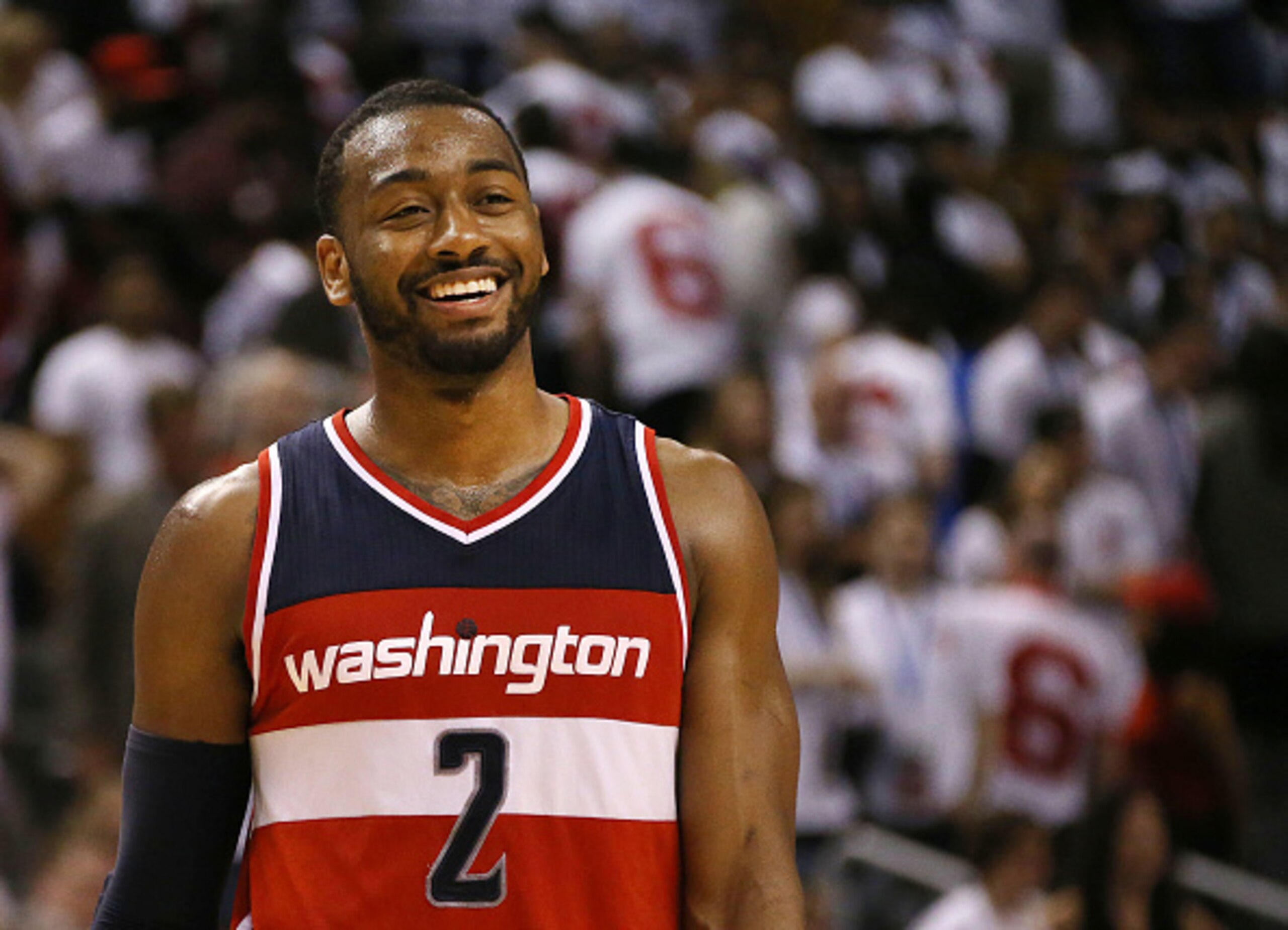
After beginning his career with durability issues, John Wall has emerged as one of the most electrifying players in Washington history.
He has played only five seasons so far, but he has improved his game each year since he has been in the league. In 2015, he averaged career highs with 10 assists per game and a 44.5 field-goal percentage.
This ranking may seem premature, but that is not the case. Sure, there is a small amount of foresight involved, but Wall has already earned this spot.
He is second in franchise history already with 2,990 assists and has led Washington to two straight Eastern Conference Semifinals. Had he not missed three games because of injury against the Atlanta Hawks in this year's playoffs, the Wizards would likely still be competing for a spot in the Eastern Conference Finals.
Perhaps the most impressive part of Wall's game is his defense. He is sixth in franchise history with 568 steals, and his long arms and athleticism have made him one of the best defensive guards in the league.
Wall has plenty more to prove before he can earn a higher spot on this list. If he can avoid injury and continue to improve his passing and scoring, he will undoubtedly lead the Wizards deep into the playoffs for years to come.
4. Walt Bellamy
3 of 6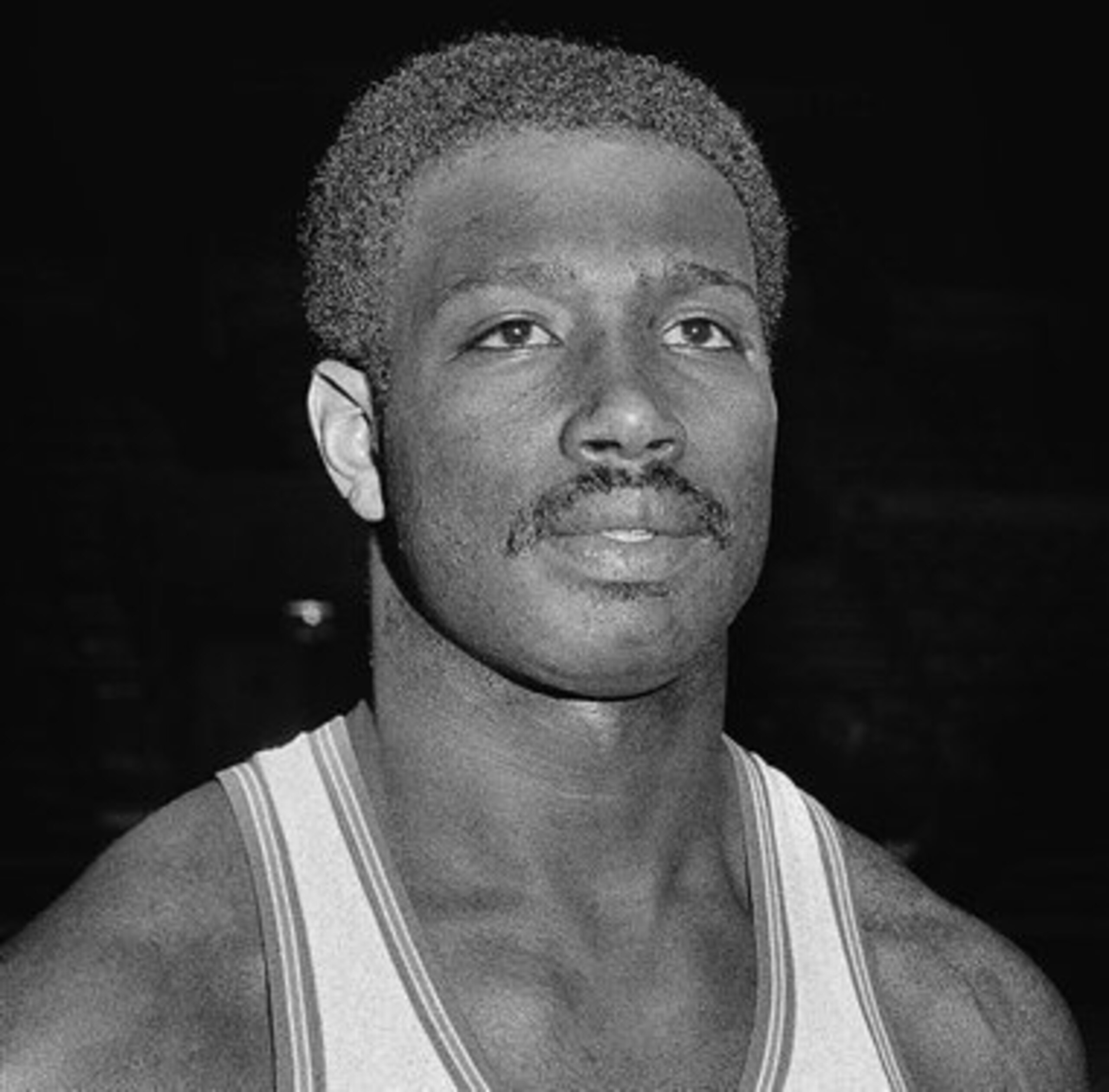
Despite playing just four seasons with the Packers, Zephyrs and Bullets, Walt Bellamy may be the most dominant player in franchise history.
As his NBA.com biography states, he was the inaugural pick of the franchise in 1961 and made an instant impact. He had one of the most impressive rookie years in NBA history with 31.6 points and 19.0 rebounds per game.
Bellamy won the Rookie of the Year award and would never match that production again in his career.
He remains the franchise leader in points and rebounds per game with 27.6 and 16.6, respectively. His four seasons with the team were probably the best four individual years in franchise history.
Despite his dominance, Bellamy does not fit the criteria as well as Elvin Hayes, Gus Johnson or Wes Unseld do. He did not have longevity with the team and did not lead Washington to a winning record in any of his four seasons.
He was quite the show, though.



3. Gus Johnson
4 of 6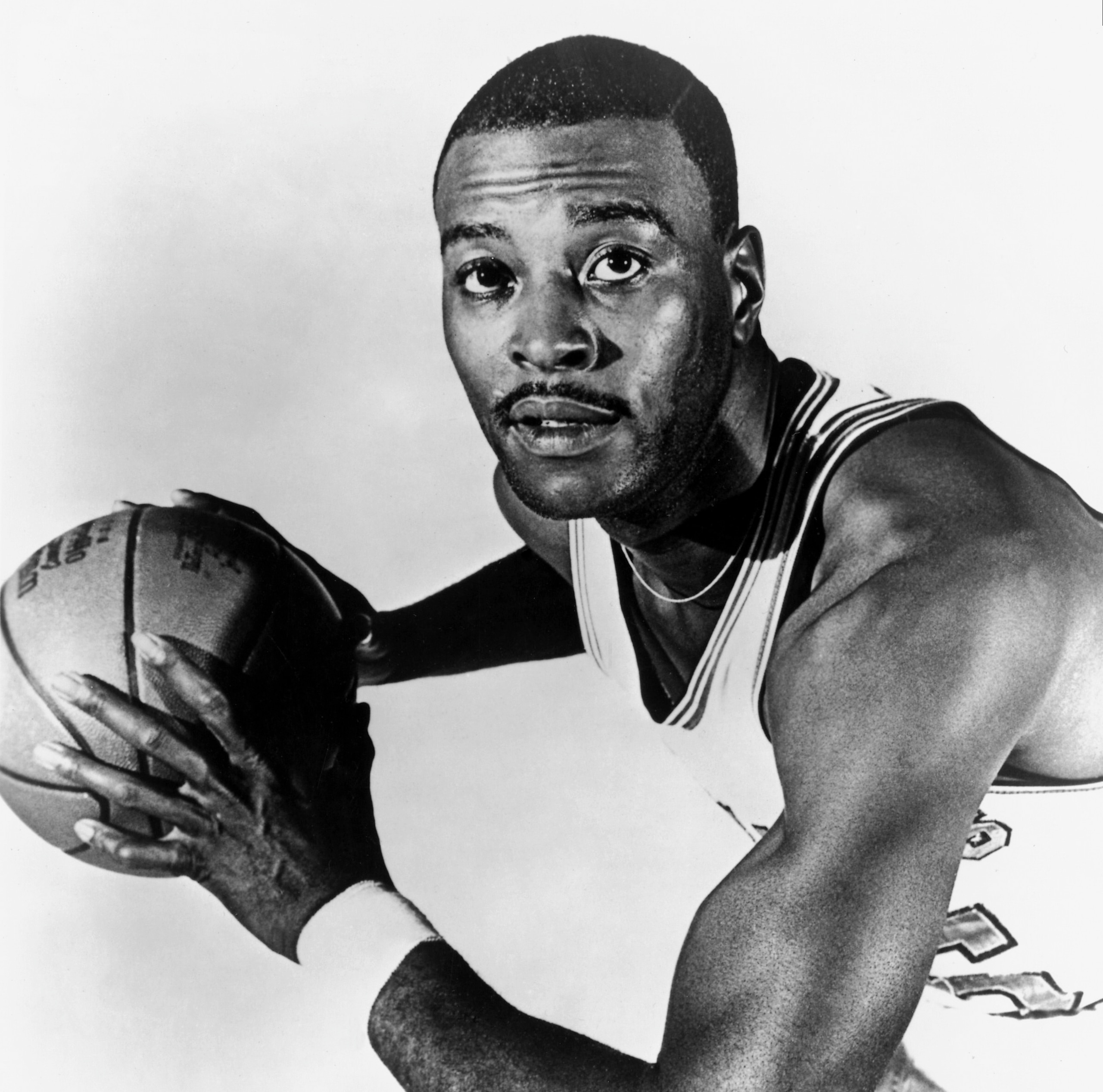
Gus "Honeycomb" Johnson is an obvious pick for the No. 3 spot.
His 19,723 minutes and 7,243 rebounds both rank third in franchise history. He played nine seasons and was named an All-Star six times.
Despite helping the franchise reach the playoffs six times in his nine seasons, Johnson was never a part of a championship team. His team reached the NBA Finals in 1971 but was swept by Milwaukee.
Had Johnson been a part of a championship team, he may have challenged Wes Unseld or Elvin Hayes for the top two spots.
His inability to win a championship was really his only downfall, though. Johnson averaged 17.4 points and 12.9 rebounds per game during his time with the Bullets.
The franchise has retired his No. 25 jersey, making him one of just four players in franchise history to earn that distinction, according to his NBA.com history page.
2. Elvin Hayes
5 of 6
Elvin Hayes, a 12-time All-Star and Hall of Famer, is undoubtedly one of the best big men in NBA history.
He was a true iron man. He missed just seven games in nine seasons with the Bullets and ranks fourth all-time with 50,000 minutes played, sixth all-time in rebounds and 11th all-time in points scored. He was, and still would be, a prototypical forward-center.
As if his stats were not compelling enough, Hayes also led the Bullets to their only NBA title in 1978. That season, he led the team in points, blocks and rebounds.
Hayes owns the franchise records for points, blocks, field goals and many other statistical categories. His statistics and role in the 1978 championship pushed him ahead of Gus Johnson and Walt Bellamy on this list.
The Bullets made the playoffs in eight of Hayes' nine seasons with the team, reaching the NBA Finals three times.
So, why not No. 1? Hayes never won a league MVP, and he was not named the Finals MVP in 1978. Those distinctions were reserved for the top player on this list.
1. Wes Unseld
6 of 6
Wes Unseld, a Bullet from start to finish, deserves the top spot on this list.
He fits the criteria better than Gus Johnson, Walt Bellamy and even Elvin Hayes.
Unseld won the Rookie of the Year and league MVP awards during his first season in 1968, according to his NBA.com biography. No other Washington player ever won an MVP, and the only other player to win in his rookie season was Wilt Chamberlain.
Unseld was also an unstoppable rebounder. Despite standing at just 6'7", he averaged 14 rebounds per game during his 13 seasons with the team. That's higher than Hayes and is second in franchise history to Bellamy, but he played just four seasons.
What separates Unseld most from his fellow Bullets, though, is his NBA Finals MVP award. Had Hayes won the award instead, he probably would have earned the top spot on this list.
The fact that Unseld won it shows that he was the most valuable player for the Bullets during their only NBA championship run. His leadership during the most successful year, and era, in franchise history is what puts him above Hayes and Johnson.
The Hall of Famer meant more to the Bullets than any other player in franchise history, and that is why he is No. 1.
Unless otherwise noted, all statistics were taken from Basketball-Reference.com.

.jpg?w=2560 "Raiders Could Start Mendoza")

.jpg?w=2560 "Rodgers Iced Out on Plane 💎")
.jpg?w=2560 "Packers Safety Slams Refs 🤬")
.jpg?w=2560 "🚨 Week 8 AP Top 25 Poll")