
Projecting Washington Redskins' Most Heated Roster Battles This Offseason
Increasing competition is usually a good starting place for any rebuilding effort. Fortunately, new general manager Scot McCloughan has ensured intense competition will be a feature of the Washington Redskins roster this offseason.
In particular, six key positions stand out as theaters for several heated battles. Each position needed to be refreshed after last season's 4-12 finish.
So it's only natural that top rookies will be engaged in scraps for starting berths along the right side of the offensive line. Sticking on that side of the ball, the duel to play third-down running back should be a three-way tussle between two rookies and a brittle incumbent.
Defensively, an obvious replacement for Brian Orakpo still needs to emerge at the edge of the front seven. Further back, new coordinator Joe Barry and secondary coach Perry Fewell must choose the right veteran cover man to operate in the slot.
Here are the most heated roster battles set to play out for the Redskins this offseason.
Right Tackle
1 of 6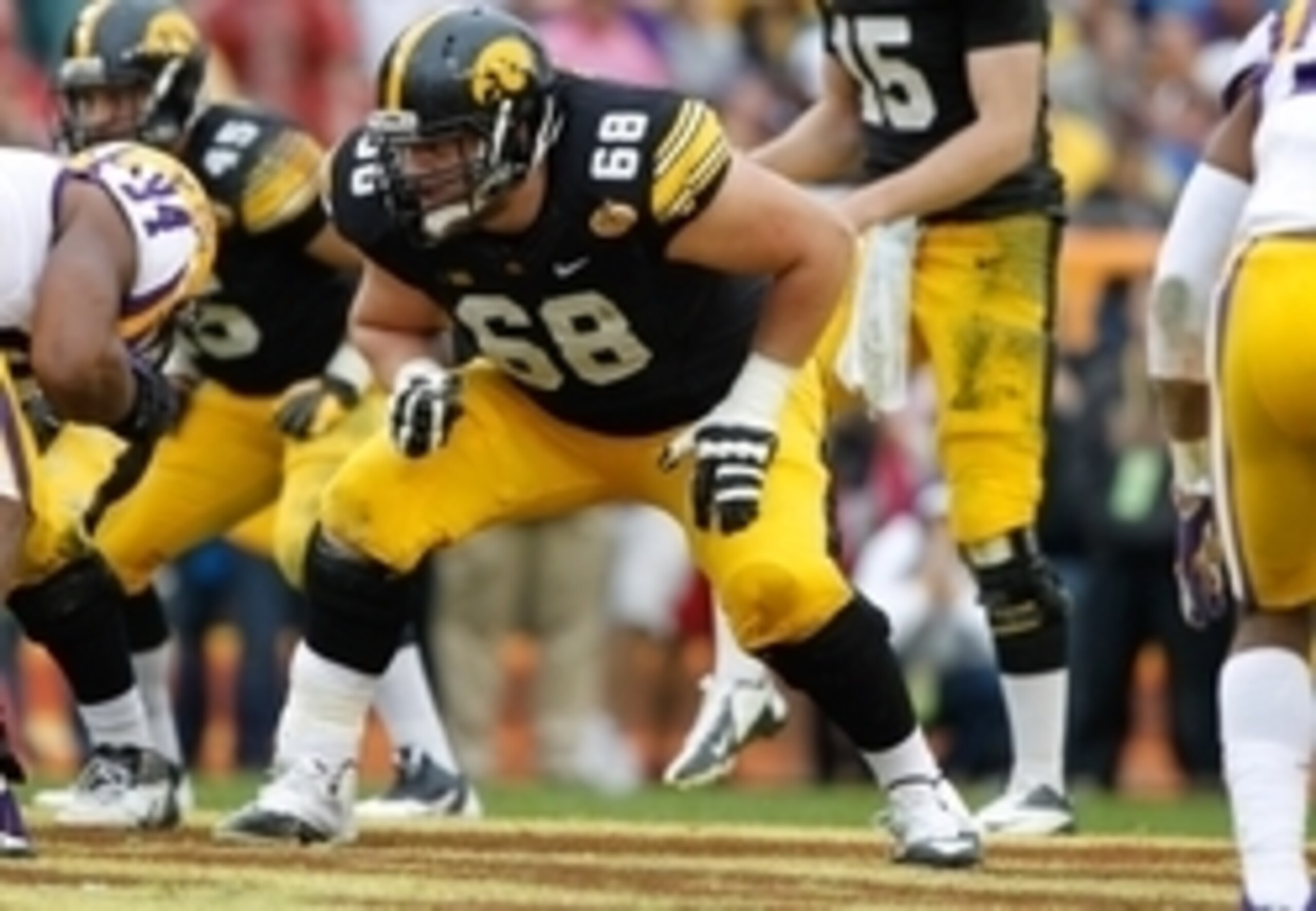
Top draft pick Brandon Scherff should be ticketed for the right tackle spot after being chosen fifth overall. Head coach Jay Gruden has already indicated Scherff will begin his pro career working on that side, per Mike Jones of The Washington Post: “But I think Day 1, we start him out at right tackle. Obviously, we have a Pro Bowl left tackle, and we’ll start [Scherff] out at right tackle, see how he does, and I’m sure he’ll pick it up quickly."
As the best lineman in college football last season, Scherff has to be the favorite over Tom Compton and Morgan Moses. The former Iowa mainstay is physically dominant in the running game.
It's a core skill new line coach Bill Callahan wants to emphasize this season. McCloughan wants a power-based rushing attack to be the backbone of the team's offense, per CSN Washington's Tarik El-Bashir: "It’s very important for our offense to be able to run the football. Jay [Gruden] is on board. Bill Callahan is on board."
The desire to boss the line of scrimmage is one of the main reasons he took Scherff off the board. McCloughan is building a big and bruising offensive front, per Liz Clarke of The Washington Post:
"We need to be able to win up front. We need to have big guys come off the ball and move people. We’re addressing this with [Alabama guard Arie] Kouandjio, Brandon [Scherff] — our big-body guys who have no problem doing the dirty work.
"
Inserting 6'5", 319-pounder Scherff as the bookend to standout left tackle Trent Williams would certainly beef up the trenches in D.C. But perhaps it won't be plain sailing for the team's top rookie.
Scherff will first have to get past Compton and Moses. Prior to the draft, the two were set to make this position their own, per 247Sports.com's Jamie Oakes.
Scherff is certainly the most accomplished of the three despite no pro-level experience. But his primary strength is as a blocker in the run game, while his most obvious weaknesses are in pass protection.
It's the same with Compton. Yet where 2012's sixth-rounder will struggle is adapting to the gap and drive-blocking techniques Callahan will emphasize in the new season. Compton has, after all, been schooled in the zone principles Gruden's predecessor Mike Shanahan preached. Scherff is certainly more of a physical force.
But Scherff can really separate himself if he shows quicker footwork, particularly lateral steps to meet edge-rushers.
Of the three competing for this spot, Moses seems the most likely to miss out. He struggled with injury as a rookie and was limited when he did see the field.
This job won't be handed to Scherff, yet it would be a massive shock, not to mention deeply disappointing, if he doesn't begin the new season starting on the right edge.
Slot Cornerback
2 of 6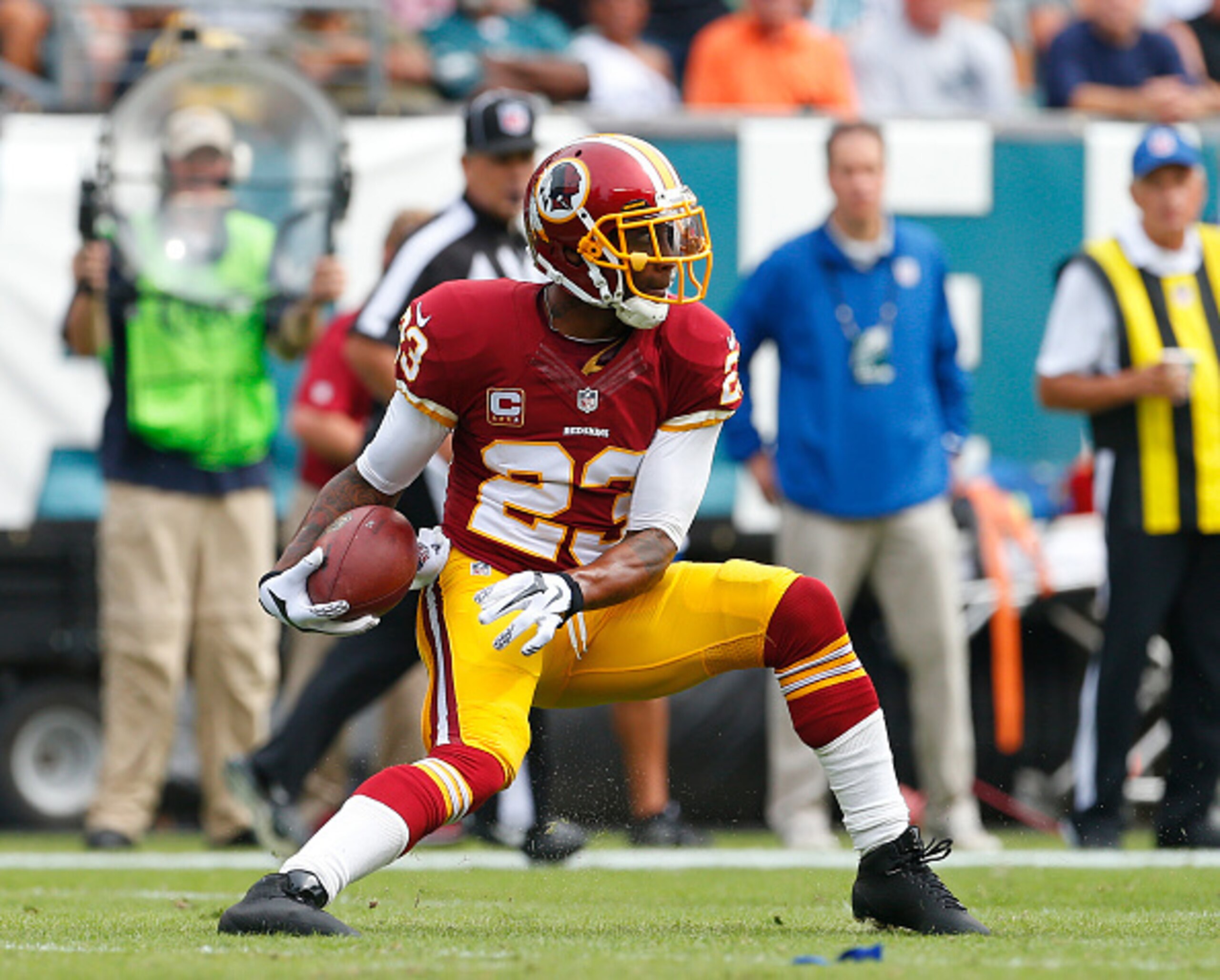
McCloughan ensured things are as settled in the secondary as they've been at any time during the last five seasons. His work in free agency added three sure-fire starters in cornerback Chris Culliver, along with safeties Jeron Johnson and Dashon Goldson.
With this trio on board, the starting quartet pretty much picks itself, per CSN Washington's JP Finlay:
"The projected starting secondary will go Bashaud Breeland and Culliver at the corners, with Johnson and Goldson at the safeties. Assuming he's healthy by August, DeAngelo Hall will have a role as a reserve safety or third corner. There is also corner David Amerson, who stepped way back in his second season but played well as a rookie. Tracy Porter, a free agent signee last season by Bruce Allen who played very limited snaps due to a host of injuries, could be an odd man out.
"
Breeland has to retain his spot following a fine rookie season. A fourth-round pick in 2014, the ex-Clemson ace is one of the few budding young stars on the roster.
But it's Finlay's thoughts on the potential futures of David Amerson, DeAngelo Hall and Tracy Porter that really makes for interesting reading. One member of this trio must emerge as Washington's nickel cornerback.
This should be one of the more intriguing and heated roster battles this offseason. That's because Hall and Porter both have the ideal qualities to thrive in the slot.
Both veterans can be physical in coverage and are naturally opportunistic. Porter also offers excellent skills as a blitzer off the edge. Bringing pressure from the slot is an essential part of any team's blitz packages.
But Hall is no stranger to the versatility and physicality demanded by playing slot corner. He filled that role in 2012 and showed a knack for making big plays.
Yet one issue looms large for both Porter and Hall regularly playing closer to the line of scrimmage in nickel sets. Specifically, it concerns a lack of size and tenacity for defending the run.
At 5'10" and 198 pounds, the 31-year-old Hall has never been a force against the run. Neither has Porter and his wiry 5'11", 188-pound frame.
Considering how often teams use nickel packages on traditional run downs in today's game, a fifth defensive back who can win up front is a must. It's a reality that might give Amerson a chance to recover from losing his starting job to win a vital role in the sub-package defenses.
At 6'1" and 205 pounds, 2013's second-round choice certainly offers the bulk to be a force player in the running game. The often press-first nature of coverage in the slot is also good news for a big cornerback more adept whenever he can keep the game in front of him.
Right Guard
3 of 6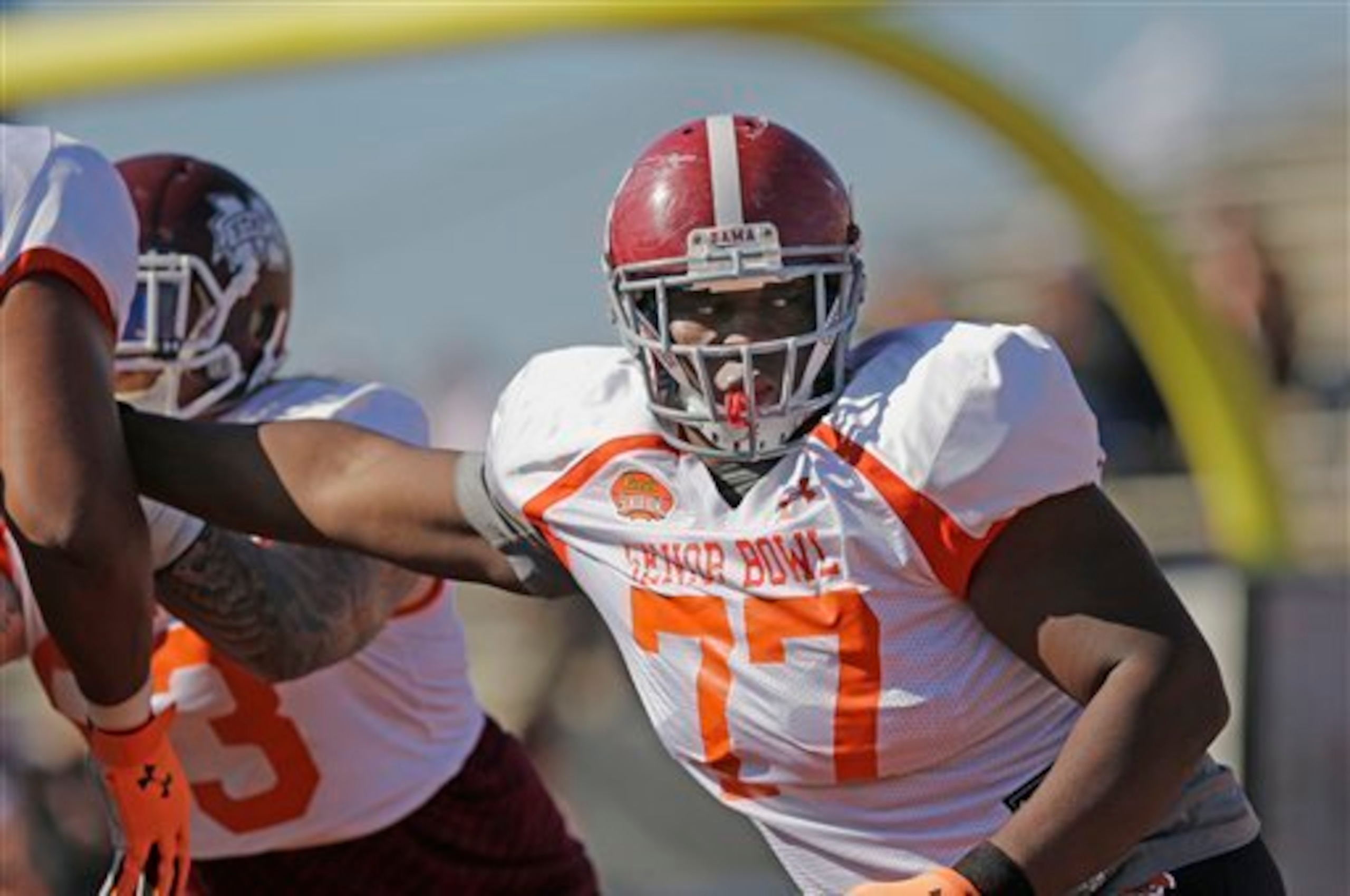
The new schemes favored by Gruden, Callahan and McCloughan demand bigger athletes up front. That demand should surely spell the end of Chris Chester's disappointing tenure in D.C.
He was originally recruited to be an asset in the zone-based, stretch-style blocking Shanahan installed. But 32-year-old Chester and his 6'3", 303-pound frame has merely been pushed around through four dismal seasons as a starter.
Chester doesn't seem a safe bet to last in a scheme now geared toward dominating one-on-one matchups with power. His age and inflated $4.8 million cap hit for 2015, per Spotrac.com, make the veteran a strong candidate for the axe before the new season gets underway.
Despite not missing a start in four years, Chester's case really won't be helped by the presence of three beefier interior maulers. The most interesting is fourth-rounder Arie Kouandjio.
He's the classic power blocker, very adept at pulling around the corner and absorbing defenders at the second level. The 6'5", 310-pound behemoth brings power-ready skills from his days at Alabama.
Kouandjio may not generate much buzz as a potential rookie starter, but no other interior lineman is as suited to the scheme.
Of course, Gruden may opt for the bigger option—in this case, last year's third-rounder, Spencer Long. Gruden has already talked up the 6'5", 311-pounder's potential to make great strides in his second year, per ESPN's John Keim.
The reporter also noted how Long seems to possess niche skills and a natural comfort level for the new system:
"As for Long, during the season the coaches said Long had to adjust to playing differently on the move. Though he pulled quite often at Nebraska, he had to learn to play in the Redskins’ outside zone. But he said that was not a big adjustment. His size (6-foot-5, 311 pounds) also works OK with the direction the Redskins want to go up front with a more physical line.
"
One outsider for the guard spot is Josh LeRibeus. He's always carried a little too much weight and lacked the athletic range for the team's zone blocking. But LeRibeus may be an asset utilizing gap techniques.
Right guard has been a major weakness up front for too long. With four players competing for the job, a more competent starter must emerge from this heated battle.

.jpg?w=2560 "Steelers Saints Football")
.jpg?w=2560 "Rams Raiders Football")
Outside Linebacker
4 of 6
Barry's defense should be the real winner of the battle between Trent Murphy and Preston Smith to replace Brian Orakpo. The unit needs a capable outside linebacker to complement Ryan Kerrigan and ease some of the pass-rushing burden on the Pro Bowler.
Murphy was expected to do that as a rookie last season. But a mere 2.5 sacks in eight starts shows the former Stanford man still has plenty of room to grow, particularly as a pass-rusher.
Murphy must make giant strides this offseason, or this year's second-round pick, Smith, will take his place. Smith logged nine sacks during his final year in the SEC, per CFBStats.com.
Just as important as his production, though, Smith offers tremendous flexibility to a defense set to be more multiple and hybrid up front this season. The many guises Smith can adopt is a major reason why McCloughan used a prominent pick to take the ex-Bulldogs ace, per Tom Schad of The Washington Times:
"He has the ability to play, on certain downs, stand up in a two-point stance, and on certain [downs], pass rush in a three-point stance. He played down at Mississippi State a majority of the time. What was unique about him, when they go to the three-man front, he’d move to nose tackle and play over the center and had success rushing the passer from inside there.
"
But while Smith's versatility strengthens his case to start, it also means he can be an asset even if Murphy wins the job. He's sure to be invaluable in the sub-package schemes, as either a standing rusher, a 3-technique or 0-technique.
Murphy could even do some of the same things if he doesn't win the job. That's why this battle represents a win-win for Washington.
A defense that registered a mere 36 sacks last season has earned one more weapon for rushing quarterbacks. So both the base and sub-package schemes will be stronger no matter if it's Murphy or Smith who begins the season in the starting lineup.
Third Wide Receiver
5 of 6Andre Roberts hardly wowed coaches and fans in a vital niche role in 2014. The veteran's hands let him down more than once, and Roberts was rarely dynamic after the catch.
That's why McCloughan's choice to take Jamison Crowder in this year's draft should leave Roberts very nervous. The ex-Duke mini-marvel is in the classic mold of the pint-sized slot receivers who've become increasingly popular in today's passing games.
What teams look for from these pass-catchers are two specific things.
The first is sure hands and the ability to consistently win underneath. Those qualities create a regular outlet for quick, short-range throws. These are the kind of easy reads that can make any quarterback look good.
As a passer who's often struggled making quick and smart choices, Robert Griffin III could certainly use this kind of target. But steady production from safe throws isn't enough.
Sure hands must be matched with big plays once catches are made. Diminutive burners are often adept at outrunning underneath defenders and turning short passes into big gains.
A 5'8", 185-pound Cheetah-fast runner with returner-like moves, Crowder is a natural source of big plays. That's why Mike Jones of The Washington Post believes the rookie could push Roberts down the roster at two key spots: third wideout and return man.
Third-Down Back
6 of 6
With Crowder, Roberts and even Ryan Grant competing for the third receiver role, the Redskins should be strong at the position however the battle plays out. But things aren't as clear at the running back spot in the third-down offense.
As with most of the positions on this list, the competition features three likely candidates. The first is Chris Thompson, a half-sized pace merchant who's never been healthy enough to add the extra dimension Washington's offense has missed.
Instead, there have only been glimpses of potential from the player who's appeared in just six games in two years. He caught six passes in very brief cameo duty last season, including a nine-yard scoring grab against NFC East rival the New York Giants in Week 15.
There's no denying Thompson has the speed and shiftiness to bring more explosive qualities to both the rushing attack and the pass offense. So could Trey Williams, a smart signing as an undrafted rookie.
Real Redskins blogger Rich Tandler described the former Texas A&M pocket-edition sensation as a "scatback" and noted his potential as a quick and elusive weapon. Meanwhile, Sports Illustrated's Ben Glicksman uses words such as "slippery," "shifty" and "change-of-pace weapon" to describe a back he also compares to Darren Sproles, who is certainly the template for the type of third-down option the Redskins need out of the backfield.
Yet, there's one key quality neither Williams nor Thompson is likely to offer. Specifically, they don't seem suited to the physical demands of pass protection.
Considering how most defensive coordinators use third downs to get particularly creative with blitz schemes, running backs have to be adept at identifying and blocking additional rushers.
This is most obvious with certain blitz schemes that specifically target running backs, such as double A-gap pressure. That's why third-round pick Matt Jones should merit a long look.
Jones is no field-stretcher as a runner, but his brawn is an asset in pass protection, one of his main strengths, per NFL.com's Lance Zierlein: "Aggressive in protection, squaring up and striking a blow against free-running blitzer." Meanwhile, Mark Bullock of The Washington Post described Jones' protection skills as "perhaps the best in this draft."
A lack of adequate supplemental blocking to support a weak line was a major issue last season and certainly one of the factors in Washington surrendering 58 sacks. In this context, maybe Jones' blitz-pickup skills will be deemed more important than the big-play potential Thompson and Williams might offer.
The good news for the Redskins is their most heated roster battles feature several contenders. That's a positive indicator of the work done this offseason to boost the numbers and talent on one of the league's most threadbare rosters.
.jpg?w=2560 "Chiefs Giants Football")
.jpg?w=2560 "Titans Ravens Football")
.jpg?w=2560 "🚨 Week 8 AP Top 25 Poll")

.jpg?w=2560 "Packers Safety Slams Refs 🤬")