

Denver Broncos: Ranking Remaining Offseason Priorities
The Denver Broncos still have work to do. They fell short of their Super Bowl hopes last year, and they entered this offseason with less salary-cap space then they had in the 2014 offseason.
Thus, in free agency, Denver had to let some of their higher-priced free agents go. They also had to look for bargain free agents to fill the holes on the roster.
In the 2015 NFL draft, Denver did something they had not yet done under the guidance of general manager John Elway—they moved up in the first round of the draft. The Broncos added a couple of potential starters with their first two picks, and they added some depth players behind them.
They still have to work out some contracts, determine ways to get the most out of the talent in place already and find some key starters on both sides of the ball.
Here are the remaining offseason priorities for the Broncos, ranked in order of importance.
5: Extend Brock Osweiler
1 of 5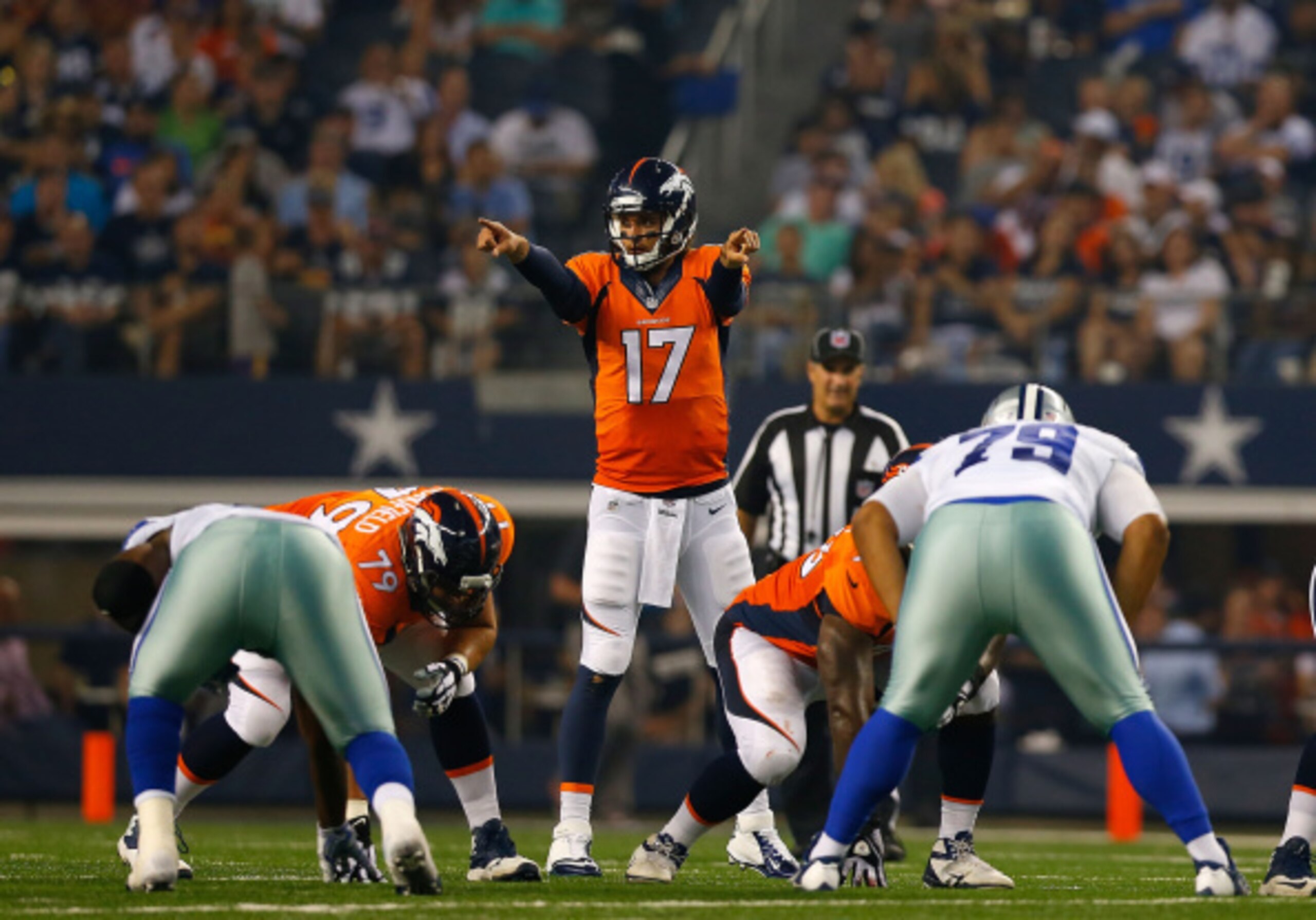
The Broncos did not draft a quarterback with a premium pick in the 2015 NFL draft. Before the draft, speculation was rampant that Denver would add a quarterback early to groom behind Peyton Manning as the quarterback of the future. Brock Osweiler is entering the final year of his contract, and there has been no word of extending him at this time.
The Broncos need to extend Osweiler to insure their future at the position.
Osweiler, a second-round pick in 2012, came out of Arizona State as a somewhat raw prospect. He has worked diligently to improve his game at the pro level.
Coming out of college, Osweiler had a poor (low) throwing motion, bad footwork when passing in a clean pocket and struggled to make quick decisions with the football. Now, Osweiler has a natural release point that is high and over his head. He is light on his feet when standing in the pocket, and this helps him take off quicker if he needs to escape the oncoming pass-rushers. Osweiler is not afraid to challenge the defense, but from his reps in training camp and the preseason, you see a player making quicker and better decisions as a passer.
Zac Dysert, a seventh-round pick in 2013, is not the answer. He’s got a big arm, but he is not accurate enough to be an effective starter. Trevor Siemian, a seventh-round pick in the 2015 NFL draft, could be a pick that never plays significant snaps for the Broncos. He struggled to stay in the starting lineup for Northwestern, has mechanical issues, velocity concerns and is coming off a torn ACL he suffered last November. Siemian is nothing more than a developmental quarterback with the upside of a replaceable backup.
Peyton Manning has two years left on his contract. The team has put a lot of time and effort into Osweiler, and they could offer him a contract extension that goes beyond where Manning is signed. If Manning is done after this season, Osweiler could slide into the top spot for the 2016 season.
Denver does not want to be caught without a quarterback next offseason if Manning decides this is his final season. Extending Osweiler and selling him on still being the future in Denver is the best—and clearest—option.
4: Determine Who Is the Starting Fullback
2 of 5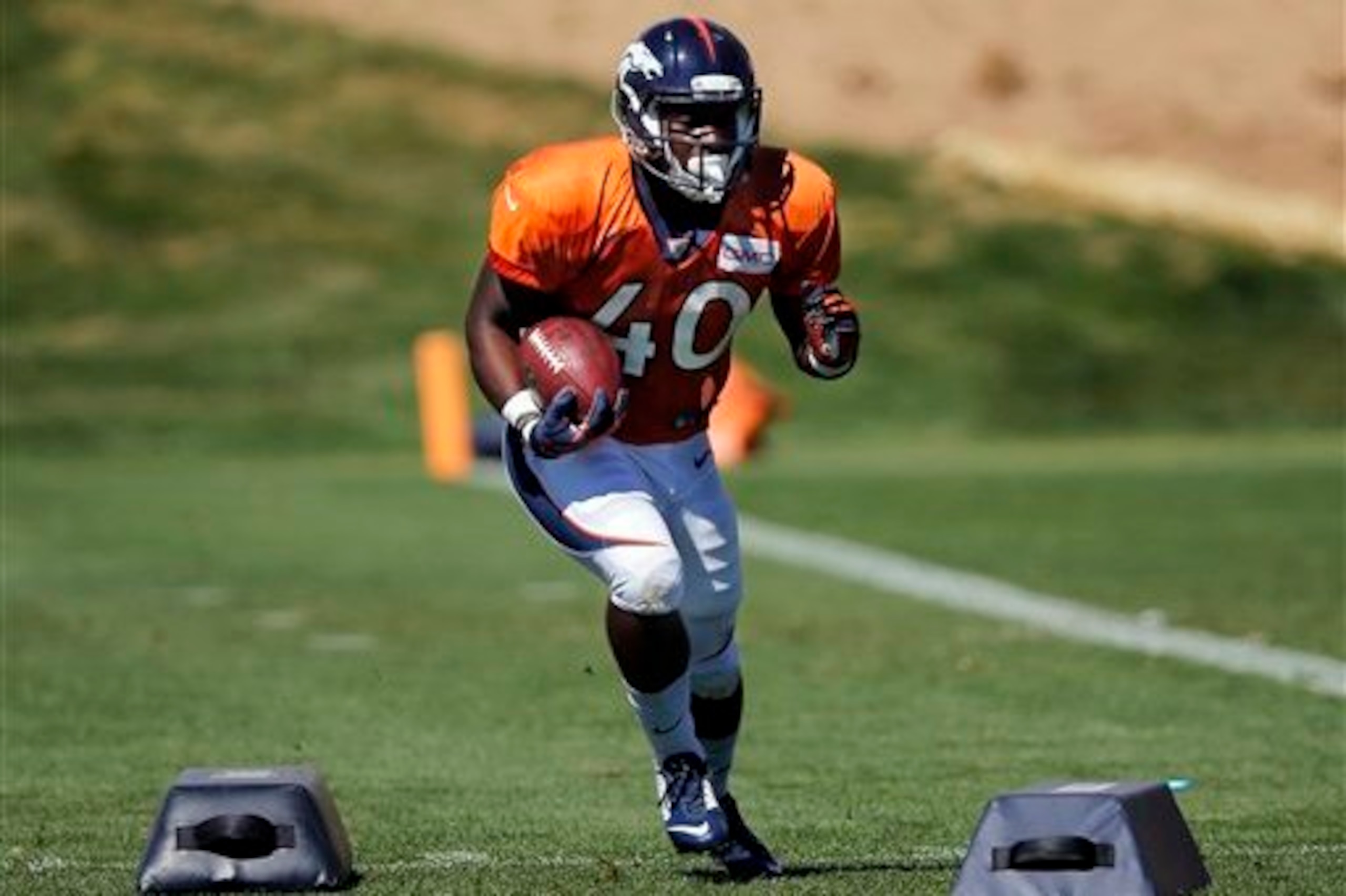
The ground game will have a different look in 2015. The Broncos are going to implement a zone-blocking system up front on the offensive line, but that’s not the only difference we’ll see this season.
The Broncos are going to be using a fullback to blast open holes for C.J. Anderson.
The Broncos haven’t had a fullback on the roster since the days of Chris Gronkowski, who was last with the team in 2012. This season, the Broncos have a group of players who will be competing for the starting fullback job.
They signed former Dixie State tight end Joe Don Duncan earlier this year. He was worked out as a fullback, given a fullback number (42) and might be considered the leader at the position. Duncan is incredibly athletic, powerful at the point of attack and can be used effectively as a receiver out of the backfield.
Denver also signed veteran tight end James Casey earlier this year in free agency. Casey has experience working in Gary Kubiak’s offense from their time together with the Houston Texans. He’s listed as a tight end—and wearing the number of former Broncos tight end Julius Thomas (80). Casey was an incredibly versatile player in college at Rice, and those traits have carried over to the pros. He can play fullback, tight end or H-back for the Broncos.
There’s a chance the Broncos could use second-year running back Juwan Thompson as a fullback this season. He played the position in college at Duke (in addition to playing linebacker for the Blue Devils) and has the size to be a crushing lead blocker. If the team wants to add more power to the rushing attack, then using Thompson at fullback might be the best answer.
3: Establish the Nose Tackle Position
3 of 5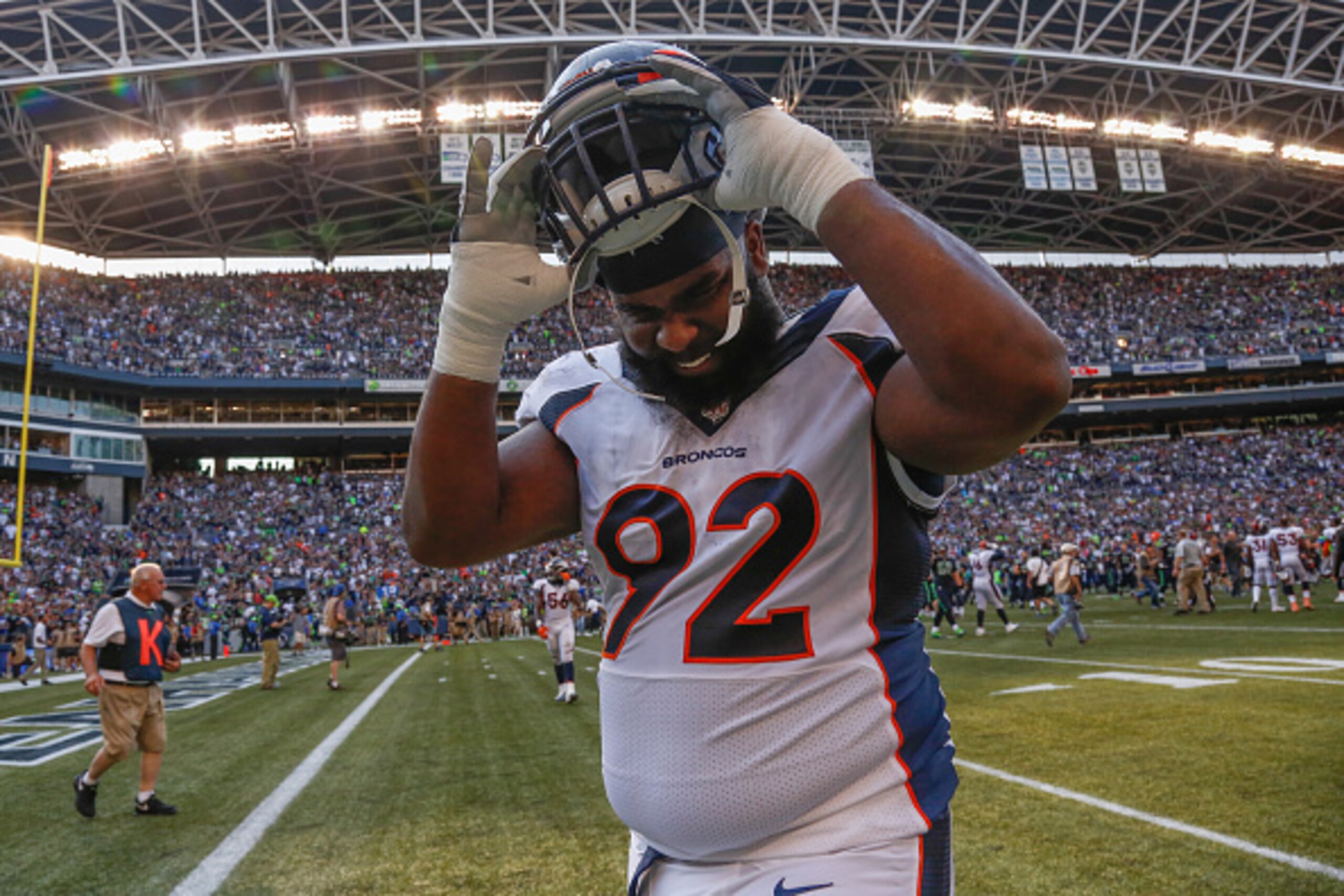
The Broncos need to get quality play out of the nose tackle position. We’ll see Denver running a 3-4 defense this year, and the nose tackle is the fulcrum of the scheme. Bad play at the position will lead opponents to run the ball up the gut, punish the inside linebackers and force the defense into putting more players in the box.
The Broncos had better find the best possible option they have inside at nose tackle.
Sylvester Williams, a first-round pick in 2013, might be the starter come Week 1 of the regular season. In half a season during his rookie year, Williams flashed some potential. Last year, Williams failed to make much—if any—of an impact on the field. At nose tackle in a 3-4 defense, Williams needs to stand strong against the point of attack and get some interior pressure if he can. That may prove to be difficult for Williams if he continues on the trajectory from last season.
Marvin Austin was added in free agency last year in a move that went unnoticed by many around the league. A second-round pick of the New York Giants in 2011, Austin has a ton of natural talent, but injuries and inconsistencies have plagued his pro career, and he’s bounced around to four different teams. It’s not difficult to make the argument that Austin is a better fit at nose tackle than Williams. If healthy and motivated, Austin might put up a big fight for the starting job.
In the sixth round of the 2015 NFL draft, the Broncos added defensive tackle Darius Kilgo from Maryland. He’s not necessarily ready to be a starter at the pro level, but he could be a two-down run-stuffer because of his size and base strength.
In the end, the Broncos may end up using a combination of the players listed above along with veteran defensive end Antonio Smith rotating in on certain downs.
.jpg?w=2560 "Rams Raiders Football")

.jpg?w=2560 "Steelers Saints Football")
2: Get a Long-Term Contract Done with Demaryius Thomas
4 of 5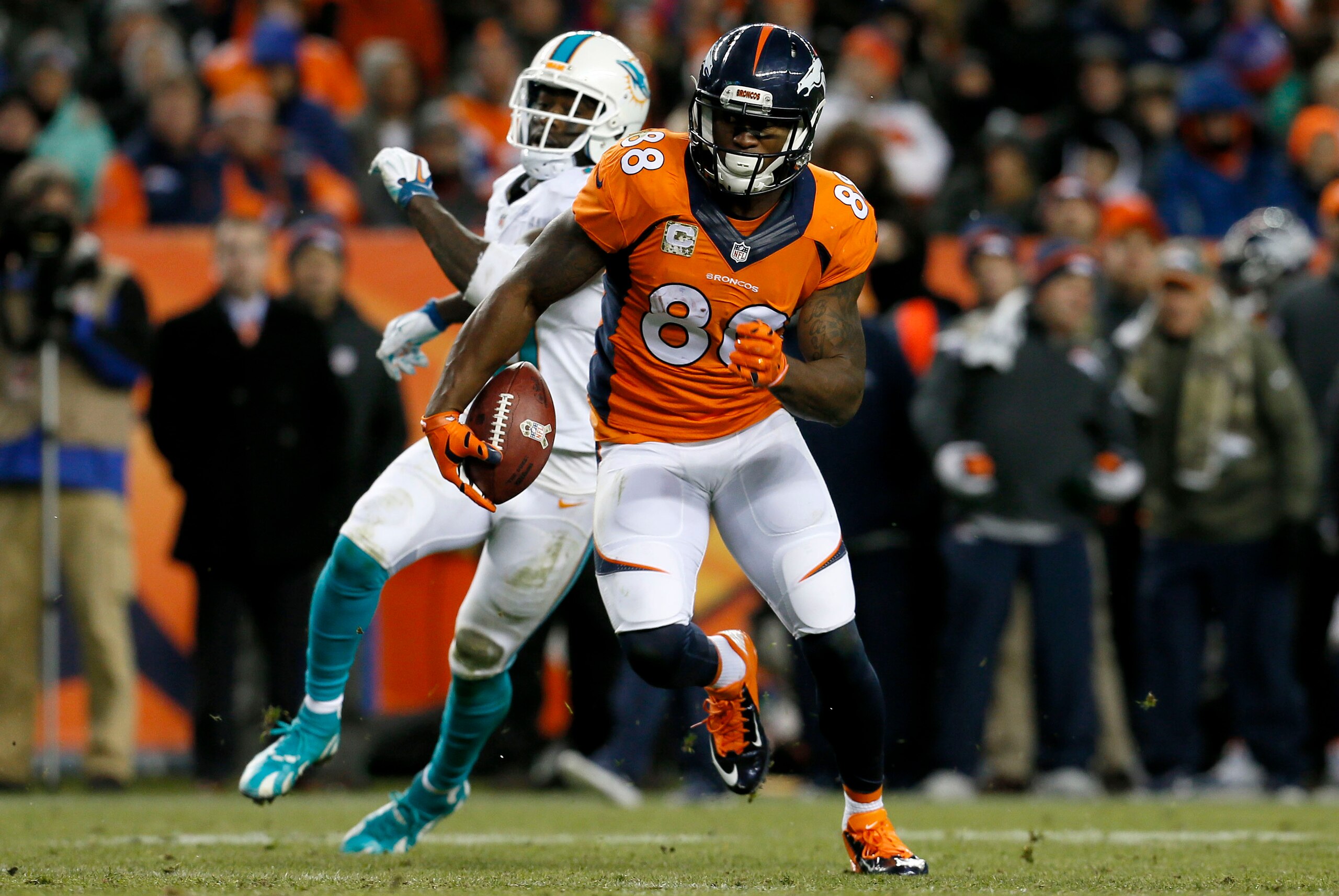
Demaryius Thomas is not holding out—yet. He was tagged as the Broncos' franchise player earlier this year, but he has yet to sign his one-year tender. The two sides have until July 15th to work out a new contract. If no contract is agreed upon at that time, then Thomas could be considered a holdout if he fails to sign his franchise tender and skip part of training camp.
To avoid all that drama, the Broncos need to get long-term deal done with their superstar wide receiver.
Thomas is a top-five wide receiver in the NFL today. Yes, he benefits from catching passes from Peyton Manning, but that doesn’t take away Thomas’ natural talent.
Finding a player like Thomas has proven to be quite difficult for NFL teams. The rarity means his price tag is going to be high, but Denver should have been prepared for this contract situation already.
Thomas may not get a contract larger than (or even similar to) what Calvin Johnson received from the Detroit Lions. In 2012, Johnson signed a seven-year contract worth over $113 million with $48.7 million guaranteed and an average annual salary of $16.2 million.
The top wide receivers in the NFL earn around $10-$16 million annually. Thomas should see a number that is around the $12.8 million franchise tender he would play under this season if no new long-term deal was agreed upon.
The Broncos might be waiting (and vice versa) for the Dallas Cowboys to work out a new long-term deal with their superstar wide receiver Dez Bryant. Both of these players are similar in terms of production and potential, so their salaries might be similar when all is said and done.
Any new long-term deal—for either player—might likely happen near the mid-July deadline. Denver needs to get this deal done so they can secure a player like Thomas long term. However, there’s just no rush to get something done at this time.
1: Find a Starting Right Tackle
5 of 5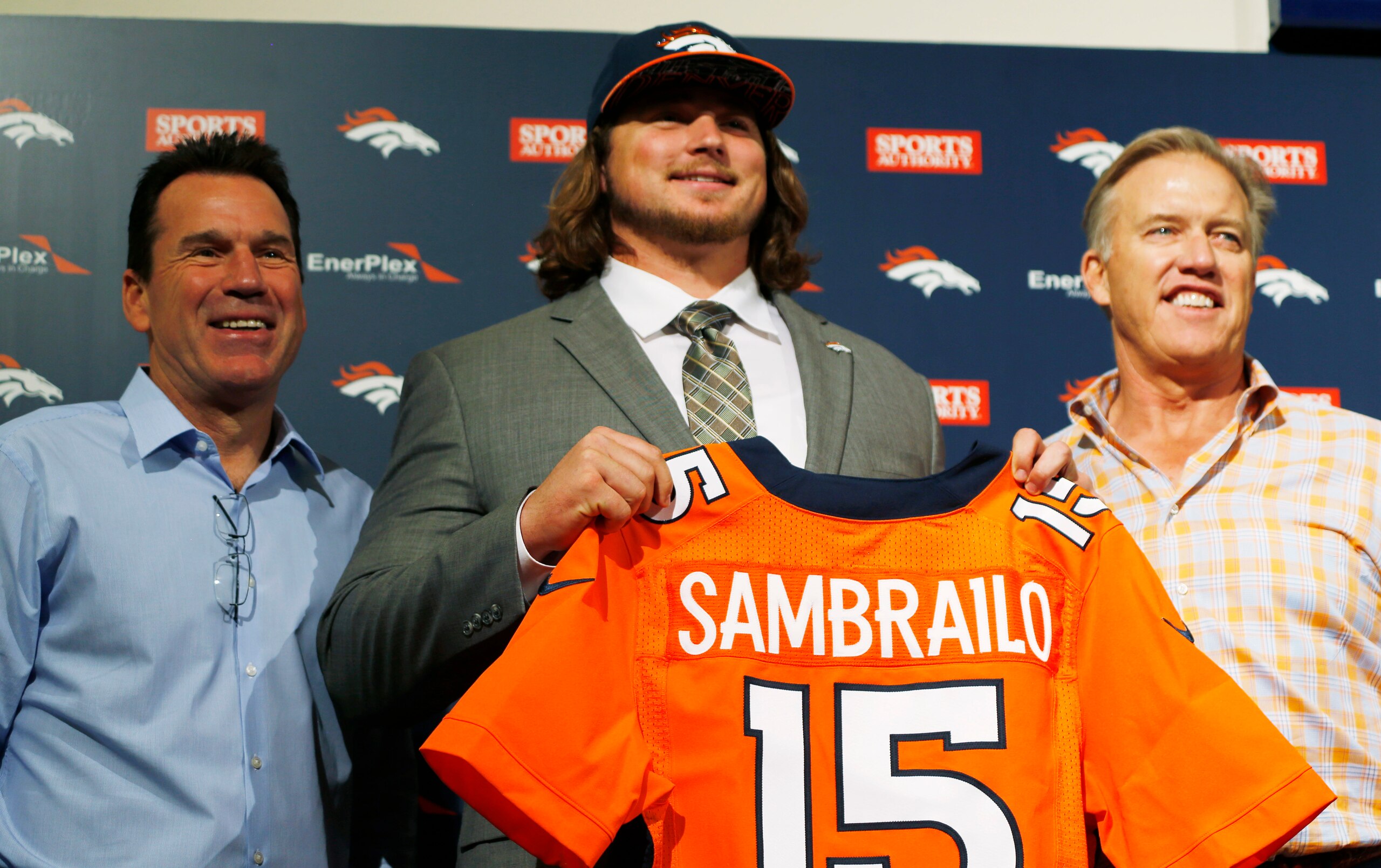
This will likely be the most heated battle in camp. The Broncos shuffled the right tackle position multiple times last year looking for the best option. They found out that right guard Louis Vasquez was that player, but he was only a decent right tackle even though he’s an All-Pro at guard.
This season, the Broncos have more and better options at the position.
The top option could be rookie Ty Sambrailo. The Colorado State prospect was Denver’s second-round pick in the draft this year, and he’ll be given plenty of opportunity to prove himself at right tackle.
Sambrailo is athletic enough to mirror rushers on the edge. He’s a nasty player with attitude to dominate his man as a run-blocker. Sambrailo does have to clean up his footwork against pass-rushers who go inside on their second move. He also has to keep his emotions in check on the field. Sambrailo plays with a ton of fire and tenacity, but that can cause some penalties from time to time.
The second-best option could be Michael Schofield. The Broncos selected Schofield in the third round of the 2014 NFL draft with the option of playing him at right tackle or left guard. He did make the final roster, but Schofield was not active for a single game during his rookie year.
Schofield struggled with keeping weight on as a rookie. He also struggled in pass-protection during training camp and during practice as the regular season rolled on.
Earlier this year at veteran minicamp, Schofield showed up with a larger upper body, and it appeared like he spent a lot of time during the offseason putting on good weight and adding functional strength. We’ll have to see in training camp if Schofield improved his pass-protection ability.
Another option at right tackle is veteran Chris Clark. Yes, he began last season as the starting right tackle and was removed from the starting lineup during the season. However, the zone-blocking system employed by the Broncos this year could be a better fit for Clark. He has more starting experience than Sambrailo or Schofield, and that could give him an advantage in this competition.
The Broncos are going to have a more balanced offense this year. They need to find a quality right tackle to aid their rushing attack and passing game.
All quotes and injury/practice observations obtained firsthand. Record/statistical information provided via the Broncos' media department unless otherwise noted.
Contract and salary-cap information provided by Spotrac. Transaction history provided by Pro Sports Transactions. Draft grades provided by NFLDraftScout.com.
.jpg?w=2560 "Dolphins Jets Football")
.jpg?w=2560 "Cowboys Packers Football")



.jpg?w=2560 "🚨 Week 8 AP Top 25 Poll")
