

5 NBA Draft Combine Prospects Los Angeles Clippers Must Watch Closely
The Los Angeles Clippers do not have any picks in the upcoming draft. They traded their first-round pick to the Boston Celtics for head coach Doc Rivers and their second-round pick to the Denver Nuggets for the rights to Cheikh Samb in 2009. However, there will be opportunities to trade into the draft, and the team needs to keep an eye on a few players at the combine.
With the team lacking a solid bench, the easiest way to add and develop talent is via the draft. Rivers has been unwilling to give young players consistent minutes since being hired, but developing draft picks is the best way to supplement a team's core without spending copious amounts of money.
These five prospects would fill a role next season and into the future. The only snag would be acquiring a pick in the right draft range to select each player.
J.P. Tokoto
1 of 5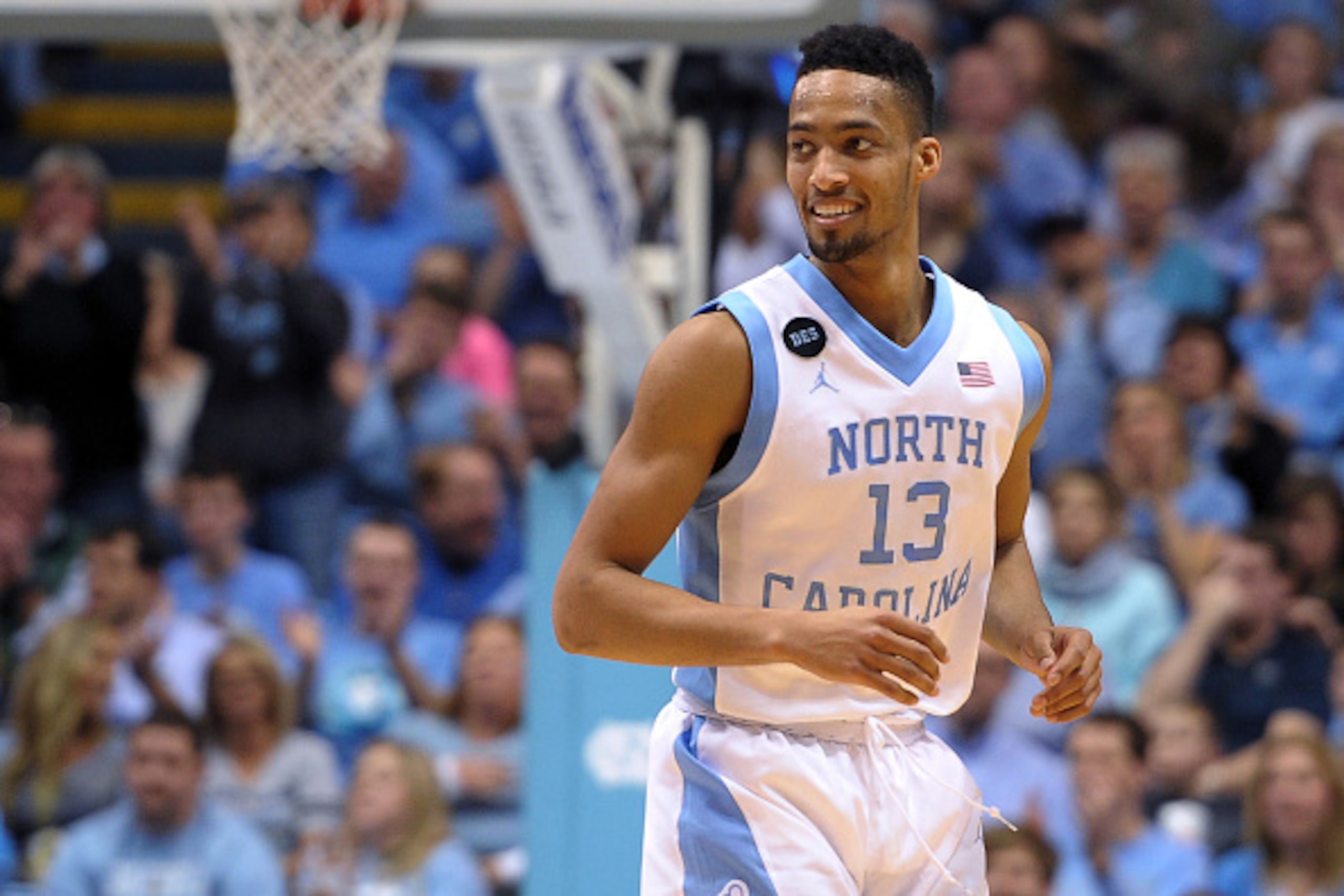
Junior, Forward, 6'5", 200 lbs
Statistics: 8.3 PPG, 5.6 RPG, 4.3 APG, 42.8 FG%
Regarded as one of the nation's top perimeter defenders, J.P. Tokoto chose to forgo his senior season at the University of North Carolina and enter the NBA draft.
On the court, he immediately stands out because of his outstanding athleticism and quickness.
Earning first-team ACC All-Defense honors this year, Tokoto's ability to pressure the ball and defend multiple positions is valuable. This is especially true in a league full of hyperathletic guards.
The statistics back up his defensive profile as well. He recorded 1.5 steals per game and produced 1.9 defensive win-shares, according to Sports-Reference.com.
Offensively, he is going to be a work in progress and understands that, according to Yahoo's Adrian Wojnarowski:
"Going in, I know I’m not a first-round pick, Tokoto told Yahoo Sports. I know my jumper needs work, and I’m putting in that work now – and will keep doing it. My jumper is something that has me as a second-round pick right now, but I have a mindset of work to improve the form and range of my shot.
"
His jumper does need work considering he recorded an effective field-goal rate of 45 percent. He needs to improve his shooting balance, form and consistency. However, if Tokoto can develop his range and form, he is the ideal three-and-D player who also sees the floor well for a wing.
Branden Dawson
2 of 5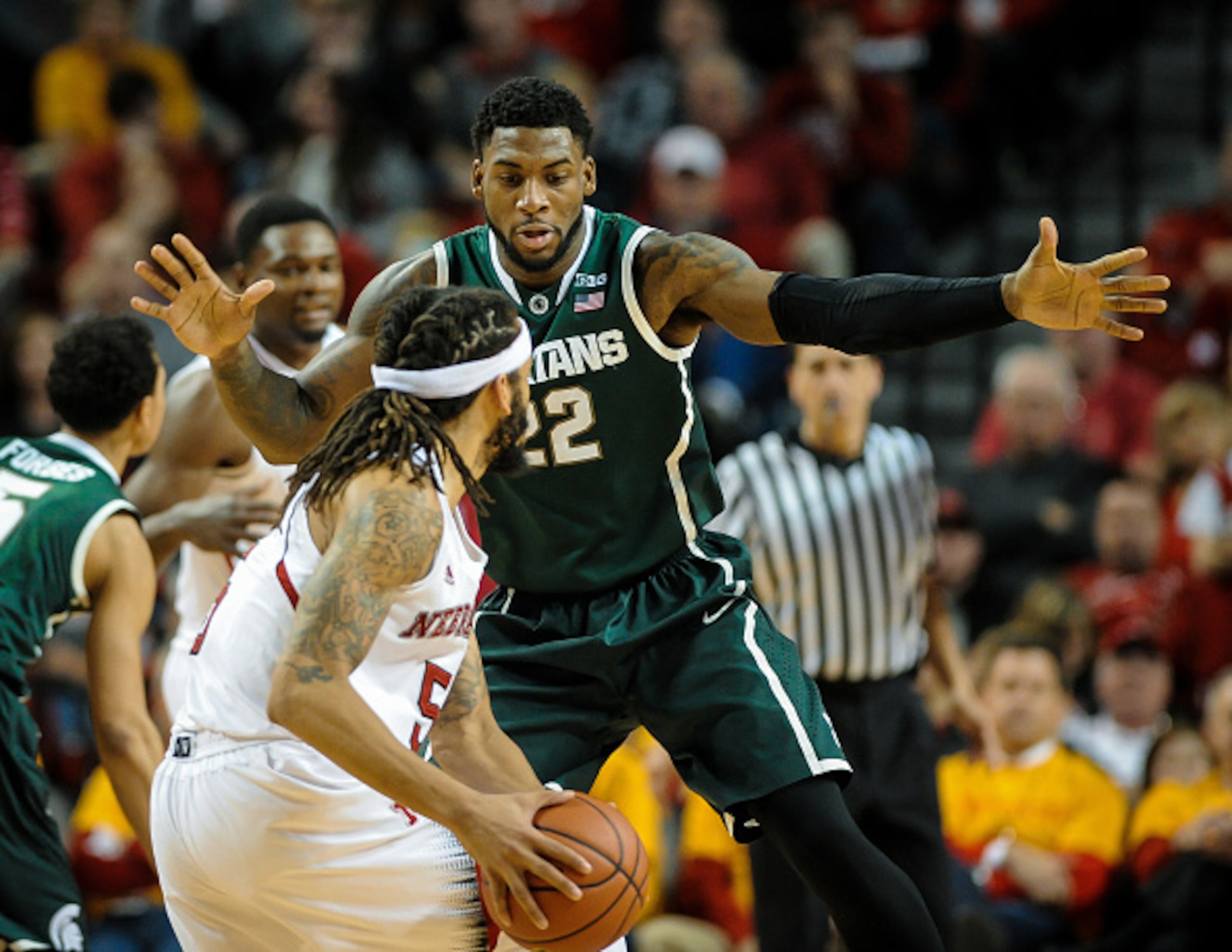
Senior, Forward, 6'6", 225 lbs
Statistics: 11.9 PPG, 9.1 RPG, 1.2 SPG, 1.7 BPG, 53.5 FG%
Seemingly cut from the same cloth as every other successful Michigan State University forward, Branden Dawson is a bit undersized. Fortunately, he makes up for it with energy, toughness and attitude.
He is a terrific athlete who can defend both forward positions. Additionally, he has an impressive ability to make plays defensively, blocking 58 shots and recording 42 steals in 35 games.
His size and athleticism should allow him to defend on the perimeter in the NBA. However, considering Dawson's size (6'6", 225 lbs), he will need to prove he can hold his own on the block against bigger, more powerful players.
Offensively, he is going to be limited early in his career. Dawson did not attempt a three all season and only put up nine during his four years. Since he doesn't have any range on his jumper, teams could be hesitant to play him as a small forward.
Luckily, he excels finishing around the basket. According to Hoop-Math.com, half of Dawson's shots came at the rim, where he finished 73.5 percent of them. If he can develop any semblance of a jumper, he could be an intriguing player.
Rondae Hollis-Jefferson
3 of 5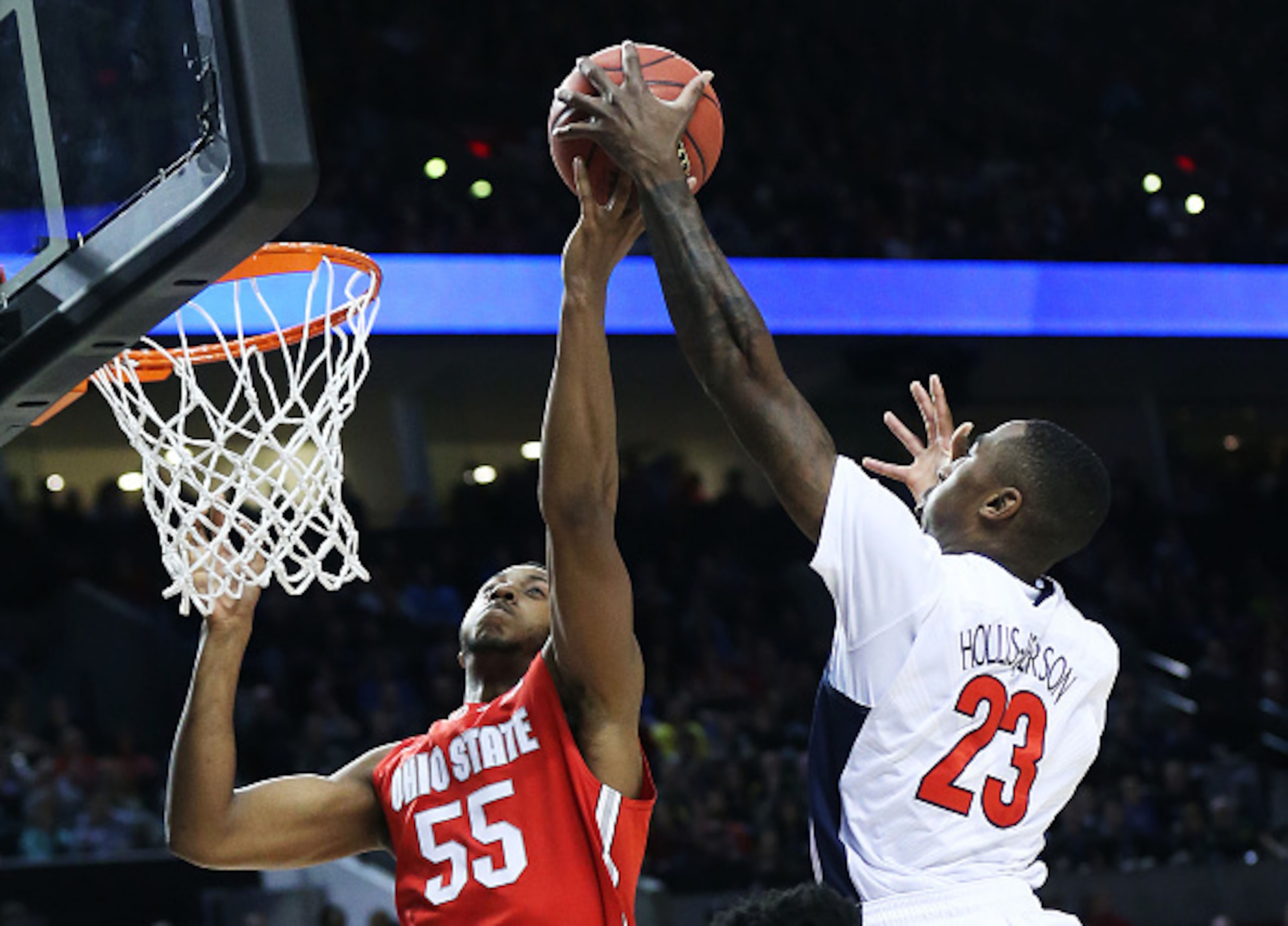
Sophomore, Forward, 6'7", 220 lbs
Statistics: 11.2 PPG, 6.8 RPG, 1.6 APG, 1.2 SPG, 50.2 FG%
Arguably the best defender in the draft, the University of Arizona's Rondae-Hollis Jefferson would be a perfect fit for Doc Rivers' defensive schemes. Blessed with long arms, a constantly running motor, elite athleticism and lateral quickness, Hollis-Jefferson looks the part of an NBA small forward.
Last season, he was asked to defend the opposing team's primary offensive threat, including a matchup with the University of Wisconsin's Frank Kaminsky in the Elite Eight. Hollis-Jefferson's versatility, length and athleticism should allow him to defend 1 through 3, with the ability to switch on 4s in the NBA.
Offensively, Hollis-Jefferson has plenty of work to do.
His primary strength is finishing at the rim, either off the dribble or via cuts. According to Hoop-Math.com, 47.3 percent of his shots came at the rim, and he converted an astounding 72.3 percent.
He runs into trouble when driving through traffic via multiple dribbles. His handles are solid for a small forward, but some of his attacks are out of control and rushed.
Finally, Hollis-Jefferson must improve his shooting, especially from three. He only attempted 29 three-pointers last season, making six. His form is not stable and changes on each shot. This is something he must correct in order to live up to his potential, because he is ready to play a defensive role as a rookie.



Delon Wright
4 of 5
Senior, Guard, 6'5", 190 lbs
Statistics: 14.7 PPG, 5.0 RPG, 5.0 APG, 2.0 SPG, 1.0 BPG
The defensive prospect trend continues with the University of Utah's Delon Wright. Older than most prospects in this draft class, Wright is already 23 but has the passing ability and defensive capabilities to make an impact immediately.
A triple-double threat every game, Wright's excellent court vision combined with his size (6'5") makes him a dangerous creator off the bounce and in pick-and-roll situations. He is a crafty guard who is able to change speeds, penetrate and kick or finish at the rim (64.3 percent via Hoop-Math.com).
However, Wright lacks elite explosion and athleticism. This could be a problem when attempting to finish in traffic at the next level, especially since he weighs only 190 pounds.
While he shot a reasonable 35.6 from three last season, he will have his work cut out for him to develop a more consistent jumper. Instead, he must rely on his ability to create and his defensive versatility.
His defensive instincts are good, which means he can defend point guards and shooting guards. He also excels pressuring the ball or jumping passing lanes.
Wright's team defense is also solid. He does a good job of closing out on shooters and contesting shots. More importantly, he makes quick rotations when the defense breaks down, which will be a valuable attribute early in his career.
Andrew Harrison
5 of 5
Sophomore, Guard, 6'6", 210 lbs
Statistics: 9.3 PPG, 3.6 APG, 2.2 RPG, 37.8 FG%
There will always be a place in the NBA for big guards who can create their own shot, draw fouls and finish at the rim. That is a good summation of Andrew Harrison's talents.
The University of Kentucky product stands 6'5" and 207 pounds. While not the best athlete, Harrison has the handles and body to attack off the dribble and punish defenders with contact.
Unfortunately, Harrison has plenty of holes in his game.
He shot a miserable 37.8 percent from the field, and only 33 of his 101 made baskets were assisted, according to Hoop-Math.com. While he can create his own shot, he needs to trust his teammates and run the offense instead of trying to do everything on his own.
Defensively, he loses focus and almost looks bored at times. However, when he is engaged he can stick with opposing point guards and use his size to keep them from penetrating.
Harrison needs to work on a lot in order to earn a spot in an NBA rotation, but the potential is there. If he can adjust his attitude and focus on his strengths, he could realize that potential. This is especially true on a team like the Los Angeles Clippers, who have a pressing need for a point guard but have veteran leaders to motivate him.
.jpg?w=2560 "Raiders Could Start Mendoza")

.jpg?w=2560 "Rodgers Iced Out on Plane 💎")

.jpg?w=2560 "🚨 Week 8 AP Top 25 Poll")