Who Will Have More Success in His First Season: Jim McElwain or Jim Harbaugh?
The 2015 college football coaching carousel was a bit less frenetic than normal but didn't lack for intrigue at its highest levels.
Last fall, the powers that be at a pair of important, tradition-rich programs finally decided they’d seen enough from their underperforming head coaches. Florida fired Will Muschamp and Michigan fired Brady Hoke, one year after both hired new offensive coordinators in an unsuccessful last-ditch effort to save their jobs.
Both programs made hires that were fascinating in their own unique ways. Michigan made the biggest splash of the winter by luring native son and alum Jim Harbaugh back home after he parted ways with the NFL’s San Francisco 49ers.
.jpg?w=2560 "AP Poll Top Five Week 9")
.jpg?w=2560)
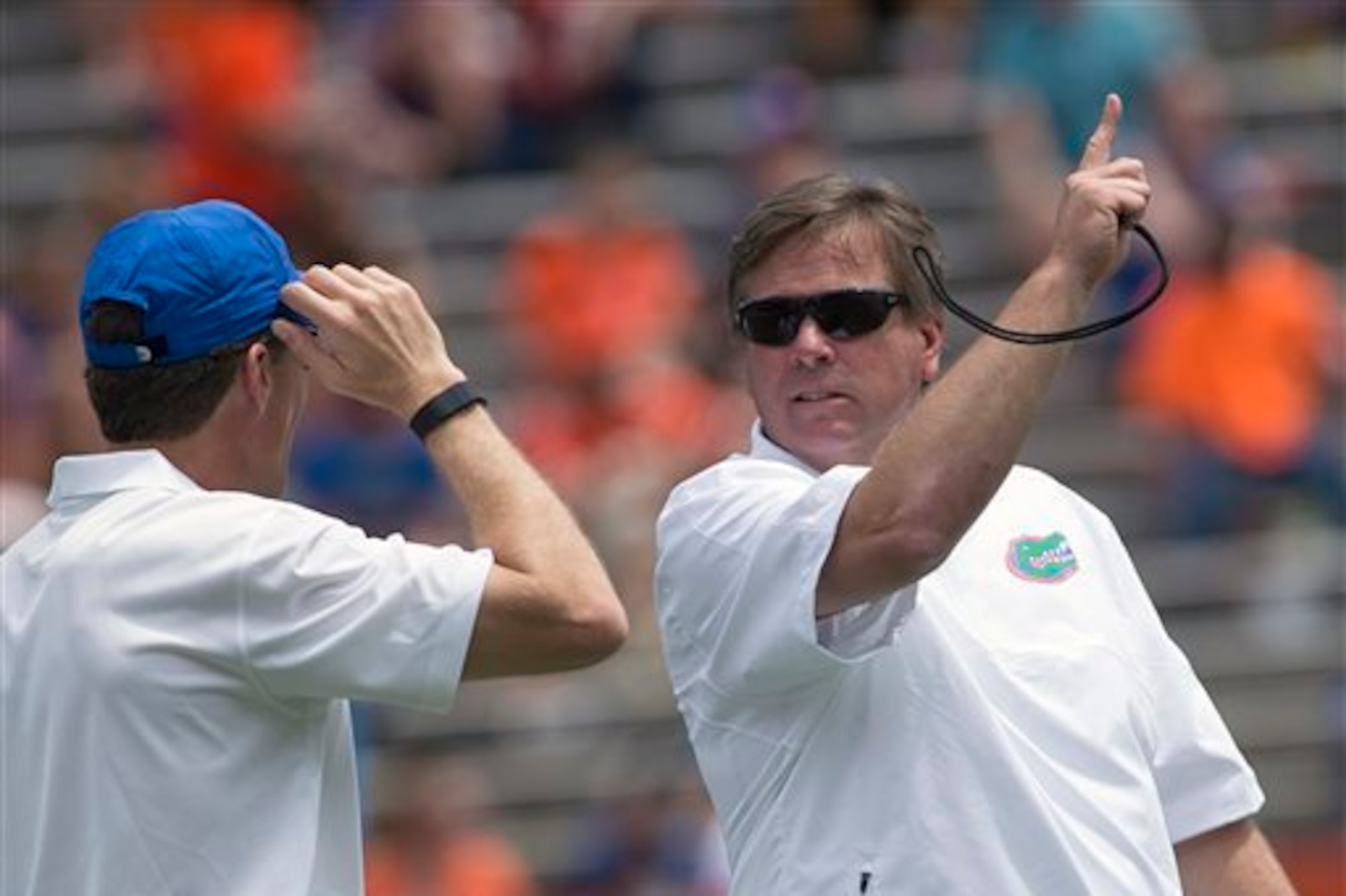
Florida and athletic director Jeremy Foley took a slightly different tact in hiring Jim McElwain, a career coordinator who turned around a downtrodden Colorado State program over just three seasons in his first head coaching gig.
USA Today's Dan Wolken said McElwain is "built for the business of winning games at Florida," a job he couldn't turn down.
"There's only a handful of these jobs," McElwain said, via Wolken. "When you just poll the United States and say, 'Give me the top five football programs in the country,' there's a pretty good chance University of Florida is going to be in there. That opportunity doesn't come around very often."
Judging which program made the better hire is foolish on the surface. It will take years to figure out if Harbaugh or McElwain was the better, more successful fit, with many variables like coaching staffs, facilities and recruiting in play. This isn’t the time or place for that, not yet.
However, we can take a look at which program’s fans will be happier with their new hire this fall, given the players each coach has inherited and recruited. So let’s do that instead.
Here’s a look at whether Jim Harbaugh or Jim McElwain will be more successful in his new home in 2015, examining key factors for each program.
Florida
Let’s start with the positives.
Muschamp was known for his defensive prowess and left McElwain a very good defense to work with. Last fall, the Gator defense kept Florida in contests, allowing 21.1 points (No. 19 nationally in scoring defense) and 329.8 yards per game (No. 15 nationally in total defense).
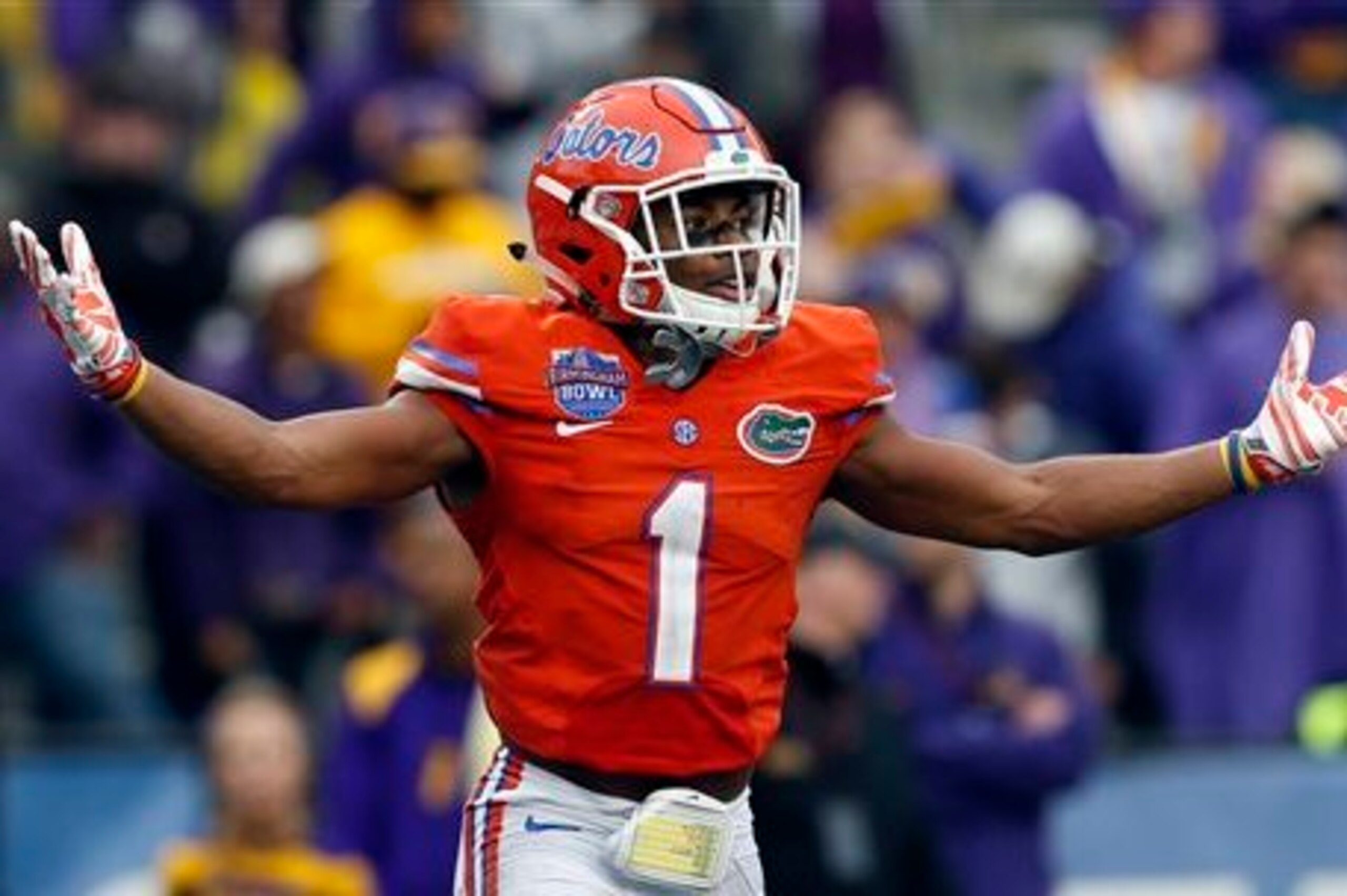
And despite losing edge-rusher Dante Fowler Jr., the third overall pick in the NFL draft, that unit should be just fine this season.
Florida will return eight defensive starters, including its entire secondary. The back end will be anchored by All-American Vernon Hargreaves III, a lockdown corner capable of taking on virtually any receiver in the country. Linebacker Antonio Morrison, who led the team with 101 tackles last fall, also returns.
While Fowler will be tough to replace, McElwain’s staff closed strong in recruiting by nabbing 5-star defensive end CeCe Jefferson, who was rated as the nation’s No. 7 overall player by 247Sports. So at the very least, Florida won’t have much to worry about on the defensive side of the ball.
That’s a good thing, because there’s plenty on the offensive side that’ll keep McElwain and his staff up at night.
Florida was far from an offensive powerhouse in 2014. The Gators averaged 30.3 points (No. 56 nationally) and 367.6 yards (No. 96 nationally) per game. Quarterback Jeff Driskel never developed as expected, and freshman dual-threat Treon Harris finished the season under center.
Florida’s passing offense scared no one, piling up 179.9 yards per game, No. 106 in the country.
And consider this: Florida returns just one offensive line starter from a year ago: guard Trip Thurman. The Gators actually had six offensive players picked in the NFL draft, including four offensive linemen (led by No. 24 overall selection D.J. Humphries). Leading rusher Matt Jones also left, although junior Kelvin Taylor (565 yards, six scores) is ready to step into that role.
But who will block for him?
Tackle Rod Johnson was expected to flip from the right side to the left, but he was forced to give up football after being diagnosed with spinal stenosis (the narrowing of the spinal canal), and Florida finished spring with just six healthy scholarship offensive linemen. Top offensive tackle recruit Martez Ivey will almost certainly be thrown into the fire as a true freshman starter.
Demarcus Robinson (53 receptions, 810 yards, seven touchdowns in 2014) is an emerging star, but who’ll throw to him?
Harris and redshirt freshman Will Grier will carry their battle for the starting quarterback role into August. Harris threw for nine touchdowns against four interceptions and added three rushing touchdowns last fall, but he completed just 49.5 percent of his passes. Grier has good mobility and is also a better passer. It wouldn’t be a surprise to see him win the job.
The schedule isn’t easy, either. Florida draws Ole Miss and traditional crossover foe LSU from the SEC West and must travel to Baton Rouge. The Gators also will travel to Missouri and South Carolina, have their traditional neutral-site showdown with Georgia in Jacksonville and host archrival Florida State.
Unless the offense kicks into gear, wins might be hard to pile up.
Michigan

The only thing worse than losing is losing in boring fashion, which Michigan fans found out last fall.
Brady Hoke kicked off his Wolverine tenure with a rousing 11-2 record but got consistently worse with each passing season, slipping to 8-5 in 2012 and 7-6 in 2013.
Hiring offensive coordinator Doug Nussmeier and installing a run-based offense wasn’t the answer, either. Michigan averaged 162.8 rushing yards (No. 64 nationally) and 170.2 passing yards per game (No. 112).
The Wolverines also struggled to get on the board, scoring just 20.9 points per game (No. 111). It was no surprise that the Michigan brass canned Hoke following a 5-7 season.
Michigan needed excitement and hit a home run by luring Harbaugh back to his alma mater. And Harbaugh said he isn't fazed by being labeled the program's "savior," via Fox Sports' Bruce Feldman.
"I can't even think of professions where you don't have the pressure to perform and do a good job," he said. "Man, if there was that profession, I wouldn't want to do it."
Harbaugh’s fiery ways tend to wear on people. He hasn’t spent more than four seasons at any of his three stops (San Diego, Stanford and the San Francisco 49ers), but that isn’t as big a concern in his inaugural season.
He has made an immediate difference at all three previous stops. He led San Diego to a 7-4 record in his first season, improved Stanford from 1-11 to 4-8 in Year 1 on The Farm and turned the 49ers from a 6-10 team into a 13-3 team with an NFC title game visit in his first year.
To do so at Michigan, he must lean on a salty defense while whipping the offense into shape.
The Wolverines suffered key losses in linebacker Jake Ryan and defensive ends Frank Clark and Brennen Beyer, but they return eight starters from a unit that allowed 311.3 yards (No. 7 nationally) and 22.4 points per game (No. 27). Michigan just needs to develop pass-rushers and find an impact player in the secondary.
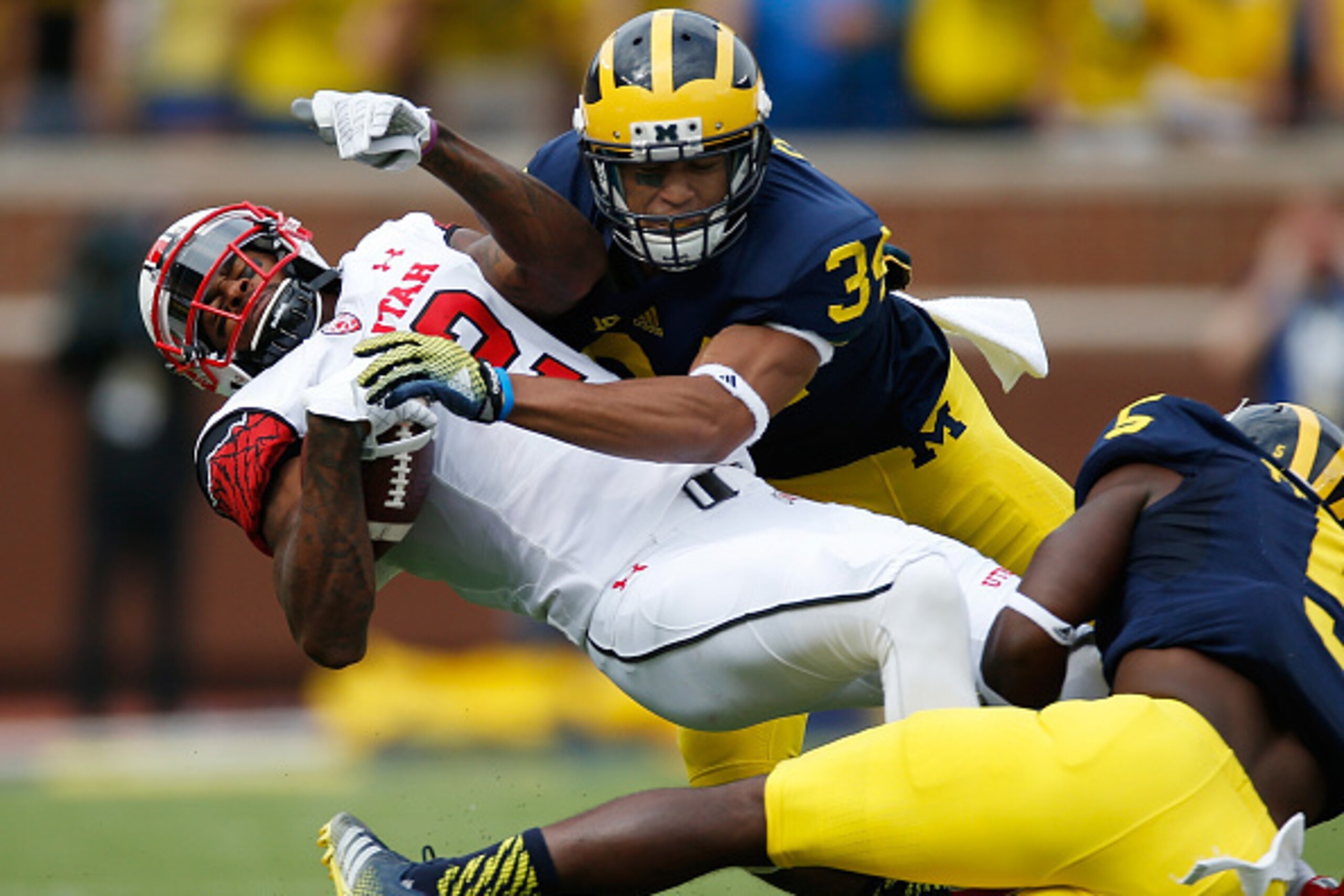
Redshirt freshman Jabrill Peppers should fulfill the latter requirement. He was one of Michigan’s most highly anticipated recruits in recent memory but was forced to redshirt following multiple leg injuries.
Bigger questions exist on offense. Michigan returns all five offensive line starters, but that unit simply wasn’t very good in 2014, often failing to protect quarterback Devin Gardner, who threw 10 touchdowns against 15 interceptions.
That line must open holes for tailback Derrick Green, who was emerging as a star before suffering a season-ending broken collarbone in October. He had 471 yards and three touchdowns, averaging 5.7 yards per carry.
Leading receiver Devin Funchess is off to the NFL, but senior Amara Darboh (36 receptions, 473 yards, two touchdowns) showed signs in spring of being a functional No. 1 receiver.
The biggest question is the same one Florida faces: Who’ll start at quarterback?
Shane Morris was given chances to unseat Gardner last season but never took advantage of them. He completed 14 of 40 passes for 128 yards with no touchdowns and three interceptions on the season and battled sophomore Wilton Speight and freshman Alex Malzone in spring practice.
The wild card could be senior Jake Rudock, a graduate transfer from Iowa who left the Hawkeyes after it became apparent that C.J. Beathard would be the starter this fall. Rudock started 11 games for Iowa in 2014, completing 61.7 percent of his passes for 2,436 yards with 16 touchdowns and five interceptions.
Rudock has a little mobility and a solid arm but is also experienced as a “game manager” who doesn’t take a ton of chances.
If Michigan’s defense and run game are as good as expected, he could be a perfect one-year fit for Harbaugh.
Michigan’s 2015 schedule is reasonable. The Wolverines have tough non-conference games in the opening month at Utah and home against Oregon State and BYU, but they do get rivals Michigan State and Ohio State at home and avoid Nebraska and Wisconsin out of the Big Ten West.
There’s reason to expect that Harbaugh’s trend of first-year improvement will continue.
The Verdict
While Michigan made the flashier hire, both the Wolverines and Gators made moves that will push their programs forward in coming years, particularly with Florida's investment in long-overdue facility upgrades.
Both teams will have solid defenses, but McElwain faces a difficult task in energizing Florida’s offense this fall with a thin offensive line and unsettled quarterback situation.
Harbaugh has a better offensive line and a better quarterback scenario, which should help the Wolverines enjoy a bit more success than Florida in 2015.



.jpg?w=2560 "Raiders Could Start Mendoza")


.jpg?w=2560 "Rodgers Iced Out on Plane 💎")
.jpg?w=2560 "Packers Safety Slams Refs 🤬")