


If James Harden is the engine that makes the Houston Rockets offense go, then Dwight Howard is a living, breathing fuel injector capable of lifting the franchise to heights it hasn't experienced in nearly 20 years.
As Houston seeks to reach the Western Conference Finals for the first time since 1997, it's Howard—mysteriously lost in the NBA's superstar shuffle during a season defined by a frenzied MVP race—who possesses the talent necessary to elevate the Rockets' ceiling to an entirely new level.
Through six playoff games, Howard has held up his end of the bargain, averaging 17.5 points, 13.2 rebounds, 3.3 blocks and 1.5 steals while shooting a shade over 60 percent from the field.



We may be desensitized to accept that kind of production as the norm for a healthy Howard at this point, but historic precedence shouldn't be a reason to ignore how integral his production will be to the Rockets' success against the Los Angeles Clippers.
Take Monday night, for instance.
Although the Rockets turned in their worst collective performance of the season to date, Howard was the lone piece keeping the team afloat. In 39 minutes, he scored a team-high 22 points (9-of-13 shooting) to go with 10 rebounds and five blocks for his fourth double-double of the postseason.
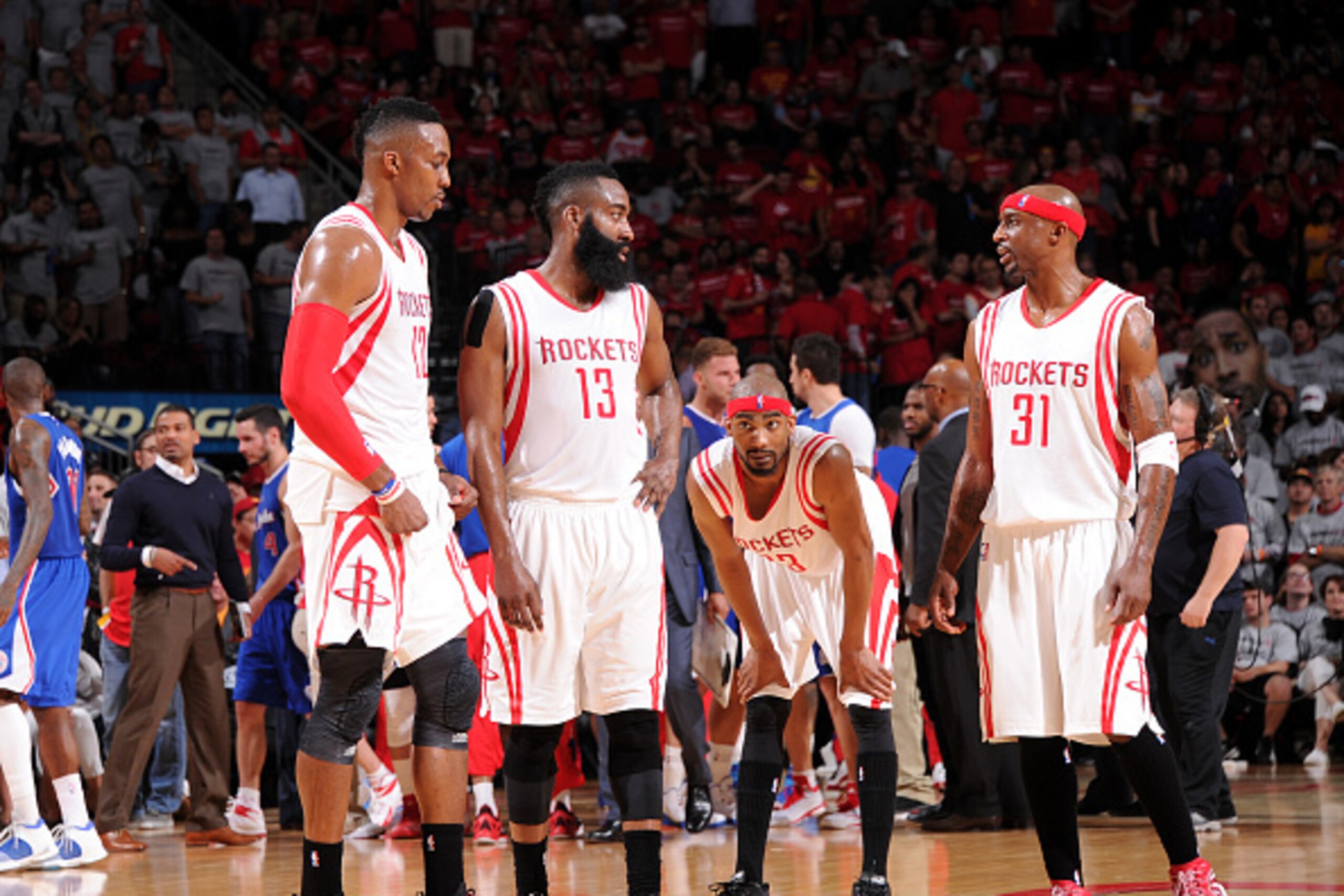
What's important here is Howard's offense.
While the Rockets are generally stereotyped as a high-powered offensive juggernaut, that label has become a misnomer. Houston ranked 12th in offensive efficiency during the regular season, recorded the league's 20th-ranked field-goal percentage (44.4) and hit threes at a rate right around the league average (34.8 percent).
Elite, that is not.
However, a record-setting number of three-point makes (933) and more than 2,100 trips to the free-throw line have branded the Rockets as trendsetters. And that they are. But volume doesn't always equate to efficiency, and that's become abundantly clear throughout the season.
As CBS Sports' Matt Moore explained, the team's personnel shift has produced results conducive to defensive progression and offensive regression:
This is why the oft-overlooked Howard remains imperative to Houston's title hopes.
As the Rockets seek to bend defenses with the same fury that allows Howard to bend rims, they must find ways to feed their interior beast early and often, which didn't always happen in Game 1.
"There were some times that my teammates missed me, and there were some times I missed my teammates," Howard told reporters after the Game 1 loss, according to the Houston Chronicle's Jonathan Feigen. "But that can't be my focus, and I won’t let it stop me from doing all the things I can do for this team."
To this point in the postseason, Howard's usage rate (21.2 percent) ranks fifth among Rockets players, behind Harden, Josh Smith, Corey Brewer and Terrence Jones. He's also attempting 11.3 shots per game, which is tied with Brewer for No. 3 overall behind Harden and Smith.
With Houston playing at the fastest pace (105.7 possessions per 48 minutes) this postseason, it's not surprising to see so many different players getting in on the action at high rates. But the fact remains that Howard isn't even the team's most utilized frontcourt option, and that needs to change.
To be clear, Houston needs a specific version of Howard. Fortunately, the spring-loaded, decisive, quick-strike edition of Superman has shown up to this point.
You know—the one who takes a sledgehammer to opponents in transition:
The key with Howard—as it has been for some time—is to get him the ball in spots that expedite offensive success. Deliberate post-ups and clear-outs have never been Howard's forte, and the Rockets have done a nice job of playing off his strengths.
Instead of asking him to pound opposing bigs into submission with his back to the basket, Howard has been afforded opportunities to burn defenses with his speed. After all, that—coupled with sickening athleticism—is what separates him from other centers at 6'11'' and 275 pounds.
Howard thrives when he can catch the ball in the flow of the offense, generally with his forward momentum pulling him toward the basket.
That's why Houston has heavily focused on getting him touches early in the shot clock, as Bleacher Report's Jared Zwerling explained:
"When Howard does look to post, the focus is on quicker one- or two-dribble moves closer to the basket. In the past, he would tend to set up for an entry pass further out and then hold the ball too long, banking on his youth and athleticism to blow by his opponent. These days, Howard looks for paint position early in transition, for example, so he can avoid a steady diet of double teams.
"
A prime example of that determination came in the fourth quarter of Monday night's loss, when Howard sprinted down the floor and took advantage of DeAndre Jordan's focus on swarming the ball-handler (Pablo Prigioni).
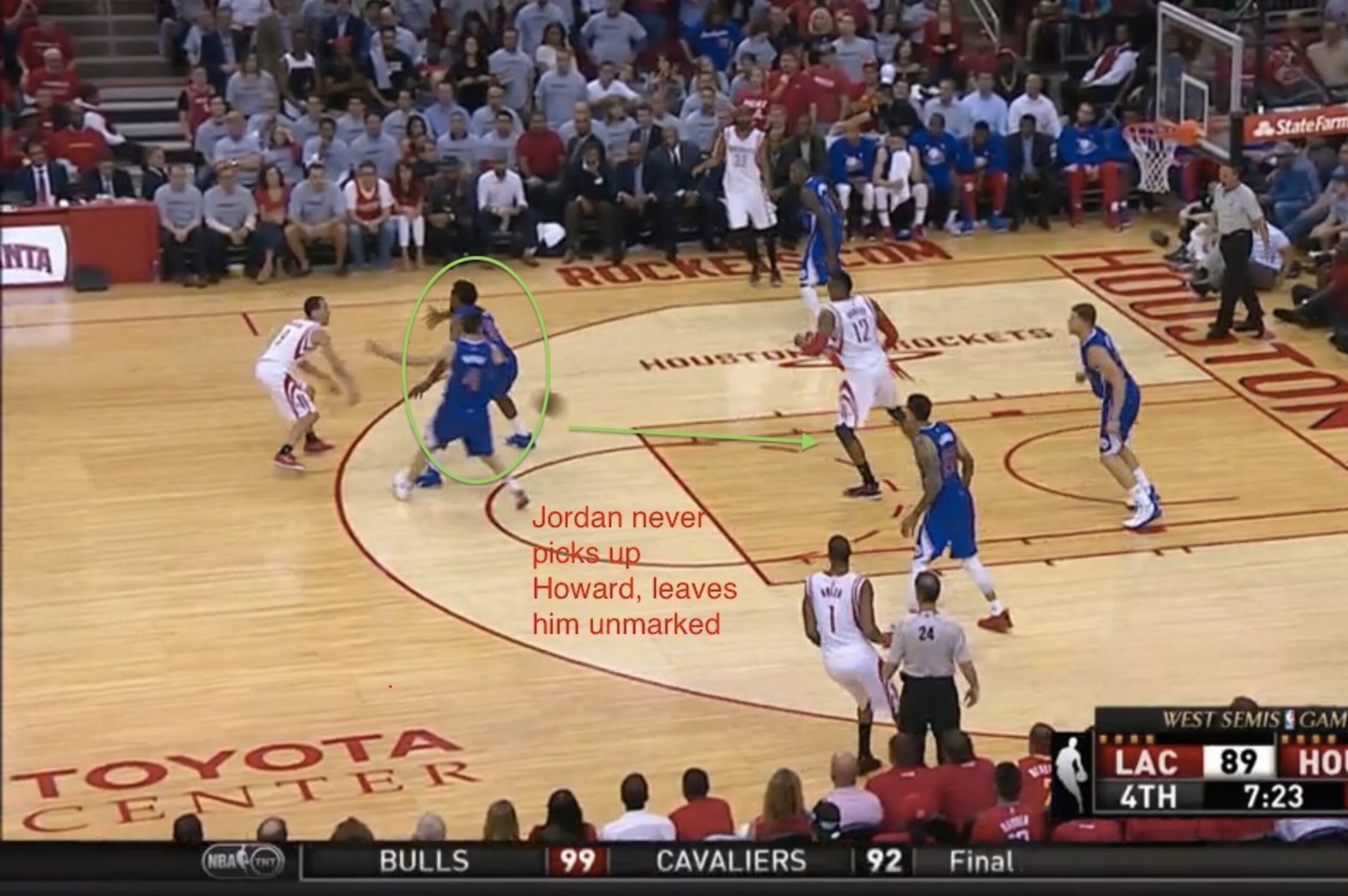
From there, Howard established deep position in the paint, received a skip pass at the charge circle and gently elevated for an easy bucket over Blake Griffin.
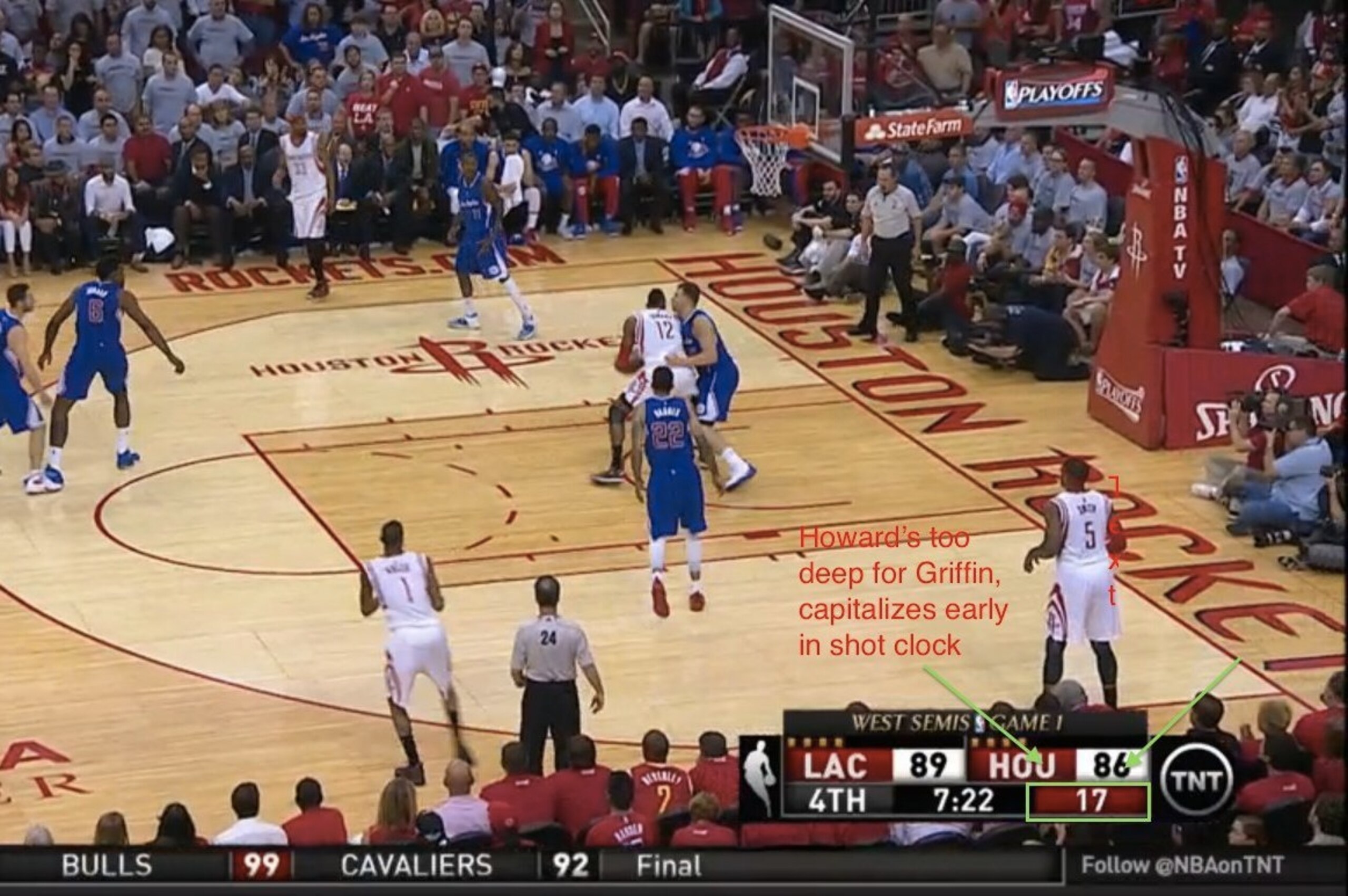
All of that came within the first seven seconds of the shot clock.
If the Rockets follow Howard's Game 1 lead, he's well aware that his team can even things up Wednesday night (9:30 p.m. ET on TNT), according to ESPN.com's Calvin Watkins:
With so much of his game predicated on using quickness to blow by opponents, it's worth exploring how efficient Howard has been in quick-strike situations compared to more stagnant sets.
According to Synergy Sports (via NBA.com), Howard is scoring on 72.7 percent of his touches when diving to the basket in the pick-and-roll during the playoffs. That's practically inhuman.
Sticking with that theme, Howard is also scoring in the 92.3rd percentile on putbacks. Basically, if he pulls down an offensive rebound, the defense should consider the possession doomed. To magnify the disparity, consider that Howard's scoring at a 40 percent rate on post-up opportunities, per Synergy.
Stark contrast, right?
Howard's defensive dominance will always be at the forefront of the conversation regarding his star status, as it should be. The Rockets perform like the league's top-ranked defense when he's on the court, and his profound impact can't be stressed enough. Howard's shot-blocking also facilitates some of the transition opportunities that he winds up punctuating, so the prosperous interconnectivity of his play shouldn't be overlooked.
But even so, there has to be a sense of urgency when it comes to getting Dwight touches in favorable spots on a regular basis. The Clippers offense topped efficiency charts during the regular season, and as Game 1 exemplified, L.A. is fully capable of running rampant with Chris Paul sidelined.
Nevertheless, Houston has Howard readily available to match that firepower and raise its ceiling—so long as the team uses him like the superstar he is.
All statistics are current as of May 6 and courtesy of Basketball-Reference.com and NBA.com unless noted otherwise.
Alec Nathan covers the NBA for Bleacher Report. Follow him on Twitter: @AlecBNathan.

.jpg?w=2560 "Raiders Could Start Mendoza")

.jpg?w=2560 "Rodgers Iced Out on Plane 💎")
.jpg?w=2560 "🚨 Week 8 AP Top 25 Poll")
.jpg?w=2560 "Packers Safety Slams Refs 🤬")
