

Power Ranking College Football's Best 2015 Dual-Threat Quarterbacks
The name says it all. As a dual-threat quarterback, these are players who are so dangerous they can beat you in more than one way, either through the air or on the ground.
Defenses must account for both the passing and running of a dual-threat quarterback, and because of this, they can't overload to stop one without risking getting burned by the other.
The best dual-threat quarterbacks in college football are ones who don't lean too heavily in one direction or the other but rather make it seem like a crapshoot on each and every play. The call might even start out as a pass and quickly become a run, which isn't as difficult to defend with a pocket passer but is a major inconvenience with a dual-threat QB.
Here's our look at the best dual-threat quarterbacks in FBS heading into the 2015 season. They are ranked based on their production from previous years as well as what is expected of them this fall, taking into account how valuable their performance is to their teams' success.
14. Jeremy Johnson, Auburn
1 of 14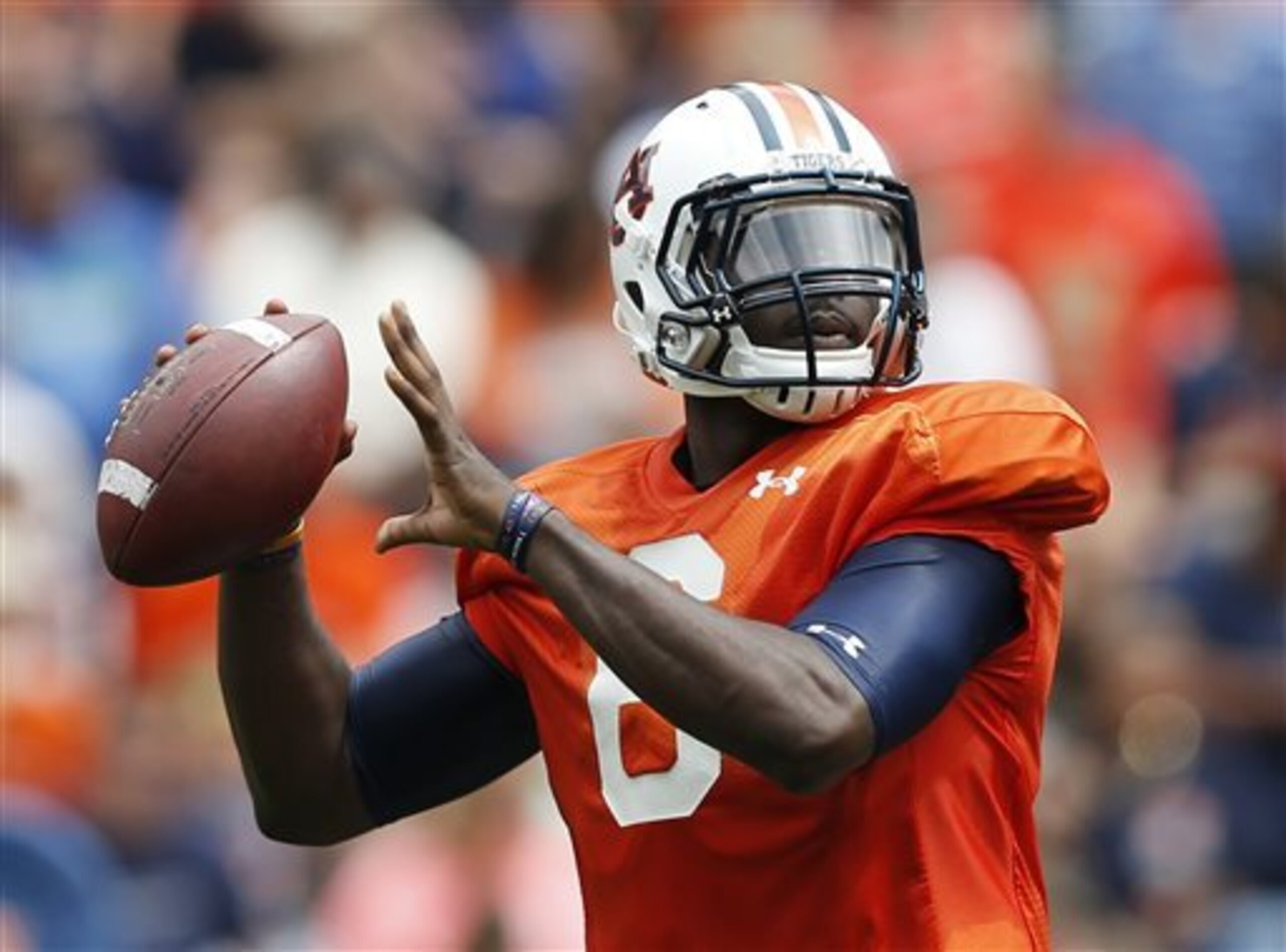
Year: Junior
Height, weight: 6'5", 240 lbs
2014 stats: 436 passing yards, 75.7% comp., 3 TDs
We start out with a quarterback who makes the list almost entirely on hype. Over the previous two seasons, he has made just two starts—one for only a half and only because Nick Marshall was suspended—and appeared in 13 games. But now that Jeremy Johnson is locked in as Auburn's starter for 2015, there are all sorts of anticipation over what the combination of his skills and the Tigers' system will produce.
Not just from fans but from Johnson himself. Not one to play the modesty card, Johnson has said he wants to be just the sixth quarterback to "at least throw for 3,000 yards and also rush for 1,000," per James Crepea of the Montgomery Advertiser.
Auburn's passing record is 3,277 yards, set by Dameyune Craig in 1997, while Cam Newton ran for a school QB-best 1,473 yards during his Heisman-winning season in 2010.
13. Malik Zaire, Notre Dame
2 of 14
Year: Sophomore
Height, weight: 6'0", 222 lbs
2014 stats: 266 passing yards, 60.0% comp., 1 TD; 187 rushing yards, 2 TDs
Malik Zaire didn't get a chance to show off his abilities in a meaningful game situation until Notre Dame's final contest of 2014, when he split snaps with Everett Golson in the Music City Bowl against LSU. Though a limited sample size, it was still more than enough to warrant the Fighting Irish needing another quarterback competition this year, as well as to show that Zaire could be a difference-maker with the ball in his hands.
In Notre Dame's 31-28 win over LSU, Zaire had 192 yards on 37 touches compared to 96 for Golson on 12 touches. Zaire had 96 rushing and passing yards apiece, alternating between throwing and running in a way that Golson wasn't capable of doing effectively during the second half of the season.
Now that Golson has decided to transfer for his final season, per ESPN's Brett McMurphy, Zaire will get a chance to show off his talents on a full-time basis in 2015.
12. Fredi Knighten, Arkansas State
3 of 14
Year: Senior
Height, weight: 5'11", 189 lbs
2014 stats: 3,277 passing yards, 62.3% comp., 24 TDs, 7 INT; 779 rushing yards, 11 TDs
If not for being stuck in the Sun Belt Conference, Fredi Knighten might have gotten more attention for what he did last season. But when his school is best known for having a new coach nearly every season this decade, it's hard to get attention no matter how productive you are.
Knighten spent his first two years backing up Adam Kennedy and school career-passing leader Ryan Aplin, but he started the Red Wolves' bowl game at the end of the 2013 season after Kennedy was injured. He was named the GoDaddy Bowl MVP with 97 rushing yards and 115 passing yards in the comeback victory, and that served as a springboard for last year's 4,000-yard performance.
He saved his best for the end of last season, averaging 420.7 yards of total offense over his final three games.
.jpg?w=2560 "AP Poll Top Five Week 9")
.jpg?w=2560)

11. Tommy Armstrong, Nebraska
4 of 14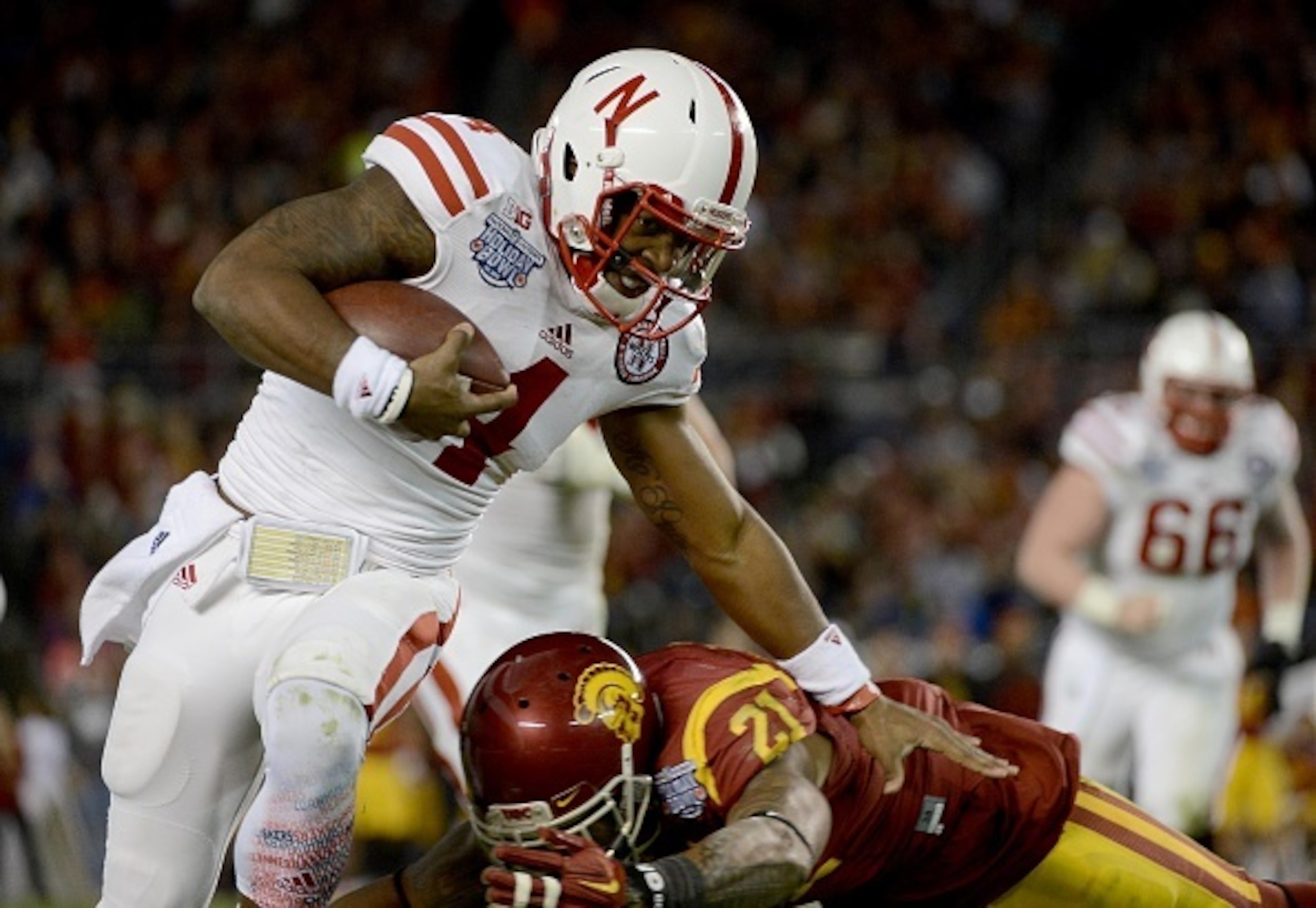
Year: Junior
Height, weight: 6'1", 220 lbs
2014 stats: 2,695 passing yards, 53.3% comp., 22 TDs, 12 INT; 705 rushing yards, 6 TDs
The Tommy Armstrong we see this season could be vastly different from the one who took over as Nebraska's starter during his redshirt freshman year and then controlled the position all of 2014. Assuming he's able to handle the Cornhuskers' new offense, this will result in an even better Armstrong than we've seen to this point.
Armstrong has spent his career to this point operating a spread attack, and as a result, he has run the ball 212 times to go with 476 pass attempts. Now he steps into a pro-style offense that new coach Mike Riley ran at Oregon State, where he didn't have a quarterback finish with positive rushing yardage in any of his final four seasons.
In order to succeed this year, Armstrong will have to become more accurate than the 53 percent of his throws he completed last year or the 51.9 percent in 2013. Four of Riley's last five seasons at OSU saw the quarterback hit at least 62 percent of his passes.
But unlike those Beavers QBs, Armstrong has the run game to fall back on, as he did last year when protection would break down.
10. Drew Hare, Northern Illinois
5 of 14
Year: Junior
Height, weight: 6'1", 210 lbs
2014 stats: 2,322 passing yards, 59.5% comp., 18 TDs, 2 INT; 900 rushing yards, 8 TDs
On their own, Drew Hare's 2014 numbers were quite impressive for a dual-threat quarterback. Unfortunately, his performance can't help but be compared to that of his predecessor, Jordan Lynch, who in two years as a starter for Northern Illinois put up 9,765 yards of total offense (including 3,735 rushing yards) and accounted for 91 touchdowns.
Hare battled with Anthony Maddie and Matt McIntosh during the Huskies' first two games in 2014 before taking over the starting job, and in his 112 starts, he averaged 244 yards of total offense with four 200-yard passing games and two 100-yard rushing efforts.
He averaged a solid 5.66 yards per carry, but Hare's most impressive statistic last year was his avoidance of trouble. In 326 pass attempts, he was picked off only twice, going 179 straight throws over an eight-game span without an interception.
9. Justin Thomas, Georgia Tech
6 of 14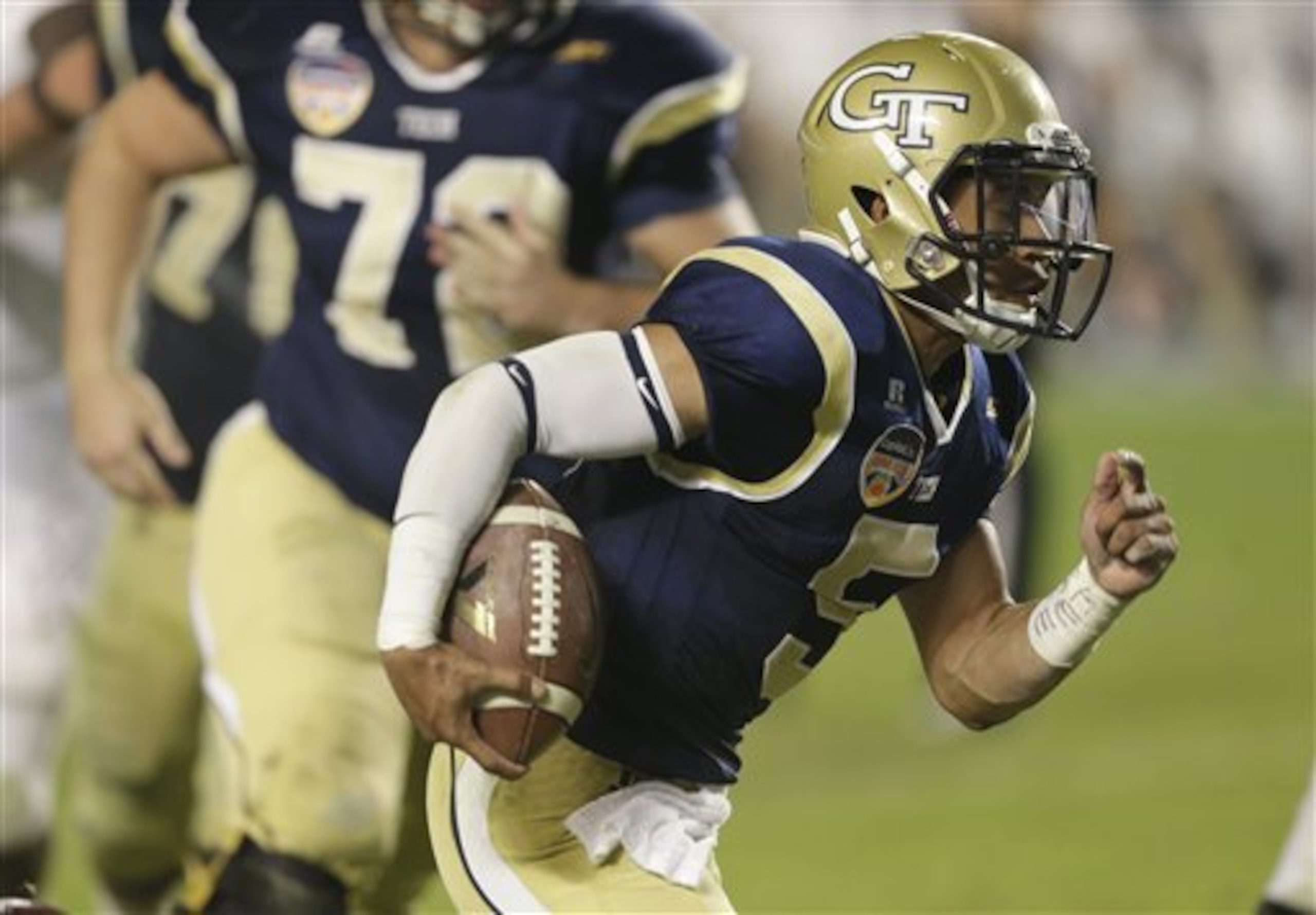
Year: Junior
Height, weight: 5'11", 189 lbs
2014 stats: 1,719 passing yards, 51.3% comp., 18 TD, 6 INT; 1,086 rushing yards, 8 TDs
As a triple-option quarterback, Justin Thomas by design is going to be adept at running the ball. He was Georgia Tech's leading rusher, carrying the ball on 190 of the Yellow Jackets' 790 run plays to become the school's sixth 1,000-yard rushing QB.
But where Thomas managed to stand out from other past passers in coach Paul Johnson's system was his ability to throw the ball with real effectiveness, making the pass play not just an occasional wrinkle but something that could be relied upon for real production.
Though he only averaged just over 13 attempts per game and topped 60 percent accuracy in only three games, Thomas' 9.2 yards per attempt would have ranked fourth in FBS had he thrown the ball enough to qualify.
8. Greg Ward, Houston
7 of 14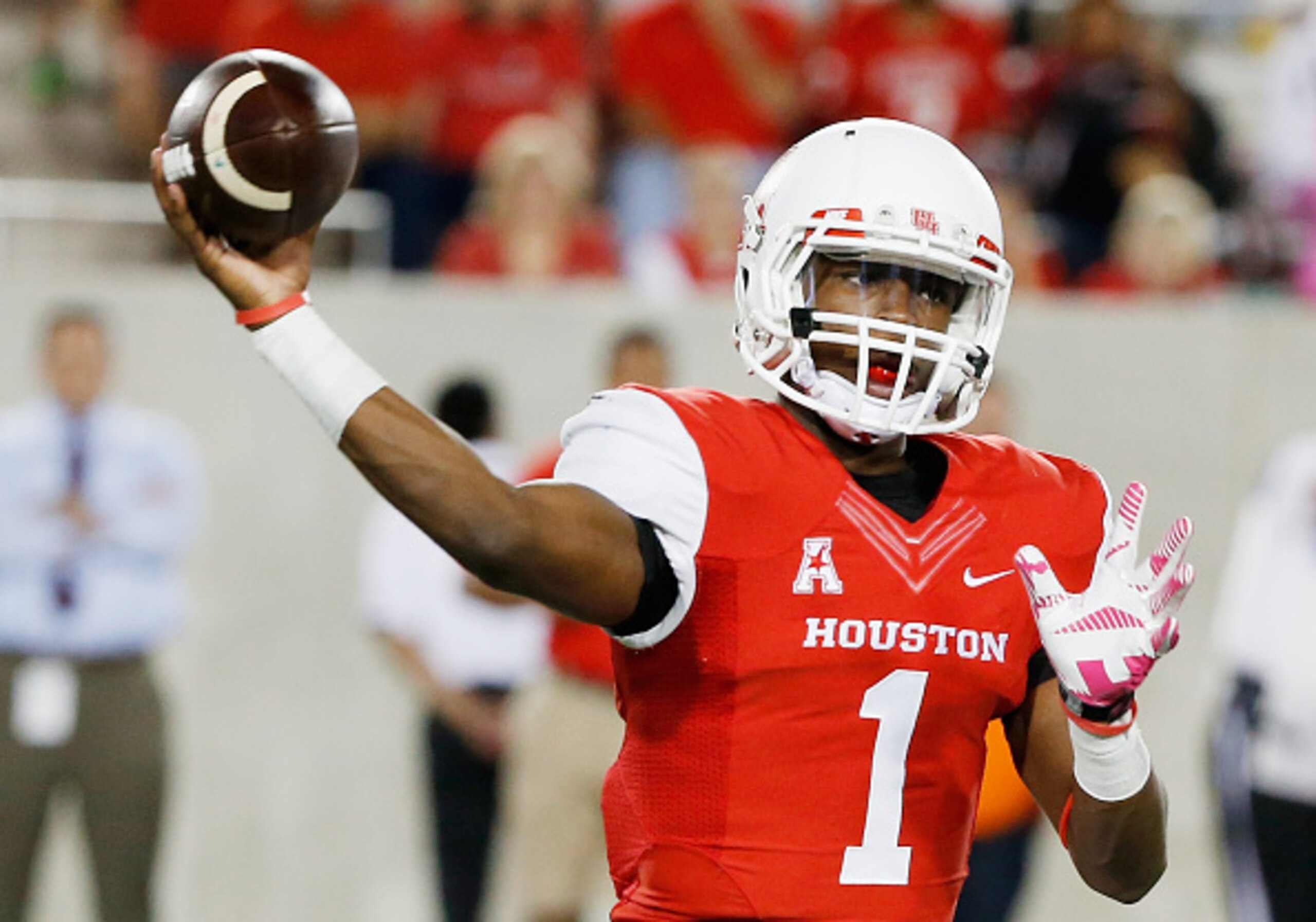
Year: Junior
Height, weight: 5'11", 178 lbs
2014 stats: 2,010 passing yards, 67.3% comp., 12 TDs, 7 INT; 573 rushing yards, 6 TD
Greg Ward was recruited to Houston to be a receiver or defensive back, despite being a standout quarterback in high school. He served as the Cougars' backup passer as a freshman in 2013, then midway through last year took over for John O'Korn at QB and lit a fire under the Cougars offense.
In Ward's eight starts, Houston averaged 439 yards and 31 points per game, compared with 375 yards and 27 points, with no fewer than 31 points in each of his last four games. He did this by not only showing a strong knack for finding the right man in the passing game but also with his legs by averaging more than five yards per carry and at least 80 rushing yards in four different games.
Ward had 366 yards of total offense in Houston's comeback bowl win over Pittsburgh, one of four games with at least 300 yards.
7. Cardale Jones, Ohio State
8 of 14
Year: Junior
Height, weight: 6'5", 250 lbs
2014 stats: 860 passing yards, 60.9% comp., 7 TDs, 2 INT; 296 rushing yards, 1 TD
His nickname might be related to his arm strength, but don't let Cardale Jones' cannon fool you into thinking this tank can't rumble over terrain and leave defenders in his wake. Just ask Alabama and Oregon, both of whom felt the pain that came with trying to take down that runaway train when he'd escape the pocket during last season's playoffs.
While Jones—whose nick name is 12 Gauge, like the shotgun—has one of the strongest arms in the game and therefore doesn't tend to have many designed run plays like fellow Ohio State quarterbacks J.T. Barrett and Braxton Miller have called for them, that doesn't lessen his ability to move the ball on the ground. His running style is more about blowing through tacklers rather than trying to run around them.
If Jones ends up winning OSU's quarterback competition this fall, he isn't likely to match the rushing numbers that Barrett and Miller have put up the past few seasons. But he won't be a running liability, and combined with his arm skills, he could be the best option of the group from an overall offensive standpoint.
6. Marquise Williams, North Carolina
9 of 14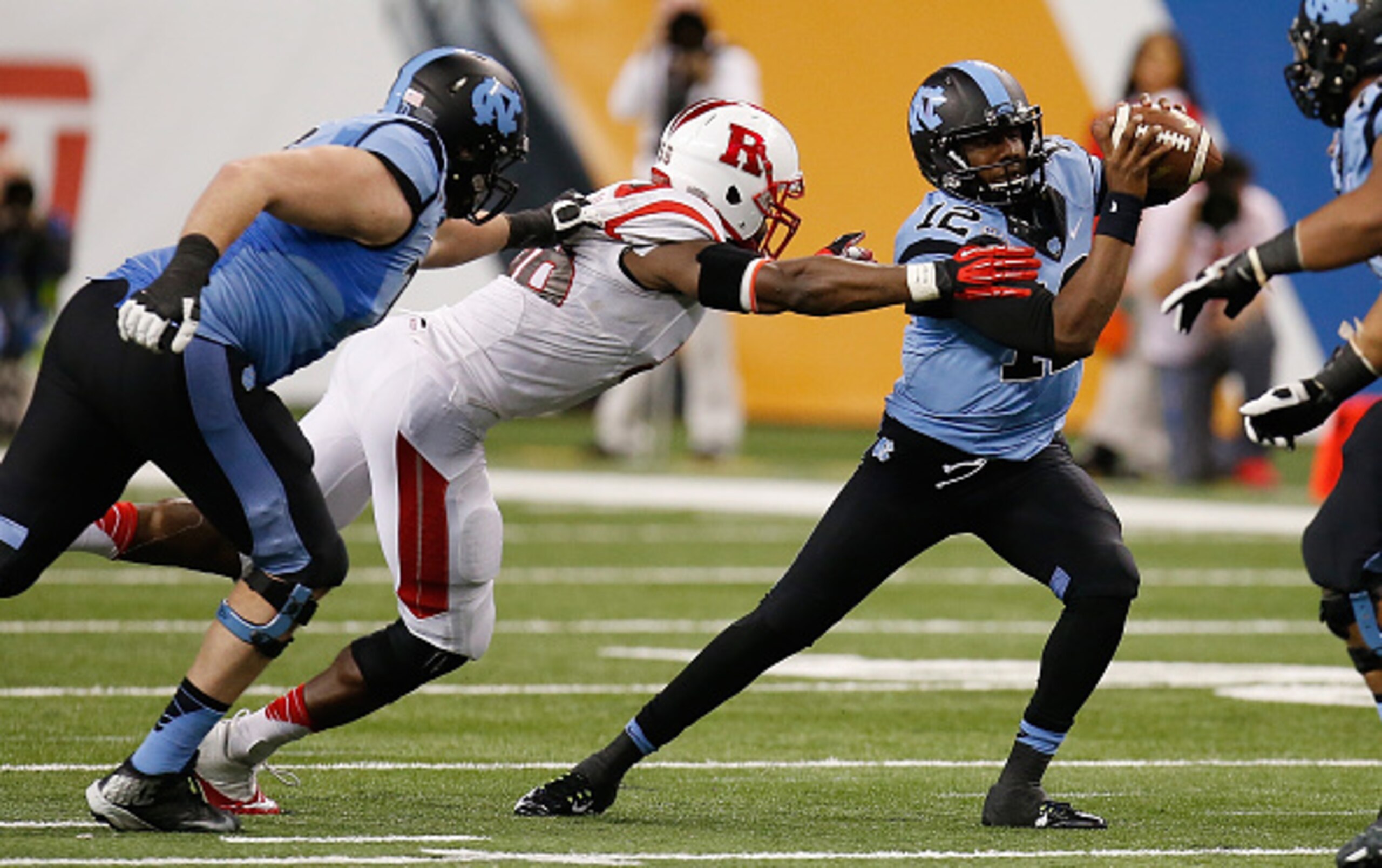
Year: Senior
Height, weight: 6'2", 220 lbs
2014 stats: 3,073 passing yards, 63.1% comp., 21 TDs, 9 INT; 783 rushing yards, 13 TDs
Marquise Williams was ranked by 247Sports as the ninth-best dual-threat quarterback of the 2011 recruiting class, a list that included Teddy Bridgewater, Brett Hundley and Braxton Miller. Unlike those guys, Williams had to wait a season to get into action despite enrolling early as a freshman.
Now entering his third year as North Carolina's starting quarterback, Williams is coming back from offseason surgery to repair a torn labrum in his hip. According to Greg Barnes of Inside Carolina, Williams originally injured himself in November 2013 but played through the pain for another year-plus despite being UNC's primary source of offense during that stretch.
In addition to throwing 428 times, Williams' 193 carries were a team high and constituted 39 percent of the Tar Heels' running plays.
With 6,403 career yards of total offense, Williams needs 3,227 to surpass Darian Durant for the school's career mark.
5. Joshua Dobbs, Tennessee
10 of 14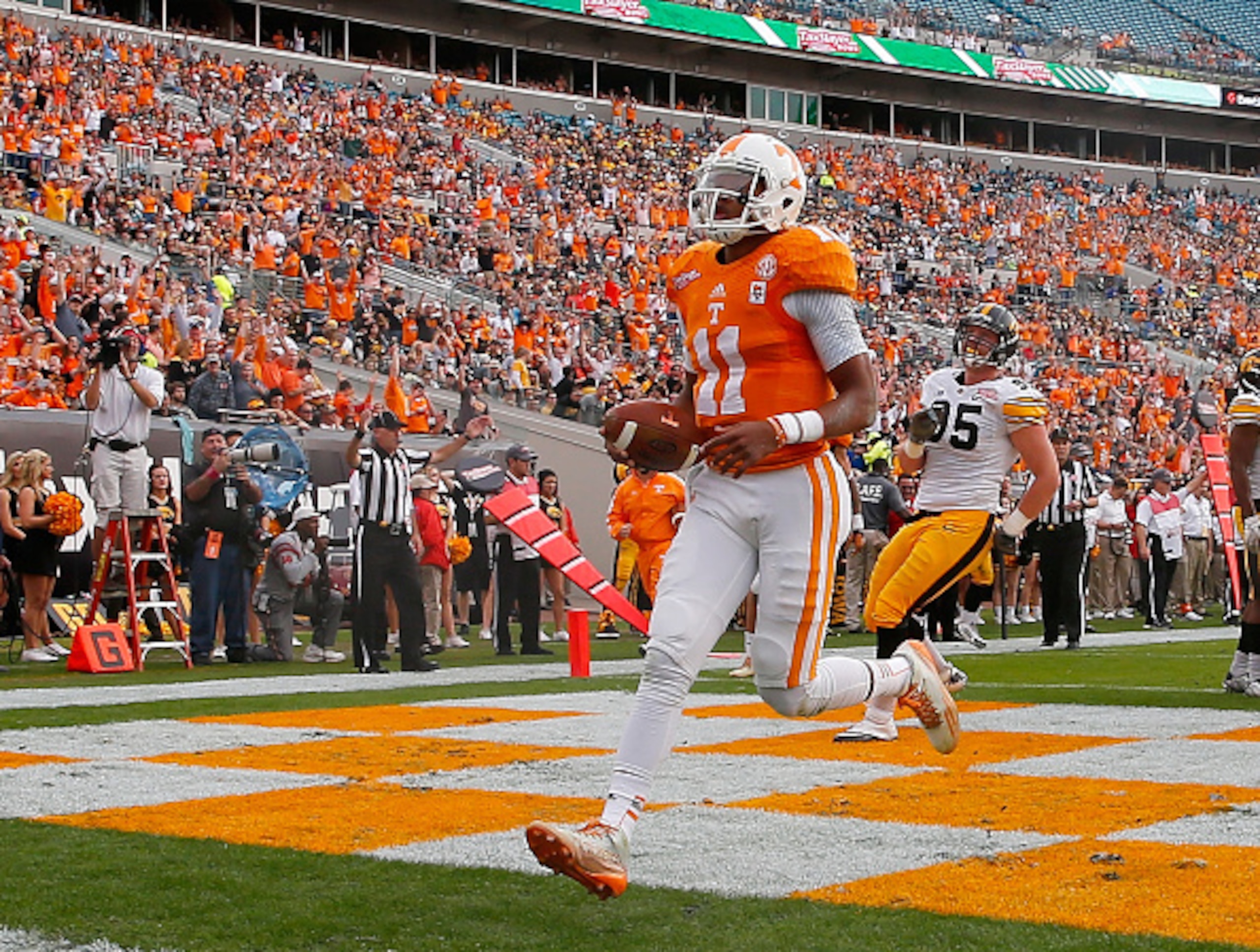
Year: Junior
Height, weight: 6'3", 212 lbs
2014 stats: 1,206 passing yards, 63.3% comp., 9 TDs, 6 INT; 469 rushing yards, 8 TDs
Before Joshua Dobbs' 2014 season began, Tennessee was 3-4 and not very explosive on offense. Then he saw what looked like a redshirt year come to an end early in a loss to Alabama, and suddenly the Volunteers were a different team and one that would win four of the five games Dobbs started down the stretch.
In just six outings, Dobbs ran the ball 104 times, including 24 carries (for 166 yards and three touchdowns) in his first start, an overtime win over South Carolina. He ended the season with two-TD rushing performances against Vanderbilt and in the TaxSlayer Bowl against Iowa, while also completing 16 of 21 passes in the bowl game.
Now that this is his team to lead on a full-time basis, Dobbs is entering his junior year in the role of what coach Butch Jones calls a "CEO quarterback," per Dave Link of the Memphis Daily News.
"We want him to own the football team," Jones told Link. "We want him to take accountability for everything with our football team and with our offense."
Considering he ran or threw the ball on 281 of Tennessee's 459 offensive plays over the final six games, that's a fitting description.
4. Deshaun Watson, Clemson
11 of 14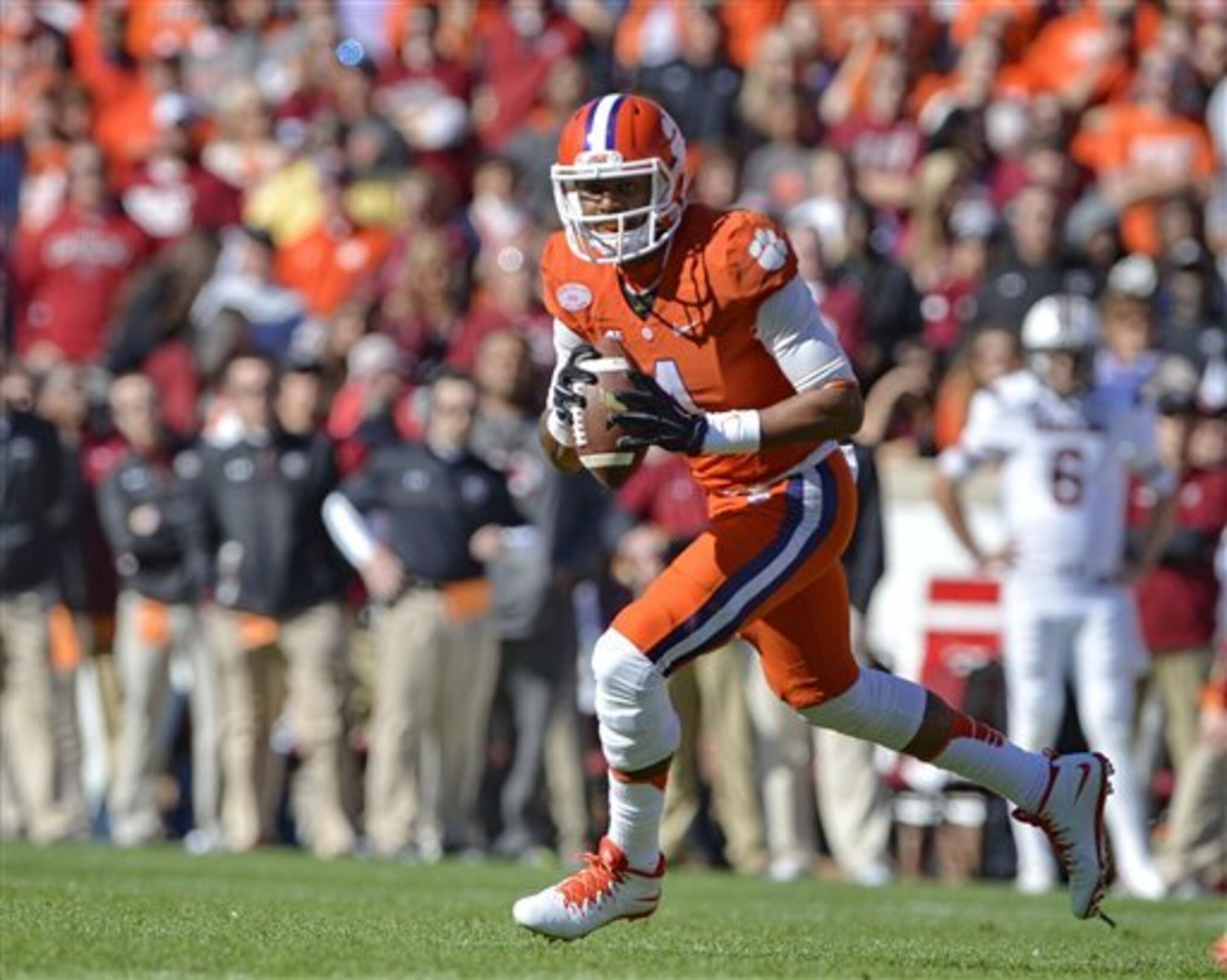
Year: Sophomore
Height, weight: 6'2", 205 lbs
2014 stats: 1,466 passing yards, 67.9% comp., 14 TDs, 2 INT; 200 rushing yards, 5 TDs
Injuries robbed Deshaun Watson of having a truly magical first season, though the limited action he saw was more than enough to show he's going to be a special player to watch. All that stands in his way is being able to stay healthy.
In between missing time for a broken hand and two knee injuries, the last of which required surgery, Watson was nearly unstoppable. Even while playing on a torn ACL, as we found was the case when he helped Clemson beat rival South Carolina, Watson managed to throw for 269 yards and two touchdowns on 14-of-19 passing.
The knee injury took away a lot of Watson's scrambling ability, as he only had 63 carries last year, and post-surgery, he might be less inclined to run at the outset. But while he might be more of a pass-first quarterback than anyone else on this list, that in no way means he's not capable of doing damage on the ground.
3. J.T. Barrett, Ohio State
12 of 14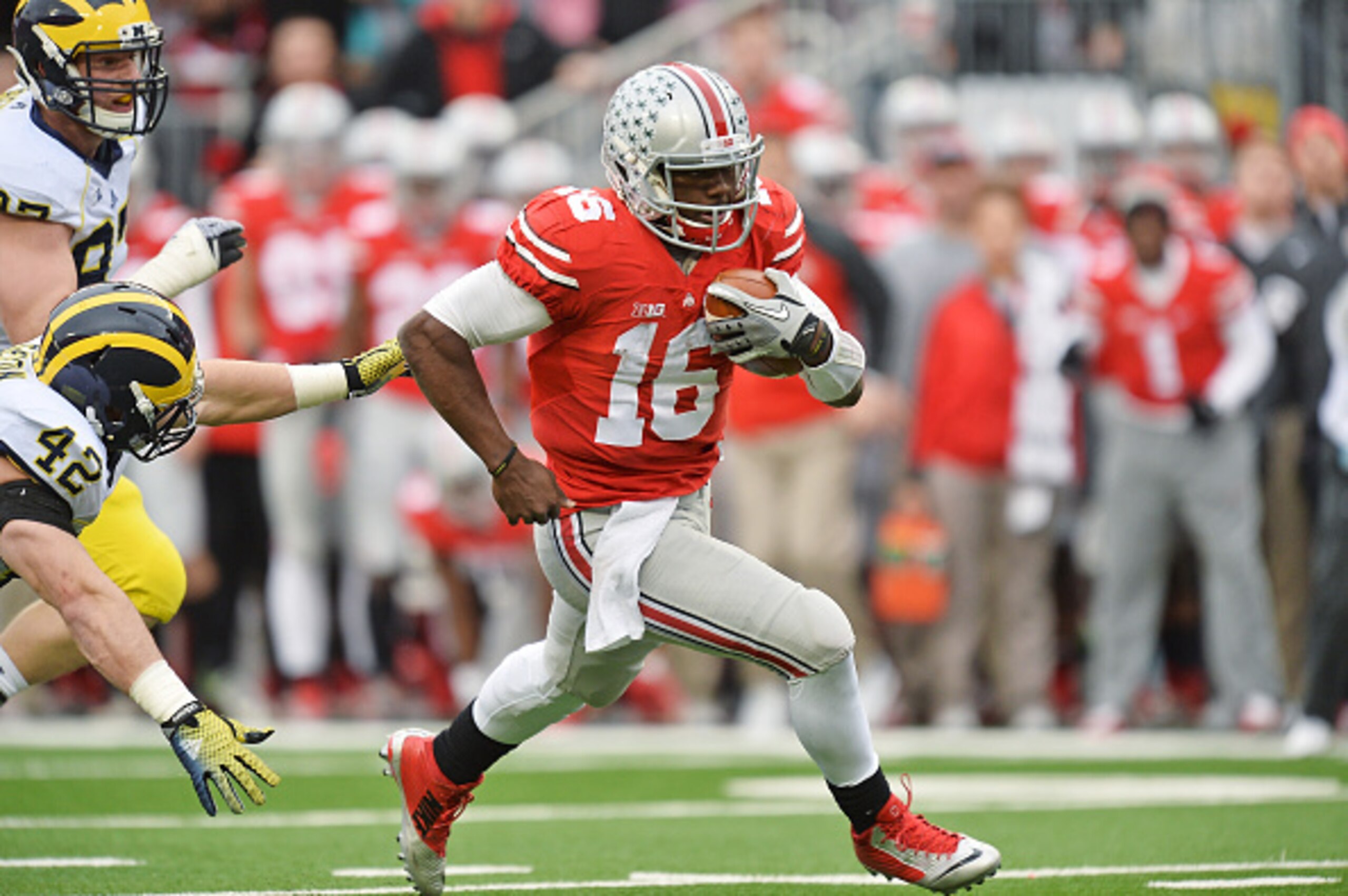
Year: Sophomore
Height, weight: 6'2", 225 lbs
2014 stats: 2,834 passing yards, 64.6% comp., 34 TDs, 10 INT; 938 rushing yards, 11 TDs
J.T. Barrett wasn't expected to play much last season. Instead, he would spend 2014 serving as Braxton Miller's understudy and learn from one of the most accomplished dual-threat passers of the previous three years. But when Miller was hurt in the preseason and Barrett's future became the present, there was no more time to study.
And while it took a game or two for him to settle in, once Barrett got his legs under him—literally—he became the deadliest weapon in college football. Only a broken ankle suffered in the regular-season finale kept the redshirt freshman from possibly crashing the Heisman party, but even with the shortened year, Barrett managed to set single-season school records for total offense (3,772 yards) and passing touchdowns (34).
But it was Barrett's running that made him the most difficult to defend, as he had at least 70 rushing yards in eight of his 12 starts.
2. Trevone Boykin, TCU
13 of 14
Year: Senior
Height, weight: 6'2", 205 lbs
2014 stats: 3,901 passing yards, 61.2% comp., 33 TDs, 10 INT; 707 rushing yards, 8 TDs
Trevone Boykin is a case study in what the right coaching and right scheme can do to turn a promising player with great athleticism into a star. He spent two years searching for the right position at TCU. In 2014, under the guidance of co-offensive coordinators Sonny Cumbie and Doug Meacham, he became one of the deadliest weapons in the game.
The key was getting Boykin to buy into being a passer and not just instinctively taking off at every sign of danger. That was the case before last season, but thanks to Cumbie and Meacham, he became more patient and willing to stay in the pocket and use that athleticism to focus on being more accurate when throwing the ball.
"Big explosive plays really depend on ball placement," Boykin told Brandon Chatmon of ESPN.com. "Being accurate was his main focus."
Last year, Boykin had six games where he completed at least two-thirds of his passes, and that improvement as a passer enabled him to make his runs more productive because the defense had to respect his throwing.
1. Dak Prescott, Mississippi State
14 of 14
Year: Senior
Height, weight: 6'2", 230 lbs
2014 stats: 3,449 passing yards, 61.6% comp., 27 TDs, 11 INT; 986 rushing yards, 14 TDs
Mississippi State had a 1,200-yard rusher last season in Josh Robinson, yet it's fair to say that Dak Prescott was still the Bulldogs' top running option. He ran the ball more than Robinson (210 carries to 190) and had a team-high 14 touchdowns to 11 for the running back.
Now that Robinson is gone, Prescott's running ability becomes even more vital to MSU's hopes of replicating its breakout season of 2014. In reality, however, whether the Bulldogs can contend again in the SEC's West Division will probably come down to his play as a passer.
Prescott had five games with at least 20 carries last season, and in each of those outings, he also threw for at least 200 yards. It's not a one-way-or-the-other scenario with him. That's why he's so hard to defend—every play could be a run or a pass.
MSU will ultimately want to have one or more running backs produce well enough to keep Prescott from having to take so many hits as a runner, but coach Dan Mullen also knows he can turn to Prescott for offense whenever needed.
Follow Brian J. Pedersen on Twitter at @realBJP.


.jpg?w=2560 "Raiders Could Start Mendoza")



.jpg?w=2560 "Rodgers Iced Out on Plane 💎")
.jpg?w=2560 "Packers Safety Slams Refs 🤬")