

Who the Dallas Mavericks Should Target in the 2015 NBA Draft
It's been awhile since the Dallas Mavericks actually enhanced their roster via the draft. In fact, you'd have to go all the way back to 2003 first-rounder Josh Howard to find a prospect who actually wound up sticking around and helping the team in a significant way.
That may have to change in short order if Mark Cuban's franchise has any hope of remaining relevant in an ever more competitive Western Conference. These Mavericks need some youth, particularly in a backcourt that will part ways with Rajon Rondo, per ESPN Dallas' Tim MacMahon, and stands some risk of also losing Monta Ellis.
TOP NEWS

Brown with an all-time summary of relationship with Tatum

Heat, Giannis were down by 20+ in each of their 3 losses
Worst NBA Predictions 🫣
The latter holds a player option to remain with the Mavericks, but it's worth a relatively modest $8,720,000. If the 29-year-old is convinced he could ink a more lucrative contract this summer, he could opt out and potentially sign with another team if the Mavericks are outbid.
For the moment, then, Dallas is in dire need of backcourt help.
Finding such a difference-maker with the No. 21 overall pick is no guarantee, but nor is it entirely impossible. Recall that Howard was drafted with the 29th overall selection. And the intrastate rival San Antonio Spurs have historically built around Tim Duncan with late picks like Tony Parker (28th) and Manu Ginobili (57th).
| Year | Pick | Selection |
| 2000 | 12 | Etan Thomas |
| 2003 | 29 | Josh Howard |
| 2006 | 28 | Maurice Ager |
| 2009 | 24 | Byron Mullens |
| 2011 | 26 | Jordan Hamilton |
| 2012 | 17 | Tyler Zeller |
| 2013 | 13 | Kelly Olynyk |
Even without prime lottery positioning, the draft can supply serious talent. Rather than trading another pick away in pursuit of immediate help, general manager Donnie Nelson should consider an alternative strategy. Building through the draft may require a little patience, but the payoff can be both substantial and economical.
Dallas' selection will begin his career with a salary of just over $1.2 million. Given the price of most top-tier (and B- or C-list) free agents, one can understand the allure of a youth movement.
And finances aside, a little extra energy and athleticism wouldn't hurt a team whose defense struggled at times this season. Dallas allowed 103.7 points per 100 possessions, according to NBA.com—a mark that ranked just 18th league-wide. So in addition to the roster's need for a guard, the organization should probably target something of a stopper—or at least a two-way talent.
"I think that this organization definitely has the potential, has the blueprint, been there, seen it, done it before," center Tyson Chandler recently told reporters. "It's just about getting the right pieces in. Everything is difficult when you don't have the right pieces. You get the right pieces, anything could happen."
Some might argue that Dallas is better off moving its pick in return for more veteran short-term help. With iconic power forward Dirk Nowitzki turning 37 in June, there's real urgency behind the club's offseason strategy.

It's a valid enough argument, but it presupposes there aren't any acquirable rookies who'd make an immediate impact. That's probably a mistaken belief regardless of the draft class.
Given the right opportunities and on-the-job training, a mature first-year player can do some good things—particularly if that player has a little length and defensive pedigree, the kind of things in short supply around the Mavericks' rotation.
This team's first priority is finding a new point guard—or at least someone who could help man the position according to some kind of platoon approach.
"It just didn't work out for both sides. And both sides need to move on now," Nowitzki recently told reporters regarding the Rondo situation. "What that moving on thing is, we don't know yet. We just have to stay tuned and get ready for a busy summer."
Besides a Rondo replacement, the Mavericks could also use some help on the wing. Even if Monta Ellis remains with the club, a longer and more defensively oriented reserve could help.
So who might be of interest to Dallas? Is there a floor general or versatile off-guard who could step in and contribute right away?
Here's a look at some ideal candidates who just might be available with the 21st pick.
Devin Booker—SG, Kentucky
Someone could select him in the lottery, but the Mavericks can certainly hope otherwise. Booker has good size at 6'6" and averaged 10 points per contest for Kentucky last season. Though his wingspan isn't exceptional, Booker spent time with a well-coached team and should be able to make some impact defensively.
The big attraction, however, is his shooting ability. Booker made 41.1 percent of his three-point attempts in his lone collegiate campaign, and that kind of range bodes well for any NBA club seeking some catch-and-shoot assistance.
Tyus Jones—PG, Duke

Aside from Emmanuel Mudiay and D'Angelo Russell, Jones may be the best floor general in the draft. And his exceptional performance in the national championship game should help his draft stock to some degree.
But there's also good reason to believe he'll slip beyond the lottery.
As Bleacher Report's Justin Hussong put it, "Being undersized and an average athlete is not a nail in the coffin, but not being able to beat guys off the dribble or finish around the rim is not a good combo for an NBA point guard. Jones shot just 41.5 percent from the floor at Duke as a freshman despite playing in such an uptempo offense that fit his style."
On the other hand, Jones comes from a program that breeds intelligent NBA-ready talent. If the Mavericks can snag a well-rounded point guard like Jones, they would be hard-pressed to do otherwise.
Kelly Oubre—G/F, Kansas
Oubre is another prospect who may be long gone by the time Dallas makes its selection, but he's exactly the kind of presence the Mavericks need on the wing. At 6'7" and with a 7'1" wingspan, his length would instantly become a valuable asset behind Chandler Parsons and Ellis (or Ellis' replacement).
DraftExpress.com's Jonathan Givony offers one opinion on Oubre's appeal:
"The place where he'll be able to put those tools to use most prominently early in his NBA career should be on the defensive end, where he is far from a finished product, but shows terrific potential as a wing stopper. Oubre moves his feet exceptionally well for his size and has the length to contain pretty much any type of backcourt player. He can put terrific pressure on the ball and has excellent instincts for getting in the passing lanes (2.2 steals per-40). He also rebounds well for his position (7.6 D-Reb per-40) and comes up with an occasional block at times as well.
"
Oubre's defensive upside makes him an intriguing option for any team that's struggling to contain scorers on the perimeter. If he's still available at No. 21, expect Dallas to take a long look.
Jerian Grant—PG, Notre Dame
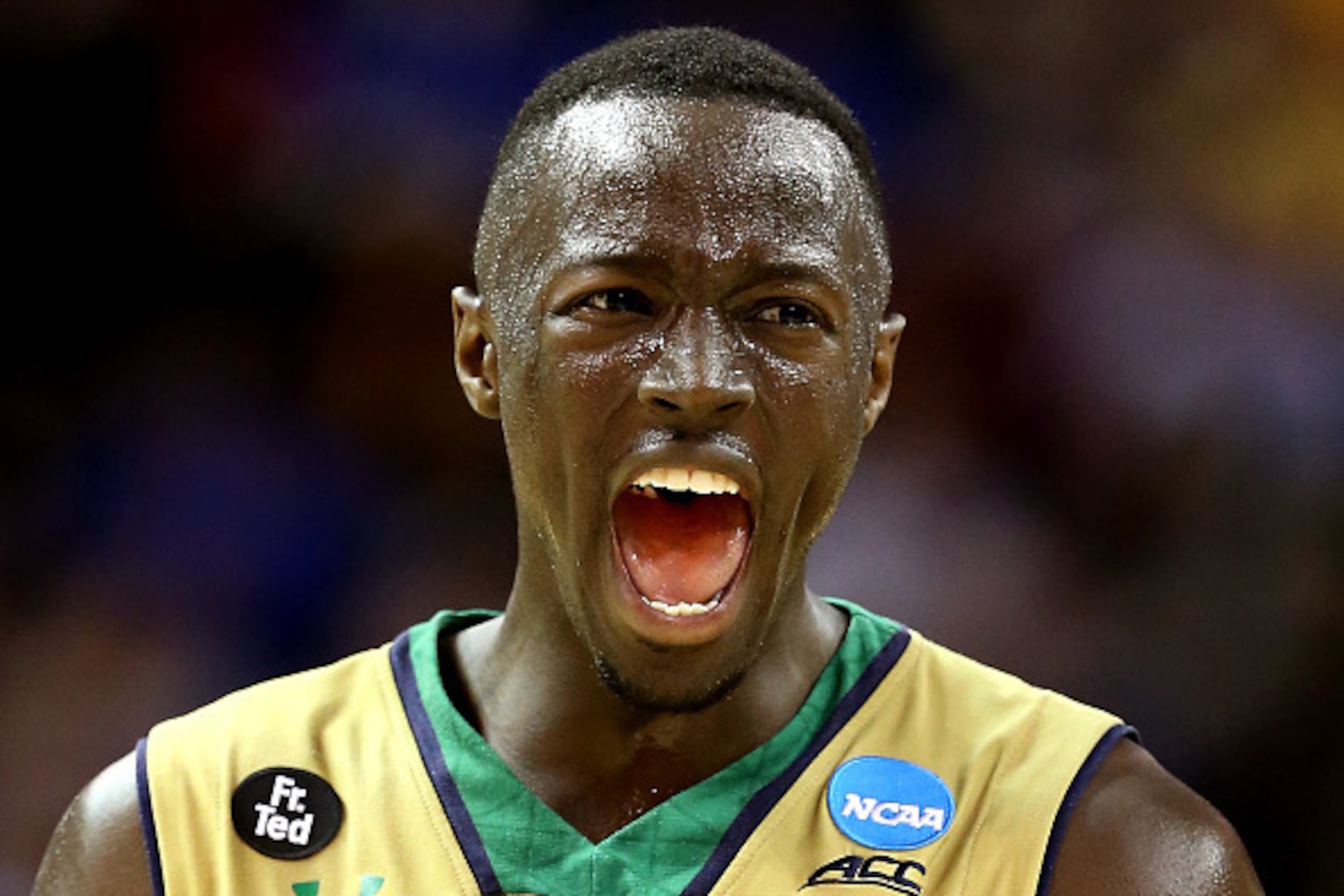
There's a lot to like about Grant, especially from the Mavericks' perspective. He comes into the NBA as a senior, suggesting he may be ready as any prospective floor general to immediately step into the action.
He's also 6'5" and perfectly situated to complement the slightly undersized Ellis. In a world with a Grant-Ellis backcourt, Grant could check the opposing team's bigger guard. That kind of versatility would do a world of good for a team that's relied on smaller reserves like J.J. Barea and Raymond Felton.
Grant's numbers don't disappoint either. He averaged 16.5 points, 6.6 assists and 1.7 steals in 38 appearances last season. He's not much of a shooter, leaving some room for legitimate comparisons to the likes of Michael Carter-Williams or Rodney Stuckey. But there's little doubt Grant has enough going for him to lead an NBA club for stretches.
R.J. Hunter—SG, Georgia State
Hunter is more than your average gunner. And after a season in which he made just 29.8 percent of his 7.4 three-point attempts per game, that's a good thing.
The wiry, long 2-guard also collected 2.1 steals and dished out 3.5 assists per contest, demonstrating his capabilities as a defender and playmaker. Those are good things to have on any bench but particularly one in need of another legitimate swingman.
NBADraft.net's Clayton Crowe also notes: "He's a coaches son so he has a high basketball IQ."
That's another perk for any team looking for immediate help.
Cameron Payne—PG, Murray State
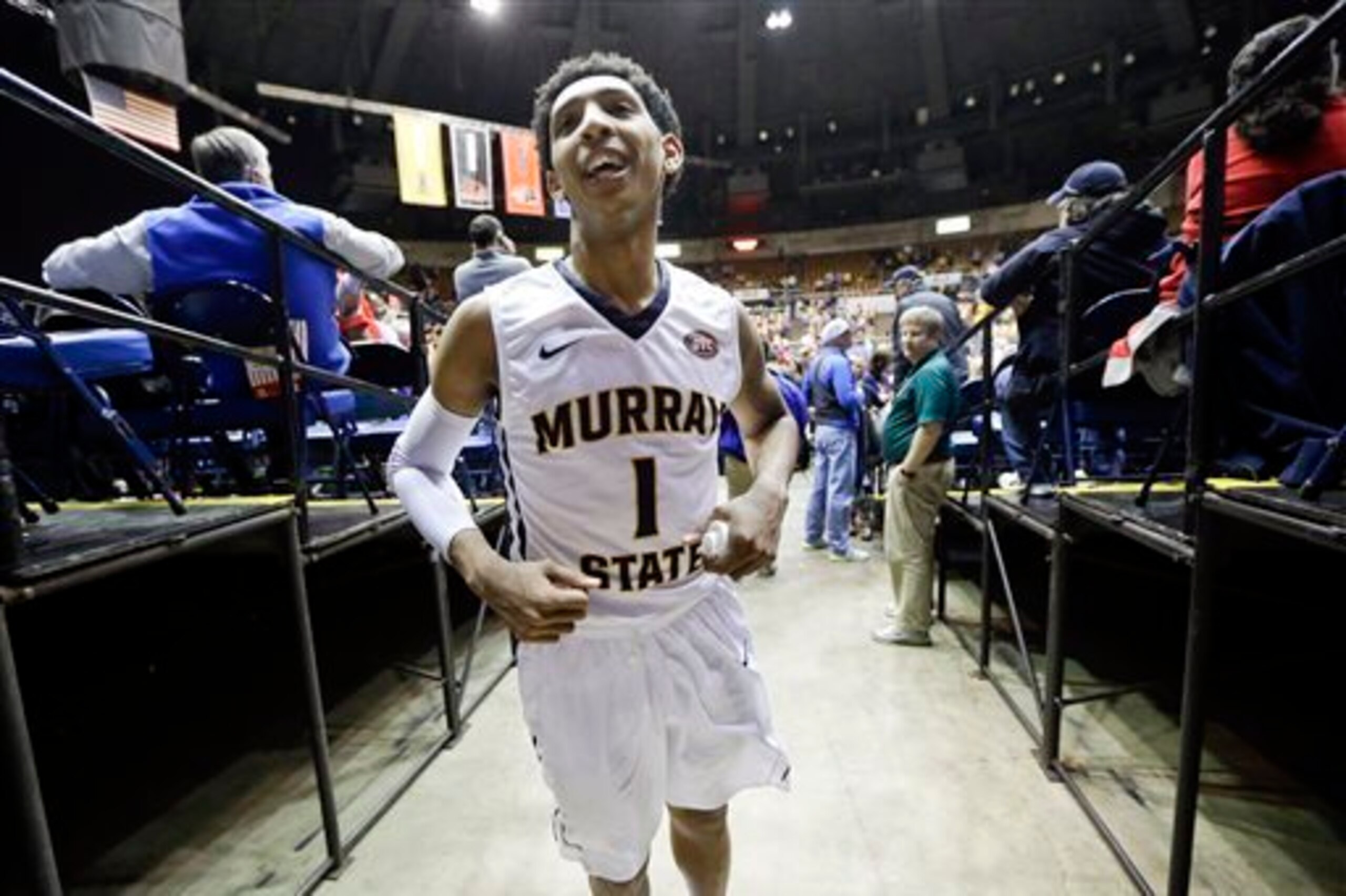
He doesn't come from a particularly large program, but there are still plenty of reasons to look into Payne.
As Yahoo Sports' Adrian Wojnarowski notes:
"Payne, the Ohio Valley Conference player of the year, had a tremendous sophomore season and several NBA executives are comparing his possible climb in the first round to Orlando Magic guard Elfrid Payton, another smaller school underclassman who rose all the way to the 10th selection in the 2014 draft.
"
And when you play like Payne did, it really doesn't matter what school you come from (see Weber State product Damian Lillard). The 20-year-old averaged 20.3 points and 6.0 assists last season while converting on a very solid 37.3 percent of his three-point attempts.
Assuming Payne's rise through the draft ranks isn't as dramatic as Payton's, Dallas might have a chance here.
And the Mavericks have precisely chosen the kinds of chances that should keep their fans engaged by this summer's draft. Dallas' selection could pay real dividends for this team, at least if it can fight that nagging temptation to trade the pick away.




.jpg?w=2560 "Mahomes Asked OT to Leave Meeting")
.jpg?w=2560 "Jonathan Taylor Landing Spots 📍")

.jpg?w=2560 "Five Teams Eyeing Taylor")
