
Minnesota Vikings NFL Draft Big Board: Position-by-Position Rankings
On the cusp of becoming a contender, the Minnesota Vikings are poised to make big changes to their roster that might set them straight for years to come in 2015's NFL draft.
Though not as important as last year's draft, 2015 can still provide the foundational talent they need not only to get over the hump this year and truly become contentious in the NFC North, but be the division's leader for years to come.
Though generally considered a deep draft, the Vikings have needs at positions that will be a little less stocked with talent than where the Vikings are a little more established, so they'll have to tread carefully.
Without having to go through every single position, we'll cover the top needs or potential needs for the Vikings—at least as far as we can tell—and try to divine the best fits for the team.
That doesn't mean the best pure talent on the board; there are a number of players who could be immensely talented in ways that don't really benefit Minnesota. General manager Rick Spielman emphasized how important scheme fit has been to their drafting strategy, and we'll follow to the best of our ability in that vein.
Until Minnesota trades running back Adrian Peterson, we won't consider it a need. But keep players like Todd Gurley, Melvin Gordon, Ameer Abdullah, Tevin Coleman and Jay Ajayi in mind.
Linebacker
1 of 5One of the more glaring and obvious needs for the Vikings remains at linebacker, a position that's needed an infusion of talent for years. While drafting Anthony Barr has provided some relief to the holes there, more work needs to be done to get the front seven up to the quality it needs to be in order to be adequate at run defense.
This particular draft isn't great for linebackers, but neither is it starved for talent. If the Vikings wait too long, they'll be stung by the steep dropoff in talent at the position, but they'll get a few shots to get an impact starter or two.
Vic Beasley, Clemson
Like Anthony Barr, Vic Beasley would end up being a position convert—switching from 3-4 outside linebacker, a primarily pass-rushing positions, to 4-3 outside linebacker. Not all position conversions work out in this manner, and in Spielman's presser yesterday, he mentioned they eliminated some of the 13 linebackers they identified as occupying those hybrid roles.
Still, a number of them are in play, and Beasley is up there as one of the most impactful players at the position. The key attributes to this kind of conversion are instincts, fluidity and length—boxes that Beasley checks with room to spare.
Beasley has extraordinary quickness and agility, and his timing off the snap is incredible. If he can replicate that off the ball, he can be an extremely reactive linebacker. Though instinct is better than reactiveness, it's a good first step. Beasley would have to improve his ability to distinguish running plays from play-action passing, but for the most part, he demonstrates a keen understanding of opposing offensive concepts.
His ability to adapt to the circumstances around him helps, and his biggest weakness (strength in closed spaces) would be hidden by this role. As a stack linebacker with pursuit responsibilities, he would thrive in the Will position for the Vikings.
Dante Fowler, Florida
Another long and athletic player, Fowler demonstrates high-level athletic traits that fit well at the linebacker position as well, with the benefit of possibly being a better pursuit player than Beasley. His versatility at Florida, where he lined up at every linebacker position and a few of the defensive line positions, speaks to his ability to adapt to his positional responsibilities, too.
His fluidity and range will mean a lot as a chase linebacker, and his fantastic 20-yard split (2.51 seconds, according to Nolan Nawrocki's NFL Draft 2015 Preview) translates better to the off-ball linebacker position than as an edge-rusher. Still, he's a surprisingly raw player for his experience and may take a little bit longer to pick up the nuances of the position than Beasley.
Fowler has great upper-body strength, but his lower-body explosiveness—something the Vikings value at the position—is a little concerning, as is his tendency to play outside of the scheme.
Eric Kendricks, UCLA
The most important attribute a linebacker can have is instinct, and it just so happens that UCLA's Eric Kendricks has the best instincts in the class—something scouts corroborate. One can find it in a number of resources reliant on information from external scouts, from Nawrocki's guide to Frank Coyle's Draft Insider publication, but one can just find evidence of that by turning on any UCLA game. He's always around the ball, and the first to react, often figuring out the opposing offense's play-calling before even they do.
A player with outstanding character and exceptional intelligence, Kendricks is the most cerebral and active linebacker in the draft. Knocks on his size are legitimate concerns, but he has a lot more strength than most 232-pound linebackers, and that size shouldn't matter nearly as much at the "Will" linebacker position, where Mike Zimmer has routinely played and started players between 228-235 pounds.
If he improves his footwork and hand placement when taking on blocks, his play strength will be more than fine. The best coverage linebacker in the draft (at least the best of those that didn't also play safety), he'll not only contribute on every down but do so as one of the more impactful starters in the NFL.
Stephone Anthony, Clemson
A much bigger and more athletic player than Kendricks, Anthony provides a lot more tools for the eager coach to develop, and his strength and range would provide real assets to the Vikings defense. Anthony plays fast and smooth, and he has the kind of movement skills that are ideal for a linebacker. If fans prefer a hitter on the defense, Anthony can be their guy—and as the most athletic traditional linebacker in the class, there's a lot to salivate over.
The Clemson linebacker is a dialed-in player who spends a lot of time in the film room, with on-field benefits. Anthony has good awareness in coverage, though he needs to be more refined as a player. Though it's accurate to say he has ball skills, they could be overrated from a few lucky bounces of the ball or fluke plays. Still, it's better than average for linebackers in this class.
Anthony does not have the same natural linebacker ability, however, as Kendricks. He's much more likely to get sucked up by play action and take false steps, and he takes consistently poorer running angles. Though his take-on strength is good, he has a lot of issues getting off of blocks. He doesn't sift through the trash very well yet, but he does have a feel for where the ball will go. Anthony is the best A-gap blitzer in the class, a big part of what makes him valuable to this scheme.
Shaq Thompson, Washington
After peaking as a first-round pick in the media's eyes, Thompson's star has fallen. That doesn't mean he's a bad linebacker pick for the Vikings by any means, however, and he could fit into a role that may be emerging from the NFL's pass-happy nature: a hybrid safety/linebacker role.
Even without that kind of conversion, he can be an effective "Will" linebacker. Thompson plays fast, and he's powerful for a player of his size, but he'll get washed out if he doesn't play with technique. He needs to wrap up his tackles and take on blocks better if he's going to be adequate, but he does play with solid instincts for sifting through the trash and can be found all over the field.
Wide Receiver
2 of 5
The Vikings have a number of young receivers that could end up becoming impact players, and the addition of Mike Wallace will give Minnesota the threat they need to challenge deep. Still, there are no good route-runners on the roster who can play intermediate routes, or players who have the ability to high-point the ball in traffic, an invaluable skill in the red zone.
There are a number of receivers who can provide those skills, starting with Alabama's top receiver.
Amari Cooper, Alabama
The best receiver in the class with room to spare, Cooper's extremely refined route-running and sophistication as a player overshadow his excellent physical abilities, with 4.35-speed and unreal agility. Though he isn't considered a deep threat by many, he managed to scorch the SEC deep on a consistent basis, where Alabama loved to feature him.
Excellent hands technique has been overshadowed by high-profile drops, but he's handled the ball better than people give him credit for, and far better than almost anyone else at the top of the class. He can threaten anywhere and in almost any role, though he does have some limitations as a vertical player. He would help the Vikings immediately.
DeVante Parker, Louisville
Ranked second not because of his previous history with Teddy Bridgewater, Parker has the ability to provide more diverse and immediate contributions in the passing game than the more physically gifted but raw Kevin White.
Parker's high-pointing ability is nearly unparalleled and though he was rough as a route-runner in terms of his precision, he still demonstrated more subtleties at the position when it came to deceiving defensive backs. Playing with a fractured foot all season also robbed him of some of his explosiveness and cuts, where he showed a little more in 2013.
Some aspects of his release are phenomenal, while others need a lot of work, but bulking up overall as a player should help him maximize.
Devin Smith, Ohio State
A speedster who dominated the highlight reels at Ohio State, Smith's reputation as a one-dimensional player is undeserved, though that one dimension is really good. He's a good route-runner on intermediate routes, even if he wasn't targeted in Urban Meyer's offense on those routes. He does a phenomenal job tracking the ball in the air and has excellent hands, too.
There should be worries about his physicality and frame, as well as his ability to get off of jams, but Smith has a lot more tools than people give him credit for, even if he's not as sophisticated as some of the top receivers in the NFL.
Nelson Agholor, USC
Perhaps it's a bias for polish, but given the Vikings' character filter, it may be unlikely they pursue a player like Dorial Green-Beckham. Jaelen Strong is a good receiver, but limited in his roles, while Breshad Perriman's hands are a real concern even with his devilish speed.
Agholor is a fantastic athlete, with an enormous catch radius for his size and precise route-running with an awareness for opposing defenses. Though he had some issues with drops and has small hands, he did a much better job corralling the ball the previous year, which implies it's not a recurring issue. He has more significant issues with physicality and route-running over the middle than anyone else on this list, however.
Safety
3 of 5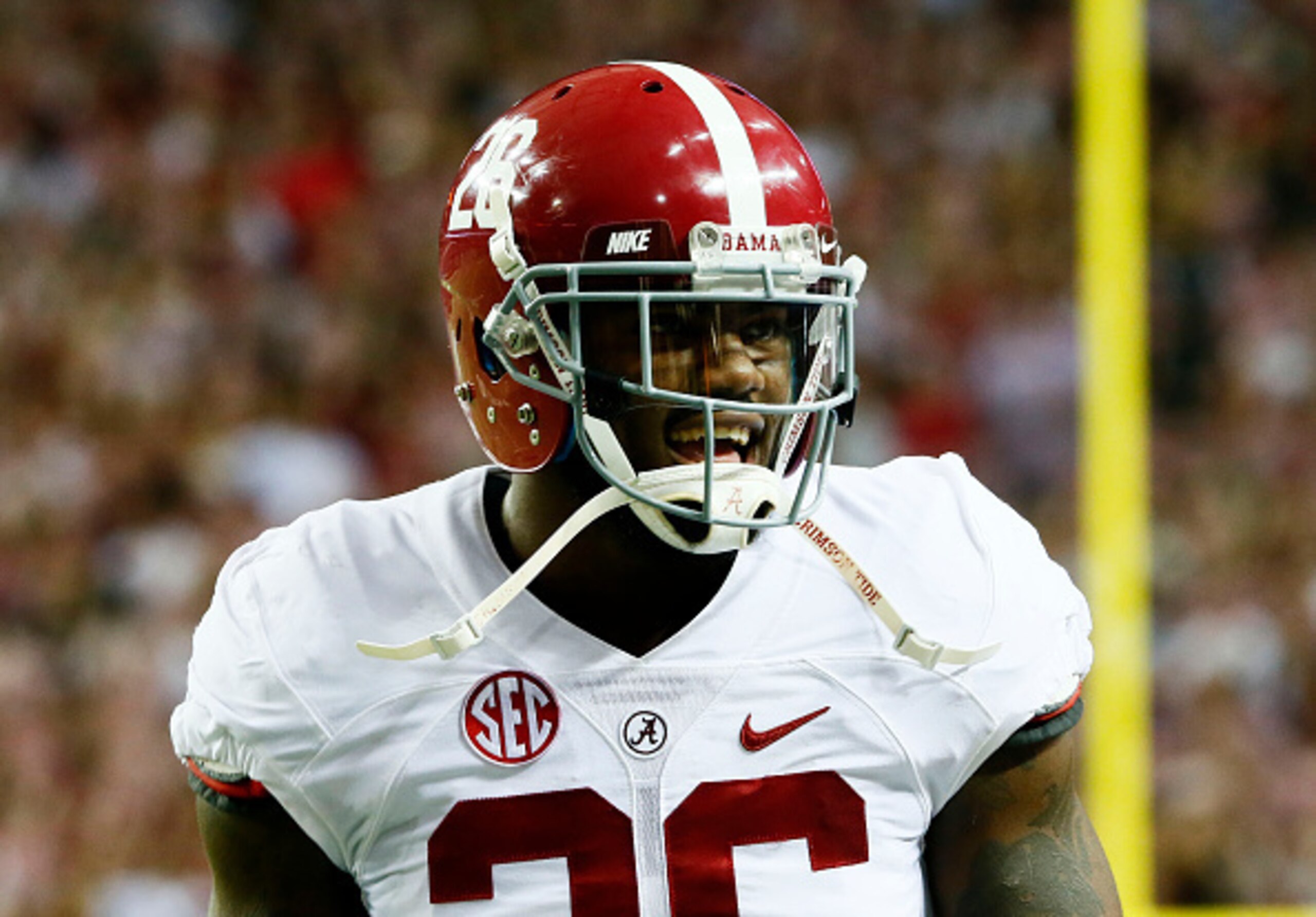
The safety class in the draft is weak, which is bad news for the Vikings, who may need to find a starter lest they end up rolling with Robert Blanton, Andrew Sendejo or Taylor Mays—though Antone Exum may provide relief to an otherwise bleak-looking position.
Landon Collins, Alabama
Collins may primarily end up being only a box safety in the NFL, but it's a better brand of one-dimensional than other safeties in the class, like Gerod Holliman's elite coverage and awful run support. Mike Zimmer can use a safety like that in Cover 1 situations, playing Harrison Smith as a free safety in those situations, but it would limit his effectiveness.
The Alabama safety hits hard and provides excellent run support while also displaying some adequate man-to-man coverage skills against tight ends, though he does struggle against better athletes in this respect. Collins is likely topped out, so though he'll provide an excellent safety in some respects inside the box, he'll limit the versatility of the team.
All of that is to say what Collins can't or won't do at the next level, but one-dimensional players do succeed, if that one dimension is very good. And his ability to play strong safety is elite.
Josh Shaw, USC
Playing as a corner for much of his career at USC, and with only two games to draw off of in 2014, he may not seem like an ideal safety. Strong, fast and rangy, Shaw has the ability to immediately start at free safety while learning the positional skills needed for strong safety.
He wasn't as physical in his play this year, but he did play with good balance and tackling the year before. If the ankle injuries sustained in his bizarre off-field incident were the reason, then he can participate in all parts of the game.
Shaw likes to mix it up with receivers and certainly likes to hit, so he has the mentality of that kind of position conversion, and he closes on the ball well in zone. Still, position conversions can be gambles.
Cody Prewitt, Mississippi State
Playing the safety position requires a lot of football intelligence, and Prewitt has it to spare. A film-room player whose study translates to quick on-the-field diagnosis, don't be surprised if he surpasses Landon Collins as the best safety of the class.
Prewitt played strong safety at Mississippi State, but likely will play free safety (or both) at the next level because his range and ball skills make him a better fit there, but that kind of versatility can be valuable to Minnesota, who will likely want Prewitt to play bigger in the run game but will find him adequate at that for at least a short while.
He's smart about filling in run fits and stays disciplined, though he could attack gaps a little more when he sees plays develop. By no means a liability in the run game, he'll make up for being average in that respect by being an excellent coverage player who has man-to-man skills as well as deep zone capability.
James Sample, Louisville
A high school teammate of Shaq Thompson, Sample's capability may be greater than his much-ballyhooed childhood friend. Sample has phenomenal size for a safety and an astounding physique to match, though his limited time as a starter does imply some other issues that do manifest themselves on the field of play.
Sample has a lot of power and he is aggressive in run support. He does a good job wrapping up, which complements his hard hitting as well.
His footwork in coverage is suspect and his range isn't great, but he is a better coverage player than Collins, if not as good at shedding blocks and making plays in the run game. He can be an average center-fielder, with decent range and read skills as a pass defender. He'll get crossed up at times, but that can be improved. His instincts at determining genuine plays from fakes will need work as well.
Derron Smith, Fresno State
If Derron Smith didn't present with such a small frame, he'd be the top safety in the class. Though he weighed in at 200 pounds at the combine, a lot of it wasn't functional weight. Nawrocki's guide indicates that his body-fat percentage was one of the highest in the class at 14 percent, which speaks to his true play size—much smaller during the actual season.
Still, he's one of the most instinctive safeties in the class, who clicks and closes on the ball in zone coverage well, with surprising physicality in the run game. He needs to wrap up better as a run defender, but for the most part is effective there.
Agile, smart and reactive, he has the mind of the top safety in the class and technique to match—he just may not have the body for it.
.jpg?w=2560 "Chiefs Giants Football")
.jpg?w=2560 "Titans Colts Football")
.jpg?w=2560 "Eagles Jaguars Football")
Cornerback
4 of 5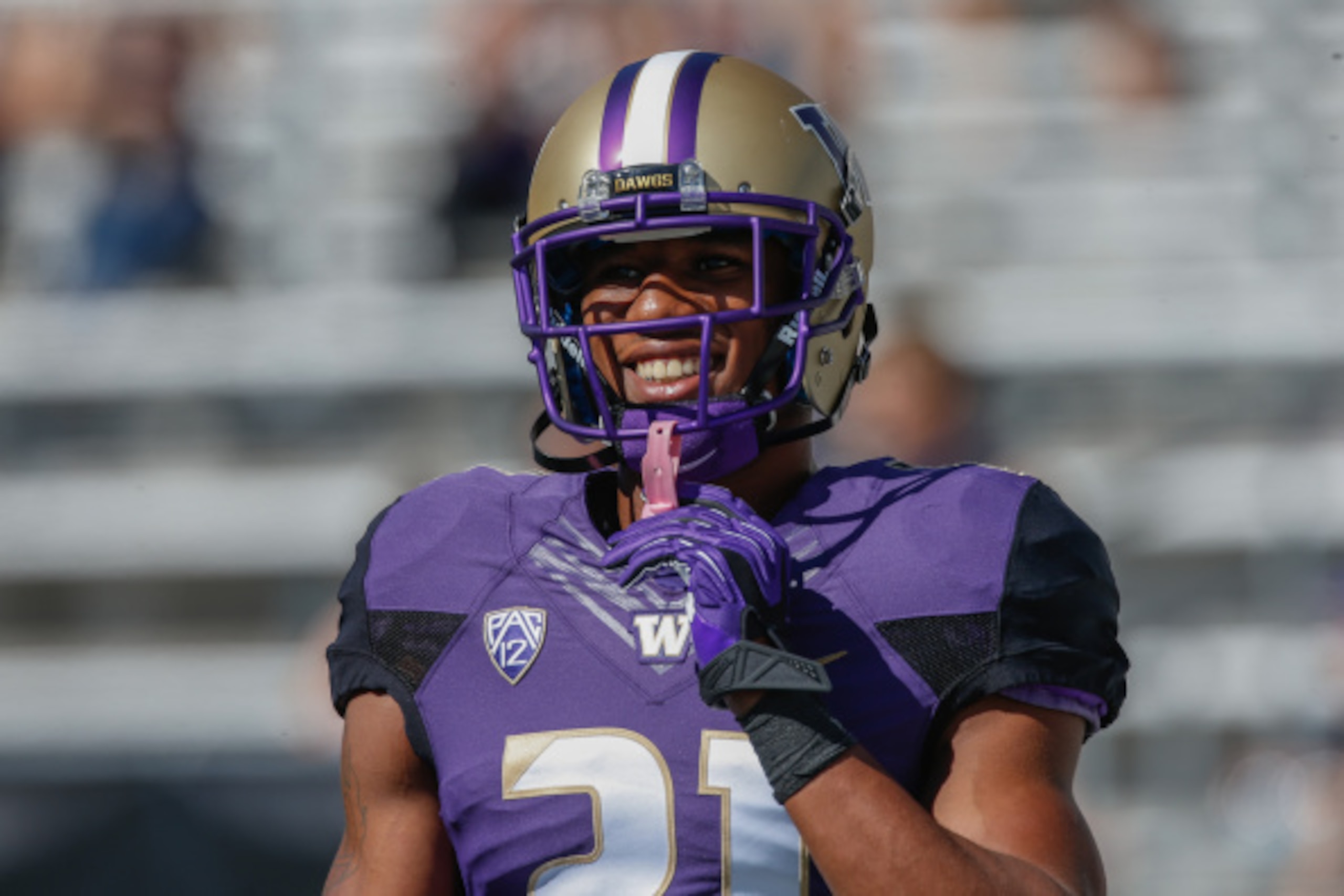
This cornerback class isn't stacked at the top, but it's certainly deep. The Vikings had some questionable play from starter Captain Munnerlyn, and though there's reason to believe both he and Josh Robinson are far better than the national media or even most fans suggest, don't be surprised if the Vikings take another defensive back—Minnesota knows all too well the value of depth at the position.
Marcus Peters, Washington
There's a reason Marcus Peters was drafted 11th despite projections otherwise in the community mock draft Bleacher Report held:
"Since the Vikings selected high-character players throughout the draft last year, Peters may raise an eyebrow as their pick. But scouts told Nolan Nawrocki in his NFL Draft 2015 Preview (a print publication) that the issue wasn't Peters; it was head coach Chris Petersen.
Peters had very few problems with his previous head coach (Steve Sarkisian, now at USC) and may not have such problems with a new head coach.
Lance Zierlein from NFL.com was a guest on 790 AM in Houston, and on that show he let people know that teams in the NFL have not scratched Marcus Peters for character concerns. If the Vikings are one of those teams, then expect them to pick the best cornerback in the draft.
Peters plays with a lot of size and length, and though he measured in at 6'0" at the NFL combine (or rather 5'11 ⅝") with 31 ½-inch arms (both above average), his wingspan was longer than any other corner at the NFL combine, per Dane Brugler of NFLDraftScout.com's NFL Draft Guide—an astounding 79 inches, four more than Trae Waynes and 5.5 inches more than Kevin Johnson.
He plays to that length and adds a lot of strength in press coverage to boot, moving receivers off their routes constantly while maintaining solid positioning—pushing receivers to the sideline on outside routes and ready to cut underneath on inside routes. He plays bracket coverage extremely well and understands the defensive concepts around him.
Peters is aggressive and physical in the run game as well, though that is inconsistent from time to time—but it does always show up in critical situations, such as late in games and on third down. He has very good ball skills and great instincts for attacking the ball in the air.
"
Byron Jones, Connecticut
In contrast to Marcus Peters, who is polished but average in a lot of ways athletically, Jones is a ball of supreme athletic potential that Mike Zimmer can really coach up, especially because he has the requisite instinct needed to play the position and the football character to help a locker room. Ignoring the record he set or his blazing pro day 40-yard dash, Jones shows up as athletic on the field, even though he doesn't come close to matching his testing numbers.
He has excellent size and length, and though most corners described in that way are stiff, Jones shows average to above-average fluidity for the position. Jones is a smooth player who plays with intelligence, but he will need to improve his route recognition at the next level, especially in Minnesota's pattern-matching scheme.
Teams didn't throw to him often and weren't successful, but there are areas of improvement, like footwork and ball skills that will need to be worked on. Still, he's a high-level prospect.
Kevin Johnson, Wake Forest
Polish. If there's one word to describe Johnson, polish is that word—he's a refined player who can play in a number of schemes, though his running numbers may not fit the Vikings' requirements. Johnson seemingly plays with a lot of length, and at 6'0", he can be the kind of taller cornerback teams are looking for. His actual length and wingspan are shorter than one might expect given his film and may give some teams pause, though that may also be the result of good closing speed and incredible leaping ability despite issues with long speed.
He's a very physical player and has phenomenal agility. He's a good tackler and a smart player that knows how routes develop, and has the upper and lower body technique to match what needs to be done. Johnson has scheme versatility and could be an impact player immediately. His weight does cause issues for concern, however, and may not pass certain benchmarks for some teams.
Trae Waynes, Michigan State
Trae Waynes will probably be a very good cornerback in the NFL, but likely for a team that runs quarters or Cover-3 concepts in coverage—teams like Seattle, Jacksonville, Atlanta and possibly Tennessee, Chicago and Pittsburgh, depending on tertiary responsibilities. For other teams, he could be more of a liability given the distribution of his skills.
Poor agility, footwork and offensive recognition balance out his elite speed, ability to push to the sidelines and capability with reading receivers. That makes him a particular type of talent, and it may not be a good match for Minnesota which requires more reading offenses than individual receivers, and a lot more shadowing receivers across the field and inside than Waynes is used to.
Still, talent is talent, and don't be surprised if the Vikings take a chance on him late if he falls and they trade up.
Offensive Line
5 of 5
The Vikings had an abysmal performance from their offensive line last year, and though injuries played a big role, it's clear upgrades are necessary, either this year or next. Those upgrades may not have to come from the draft, however. Releasing Charlie Johnson may have been a signal the Vikings gave of their confidence in the competition they can create at guard, and Matt Kalil may find his rookie form.
If not, however, one or both will need to be replaced.
Brandon Scherff, Iowa
A lot of NFL teams may have Andrus Peat as their top overall player, but Brandon Scherff's 2014 was good enough to give him the top spot. Though he's projected to be a guard—and he'll probably be stunning there—his quickness to the edge as a tackle is underrated if only because he had a knee surgery during the season without missing a game. Recovery from that may prove key to his edge protection, which is good even if it's not elite.
There were times in 2013, however, that Scherff looked dominant as both a pass-blocker and road grader, and the timing, power and placement of his punch allowed him to reduce concerns about his ability to deal with speedy pass-rushers.
Either way, the Vikings will get a hell of a player in Scherff, who has clean character and incredible strength, as well as great technique.
La'el Collins, LSU
A nasty player with above-average though not astounding athleticism, Collins projects a little better to tackle but still figures to be considered for both guard and tackle spots in the NFL. Collins has phenomenal weight-room strength and translates it well on the field, with good pop in his hips and solid technique overall when standing up opposing defensive linemen, that and his strong grip strength will help the offensive line a lot.
He can improve his agility (and did so by dropping 20 pounds his senior year) but for now is generally good enough for the tackle position. He doesn't quite have the height typically associated with tackles, but his length should more than make up for it, and it provides him a leverage advantage (except against over-arm moves).
His technique on the move needs to be refined, and he's too over-eager defending the edge and can allow interior pressure. He needs to time his punch better, but he has the tools needed to grow into a solid-to-great offensive tackle. He also needs to work on balance, or he'll give up too many failures in both the running and passing game.
Andrus Peat, Stanford
Moving up boards quickly, Peat is a talented tackle that doesn't quite match the prototype but has a lot of success. Throw in the fact that Vikings offensive line coach Jeff Davidson has a son coaching Peat (Nick Davidson is the OL coach at Stanford, and David Yankey's former coach) and there's a lot of reasons to think there may be a match here.
Peat has an enormous frame and a good base. He plays with raw power in both aspects of play, though runs hot and cold in this regard. He has an extremely powerful punch and he has incredible balance. His slide to the edge in pass protection is urgent but under control.
Still, he has issues with upper-body strength despite that punch and may not win when engaged for long periods of time. He has a questionable attitude as a blocker and doesn't play as nasty as most of the other prospects, and he has struggled with quickness.
Other than those three, there are not many names to add to the list from a month ago. Look out for D.J. Humphries, T.J. Clemmings, A.J. Cann, Laken Tomlinson and Jake Fisher.
.jpg?w=2560 "Colts Football")
.jpg?w=2560)