
Power Ranking All NBA Benches This Season
The NBA playoffs are in full swing, and any team with an eye on the trophy will be hoping it has enough depth to go all the way.
As last year’s champions—the San Antonio Spurs—know all too well, a competent bench is crucial for successfully navigating two months of grueling postseason.
But the players who typically begin each game riding pine must be more than simple placeholders for the starting five. In addition to being able to hold their own, the best benches in the league (regular season or playoffs) are capable of shifting teams into another gear to unsettle the opposition and win out.
In order to assess the quality of each NBA bench this season, a number of factors were taken into account (though, sadly, dancing ability was not one of them).
Firstly, we used efficiency-recap difference (generated by hoopstats.com) as a baseline, because it is a widely inclusive measure of player performance as it relates to the opponent’s performance. Secondly, we assessed each bench’s star power and dynamism to reward those teams that were able to drastically change the dimensions of a game simply by introducing their bench assets.
(Think of it as a statistical evaluation with a nod to tactical versatility and the good old-fashioned eye test.)
Now, without further ado, let’s take a look at all 30 NBA benches ranked from worst to best.
30. Orlando Magic
1 of 30Efficiency-Recap Difference: -11.3
Efficiency Recap: 28.4
The Orlando Magic finished dead last in the Southeastern Division with a mere 25 wins. At 25-57 overall, they were never threatening to make the playoffs this season, and their bench had neither the personnel nor performances to buck the trend.
The Magic bench was anything but, contributing only 16 minutes per game (which tied for third-least involvement by any bench in the league) and 26.5 points per game (second worst in the league).
Frequent subs Dewayne Dedmon and Kyle O’Quinn were also part of the second-worst rebounding unit in the league in that it contributed a mere 12.3 boards per game, despite the fact that those players are a healthy 7’0” and 6’10”, respectively. Despite great plays like the one above, Victor Oladipo needed a little more help from his bench this season.
29. LA Clippers
2 of 30
Efficiency-Recap Difference: -10.5
Efficiency Recap: 29.4
The Los Angeles Clippers are currently locked in the most exciting playoff matchup of Round 1 with the San Antonio Spurs. While their starters have been doing some heavy lifting against the underrated opposition, the Clippers bench hasn’t been playing quite as well.
Doc Rivers’ bench contributed just 17 points in Game 2 against the Spurs from a combined 47 minutes of play. Over the course of the regular season, they were selected at a league-low average of 15.4 minutes per game. The bench also contributed a league-worst 8.7 defensive rebounds and 1.5 offensive rebounds per game. They had a respectable free-throw percentage of 78 percent, but that’s about it.
28. Cleveland Cavaliers
3 of 30Efficiency-Recap Difference: -9.3
Efficiency Recap: 29.9
LeBron James may be questing for another title ring, but his teammates on the bench will have to step it up to make King James’ dreams come true. At a league-worst average of five assists per game, Cleveland’s bench struggles to move the ball when its stars are catching their breath on the sidelines. On the boards, they register both a respectable 4.5 offensive rebounds and a poor 9.7 defensive rebounds per game.
Overall—despite having dominant star power in James, Kevin Love, Kyrie Irving and others—subs like Shawn Marion (highlighted above) and Tristan Thompson have received significant minutes this season, meaning David Blatt and his players will have more confidence in the rotation as they get deeper in the Eastern Conference playoffs.
The Cavs bench also boasts a league-best 3.5 turnovers per game, so at least it can take care of the ball.


27. Minnesota Timberwolves
4 of 30
Efficiency-Recap Difference: -8.1
Efficiency Recap: 33.5
The Minnesota Timberwolves use their bench less than any other team in the nation, averaging just 15.8 minutes per game. They also rank seventh from the bottom in both points and assists.
Their saving grace comes in the form of double-digit scorers Shabazz Muhammad (13.5 points per game), Mo Williams (12.2) and Corey Brewer (10.5), who can pick up a little slack for starters such as Thaddeus Young (14.3) and Zach LaVine (10.1) when their shots aren’t falling.
Given that the bench averages 44 percent from the field (10th-best in the league), those starters will be able to focus on Flip Saunders’ instructions when they come out for a break rather than biting their nails.
26. Sacramento Kings
5 of 30Efficiency-Recap Difference: -6.1
Efficiency Recap: 33.5
Sacramento’s bench poses virtually no threat from beyond the arc (29.3 percent), but it tries to make up for it with 15.5 rebounds per game. Aside from sub Omri Casspi, no one on the team (including starters) has managed to break the 40 percent accuracy mark from downtown.
Generally speaking, it has been an off year for the Kings, as only four players on their entire roster averaged double-digit scoring (Ben McLemore, Rudy Gay, DeMarcus Cousins and Darren Collison).
There have been bright spots from the bench—like 23-year-old Derrick Williams (pictured above), who made 74 appearances and averaged 8.3 points per game—but most of the other role players haven’t been nearly as consistent. Across the board, Sacramento’s bench is generally mediocre at best.
It is that commitment to being just above the dregs in virtually every statistical category that earns them a spot at No. 26 in these power rankings.
25. Miami Heat
6 of 30
Efficiency-Recap Difference: -4.9
Efficiency Recap: 32.0
The Miami Heat’s bench is ahead of only Cleveland and Orlando when it comes to average points per game (26.6). Outside of their top six players, the Heat do not have any double-digit scorers. In fact, after Michael Beasley (who only made 24 appearances this season and averaged 8.8 points per contest), their next-best point producer was Henry Walker (who averaged 7.3 points per game in 24 appearances).
Miami actually almost qualified for the Eastern Conference’s No. 8 seed with an astonishing 37-45 record, but fate mercifully spared the unprepared Heat’s bench. Despite coming in at No. 18 in the league with an average of 17.8 minutes per game, Miami’s bench was better off not having its imperfections exposed by the unforgiving light of playoff scrutiny.
24. Charlotte Hornets
7 of 30Efficiency-Recap Difference: -4.5
Efficiency Recap: 34.1
The Charlotte Hornets' bench is second in the nation when it comes to blocked shots per game with an average of 2.4. Aside from that, their mediocrity is fairly pervasive without exception. The fact that the Hornets bench ranks 16th in the league with 4.7 turnovers per game is a little surprising considering Kemba Walker’s point guard replacements, Mo Williams and Brian Roberts (highlighted in a perfect loop above), have assist-to-turnover ratios of 2.3 and 2.8, respectively.
Even when Charlotte’s bench does hold the ball long enough to work it into scoring position, the statistics say the Hornets’ fringe shooters tend to miss more often than not. In fact, they are dead last in the nation with a field-goal percentage of 39.1 (they are the only bench not to break 40 percent this season).
Lance Stephenson (8.2 points per game) and Mo Williams (17.2 points per game, though he only laced up for 27 games) were the only real bright spots coming off the bench for Charlotte.
23. Detroit Pistons
8 of 30
Efficiency-Recap Difference: -4.4
Efficiency Recap: 34.5
The Detroit bench must have buckled down to work on their free throws, while the starters were scrimmaging because they lead the league with 84.5 percent accuracy from the charity stripe. Elsewhere, the Pistons bench has a healthy assist average of 7.5 per game (ranking 11th), compared to only 4.1 turnovers per game (ranked sixth).
Detroit’s periphery players can also be proud of conceding the fifth-least fouls per game with 7.5. In short, the Pistons bench made a habit of doing the little things correctly all season long. Unfortunately for the fans, though, the bench players kind of missed the forest for the trees by coming up short in the scoring department.
22. Houston Rockets
9 of 30Efficiency-Recap Difference: -4.2
Efficiency Recap: 33.0
Let’s talk about the guys whose job it was to keep Houston in the game whenever James Harden had to sit down to rehydrate from his triple-double duties. The Houston Rockets were actually in fairly good hands this season, as Kevin McHale had the option of subbing on sixth man Terrence Jones (11.7 points per game; shown blocking above), Corey Brewer (11.9 PPG) or Josh Smith (12 PPG).
However, on the nights those players weren’t hitting, McHale was somewhat out of luck.
For example, if Dwight Howard needed a direct replacement at center, then 2.7-points-per-game Joey Dorsey was called up (the 31-year-old made 69 appearances for the Rockets this season). Houston’s bench also had a fairly high turnover rate at 5.2 per game (ninth-worst in the country), which may have been improved had Pablo Prigioni (4.5 assist-to-turnover ratio) received more minutes.
21. Philadelphia 76ers
10 of 30
Efficiency-Recap Difference: -4.0
Efficiency Recap: 38.4
Differentiating between Philadelphia’s starters and bench isn’t always easy, as all but two players on its roster averaged double-digit minutes this season (no, seriously), but here it goes.
It may be a shock to see Philadelphia ranked so highly, but the 76ers’ bench owned the boards this season. The non-starters grabbed a league-high 5.3 offensive rebounds per game, while also managing to register 11.7 defensive rebounds (which ranked 14th-best in the league). Philadelpia was also No. 1 in average blocked shots with 2.5 per game and No. 5 with 3.4 steals per game.
To their detriment, however, the 76ers’ bench undid much of that hard work with a league-worst 6.7 turnovers per contest (well behind Milwaukee’s second-worst 6.1 turnovers per contest).
As one would expect, teams like Philadelphia that are falling near the middle of these power rankings tend to exhibit a reasonable mix of good and bad statistics that keep them out of the dregs but prevent them from breaking into the top 10.
20. Denver Nuggets
11 of 30Efficiency-Recap Difference: -3.0
Efficiency Recap: 37.4
Denver’s bench led the league in fouls committed with 10.3 per game. The Nuggets were also at the bottom of the list when it came to three-point shooting with an average accuracy of 27.5 percent. The distance-shooting woes are understandable, as only one player (Alonzo Gee) on Denver’s full roster averages better than 40 percent from behind the arc (we’re not counting Jamaal Franklin, as he has only made three appearances).
The Nuggets’ bench regains some ground by scoring an average of 35.7 points (ranked 12th in the nation) and collecting 16.9 (eighth in the nation) rebounds per night. J.J. Hickson (6.2 RPG, shown with the rejection above) and Will Barton (4.6 RPG) have made consistent contributions to the latter stat.
19. New Orleans Pelicans
12 of 30
Efficiency-Recap Difference: -2.1
Efficiency Recap: 34.1
New Orleans’ claim to fame this season has been intelligent play—well, at least that’s the hallmark of the Pelicans’ bench.
They are No. 3 in the league in avoiding turnovers, having given the ball away a mere 3.8 times per game. Some of the credit for that feat can go to Jrue Holiday’s point guard caretakers, Norris Cole (2.2 assists/turnover) and Toney Douglas (2.4 A/T), but they aren’t the only ones making smart plays for the Pelicans.
New Orleans’ bench also conceded the fourth-fewest fouls at an average of 7.5 per night. The Pelicans put up a middle-of-the-league field-goal percentage of 43.5 percent to go along with their equally average 34.1 percent accuracy from behind the arc. Off the bench, the majority of New Orleans’ point production comes from Ryan Anderson (13.7 points per game) with help from Cole (9.9 PPG) and Quincy Pondexter (9.0 PPG).
18. Brooklyn Nets
13 of 30
Efficiency-Recap Difference: -1.5
Efficiency Recap: 37.5
The Brooklyn Nets shared the load over the 2014-15 season—and then some. They had 13 players averaging at least 10 minutes per game and 10 players averaging at least 20 minutes per game. Since Brooklyn also had 11 players with more than 10 starts each, the bench statistic for average minutes per game over the course of the season (18.6) is a little misleading.
In other words, Lionel Hollins’ frequent rotation philosophy wasn’t just limited to in-game situations, as it was a season-long phenomenon. Taking that into account, the Nets were a mid-table team in almost every respect. They were essentially average (with only minor fluctuations) in every statistical category without any major outliers, which explains why they finished the season at 38-44 and arrive at No. 18 on this list.
17. Phoenix Suns
14 of 30Efficiency-Recap Difference: -1.1
Efficiency Recap: 38.8
Unlike Brooklyn, the Phoenix Suns' roster demonstrates a sharp contrast between starters, substitutes and fringe players. It also boasts the sixth-best three-point shooting average of any bench in the league at 35.7 percent, thanks to Gerald Green (35.4 percent, pictured dunking without shoes above) and Isaiah Thomas (39.1 percent).
The Suns bench earns significant points for that statistic, as it is marginally better than the starters’ 32.7 percent outside shooting accuracy.
The bench’s 44 percent field-goal shooting (ranking ninth in the nation) was also a boon to the team’s efforts to maintain pressure on opponents while the starters took a break from the action. Though assists were relatively low at 5.8 per game, the bench’s shooting accuracy kept the Suns in games and, in the case of three-point shooting, actually stood to improve the team's prospects.
16. Atlanta Hawks
15 of 30
Efficiency-Recap Difference: -0.7
Efficiency Recap: 36.2
Now we’re getting into the heavy hitters, for the most part. The bench of the Eastern Conference’s No. 1 seed may look somewhat surprising at only No. 16 on this list, but Atlanta’s role players only averaged 16.9 minutes per game over the course of the regular season. In that time, they picked up only 32.1 points per game (putting them at No. 18 in the league in average point production).
Elsewhere, the Hawks had poor showings on the boards with a season average of 13.8 per game. They redeemed themselves somewhat by sharing the ball with 8.3 assists (sixth best in the nation) and only 7.3 fouls (third best in the nation) per game. All five starters averaged double-figure scoring, but Dennis Schroder was the only one sub to earn that distinction with an even 10 points per game. Mike Scott, the next closest, was a bucket short with 7.8 points per game.
15. Utah Jazz
16 of 30Efficiency-Recap Difference: -0.1
Efficiency Recap: 34.8
The Utah Jazz's bench has the second-worst free-throw shooting in the league (behind only Houston) at 65.2 percent and fourth-worst in points with 29.2 per game. But those bench players have a respectable 6.7 assists, 15.4 rebounds and 33.6 three-point percentage per game (all ranked 17th in the nation in those respective categories), which help cement them as a middle-of-the-league side.
Again, Utah’s bench is like so many others on this list that hovers around the league averages in many statistical categories, making it respectable but not exactly impressive across the board. The Jazz get a nod for having quality bench play from shooting guard Rodney Hood (8.7 points per game, 1.8 assist to turnover ratio) and center Rudy Gobert (8.4 points per game, 60.4 percent from the field, pictured jamming above).
14. Washington Wizards
17 of 30Efficiency-Recap Difference: -0.1
Efficiency Recap: 38.7
Washington actually has the same efficiency recap difference as Utah, but the Wizards’ efficiency recap means they clip the Jazz for No. 14 on this list. Washington’s bench averages 33.4 points per game, putting it squarely in the middle of the pack for scoring production in the NBA.
That is to be expected, as only the starting five averaged in double figures for buckets this season—despite Kris Humphries' (pictured above) best efforts, contributing eight points per game from the bench.
The Wizards, however, climb a little farther up in these power rankings, thanks to their 17.8 rebounds per game, which ranks as third-best nationally. They also claim the fifth-best field-goal percentage (44.8 percent) to offset their below-average assist ratio (6.6 per game, No. 21 in the nation), despite having super-sub Andre Miller’s 3.1 assist-to-turnover ratio over his 51 appearances this season.
13. Chicago Bulls
18 of 30
Efficiency-Recap Difference: 0.8
Efficiency Recap: 33.6
Tom Thibodeau is adept at rotating his players. That’s why the Chicago Bulls have 10 players averaging double-digit minutes per game. What’s more, all of those players are averaging at least 20 minutes per game—with the exception of Tony Snell, who just misses the cut with 19.6 MPG.
Despite having so many players with so many minutes, here is a clearly defined line between the starters and bench players Kirk Hinrich, Aaron Brooks, Taj Gibson, Nikola Mirotic and Snell.
The Bulls bench is No. 3 in the league when it comes to three-point accuracy at 36.5 percent. At 38.7 percent, Brooks is just ahead of Snell’s 37.1 percent in that category. Chicago loses ground, however, in points scored (31.9 per game, ranked 19th in the nation) and rebounds (13 per game, ranked 27th in the nation).
No. 12 Portland Trailblazers
19 of 30
Efficiency-Recap Difference: 1.0
Efficiency Recap: 44.0
Portland’s bench may play only 16 minutes (No. 26 nationally) and score only 27.1 points per game (No. 27 nationally), but the Trail Blazers lead the league in three-point accuracy. The bench hits 37.7 percent of its 7.9 attempts per game from behind the arc.
Arron Afflalo (40 percent) and Meyers Leonard (42 percent) lead the bench rotation in that category. Without Damian Lillard on the floor, the Trail Blazers predictably suffer with only 6.8 assists (No. 16 nationally), but they also only give up 4.5 turnovers (No. 11 nationally). Their 16.4 rebounds per game put them in the middle of the pack at No. 16 in the league, holding them back from cracking into the top 10 on this list.
11. Oklahoma City Thunder
20 of 30Efficiency-Recap Difference: 1.1
Efficiency Recap: 37.9
Oklahoma City’s bench is near the top of the league (No. 8) in minutes per game with 19.4, but its point production falls a bit shorter at 34.1 points per game (No. 14). The Thunder end up straddling the top-10 line in most categories: They’re No. 8 in turnovers with only 4.3 per game, No. 15 in assists with 6.8 per game and No. 10 in both rebounds (at 16.3 per game) and three-point accuracy (at 34.3 percent per game).
Oklahoma City’s chief bench producers were Reggie Jackson at 12.8 points per game, Dion Waiters with 12.7 points per game and Anthony Morrow (pictured draining a three above) with 10.7 points per game. Morrow also gives OKC another dimension in attack with a devastating three-point threat of 43.4 percent from behind the arc.
10. Memphis Grizzlies
21 of 30Efficiency-Recap Difference: 3.3
Efficiency Recap: 37.2
The Memphis Grizzlies' bench is fourth in the nation in steals, with 3.4 per game, 12th in field-goal percentage at 43.8 percent and 13th in assists with 7.3 per game. At 55-27, the Western Conference’s No. 5 seed currently has a 2-0 series lead against the Trail Blazers thanks, in part, to its deep bench.
The Grizzlies have 13 players on their roster averaging at least 10 minutes per game, including support players Beno Udrih (7.7 points per game), Tayshaun Prince (7.3 points per game) and Vince Carter (5.8 points per game).
Fringe starters Jeff Green (13.1 PPG, pictured above) and Tony Allen (8.6 PPG) can also be game-changers for coach David Joerger, depending on who gets the starting strong forward spot on the night. In short, Memphis has options who served the team well during the regular season and show every indication of continuing to do so in the playoffs.
9. New York Knicks
22 of 30Efficiency-Recap Difference: 3.5
Efficiency Recap: 40.9
This may come as a surprise given the New York Knicks’ 17-65 record this season, but remember this list is just about comparing benches. With that firmly in mind, let’s look at New York’s statistics.
The Knicks bench ranks third in the league in minutes per game with 20.1, fifth in rebounds at 17.2 per game, seventh in assists at 7.2 per game, eighth with 3.2 steals per game and ninth with 36.2 points per game.
Amar’e Staudemire (12 points per game), Tim Hardaway Jr. (11.5 points per game, pictured above), J.R. Smith (10.9 points per game) and Co. were potentially significant difference-makers for the beleaguered starting five all season long. The bench was limited by making only 42.7 percent of its field goals but made up for the missed shots by nabbing (and not infrequently scoring) the rebounds.
8. Dallas Mavericks
23 of 30
Efficiency-Recap Difference: 4.3
Efficiency Recap: 41.6
The Western Conference's No. 7 seed may been in a 0-2 hole against Houston, but Dallas’ bench was a formidable force throughout the regular season. The second team on this list to benefit from Amar’e Studemire’s production (10.8 points per game), the Mavericks bench also boasted 7.7 points per game from J.J. Barea, 8.8 points per game from Brandan Wright and another 8.8 points per game from Devin Harris.
In just 17.9 minutes per game (ranked 17th in the nation), the bench managed 36.1 points (10th in the nation). The Mavericks also rank 10th in assists with 7.6 per game, seventh in steals with 3.3, fifth in blocks with 2.1, fourth in turnovers at just 3.9 and third in field-goal percentage at 45.2.
7. Golden State Warriors
24 of 30Efficiency-Recap Difference: 6.0
Efficiency Recap: 43.7
Golden State is certainly a favorite to finish on top in the NBA Finals as long as Stephen Curry is marshalling the troops on the court, but don’t forget about the punch his teammates are packing on the bench.
The Warriors get a noticeable scoring boost off the bench from Marreese Speights (10.4 points per game, pictured jamming above), David Lee (7.9 PPG) and Andre Iguodala (7.8 PPG). Altogether, they rank No. 11 in the nation with 35.8 points per game.
The Warriors bench is also first in the nation in field-goal percentage (47.1 percent per game), fourth in assists (9.4 per game), sixth in steals (3.3 per game) and seventh in blocks (2.1 per game). Skilled shooters like Lee (51.1 percent from the field) and Shaun Livingston (50.0 percent) coming off the bench means Golden State will continue dropping shots all game long through the postseason.
6. Los Angeles Lakers
25 of 30
Efficiency-Recap Difference: 6.3
Efficiency Recap: 44.3
The Los Angeles Lakers' bench claims the second-best three-point shooting record in the country with an accuracy of 36.8 percent. That can be directly attributed to the sharp eyes of Dwight Buycks (63.6 percent from behind the arc), Jabari Brown (37.1 percent) and Nick Young (36.9 percent).
Elsewhere in the floor, the Lakers have a healthy field-goal percentage of 44.3 (ranked No. 7 nationally), they contribute 19.7 minutes per game (No. 5 nationally),and they drop 39.4 points per night on average (No. 4 nationally). Add that to their 18.8 rebounds per game, which is the second-best record in the league, and Byron Scott’s bench proved it could hold its head high, despite the team’s 21-61 overall record.
5. Toronto Raptors
26 of 30Efficiency-Recap Difference: 7.5
Efficiency Recap: 42.7
The 49-33 regular-season Toronto Raptors bench had point production coming from every direction. That explains why it was ranked fifth in the country in that statistical category with 38.9 points per game. Louis Williams (15.5 points per game), Greivis Vasquez (9.5 PPG), Patrick Patterson (8 PPG) and James Johnson (7.9 PPG) all made a habit of coming off the bench and making buckets.
Toronto also came in at No. 8 in the country in assists (7.7 per game), No. 8 in three-point accuracy (34.7 percent), No. 7 in turnovers (only 4.2 per game) and No. 4 in free-throw accuracy (78 percent).
With super-sub and NBA Sixth Man of the Year Louis Williams (pictured above being clutch like nobody's business) ready to make a difference at a moment’s notice—he made 80 appearances this season, averaging 25.2 minutes per game—Toronto had a definitive X-factor helping it to No. 5 in these power rankings.
4. Milwaukee Bucks
27 of 30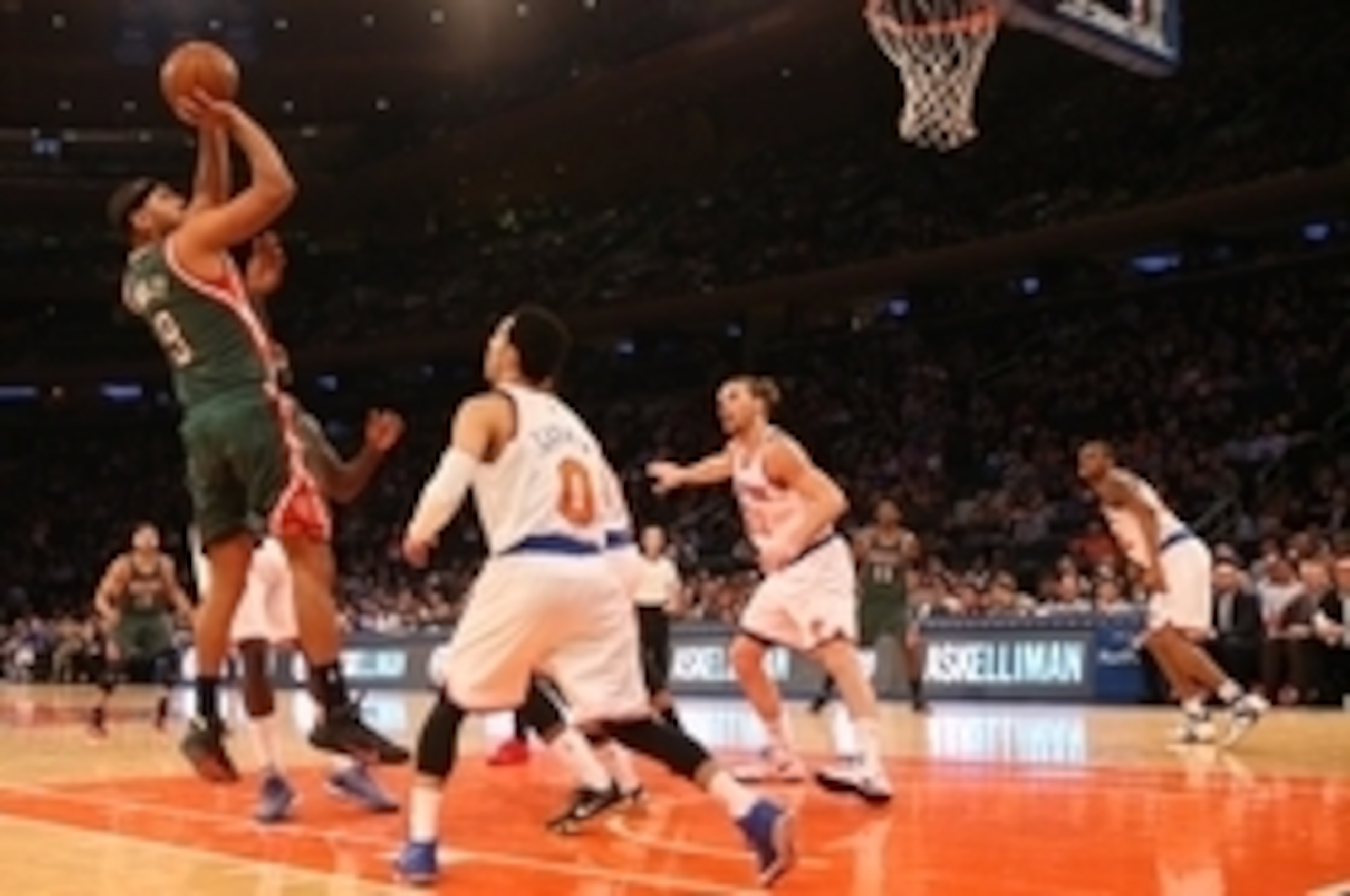
Efficiency-Recap Difference: 8.7
Efficiency Recap: 43.1
The Milwaukee Bucks may have finished the regular season right at .500, but their bench was way better than average.
Milwaukee’s substitutes averaged 20 minutes per game (ranked No. 4 in the country), contributed 9.5 assists per game (ranked No. 2), hit 45.7 percent of their field goals (ranked No. 2) and registered the most steals per game (3.8) in the country by a considerable margin over No. 2 Denver (3.5).
Jared Dudley alone averaged one steal per game during the regular season. The Bucks just missed out on the top three in this list as a result of their 37.1 points per game (ranked No. 8 in the country) and 15.8 rebounds (ranked No. 13). The Eastern Conference’s No. 6 seed looks to be headed out of the playoffs after going down 0-3 to the Bulls, but Milwaukee’s bench deserves recognition for its consistency over the first 82 games.
3. Boston Celtics
28 of 30Efficiency-Recap Difference: 9.3
Efficiency Recap: 45.9
The Boston Celtics are also down 0-3 in their first-round playoff series, but their bench slightly outperformed the Bucks bench this season. Boston’s bench was No. 1 in the league in scoring.
Point production from Isaiah Thomas (19 points per game from his 21 appearances), Kelly Olynyk (10.3 PPG, pictured jamming above), Jae Crowder (9.5 PPG), Marcus Thornton (8.9 PPG) and Marcus Smart (7.8 PPG) all contributed to alleviate some of the starters’ burden.
Additionally, Boston was sixth in the nation in minutes per game (19.6), fourth in rebounds (17.2 per game) tied for second in steals (3.5 per game) and second in assists (9.5 per game). The Celtics lost ground, however, by having the third-most fouls in the league (9.6 per game) and being tied for the sixth-most turnovers (5.3 per game).
2. Indiana Pacers
29 of 30Efficiency-Recap Difference: 11.8
Efficiency Recap: 46.1
The Indiana Pacers’ bench got the second-most playing time of any bench in the league. Considering every man on the roster but one (Shayne Wittington) averaged double-digit minutes—and nine averaged better than 20 minutes per game—it is no surprise that the bench clocks in at an average of 20.3 minutes.
Indiana also dominated the boards by nearly a full rebound over No. 2 (the Pacers had 19.7 rebounds per game) and came in at No. 3 in scoring with 40.8 points per game. The Pacers bench also comes in at No. 8 in field-goal percentage (44.2), No. 5 in assists (8.5 per game) and No. 4 in three-point accuracy (36.4 percent).
Damjan Rudez (pictured above) led the way at 40.6 percent from outside and was aided by C.J. Watson (40 percent from three-point land). Overall, the Pacers had 12 players who featured in 50 or more games over the course of the season, meaning they had some seriously experienced depth. Had Paul George been 100 percent this season, one can only assume Indiana would have been a factor in the Eastern Conference playoff picture.
No. 1 San Antonio Spurs
30 of 30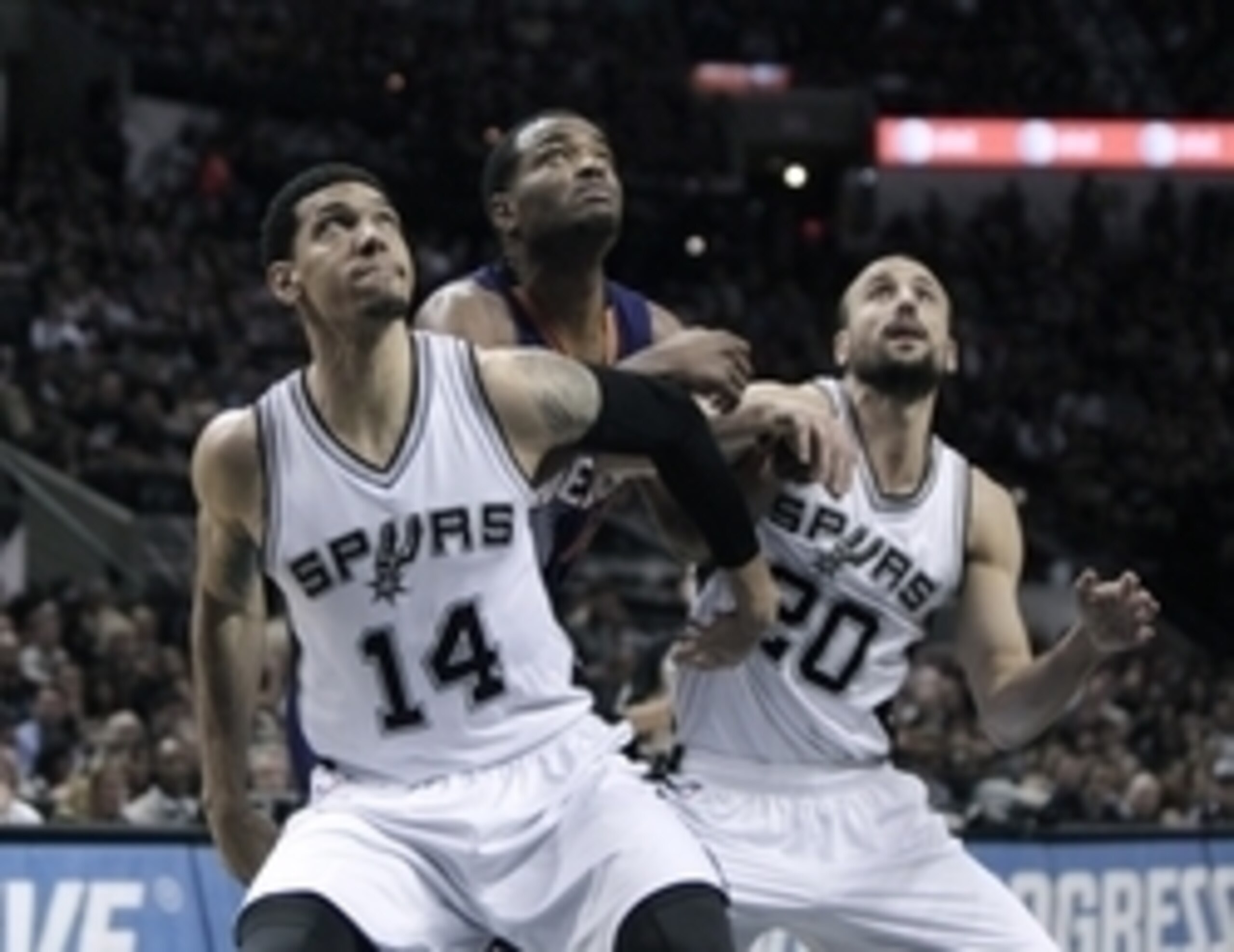
Efficiency-Recap Difference: 11.8
Efficiency Recap: 46.4
Though the San Antonio Spurs technically tied with Indiana in efficiency-recap difference, the Western team won the tiebreaker with a better efficiency recap of 46.4.
Among their many impressive stats, the Spurs boast the most featured bench in the NBA at an average of 20.8 minutes per game. They also have the most assists with 10.9 per game. San Antonio’s bench scored the second-most points with 41.1 per game, the sixth-most rebounds with 17.2 per game, the sixt-best field-goal percentage at 44.4 and the seventh-best free-throw percentage at 77.4.
Overall, 13 players on San Antonio’s roster have featured in at least 50 games. Nine of the Spurs’ 12 non-starters averaged double-digit minutes per game. With options like Manu Ginobili (10.5 points per game) and Boris Diaw (8.7 points per game) shining atop an already generally impressive bench, it’s no surprise why the San Antonio Spurs take the No. 1 spot on this list.
Unless otherwise noted, all statistics are courtesy of hoopstats.com and ESPN.com.



.jpg?w=2560 "Love's Body Already 'Tired'")

.jpg?w=2560 "Tyreek Deal May Come Soon")
.jpg?w=2560 "Ward Nearly Walks Out of Presser ▶️")
