
Re-Grading Jacksonville Jaguars' Past 5 Drafts
The Jacksonville Jaguars have built through the draft over the past few years, and it's important to realize what was successful and what wasn't. Not every pick was perfect, but examining the past five years of the draft is telling for the Jaguars.
In the past five years, they have seen two owners, two general managers and three coaches. Drastic change over the past half-decade means that evaluating the past drafts requires context.
First, current general manager Dave Caldwell is drafting at a much higher quality than former GM Gene Smith was before the end of his time with the Jaguars in 2012. Therefore, Caldwell deserves more praise but also a higher standard.
The Jaguars' focus on the draft over the past few years has really shown that they are growing but are still in need of time to get it all together. That also comes into consideration.
Finally, it's important to be fair and understanding of past drafts. A selection back in 2012 might not make sense now, but at the time, it may have been a smart pick or even a necessity.
Evaluating the past drafts gives a kind of precursor to this year's draft, which is now just a week away. Really, the Jaguars' past drafts have been steps to success, and this is just another one.
With the intro out of the way, let's look back at the Jaguars' past five drafts.
2010
1 of 5
The Jaguars were rolling into the 2010 NFL draft with momentum. They had decently improved off 2008's 5-11 record with a 7-9 record in 2009, and they had the potential to overtake the AFC South if they could just get a few more pieces.
For context, David Garrard and Maurice Jones-Drew were Pro Bowlers in 2009 and the driving force of the offense. All the team needed was to reinforce the defense and get a decent weapon or two on offense.
| Name | Selected | Position | College |
| Tyson Alualu | First round, 10th overall | DL | California |
| D'Anthony Smith | Third round, 74th overall | DT | Louisiana Tech |
| Larry Hart | Fifth round, 143th overall | OLB | Central Arkansas |
| Austen Lane | Fifth round, 153rd overall | DE | Murray State |
| Deji Karim | Sixth round, 180th overall | RB | Southern Illinois |
| Scotty McGee | Sixth round, 203rd overall | KR | James Madison |
The Jaguars did well to get some defensive help, but having no second- and fourth-round picks really hurt them in terms of quality of player. Having to wait until the third and fifth rounds isn't preferable.
However, the real issue isn't from the lack of picks from trades with Tampa, New England and Oakland, but it's the quality of player. There are gems every year from smaller schools, but four out of six players came from non-FBS schools.
It's never a sure thing, but drafting players who played at the highest levels in college typically works out more than going for stars from small schools. This is one of the major differences from the draft plans from then-GM Gene Smith and current GM Dave Caldwell.
Now, only Alualu remains on the Jaguars roster. Smith is with the Seahawks but has played 10 career games. Lane is a deep depth player for the Bears, and Hart, Karim and McGee are not currently on an NFL roster.
Three of the six picks aren't with a team, and two have had little impact in the NFL. That's an awful result from a draft. When five of six players don't currently play with the Jaguars, and the one doesn't start, that's concerning.
Final Grade: D
2011
2 of 5
Recognize this image or one similar? It's everybody's favorite Jaguars draft choice quarterback Blaine Gabbert! All joking aside, the 2011 draft was the chance for the Jaguars to continue improving and become a legit contender for the AFC South, but instead they took not one step backward but several.
Coming off an 8-8 season, the Jaguars were in a place to try to move forward after a minor improvement of the 7-9 season in 2010. With David Garrard and Maurice Jones-Drew leading the offense, the Jaguars could add a key player or two to create a high-powered offense.
But things happened a little differently.
| Name | Selected | Position | College |
| Blaine Gabbert | First round, 10th overall | QB | Missouri |
| Will Rackley | Third round, 76th overall | OG | Lehigh |
| Cecil Shorts III | Third round, 114th overall | WR | Mount Union |
| Chris Prosinski | Fourth round, 121th overall | S | Wyoming |
| Rod Issac | Fifth round, 147th overall | CB | Middle Tennessee State |
The selection of Gabbert promotes a lot of confusion and pain for Jaguars fans now. But looking back, the selection of a QB made sense. Garrard was entering his 10th season and seemed to have a ceiling that didn't match the Jaguars' ambitions.
However, the Jags not only traded their first- and second-round pick to select Gabbert, but they cut Garrard a week before the season. Gabbert was thrust into the starting spot in the third week, and the rest was painful, painful history until the Jaguars traded him to the San Francisco 49ers for a sixth-round pick. (Hooray.)
Rackley made 25 starts between 2011 and 2013, but was on injured reserve for the entirety of 2012 and didn't play at all in 2014 either. He was released in May 2014 and is now with the Baltimore Ravens. Overall, he wasn't the worst pick, but it didn't work out for the Jaguars.
Shorts was the definite MVP of this draft. After a near absent rookie year, Shorts exploded into a 979-yard sophomore season. His production and games played slowly dipped over the next two years; over the offseason, the Jaguars didn't re-sign him, and he is now with the Houston Texans.
Prosinski was selected in the fifth round and never made a huge impact for the Jaguars with nine total starts and an interception. Issac played three games total and has no stats to measure his performance. Jacksonville cut Prosinski last season and Issac in 2012.
The only thing stopping the 2012 NFL draft from being worse than the 2011 NFL draft is Shorts' success and possibly the contributions of Rackley. However, none of the players drafted play with the Jaguars still, which is awful.
Also, it's the second year of drafting players from small FBS schools or non-FBS schools, and it's just more evidence that trying to pick the sleepers and nothing but typically doesn't produce results.
Final Grade: C-
2012
3 of 5
Well, the Jaguars didn't exactly progress forward like they were on track to do. A rough season ended with a 5-11 record, and Blaine Gabbert was still excused for awful play due to his young age.
What this meant was that the Jaguars needed a top-receiver to help Gabbert in his quest to lead the team to victory. The plan was clear—all that was needed was proper execution from GM Gene Smith.
| Name | Selected | Position | College |
| Justin Blackmon | First round, fifth overall | WR | Oklahoma State |
| Andre Branch | Second round, 38th overall | DE | Clemson |
| Bryan Anger | Third round, 70th overall | P | California |
| Brandon Marshall | Fifth round, 142nd overall | LB | Nevada |
| Mike Harris | Sixth round, 176th overall | CB | Florida State |
| Jeris Pendleton | Seventh round, 288th overall | DT | Ashland |
First, the selection of Blackmon can't really be criticized. He was, by far, the best receiver in the draft, and the Jaguars needed the best they could get for Gabbert. Blackmon's off-the-field issues obviously hindered him, and he's only played 20 total games since 2012.
He's still technically a Jaguar, but his failure to get reinstated to the NFL has me thinking that Blackmon will never see the field again.
As for the rest of the draft, it's better than the 2011 and 2010 drafts but not by much.
Branch is a decent backup and has shown signs of brilliance but complacency and incompetency as well. Through three years with the Jaguars he has 10 sacks and three forced fumbles. That's not necessarily what you want out of a second-round pick, but he's serviceable.
The major head-scratcher of this draft is obviously a punter, Anger, in the third round. Unless it's a reincarnation of Ray Guy, there's no explanation for drafting a punter before the third day. Anger has done OK, though, and has remained the Jaguars punter since being drafted.
Marshall, Harris and Pendleton no longer play for the Jaguars but are still in the league with the Denver Broncos, New York Giants and Indianapolis Colts, respectively, albeit as depth or practice squad members.
All in all, this draft was Gene Smith's best on this list. Branch and Blackmon were good picks at the time, and despite taking a punter in the third round, the draft plan was well-executed.
Final Grade: C
.jpg?w=2560 "Chiefs Giants Football")
.jpg?w=2560 "Colts Football")
.jpg?w=2560 "Titans Colts Football")
2013
4 of 5
Now we're starting to cook with oil! GM Gene Smith was fired after the Jaguars' horrendous 2012 season, and the team was under a new regime. New owner Shad Khan, new general manager Dave Caldwell and new head coach Gus Bradley were ready to make changes.
The Jaguars had to restart and had to, as Bradley is apt to say, "get better." It wasn't a rebuild—it was a brand new project as a whole. With that in mind, the Jaguars drafted on both sides of the ball and looked to start anew.
| Name | Selected | Position | College |
| Luke Joeckel | First round, third overall | OT | Texas A&M |
| Johnathan Cyprien | Second round, 33rd overall | S | Florida Int'l |
| Dwayne Gratz | Third round, 64th overall | CB | Connecticut |
| Ace Sanders | Fourth round, 101st overall | WR | South Carolina |
| Denard Robinson | Fifth round, 135th overall | RB | Michigan |
| Josh Evans | Sixth round, 169th overall | S | Florida |
| Jeremy Harris | Seventh round, 208th overall | CB | New Mexico State |
| Demetrius McCray | Seventh round, 210th overall | S | Appalachian State |
The first thing worth mentioning is the quality of football schools in this list: six then-FBS schools and one school that's FBS now (Appalachian State). Drafting players who have played to a standard of a program in college means more talented, NFL-ready guys, and Caldwell knew this.
Joeckel's unfortunate 2013 season-ending injury was devastating, but he's since bounced back and showed signs of improvement in 2014. However, he still hasn't met the expectations one has for the third overall selection.
Cyprien, Gratz, Harris, Evans and McCray have all been important parts of the secondary for the past two years. They've been raw and, for Harris and Evans specifically, not always promising, but their play deserves merit, especially McCray, who has far outperformed his seventh-round selection.
The selection of both Robinson and Sanders puzzled me in 2013 and still puzzles me know. They're both hybrids and can do a lot for an offense, but did the Jaguars need both? Robinson's success has pretty much justified his selection, but Sanders hasn't been great on the field, and off-the-field issues in 2014 raise even more issues.
This draft was light-years ahead of the drafts from 2010 to 2012, and that's more of an insult to those drafts than a compliment to this one. However, this draft deserves praise all the same. It's not perfect, but it was a great starting point for the Jaguars going forward.
Final Grade: B
2014
5 of 5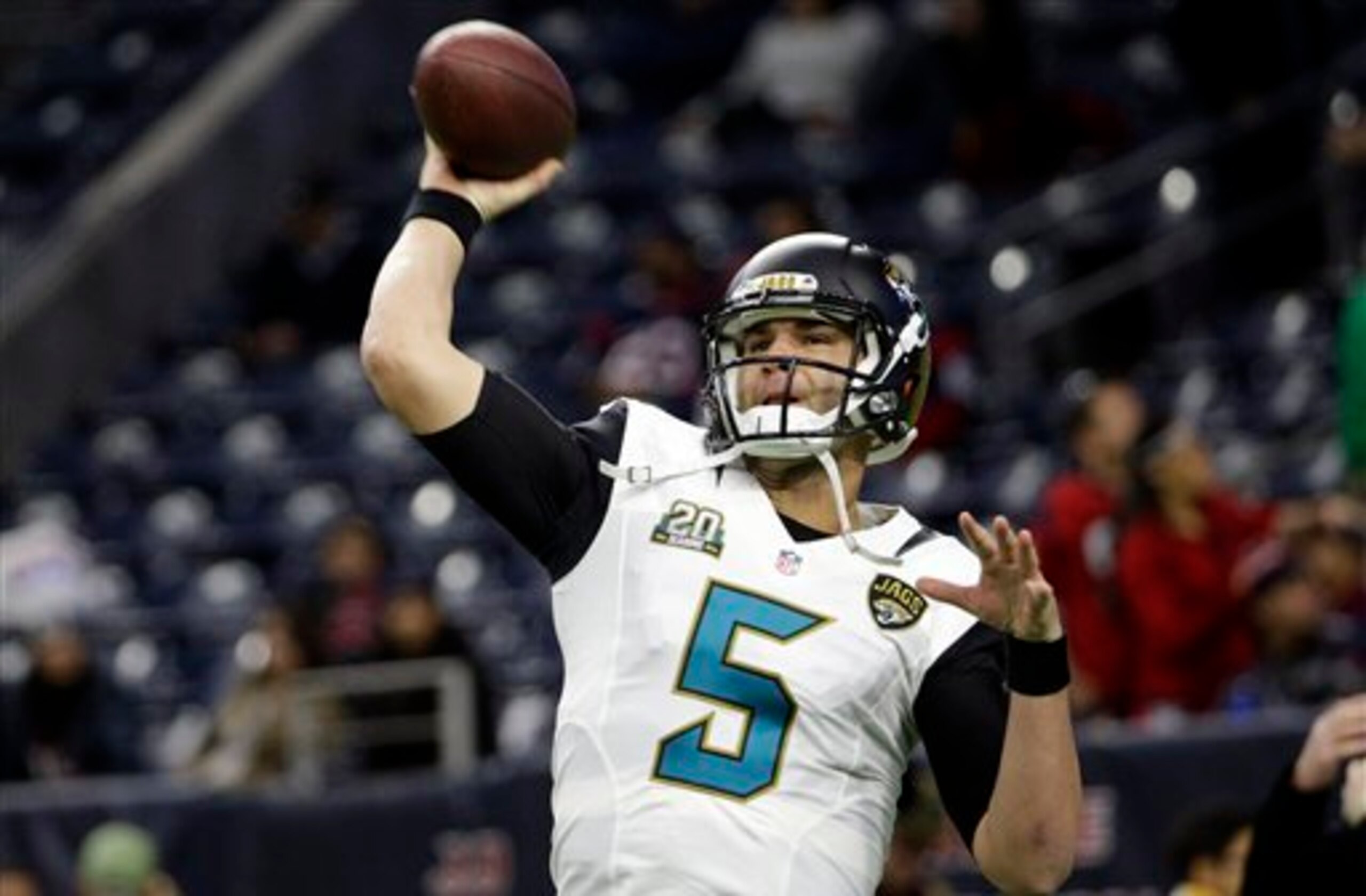
Caldwell and Bradley continued building through the draft in 2014, and it shows by the total of nine picks. Like the 2013 draft, both offense and defense received some help, and in big ways.
This past year's draft saw the Jaguars get more aggressive in the right way. They made smart trades and bold but sensible selections to try to set the image for the offense and continue building the foundation of the defense.
| Name | Selected | Position | College |
| Blake Bortles | First round, third overall | QB | Central Florida |
| Marqise Lee | Second round, 39th overall | WR | Southern Cal |
| Allen Robinson | Second round, 61st overall | WR | Penn State |
| Brandon Linder | Third round, 93rd overall | OG | Miami, FL |
| Aaron Colvin | Fourth round, 114th overall | CB | Oklahoma |
| Telvin Smith | Fifth round, 144th overall | LB | Florida State |
| Chris Smith | Fifth round, 159th overall | DE | Arkansas |
| Luke Bowanko | Sixth round, 205th overall | C | Virginia |
| Storm Johnson | Seventh round, 222nd overall | RB | Central Florida |
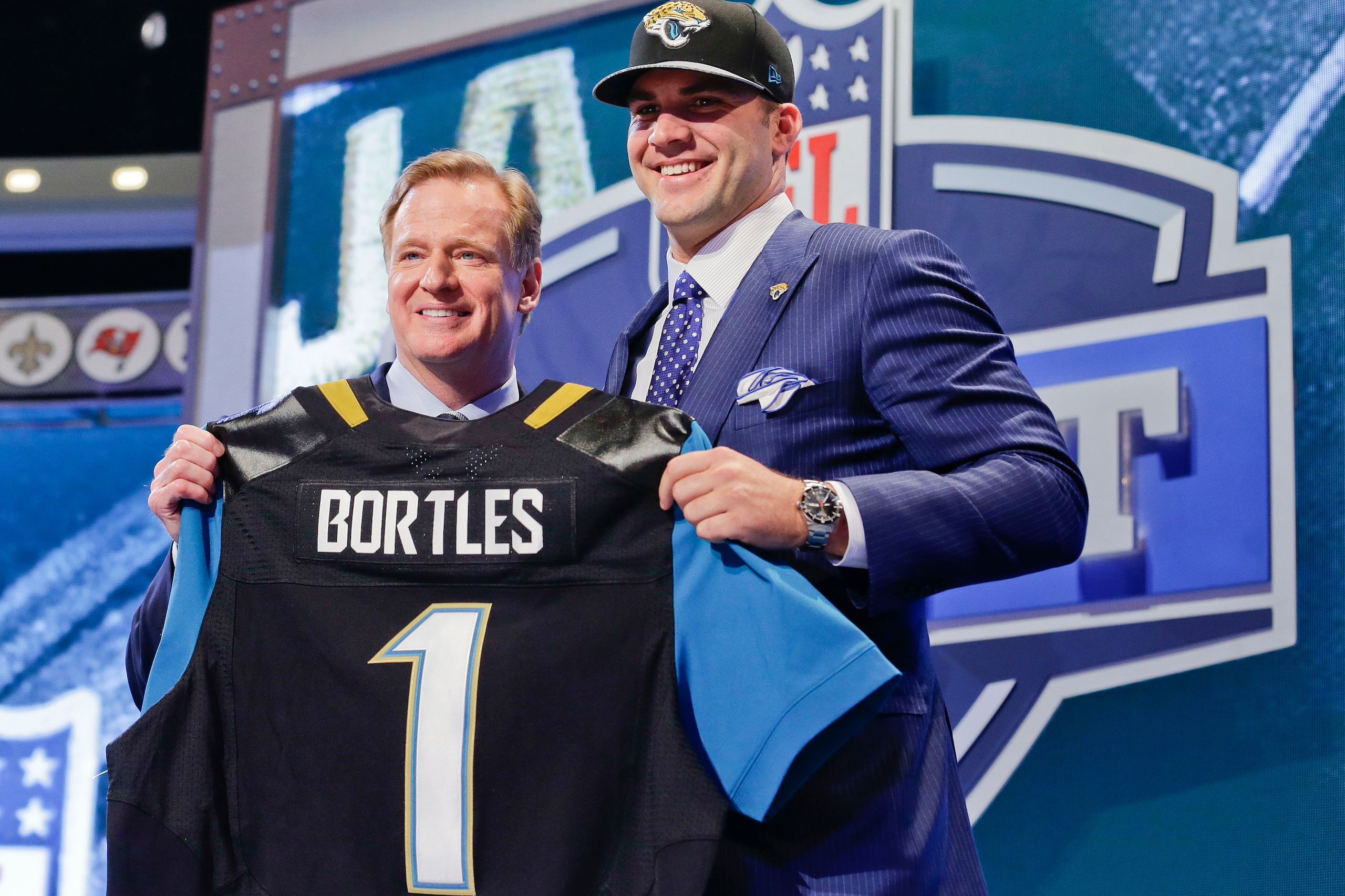
The Jaguars turned a lot of heads with the selection of Blake Bortles at third overall. It was time for a change, and the depth at QB in this past year's draft was too much for the Jaguars to not take one. Bortles had a rough "baptism by fire" kind of season, but he showed that he can take the hits. He will continue to improve his technical skills this offseason.
The Jaguars made five really good draft selections on the offensive side of the ball. They got two high-quality receivers in Lee and Robinson and two value picks for the offensive line with Linder and Bowanko, plus a backup running back in Johnson.
The only player of the four offensive selections to really disappoint was Lee, and he had to battle injury and the fact that he really wasn't big enough for the NFL. If Lee can bulk up a bit, he could reach the potential and hype we saw at Southern California.
On the defensive side, the selections of Colvin, Telvin Smith and Chris Smith were riskier than the offensive side but smart all the same.
Colvin was a first- or second-round talent before his ACL tear, and being able to grab him in the fourth round was an absolute steal. Telvin Smith ended up being a strong selection, and he can still improve. Meanwhile, Chris Smith was a depth player in his first year.
Out of all the picks, I'd say Bowanko was the greatest overachiever for his selection, and Linder was the best performer. Both were integral parts of the offensive line, and I'll look for them to be just as successful in 2014.
This year's draft was the second strong one in a row. One of the most important parts of the 2013 and 2014 drafts is the amount of players selected: 17. Compared to 16 in three years between 2010 and 2012, that's impressive, especially considering how the players are performing.
The jury is still out for a lot of guys who were drafted in 2013 and 2014, but I'd say as a whole, the selections of those two years look promising.
Final Grade: B+
All stats were provided by ESPN.com unless otherwise stated.
Evan Reier is a featured columnist for Bleacher Report covering the Jacksonville Jaguars. Follow Evan on Twitter at @evanreier.
.jpg?w=2560)
.jpg?w=2560 "Cardinals Giants Football")






