

The Biggest Takeaways from 2015 College Football Spring Practice
Spring football is hitting its final stretch, with the last major batch of scrimmages set for this weekend. After that, we head into the last extended dead period of college football before training camps get going in late July and early August. Before you know it, the 2015 season will be here.
It's been another notable season in terms of player development and position battles, and coaches no doubt have gained valuable insight into what their teams will look like this fall. Much was learned from the practices as well as the spring games, though far more will come from preseason practice, when teams have their rosters replenished by incoming recruits.
Follow along as we detail some of the biggest takeaways from this year's spring practice season.
Big Men Can Do More Than Just Block and Tackle
1 of 6The largest football players on the field have decided that just doing the grunt work isn't good enough anymore. Now they the want the ball in their massive hands, too, and there's not much we can do to stop them.
Resistance is futile. It's far better just to stand back and watch them in awe.
Several hefty individuals showed off their receiving and open-field running skills during spring games this year, starting with Baylor's LaQuan McGowan back in mid-March. The 6'7", 410-pound senior, whom coach Art Briles has fully converted into a tight end, caught a nice pass during the Bears' scrimmage and destroyed a few poor defenders on his way up the field.
"He's just a big kid that's got some talent," Briles said, per the team's website. "We've got to make sure he keeps burning hot and keeps figuring out ways to help our football team."
Not to be outdone, linemen from Alabama (6'6", 326-pound Cam Robinson) and Notre Dame (6'6", 315-pound Ronnie Stanley) also hauled in receptions in their spring games, though neither did so with as much grace as McGowan and will likely return to their full-time jobs as blockers in the fall.
Early Enrollees Continue to Make Impacts
2 of 6
The days of freshmen getting eased into action at the collegiate level in football are long gone, as pretty much every FBS team will end up starting at least one first-year player in their season opener this fall. And most of those starters will earn that playing time based on the strides they made during the spring after enrolling early.
This year's spring games featured a slew of standout performances from true freshmen, players who would have been going to prom on these weekends had they not graduated ahead of time to get a jump on their college careers.
Florida State had seven of its 20 signees from the 2015 recruiting class enroll early, and several made a big splash this spring. Receiver George Campbell, safety Derwin James and running back Jacques Patrick all impressed, and each figures to be a major player this season.
At TCU, the Horned Frogs look like they've already found their replacement for departed linebacker Paul Dawson. Mike Freeze, a converted safety who was rated by 247Sports as the No. 1,001 player in 2015, impressed so much he's listed first on the depth chart coming out of spring ball.
Fandom Is Moving North
3 of 6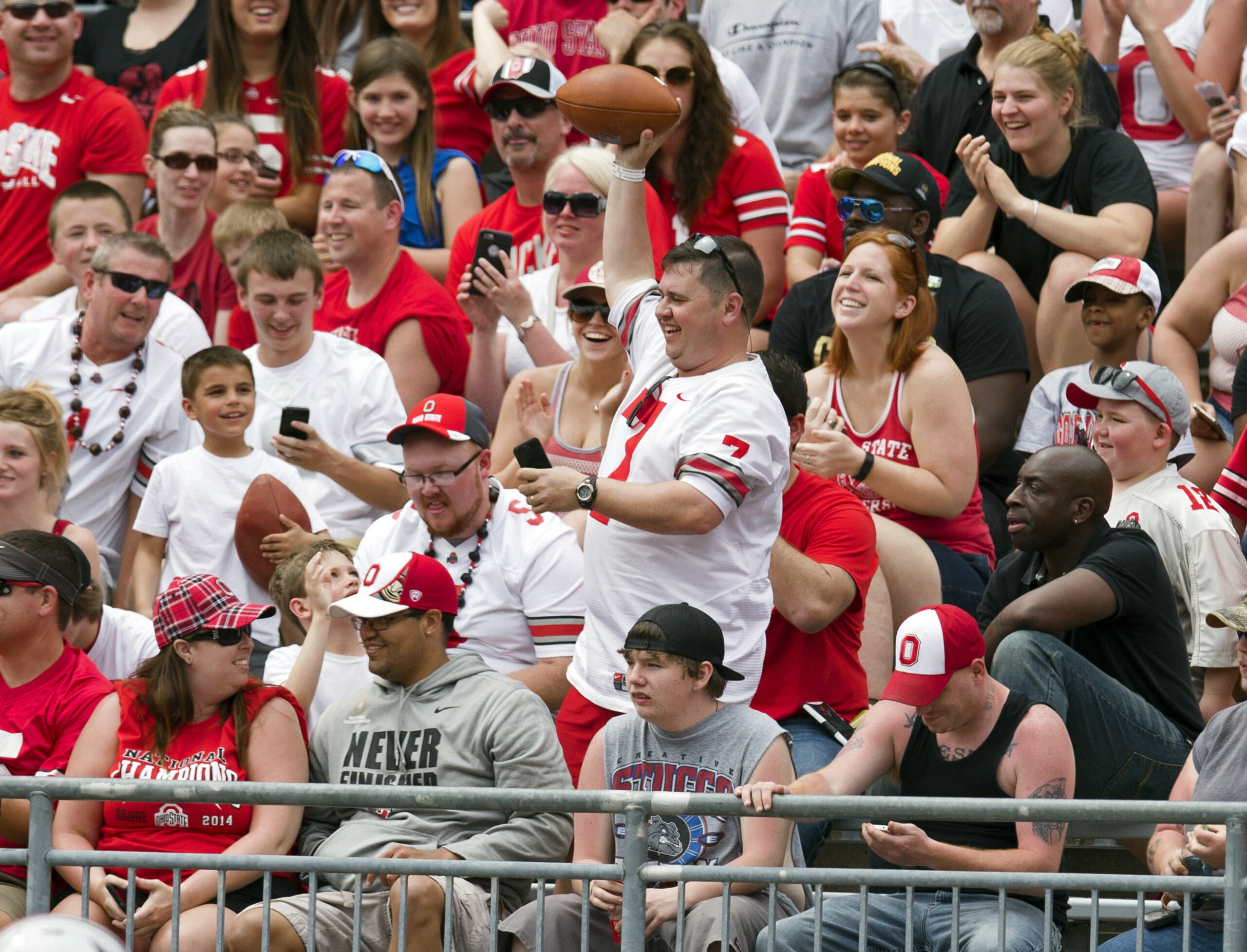
There were some impressive attendance numbers from this year's spring football games, topped by the record 99,391 fans who were at Ohio State's scrimmage on April 17. All told, 10 schools, according to SB Nation's collection of attendance numbers, drew at least 30,000 people to what in reality was nothing more than a glorified practice.
Of those 10, only half came from the South or from an SEC school, while four—including the top three—were from the Big Ten. Nebraska drew 76,881 and Penn State had 68,000, while Michigan drew 60,000 for Jim Harbaugh's first spring game.
The top draw from the SEC was Alabama, which had 65,175 fans. Auburn had 62,143.
Even more mind-blowing was that, in Ohio State's case, the game wasn't free. It cost $5 to get in, though that also got you access to a men's lacrosse game beforehand.



Few Position Battles Were Decided
4 of 6
Because of graduation and early NFL entry, hundreds of starting spots are up for the taking each season in college football. Though many end up getting filled by a backup at the position from the year before, several end up going to a player who wins a competition against one or more teammates based on his performance in practice during the offseason.
That usually starts during the spring, and in most cases it doesn't finish until just before the season begins.
This was especially true this year for the most notable position battles we saw across the FBS, particularly at quarterback. Open quarterback competitions at schools like Alabama, Florida State, LSU, Notre Dame, Oklahoma, Texas and UCLA saw some developments this spring, but none to the point that a starter was named or a clear leader was identified.
Major Injuries Were Held to a Minimum
5 of 6
Every coach's greatest fear during spring ball is that a player will get injured in some manner that will prevent them from being able to contribute to the team during the season. For this reason, many of the top players who have already established themselves as starters are limited during practice and scrimmages, with quarterbacks often wearing different-colored jerseys meant to keep them off-limits from contact.
But injuries are unavoidable, no matter how careful teams are. This spring we thankfully didn't see many significant ones, though not every team was lucky.
Arizona State was already going to be short at receiver with Jaelen Strong turning pro, but then projected No. 1 wideout Cameron Smith went down early in the spring and needed to have season-ending knee surgery. The injury had first occurred late last season, but prolonged wear made him unable to continue this spring.
Alabama saw highly touted running back Bo Scarbrough go down with a knee injury during a scrimmage, and he had surgery shortly thereafter. It's unknown how long he'll be out, but the redshirt freshman might be headed for a quick recovery after posting a video on Twitter two days after his procedure showing he could already do a leg lift.
Other notable players who got hurt this spring and won't be playing this season are Texas cornerback Sheroid Evans, who will miss a second straight season after suffering another knee injury, while Florida offensive tackle Roderick Johnson had to retire after suffering a stinger in practice and later getting diagnosed with a congenital spinal condition.
Struggling Offenses and Defenses Won't Have Instant Fixes
6 of 6
Spring game results and statistics don't mean much in the long term, since teams aren't playing with full rosters and usually don't have the full playbook installed until preseason.
But some progress is usually expected to come from the 15 practices allotted during this period, yet some of the schools looking to overhaul their offenses or defenses didn't seem too far along in this process based on how their games went.
Michigan ranked 115th in total offense last season, and Jim Harbaugh's arrival was championed as the key to getting that unit fixed. We didn't see much improvement in the spring game, though, which included just a single touchdown.
Oklahoma's revamped Air Raid offense saw four quarterbacks combine for nearly 400 yards on 26-of-43 passing, but they also threw four interceptions. Two of those were by Baker Mayfield, the Texas Tech transfer who has experience in this offensive style.
On the defensive side, Auburn's Will Muschamp-led defense didn't impress in its spring game either, though Bleacher Report's Barrett Sallee noted the absence of some key contributors need to be factored into that evaluation.
"Auburn's defensive performance in the spring game is best described as either a 'work in progress' or 'incomplete,'" Sallee wrote.
Follow Brian J. Pedersen on Twitter at @realBJP.



.jpg?w=2560 "5 Teams Eyeing Jonathan Taylor")
.jpg?w=2560 "Mahomes Told Teammate to Leave Meeting")

.jpg?w=2560 "NFL investigating Eagles")
.jpg?w=2560 "Jonathan Taylor Landing Spots 📍")
