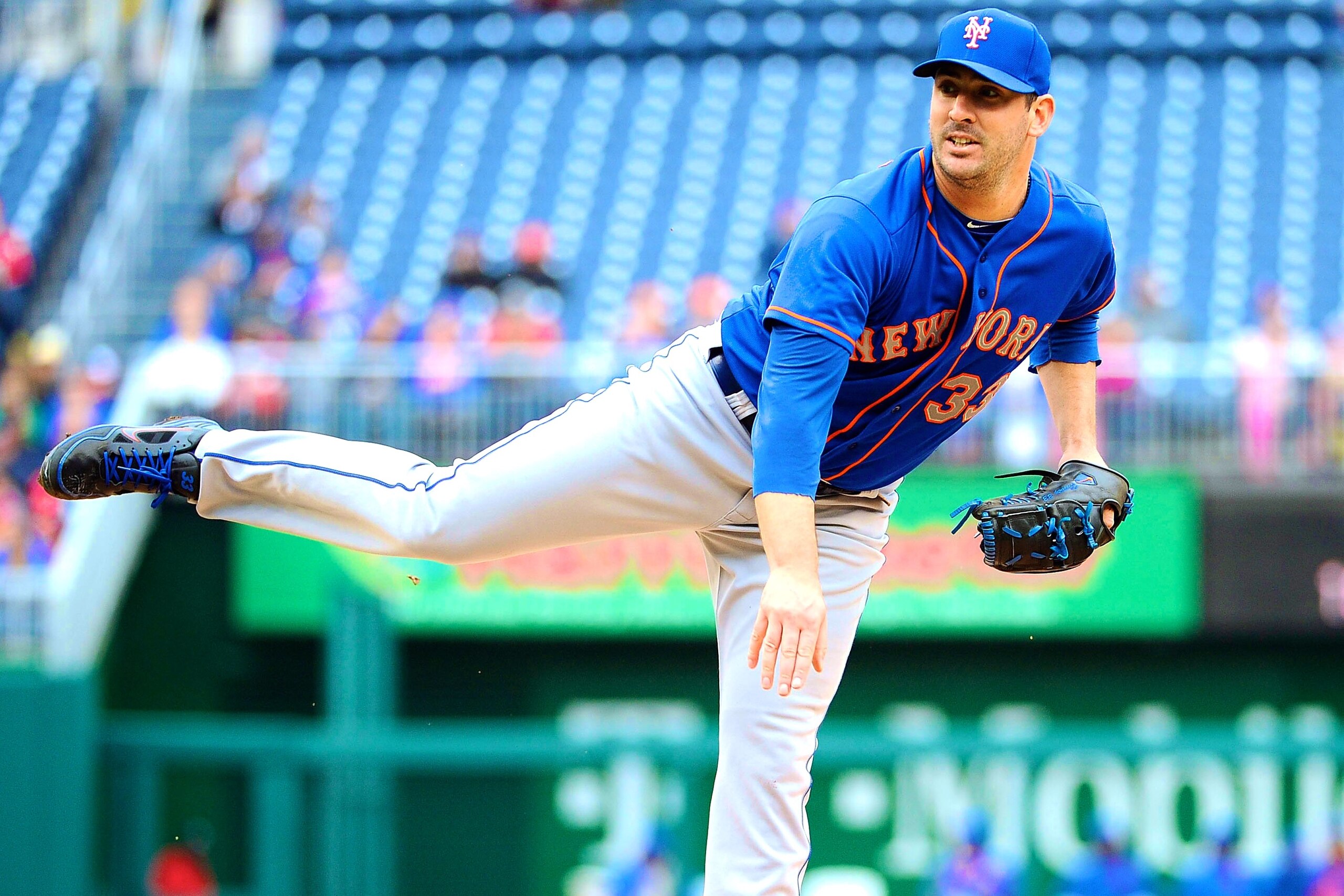

Matt Harvey's Convincing Debut Is Perfect 1st Step in Return to the Elite

First, the Dark Knight returned. Then, the Dark Knight rose to the occasion.
Put more simply for those who aren't up to date on their sports and pop-culture crossover references: Matt Harvey finally made his 2015 debut on Thursday afternoon, and it went really well.
The 26-year-old right-hander's first start after missing 2014 recovering from Tommy John surgery ended with his throwing six scoreless innings to pace the New York Mets to a 6-3 victory over the Washington Nationals, clinching a season-opening series win. Harvey threw 91 pitches and allowed just four hits and a walk and struck out nine.
TOP NEWS

Brewers Complete Comeback In Game 2
World Series Game 2 Takeaways 🍿

Next MLB Players to Sign $200M Contracts 💰
That's a line that is indeed reminiscent of the pitcher Harvey was before his surgery. He posted a 2.73 ERA in a major league cameo in 2012 and followed it up with a 2.27 ERA and 6.16 strikeout-to-walk ratio in 2013 through 178.1 innings.
That had him on track to possibly win the 2013 National League Cy Young. And as Drew Silva of Hardball Talk noted, here's how Harvey's overall major league track record looks now:
The only number there that doesn't impress is Harvey's innings count. All the others, however, are reminders that he has the goods to stand next to guys like Clayton Kershaw and Felix Hernandez among baseball's elite pitchers.
Of course, Harvey will need to get more work in this season before he can truly reclaim his place among baseball's elite. But if we dig a little deeper, we can highlight how his 2015 debut really is as good a first step as his final pitching line indicates.
When Harvey was mowing down the competition in 2013, what stood out was his stuff. He had a seemingly impossible combination of a mid-to-high-90s fastball and a stellar changeup and slider stuff, and each one of his pitches seemed to be as good an out pitch as the next.
If you didn't get a chance to watch him in action Thursday, the stuff looks like it's still there.
Harvey started the game by sitting in the 96-97 range with his fastball in the first inning. And though he eased off later in the game, he only "eased off" to the degree that he was sitting 94-95. In the end, ESPN Stats and Information notes that Harvey's average velocity was par for the course:
It wasn't all about velocity. Harvey's fastball also had its vintage late movement, making it that much harder to hit. Nobody can vouch for that more than Bryce Harper, who went down swinging on three Harvey fastballs.
As for Harvey's secondaries, the real star of his show was his curveball. The PITCHf/x data at Brooks Baseball says he threw 15 of them, drawing two whiffs and allowing only one to be put in play. It also got a couple of his strikeouts, including his first of the day against Michael Taylor.
That's pictured here, courtesy of MLB GIFs:
That's a nasty curveball. Certainly nastier than any new curveball has the right to be, anyway. And even though FanGraphs classified 13.4 percent of his 2013 pitches as curveball, Harvey insisted in spring training that his Uncle Charlie is indeed new.
“I always threw sliders and I don’t know where this curveball came from, so it’s nice having that develop,” he told Mike Puma of the New York Post. “I don’t know if I figured out something in my mechanics or it just magically appeared, but it’s nice having that and it felt good out there."
If you had doubts about Harvey's stuff heading into 2015, you can put them away. He's picking up right where he left off with his fastball, and his new curveball looks like a worthy addition to what was already an overpowering collection of secondaries. He's now a pitcher with four plus pitches.
However, Harvey's debut did provide one nit to pick. Though his stuff was in vintage form, his command wasn't.
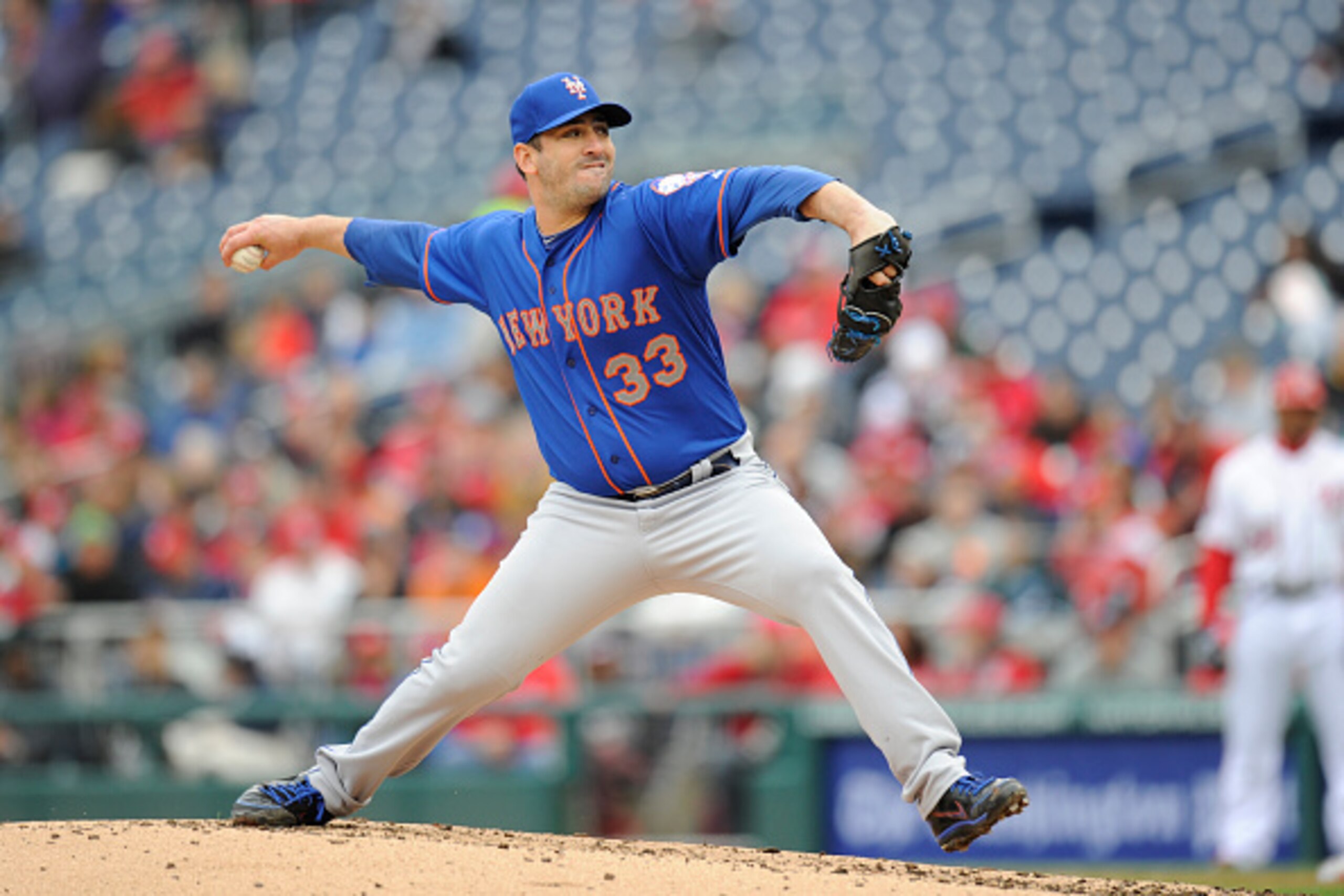
It may look like it was, based on how 63 of his 91 pitches were strikes and that he walked only one batter. But those figures can't illuminate how Harvey didn't have the easiest of times hitting his spots.
This is especially true of his fastball command. Catcher Travis d'Arnaud was frequently setting to to receive fastballs at the knees, and instances of Harvey actually hitting those spots were infrequent. Throughout Harvey's six innings, d'Arnaud's glove was moving a lot.
This isn't overly surprising, as the anecdotal evidence we have says that command is slower to come back than stuff in a pitcher's return from Tommy John. Here's Marc Carig of Newsday with some input on why that is:
"Regaining full command, however, is often a different matter.
This is not lost upon either Matt Harvey or Jeremy Hefner, the Mets righthanders who are nearing a major step in their recovery from Tommy John surgery.
The incline of a pitcher's mound adds to the strain of throwing a baseball. Pitchers coming back from Tommy John will go months without the added challenge of gravity...
"
However, the relatively lackluster command that Harvey showed on Thursday is not without bright sides. His fastball control did get better once he dialed it back to the 94-95 range, and his misses were largely good ones. Rather than in the middle, he tended to miss off the edges of the zone or up above the belt.
And even if Harvey had been missing in the middle of the zone, there wouldn't be cause to push the panic button.
| Jered Weaver | LAA | .205 |
| Matt Harvey | NYM | .222 |
| Max Scherzer | DET | .233 |
| Hisashi Iwakuma | SEA | .234 |
| Chris Archer | TBR | .236 |
Thanks to his fastball's velocity and heavy movement, Harvey is a rare pitcher with a heater that allows him to get away with mistakes in the zone. That, along with its sheer whiffability, is why his fastball held hitters to an NL-best .222 average within the strike zone in 2013, according to Baseball Savant.
In light of this, Harvey should be fine even if he never really gets his fastball command on track this season. But since it's more than likely that he will, one should view his command in his 2015 debut more as a necessary steppingstone than something to be wary of.
In all, Harvey's performance on Thursday night is very much reflective of his final line itself: He wasn't as good as we know he can be, but he was about as good as he could have been.
And that was just Act 1 of what should be a 30-act play, and against a pretty good (not great, thanks to their injuries) Nationals lineup to boot. In a year where the Mets are hoping Harvey can help lead them back to the postseason, they really couldn't have asked for a better way to welcome him back.
Or, as they put it:
He is back, all right, and he looks perfectly capable of being the hero Gotham needs.
Note: Stats courtesy of Baseball-Reference unless otherwise noted/linked.
If you want to talk baseball, hit me up on Twitter.

.jpg?w=2560 "Mahomes Told Teammate to Leave Meeting")

.jpg?w=2560 "5 Teams Eyeing Jonathan Taylor")


.jpg?w=2560 "NFL investigating Eagles")

.jpg?w=2560 "Jonathan Taylor Landing Spots 📍")