Jason Kidd Leads Milwaukee Bucks' NBA Learning Experience This Season
Walk into any NBA locker room before a game, and you'll see a whiteboard graffitied with statistics and plays. It's plastered with reminders about the upcoming opponent, some so technical they'll look like gibberish to the average fan.
Some coaches keep their whiteboards simple in an attempt not to overload their players' minds with information right before a game, though the scribbling is usually done by an assistant. But you'd never know that by walking into the Milwaukee Bucks' locker room.
The Bucks have some of the most detailed whiteboards in the league, a direct reflection of their coach, Jason Kidd, who is in the midst of his first year coaching them. Preparedness is becoming their identity.
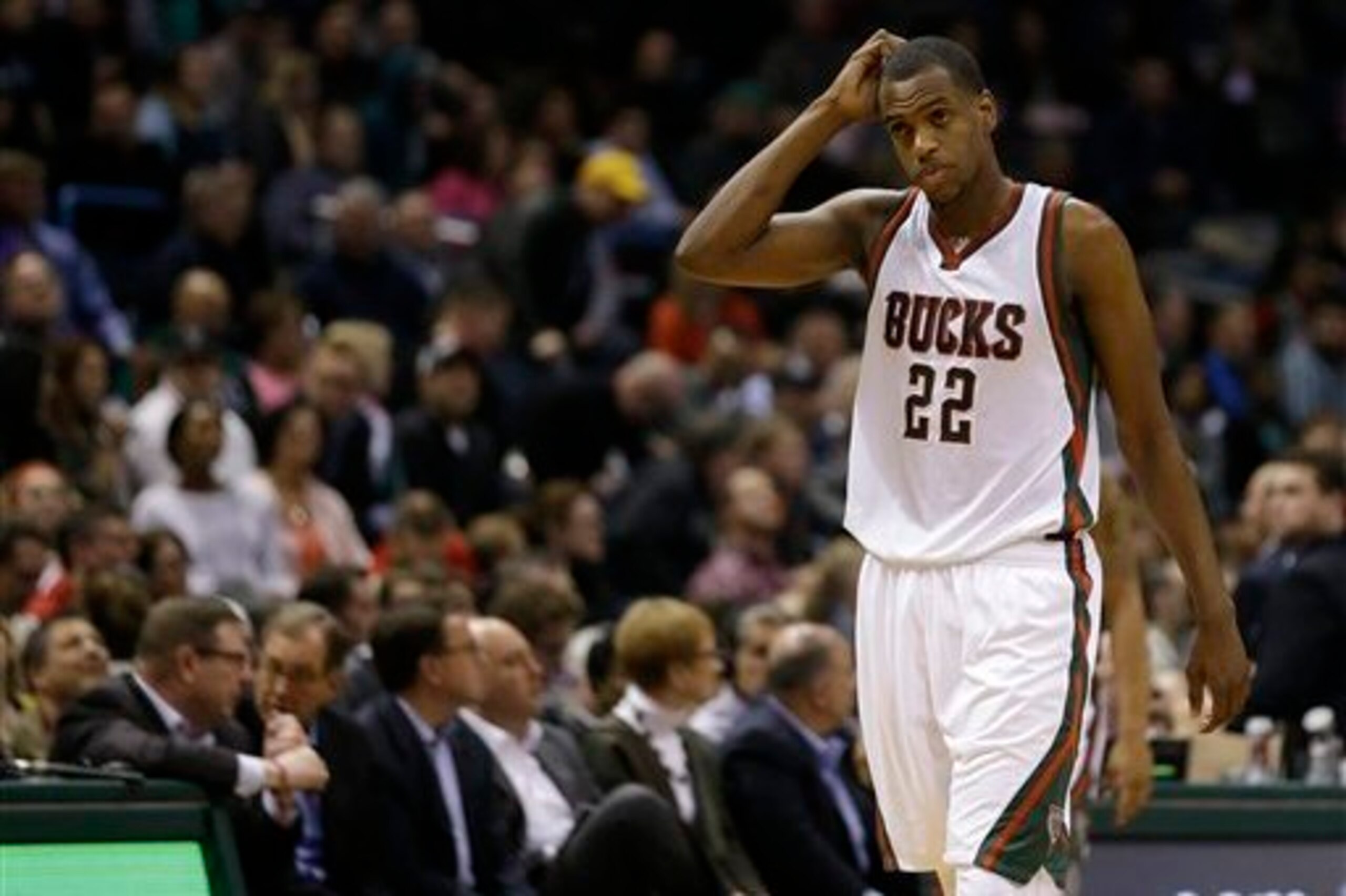
"They're detailed about everything," breakout star Khris Middleton mused about his new coaching staff, especially Sean Sweeney, the apparent calligrapher responsible for the Bucks' stifling defense and whiteboard doodling. "I mean, it really helps us out. All the tendencies, what we need to do. It helps."
The Bucks are one of the NBA's shockers of 2014-15. At 38-40, they seem to have a firm hold on the No. 6 seed in the Eastern Conference (though they haven't clinched it yet), erasing memories of a league-worst 15-win season a year ago, a victory total which couldn't even match the historically bad Philadelphia 76ers.
Now, that almost seems like ancient history. Names like Giannis Antetokounmpo, Khris Middleton, John Henson, Michael Carter-Williams and Jabari Parker—which didn't mean nearly as much at this time last year—are now integral to a young core that's developing a culture for the future.
"We're in the process of building a team with young men," said Kidd. "... There's no better time than right now for us learning as a group what it takes to be successful in this league."
The Bucks are prepared: for their next opponent, for the consequent season, for the future. And for Kidd, it's a stark difference from the position he found himself in last year as coach of the Brooklyn Nets.
The History of Kidd

It almost didn't happen this way. Milwaukee trekked through an ugly 2013-14 with Larry Drew, now an assistant with the Cleveland Cavaliers, leading the troops.
The team didn't have an identity. It was young; too young. It was inexperienced; too inexperienced. It was undisciplined; way too undisciplined.
There was talent, but everything seemed to be out of whack. The Bucks were long and athletic, as is this year's team, since it's made up of mostly the same players. But they couldn't find ways to win.
Enter new owners Marc Lasry and Wes Edens.
Lasry and Edens purchased the Bucks in April of 2014, almost a year ago to the day, and immediately wanted to make an imprint.
You could argue Kidd unknowingly took his first steps toward Milwaukee in the early 2000s, when his agent, Jeff Schwartz, recommended he invest his money with Lasry, an avid New York Knicks fan and the CEO of Avenue Capital Group, a highly successful global investment firm.
The two immediately became close to the point that Kidd made an appearance in a movie Lasry's teenage son, Zach, would make for a high school film class in 2007. He even flew down to Georgia for Lasry's daughter's wedding a couple summers ago. It was there that Kidd would officially decide to become head coach of the Nets, who subsequently retired his number from his playing days.
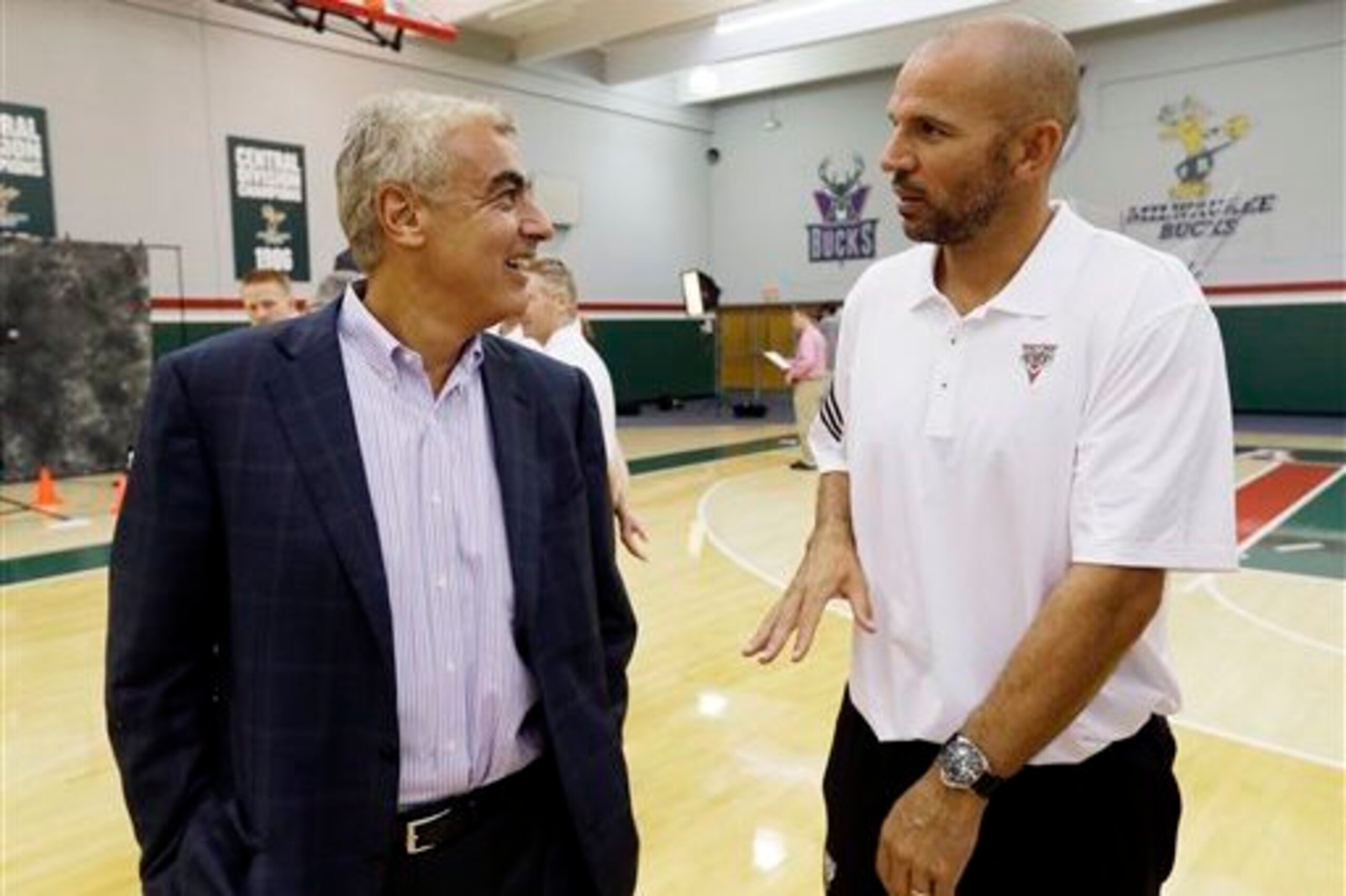
His reign in Brooklyn officially began only a couple weeks after the wedding in 2013. But it would end the following summer, a few months after Lasry purchased the Bucks.
There's a reason so many suspected tampering when Kidd essentially ousted himself from Brooklyn, reportedly trying to force Nets general manager Billy King out in an attempt to earn more power within the organization. When that didn't work, he just so happened to end up being "traded" to his good friend's team.
He caught heat at the time, which did make sense. Kidd had a history (as a player) of leaving organizations in unpopular fashion. Here he was bolting from a 44-win, veteran-laced playoff team located in the NBA's No. 1 market for a squad that had just won 15 contests and didn't appear to be on the precipice of anything positive.
Fast-forward just 10 months, and the Bucks are sitting two games ahead of the Nets in the Eastern Conference standings. Each time Kidd has come back to Barclays Center for a game, he's done it with a smirk.
The Nets may not draft with their own selection until 2019. The Bucks, meanwhile, have eight rotation players who are 27 years old or younger and own all their picks (plus, they have the Los Angeles Clippers' 2017 first-rounder, according to RealGM).
"We're in a pretty good seat with draft picks," Kidd, who essentially no-comments every question about the Nets, subtly quipped before the Bucks' matchup in Brooklyn on March 20.
Dealing with Struggles
The Bucks may have already overshot their 2013-14 victories by 23 (and counting), but they've experienced their fair share of inner turmoil.
First, star rookie and 2014 second-overall pick Jabari Parker tore his ACL only 25 games into the season, just as he was starting to emerge as the potential leading candidate for Rookie of the Year. Then, Larry Sanders, someone who was supposed to anchor the defense, left the team and the NBA—at least for the time being.
Yet the Bucks kept winning, especially early.
Milwaukee jumped out to a 31-23 record to begin the year. Amazingly, it had doubled last year's win total by the All-Star break. But it hasn't been pretty over the past month-and-a-half.
Milwaukee, who prides itself on its defense and ranked second in points allowed per possession on Feb. 21, has posted only the 14th-best defense since that date. By no coincidence, the Bucks have gone 7-17 since.
Feb. 21 is a nice marker for symbolic reasons, too. That's one game after the trade deadline, one game after shipping out Brandon Knight, generally thought of as the Bucks' best player, for Carter-Williams, who has struggled in Milwaukee. But there could be other reasons for that than the obvious "bad trade" excuse.
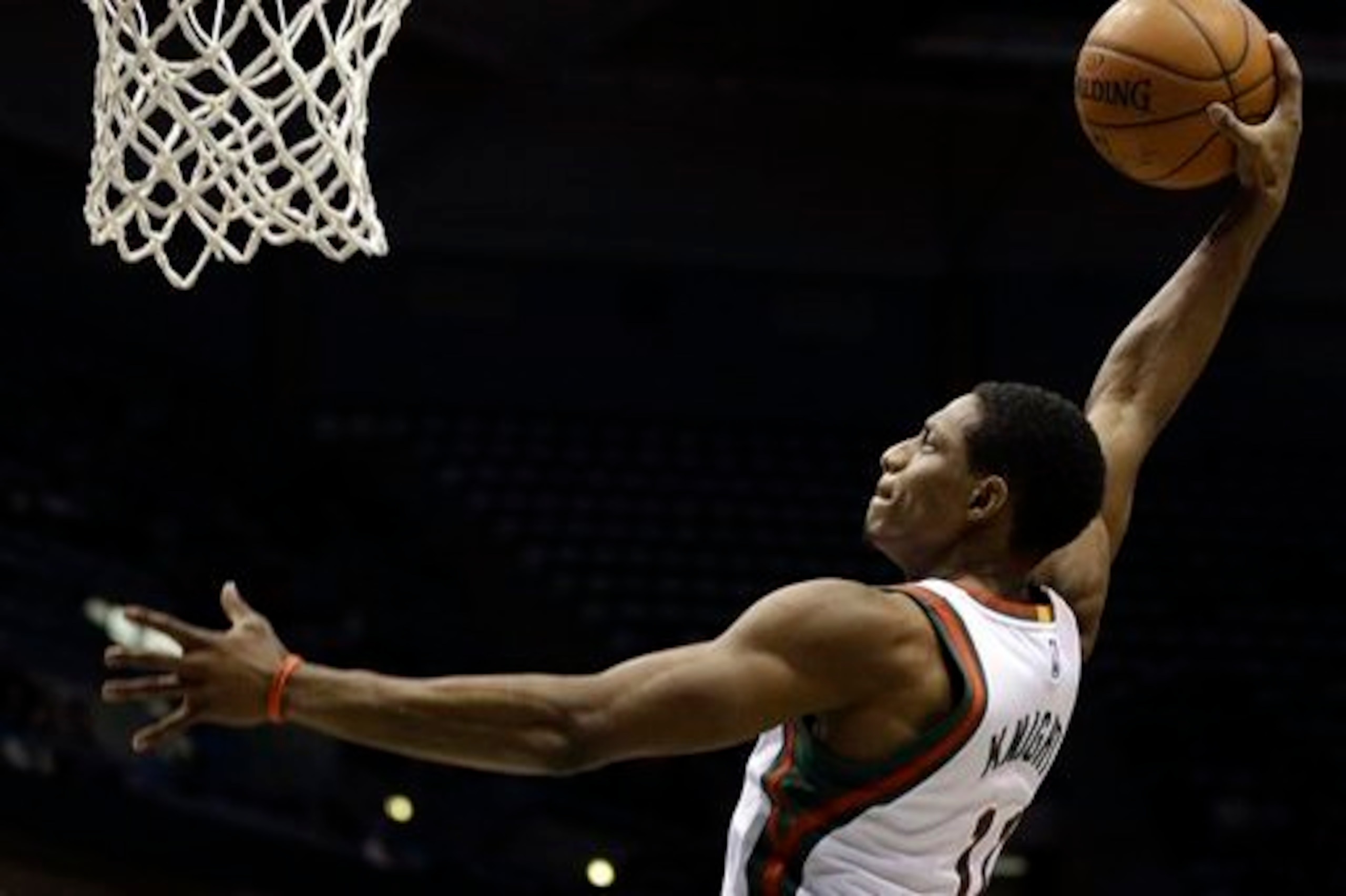
Even if deals can make basketball sense, and it's certainly arguable if this one did—that mostly depends on how you value Carter-Williams, whose stock is as volatile as anyone's—any trade can shake a team for the worse.
Teammates liked Knight. He was a locker room leader, someone who had been around for a couple of years. When part of your organizational philosophy is to build a core to create continuity and chemistry, you can't be shocked when you bump that consistency and things fall out of sorts.
"I think the trade, it was a good thing, a positive thing," Kidd revealed. "No matter how our record shapes out, we're here to build something."
As well as Milwaukee played early, there's always that buzzword: regression. The Bucks struggled last year with a similar roster. It's possible they are more of the treading-.500 team that they are now than the 46-win team they appeared to be early on.
That's not Kidd's fault. It's the way sports work. But Milwaukee is still playing over its head, causing far more damage than even the greatest optimists expected in the preseason.
"We're in the sixth spot. No one in front of me said we would ever be here," Kidd defended when asked about his team's recent struggles. "So how are we trending down?"
When the reporter who asked the question answered, "The losing streak," Kidd clearly saw a bigger picture than just a few games.
"That's the way you see it," retorted Kidd. "We're getting better every time we play, winning or losing... We learn from missed shots. We learn from making shots. So we're not trending down; we're actually learning."
Transforming a Defense
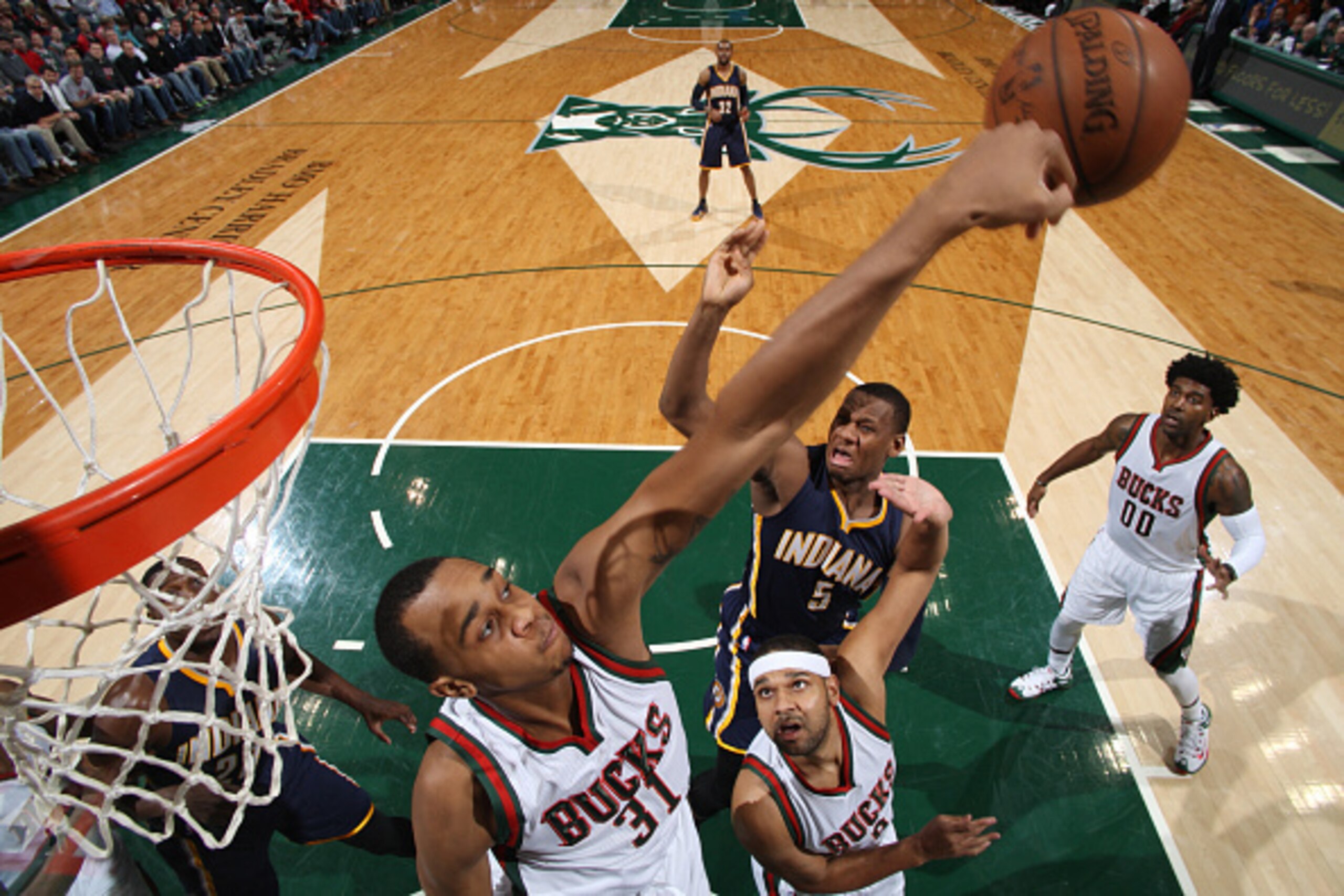
Milwaukee plays in one of the most aggressive defensive styles of any team in the league. Especially late in games, it'll switch on everything, a strategy which its roster is designed to deploy.
There's a reason that when the Bucks acquired Carter-Williams at the trade deadline, loads of reports came out expressing how much Kidd loved his new point guard. It's not just because he sees himself in MCW, a 23-year-old floor general who's biggest flaw is his inability to shoot, something a man whose nickname was once "Ason"—since he had no J early in his career—can surely understand.
It's also because of what the former Philadelphia 76er allows Milwaukee to do on the defensive end.
The Bucks have loaded up on long athletes who range from 6'5" to 6'9" (and then there's Giannis). Employing such a roster allows them to play that ultra-aggressive defensive style Kidd and the previously mentioned Sweeney prefer.
They can switch everything late and not have to worry about mismatches because guys like Antetokounmpo, Carter-Williams, Middleton, Jared Dudley and even Henson are versatile and intelligent enough to guard multiple positions. They can jump passing lanes because their length allows them to recover, and their overall quickness authorizes teammates to help when someone overplays a pass.
Even with all the length and defensive aggression the Bucks employ, they've mightily struggled defending the corners during these past 24 games. That's quite the difference from the D during the first half of the season, when Milwaukee was closing out hard on shooters and actually allowed one of the lowest three-point percentages on corner threes in the league.
Travel back to a late-January contest against the Portland Trail Blazers, and you'll find exactly what makes the Bucks defense so stifling, and it's not just the miles of arms they have on the floor at any given moment. First, take a sneak peak at the full play in reference:
The quickest scores are often in second-chance opportunities. It requires impeccable communication and awareness from a defense for each player to recover back to his assignment after an offensive board. But look how quickly the Bucks do that here, forcing the Blazers to slow down and run a new play with a bookmarked Antetokounmpo closeout on Wes Matthews:

With the defenders back on their assignments now, Portland moves into a side pick-and-roll. Matthews, defended by the Greek Freak, calls over Meyers Leonard, guarded by Dudley, to set a screen. But Henson, anchoring the play, calls out the Leonard pick while shading to the right side.
The Bucks switch and drive Matthews to the corner while also taking away the possibility of a cross-court pass, forcing him to feed Leonard:

That's a move few teams can make so seamlessly. Of course, only one team has a 6'11" Greek kid so stretchy and agile that his nickname had to contain the word "Freak."
"[Switching] definitely helps us out," described Middleton. "It takes the other team out of their sets and forces them to make a play, which is hard to do in this league, especially when you've got long, athletic guys that can guard. It's definitely good for us in the passing lanes, also."
The passing lanes, you say? You mean like this?

The Bucks will give up easy shots on occasion because of gambles like the one Giannis makes here. But such a move is also a reason they average the second-most steals per game of any NBA team. And it's surely a reason why this defense still ranks inside the top five in points allowed per possession.
Players have to cover far more ground in Kidd's system than in your average NBA defense. They have to help more. They have to recover more. They have to be more aware of both their own tendencies and that of their opponents.
"We watch a lot more video [than last year]," Middleton said of one difference between Kidd's and Larry Drew's regimes, which is unsurprising since Kidd has actually said he believes showing game film is more important around a younger team.
"They care," Kidd asserted to Charles Gardner of the Milwaukee Journal-Sentinel in February. "They take pride in playing defense, and that was one of the things we talked about starting in training camp. Those guys have really bought into that.
"You look at our length. Starting the season, we were one of the longest teams, so we have the ability to switch. We have the ability to get steals and deflections and go from there."
A Cohesive Project

The NBA's best franchises have something called "organizational synergy." Just like how you want your up-the-middle positions to strengthen your defense in baseball, you need your up-the-middle administrators to work in tandem within a front office. Normally, that refers to the owner, the GM and the coach.
Stability and consistency have to be present. If a team is rotating coaches or front-office members, philosophies change with bodies.
Of course, the San Antonio Spurs, who have had the same core together since the Van Buren administration, lead the way. The Dallas Mavericks certainly have it. So do the Houston Rockets. And the Indiana Pacers.
Teams like the 76ers and Bucks are trying to build to such a point.
"We're definitely more together than we were last year. Last year, we were a fragmented locker room," Middleton admitted. "This year, we came together as a group."
It's obvious Kidd wants to implement a unique culture in Milwaukee, an exactitude that goes beyond just saying so. He's somewhat of a throwback, even forcing guys to run sprints in practices. That may be fine and dandy for your son's middle school team but certainly isn't protocol in the NBA.
"It kind of reminds you of a backyard coach, just because he will stop practice and say, 'Get on the line, let's get some lines in. Let's get some ups and downs,'" Bucks guard O.J. Mayo told Sean Deveney of Sporting News back in November. "It's a little different because the NBA is not like that, but he takes it back to how he would have liked it when he played."
Back to how he would have liked it when he played?
Are we that old? Wasn't Kidd draining threes for the New York Knicks just a couple years ago?
Mayo's been around for a while. His playing career and Kidd's actually overlapped five years. He knew Jason Kidd the player. At only 42 years old, Kidd's able to relate to players on a personal level while still exuding that old-school mentality.
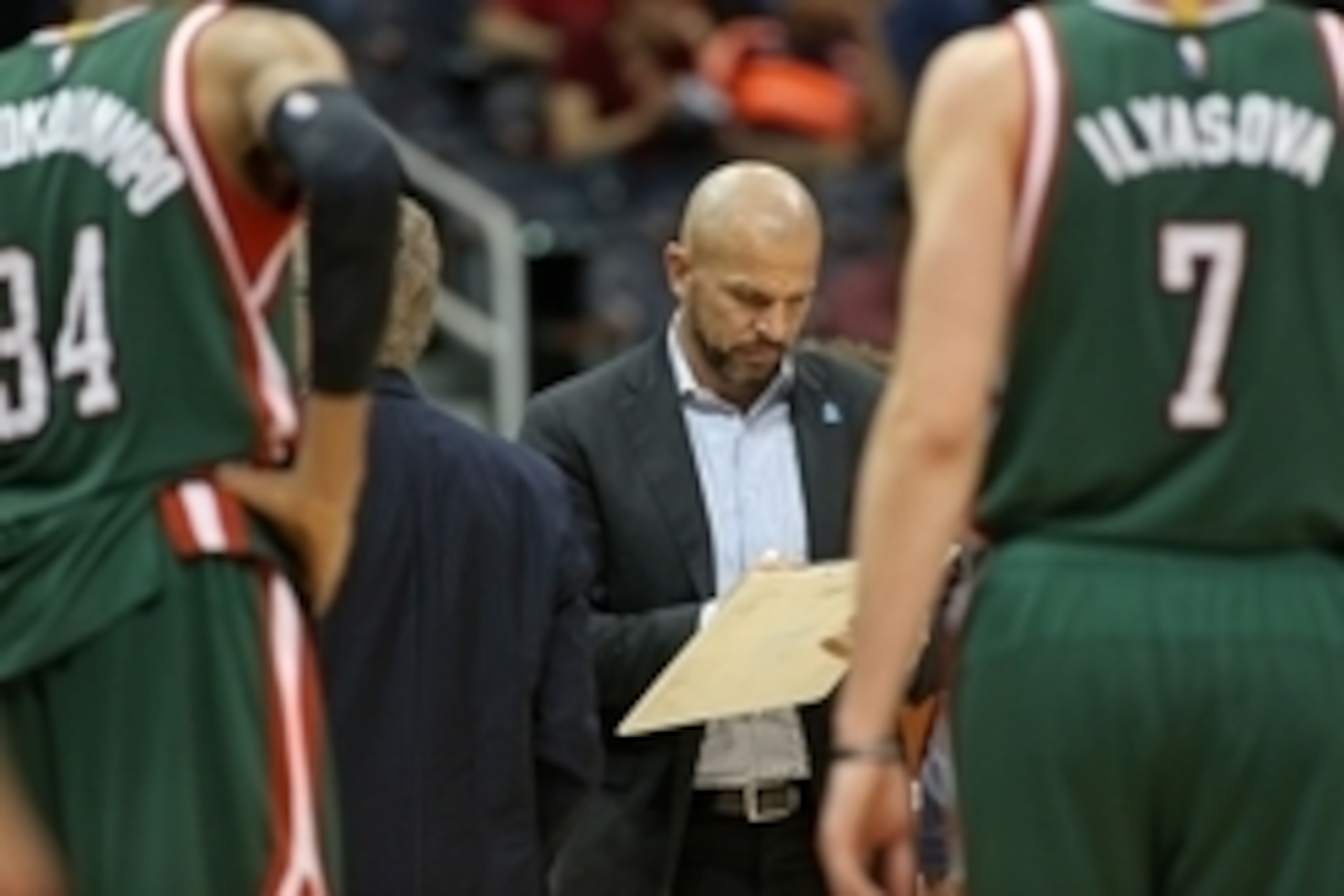
We're talking about a coach who unconventionally gives his players written tests before games, something that, as Grantland's Zach Lowe noted, he learned from playing for Dallas Mavericks head coach Rick Carlisle and then assistant Terry Stotts.
It's all part of the culture Kidd and the rest of the Bucks are trying to enforce: that overriding concept of organizational synergy which the Bucks are so clearly actualizing.
You can tell from how a coach's—and not just a general manager's—opinion on MCW helped net him. You can tell from how Kidd has used the players GM John Hammond—who deserves far more credit than he's received—drafted and craftily acquired over the past few years. And you can certainly tell by the way Kidd talks about his squad's recent losing.
"We're not trending down. We're actually learning."
"No matter how our record shapes out, we're here to build something."
A coach worried about his job doesn't chat like that. Often, the front office concerns itself with the future, while the ones with everyday duties in the locker room involve themselves with game-to-game activities. When your coach fuses those two mentalities together, you have something different.
You have something special.
The Bucks are building, and each level of the organization is in on the plan. It's how the successful clubs find winning in the first place. And just imagine: It all started years ago with with a seemingly unrelated investment involving Kidd and Lasry.
Follow Fred Katz on Twitter at @FredKatz.
All quotes obtained firsthand. Unless otherwise noted, all statistics are current as of April 9 and are courtesy of Basketball-Reference.com and NBA.com.

.jpg?w=2560 "Report: New NFL International Cities ✈️")
.jpg?w=2560 "McCarthy 'Not Surprised' to Be QB1")
.jpg?w=2560 "Breaking News")