


The Cleveland Indians enjoyed Corey Kluber's Cy Young breakout in 2014 so much they've decided they want to hang on to him for a while.
Good for them. And for him, too.
It was late Saturday afternoon that Ken Rosenthal of Fox Sports reported Kluber and the Indians were nearing an agreement on a long-term extension. Jeff Passan of Yahoo Sports reported it would be for five years with two additional option years, and Jordan Bastian of MLB.com reported the financial terms Sunday afternoon:
TOP NEWS

Brewers Complete Comeback In Game 2

World Series Game 2 Takeaways 🍿

Next MLB Players to Sign $200M Contracts 💰
Just like that, the reigning American League Cy Young winner will be sticking around in Cleveland through at least 2019, and potentially through 2021.
Now, it's admittedly rare that an extension for a star player comes off as a bad move for either or both sides. At the time they're signed, it's usually easy to speak about them in glowing terms.
And fortunately for Kluber and the Indians, their deal isn't an exception.
A Win for the Indians
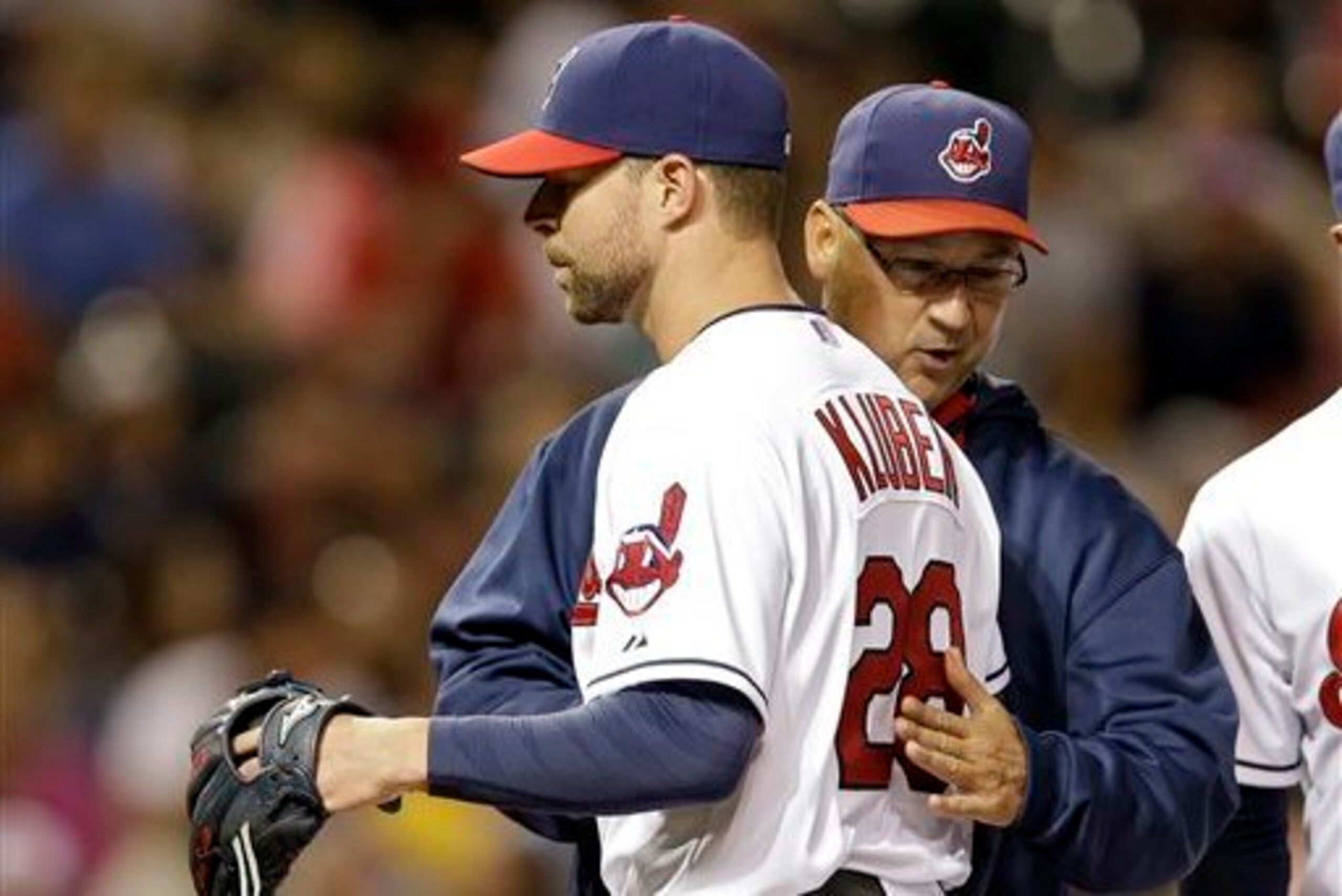
For the Indians, the only thing more awesome than watching Kluber put together his 2.44 ERA in 235.2 innings in 2014 was knowing they were getting that production for very, very cheap.
It being only his second full season in the majors, the 28-year-old right-hander only earned $514,000. And with 2015 due to be his third and final pre-arbitration season, the Indians only upped his salary to $601,000.
After 2015, however, Kluber was due to get expensive in a hurry through his three years of arbitration, especially if 2014 proved to be just the first of many ace-like seasons. By extending him, the Indians have dodged that bullet, and that will likely mean a savings of millions of dollars relative to Kluber's potential arbitration payouts.
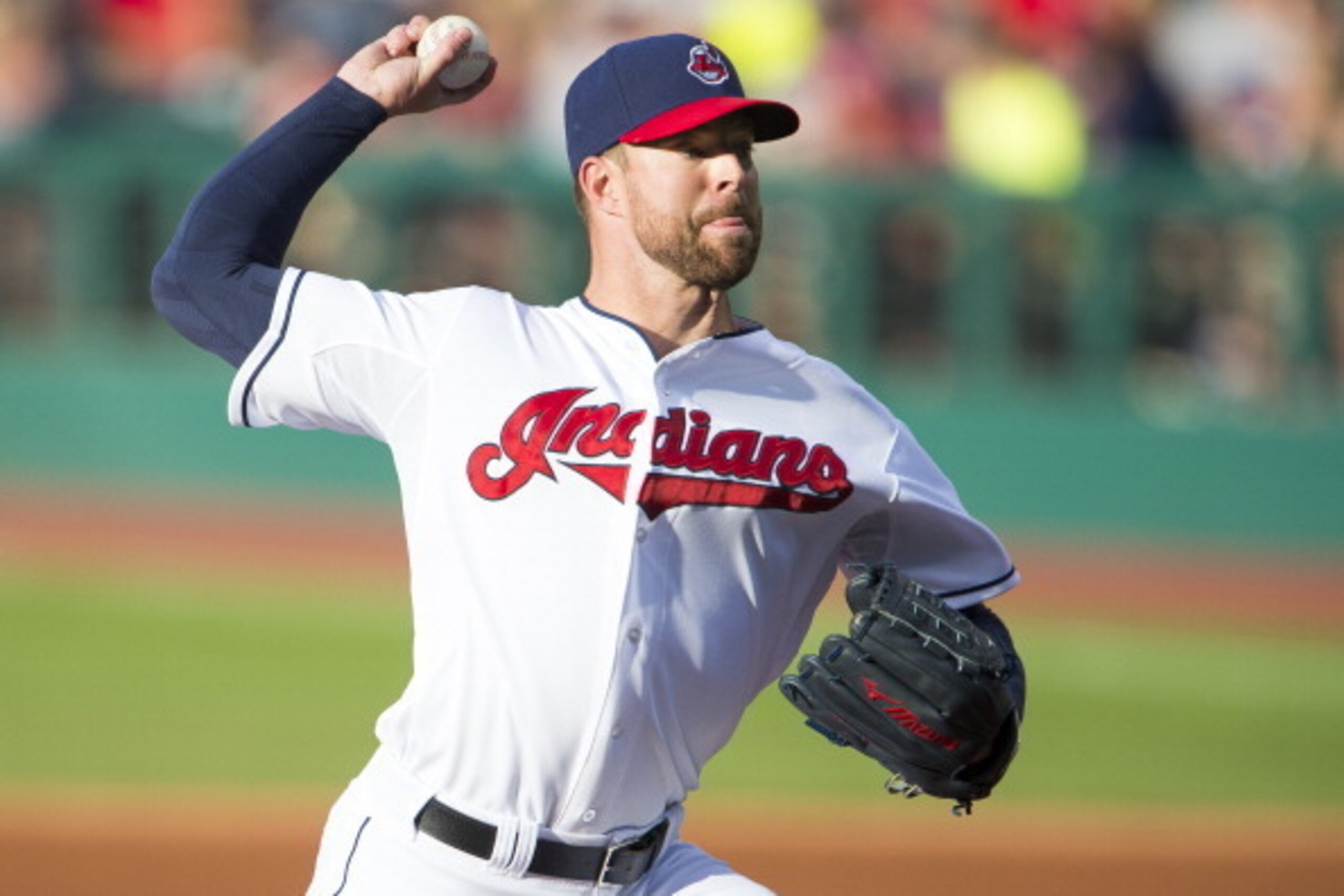
Just as important, locking up Kluber for at least five years and potentially as many as seven years means the Indians are getting at least one and potentially three of his free-agent years. Relative to what the going rate for ace pitchers is going to be down the line, those years are definitely going to be cheap.
That's a good deal for the Indians even without context. But in this case, the context is that they're going to need as much future financial flexibility as they can get.
In Trevor Bauer, Danny Salazar, Cody Allen and Lonnie Chisenhall the Indians have some young players who they also need to think about locking up. Just below them are top prospects such as Francisco Lindor, Bradley Zimmer and Clint Frazier who will also be on Cleveland's extension radar before long. In the long run, the Indians could be very glad they signed Kluber for relatively cheap while they still could.
The only way the Indians will regret this deal, of course, is if Kluber gets injured or proves to be a one-year wonder. But from the looks of things, neither outcome should frighten them too much.
Yes, Kluber is a pitcher. That means there's an inherent danger of him getting injured. He's also just a few days shy of turning 29, putting him one year short of the danger zone that is the age of 30.
But the thing to remember about Kluber is that he's relatively well preserved. Between the minors and the majors, he only has 1,227 professional innings on his arm. Relative to other recent aces through his age, that's not a very big number. He may be close to 29, but his arm is younger.
As for the trustworthiness of Kluber's big 2014 breakout, it's...well, trustworthy.
It's definitely possible for an ERA as low as Kluber's 2014 ERA to be the product of luck. But that's not the case here. As far as the ERA estimating metrics at FanGraphs—those being FIP, xFIP and SIERA—are concerned, Kluber pretty much got the ERA he deserved last year.
That's one way we can tell he didn't get lucky. We can also tell by looking at how his strikeout, walk and ground-ball rates were all better than average. And as Mark Simon of ESPN Stats & Info notes, Kluber was one of the top 35 pitchers at limiting hard contact:
This is all to say Kluber was legitimately hard to hit in 2014. And certainly, you'd expect as much from a guy with strong command who also has plus movement and velocity on his sinker and cutter and one of the nastiest sliders in existence.
In locking up Kluber, the Indians are holding on to a guy with a relatively fresh arm who just won a Cy Young on the strength of quality command and a lethal arsenal. And in locking him up, they're securing both short- and long-term cost control.
So, shoot. What's not to like?
A Win for Kluber
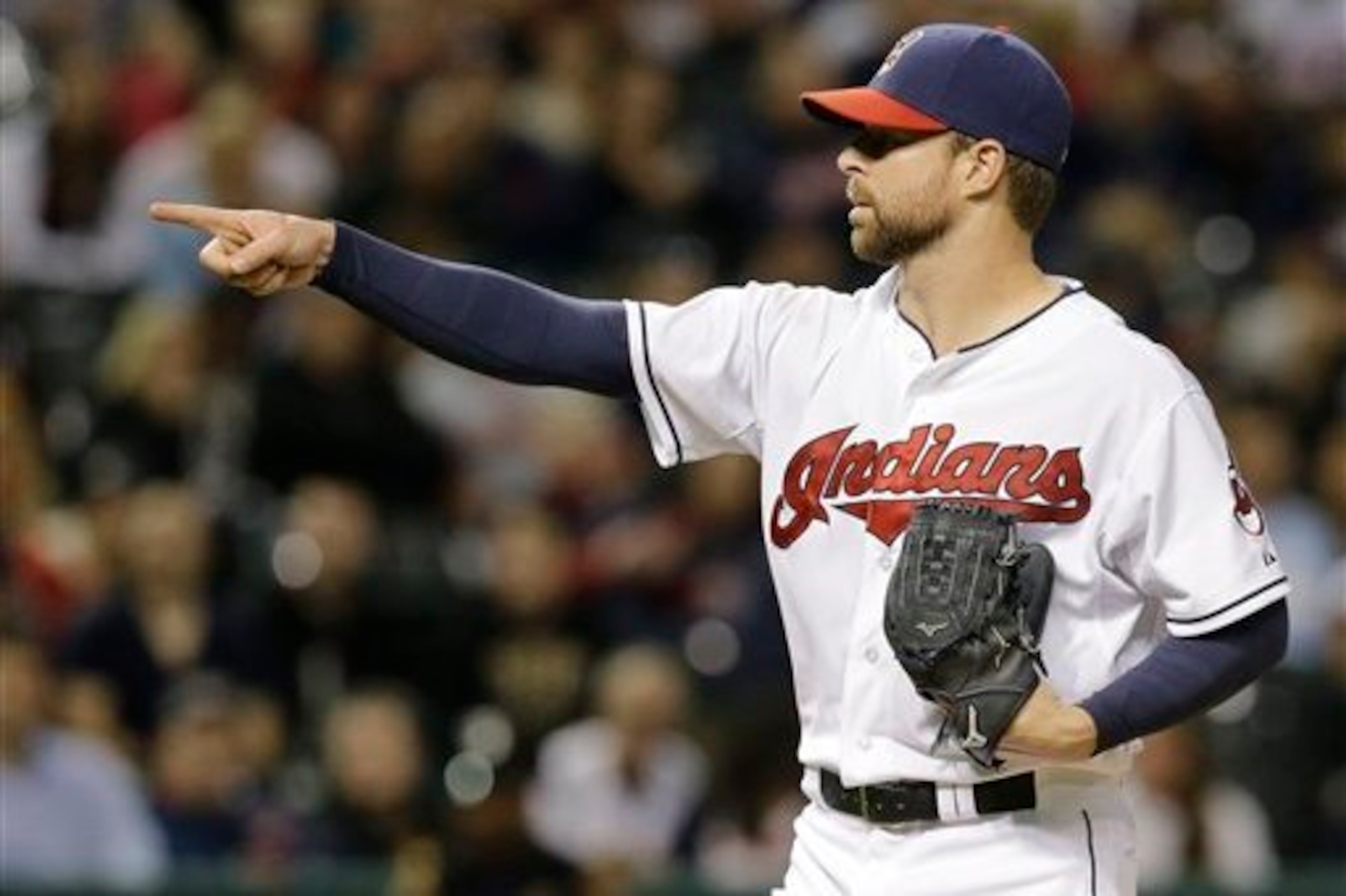
At first glance, it might look like Kluber is getting robbed with this contract. And there is something to that argument, as the $38.5 million he'll earn over the next five years is actually less than what FanGraphs' value system says he was worth in 2014 alone.
But let's be real. With one year to go until arbitration eligibility and four years to go until free agency, Kluber didn't have the leverage to bargain for anything even remotely close to market value. So relative to his bargaining power, Kluber actually got a solid deal, Bastian notes:
Yes, there's more money in the game now than when Madison Bumgarner signed his extension three years ago. But Kluber's also darn near seven years older now than Bumgarner was at the time he signed, so him actually slightly surpassing Bumgarner's deal counts as a victory.
Now, one thing Kluber could have done is deny extension talks and aim for escalating paydays in arbitration starting next winter.
But had he done that, he would have been risking an injury ruining everything. Though his workload history may say that's unlikely, such an outcome had the potential to be disastrous for him due to his age. A major injury in 2015 would have resulted in a small payout in his first year of arbitration, and his next two years of arbitration would then have taken place on the wrong side of 30.
And that's not the only reason Kluber was right not to try and play the waiting game.
Had Kluber gone all-in on waiting, making big bucks in arbitration would have just been a warm-up for free agency. But even if he had gone through with it and remained healthy and productive, odds are he would have ended up being disappointed.
Kluber would have entered free agency off his age-32 season. That's now considered old by free-agent standards, as teams have wised up to the fact that it's generally not a good idea to invest big bucks in a player's mid-30s. Rightfully so, because the production to come is more than likely going to be a major step down from the production that came before. Why pay a premium for it?
Look no further than what just happened with James Shields. He entered free agency this past winter fresh off an outstanding four-year run between 2011 and 2014 and was often said to be seeking a nine-figure deal. What he got was a deal worth only $75 million.
"Security" is always a buzzword with long-term extensions, but it might apply to Kluber's extension more than any other one in recent memory. Him waiting in search of a much larger payday would have been a disaster waiting to happen at worst and a fool's errand at best. He was right to get what he could while the getting's good.
It's a good deal for Kluber, and it's a good deal for the Indians. So, let's hear it for a deal well struck.
Note: Stats courtesy of Baseball-Reference.com unless otherwise noted/linked.
If you want to talk baseball, hit me up on Twitter.

.jpg?w=2560 "Mahomes Told Teammate to Leave Meeting")

.jpg?w=2560 "5 Teams Eyeing Jonathan Taylor")


.jpg?w=2560 "NFL investigating Eagles")

.jpg?w=2560 "Jonathan Taylor Landing Spots 📍")