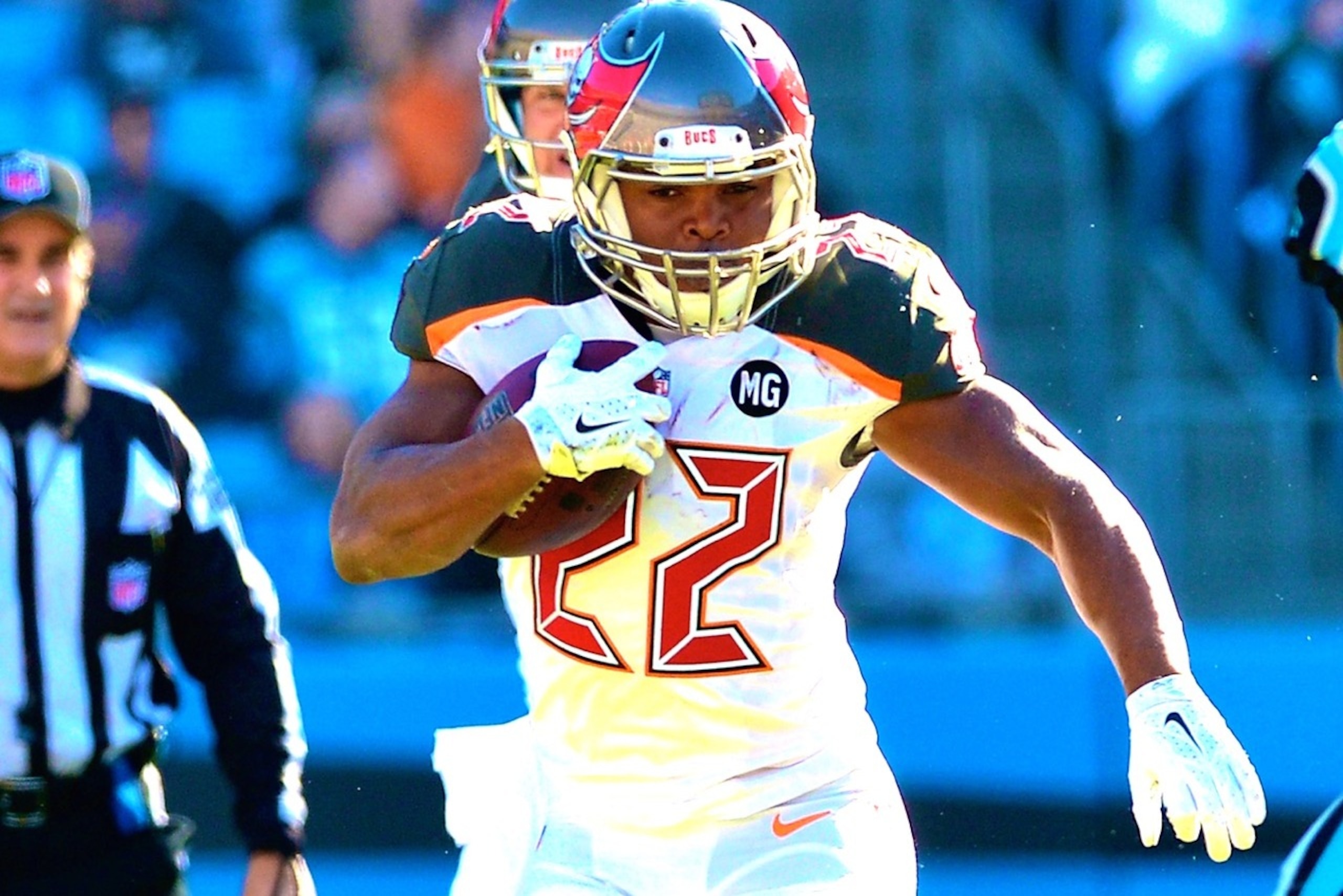

Doug Martin Still Holds Plenty of Value in an NFL Backfield
After an amazing rookie year in 2012, Tampa Bay Buccaneers running back Doug Martin’s value has plummeted over the last two years. Last season, he split time with Bobby Rainey and Charles Sims, compiled just 558 yards from scrimmage and averaged a meager 3.7 yards per rushing attempt.
Martin still holds plenty of value in an NFL backfield—it just might not be in Tampa Bay.
If the Buccaneers can get a mid-round pick for Martin, the current regime may move on from a player going into the final year of his rookie contract.
TOP NEWS

New NFL contenders starting to emerge after Week 4
.jpg?w=2560 "Cardinals Giants Football")
NFL investigating 2 referees for separate viral exchanges
.jpg?w=2560 "Titans Giants Football")
OBJ Calls Out Giants 😳
Both sides would probably be better off.
Although we can’t absolve Martin from blame for his struggles, his situation has a lot to do with the drop in his production. Martin has been terrible in pass protection and dropped too many passes throughout his career, which has prompted the team to make adjustments.
Great Vision
As a rookie, the Buccaneers let him play despite those issues because he has great vision and burst. When healthy, he still does. The problem has been the offensive line's ability to execute.
The Bucs had to trade for guard Logan Mankins out of desperation prior to last season to repair the offensive line.
Rainey and Sims collectively averaged 3.7 yards per carry last year—the same as Martin.
Despite his other struggles, Martin still received the most carries on the team last year in large part because of his vision. The coaching staff also knew the offense struggled to run the ball because of the line.
When the offensive line does execute, Martin rarely leaves yards on the field. The two most shining examples of his vision are on his two longest runs of the season, a 63-yard run against the Carolina Panthers and a 43-yard run against the New Orleans Saints.
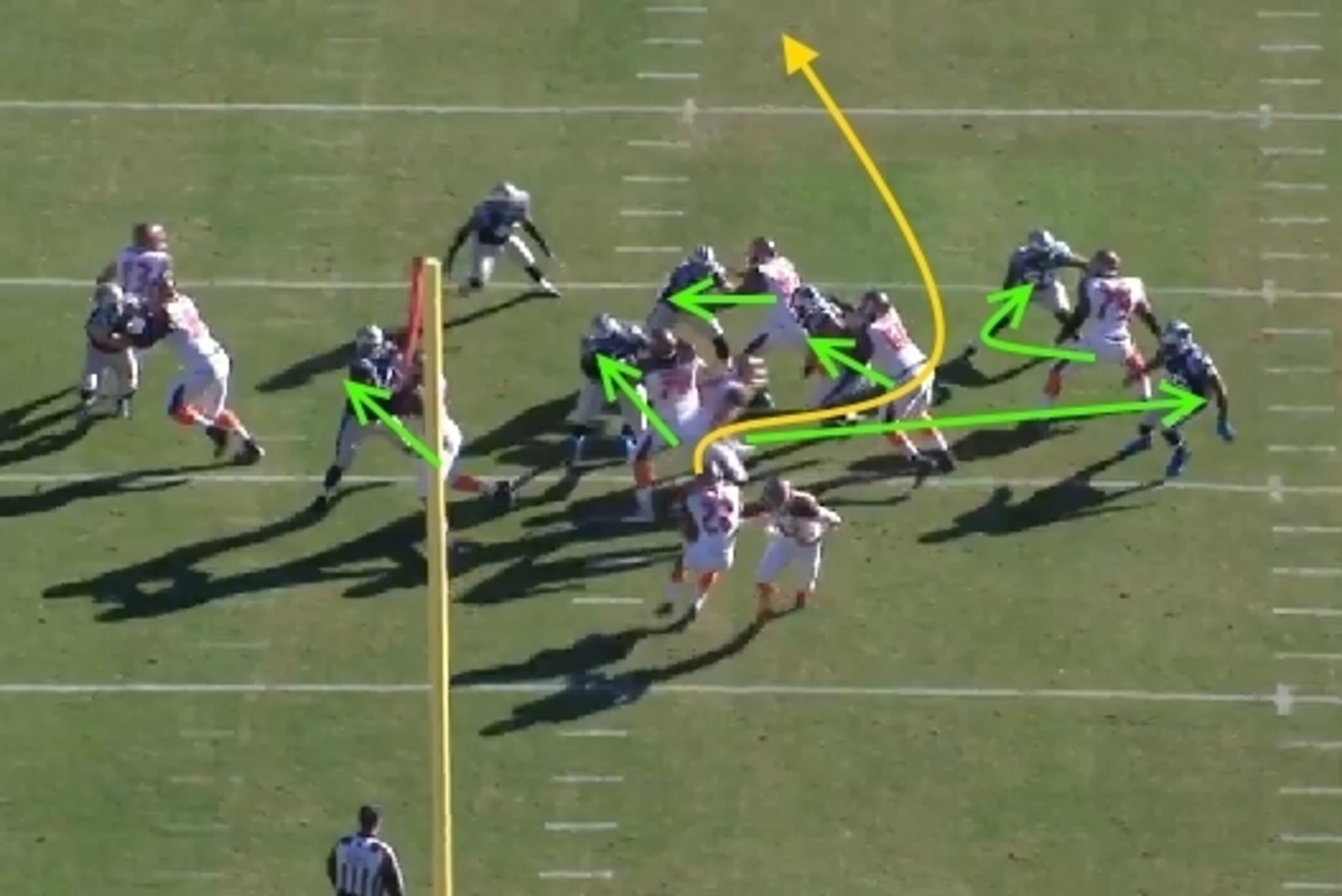
On the 63-yard run, the blocking was nearly perfect. Martin cut hard back to his right and found daylight. Running backs with poor vision don’t always see how the play is going to develop and either run into the backs of their offensive linemen or try to make a move in the hole instead of committing.
Martin understands the blocking to the extent that he can choose the right hole depending on the location of the linebackers.
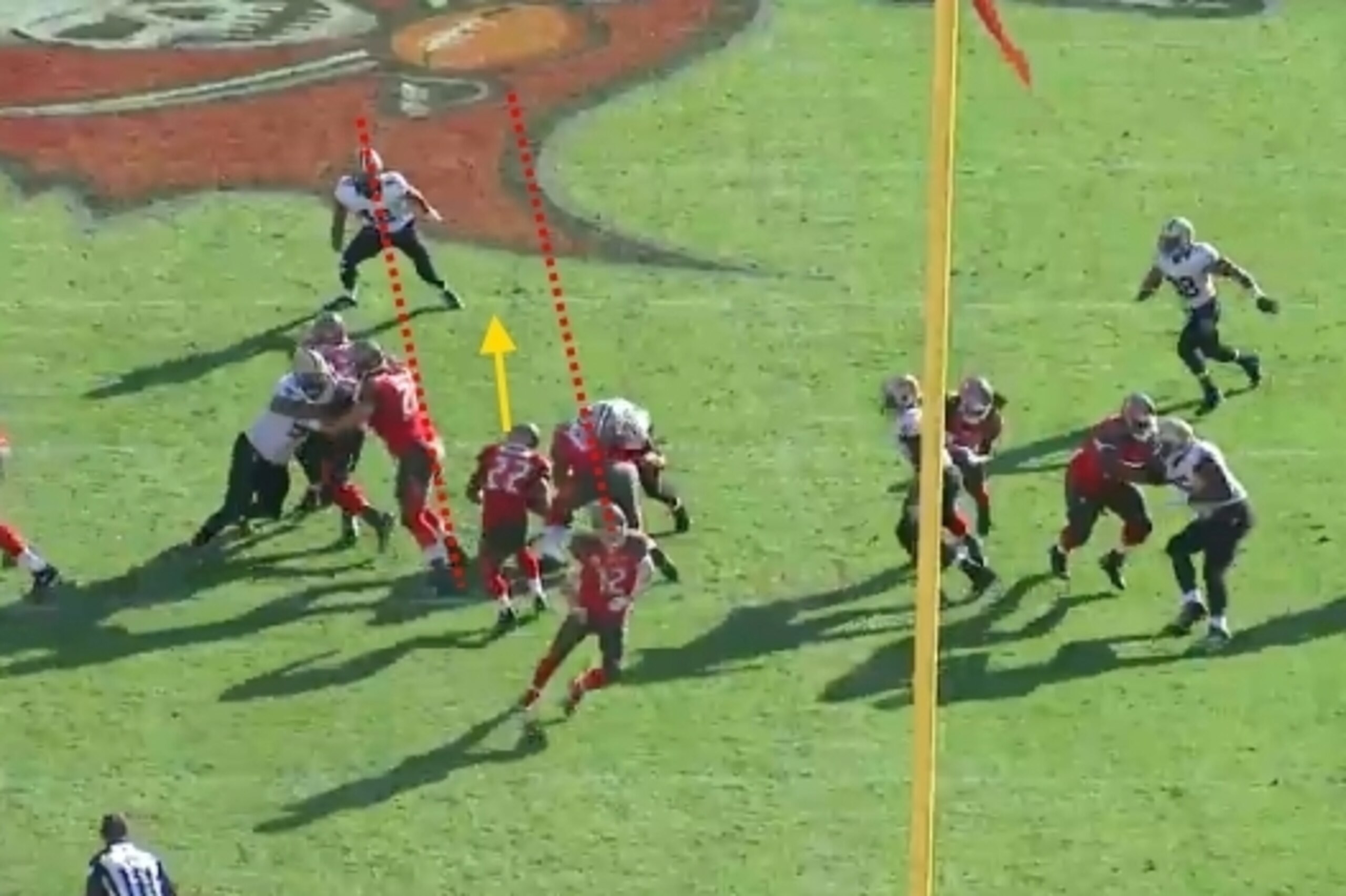
On his 43-yard run against the Saints, Martin’s ability to find linebackers with his vision is key:
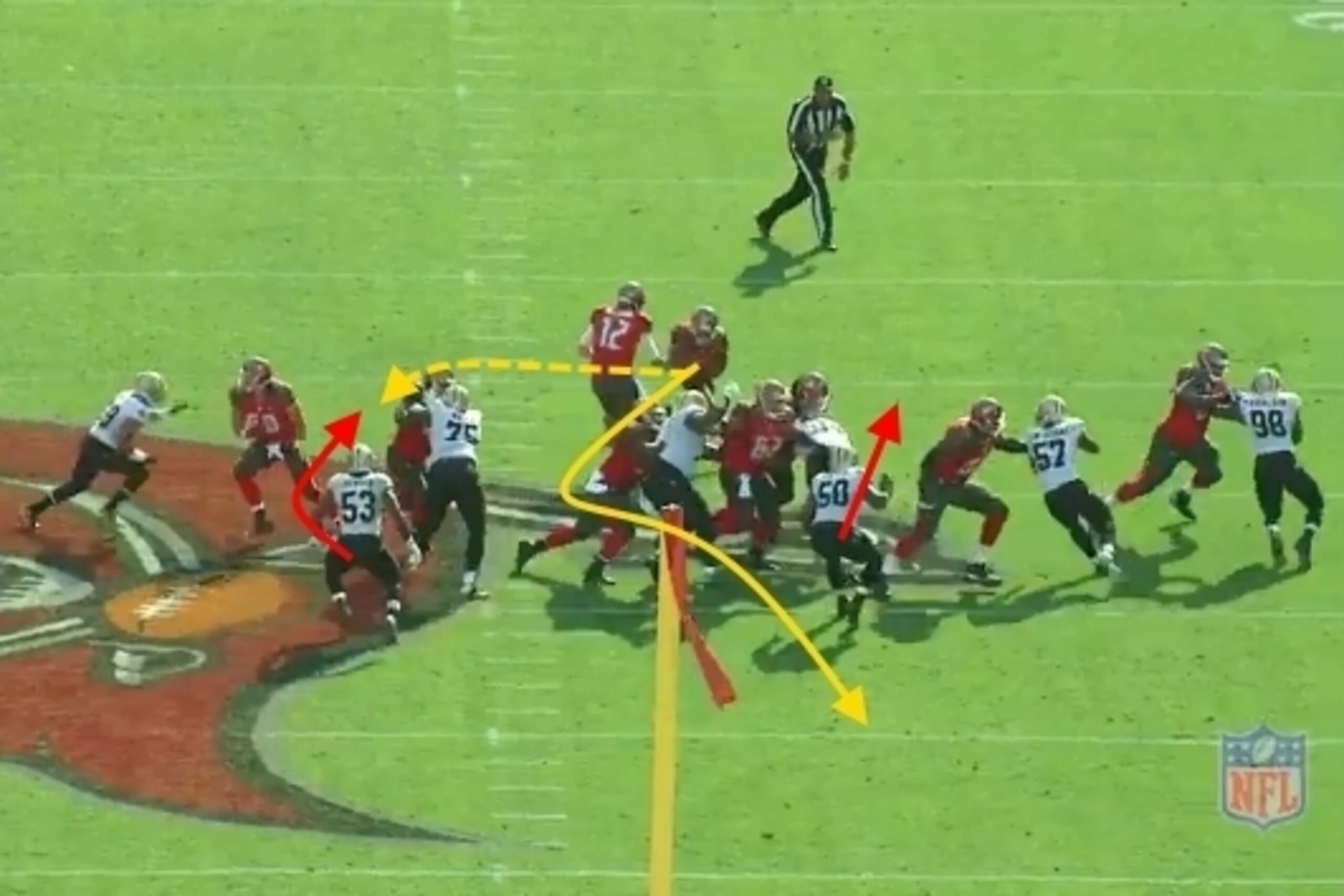
It’s not clear to every running back based on the position of the defensive lineman on that side whether Martin should press to the C-gap or take the more direct route up the middle. What dictates this is the position of the two linebackers.
One has flashed to the play side and the other is sitting outside in the C-gap, leaving the big run up the middle wide open.
The blocking has to be good for big plays like this, but the running back also has to understand how to get the most out of them. Here’s an example on a more pedestrian six-yard gain that demonstrated Martin’s vision just as well:
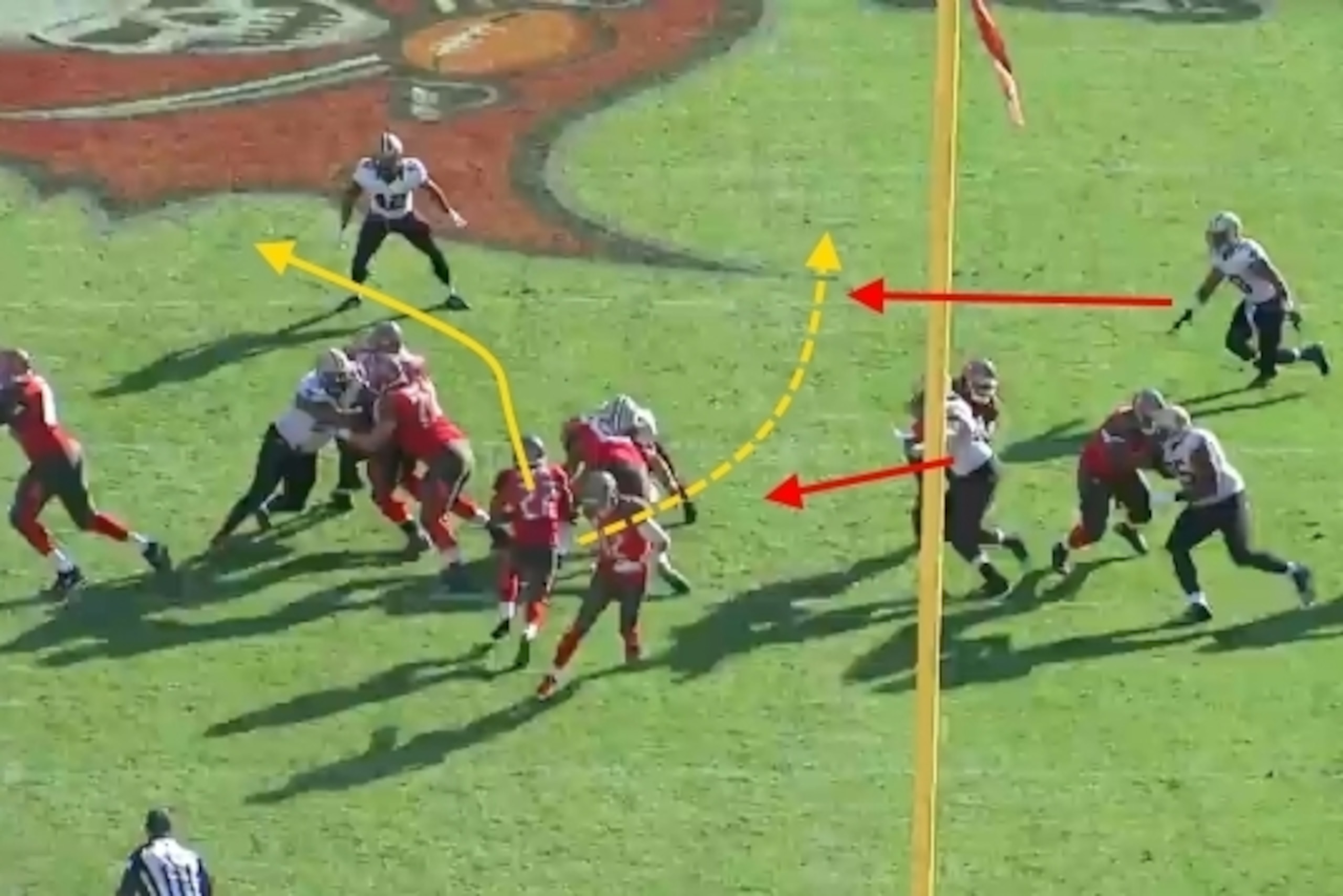
The block in front of him and the daylight to Martin’s right would entice runners with lesser vision. Martin sees the defensive lineman and a safety coming from that side and patiently waits to see if there will be a gap open right in front of him:
When his tight end gets a good block that doesn’t pinch off the gap too much, Martin gets through it in a hurry and tries to put a move on the linebacker.
When the blocking is at least decent, Martin is able to get to the second level consistently due to his vision and is often a missed tackle away from a big play.
Passing Game
One area where the new regime in Tampa Bay didn’t use Martin as much as the prior regime did was in the passing game. One way to keep a running back out of pass protection but in the game is to utilize them as receivers.
The Bucs chose to use Rainey instead of Martin in this role.
Given Martin’s struggles with drops over the first two seasons of his career, you can understand why they might do this. When Sims returned from injury in Week 10, Martin’s share in the passing game became almost nonexistent.
What the Bucs overlooked was the fact that Martin didn’t drop a single pass in 2014. This is after dropping four passes in six games in 2013 and seven in 16 games in 2014, per Pro Football Focus.
The new regime’s desire to get Sims involved and use Rainey took away a dimension of Martin’s game that may have kept defenses from keying on him in the running game.
| 2012 | 4.4 | 3.1 | 29.5 | 9.6 | 7 |
| 2013 | 4.0 | 2.0 | 11.0 | 5.5 | 4 |
| 2014 | 1.8 | 1.2 | 5.8 | 4.9 | 0 |
| 2014 with Sims | 1.0 | 0.7 | 1.7 | 2.5 | 0 |
In his rookie year, Martin had about one-quarter of his yards in the passing game. In fact, he had just 22 fewer receiving yards in his rookie year as he had rushing yards in 2014. It’s a big part of his game that was missing last year.
This probably won’t change as long as he is in Tampa with Rainey and Sims.
If Martin lands on a team where he can be a true feature back and used heavily in both the running and passing games, he has a chance to return to near his rookie-level production.
Pass Protection
Martin’s biggest issue is pass protection. PFF graded him as the worst running back in the league in pass protection. According to Steve Gallo of The Huddle, the team benched him for his inability to pick up blitzes last season.
What doesn’t make sense is continuing to throw Martin to the wolves. Martin stayed in to block 35.5 percent of the time in 2014, the third-highest percentage in the league among qualified running backs.
By comparison, a running back like Jamaal Charles stayed in to block just 15.1 percent of the time and Matt Forte stayed in just 18.8 percent of the time. It’s not like the Kansas City Chiefs and Chicago Bears had awesome offensive lines last year, but those teams figured out how to work around their limitations in another way.
| Doug Martin | 187 | 66 | 35.3% | 13 | 19.6% |
| Jamaal Charles | 696 | 59 | 15.1% | 5 | 8.5% |
| Matt Forte | 392 | 118 | 18.8% | 13 | 11.0% |
| Arian Foster | 314 | 44 | 14.0% | 7 | 15.9% |
Forcing Martin to stay in to do something he’s not good at doing is lunacy.
The problem is the Bucs thought they had little choice because the offensive line was so porous, quarterback Mike Glennon needed extra time and Rainey wasn’t much better in pass protection.
Getting Martin out of the pass-blocking business as much as possible and back into the pass-catching business might also get him going in the running game. Defenses would have to account for him, which could also open up others.
With two tall guys like Mike Evans and Vincent Jackson at wide receiver, it’s not as if the Bucs have anyone else who’s great in the short passing game.
That’s probably what they envision Sims being, which is part of the reason the Bucs should move Martin.
Teams also notoriously overrate the value of the running back as a pass protector. Even a terrible year like Martin's only produced a pressure about 20 percent of the time. If a running back is staying in to pass protect five times per game, that’s one pressure per game.
Compared to an average running back in pass protection, it would be only one extra pressure or less every other game.
Teams can’t make compromises like this everywhere, but they should be able to work around a few extra pressures if the running back is otherwise producing. The Buccaneers didn't have the talent to do much in 2014, and the fact that Martin hasn’t been producing is part of the issue, but the Bucs haven’t put him in position to have success.
Of course, Martin can also be better in pass protection like he was his rookie year. His struggles in 2014 may be directly related to the fact that the offensive line was often blocking air and leaving him to pick up the slack. "Backers on backs equals sacks" is a common saying in the league for a reason.
Martin is just 26 and going into a contract year, so the Bucs should consider moving on now if they don’t intend to keep him for the long term.
His age and vision should net them something in return, even if it’s a mid- or late-round draft choice.
Unless otherwise noted, all statistics via Pro Football Focus.


.jpg?w=2560 "Ward Nearly Walks Out of Presser 😳")

.jpg?w=2560 "Buzz: Tyreek Eyeing November Return")