

Tony Snell's Inconsistency Is Both Understandable and Worrisome
Tony Snell’s brief NBA tenure has run the gamut from frustrating to impressive. Unfortunately, those phases have manifested themselves on a number of occasions, leaving room to wonder how high his ceiling actually goes. With so much inconsistency occurring over such a short period of time, is Snell worth keeping around to see whether he turns into someone whom the Chicago Bulls need?
Expectations for players drafted at his position aren't always the highest; however, the former University of New Mexico standout was chosen by a club that had a knack for finding late first-round gold. Basketball fandom at large may not have flinched when he was selected, but there was definitely a standard in place for the youngster.


Had circumstances been different, Snell would not be a blip on Bulls fans’ radars. But Snell was selected at a time when personnel was thin, and he had to transition quickly as a professional. He played in 77 games during his rookie campaign, which seared him into the consciousness of the Chicago sports community. Expectations followed that exposure; now he has to show that he deserves his roster spot each time he suits up to play.
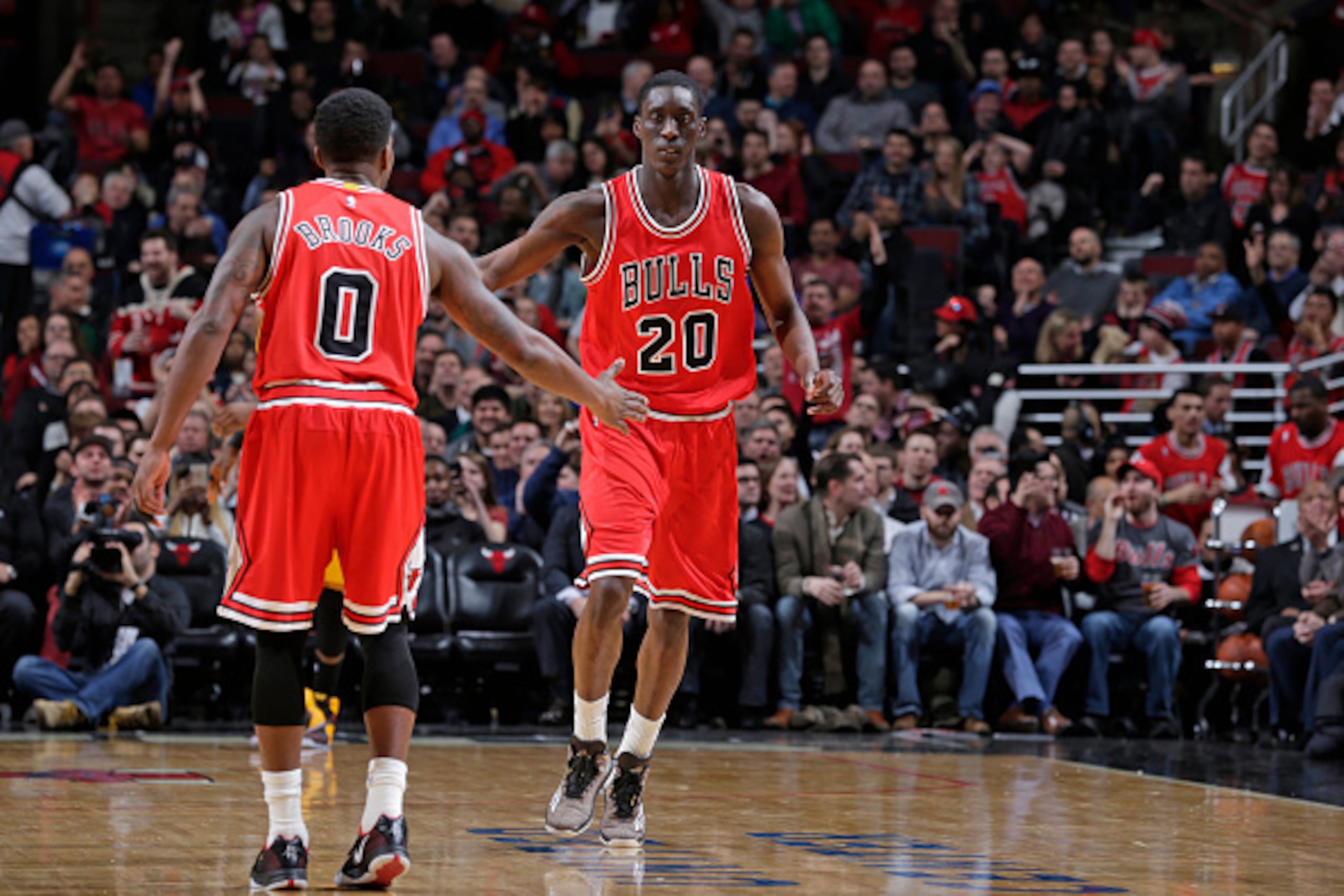
The body of work
During his first season, all anyone could do was look for signs indicating that Snell could be a productive contributor; unfortunately, there were not many portents of good fortune. As a newbie, his numbers were indicative of someone who was overwhelmed.
His low 4.5-point scoring average wasn't that surprising for someone who only played 16 minutes per game, but his 38.4 field-goal percentage and 32 percent three-point proficiency showed that he was not ready for NBA defenses. It was nothing to be concerned about.
Chalk it up to rookie jitters.
Fate was not wholly unkind to Snell, as he showed he was better suited for guarding the ball. His length and athleticism permitted him to challenge most other players with some degree of effectiveness.
The Bulls didn't see much court time in the 2014 playoffs thanks to a first-round elimination at the hands of the Washington Wizards in just five games played. Snell’s role was greatly diminished over that short stretch, lessening his contributions as well. Even with a subpar first season, it wasn't too fallacious to think that the experience served him well and would pay off during his sophomore campaign.
Hopes for an improved second season were piqued when Snell demonstrated impressive scoring strides during the 2014 Samsung NBA Summer League in Las Vegas. He played well enough to earn first-team honors. Of course, this was not against topnotch competition, but Snell exuded a confidence that was not present during the prior year.
It looked like he was ready to make a leap.
Not only did that summer league poise diminish by the start of the 2014-15 regular season, but it also downright vanished. Those who were expecting to see a more polished pro were sorely disappointed. Over the first 26 games of the season, Snell averaged a meager 1.8 points per game on 35.6 percent shooting.
Not only did he fail to evolve, but he also actually regressed.
It is not upsetting to watch an athlete grapple with that initial transition from the collegiate to the professional sporting ranks, but it is distressing to watch that same person perform worse when he is supposed to have a better understanding of the game.
The months of October to December should have all but buried Snell at the end of the bench, but a rash of injuries would force head coach Tom Thibodeau to tweak his rotation. The second-year wing got the nod and was back on the court.
January brought a second wind for Snell. Since the calendar rolled over to 2015, he has averaged 9.4 points per game, and his field-goal accuracy has improved to 45.1 percent. He hits the three-point shot with enough consistency to provide great perimeter spacing in the halfcourt set.
For a little more perspective on his last few productive months, consider that in all of 2013-14, Snell had 13 games in which he scored double digits, tallying 15 points or more in four of them. Since January 1, he has racked up 18 such games, with seven of them breaking the 15-point threshold.
In other words, Snell is back to having potential again.
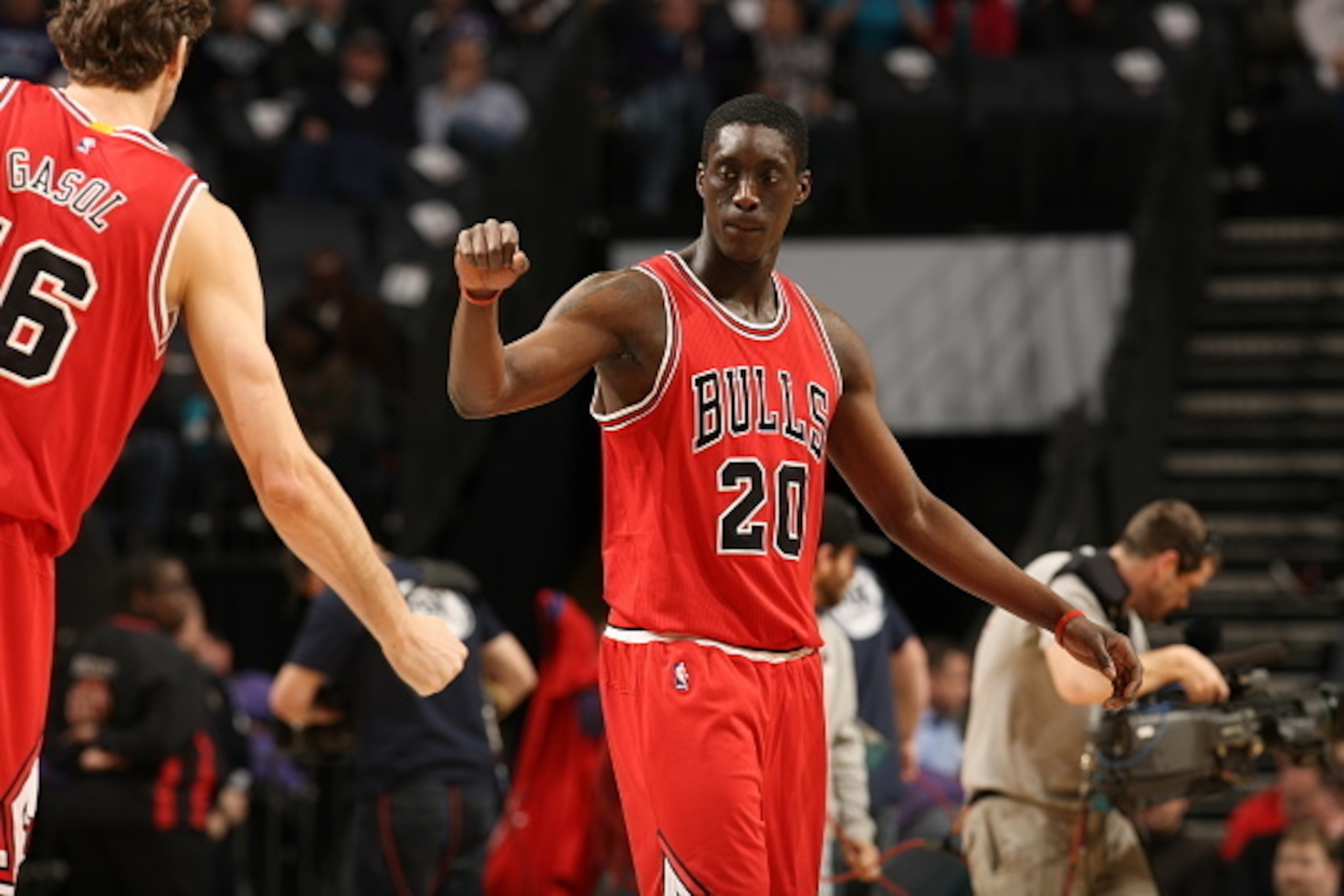
What the future may hold
Snell is a keeper for this team despite his ups and downs. His play during the second half of this season proves that he can be a consistent contributor, and his continued defensive adeptness gives the Bulls another two-way wing player to go along with Jimmy Butler.
This has been a fortunate turnaround. Snell’s emergence came at a time when the team really needed someone to step up. He played well when filling in for injured players and continues to perform solidly even with Butler and Taj Gibson back in the lineup.
In his short career, this is the most productive stretch of basketball Snell has ever played. It may be too soon to say that he has turned a corner, but he is putting together a collection of consistently strong outings. If he can keep this up into the postseason, it would be safe to venture that he has finally found his groove.
It’s amazing what a little stability and familiarity can do for a person’s performance. Snell seems to have finally escaped the vicious cycle of playing poorly because of infrequent minutes and receiving low minutes because of inferior play. It will be interesting to see where this could lead if Snell can secure a steady part in the rotation for next season.
All statistics courtesy of NBA.com and are current as of March 27, 2015.




.jpg?w=2560 "Love's Body Already 'Tired'")

.jpg?w=2560 "Tyreek Deal May Come Soon")
.jpg?w=2560 "Ward Nearly Walks Out of Presser ▶️")
