

Best and Worst Moves the Washington Redskins Have Made in Free Agency
The Washington Redskins entered free agency with a clear plan to get better on defense. They certainly stuck to that plan, as five new recruits joined the unit to bolster both the line and secondary.
But not every move new general manager Scot McCloughan made seems like a hit. He scored big when he snared a natural nose tackle and one of football's best run-stuffers on a smart, short-term deal that protects the team; however, the decision to hand big dollars to a versatile yet uninspiring depth player remains a head-scratcher. Meanwhile, there are a few question marks about the final lineman McCloughan added to Washington's revamped front.
The new GM also asked for a leap of faith when he tagged a special teamer to fix annual woes at safety and gave a bumper deal to a cornerback whose considerable talent is only matched by his serious, off-field baggage.
Find out what moves rate among the best and the worst from an altogether different free-agency period for the Redskins. The list will alternate between the good and the bad, leading up to the very best and worst.
Good: Signing Stephen Paea, DT
1 of 7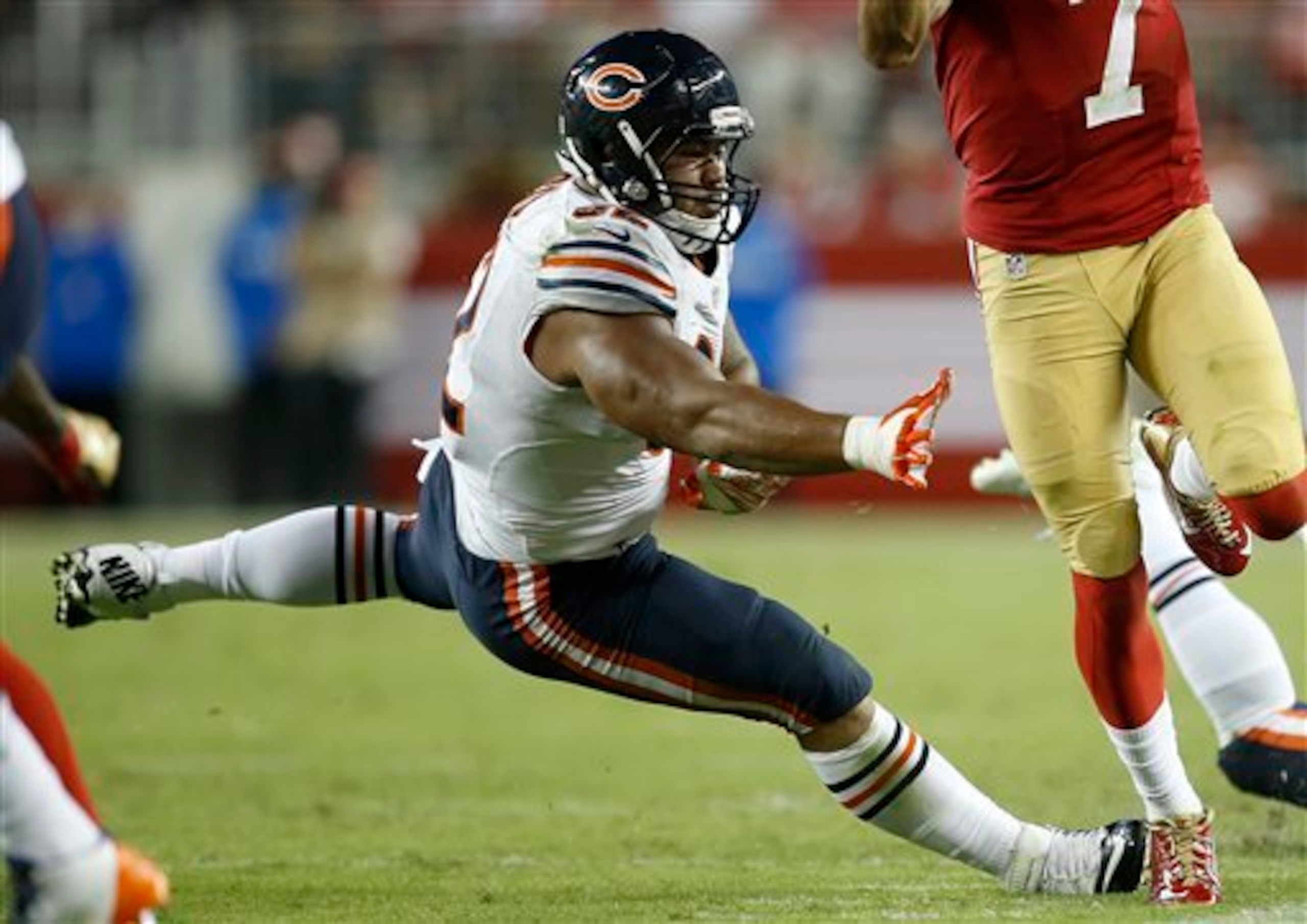
Judging the decision to pluck former Chicago Bears nose tackle Stephen Paea off the market early could have gone either way. But the intent behind the signing ultimately outweighs any question marks.
To begin with those pesky negatives, Paea is expected to transition from nose tackle to end, per ESPN Redskins reporter John Keim. He's also swapping a career in a 4-3 scheme for life in a 3-4.
Now, neither of those transitions is impossible, but early progress is rarely smooth. The Redskins know about the pitfalls, having tried and failed to wedge the likes of Albert Haynesworth and Barry Cofield Jr. into their three-man front schemes.
In fairness though, the switch may not be as big an issue for Paea as it was for Haynesworth and Cofield. The Redskins are no longer trying to make a traditional, two-gap 3-4 their base defense of choice.
This year's system will be more one-gap in nature, according to head coach Jay Gruden, per Mike Jones of The Washington Post. Not only that, but new defensive coordinator Joe Barry is likely to mix fronts more often, with Real Redskins blogger Rich Tandler stating more 4-3 looks are likely. U-T San Diego reporter Michael Gehlken indicated the same thing to Bleacher Report's Adam Lefkoe.
So it's easy to see Paea making the grade as a 3-technique end shaded into the B-gaps in this new-look defense. Yet it's not as simple to believe the 6'1", 300-pounder will be stout against the run.
That was a weakness of Paea's game in 2014 and could be an issue in an NFC East division loaded with power in the trenches.
But even with these questions, Paea can still be a positive force for Washington in 2015, provided he does what he was signed for. Specifically, that means creating consistent pressure inside.
CSN Washington reporter Tarik El-Bashir detailed how Paea established a niche as an interior pass-rusher last season:
"As we mentioned yesterday, Stephen Paea is a 26 y.o. D-tackle. Had a career-high 6 sacks for the #Bears in 2014. Also 31 QB pressures.
— Tarik El-Bashir (@TarikCSN) March 10, 2015"
Those skills will be crucial to creating the kind of defense Barry wants—a defense built on the backbone of a consistently disruptive four-man rush.
With Paea, Jason Hatcher and Ryan Kerrigan ready to pressure the pocket, along with at least one other new addition, Barry already has the most important part of his formula in place.
That's enough to put a few of the doubts about Paea to the back of the mind and hope for the best once he sees the field.
Bad: Adding Jeron Johnson to Fix Safety
2 of 7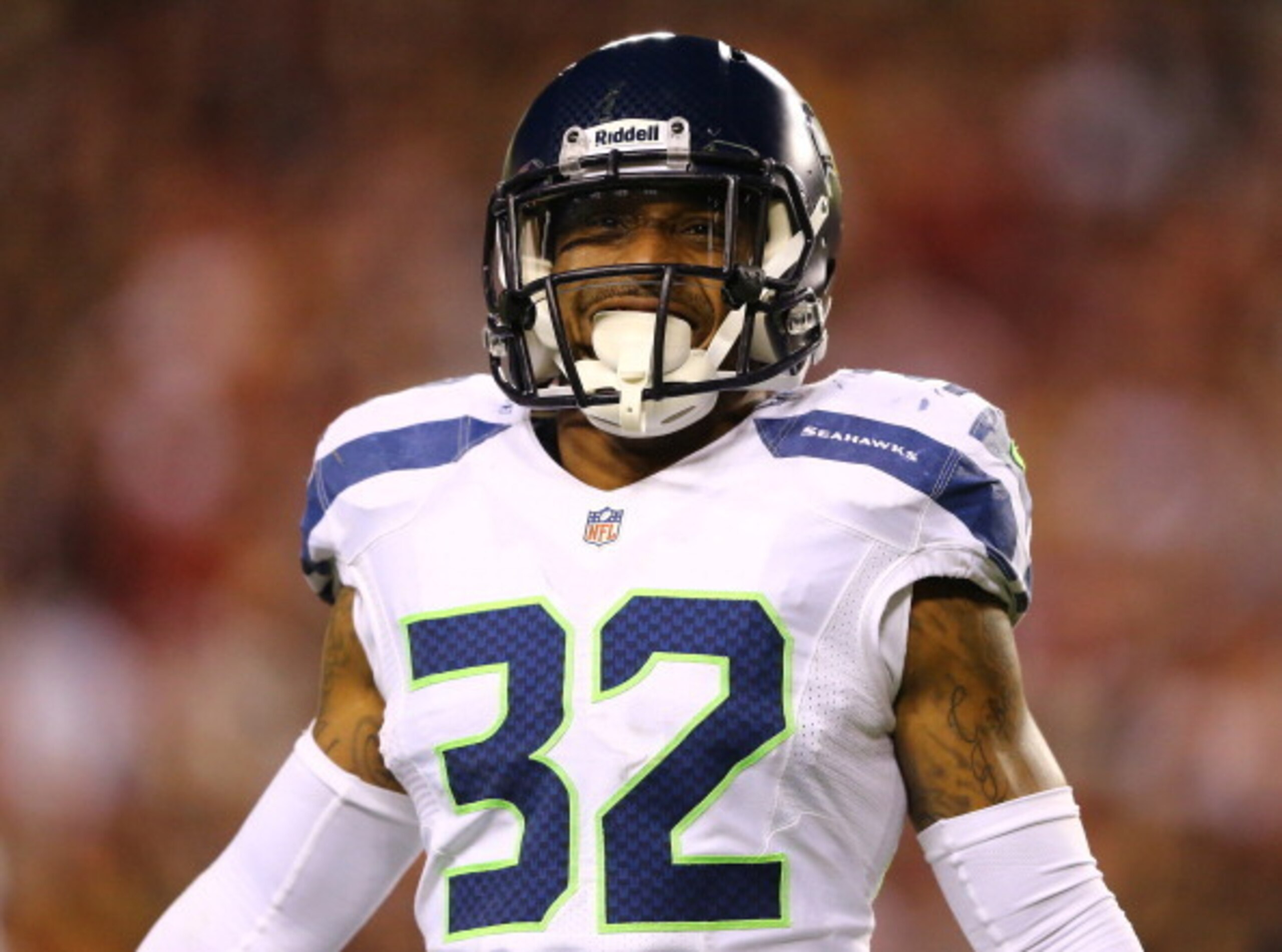
Here's a question for you: What's the best way to fix a position that's been a problem for the last five seasons and has been picked clean by free agency?
If you answered signing a special teams player with just one start at safety in four seasons, you're as much of an optimist as McCloughan. It takes a sunny disposition to believe adding Jeron Johnson will quickly fix the most obvious weakness on the roster.
Even in a year not considered to offer many marquee veterans, it's difficult to believe many would have picked Johnson as a solution. After all, he's spent four seasons on the bench with the Seattle Seahawks.
Of course, there's little shame in that when Kam Chancellor and Earl Thomas are the starters. But it was still a surprise Washington didn't make plays for Ron Parker, Kendrick Lewis, Will Hill and others.
McCloughan is putting a lot of faith in what and, more specifically, who he knows. He was a member of the Seahawks front office when the NFC West club plucked Johnson off the undrafted scrapheap in 2011.
It's a familiar theme in NFL circles for coaches and general managers to fall back on former players. Johnson's versatility and experience on special teams will certainly be assets in D.C.
But this move still belongs in the bad category because it's yielded an unproven potential answer to an annual issue. That Johnson has been the only reinforcement at a position that's already lost struggling veterans Ryan Clark and Brandon Meriweather indicates another season where safety could be the bane of this team.
Good: Signing Chris Culliver, CB
3 of 7
Just signing a capable cornerback rates as a good move for McCloughan and the Redskins. They certainly got that in Chris Culliver, who enjoyed a career year in 2014.
He snatched four interceptions, broke up 14 passes and forced a fumble during 14 starts for the San Francisco 49ers. Culliver proved he can make big plays and press receivers on the outside.
Opportunism and physicality are two essential characteristics currently in short supply in Washington's secondary. The 6'0", 199-pound Culliver will provide those traits.
Perhaps the most positive implication of Culliver's arrival is the change it could spark elsewhere in the secondary. He is almost certain to overtake David Amerson as a starter. That's good news considering how much 2013's second-round pick has struggled.
Maybe Amerson's future lies at free safety, a glaring hole in this defense. He's a decent fit for the position thanks to his size and the benefit of getting to keep the game in front of him.
If Amerson doesn't make the move, perhaps he takes the slot corner role from brittle and uninspiring veteran Tracy Porter. In that scenario maybe DeAngelo Hall converts to free safety. That's a popular notion, although Amerson switching makes more sense.
So with all this going for the signing, why doesn't Culliver's arrival rate more positively on this list? The reasons are rooted in the hefty contract handed to a player with plenty of question marks, specifically off-field issues.
Culliver got a four-year, $32 million deal to sign for the burgundy and gold, per National Football Post writer Aaron Wilson. ESPN Redskins reporter John Keim broke down the contract, which includes $16 million in guaranteed money.
Tellingly, Keim detailed how Washington can cut bait after two years and save $8 million against 2017's cap. That's a smart safeguard considering Culliver's problems away from the game.
He became infamous after homophobic comments made prior to Super Bowl XLVII. More recently, he's been under investigation following an alleged hit-and-run incident, during which Culliver is also accused of threatening a teenager with brass knuckles. The latter charge has since been reduced to a misdemeanor, according to Tracey Kaplan and Robert Salonga of the San Jose Mercury News.
McCloughan slightly protected the team with a clause that means even a one-game suspension will force Culliver to repay a "significant chunk" of the $5 million signing bonus he received, per Pro Football Talk reporter Mike Florio.
That catalog of off-field trouble goes alongside concerns over Culliver's durability and overall experience. He missed all of the 2013 NFL season after tearing his ACL.
That means he's spent only one season as a full-time starter. The Redskins have bet a lot that Culliver's production won't just be a one-off.
McCloughan played things smart inserting so many safeguards in this contract, but the fact he had to only emphasizes the risks inherent in adding Culliver.
.jpg?w=2560 "Chiefs Giants Football")
.jpg?w=2560 "Titans Colts Football")
.jpg?w=2560 "Colts Football")
Bad: Letting Roy Helu Jr. Walk
4 of 7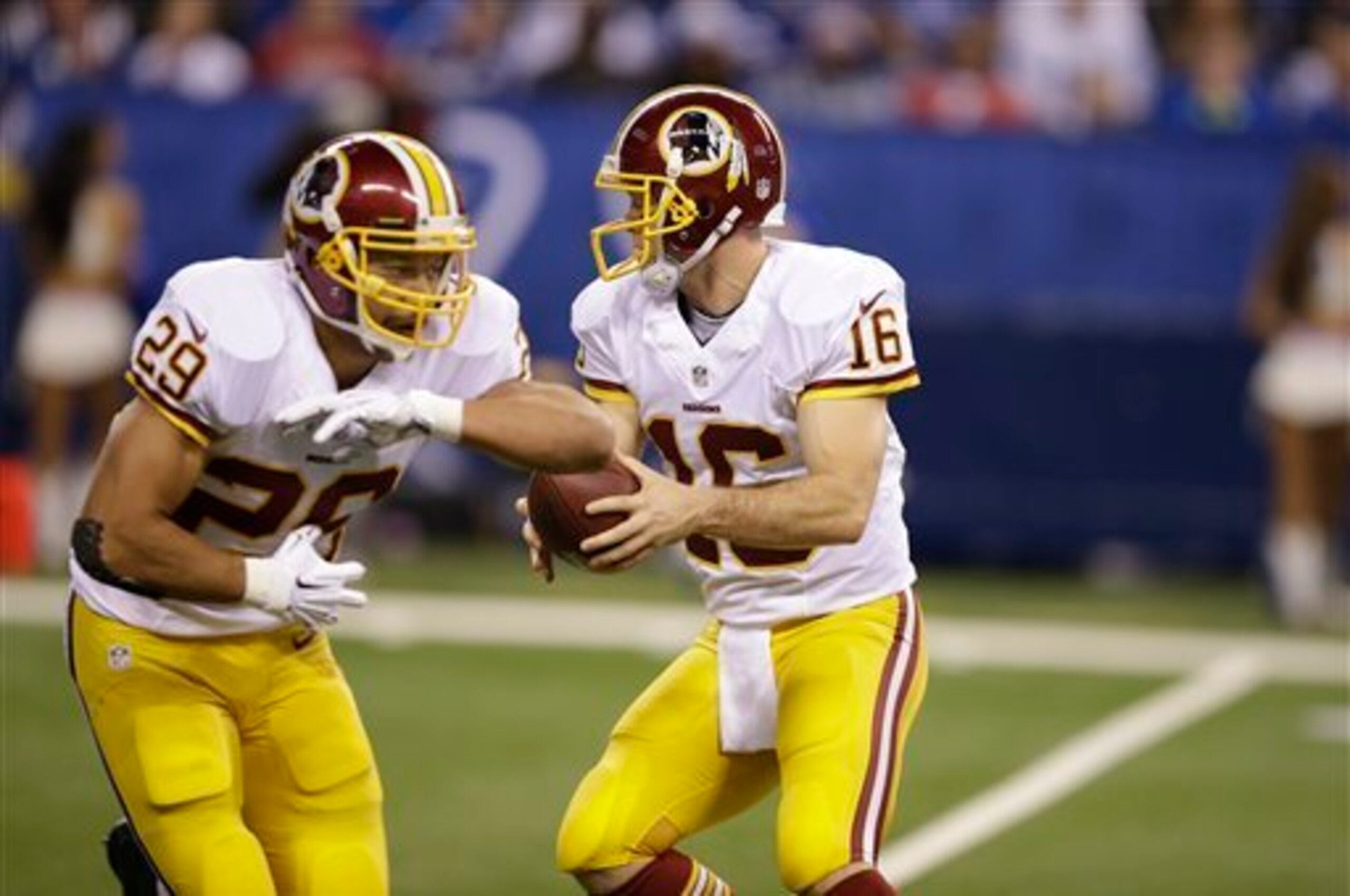
If there was one of their own free agents the Redskins should have been in a rush to bring back, it was Roy Helu Jr. By letting him join the Oakland Raiders, Washington lost the only genuine dual-threat running back on the roster.
Alfred Morris is the obvious workhorse of choice, but his receiving skills remain mediocre. Last year's undrafted runner Silas Redd is a little more versatile, but he's not as explosive as Helu in any one area.
Pocket-edition speedster Chris Thompson certainly has big-play potential as a pass-catcher, but the diminutive third-down fit is never going to offer much as a ball-carrier.
Helu had established a niche as a change-of-pace runner and more-than-useful receiver out of the backfield. In fact, 2014 represented his most productive season in the latter role.
His 42 catches were Helu's second most as a pro. But he set career-best marks in yards with 477, yards-per-catch average with 11.4 and receiving touchdowns with two.
Given the always present potentially season-wrecking uncertainty at quarterback, a prolific outlet like Helu would be invaluable for whoever is under center for Washington.
The Redskins could have kept Helu and his niche skills for a modest price since it only cost the silver and black a two-year, $4.1 million deal to bring him to Oakland, per Mike Jones of The Washington Post.
He also reported how new Raiders head coach Jack Del Rio is only anticipating another supporting role for Helu: “Roy is a good solid backup running back. He played a third-down role in Washington and a little bit on special teams, and so we see him being able to come in and compete in our backfield.”
So it's not as if Helu had his head turned by the promise of more carries. In this context, it's a little galling the Redskins didn't make more of an effort to keep this useful weapon in town.
Letting him walk has created an obvious hole in the offense that will have to be filled before the new season starts. Gruden has already indicated he's ready to add to Washington's options at running back, per Andrew Walker of the team's official site.
That need has now become pressing since Helu was allowed to skip town.
Good: Re-Signing Niles Paul, TE
5 of 7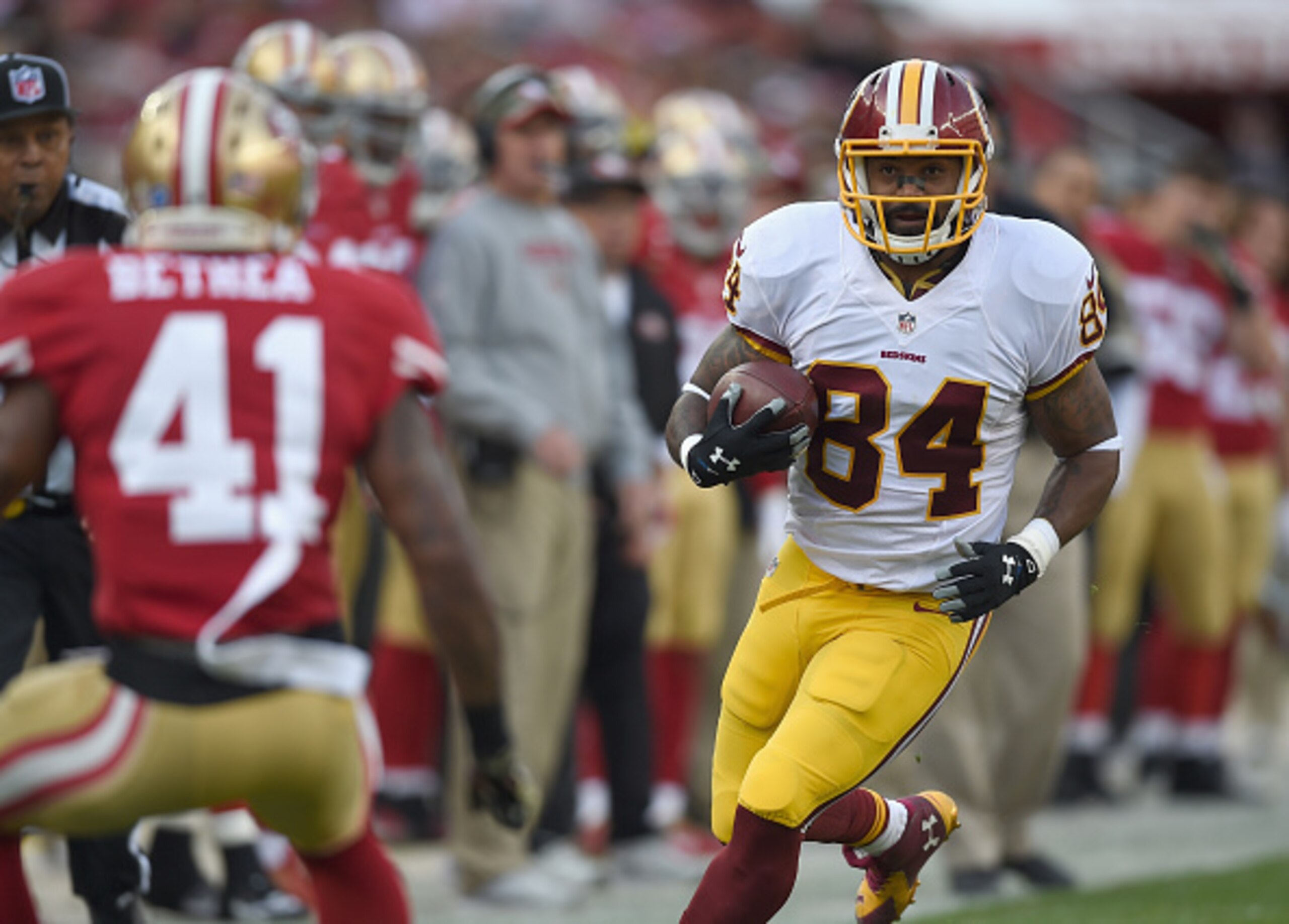
McCloughan and Gruden may rue letting Helu slip through the net, but the pair scored big when they brought Niles Paul back. It was a smart decision that kept a rising playmaker in town and ensured quality cover at a key position.
With Paul around, the Redskins don't have to rely on Jordan Reed staying healthy and learning some consistency. He's managed to do neither during two seasons that have contained as much frustration as promise.
If Reed doesn't deliver on his immense talent, Paul's presence will soften the blow. Like Reed, he is a roving target with wide receiver-type qualities and natural move skills.
Gruden and offensive coordinator Sean McVay took full advantage of that flexibility in 2014. They moved Paul to different alignments and let him attack every level of coverage schemes.
The result was 39 receptions for 507 yards at an average of 13 yards per catch. They are all career-best marks. The next step in Paul's development is to improve on the single touchdown catch his expanded role yielded last season.
As an added bonus, the 25-year-old still offers a wealth of experience, value and willingness on special teams.
Washington managed to keep all those qualities on the roster for a modest three-year deal of less than $10 million, according to NFL Media Insider Ian Rapoport.
That's a reasonable contract for a versatile talent who's an asset in two phases of the game. It took something special to beat this move to the distinction of the team's best so far this offseason.
Worst: The Ricky Jean Francois Deal
6 of 7
Given how fast the Redskins moved for Francois, along with the contract he received, it's easy to wonder if you've missed something about the journeyman entering his seventh pro season.
After all, he never made a starting job his own with the San Francisco 49ers, despite being able to play both end and nose tackle. Francois followed four seasons in the Bay Area with two mediocre years with the Indianapolis Colts.
It's not that the 28-year-old doesn't possess some ability as an inside pass-rusher. He has logged 7.5 of his 8.5 career sacks during the last three seasons.
Yet he's inconsistent as a rusher and far from a force against the run. Obviously, McCloughan feels different. It's only natural he would, given he drafted Francois in the seventh round in 2009.
Francois will provide depth and see the field at every line spot, but the question is: How effective will he really be? His career so far indicates not very.
Certainly not effective enough to justify the three-year contract paying $9 million that his agent Drew Rosenhaus stated his client received to move to the NFC East, per NFL Media Insider Ian Rapoport.
That contract also includes $4 million guaranteed and could go up to $11.25 million in total value. That's a lot to pay a strictly rotational lineman, especially one who is lacking in key areas of the game.
Best: Signing Terrance Knighton, NT
7 of 7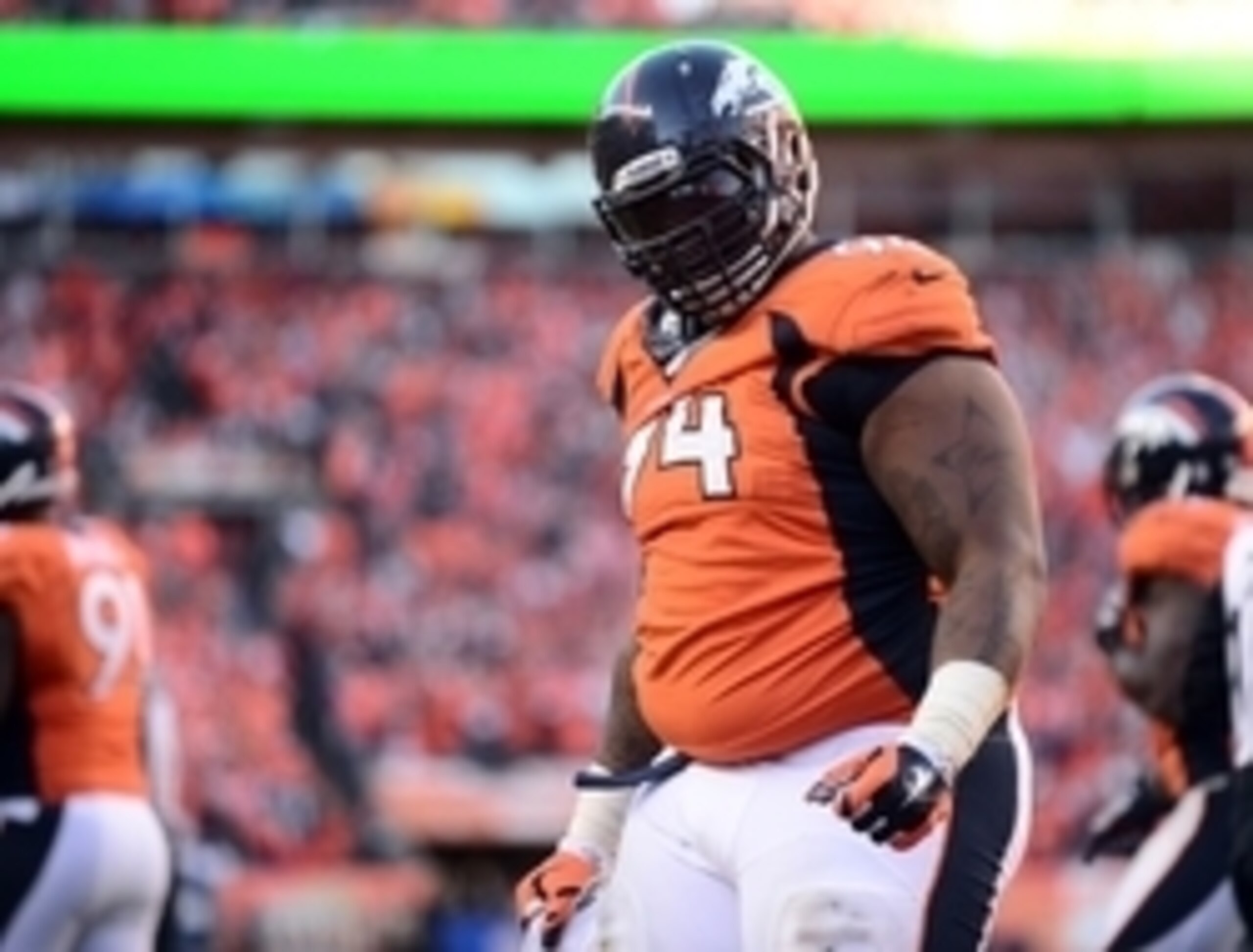
In both a playing and financial sense, the Redskins and McCloughan deserve top marks for the deal that brought Terrance Knighton to town. For a bargain fee, Washington has acquired arguably the most formidable run-stuffer in the NFL and a natural anchor for the 3-4 defense.
Getting those things for the cost of $4 million over one year is superb business. It's particularly impressive when the contract contains smart clauses that should encourage Knighton to watch his weight and stay in optimum playing shape.
Pro Football Talk reporter Mike Florio detailed the vital provisions:
"Per a source with knowledge of the contract, Knighton’s one-year deal (reported widely as being worth $4 million), pays out $2.95 million guaranteed. Another $500,000 is tied to per-game roster bonuses, and another $450,000 will be paid based on his ability to comply with specific weight clauses.
Another $100,000 can be earned by participating in the team’s workout program.
"
Considering staying in shape is the one major weakness of Knighton's otherwise dominant game, this contract not only encourages his best football but also protects the Redskins, as ESPN 980 reporter Chris Russell noted.
No wonder former NFL center Damien Woody had such high praise for this signing. The praise is certainly merited.
At his best, Knighton simply owns the guard-center-guard box. He fills both A-gaps, forces running backs wide and keeps linebackers free to swarm to the ball.
Those are the core characteristics every 3-4 scheme needs over center. They are also essential qualities this team has missed. Their absence directly corresponds to the porous defenses the Redskins have fielded for the last five seasons.
But in one quick action, McCloughan has added a marquee talent at the most important position on Washington's front seven. It's impossible to point to a better move for the Redskins during free agency.
Smart contracts have generally been a hallmark of this market for Washington. In some cases, the players receiving those contracts come with more doubts than answers.
But the general results of a rare coherent plan have been positive. The Redskins will enter the 2015 NFL season with a bigger, tougher defense.
Given the talent on the other side of the ball, only those pesky quarterback issues can prevent a decent turnaround from last season's dismal 4-12 finish.
All statistics and player information via NFL.com.
.jpg?w=2560 "Steelers Buccaneers Football")
.jpg?w=2560 "Eagles Jaguars Football")




