

How Rodney Stuckey Is Becoming the New Lance Stephenson for the Indiana Pacers
The Indiana Pacers began this season with some holes to fill.
Both of their starting wings were gone—Paul George rehabbing from a catastrophic leg injury suffered in a Team USA scrimmage and Lance Stephenson departing as a free agent to the Charlotte Hornets.
Although George was the better player last season, replacing Stephenson's contributions seemed like a bigger challenge. Like George, Stephenson scored, rebounded, passed and defended at multiple positions. However, "Born Ready" carried a much larger load in terms of offensive creation and ball-handling.
TOP NEWS

Jokic says booing fans not welcome in Denver
Worst NBA Predictions 🫣

Brown with an all-time summary of relationship with Tatum
A number of factors have allowed the Pacers to find success this season—they're currently just one game out of the Eastern Conference's final playoff spot, despite a slew of injuries. One of the biggest has been the Stephenson-esque contributions of Rodney Stuckey.
Last summer, Stephenson spurned the Pacers' offer of five years and $44 million, opting instead for a change of scenery and a three-year, $27 million contract from the Hornets. The Pacers quickly sought out replacements and, with limited options, ended up signing C.J. Miles to go along with Stuckey.
The Miles-and-Stuckey combination seemed like a piecemeal approach to replacing Stephenson. Miles could provide some of Stephenson's defense and outside shooting, and Stuckey could handle the dribble penetration and shot-creation duties.
The problem, obviously, was that those skills were split between two players instead of wrapped up into one. This idea of replacing one player's contributions with two, more individually limited, players is a common backup plan around the league. It rarely works as cleanly as it appears on paper.
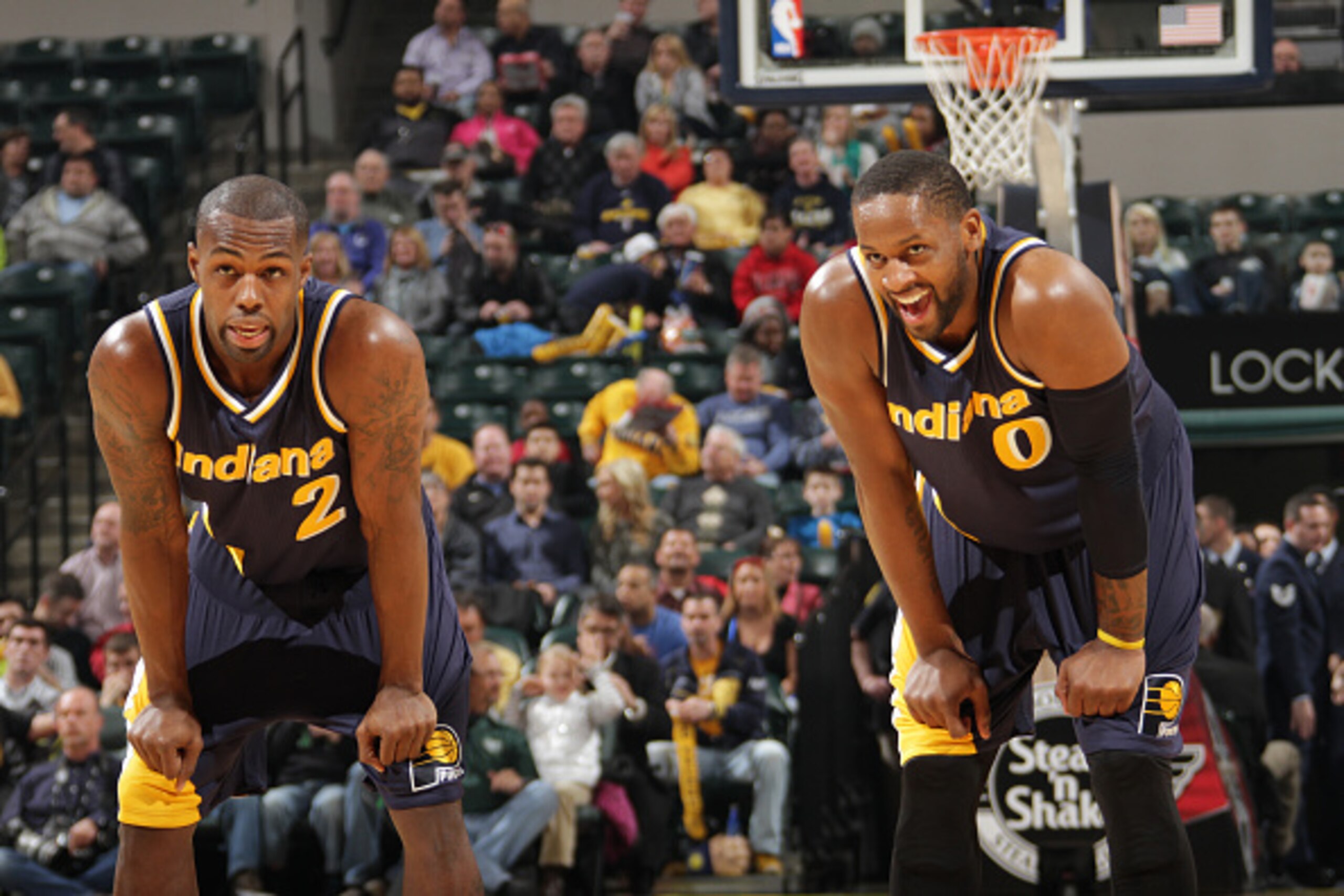
As it turns out, Stuckey has pretty much been able to do everything by himself.
The table below shows a comparison of Stephenson's contributions last year and Stuckey's this year (real plus-minus numbers are from ESPN.com)
| MPG | PPG | TRB% | APG | 3PT% | ORPM | DRPM | RPM | |
|---|---|---|---|---|---|---|---|---|
| Stephenson (13-14) | 35.3 | 13.8 | 11.4% | 22.1% | 35.2% | 0.90 | 0.14 | 1.04 |
| Stuckey (14-15) | 26.3 | 12.9 | 7.4% | 20.9% | 38.3% | 0.64 | -0.03 | 0.61 |
In slightly fewer minutes, Stuckey has almost completely replaced Stephenson's scoring.
He's not quite as effective on the glass, but he has been a better outside shooter while creating nearly as many shots for his teammates. By real plus-minus, the sum of Stuckey's offensive and defensive contributions are fairly close to filling the holes left by Stephenson.
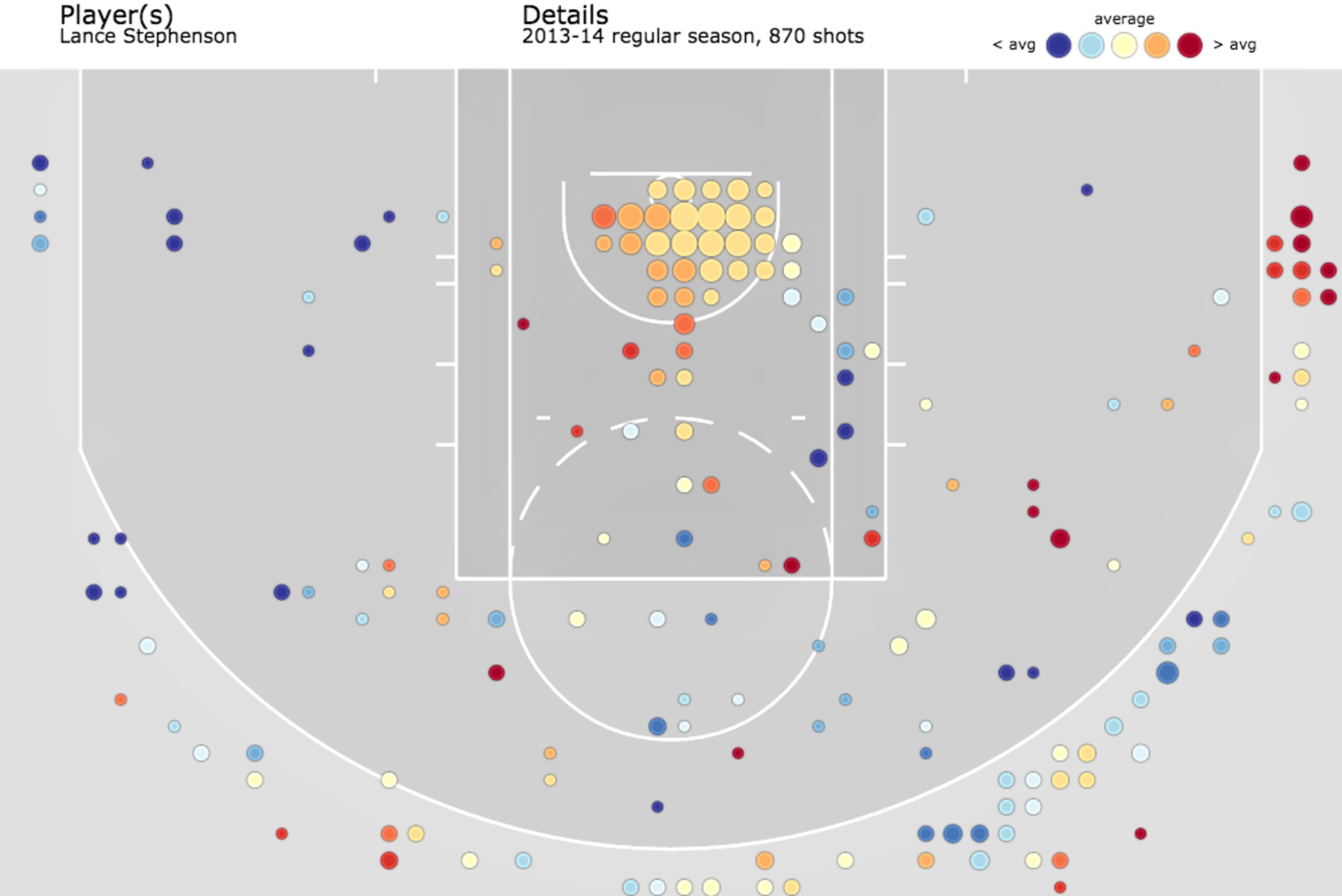
When you compare shot charts between the two players, you can see Stuckey has almost duplicated Stephenson's shot distribution, with a few differences in efficiency. Here's Stephenson's from last year:
And here's Stuckey's from this year:
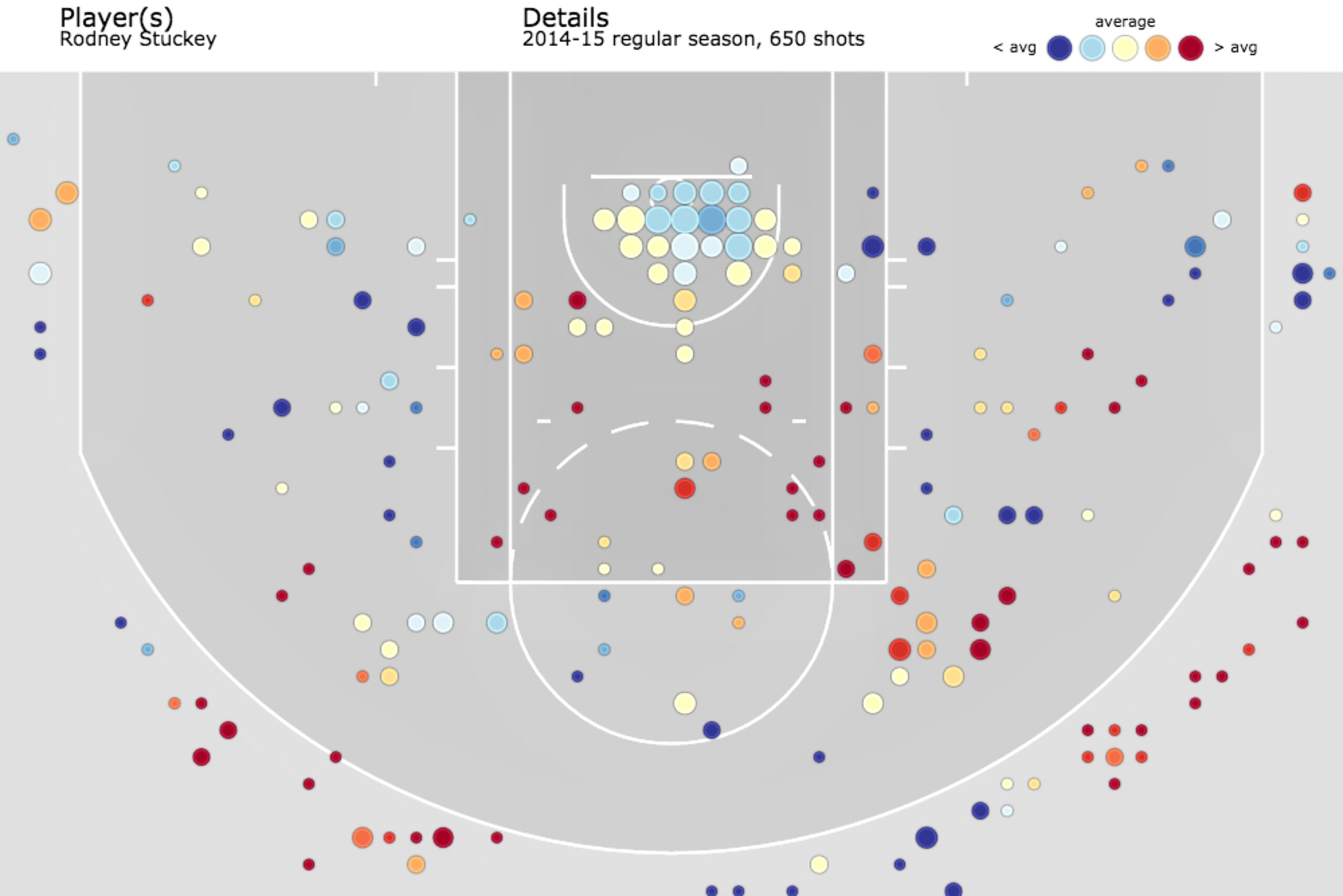
Stephenson was more effective from the corners and around the basket, but Stuckey has been much better on above-the-break three-pointers. And overall, there are more similarities than differences.
The variance in three-point shooting from the corners is partly explained by the locations each player usually handles the ball. Stephenson often handled the ball up top, initiating the offense from the top of the key.
As George Hill has taken on more of a primary offensive role, Stuckey has been spending more time on the wing, attacking as a secondary creator. This is one of the reasons his shot distribution has been subtly different from Stephenson's and, as Rob Mahoney of Sports Illustrated pointed out, has really helped Stuckey be more effective as the season has gone on.
"Force him into a high pick-and-roll against a set defense and Stuckey will frustrate with his lack of awareness. But run him around screens and into a side pick-and-roll and Stuckey will knife his way all the way to the rim. Playing off the ball is a freeing experience for Stuckey, even if – through the natural flow of the offense – he so often finds himself in a position to create.
Alongside Hill, Stuckey makes for a smooth, decisive driver. He knows how to attack a scrambling defense by changing speeds and angles, working his way into finger rolls and short jumpers.
"
Stuckey is doing a reasonable impression of Stephenson in a statistical, practical and functional sense. But the visceral and aesthetic similarities have been nearly as important.
Stephenson was a player who brought explosiveness to the Pacers—emotionally and physically.
Stuckey has avoided the ear-blowing, teammate-alienating, ref-baiting, bear-poking aspects of that explosiveness while duplicating many of the positives.

Although Stephenson averaged just 13.8 points per game last season, he was always capable of catching fire for a big scoring night. He had 20 or more points in 13 games last season. Stuckey has a slighly lower per-game scoring average this season but has already topped 20 points on 11 occasions—in 17 fewer games than Stephenson played last year.
After a 34-point masterpiece against the Orlando Magic at the beginning of March, Victor Oladipo talked about how hard Stuckey can be to stop, via Josh Robbins of the Orlando Sentinel:
"There's not much you can do. When someone gets hot like that, you've just got to try your best to slow him down. And he got really hot today. I was trying. I was right there. I think I played great 'D,' and he just made tough shots."
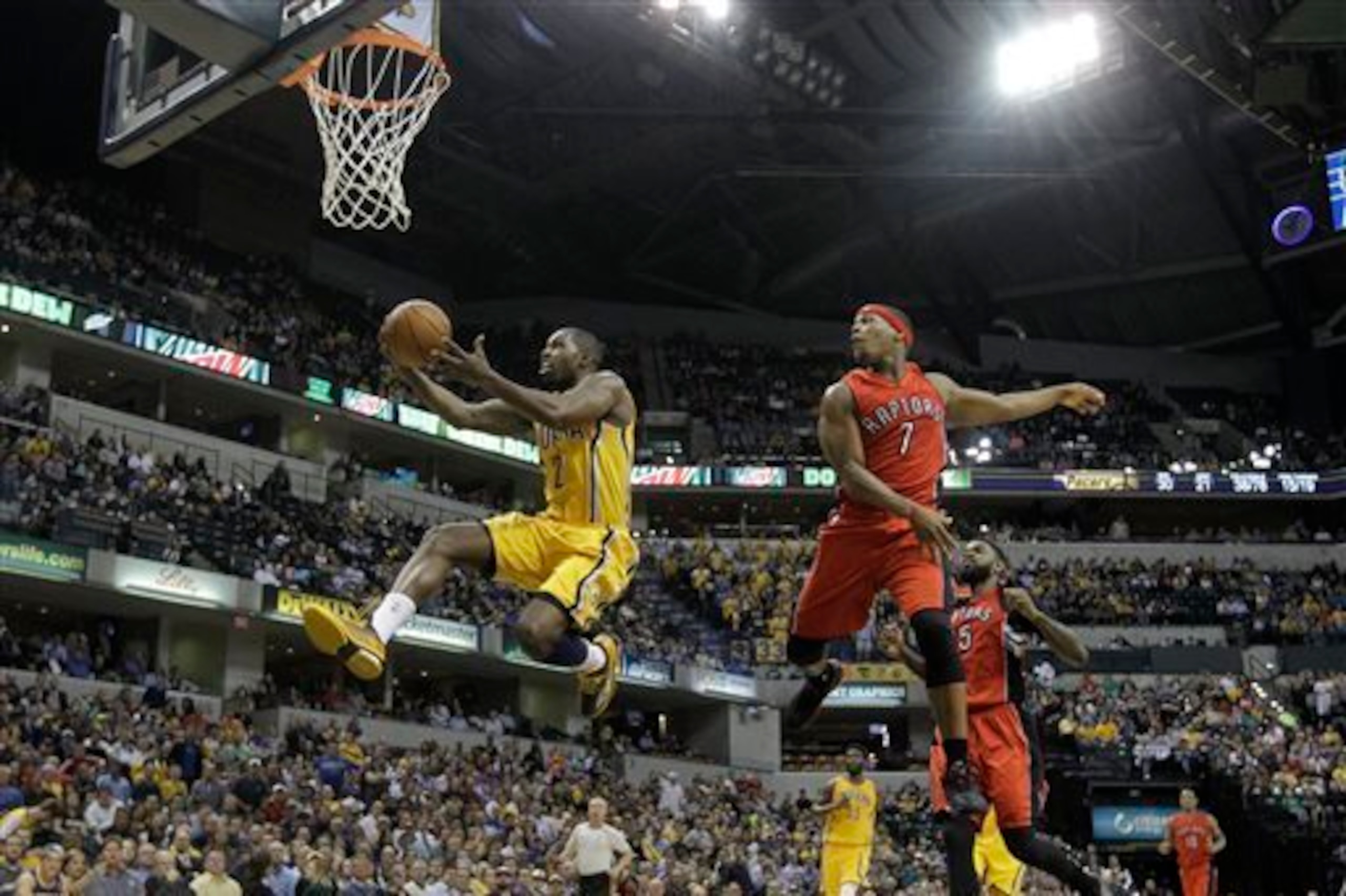
Stuckey plays with a confident physicality that is more than a little reminiscent of Stephenson. The Pacers draw a great deal of their team identity from this sort of physical play, particularly on defense. Having Stuckey competing and pushing people around on the wing has been enormous for their collective confidence.
The Pacers expected to get some of these things from Stuckey, and the stylistic similarities with Stephenson was probably one of the reasons the club pursued him in free agency. But reflecting back on this analysis by Ben Gibson of 8points9seconds from right after the signing just reinforces that the Pacers have gotten way more than they bargained for:
"That brings us to the negatives of Stuckey and they are as follows: less range than Stephenson, less accurate, less of a passer. He’s going to play below the arc and that worries me. Lance helped space the floor out while Stuckey is more likely to be found near the rim with half of his shots coming from the restricted area and the rest from midrange. This could lead to some spacing issues for the Pacer offense.
"
This is the unfortunate underlying issue. As great as Stuckey has been this season, it's been surprising and probably not sustainable—particularly his shooting. Both his two- and three-point field-goal percentages are career highs—2.0 and 8.2 percentage points higher than his career averages, respectively.
The one-year deal he's on is extremely reasonable from a team perspective, but his strong play means the price is likely to go up this summer. Given that he's 28 years old and likely outperforming his true ability level, Stuckey may not be a viable replacement for Stephenson in the long term.
Regardless of what the future holds, the Pacers are close to making the playoffs. In large part, this team should be thanking Rodney Stuckey for that. Adding him to the Pacers has turned out to be a fantastic move for both parties, even if it doesn't last beyond this season.
All statistics are from Basketball-Reference, unless otherwise noted.

.jpg?w=2560 "Mahomes Told Teammate to Leave Meeting")
.jpg?w=2560 "🚨 Week 8 AP Top 25 Poll")

.jpg?w=2560 "Baker Gets Glove From Rays 🧤")
.jpg?w=2560 "5 Teams Eyeing Jonathan Taylor")
.jpg?w=2560 "Steelers Roll Saints in Paris")
.jpg?w=2560 "NFL investigating Eagles")
