Why DL George Selvie and Kenrick Ellis Are Key NY Giants Free-Agency Signings
In 2014, the New York Giants defense finished 29th overall, 30th against the run and 17th against the pass.
That’s significantly different from the defensive rankings that the Giants defense enjoyed under defensive coordinator Steve Spagnuolo, as shown in the table below:
| 2007 | 6 | 12 | 7 |
| 2008 | 6 | 8 | 6 |
TOP NEWS
.jpg?w=2560 "Chiefs Giants Football")
Mahomes Told Teammate to Leave Meeting
.jpg?w=2560 "Steelers Buccaneers Football")
Baker Gets Glove From Rays 🧤
.jpg?w=2560 "Titans Colts Football")
5 Teams Eyeing Jonathan Taylor
So here we are in 2015: Spagnuolo is back, tasked with the challenge of restoring the Giants defense to a top-10 unit despite not having guys like defensive ends Justin Tuck, Osi Umenyiora and Michael Strahan, linebackers Antonio Pierce and Kawika Mitchell and defensive backs Sam Madison, R.W. McQuarters and James Butler.
It’s not going to be easy at all for the 55-year-old Spagnuolo, but the front office has at least been trying to equip him with pieces to the puzzle to turn the fortunes of the defense around.
Perhaps the most significant of the free-agency signings made by the Giants thus far is defensive end George Selvie and defensive tackle Kenrick Ellis, two key additions to the defensive front that should breathe new life into a unit whose only consistent threats last year were defensive end Jason Pierre-Paul (when he was healthy) and defensive tackle Johnathan Hankins.
What Ellis Brings to the Table
In order to understand why the signings of Selvie and Ellis are so significant, let’s look at where the Giants defense finished in each season since Spagnuolo’s departure after the 2008 season.
| 2009 | 8-8 | 13th | 13th | 15th |
| 2010 | 10-6 | 7th | 8th | 9th |
| 2011 | 9-7 | 22nd | 19th | 24th |
| 2012 | 9-7 | 31st | 24th | 28th |
| 2013 | 7-9 | 10th | 13th | 10th |
| 2014 | 6-10 | 29th | 30th | 17th |
The biggest issue was stopping the run, something that head coach Tom Coughlin has repeatedly emphasized as a priority on defense and a factor that becomes even more important now that Spagnuolo is back.
Why? Because having the personnel up front to stop the run on first down is the key to getting the defense off the field as quickly as possible.
While it’s true that these days offenses don’t automatically run the ball on first down, the idea is to try to minimize their available weapons in case they try to pass.
In other words, if the Giants have four men trying to penetrate into the offensive backfield on first down and those four men are having trouble disengaging from their blocks, that means the opposing offensive line is winning the battle in the pit.
Taking that theory a step further, if you have one offensive lineman standing there with little to nothing to do, he can clean up any breakdowns that might occur, thereby allowing the running back and tight end to slip into pass patterns since there is no need to have a back or tight end chip or give help blocking.
Let’s look at an example from last year’s game against the Philadelphia Eagles, where the Giants defensive front failed to disengage from solo blocking.
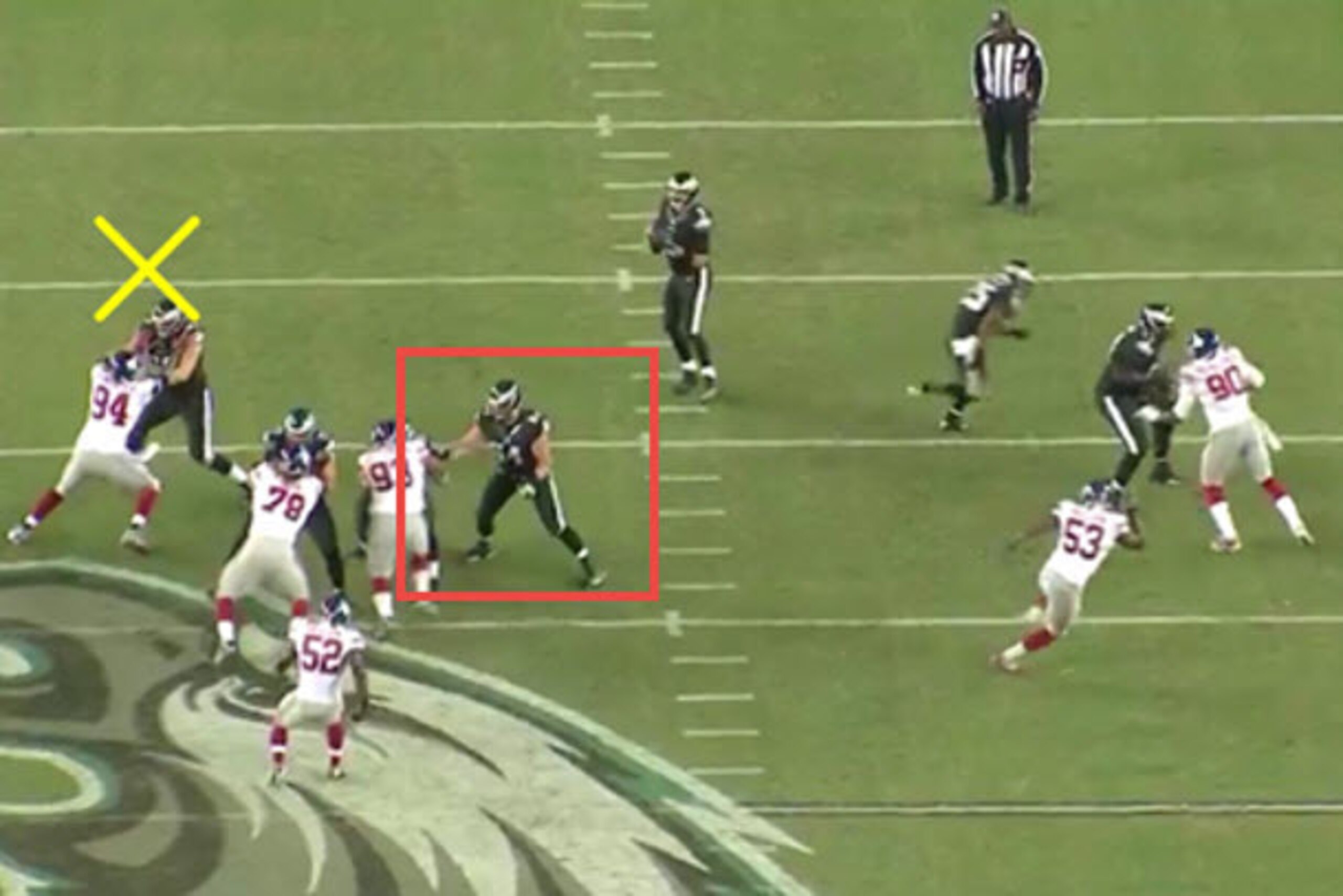
During this play, defensive end Mathias Kiwanuka is unable to beat solo blocking on the edge (the left side of the frame).
Also, note how Markus Kuhn and Mike Patterson (Nos. 78 and 93 respectively) are being handled by solo blocking.
This leaves the Eagles’ center, in the red box, standing there with no one to block. Had quarterback Nick Foles chosen to run up the gut, the only Giants defender in position to make a play was middle linebacker Jon Beason (No. 52), who likely would have been sealed off by the Eagles' center had Foles decided to run.
The result of this play, in case you were wondering, was that Foles threw a completed pass over the middle after enjoying all kinds of time to wait for a receiver to become open.
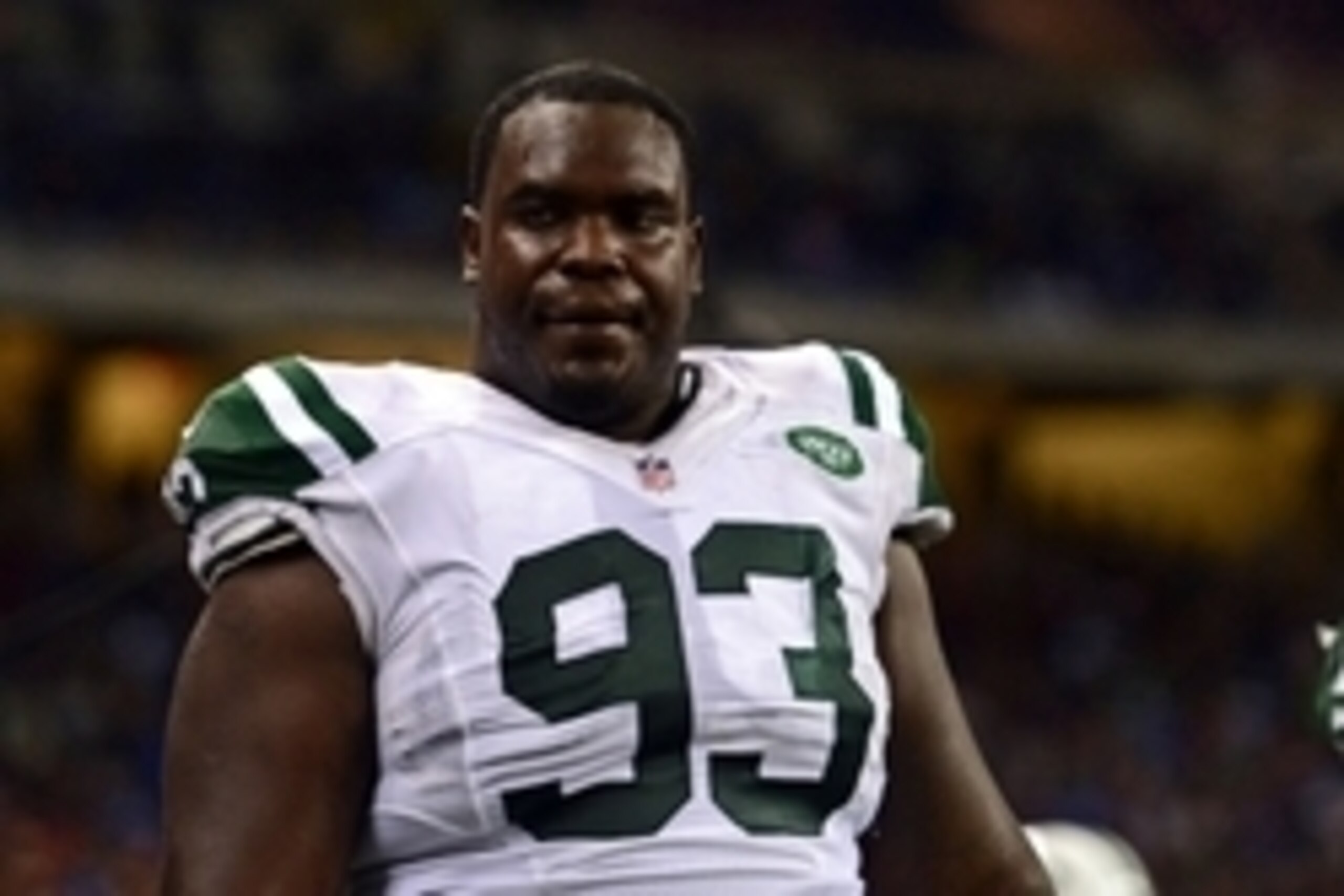
This is where a space-eater like Ellis can help. At 6’4”, 346 pounds, Ellis is a big-bodied man in the mold of past Giants defensive tackles such as Fred Robbins, Norman Hand and, most recently, Shaun Rogers.
All of those names were space-eaters who specialized in drawing double-team blocks who were capable of clogging up the interior running lanes. All of those big-bodied defensive tackles also had the athleticism necessary to collapse the pocket and force the quarterback to either roll out or step up where oftentimes a nearby defender might be close enough to slide into a sack.
Simply put, get five offensive linemen to block four defensive linemen in the pit, and now the numbers start to favor the defense.
This becomes even more important when Spagnuolo dials up a blitz, because if he is able to overload the offense’s blockers, then the Giants have a good chance of dictating to the opponent when to throw the ball—which could potentially lead to turnovers by the defensive secondary.
What Selvie Brings to the Table
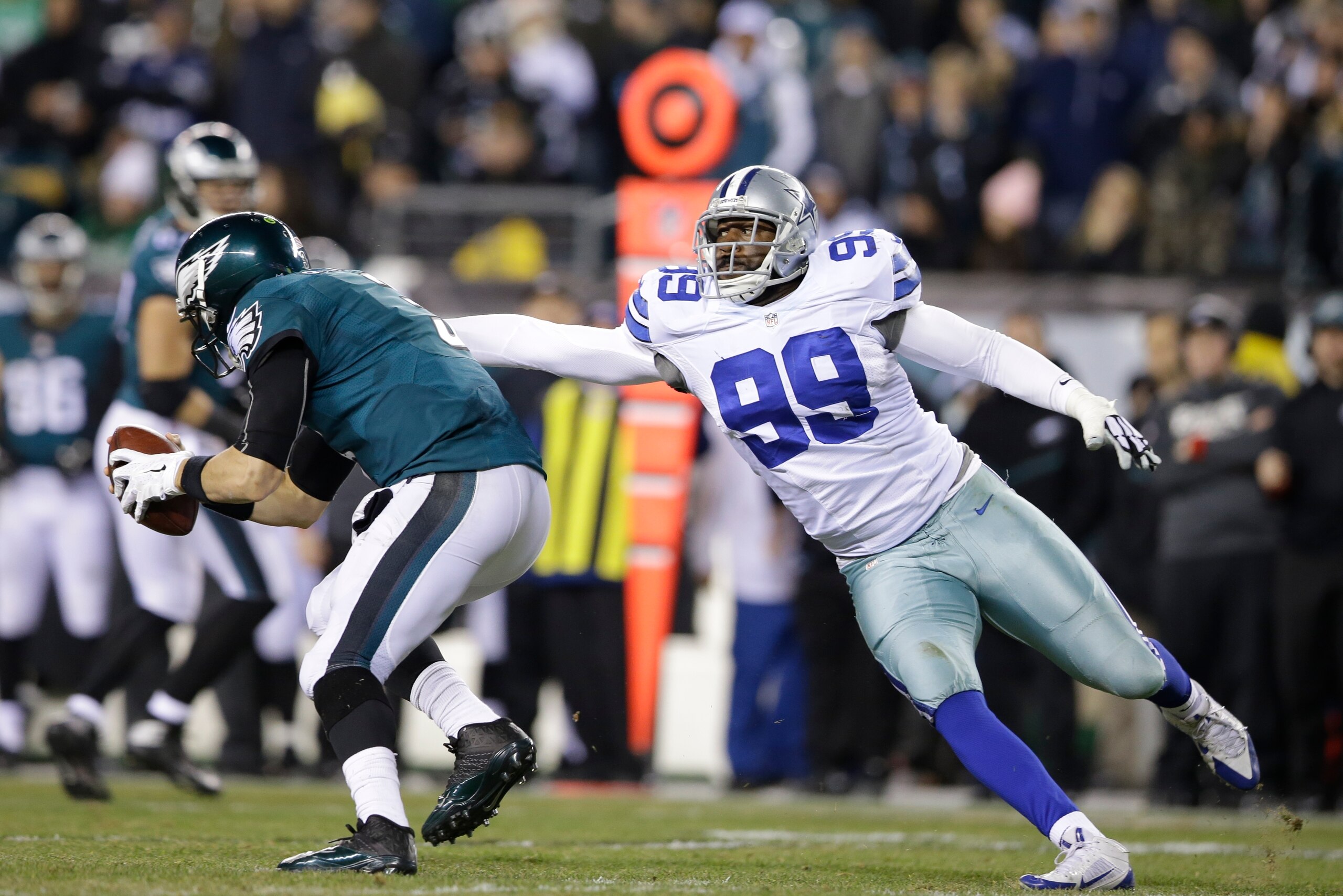
Selvie, 6’4”, 270 pounds, might not have the pass-rushing numbers as far as sacks. He has 13.0 sacks over his six-year career, but he represents an upgrade over Mathias Kiwanuka because he is more of a disruptive edge-rusher who has shown he can do something that Kiwanuka struggled to do the last couple of seasons.
Selvie, with his long wingspan, uses his hands well to disengage from blocks thrown by offensive tackles when he rushes off the edge.
As B/R’s Jonathan Bales notes, Selvie’s arms measured 34 ½". That’s probably one reason why Selvie’s 69 tackles for a loss recorded during his college career were, according to Sports-Reference.com, the most by a college defensive lineman in the Big East since 2005.
By keeping offensive tackles from getting their hands into his chest and driving himself out of harm’s way, Selvie is able to disengage, put a move on the tackle and charge into the backfield to force the quarterback to throw the ball early.
Let’s take a look at a play from the Dallas Cowboys’ 2013 game at Philadelphia.
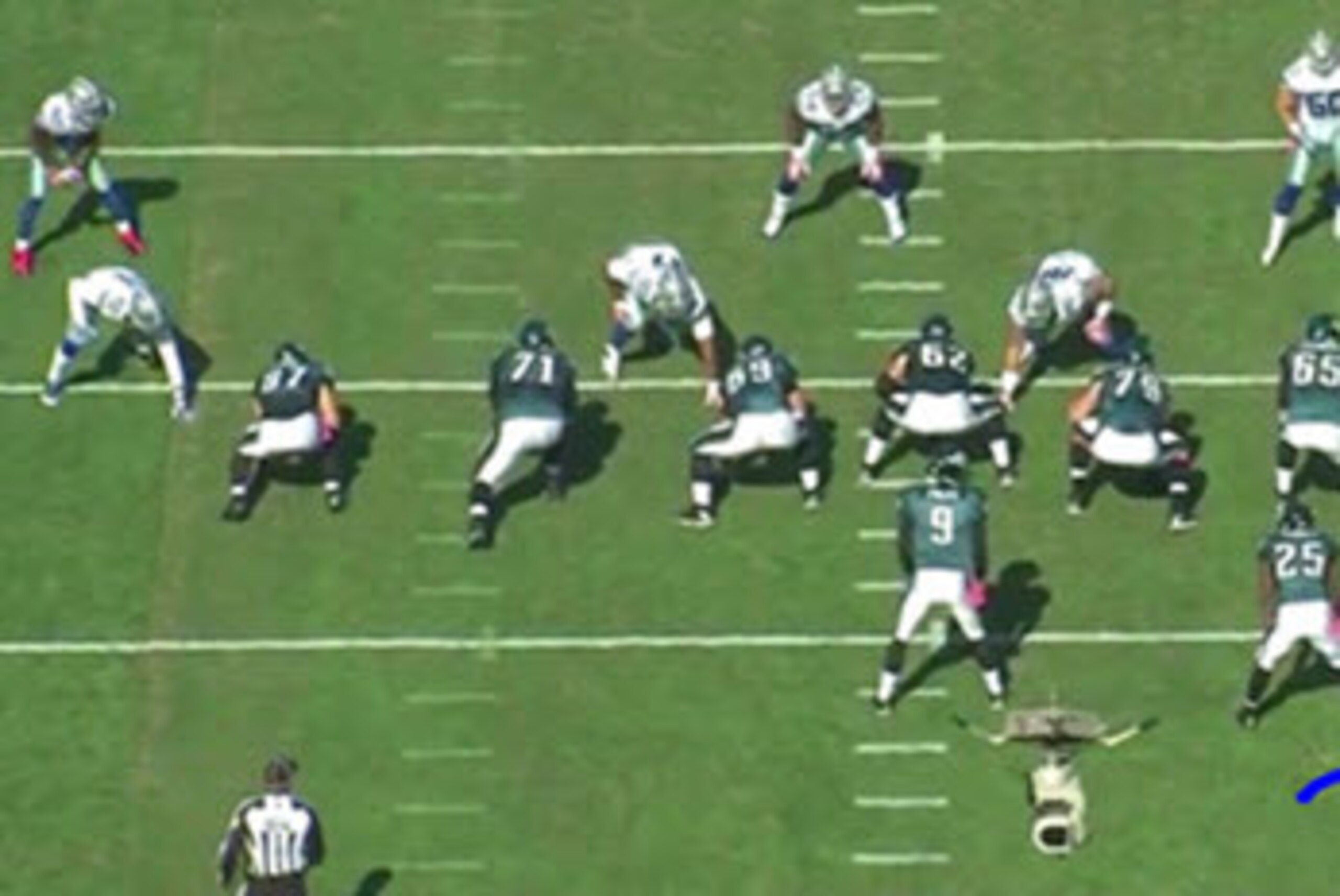
Here we see Selvie lined up wide across from tackle Lane Johnson. The Eagles send LeSean McCoy into a passing route and leave Johnson to handle Selvie by himself.
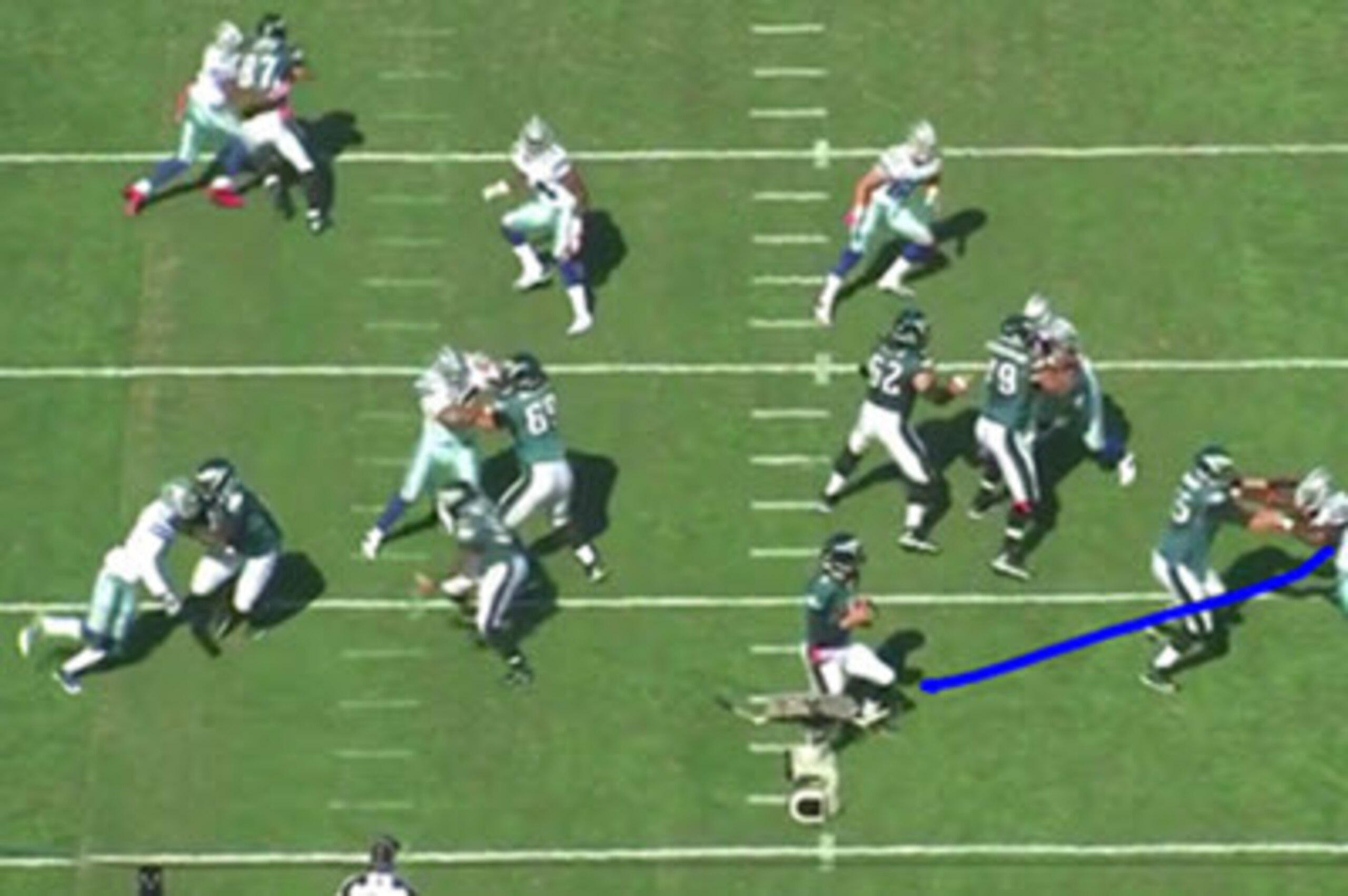
When the ball is snapped, Selvie takes a wide rush, which puts Johnson back on his heels.
Although Johnson tries to get his hands into Selvie’s chest, the defensive end uses his arms to swat Johnson’s hands away, turning the offensive tackle to where his back is now to the sideline rather than the end zone.
(Note how far Johnson has his arms extended, which suggests he doesn’t have Selvie under control at this point in the play.)
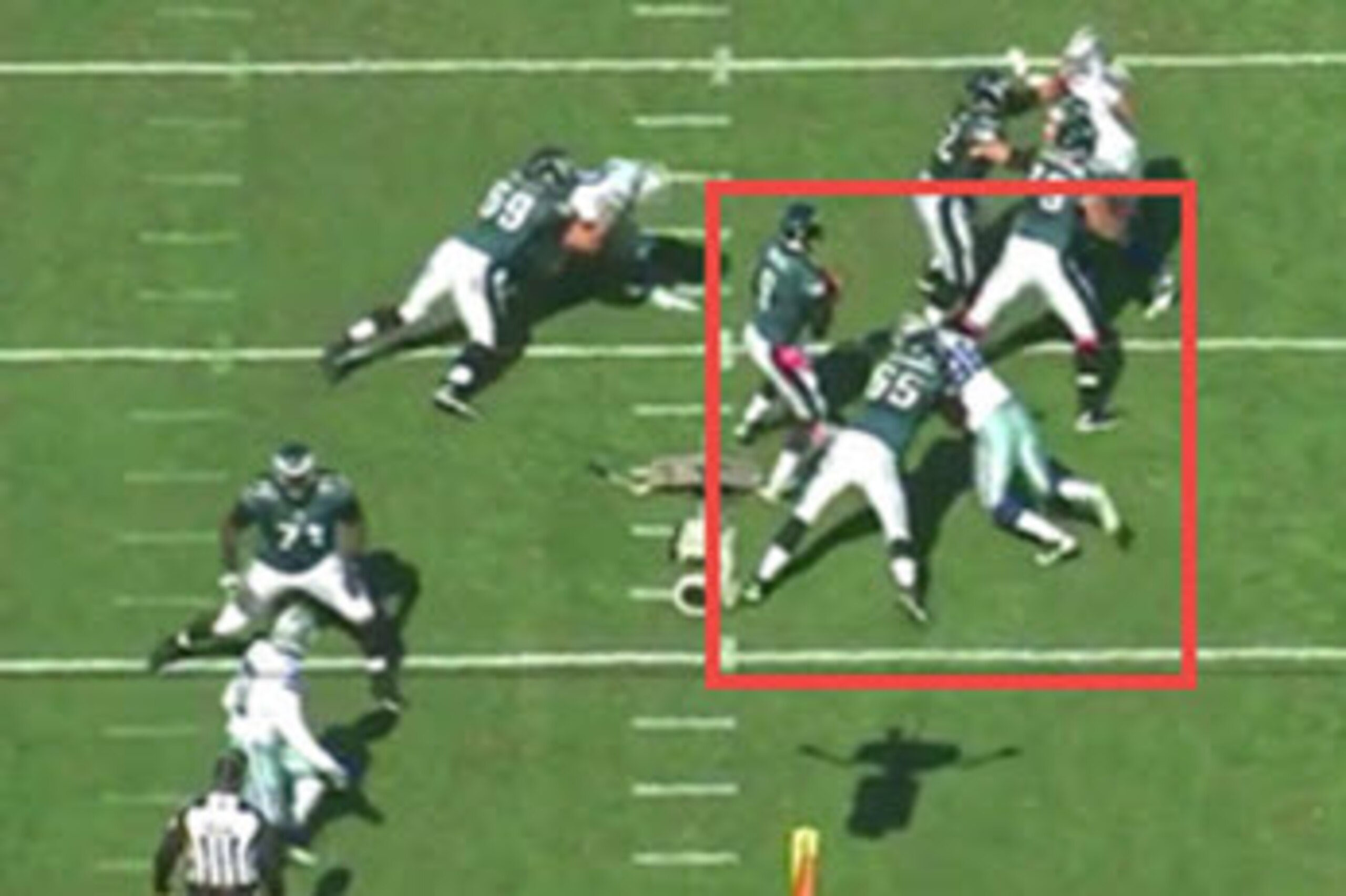
Once Selvie creates that separation, he puts an inside move on Johnson and steps into the pocket to sack quarterback Nick Foles for a loss.
Fitting the Pieces of the Puzzle Together
Spagnuolo likes to run multiple-front defenses, and that probably isn’t going to change this year as he continues to assemble the pieces to the overall puzzle.
As for the defensive line, figure Pierre-Paul and Hankins will be entrenched as three-down players. The rest of the defensive front is still to be determined, but Ellis and Selvie will certainly play big parts in the overall picture.
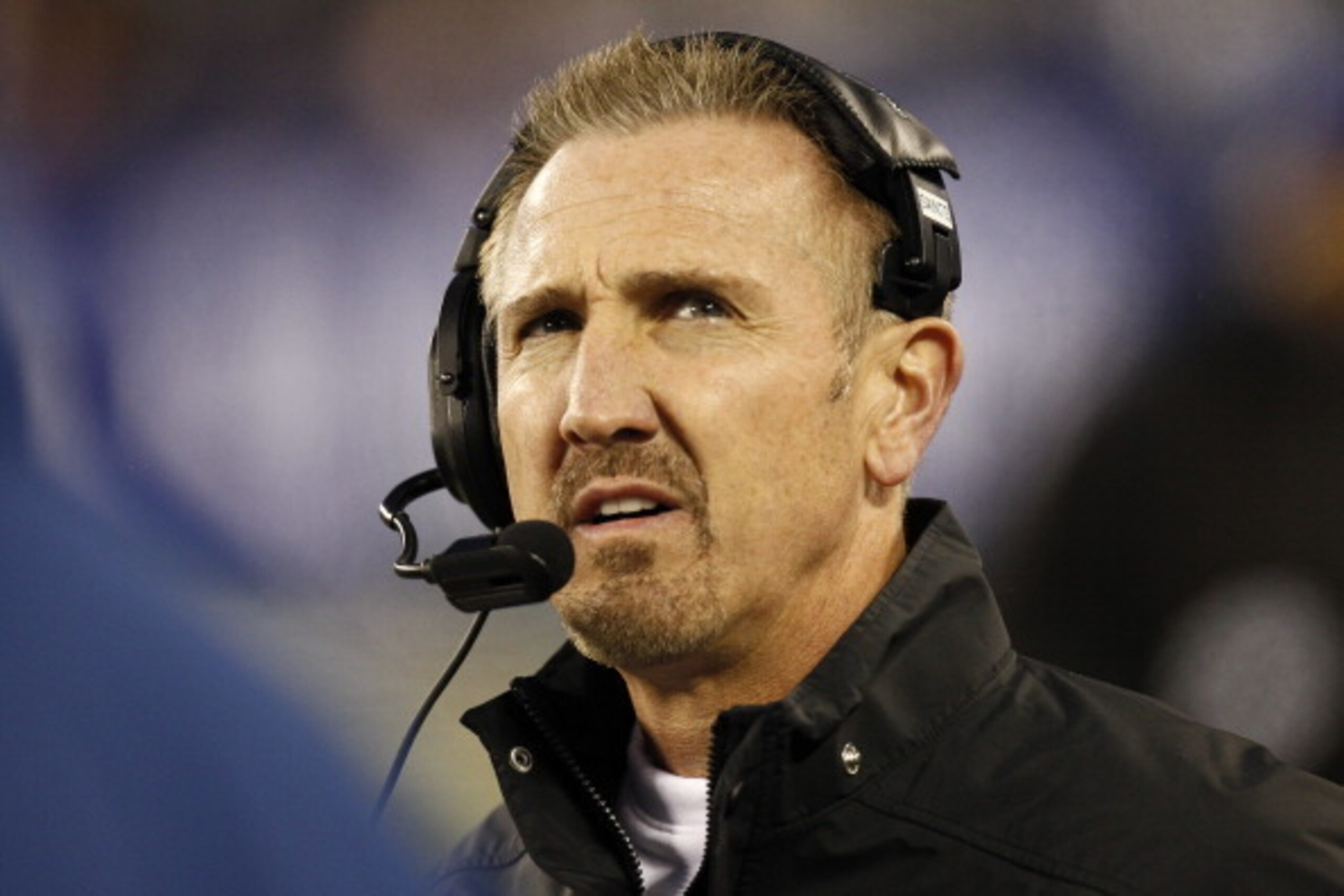
Ellis, who, per Pro Football Focus, has graded out positively in run defense every year of his career with the exception of 2012, will likely be the first- and second-down run-stuffer who comes off the field on third downs in favor of another pass-rusher.
Selvie, on the other hand, probably isn’t going to generate big-time pass-rushing numbers. But if he can create enough of a disruption on the other end of the defensive formation, perhaps that might lead to him receiving a chip block on passing downs.
When it’s all said and done the goal is to improve the run defense and get the defense back to a top-10 unit, just as it was in 2007 and 2008.
There are still more pieces they need to add—and a little bit of luck with player health will certainly help matters—but the Giants appear to be on the right track for fixing their broken defense.
Unless otherwise noted, advanced stats are from Pro Football Focus.
Patricia Traina covers the Giants for Inside Football, the Journal Inquirer and Sports Xchange. All quotes and information obtained firsthand unless otherwise sourced.
.jpg?w=2560 "Eagles Jaguars Football")
.jpg?w=2560 "Steelers Saints Football")

.jpg?w=2560 "🚨 Week 8 AP Top 25 Poll")