

Assembling the Atlanta Hawks' Ideal Playoff Rotation
Atlanta Hawks head coach Mike Budenholzer has done a fantastic job leading his team to a 53-17 record and the Eastern Conference's No. 1 seed by eight games. His promotion of team ball and solid rotations has put him in pole position for the NBA's Coach of the Year award.
However, Coach Bud's team have faltered recently, losing its last three games and five of its last nine contests.
Atlanta isn't totally healthy right now, with injuries to key reserves Thabo Sefolosha and Mike Scott. But when both are back for the playoffs, the onus will be on Budenholzer to put together the right five-man groups that will put the Hawks in the best position to win.
TOP NEWS

Jokic says booing fans not welcome in Denver
Worst NBA Predictions 🫣

Power Ranking Every NBA Team's Starting Lineup 🔢
How should the second-year head coach assemble his rotation once the postseason starts in a few weeks? Let's look at how the minutes can be most ideally distributed.
The Starting Lineup
Assuming complete health, the Hawks will trot out their preferred starting lineup of Jeff Teague, Kyle Korver, DeMarre Carroll, Paul Millsap and Al Horford throughout the postseason.
Atlanta should feel good about this group heading into the playoffs. Not only has the unit gained 1,206 minutes of on-court experience together in the past two seasons, it's been extremely effective. In 2014-15, the fivesome has outscored its opponents by 9.4 points per 100 possessions. The lineup thrives on spacing and crisp ball movement, accumulating 5.4 more dimes per 100 possessions than the opposition.
Looking toward his postseason rotation, Budenholzer will have to decide how valuable each starter is to the team and distribute playing time accordingly.
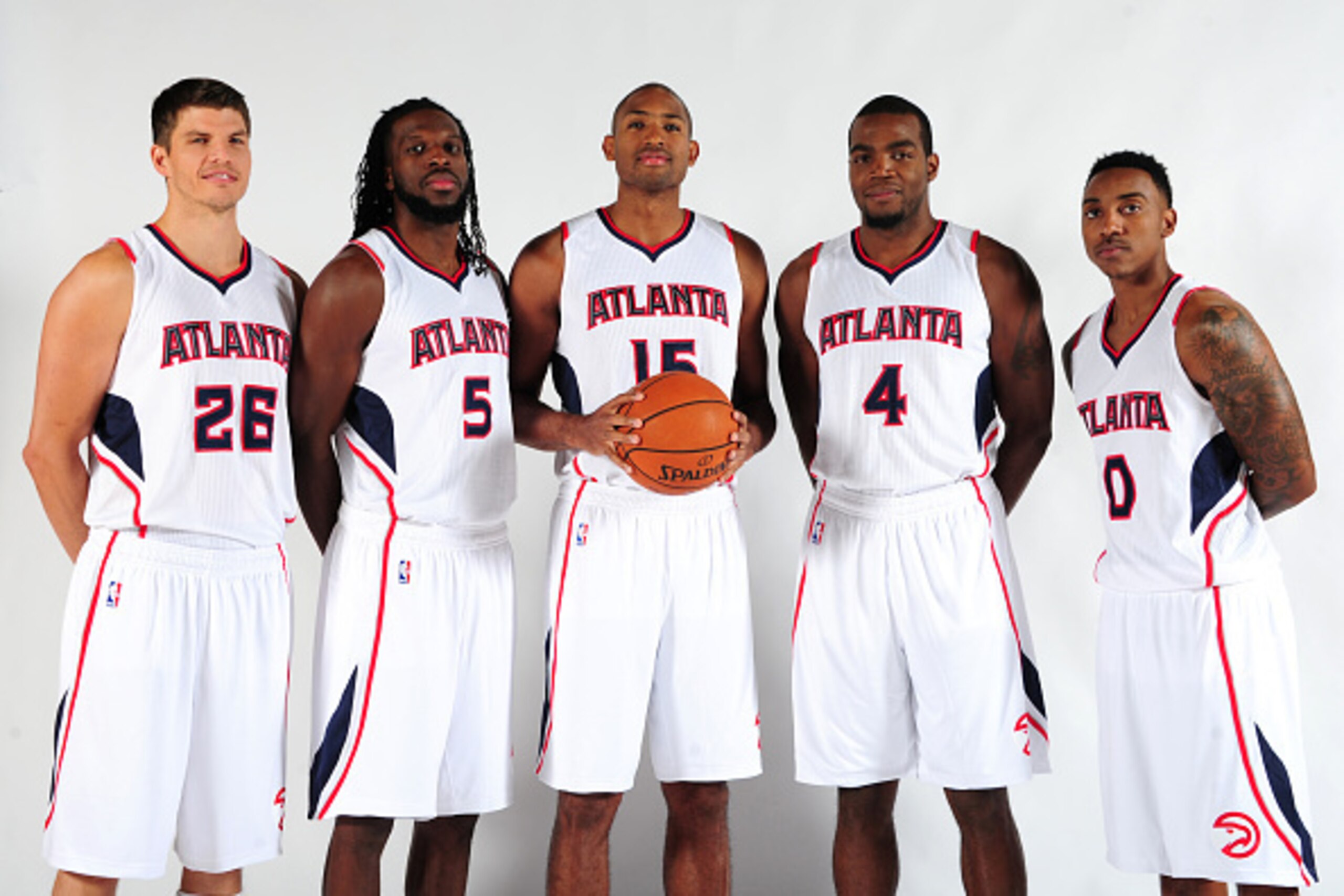
Matchup issues may slightly tweak different players' minutes—for example, Carroll would get more in a potential series against the Cavaliers for his defensive abilities on LeBron James than against another opponent—but I'll be looking at the average amount of playing time the Hawks should receive throughout the postseason.
Teague should get a slight minutes decline in the playoffs from what he's gotten in the regular season.
His playing time has already started to dip (29.7 minutes per game in March), partially due to his team's huge lead in the East but mainly because his backup, Dennis Schroder, has improved significantly throughout the campaign.
At shooting guard, Korver's postseason minutes will basically consistent with what he's grown accustomed to. The Hawks will want his floor-spacing shooting on the court as much as possible, as Atlanta has a blistering 113.8 offensive rating when he's on the floor, the best mark on the team among regulars.
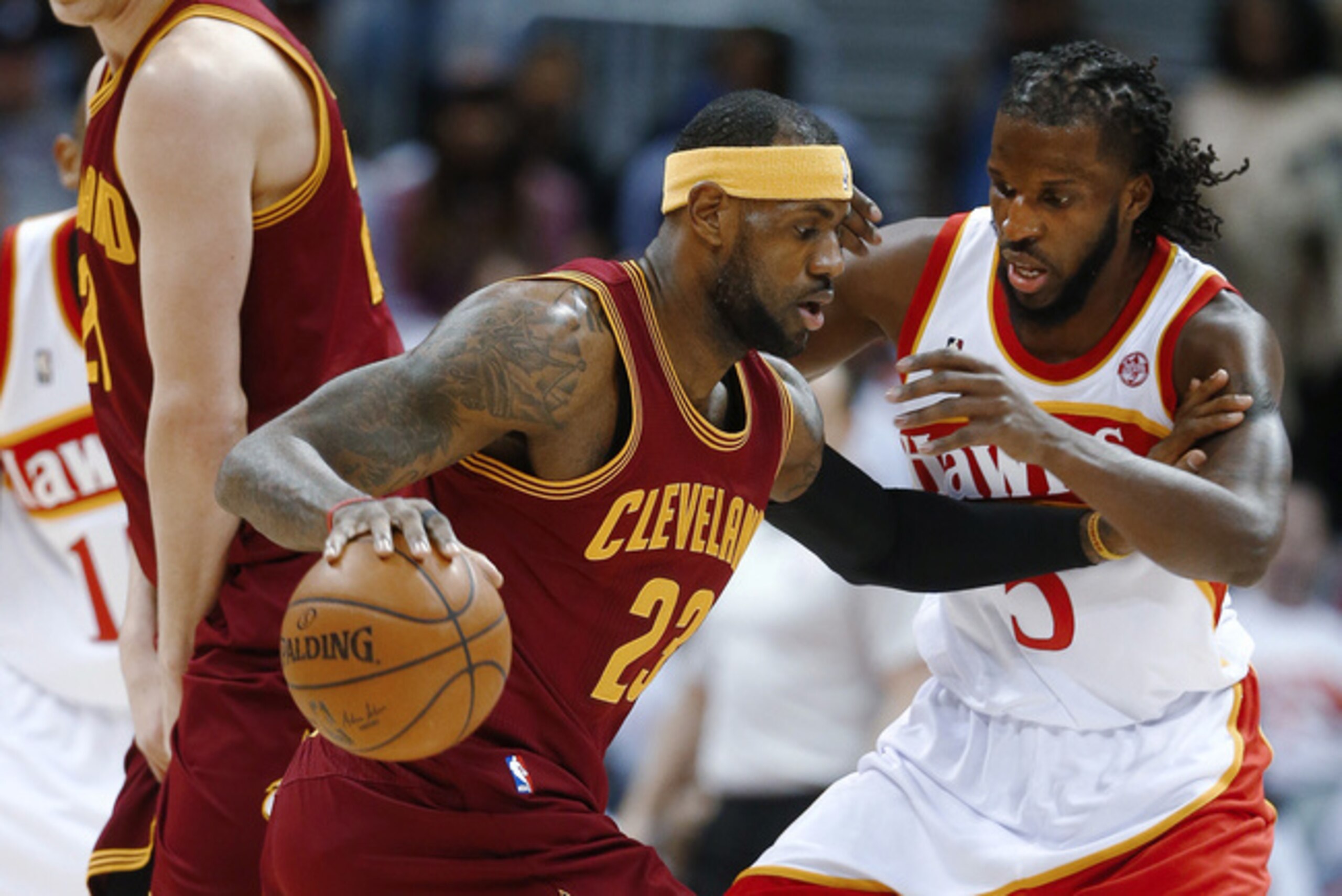
Carroll is the starting unit's designated wing stopper and will get plenty of burn against teams with elite wing scorers. Against the Cavaliers' James particularly, he should continue to be a gnat on defense.
At power forward, Millsap is the Hawks' most versatile player and will get playing time in accordance with his skill set. He scores inside and outside, rebounds and passes well and even steals the ball (1.8 takeaways per game, 10th in the NBA).
Al Horford is the Hawks' best and most important player.
The 28-year-old center is nearly as versatile as Millsap and also has an elite skill: mid-range shooting. Attempts from 16 feet to the three-point line account for 36.7 percent of Horford's field-goal attempts, and he shoots a remarkable 49.7 percent from that distance.
His minutes should increase in the postseason. The Hawks will want to unleash him as he becomes more and more comfortable recovering from his pectoral injury.
This starting lineup will get plenty of on-court time together—it is the NBA's second-most used lineup of the regular season, after all—and should outplay most of its playoff opponents' top groups.
The Reserves
Atlanta, when healthy, has a solid bench.
According to hoopsstats.com, Hawks reserves average 31.7 points per game, good for No. 18 in the league. However, they get just the 23rd-most minutes out of all reserve units in the NBA, which deflates their scoring numbers.
Schroder, Kent Bazemore, Sefolosha, Scott and Pero Antic make up my proposed playoff second unit. Every one of these players should see action in each postseason game.
Schroder is the bench's proverbial head of the snake. He has been on fire lately (14.6 points and 5.9 assists per game in March) and should continue to get the most minutes of the Hawks reserves. He'll get some reps with the starting lineup when Teague isn't playing well, which has been the case as of late.
Bazemore and Sefolosha have similar playing styles and will both get significant minutes when Korver and Carroll need rest. Defensively, the two have the potential to lock down opposing shooting guards and small forwards.
Sefolosha has not played since Jan. 30 due to a calf injury but is close to returning. He participated in three-on-three work on Wednesday, according to The Atlanta Journal-Consitution's Chris Vivlamore. The 30-year-old swingman has 78 games of playoff experience, which will help him trump Bazemore as the No. 1 wing off the bench.
Scott isn't much of a defender or rebounder, but he proved a year ago in Atlanta's first-round series against the Indiana Pacers his three-point stroke can change the complexion of a game.
Antic is probably the weak link of the proposed second unit. While he sometimes gets hot from long range, he's only shooting 29.7 percent from three this season. His main value comes from playing decent post defense.
I lowered Antic's playing time a bit in my ideal playoff rotation. This is partly because he has played badly the past couple of months, and partly because Horford is the Hawks' best player and will get played accordingly in the postseason.
The team's remaining five players (Shelvin Mack, John Jenkins, Daye, Elton Brand and Mike Muscala) will be casualties of the tendency for teams to bump up their core rotation players' minutes in the playoffs. All five are behind at least two competent players at their position and will have to play extremely well in the season's final three weeks to earn a spot in the second unit.
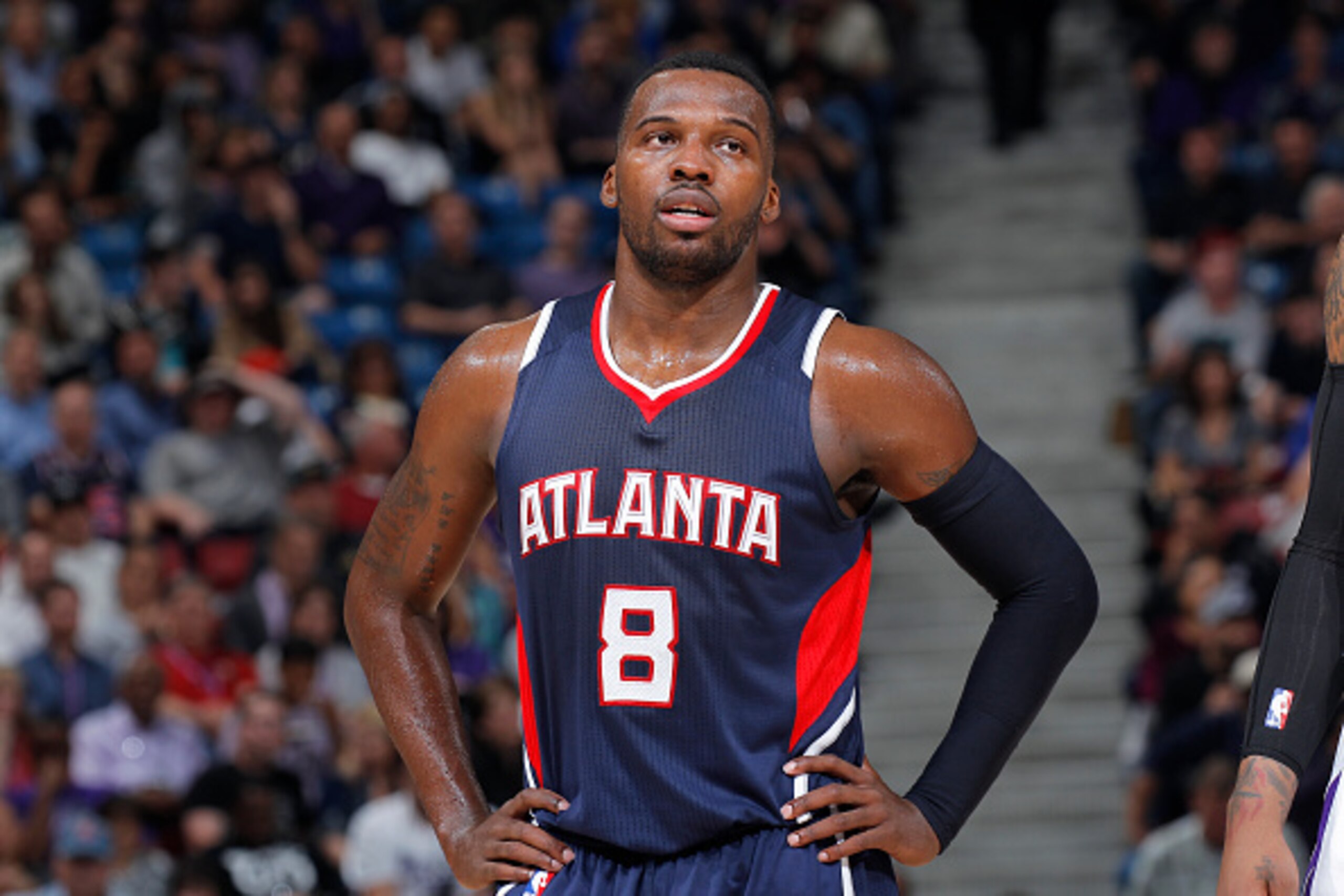
However, all of the aforementioned players (aside from probably Daye) should get a few playoff minutes here and there when teammates are in foul trouble or during garbage time. As for Daye, he is still on his 10-day contract, and may or may not even be on the squad when the postseason starts.
Conclusion
The "if healthy" caveat gets old, but it is necessary to use for the Hawks.
So here goes: If healthy, Atlanta has two great five-man lineups to throw at its opponents in Teague/Korver/Carroll/Millsap/Horford and Schroder/Bazemore/Sefolosha/Scott/Antic. However, Scott and Sefolosha obviously need to be back at 100 percent for these groups to work.
If both players come back and play at full strength during the playoffs and the rest of the team stays healthy, the Hawks' March struggles will become a distant and insignificant memory.
Below is my final proposal for the rotation. Keep in mind the minutes for starters often increase in the postseason as teams aren't as concerned about staying rested and seek to maximize their potential. Players will be listed next to the position they have played most throughout the season, according to Basketball-Reference.com.
Also, the minutes per game total will add to more than 240 (the combined player minutes for a team in a regulation game) because not everybody participates in every contest and Atlanta may go into overtime games during the playoffs. Some positions will have more combined minutes than others because many of the Hawks play multiple positions but are only slotted at one of them.
| PG | Teague (30) | Schroder (20) | ||
| SG | Korver (33) | Bazemore (14) | Mack (3) | Jenkins (3) |
| SF | Carroll (31) | Sefolosha (16) | ||
| PF | Millsap (35) | Scott (13) | ||
| C | Horford (34) | Antic (11) | Brand (5) | Muscala (4) |
Note: All statistics are from Basketball-Reference.com and updated through March 22, unless otherwise indicated.

.jpg?w=2560 "Mahomes Told Teammate to Leave Meeting")
.jpg?w=2560 "🚨 Week 8 AP Top 25 Poll")

.jpg?w=2560 "Baker Gets Glove From Rays 🧤")
.jpg?w=2560 "Steelers Roll Saints in Paris")

.jpg?w=2560 "5 Teams Eyeing Jonathan Taylor")
.jpg?w=2560 "NFL investigating Eagles")
.jpg?w=2560 "Updates from EVERY Game")