
Power Ranking the 10 Best College Football Players Who Played in March Madness
March Madness is such a wide-reaching event that it draws in more than just the diehard college basketball fan. Whether because of bracket pools or school allegiances, the NCAA basketball tournament is one of the most watched sporting events in the country.
It's also something that pretty much every kid who plays hoops growing up dreams of being able to participate in, even those who don't end up having basketball be their primary sport in college.
Over the years, dozens of great college football players have been a part of March Madness, and while for most this was a cameo appearance as a walk-on or last-off-the-bench scrub, it was a bona fide second career option for others.
We've identified the 10 best college football players to ever appear in an NCAA tournament game, ranking them based on their gridiron performances while factoring in what they did on the hard court as well.
10. Kelvin Eafon, Arizona
1 of 10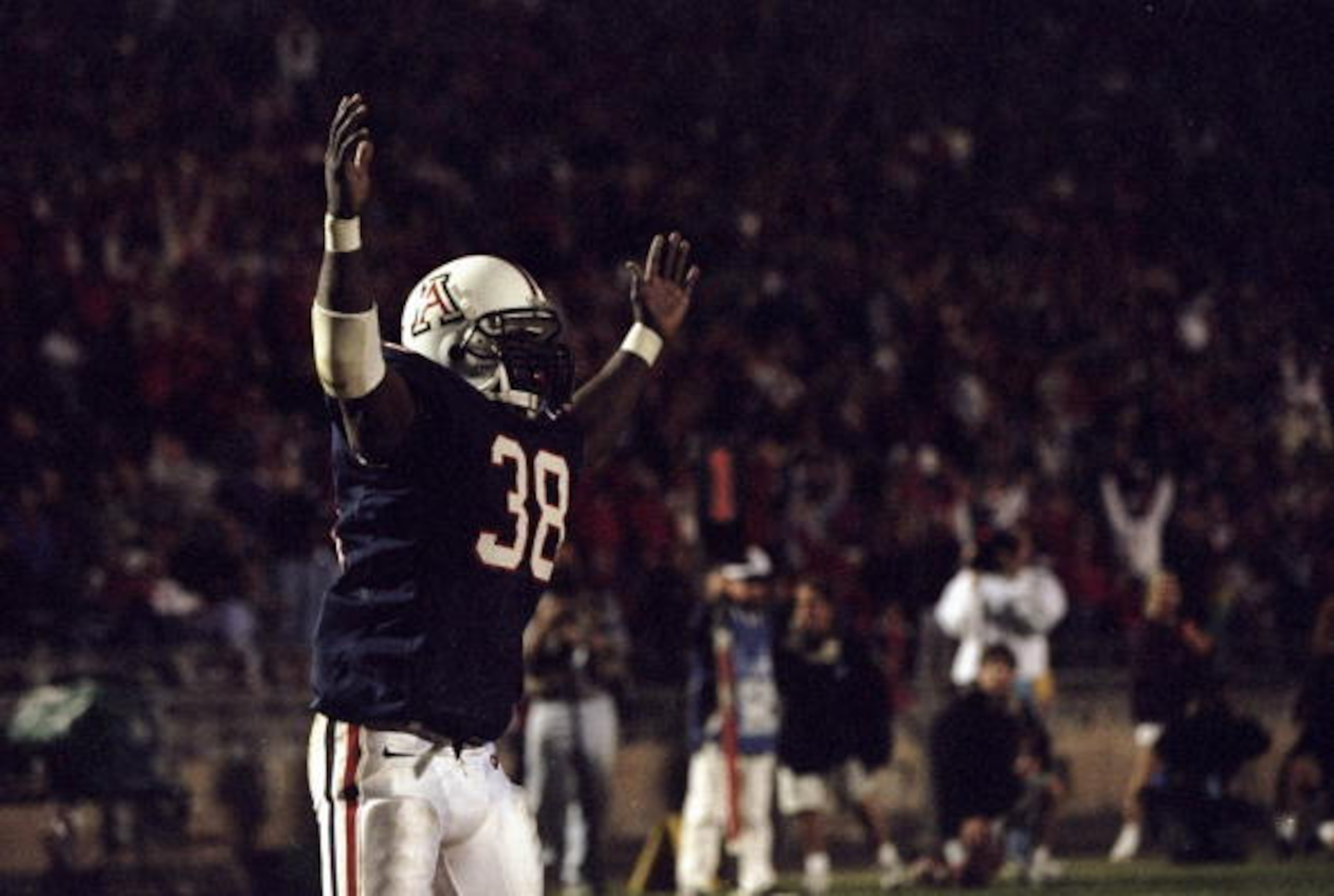
March Madness appearance: 1996
He only played 45 minutes all season, but in 1996 Kelvin Eafon logged eight of those minutes during garbage time of Arizona's first-round NCAA tournament win over Valparaiso. Never one to shy away from a chance to shoot, Eafon attempted three shots but missed them all in the 90-51 victory.
The Wildcats would make it to the Sweet 16 that season—before winning the national title the following year—and Eafon played one minute in that final loss to Kansas. After that, though, his collegiate career was devoted to being a bruising running back for Arizona's football team.
Eafon played sparingly during the 1996 season, but in 1997 and 1998 he saw more action and ended up rushing for more than 1,000 yards for his career. His senior season, in 1998, saw him score 16 touchdowns on just 145 carries, including the game-winning one-yard TD to give Arizona a 23-20 win over Nebraska in the Holiday Bowl to cap off the program's best season ever at 12-1.
Though Eafon's own link to March Madness was small, he's still connected to the tournament today. That's because his son, Lester Medford, is a junior guard at Baylor who had five points and two assists in the Bears' upset loss to Georgia State in last week's second round.
9. Justin Gage, Missouri
2 of 10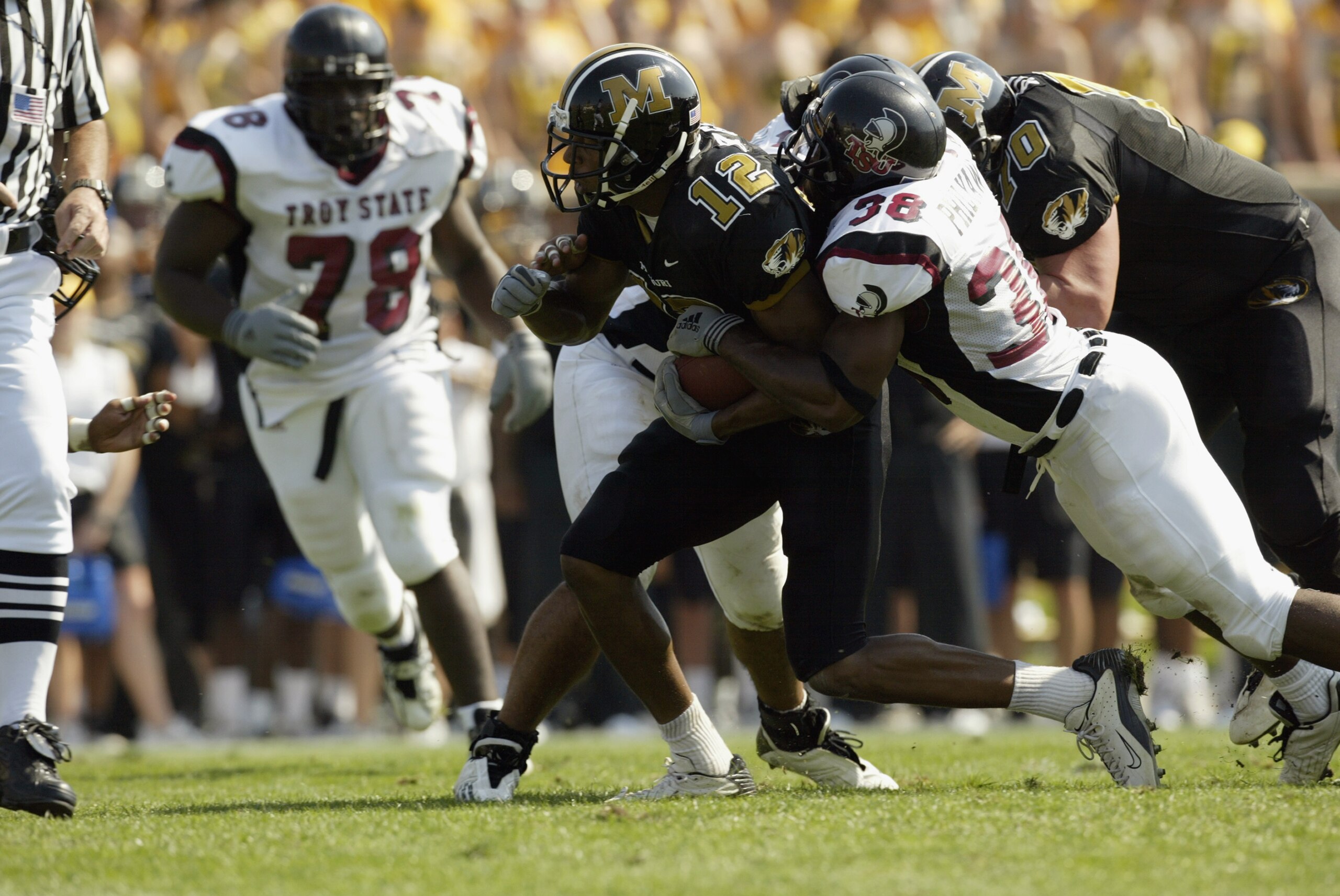
March Madness appearances: 2000-02
Missouri has quickly established itself as an SEC football power since moving over from the Big 12 in 2012, but the basketball team hasn't been able to do the same as of yet. It was the opposite during Justin Gage's time in Columbia in the late 1990s and early 2000s, when he was part of three Tigers basketball teams that made the NCAA tournament yet never had the privilege of playing in a football postseason contest.
Gage played in three games as a quarterback in 1999 under coach Larry Smith, who was fired following that 4-7 season. Before he was let go, though, he began converting Gage into a wide receiver, the position he thrived in over the next three years under current coach Gary Pinkel. Gage caught 200 passes for 2,704 yards and 18 touchdowns in his Mizzou career, with his senior year (82 catches, 1,075 yards, nine TDs) helping him get drafted in the fifth round by the Chicago Bears.
His basketball career wasn't as prolific, but Gage still did manage to play in all seven NCAA tournament games that Missouri had in his three seasons. That includes a run to the Elite Eight in 2001, when Gage had six points and five rebounds in a loss to Oklahoma.
8. Terrell Owens, Chattanooga
3 of 10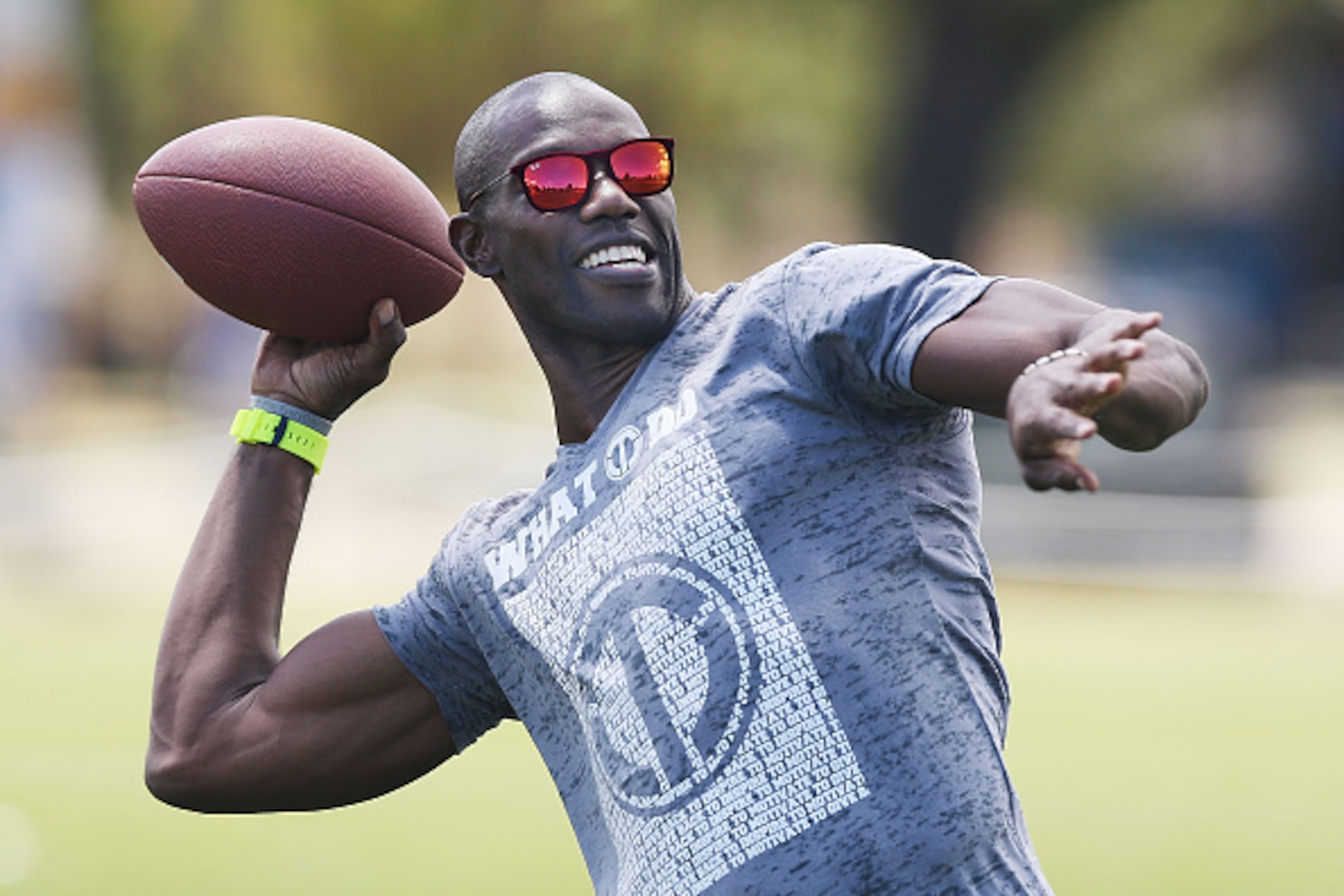
March Madness appearances: 1995
Long before he became one of the most polarizing players in NFL history, Terrell Owens played three sports at Tennessee-Chattanooga in the mid-1990s. He's most known for his football exploits, but Owens was part of a national championship 4x100 relay team participant in 1996, and as a junior in 1995 he was a deep reserve for the Mocs' basketball team.
That's when he made his very brief appearance in March Madness, getting some mop-up time during the final moments of Chattanooga's 100-71 first-round loss to Connecticut.
Football, though, is where Owens made his biggest mark. Playing for an FCS program that won 13 games in his four seasons from 1992-95 (and lost 76-10 in his senior year at Auburn), he was a diamond in the rough, with his 2,320 receiving yards and 19 touchdowns ranking second and third, respectively, on the school's career list.
A strong combine and some good film, as well as his imposing 6'3", 225-pound frame, prompted the San Francisco 49ers to take him in the third round of the 1996 draft. The rest is history...or infamy, depending on how you look at it.
.jpg?w=2560 "AP Poll Top Five Week 9")


7. Ronald Curry, North Carolina
4 of 10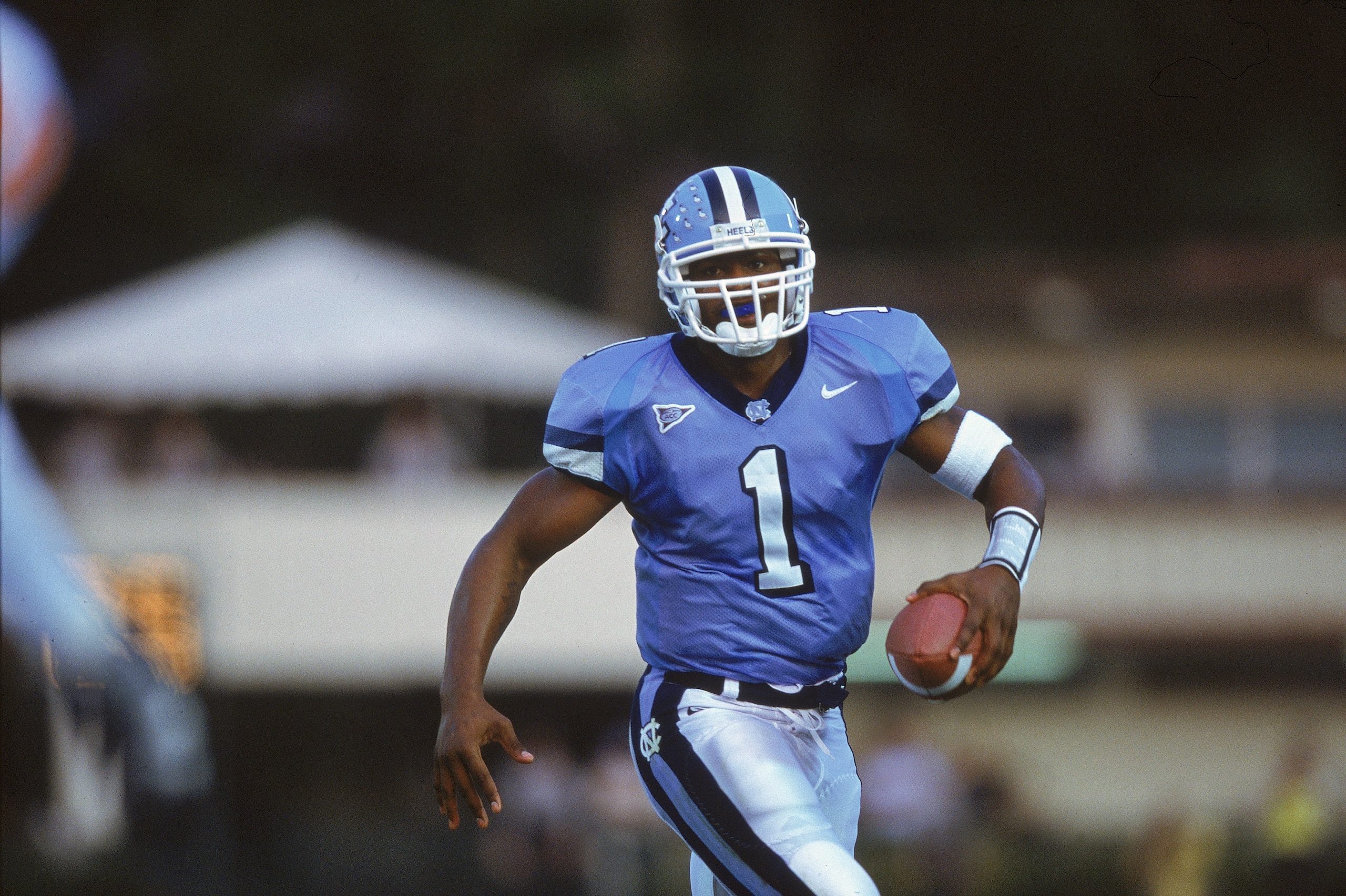
March Madness appearances: 1999, 2001
Ronald Curry's time at North Carolina coincided with one of the rare instances when football was the more successful sport than basketball, yet he was able to stand out in both disciplines.
A four-year starter at quarterback for UNC, he threw 28 touchdown passes and ran for 13 more while earning offensive MVP honors in bowl games following his freshman (1998) and senior (2001) seasons. In between he missed half of his sophomore year after tearing his Achilles, yet returned in 2000 to throw for a career-best 2,325 yards.
Curry's hoops career was split in two, serving as a backup in 1998-99 and then starting at point guard in 2000-01 after missing the 1999-2000 season while recovering from the Achilles tear. That final year he led the Tar Heels in assists and started 26 games, tallying 16 points and 10 assists in UNC's two NCAA tourney games.
Professionally, Curry would stick with football but ended up spending his NFL career as a wide receiver.
6. Antwaan Randle-El, Indiana
5 of 10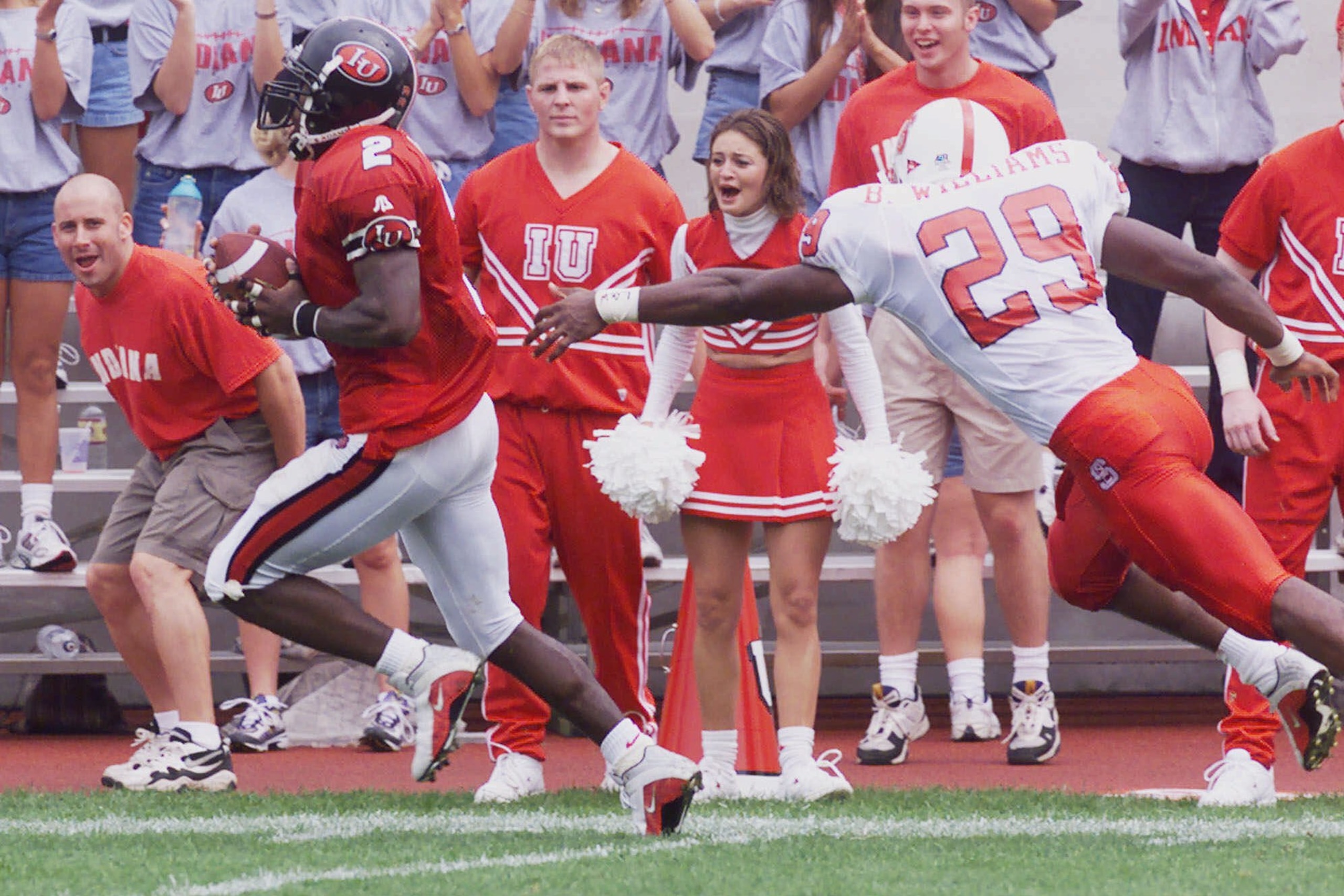
March Madness appearances: 1999
The list of greatest players in Indiana football history isn't a long one, but there's little doubt that Antwaan Randle-El deserves to be at or near the top of it. One of the most diverse athletes in college sports, Randle-El was also briefly a member of the Hoosiers' baseball and basketball teams and in 1999 got to see some time in a pair of NCAA tournament games as a backup guard.
Randel-El's basketball exploits were limited to his freshman year, when he had four points in six minutes of postseason action. What he did on the football field was far more impressive, however.
A four-year starter at quarterback, Randle-El is the school's career passing leader with 7,469 yards to go with 42 touchdowns. But he also ran for 45 scores and 3,985 yards, which is why though he wasn't considered a pro prospect as a passer he had the skills to make it as a receiver.
The Pittsburgh Steelers drafted him in the second round in 2002, and in nine NFL seasons he had 370 receptions for 15 TDs while also throwing six TDs and returning six punts or kickoffs for scores.
5. Tony Gonzalez, California
6 of 10
March Madness appearances: 1996-97
Arguably the greatest tight end in NFL history, as a collegiate athlete Tony Gonzalez was known as much for his prowess on the football field as on the hard court. He spent three seasons playing both sports at California, and while his breakout year in 1996 prompted him to become a first-round NFL draftee, his time with the Golden Bears' basketball team was consistently good throughout.
An occasional starter in basketball, Gonzalez averaged 6.4 points and 4.3 rebounds with the Bears. He appeared in four NCAA tournament games, dropping 23 points on Villanova to get Cal to the Sweet 16 in 1997, the last time the program has made it that far.
"When Gonzalez and Villanova star freshman Tim Thomas—future NFL and NBA first-round draft picks—dueled in the 1997 NCAA basketball tournament, Gonzalez turned it into a mismatch," wrote Jeff Faraudo of the San Jose Mercury News. "At 6-foot-5, Gonzalez outmuscled the 6-10 Thomas, outscored him 23-11 and led Cal into the Sweet 16. It was the last chapter of his legendary Cal career."
That previous fall, Gonzalez caught 44 passes for 699 and five touchdowns for Cal's football team, helping get the Bears go 6-6 and reach the Aloha Bowl. A few months later, Kansas City drafted him early and got him started on what will surely be a Hall of Fame career once he's eligible for induction.
4. Donovan McNabb, Syracuse
7 of 10
March Madness appearances: 1996
Donovan McNabb got to play in a BCS bowl game and a Super Bowl and was also on the bench for a NCAA basketball championship game. He wasn't on the winning end of any of those notable contests, but the fact he was a part of all three makes him a rare breed.
A four-year starter at quarterback for Syracuse, McNabb amassed 9,950 yards of total offense and was responsible for 96 touchdowns for the Orange. He was thrice named the Big East's Offensive Player of the Year and as a senior in 1998 was fifth in the Heisman voting. That same year he led the Orange to the Big East title, with which came an automatic bid to the Orange Bowl as part of the newly formed BCS.
McNabb threw a 62-yard touchdown pass in the 31-10 loss to Florida and a few months later was drafted second overall by the Philadelphia Eagles. He'd spend 11 of his 13 seasons with the Eagles, leading them to Super Bowl XXXIX after the 2004 season, where Philly would lose 24-21 to the New England Patriots.
Before all of that, though, as a freshman walk-on with Syracuse's basketball team, McNabb played in two of the Orange's six games during the 1996 NCAA tournament. He scored a basket in the first-round win over Montana and played eight minutes in the Sweet 16 against Georgia, though he didn't get into the title game loss to Kentucky.
3. Terry Baker, Oregon State
8 of 10
March Madness appearances: 1962-63
It wasn't known as March Madness 50 years ago, but it was no less of an achievement that Terry Baker was able to be the point guard for Oregon State's basketball team on two deep NCAA tournament runs while also putting together one of the best football careers in Beavers history.
He didn't win any awards for his hoops exploits—though he did get to play in a Final Four, in 1963, for legendary coach Slats Gill—but his trophy case is full of football hardware.
Most notably: the 1962 Heisman Trophy, when he edged out LSU halfback Terry Stovall for the award. That season Baker, a quarterback, threw for 1,738 yards and 15 touchdowns while also serving as OSU's primary punter. The first Heisman winner from west of Texas, Baker would get drafted first overall in 1963 by the Los Angeles Rams and play three seasons in the NFL before finishing his career in the Canadian Football League.
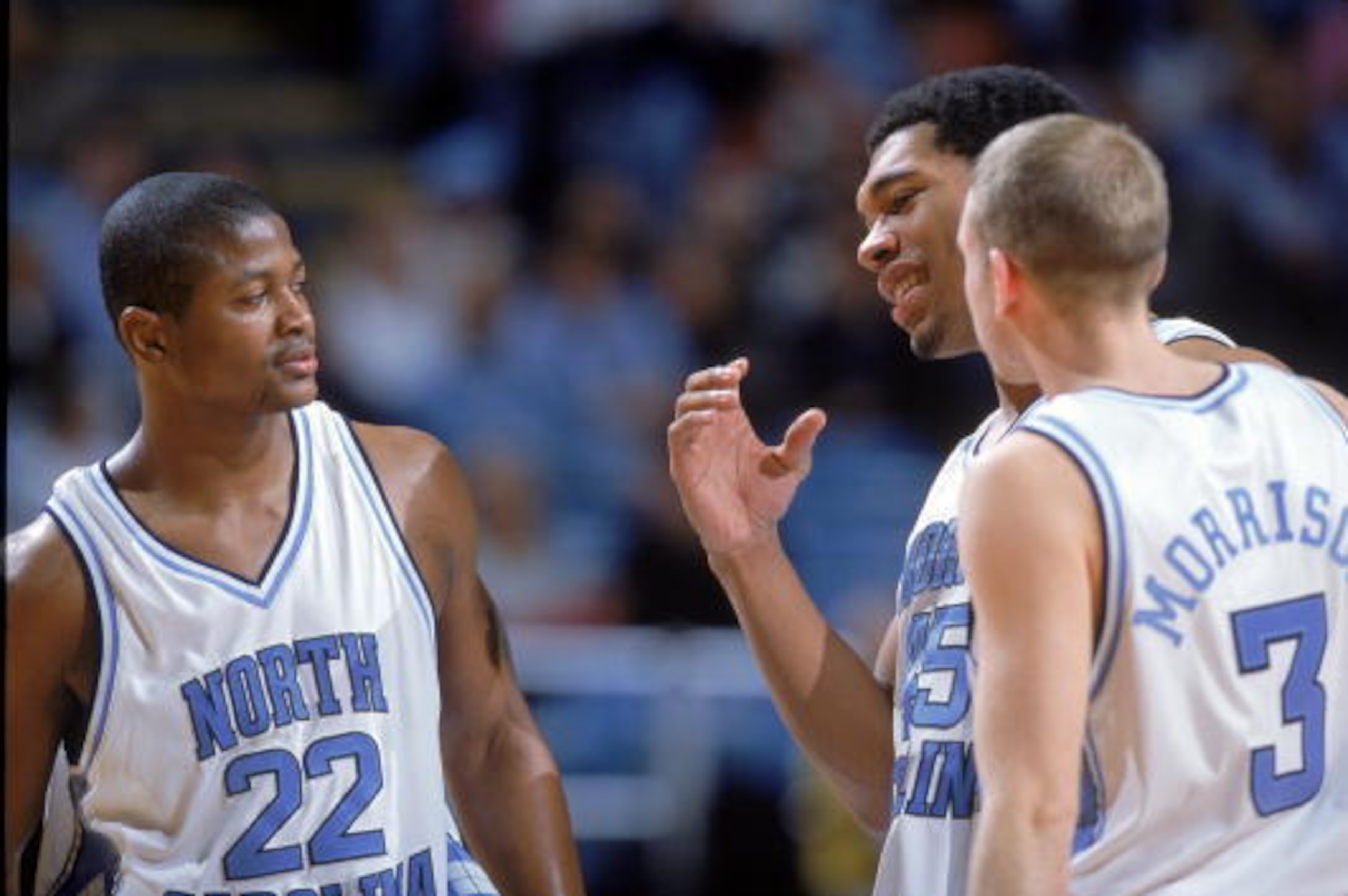
2. Julius Peppers, North Carolina
9 of 10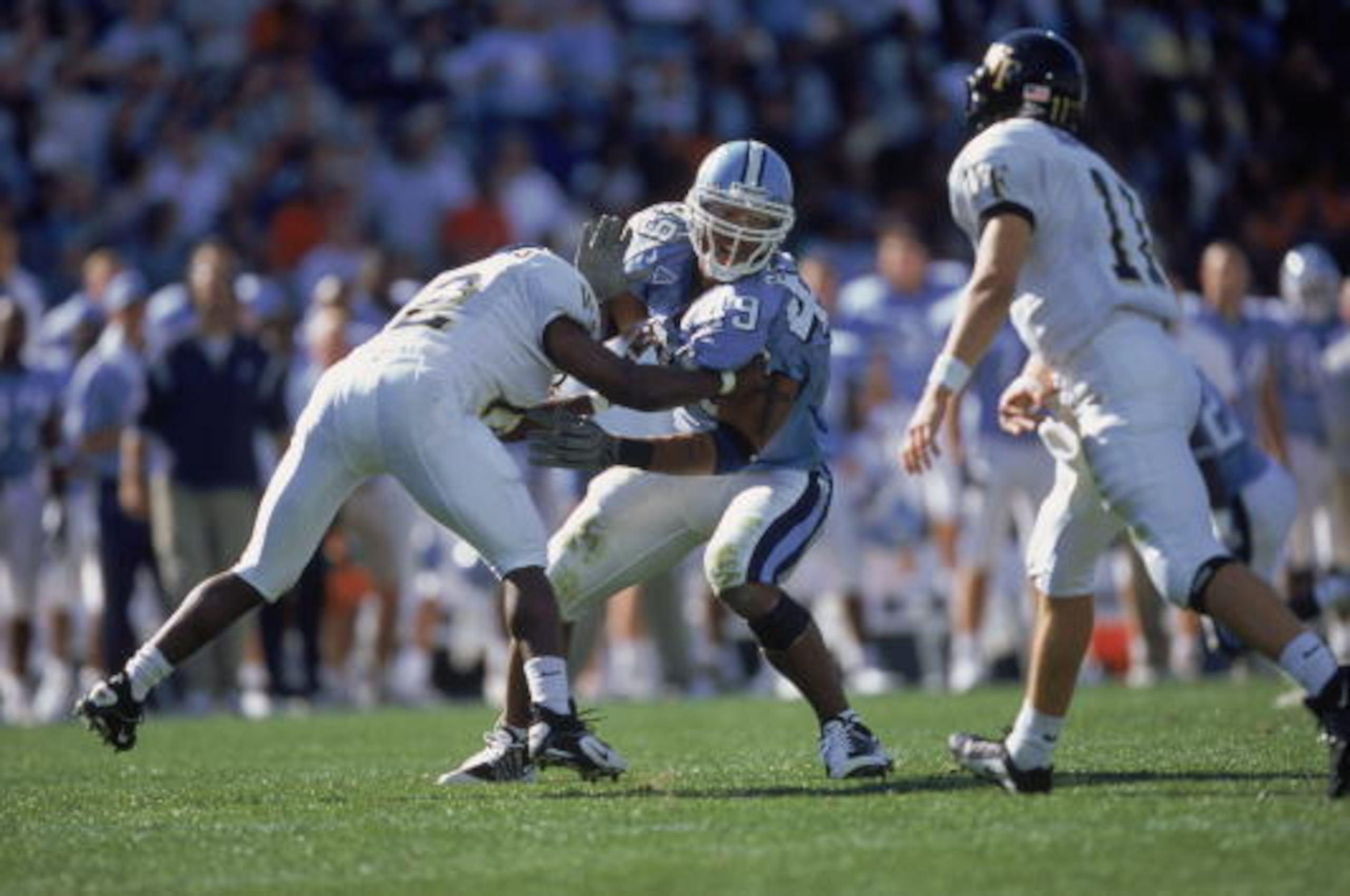
March Madness appearances: 2000-01
Julius Peppers is a North Carolina sports legend, both at the collegiate and pro level, going from being one of the most dominant defensive players with the Tar Heels to one of the most feared pass-rushers in the NFL with the Carolina Panthers. In between, though, he also showed off some pretty nifty basketball skills in two seasons with UNC's hoops team.
The 6'7" Peppers registered 30.5 sacks in his three seasons on the football field with UNC, and in 2001 he was a consensus All-American as well as the winner of the Bednarik and Lombardi awards. He ended his college football career by helping the Heels beat Auburn in the Peach Bowl, eventually declaring for the NFL draft as a junior and going second overall to Carolina.
Along the way, though, Peppers also spent two seasons as a walk-on for UNC's basketball team. But he did much more than play a few minutes of garbage time, as his size made him a perfect power forward who averaged 5.7 points and 3.7 rebounds in 56 career games, including several during the Heels' run to the Final Four in 2000.
Peppers played 16 minutes off the bench in the national semifinal loss to Florida. The following season, Peppers started during the NCAA tourney and had 21 points and 10 rebounds in a second-round loss to Penn State.
He didn't play basketball his junior year while he prepared for the NFL draft.
1. Charlie Ward, Florida State
10 of 10
March Madness appearances: 1991-93
A Heisman-winning quarterback and the starting point guard on a basketball team that made the Elite Eight? Who else would top this list by former Florida State star Charlie Ward.
Ward's collegiate career was one of the most interesting around, because basketball was how he first made a name for himself with the Seminoles. He played 30 games as a freshman in 1990-91, hitting the game-winning shot in the Metro Conference tournament final to give his team an automatic NCAA tourney berth.
"I played my role," Ward told Jim Cavan of Knickerblogger.net in 2011. "I understood my role. And I think the fans appreciated that."
Ward played in three NCAA tournaments, reaching the Sweet 16 in 1992 and the Elite Eight in 1993 while averaging 7.1 points and 3.8 assists per game. But along the way he became just as well known, if not more so, for what he did for FSU's football team.
A punter during his first season in 1989, Ward sat out the next season as he was converted to quarterback. He played sparingly in 1991 but became FSU's starter in 1992 and went 23-2 as a starter. As a senior in 1993 he threw for 3,032 yards and 27 touchdowns, winning the Heisman in a landslide, and that team ended up beating Nebraska in the Orange Bowl to be declared national champions.
Ward never played professional football, opting for a pro hoops career, where he played for three teams over 12 seasons. He started all 82 games for the New York Knicks in the 1997-98 season.
Follow Brian J. Pedersen on Twitter at @realBJP.

.jpg?w=2560)
.jpg?w=2560 "Mahomes Told Teammate to Leave Meeting")
.jpg?w=2560 "Baker Gets Glove From Rays 🧤")
.jpg?w=2560 "5 Teams Eyeing Jonathan Taylor")

.jpg?w=2560 "Steelers Roll Saints in Paris")
.jpg?w=2560 "NFL investigating Eagles")
.jpg?w=2560 "Updates from EVERY Game")