

Power Ranking Miami Heat Players Heading into Final Month of Season
This last month of the season matters for the Miami Heat.
The Heat are 30-36 and clinging to the Eastern Conference's final playoff slot by the narrowest of margins. The Indiana Pacers and Boston Celtics both share Miami's record, and the Charlotte Hornets trail the trio by just one game. It's very likely that the Eastern playoff race will come down to the final game or two of the season.
Miami isn't likely to make any kind of deep playoff run, but just getting there (and maybe making a little noise) could prove to be significant. Goran Dragic's upcoming free agency is inching closer every day. If the Heat can prove definitively that they can build a winning team around him, it could help entice him into staying.
Either way, Miami will need a lot of players to step up as it makes one last push for the playoffs. Let's do a quick ranking of those players heading into the season's final stretch of play. Rankings are based both on past performance and expectations moving forward.
The Reserves
1 of 11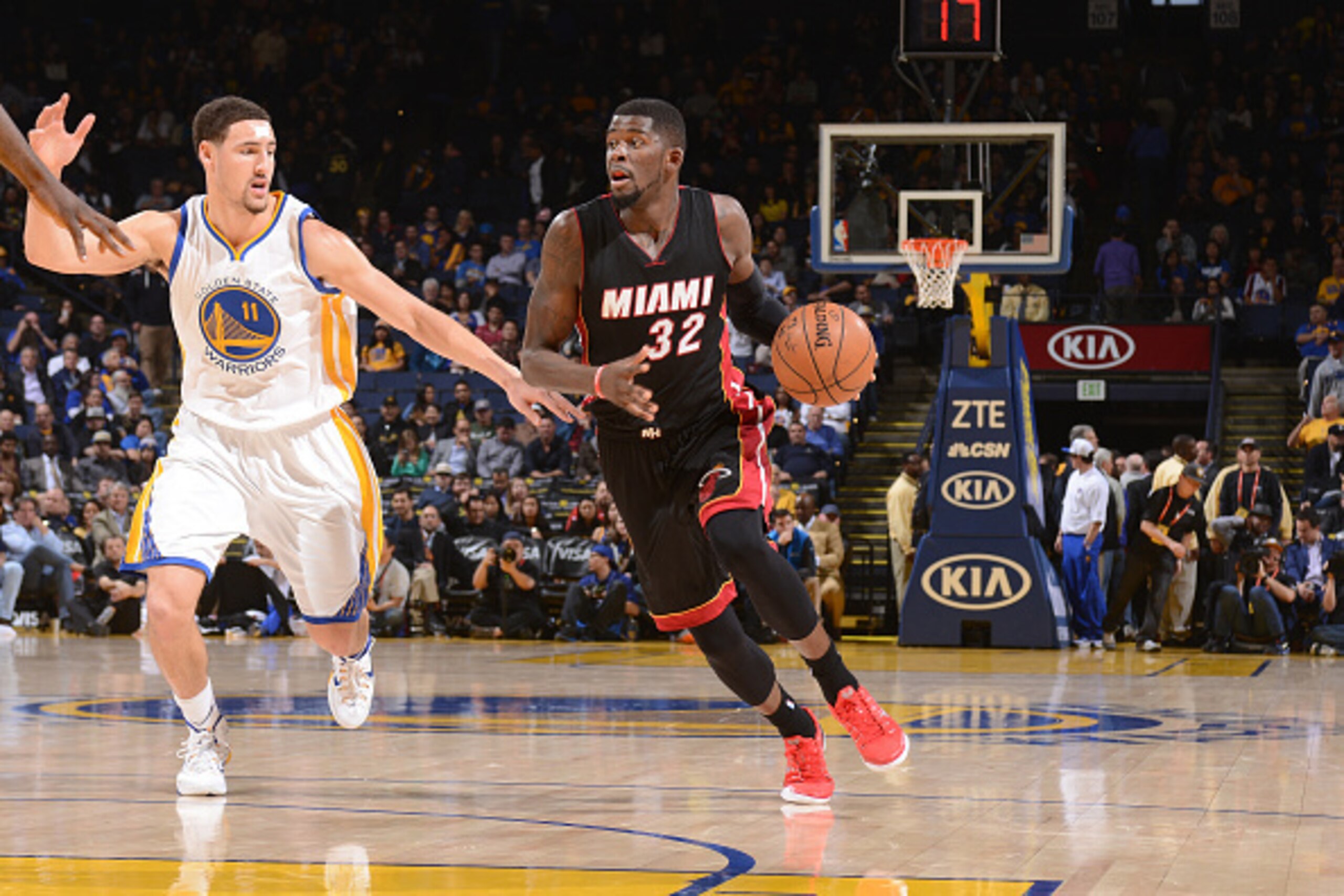
N/A: Chris Bosh and Josh McRoberts
It's frustrating to think how good this Heat team could have been had Bosh and McRoberts been healthy all season. Hopefully, both players bounce back from their respective injuries better than ever.
No. 13: Zoran Dragic
Dragic has played five total minutes with Miami. In that time, he has recorded two total fouls, and that's it. Let's just say he hasn't been instrumental to the Heat's season.
No. 12: Udonis Haslem
Udonis Haslem used to be a great role player, but unfortunately, he's simply no longer the guy he once was.
He's hitting just 33 percent of his jumpers and 52 percent of his shots at the rim. That would be survivable if he was providing elite defense, but that's not the case. Opponents are shooting nearly 5 percent better than their season averages when Haslem is guarding them.
He's also allowing 60.6 percent shooting at the rim, which is insane for a defensive-minded big.
No. 11: James Ennis
Ennis isn't quite a rotation-caliber player, but he's shown enough flashes to think that he could be one someday.
His shot selection is very close to ideal (he takes little but threes and shots at the basket), and he draws fouls at a good clip. He's also shown some ability to take defenders off the bounce.
Unfortunately, he's really hamstrung by his lack of range and inability to finish. He's hitting just 32.3 percent from downtown and 52 percent at the rim. Unless he can improve on both of those numbers, he won't be useful enough on the offensive end to justify his porous defense.
No. 10: Henry Walker
2 of 11
Henry Walker is a three-point specialist who can't shoot threes. As you might imagine, that makes him less than essential in Miami.
A whopping 76 of Walker's 101 shots have come from behind the arc (75.2 percent), but he's connecting on just 29 percent of those attempts. For what it's worth, just the willingness to launch threes is enough to provide floor spacing. But whatever defensive attention he draws is more than negated by his poor accuracy.
He's a career 36.5 percent from three, so he may end up turning things around soon. But if he doesn't, there's no real justification for giving him 27 (!!) minutes per game. No matter how thin the Heat are at the wing. He's not a useful off-the-bounce player (he's shooting 28.6 percent on drives) and is a mediocre defender at best.
The Heat could get more than that from Ennis. For now, Walker's getting ranked above Ennis because of his track record and the fact that Miami is absolutely desperate for a wing shooter. But he needs to pick up his play fast.
No. 9: Michael Beasley
3 of 11
Michael Beasley's individual numbers are not particularly good. He's averaging 9.5 points per game, but he's doing so on 45.9 percent true shooting, one of the lowest marks on the team.
Beasley is a volume scorer who loves to launch pull-up jumpers from mid-range and beyond. Nearly 45 percent of his shots have come between 10 feet and the three-point arc. He's hitting just over 30 percent of those attempts.
That's particularly frustrating considering how good he's been close to the hoop. He's had a lot of success posting up (on a very small sample size) and is hitting 62 percent from the floor when he's inside of 10 feet.
With all that being said, Beasley has still been a useful piece.
The Heat are outscoring opponents by 2.3 points per 100 possessions when he's on the floor, and he's been a part of some terrifying offensive units. His shot selection may be far from perfect, but it does give him some use as a stretch 4, where he's spent the bulk of his time with Miami.
Erik Spoelstra has even thrown him out at the 5 in really whacky lineups.
Those groups have experienced big peaks and valleys, but they should see some more burn moving forward. Playing Beasley at center gives Miami weird positional mismatches that it wouldn't ordinarily have. And when he's not settling for jumpers, he can do damage off the dribble against basically any 5 in the league.


No. 8: Shabazz Napier
4 of 11
In the perfect situation, Shabazz Napier would spend his rookie season learning the ropes and occasionally coming off the bench to launch a few triples. Unfortunately, he hasn't had that luxury.
Napier was a great shooter in college, and that part of his game has already translated nicely to the NBA. He's hitting 36.8 percent from deep, including 40 percent of his spot-up attempts. When partnered with Dwyane Wade or Dragic as a pure catch-and-shoot threat, he's already a helpful player.
His issues surface when he's asked to serve as a lead ball-handler and create offense for himself or others. He simply doesn't know how to attack NBA defenses right now, and he's not the type of raw athlete who can use physical tools to make up for that lack of knowledge. As a result, his attempts at off-the-bounce creation have been mostly disastrous.
Napier is turning the ball over on 33.9 percent of his pick-and-roll possessions, the third-highest mark of any pick-and-roll-centric player in the league. He's often just a split-second behind on his decision-making, and it costs him. He makes the right decisions on possessions; he just does so too slowly.
Typically, the best outcome of a Napier pick-and-roll is a quick pull-up jumper. He's hitting 43 percent on such shots. But that's not a very high ceiling for those play types.
No. 7: Mario Chalmers
5 of 11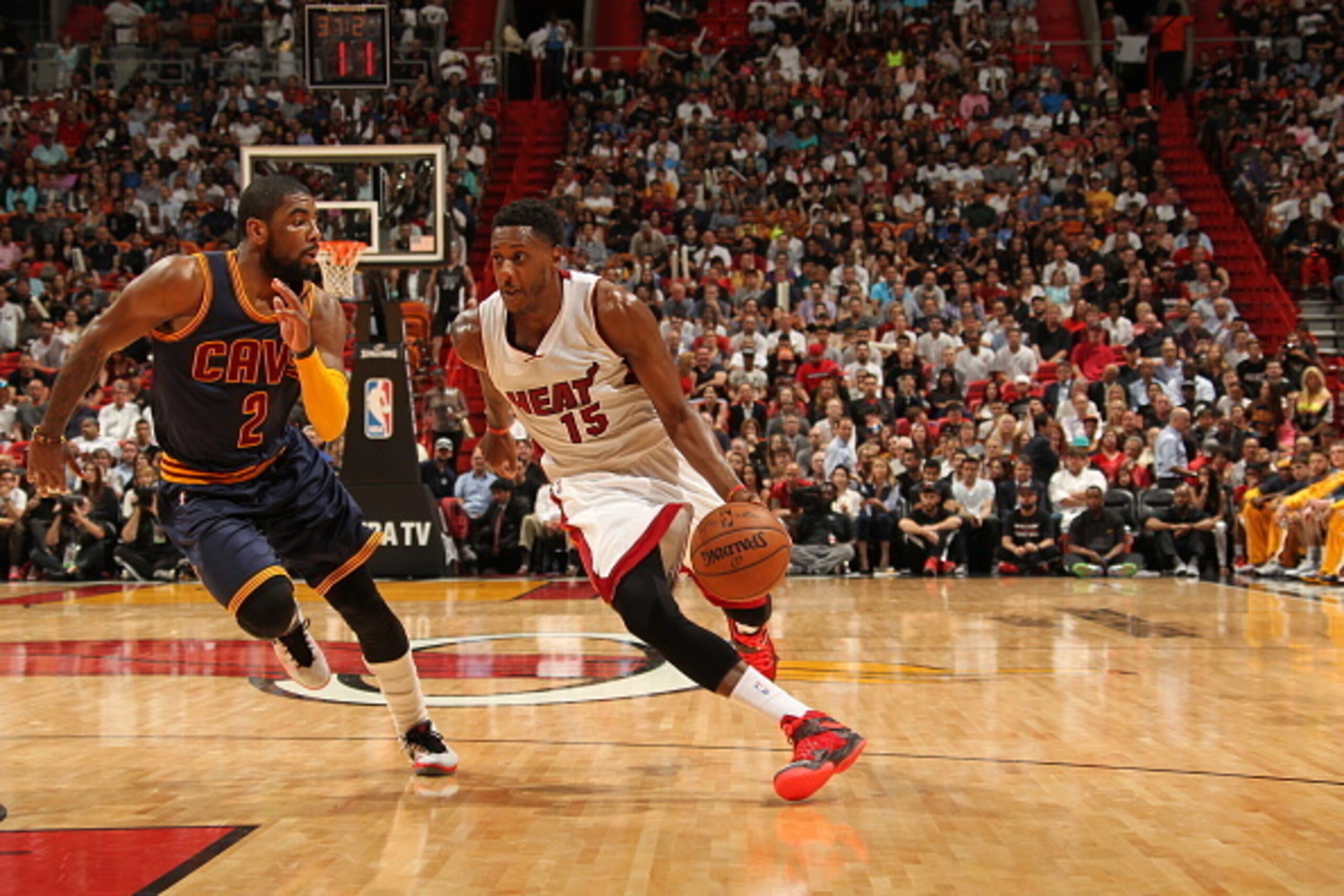
If Chalmers was shooting the ball well, he would be having a heck of a season.
That may sound self-evident, but it makes sense when you look at his numbers. The only thing he's not doing well is shooting from deep.
Chalmers is hitting just 29.3 percent from three, a 9.2 percent drop from last season. He's a career 36 percent shooter, so you have to imagine that number will turn around eventually. But he hasn't hit better than 35 percent from outside in any month this season, so who knows at this point?
Fortunately, he is bringing other things to the table. He's attacking the basket well, creating 8.8 points per game on drives to the hoop. For reference, Wade is creating 9.3 points per game on drives.
Chalmers is only converting 52 percent of his tries around the basket, but his free-throw rate has spiked now that he's getting there so much. He's averaging 6.2 free throws per 36 minutes compared to 3.9 last season.
On top of that, he's playing typically solid perimeter defense. He's not a particularly big guard (he's 6'1”), but he's very strong, and the Heat are more than willing to throw him at an opponents' best offensive guard. In fact, the majority of Chalmers' minutes have come at the 2 this season, unusual given his height.
No. 6: Chris Andersen
6 of 11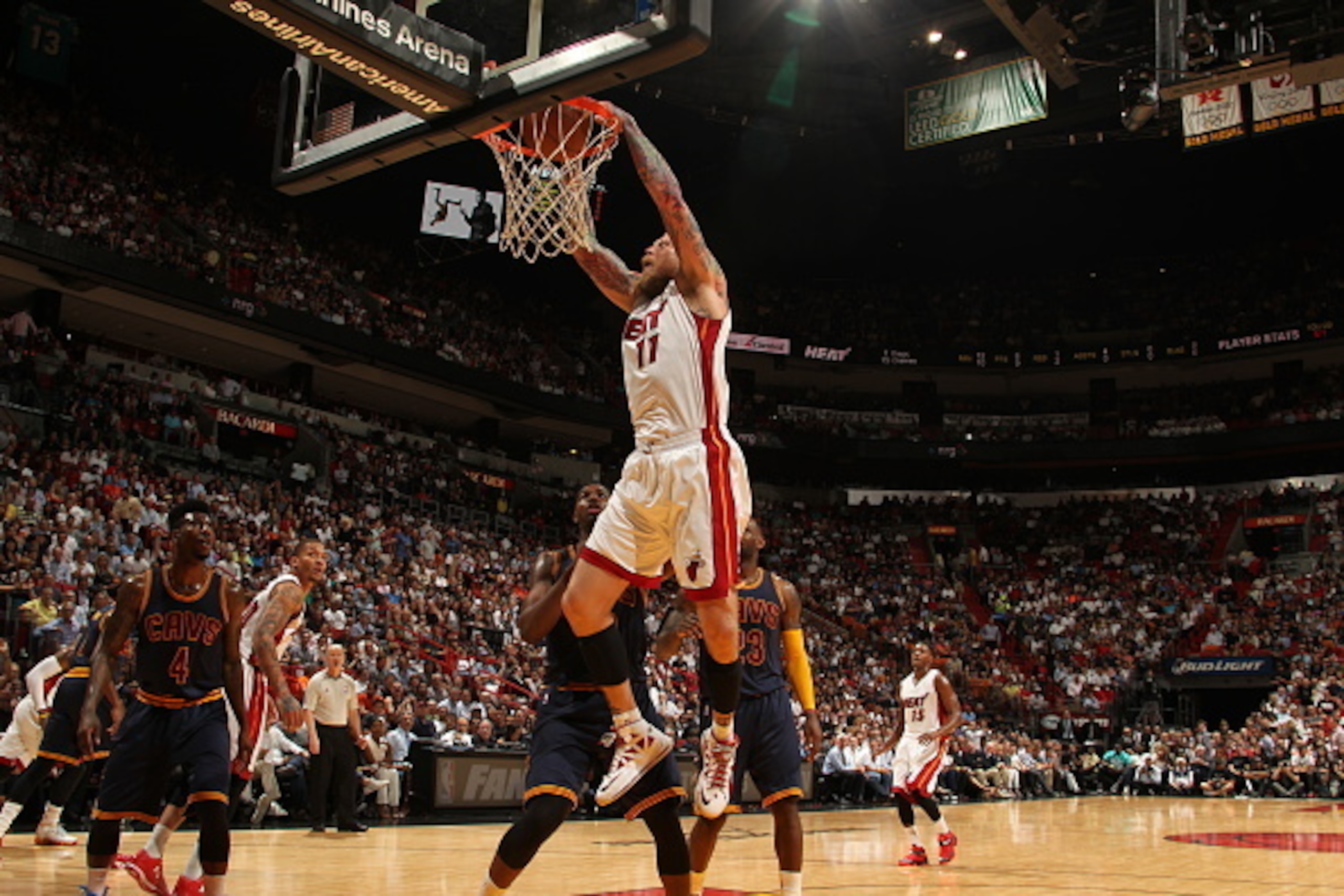
Chris Andersen's steady play has been one of the few constants in a wild Heat season.
Andersen's numbers are practically identical to last year's. He's averaging 5.5 points, 5.1 rebounds and a block per game on 63 percent true shooting. You really can't ask for anything more from a backup center.
Though he's overshadowed by Hassan Whiteside, Andersen has been fantastic rolling to the basket. He's shooting 68.4 percent and averaging 1.22 points per possessions on those play types. That's enough to put him in the league's top 10 percent as a roll man.
Those numbers are even more impressive when you consider that Chalmers is the guard he's logged by far the most minutes with. Chalmers is solid, but he's not exactly known for his pick-and-roll passing.
Andersen is still good on the boards, though he's slipped a touch on the offensive glass. What's really worth watching moving forward, however, is his defense. His block rate has fallen to 4.4 percent (the lowest of his career), and opponents are shooting 52.6 percent at the rim against him.
That's not the kind of rim protection Miami is used to seeing from Andersen. But at 36 years old, it may be all he has left. He's been an easy net positive regardless, but it's worth monitoring.
No. 5: Tyler Johnson
7 of 11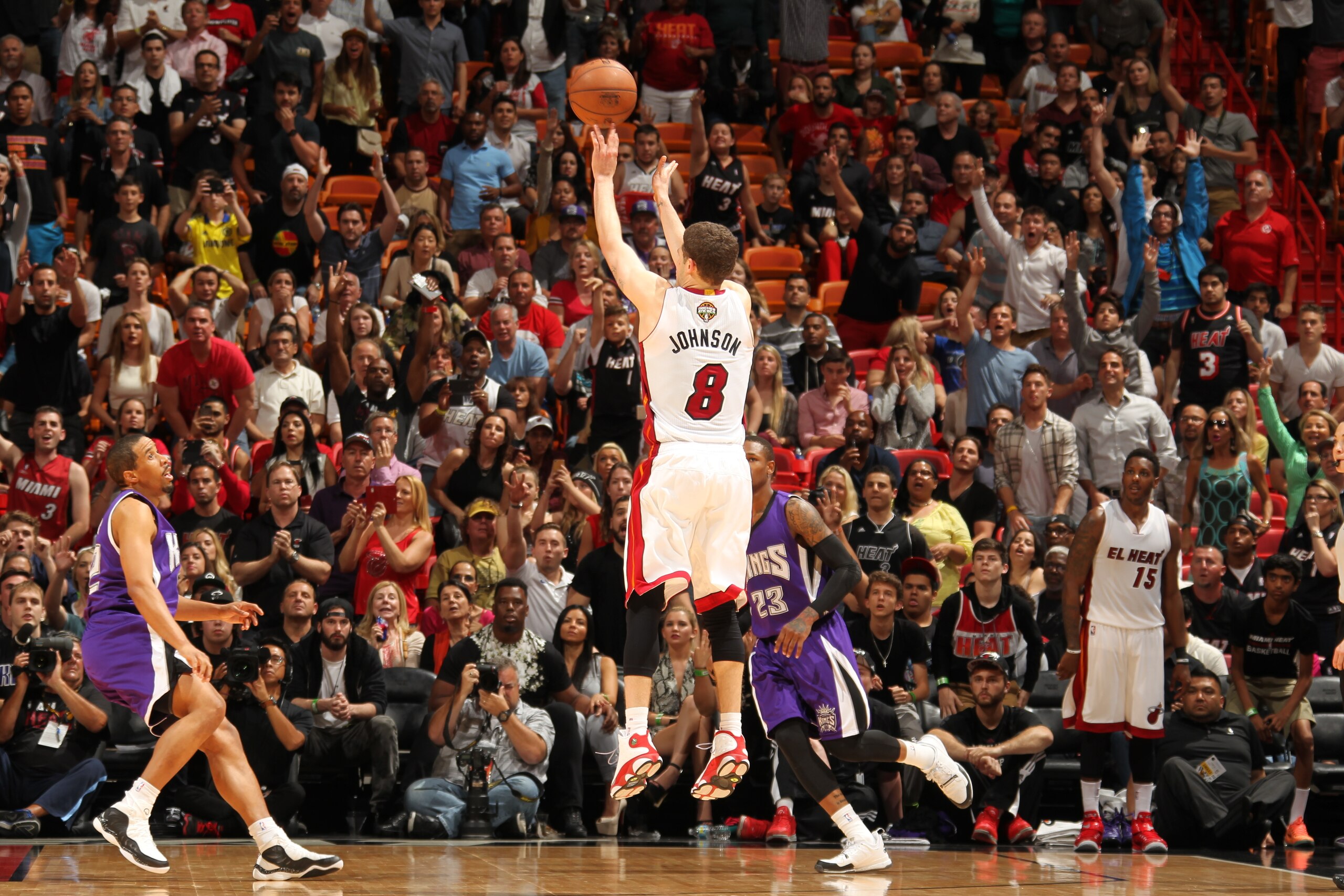
If it weren't for Hassan Whiteside's monster year, Tyler Johnson would be the surprise player of the Heat's season.
Honestly, there's not much that Johnson is doing wrong. He's averaging 14.1 points, 4.0 rebounds and 2.6 assists per 36 minutes, all while shooting 50 percent from the floor and 48.3 percent from deep. Keep in mind, this is coming from a guy Miami signed to a 10-day contract in mid-January.
The Heat often have Johnson float around as a spot-up shooter. But they've let him attack off the dribble more recently to real success.
Like Napier (and most young guards), Johnson is turnover-prone. The Heat have partially circumvented that by using screens and handoff plays to get him the ball on the move and away from traffic. Those are paying off, as he's hitting 58 percent at the rim and 57 percent from 3-10 feet (thanks to a pretty floater).
One strange thing that's worth pointing out: Despite Johnson's strong play, Miami has been roughed up when he's on the court. The Heat are being outscored by 6.4 points per 100 possessions when he's in the game. Some of that is undoubtedly skewed by garbage time, but it's still weird, nonetheless.
Fortunately, they seem to be figuring out what lineups he fits best in. They've paired him with Wade a lot more recently, and those groups have been fantastic in limited minutes (plus-7.0 points per 100 possessions).
No. 4: Luol Deng
8 of 11
Let's just say that Luol Deng has had no trouble adjusting to life with the Heat. In fact, you could make a case that this has been one of the best years of his career.
Deng is averaging 14.2 points, five rebounds and two assists per game on 57.6 percent true shooting, including 36.7 percent from three. He's been a solid catch-and-shoot option (hitting 46 percent from the corners), but he has perhaps been most impressive as a secondary ball-handler.
Deng has taken on a bit more off-the-dribble responsibility in Miami, and he's done an admirable job of it. He's averaging three drives per game and shooting 49.4 percent on those. That's a huge step up from last season, where he shot just 40.7 percent when attacking the basket.
What he really deserves to be commended for, however, is the flexibility he's shown this year. His role on the team has basically done a complete 180 since Bosh was ruled out for the season. He's more or less a full-time 4 at this point. Making an on-the-fly transition like that can't be easy, but Deng has handled it well.
No. 3: Dwyane Wade
9 of 11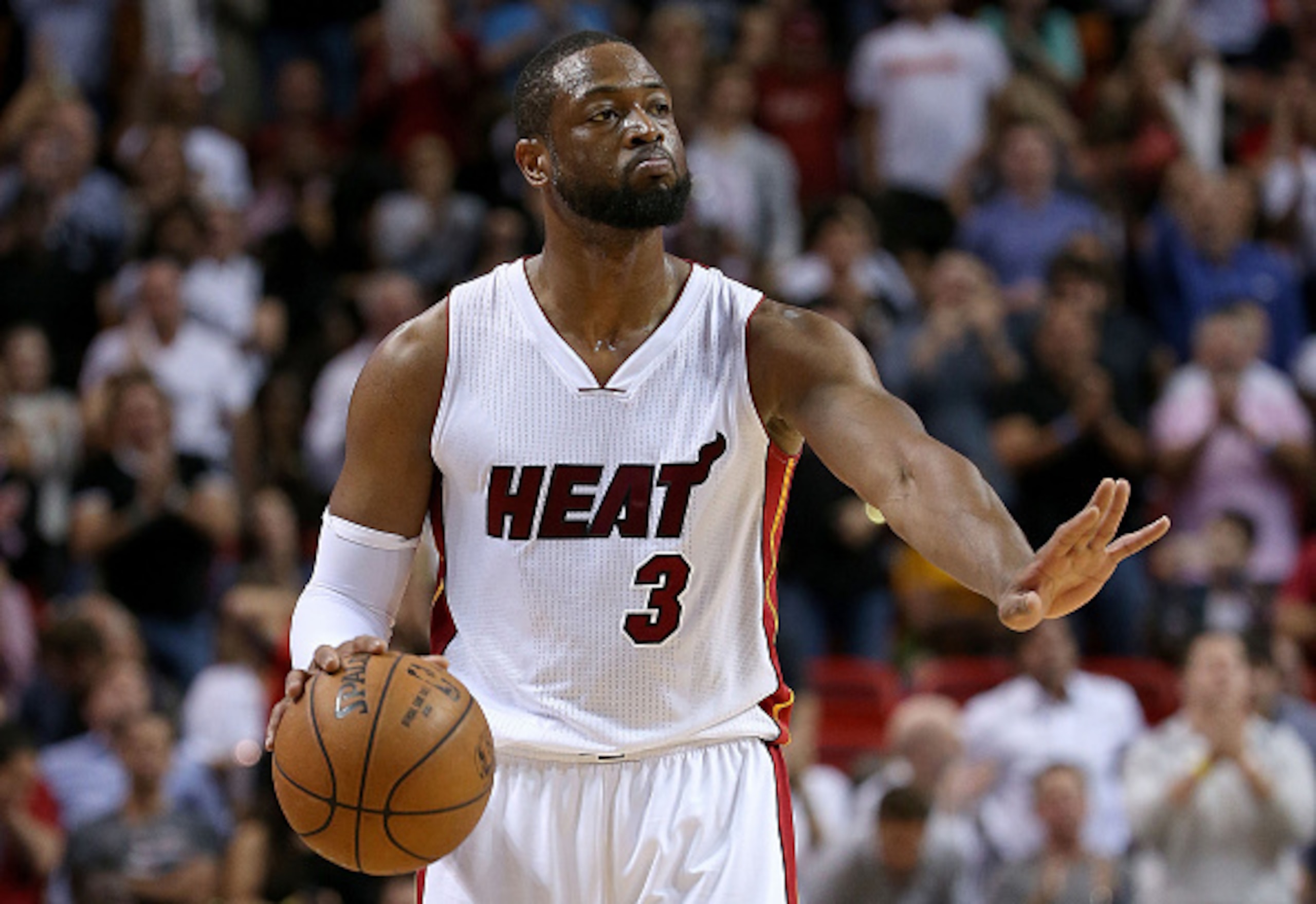
Wade has been an absolute workhorse this season.
He's averaging 21.6 points and 5.2 assists per game and is using 34.5 percent of the Heat's possessions. That's good for third in the league (behind Russell Westbrook and Kobe Bryant) and is his highest mark since 2009-10.
Wade's efficiency has taken a hit. He's true shooting percentage is 54.3, down from 58.8 percent last season. But it's unclear how much of that can be blamed on him and how much is due to the Heat's ill-fitting roster. He does most of his damage in or around the paint and is at his best when he's flanked with shooters. As has been discussed, shooting isn't exactly plentiful in Miami.
Nonetheless, Wade remains one of the more dangerous scorers in the league. He's driving to the basket nearly eight times per game and finishing on 57 percent of those drives (coincidentally, only Dragic has been better in that category).
He's also still very dangerous in the low post. He hasn't been down there a ton this year, as all of Miami's injuries have forced him to spend a lot of time at the 3. But every now and then, he's able to drag smaller guards to the block via switches. He's shooting 48 percent on those play types, one of the best marks among wings.
One other thing worth noting is how excellent Wade's pick-and-roll passing has been. Both Andersen and Whiteside have been devastating finishers, but a lot of that has to do with Wade's ability to fit the ball into tight spaces when opposing bigs cheat up on him.
No. 2: Hassan Whiteside
10 of 11
Hassan Whiteside is nearing 1,000 minutes this season (he's at 827), and he's still putting up video-game stat lines.
He's averaging 17.7 points, 15.9 rebounds and 3.9 blocks per 36 minutes on 62 percent true shooting. And that's starting to feel less and less like a fluke.
Defensively, Whiteside has been excellent. ESPN's real plus-minus system has him pegged as the seventh-best defensive center in the league and the 16th-best defender, period. He's holding opponents to 46.2 percent shooting from inside 10 feet (7.7 percent worse than their season average) and is allowing just 45.9 percent shooting at the rim as a whole.
The offensive end is where Whiteside really shines, however. He has been a pick-and-roll destroyer. He's shooting 74 percent when he rolls to the basket and averaging 1.43 points per possession on those play types. That's the best mark in the league of any player with over 50 shot attempts.
He's also shown a surprisingly effective post game. Whiteside is raw, but he has solid footwork and great touch around the basket. He's currently shooting an even 50 percent on post-ups, and the Heat have actually spent entire games running their offense through him on the low block.
It'll be really scary to see what Whiteside looks like when he's surrounded with competent shooting. He's running into crowds of three or four guys every time he cuts to the hoop, and he's not a savvy enough passer to navigate those situations. With little room to breathe, he might get more looks at the rim.
Whiteside's temper is clearly an issue at this point. But as long as he can stay on the court, it's hard to find anything but minor flaws in his game.
No. 1: Goran Dragic
11 of 11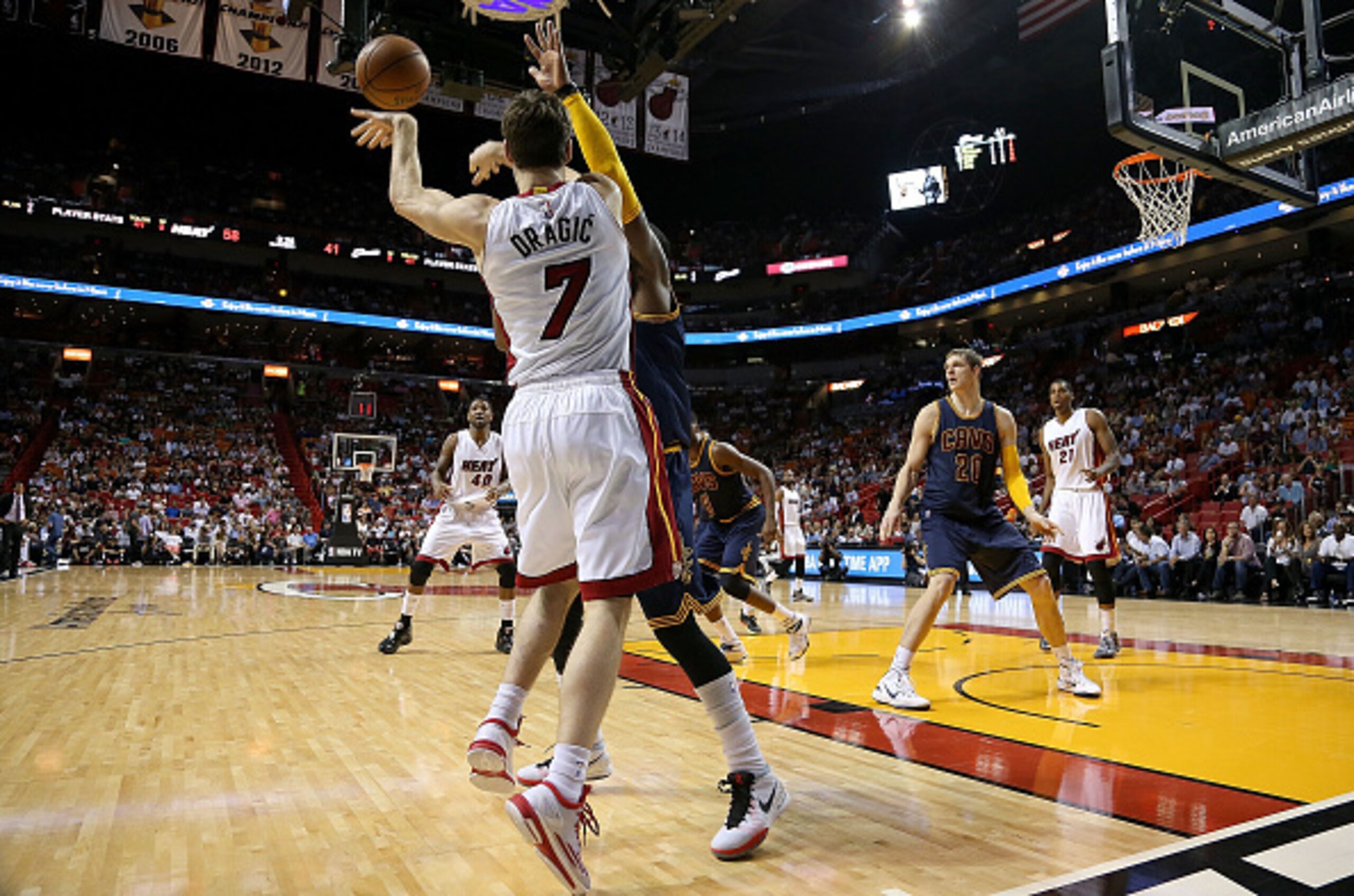
Dragic gets the nod over Whiteside if only because of the way he's totally transformed the Heat offense.
Since acquiring Dragic, the Heat have made quantum leaps in both pace (91.85 to 97.28) and fast-break points per game (8.5 to 13.9). They've also upped their offensive rating from 101.5 to 103.2—an impressive swing considering Bosh's absence.
That kind of up-tempo, push-the-pace basketball is what the Heat were meant to play. They just didn't have the right guards to do it. They do now.
Dragic is getting into transition more than just about any player in the league, and when he gets to the rim, it's basically game over. He's connecting on 70.3 percent of shots eight feet or closer to the basket.
He's similarly lethal in the half court, driving to the hoop and finishing better than virtually anyone in basketball right now. And he uses those drives to set up easy pick-and-roll passes or nifty cross-court bullets to three-point shooters.
Miami typically asks Andersen and Whiteside to slip screens and roll hard toward the rim. But they'll occasionally set full screens so that the Heat ball-handlers can draw a one-on-one matchup with the opposing big. Dragic is great at squeezing out just enough space with his dribble to fire hard skip passes to the corners.
He's only so-so defensively, but he's big enough (6'3”) to match up with most guards physically. That gives the Heat the option to use him in all sorts of lineups, including some interesting three-guard groups.
All statistics accurate as of 3/17/2015 and courtesy of NBA.com/Stats or Basketball-Reference.com unless stated otherwise.

.jpg?w=2560 "Mahomes Told Teammate to Leave Meeting")
.jpg?w=2560 "🚨 Week 8 AP Top 25 Poll")

.jpg?w=2560 "Baker Gets Glove From Rays 🧤")
.jpg?w=2560 "5 Teams Eyeing Jonathan Taylor")
.jpg?w=2560 "Steelers Roll Saints in Paris")
.jpg?w=2560 "NFL investigating Eagles")
.jpg?w=2560 "Updates from EVERY Game")