
Ranking the Best Starting Lineups in the NBA
Who has the best starting five in the NBA? And how do you determine that?
It’s not as easy as just looking at records. Benches and injuries play into things as well. Even trades can factor in. For example, the Cleveland Cavaliers’ starting five is much better since they acquired J.R. Smith and Timofey Mozgov.
And while they’ve been outstanding, how do you balance a group that’s been together half the season with a group that’s been together the whole season, such as the Atlanta Hawks or Golden State Warriors?
To determine the best groups, I factored in four things:
- Plus/minus per 48 minutes: This is based on numbers provided by NBA.com/Stats. I had a minimum of 200 minutes played. I only considered who the current starters would be if everyone was healthy. That disqualified certain lineups, like the Dallas Mavericks with Jameer Nelson, because he was no longer with the team, or the San Antonio Spurs’ starting five, which didn’t meet 200 minutes.
- Winning percentage: I used the winning percentage in games each lineup started, as provided by Basketball-Reference.com.
- Number of wins: This was to balance winning percentage with number of wins.
- Strength of schedule: This was obtained from ESPN.com. The strength of schedule for the full season was used, as there was no way of obtaining it specifically for the caliber of lineups faced.
To determine the rankings, I used the following formula: square root of (wins squared + plus/minus per 48 squared) * winning percentage * strength of schedule.
All stats are current through Mar. 18. The teams are ranked based on the results of the formula.
5. Portland Trail Blazers: 9.8
1 of 5
Starting Five: LaMarcus Aldridge, Nicolas Batum, Damian Lillard, Robin Lopez, Wesley Matthews
Plus/Minus per 48: 10.2
Record (Winning Percentage): 24-8 (75.0)
Strength of Schedule: .503
The Portland Trail Blazers took a hit when they lost Wesley Matthews for the season, as he was an important part of one of the NBA’s best starting fives.
The Trail Blazers are exceptional in three regards: They make their free throws, rebound and take care of the ball.
Among the teams on our list, they lead in all three of those categories. They shoot 81.9 percent from the charity stripe, snatch 48.1 boards and turn it over only 12.2 times per 48 minutes.
How much is the team missing Matthews? Through nine games and 103 minutes, the same unit with Arron Afflalo in Matthews' place has been outscored by five points. Chemistry matters.
4. Los Angeles Clippers: 10.9
2 of 5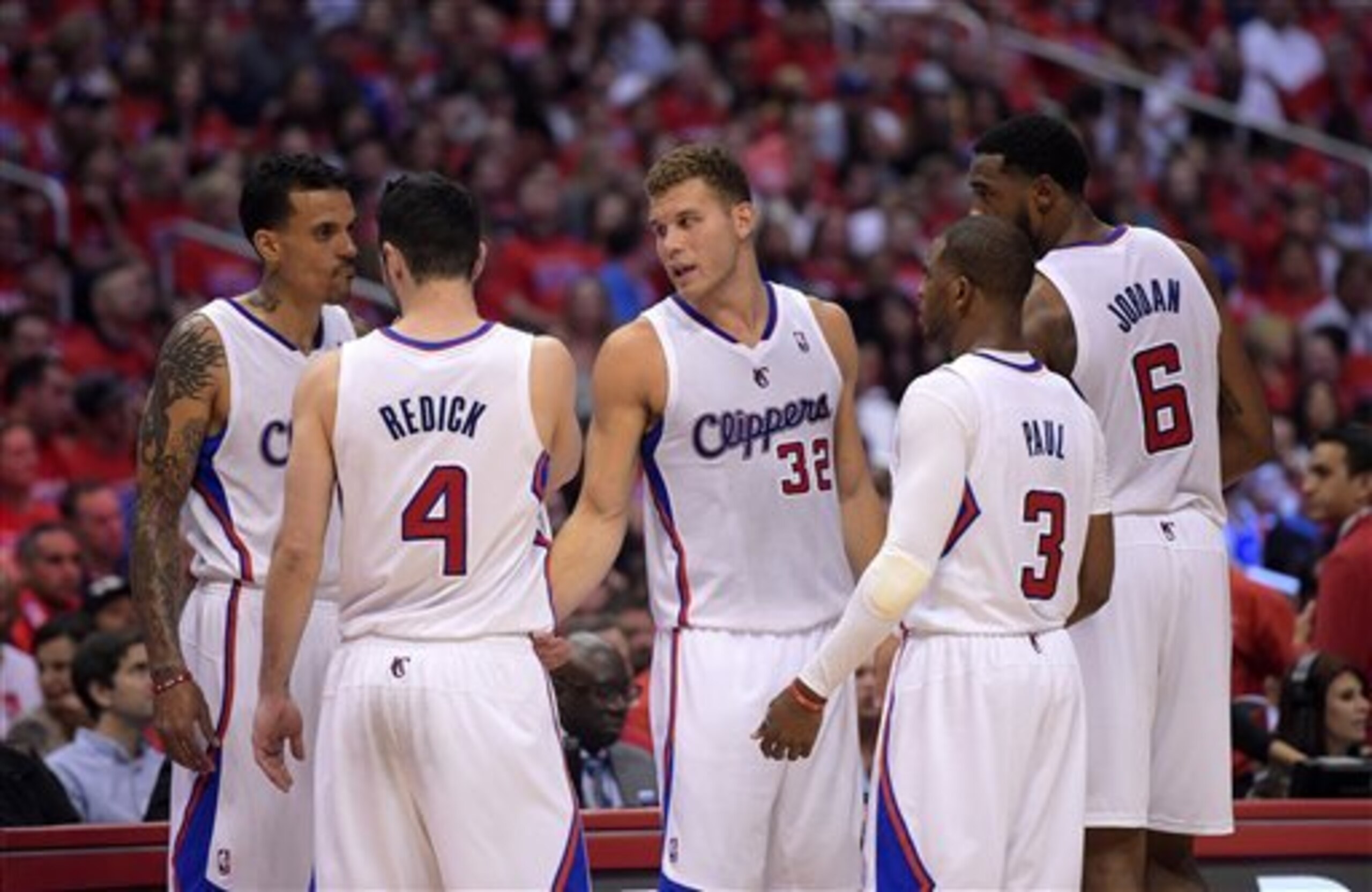
Starting Five: Matt Barnes, Blake Griffin, DeAndre Jordan, Chris Paul, J.J. Redick
Plus/Minus per 48: 15.3
Record (Winning Percentage): 29-16 (.644)
Strength of Schedule: .517
The Los Angeles Clippers starting five is pretty darned good. In fact, they’ve outscored their opponents by a total of 288 points this season, which is the highest plus/minus of any five-man unit in the NBA. So how come they’re not ranked higher?
First, it’s because that number is slightly inflated by the 905 minutes they’ve played together. Among the teams on our list, they’re only third in plus/minus per 48 minutes. Second, their winning percentage as a group is just 64.4 percent.
That could be an indication of a group that tends to run weaker teams out of the gym but struggles against better teams. As the Clippers are 18-21 against .500 teams, that seems like it’s not a stretch.
The Clippers unit takes care of the ball, turning it over just 12.5 times per 48 minutes. They are also 2.1 times as likely to block a shot as have one blocked, which says a lot about the confluence of Chris Paul (who sets up his teammates for open shots) and DeAndre Jordan (who swats everything in sight). That’s the best ratio of any lineup with 200 minutes.
3. Cleveland Cavaliers: 14.8
3 of 5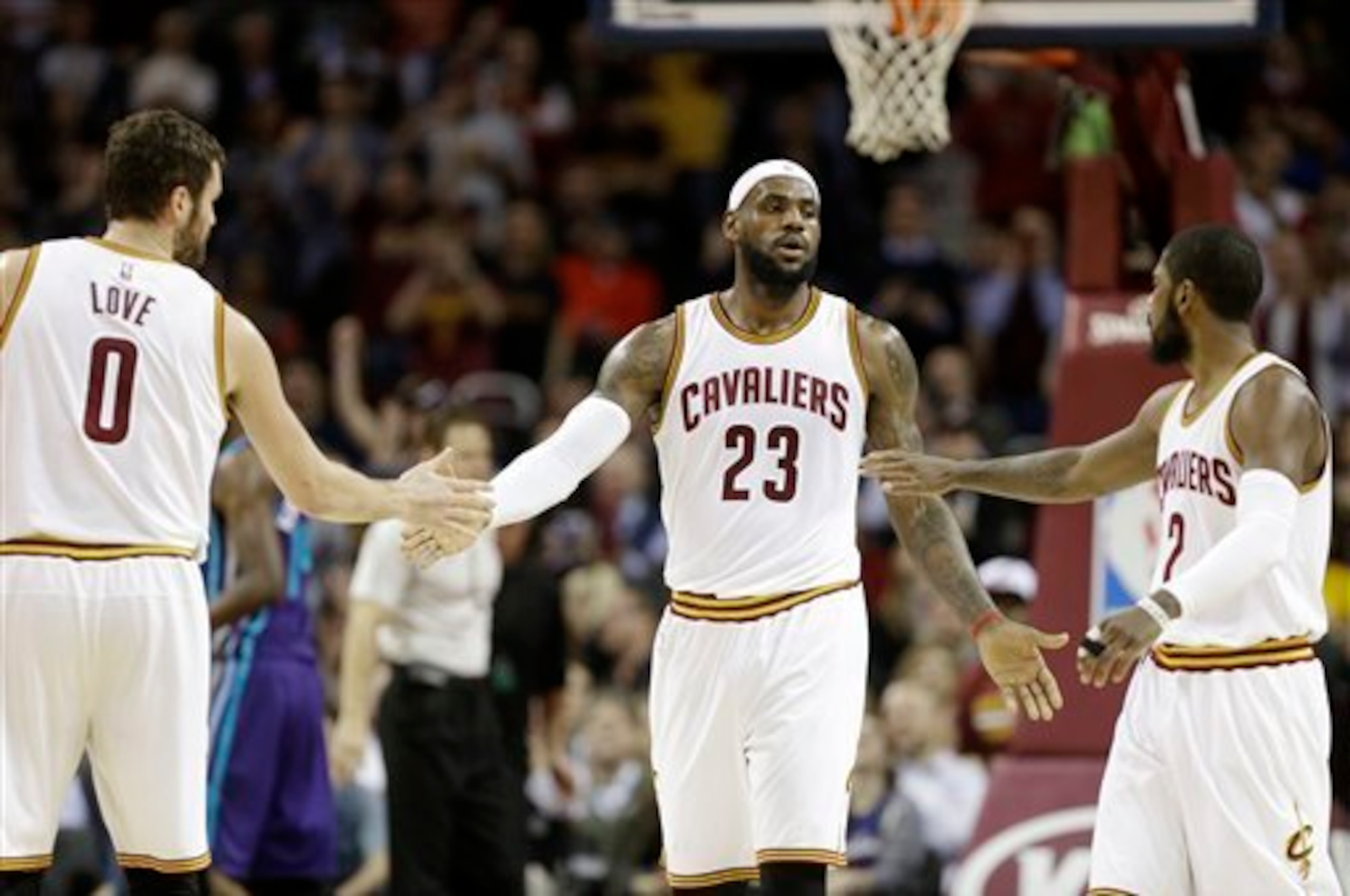
Starting Five: Kyrie Irving, LeBron James, Kevin Love, Timofey Mozgov, J.R. Smith
Plus/Minus per 48: 26.5
Record (Winning Percentage): 21-3 (.875)
Strength of Schedule: .500
The Cleveland Cavaliers have been ripping through the NBA since they traded for Timofey Mozgov and J.R. Smith. And while it wouldn’t be hard to argue that they deserve the No. 1 spot on this list, they are knocked down solely for the fact that they’ve done it for half the number of games as the two squads in front of them.
They lead the league in plus/minus per 48 at a ridiculous 26.5. When they’ve had their starting five, their record is 21-3, the second-best winning percentage of any group with 20 or more starts. Perhaps the gaudiest stat of all is their collective true shooting percentage of 62 percent.
Their offensive rating of 119.8 is best in the NBA. Their defensive rating of 94.7 is fifth best. Their net rating is 5.7 points better than anyone else's. They also have an assist ratio of 20.3.
In short, the Cavs are turning into the historically great team they were projected to be. If you want to argue they’re the best, I have no qualms with that. They’re only ranked lower because the two ahead of them have accomplished more.

2. Atlanta Hawks: 15.7
4 of 5
Starting Five: DeMarre Carroll, Al Horford, Kyle Korver, Paul Millsap, Jeff Teague
Plus/Minus per 48: 9.9
Record (Winning Percentage): 39-10 (.796)
Strength of Schedule: .491
The Atlanta Hawks have cooled down since their magic January, but January still counts and they’re still awesome, just not as awesome.
In January, the group was plus-16.7 en route to going 17-0 and having the unprecedented honor of being named the collective Eastern Conference Player of the Month.
Since then, it’s been “only" plus-nine.
The key to their success is they pass to set up shots. They have an assist percentage of 73.6 and an effective field-goal percentage of 55.5. No lineup with at least 100 minutes is better than the Hawks’ starters on both counts.
They are the epitome of teamwork, and that’s what makes them work so well. You’d almost think their coach, Mike Budenholzer, learned under Gregg Popovich or something.
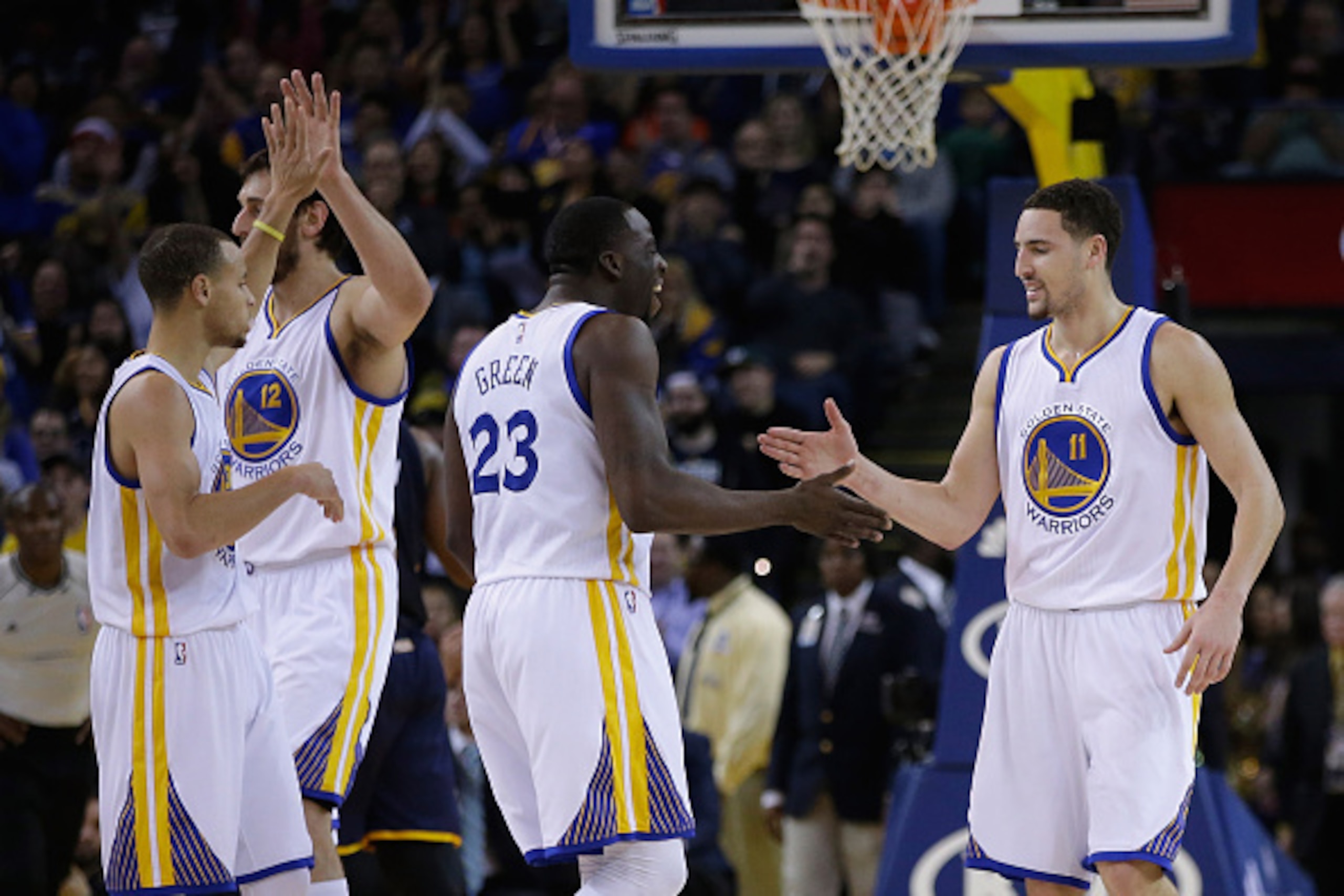
1. Golden State Warriors: 20.2
5 of 5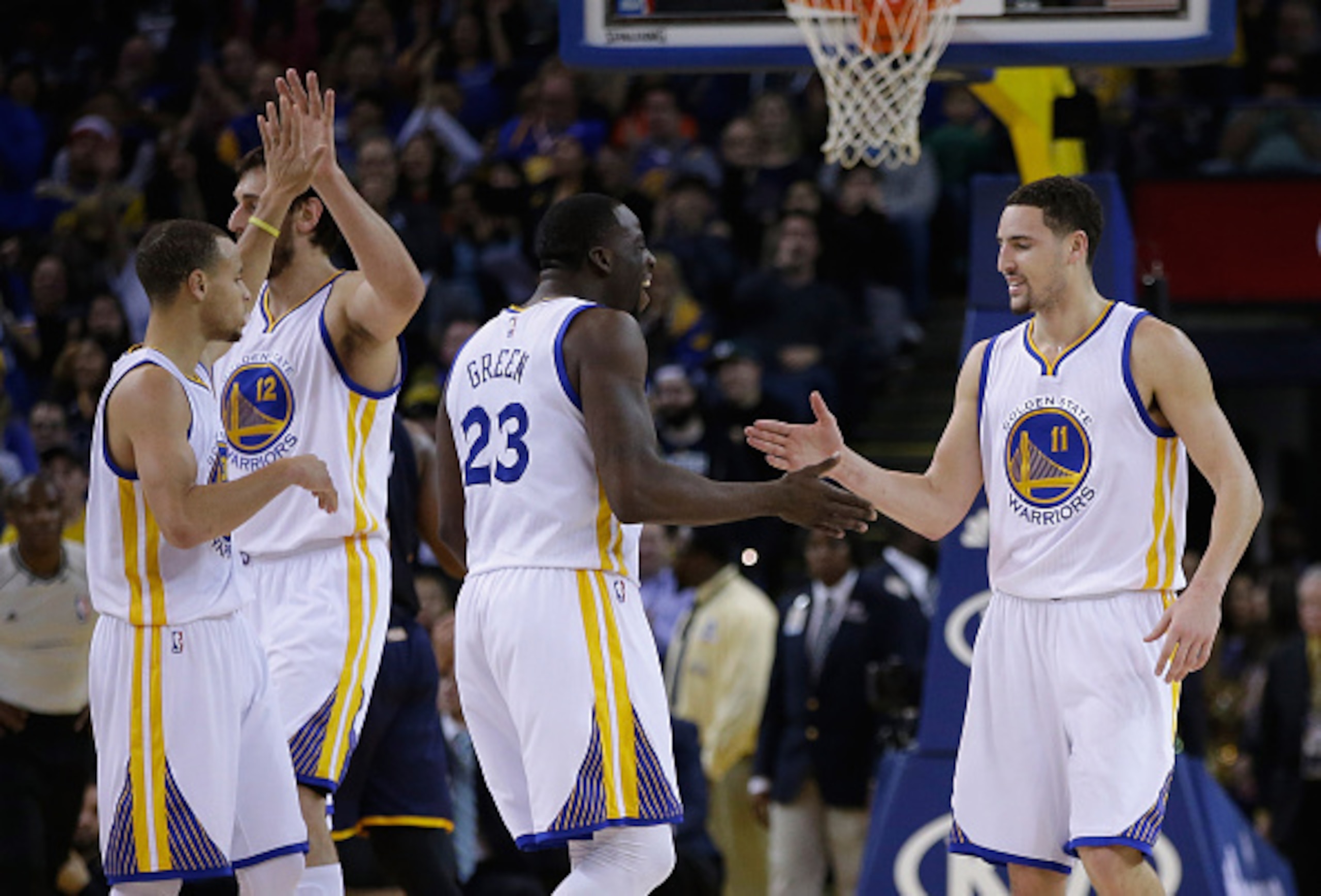
Starting Five: Harrison Barnes, Andrew Bogut, Stephen Curry, Draymond Green, Klay Thompson
Plus-Minus per 48: 19.8
Record: 42-5 (.894)
Strength of Schedule: .491
And the award for best starting five in the NBA goes to the Golden State Warriors—in a move that is almost as startling as the sunrise.
The main key to the success of the Warriors’ starters is the fast break. On the season, they’ve amassed 383 fast-break points while surrendering just 167. That means they average 14.9 more points on the break per 48 minutes than they give up—or 75.3 percent of their plus-19.8 points overall.
Much has been made of the Warriors’ three-point shooting and the chemistry of the Splash Brothers, Stephen Curry and Klay Thompson. But the key to their success is that they use the fast break so well on both ends of the court.
Bear in mind that’s not exclusive of any of the things above. Analytics show that shots taken in the first few seconds of the shot clock are the most important. Curry is fourth in transition points while Thompson is eighth. So this is really about seeing how those show up.
What’s really fascinating about this team, though, is that their starting lineup is only third in terms of net fast-break points per 48 among all lineups in the league. But the two ahead of them are variations on their starting lineup.
When Marreese Speights is in for Andrew Bogut, the net difference is 18.8 points per 48. When Andre Iguodala is in for Harrison Barnes, it’s 16.8 points. And the fifth-best lineup features Speights and Iguodala in for Bogut and Barnes.
If the Warriors were to meet the Cavaliers in the NBA Finals, they could have an advantage. While the Cavs’ group runs the fast break well, they give up nearly as many points in it, netting just 1.9 fast-break points per 48 minutes.
That's something to watch for if these teams meet. And based on their starting fives, it seems like that may very well happen.
Advanced stats for this article were provided by NBA.com/Stats and Basketball-Reference.com.

.jpg?w=2560 "Mahomes Told Teammate to Leave Meeting")
.jpg?w=2560 "5 Teams Eyeing Jonathan Taylor")
.jpg?w=2560 "Jonathan Taylor Landing Spots 📍")
.jpg?w=2560 "Baker Gets Glove From Rays 🧤")

.jpg?w=2560 "NFL investigating Eagles")
