Brian Hartline Signing a Low-Risk, Low-Reward Deal for QB-Deficient Browns
The Cleveland Browns made one significant move so far in free agency, signing wide receiver Brian Hartline to a two-year, $6 million contract that was finalized on Tuesday.
The Browns had been pursuing the Canton, Ohio, native in order to add size, speed and veteran experience to their very young receiving corps. The signing, while not the flashiest nor the biggest name, does fill a need.
Any time a player is added, via the draft or free agency, it's a risk. It's just as risky for the Browns as it is for the Super Bowl champion New England Patriots. Scheme fit, locker room fit, on-field performance—all of these things can be researched thoroughly, and still things may or may not work out.
TOP NEWS
.jpg?w=2560 "Chiefs Giants Football")
Mahomes Told Teammate to Leave Meeting
.jpg?w=2560 "Titans Colts Football")
5 Teams Eyeing Jonathan Taylor
.jpg?w=2560 "Colts Football")
Jonathan Taylor Landing Spots 📍
The Browns, to their credit, understood this risk with Hartline. It's not that he's a poor player. It's not that his best years are behind him. It's because the situation they brought him into is a malleable one. Hartline's 2015 hinges most on who will be throwing him the football, and as of now the Browns don't know who that will be.
| 2009 | 56 | 31 | 55.4% | 506 | 16.3 | 3 |
| 2010 | 73 | 43 | 58.9% | 615 | 14.3 | 1 |
| 2011 | 67 | 35 | 52.2% | 549 | 15.7 | 1 |
| 2012 | 128 | 74 | 57.8% | 1,083 | 14.6 | 1 |
| 2013 | 134 | 76 | 56.7% | 1,016 | 13.4 | 4 |
| 2014 | 63 | 39 | 61.9% | 474 | 12.2 | 2 |
| Total | 521 | 298 | 57.2% | 4,243 | 14.2 | 12 |
In his six years with the Miami Dolphins, Hartline caught 298 passes on 521 targets, for 4,242 yards and 12 touchdowns, averaging 14.2 yards per reception. He had back-to-back 1,000-plus-yard receiving seasons in 2012 and 2013, Miami quarterback Ryan Tannehill's first two years. However, that dropped to just 474 yards on 39 receptions and 63 targets in 2014.
Hartline disappeared, but it wasn't all his fault. The Dolphins changed offensive coordinators, bringing in Bill Lazor, and he installed a dink-and-dunk passing offense centered around tight end Charles Clay and rookie receiver Jarvis Landry. No longer did the Dolphins need two deep threats, and both Hartline and Mike Wallace saw their targets fall. The difference, however, is that Hartline's were cut in half, while Wallace's dropped by just 30.
| 2012 | 51 | 10.5% |
| 2013 | 64 | 10.9% |
| 2014 | 53 | 9.0% |
Tannehill's average yards per attempt and yards per completion didn't change much from 2012 and 2013. In his first two seasons, he averaged 6.8 and 6.7 yards per attempt, and 11.7 and 11.0 yards per completion, respectively. In 2014, he averaged 6.9 yards per attempt and 10.3 yards per completion.
However, he threw fewer passes of 20 or more yards—just 53, or nine percent of his total passes, according to Pro Football Focus. In 2013, he threw 64 such passes, or 10.9 percent of his total passes. Hartline, rather than Wallace, was the one to feel the effects of the decrease in those deep passes.
That switch in offensive philosophy is directly related to why Hartline received such a short, low-risk contract from the Browns. They don't know who their quarterback is going to be in 2015 and, as such, don't really know who it's going to be in 2016, either. They don't know what kind of development Johnny Manziel is going to make in his second year and whether it will be enough for him to see the field in 2015.
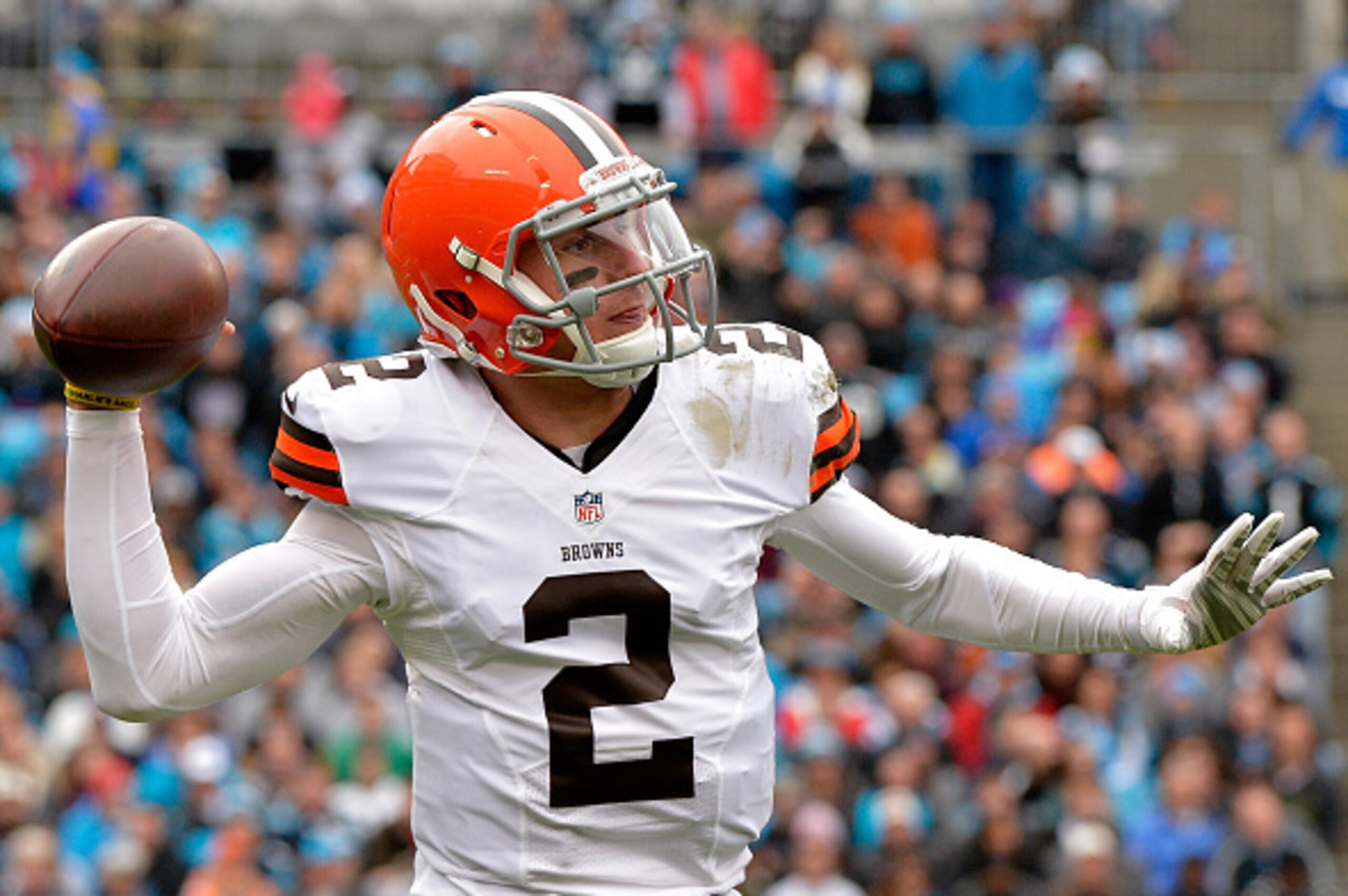
There are very different passing styles between Manziel, Josh McCown and Connor Shaw, and another quarterback could be thrown into the mix in the coming months. Who is throwing the football will determine the number of targets Hartline sees and how prominent a role he plays.
If the Browns have to resort to a short-yardage passing game like the Dolphins installed in 2014, then Hartline could have production similar to that year as well. If they can spread the ball out and make plays with the deep ball, then Hartline potentially becomes invaluable.
It's hard to pay a player a great deal of money or give him a long-term contract under those kinds of circumstances, so a safe deal of $6 million over two years was the only logical one the Browns could give Hartline. It also provides the Browns with protection if Hartline, for any reason, does not work out. There's little sunk cost and a very modest cap hit.
Though the Browns went into free agency with nearly $40 million of salary-cap room, the Hartline contract proves that they want to spend their money wisely. They could have easily overpaid for Hartline, whose services were being sought by the Patriots, Chicago Bears and Houston Texans.
Instead, however, the Browns and Hartline both realized the reality of the situation—that a wide receiver is quarterback-dependent and the Browns just don't have that position sorted right now—and put together a contract that reflected that.
In a time—the beginning of free agency—that is all about overspending, especially for teams with the cash to do so, it was a smart, well-reasoned conclusion to the negotiation. Regardless of what becomes of the Hartline signing, it cannot be said the Browns used their cash recklessly or lacked self-awareness.
.jpg?w=2560 "Steelers Buccaneers Football")
.jpg?w=2560 "Eagles Jaguars Football")