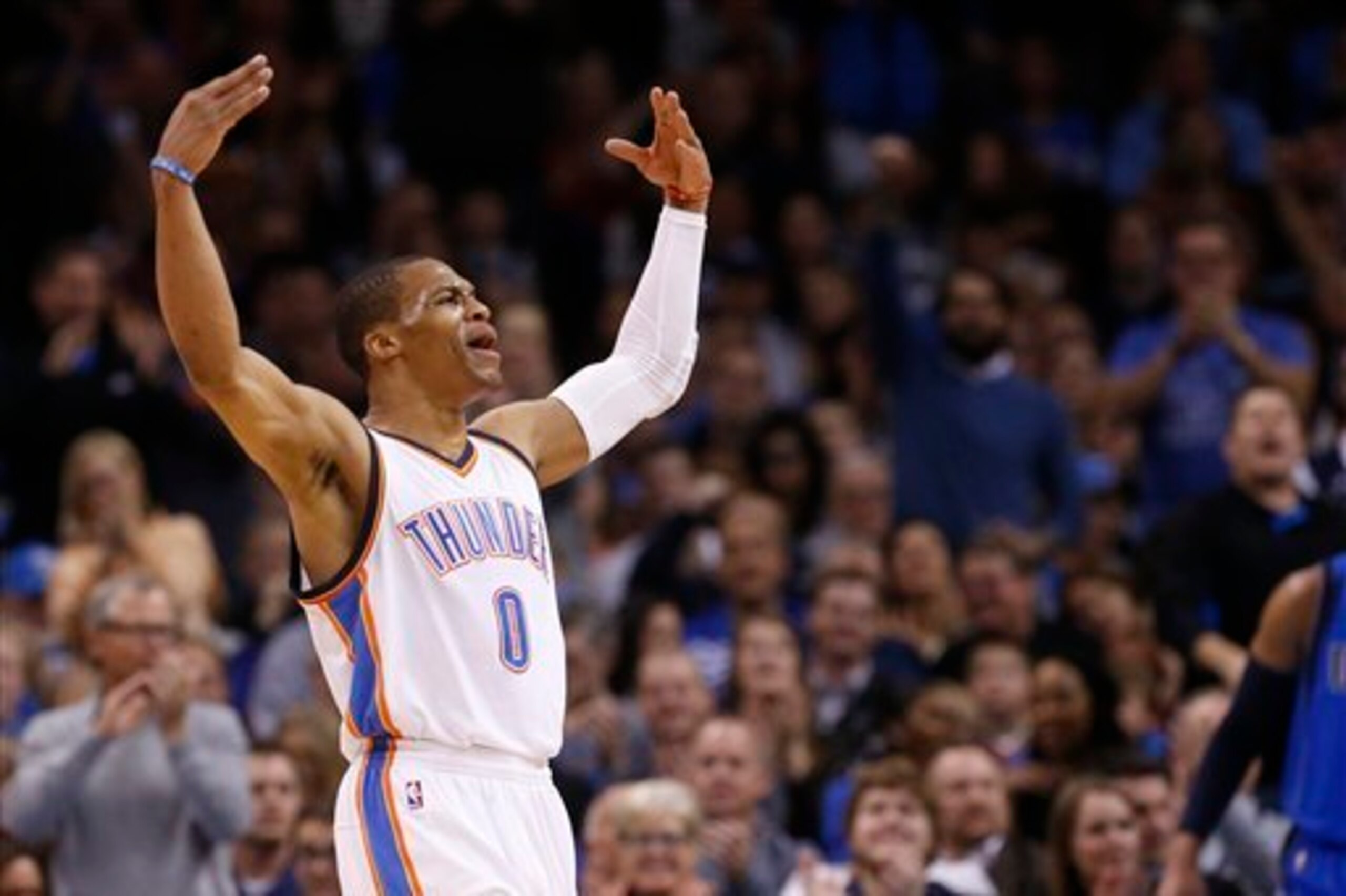

Power Ranking Oklahoma City Thunder Players Heading into Final Month of Season
Oklahoma City Thunder general manager Sam Presti seized an opportunity to improve his club at the trade deadline. Now, he’s watched enough games to form some early judgments of the trade and of his team as a whole.
He’s probably not creating power rankings, but he’s definitely evaluating how the pieces fit together and which players are most important for the team’s success. That’s also the purpose of this slideshow.
There are two main factors used to determine the order. First, there are the statistics to date. Numbers don’t tell us everything, but they do reveal a good amount. The second aspect under consideration is the player’s skill set in relation to the rest of the roster and how valuable it is.
Dion Waiters is probably a top-six player in terms of “talent,” but that doesn’t mean anything for the Thunder as they try to make a playoff run. Nick Collison is a less “talented” player but he plays within the confines of the system and doesn’t make negative plays that hurt the team. Consequently, Collison is higher than Waiters.
Sticking with the Waiters example, he’s a better two-way player than Andre Roberson. Despite this fact, he falls behind Roberson in these rankings because Roberson’s top-notch perimeter defense is a more valuable skill for an OKC team devoid of any other wing defenders.
As OKC makes its final push for the postseason, here are the most important players on the roster.
15. Novak; 14. Jones; 13. Lamb; 12. Morrow; 11. Singler
1 of 11
15. Steve Novak
Stats: 1 game, 9 minutes, 0 points, 1 assist
Steve Novak played in only one game for OKC before he needed an appendectomy, so it’s hard to gauge where he'll fit into the rotation. It seems unlikely that he will receive consistent playing time given his one-dimensional game—especially since the trade deadline brought other shooters aboard.
14. Perry Jones
Stats: 35 games, 4.7 PPG (41% FG, 25% 3P), 2.0 RPG, 7.1 PER
Despite a promising start to the year, Jones has fallen out of the rotation. His shooting has been bad, and there is no clear path to playing time given the depth on the roster. He’s currently ranked ahead of Novak because we’ve seen more of Jones to this point, but that may not last since Novak at least has one elite skill (shooting) that makes him more useful.
13. Jeremy Lamb
Stats: 39 games, 6.9 PPG (42% FG, 37% 3P, 90% FT), 15.5 PER
The curious case of Jeremy Lamb has been disappointing. We see momentary flashes of the UConn star, and it looks like Lamb is the best all-around shooting guard on the roster. Unfortunately, those moments are merely glimpses and that inconsistency has kept him out of the rotation.
The highs are enough to place him comfortably ahead of Nos. 14 and 15 on the list, but the lows are so glaring they prevent him from climbing any higher.
12. Anthony Morrow
Stats: 55 games, 23.3 MPG, 9.3 PPG (44% FG, 39% 3P), 13.2 PER
Now we’re into the guys who are consistently in the rotation—for the regular season at least. Morrow was an invaluable member of the pre-trade roster because of his shooting. That skill set is no longer as valuable after the trade deadline brought in a number of reliable shooters. He is the worst defensive guard on the team, and that limits his usefulness.
11. Kyle Singler
Stats: 9 games, 19.4 MPG, 4.0 PPG (31% FG, 33% 3P), 2.4 RPG, 0.8 APG, 6.1 PER
Singler has started at small forward for his nine games to date because of Kevin Durant’s injury. Unfortunately, that expanded opportunity hasn’t paid off in the box score. He has struggled with his shot since moving to OKC, recording career lows in field-goal and three-point percentage. Despite this, the overall skill set has been intriguing.
He’s a good passer, and though he isn’t a lockdown defender, his positioning and instincts are noticeably better than Morrow’s. His shooting struggles are strange, but he’s a better all-around player than Morrow. If he gets his shot back, Singler could easily jump a few spots in these rankings and become a key member of the rotation.
10. Dion Waiters
2 of 11
Stats: 28 games, 28.2 MPG, 11.1 PPG (38% FG, 28% 3P), 2.7 RPG, 1.0 SPG, 8.8 PER
The Dion Waiters trade made plenty of sense in terms of asset management. He’s still young and he was talented enough to be selected very early in the draft. Furthermore, OKC didn’t give up any rotation players to get him.
Unfortunately, the pieces need to fit together well on the court and Waiters has been uninspiring in his 28 games with the Thunder. That’s a concern when he’s playing 28 minutes per game.
His strongest performance has been on the defensive end, which is somewhat surprising. He’s a feisty defender who stays in front of the ball well and he’s always competing hard.
Offensively, it’s been downright offensive (pun intended). He’s not shooting well from deep and he can’t finish at the rim either. He’s also demonstrated his tendency to over-dribble and settle for long, contested twos.
Nobody would claim Waiters is a worse offensive player than Andre Roberson, but he uses more possessions with similarly frightening inefficiency and doesn’t bring the same kind of defensive value—hence his place behind Roberson in the rankings.
9. Mitch McGary
3 of 11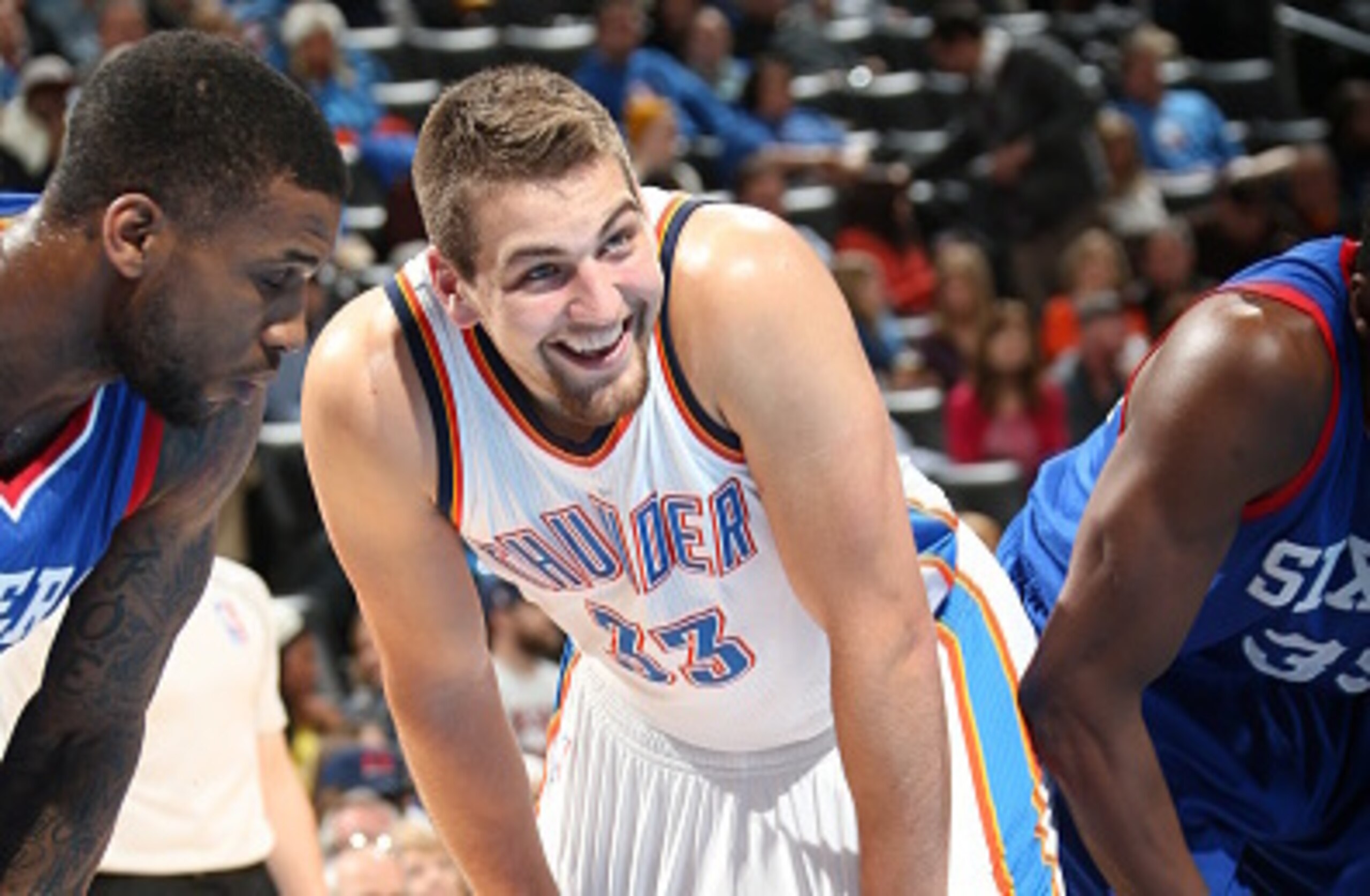
Stats: 15 games, 15.4 MPG, 6.9 PPG (51% FG), 5.2 RPG, 18.7 PER
Pundits were surprised when OKC selected Mitch McGary in the first round of last year’s draft, but the rookie has played very well so far. He should continue to be a part of the frontcourt rotation because he makes things happen.
His energy is contagious, and it gets the home crowd buzzing. More importantly, he really wears out opposing front lines with his constant running and work on the glass. He’s a skilled passer and finisher around the rim, and he’s even shown off a nice mid-range jumper when he’s given enough room.
It’s been a brilliant start to his NBA career, but his defense is still a work in progress. He’s strong enough to guard the low post, but there have been missed rotations and other miscues you’d expect from a rookie big man.
As effective and entertaining as he is on the offensive end, those defensive lapses are costly, which is why he’s lower than Nick Collision—another big man who's less productive in the box score but more reliable on the court.


8. Andre Roberson
4 of 11
Stats: 55 games, 20.0 MPG, 3.6 PPG (47% FG, 25% 3P), 4.1 RPG, 0.8 SPG, 9.7 PER
As the Thunder envisioned when they drafted him, Roberson has emerged as a very good perimeter stopper. His length and tenacity allow him to hound opposing perimeter scorers, and he’s significantly affecting their shots, according to NBA.com.
Head coach Scott Brooks can rely on him to harass the likes of James Harden and Klay Thompson, and that’s extremely valuable. He’s arguably the second-best defensive player on the roster (behind Serge Ibaka), which pushes him ahead of the aforementioned Dion Waiters in the rankings.
It’s almost impossible to place him any higher than this, however, because he brings nothing to the table offensively. Earlier in the season, he showed a decent off-the-dribble game, but he hasn’t had the chance to get to the basket lately because defenses are playing way off him on the perimeter. That 25 percent clip from three is even worse when you account for the fact that the overwhelming majority of them are very open looks.
Roberson’s defensive potential is enticing, but it’s hard to get too excited until he stops being such an offensive liability.
7. Nick Collison
5 of 11
Stats: 56 games, 16.4 MPG, 4.0 PPG (41% FG), 3.8 RPG, 1.3 APG, 11.1 PER
Collison doesn’t have any elite skills other than his intelligence. On defense, he’s always in the right place and covers for his teammates very well. He’s not much of a rim protector, but he makes opponents work for points and he’s a willing charge-taker.
Offensively, he’s a good screen-setter (an important trait for any offense) and an underrated passer from the high post. He’s also got a decent mid-range jumper that keeps defenses honest.
It’s unclear how the OKC frontcourt minutes will be divided among the five quality bigs on the roster, but Collison can be relied upon in big moments. He may be the odd man out as soon as next season, but for now his IQ and defense keep him above McGary on the totem pole.
6. D.J. Augustin
6 of 11
Stats: 9 games, 27.3 MPG, 10.3 PPG (40% FG, 39% 3P), 3.4 RPG, 3.7 APG, 0.9 SPG, 14.8 PER
Only a couple of years ago, D.J. Augustin was fighting to save his NBA career. Now, he’s emerged as a key cog on a championship contender (assuming they make the playoffs, which is a strange caveat to include for a contender).
Much like Waiters, Augustin is a prime example of the importance of fit. Reggie Jackson is a much better player and will get paid accordingly this summer, but he hurt OKC more than he helped them. His lack of outside shooting haunted the offense, and his proficiency as a lead ball-handler was wasted on a team with Durant and Russell Westbrook.
Augustin has come in and really turned things around for the Thunder backcourt. For starters, he’s been deadly from beyond the arc. That alone means he can share the floor with Westbrook. It also helps that he’s a willing passer and has been actively looking for his teammates whenever he’s had the ball.
There are defensive concerns—especially when he and Westbrook are on the court at the same time—but Augustin is a net positive thanks to his effect on the offense. His versatility, passing and shooting make him an important part of the OKC machine.
5. Steven Adams
7 of 11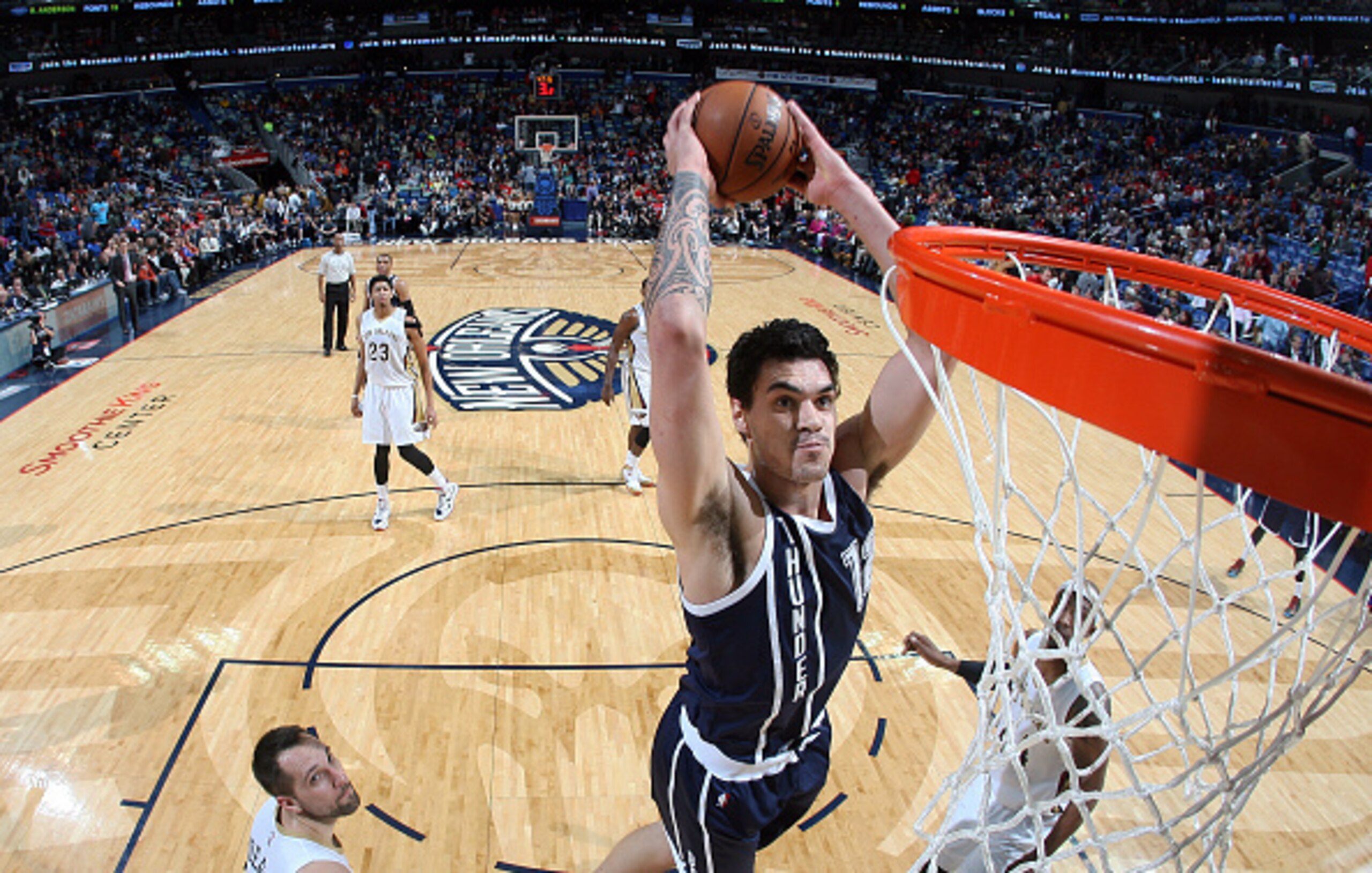
Stats: 51 games, 24.2 MPG, 7.4 PPG (55% FG), 7.0 RPG, 1.2 BPG, 13.7 PER
Figuring out who slots in at No. 4 and No. 5 was the toughest decision of these power rankings. Coach Brooks faces a similarly difficult decision when it comes to choosing his starting center.
Adams is the far superior defender. He’s improved his shot-blocking, but beyond the numbers, he’s just a much better rim protector and team defender than Enes Kanter. His toughness is valuable, and he forms an intimidating last line of defense along with Ibaka.
Offensively, he’s still growing but he already has soft hands around the rim and is a nuisance on the offensive glass. There isn’t much of a difference, but I gave the edge to Kanter because his skill set is unique for this team.
Adams is still a crucial part of navigating the Western Conference, but his offensive limitations (especially the poor free-throw shooting) are more noticeable than Kanter’s defensive shortcomings, many of which are at least partially covered by Ibaka.
4. Enes Kanter
8 of 11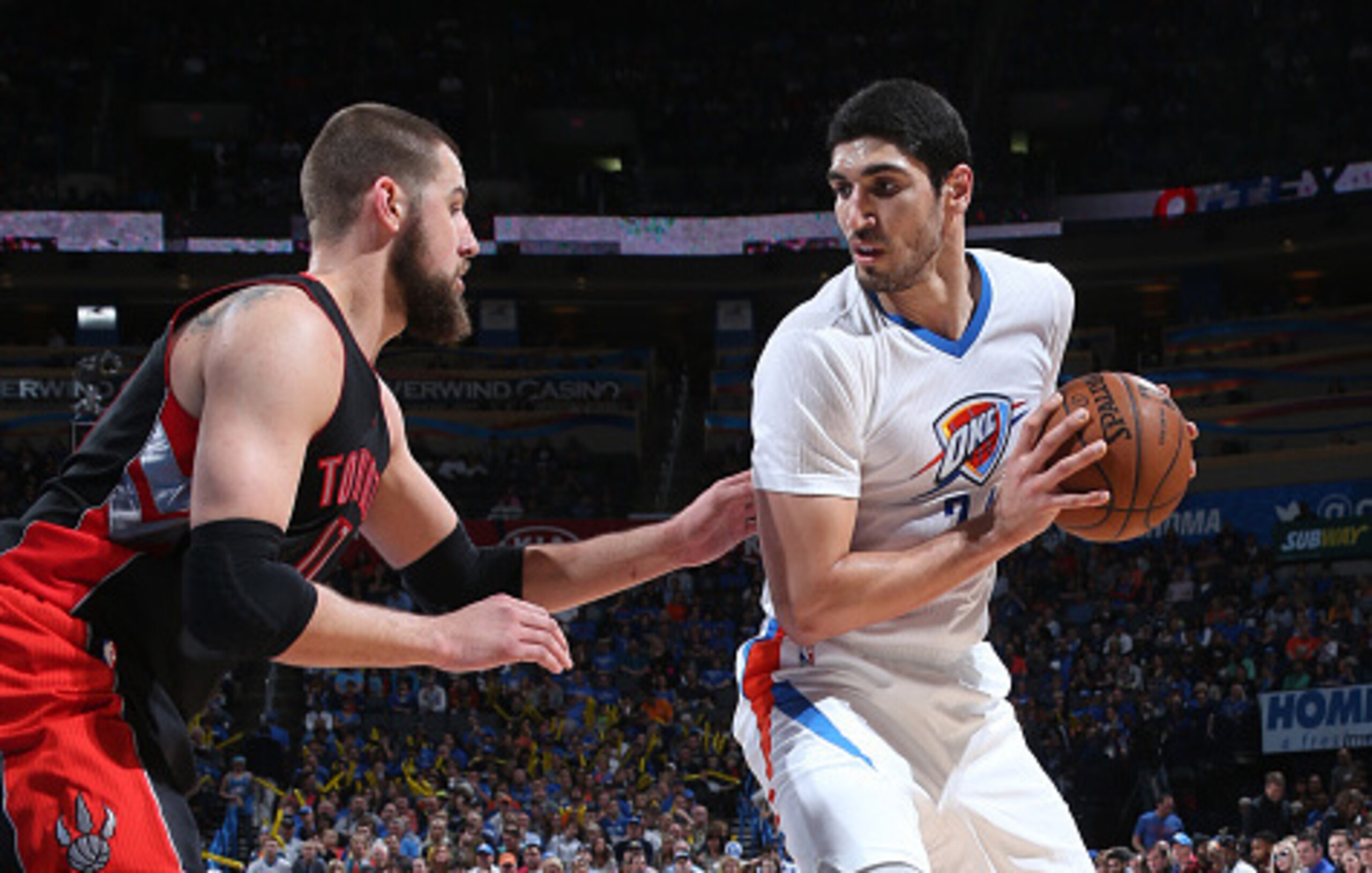
Stats: 8 games, 28.5 MPG, 14.3 PPG (56% FG), 9.3 RPG, 1.9 APG, 21.7 PER
The trade for Kanter is starting to look like a steal for OKC. We’ll have to see what happens in his restricted free agency, but Kanter has been fantastic since putting on the Thunder jersey.
We knew there were defensive issues going in, and that has proved to be the case. He’s a decent one-on-one defender in the post with the strength to match up against the bigger centers in the West, but his team defense is the real problem. His awareness is poor, and he’s not quick enough to rotate over in help situations.
Of course, that flaw isn’t as glaring when he’s playing with Ibaka. When his defensive issues aren’t a huge problem, it’s easy to fall in love with all the amazing things he can do on offense.
For the first time in franchise history, OKC has a big man with a real low-post game. His footwork is good, and he has an array of moves to finish around the rim. He’s also a very good offensive rebounder and a skilled passer. He’s developed a rapport with Westbrook as a pick-and-roll partner and looks very comfortable playing alongside Ibaka as well.
Choosing between Adams and Kanter will largely depend on the matchup, but Kanter’s offensive skill set is tantalizing. It gives the OKC offense a completely new dimension, and that’s why he’s ranked ahead of Adams.
3. Serge Ibaka
9 of 11
Stats: 63 games, 33.2 MPG, 14.3 PPG (47% FG, 37% 3P), 7.9 RPG, 2.5 BPG, 16.7 PER
Ibaka’s numbers actually look similar to Kanter’s, but there is a sizable gulf between No. 3 and No. 4 on the list. Ibaka is the anchor of the OKC defense, and he’s been the third-best rim protector in the league based on opponent field-goal percentage at the rim (via NBA.com).
That defense would fall apart without him on the floor, and it’s not just the shot-blocking. His athleticism helps him corral ball-handlers on pick-and-rolls and recover to his man in time.
Offensively, he still can’t create his own shot but he’s such a deadly spot-up shooter that it doesn’t really matter. Now that he’s added a dangerous three-pointer to his arsenal, he’s a devastating pick-and-pop threat but he’s still very effective when he rolls to the basket.
Based on what we’ve seen this season (and in last year’s playoffs), you could make a convincing case that he is the most irreplaceable player on the team. Of course, that doesn’t mean he’s going to leapfrog Nos. 1 and 2 on the list.
2. Kevin Durant
10 of 11
Stats: 27 games, 33.8 MPG, 25.4 PPG (51% FG, 40% 3P), 6.6 RPG, 4.1 APG, 0.9 SPG, 0.9 BPG, 27.8 PER
Durant is still the “best” player on the team, but the missed games add up for these power rankings. That’s not to punish him for his injury, but it’s hard to rank him No. 1 based on 27 games for the season.
The Thunder have been vague about his return date, and we can’t be certain that he’ll return with no issues. If there is lingering pain or rust from sitting out, it will affect his play and limit his ability to carry the team. Hopefully that doesn’t happen, but Westbrook may have to put the team on his back even after Durant returns.
Granted, I still couldn’t move him any lower than No. 2 because he’s been absolutely spectacular when he has played. The efficiency is still there, and he’s stepped up the defense with almost a block and a steal per game.
Furthermore, we still haven’t seen him at his best this season since he’s been dealing with nagging injuries and missing time sporadically. He still hasn’t completely found his rhythm, and that’s a scary thought when you look at those numbers.
It’s ridiculous to rank the reigning MVP No. 2 on this list, but that’s what Westbrook has been. Ridiculous.
1. Russell Westbrook
11 of 11
Stats: 48 games, 33.4 MPG, 27.4 PPG (43% FG, 29% 3P), 7.1 RPG, 8.3 APG, 2.1 SPG, 30.1 PER
No, this doesn’t mean the Thunder should trade Durant. It doesn’t even mean that Westbrook is their best player in the grand scheme of things. But for this season, he has been their best player and deserves a seat at the table where they’re discussing this year’s MVP trophy.
The recent triple-doubles have captured all the headlines, but they’re not the most impressive part of Westbrook’s season. That alone should be justification enough for his No. 1 spot.
He is still a raging maniac who plays the entire season in seventh gear, but the game seems to have slowed down for him. He’s making better reads for the most part and looks more aware of the situation. The numbers are ridiculous, but it’s the way Westbrook is playing that is most remarkable. He’s the emotional leader for the Thunder and he sets the tone with an unmatched competitive drive.
There are turnovers and the efficiency is ugly at times, but he’s a one-man wrecking crew who has carried his team without its best player. Welcome to the No. 1 spot, Russell.
Note: All statistics are accurate as of March 10 and are courtesy of Basketball-Reference and NBA.com unless noted otherwise.

.jpg?w=2560 "Mahomes Told Teammate to Leave Meeting")
.jpg?w=2560 "5 Teams Eyeing Jonathan Taylor")
.jpg?w=2560 "Jonathan Taylor Landing Spots 📍")
.jpg?w=2560 "Baker Gets Glove From Rays 🧤")

.jpg?w=2560 "NFL investigating Eagles")
