
College Football's Top RBs Entering 2015 Spring Practice
If you think the running back position has been devalued, well, you may be right in some sense. Just don't tell the following players.
With spring practice underway, our position-by-position offseason rankings roll on. Today's edition involves the best ball-carriers this sport has to offer.
As always, stats matter but aren't the only thing under consideration. What was a player's value to his offense? Is he versatile or a role player? Was he the No. 1 guy, or did he share carries? How consistent was he?
With these questions in mind, let's get to it. Here are the top 10 running backs heading into spring practices.
Bonus: Jonathan Williams/Alex Collins, Arkansas
1 of 11
I sort of hate to do this. Arkansas running backs Jonathan Williams and Alex Collins are both fine players capable of standing on their own merit. But the Razorbacks offense is such that the two are almost inseparable.
Seriously, check out the carries and stats of the two side by side. Williams had 211 carries (16.23 per game) for 1,190 yards and 12 touchdowns; Collins had 204 carries (15.69 per game) for 1,100 yards and 12 touchdowns. They both bring a great blend of power, speed and vision.
That's about as 50-50 as you can get. Since there are so many great running backs out there, it's impossible to choose one over the other. So, they're in a no man's land of sorts. They're worthy of recognition, but I'm not quite sure where they fit in with everyone else.
But let's put it this way: There isn't a better one-two punch in college football than these guys.
No. 10 Leonard Fournette, LSU
2 of 11
Leonard Fournette had high expectations as an impact freshman—becoming a Heisman candidate and an All-American and winning a national title, according to an interview with Sports Illustrated.
He didn't quite achieve all of that, but there's no problem in shooting for the stars. The issue is that Fournette got off to a slow start. He had one 100-yard performance in his first six games, and that came against New Mexico State. It wasn't until he rushed for 140 yards against Florida that things started to take off.
Fournette had at least 100 yards rushing in three of his final five games but had just nine yards on five carries in a late-season loss to Arkansas. "The runs for him were not working," LSU coach Les Miles said after the game, via Glenn Guilbeau of the Shreveport Times.
There were ups and downs, to be sure. In his second year, Fournette has to be more consistent. However, he showed flashes late in the year, namely against Texas A&M and Notre Dame. He has all the physical tools to be successful and should be the cornerstone of the offense next year.
No. 9 Kareem Hunt, Toledo
3 of 11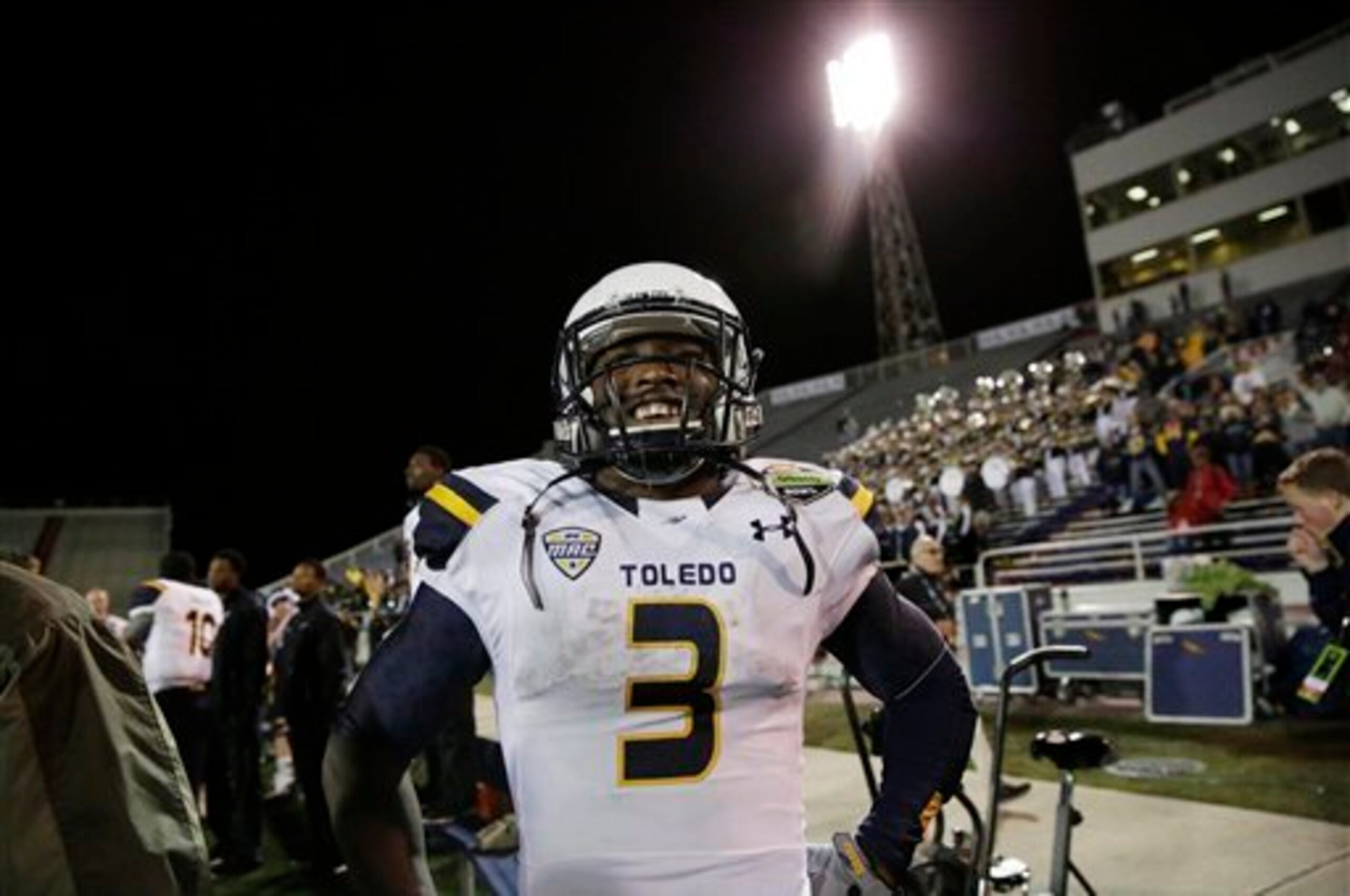
As mentioned before, stats aren't the only thing taken into consideration when ranking these players. They are a part of the formula, sure, but they aren't the formula altogether.
That said, goodness did Toledo's Kareem Hunt ever crush it last year. Take a look at these numbers: 205 carries, 1,631 yards, 7.96 yards per carry and 16 touchdowns. And he missed three games with an ankle injury.
That merits something.
Consider this: Hunt averaged nearly 10 yards per rush against Missouri last season, and the Tigers gave up a solid 3.51 yards per rush throughout all of last season. Hunt later tied an NCAA bowl record (with Barry Sanders) with five rushing touchdowns in the Rockets' 63-44 win over Arkansas State at the GoDaddy Bowl.
He doesn't play for a power conference, and he doesn't get a ton of attention, but Hunt can ball. He's valuable to his team, and he's only going to be a junior.


No. 8 Derrick Henry, Alabama
4 of 11
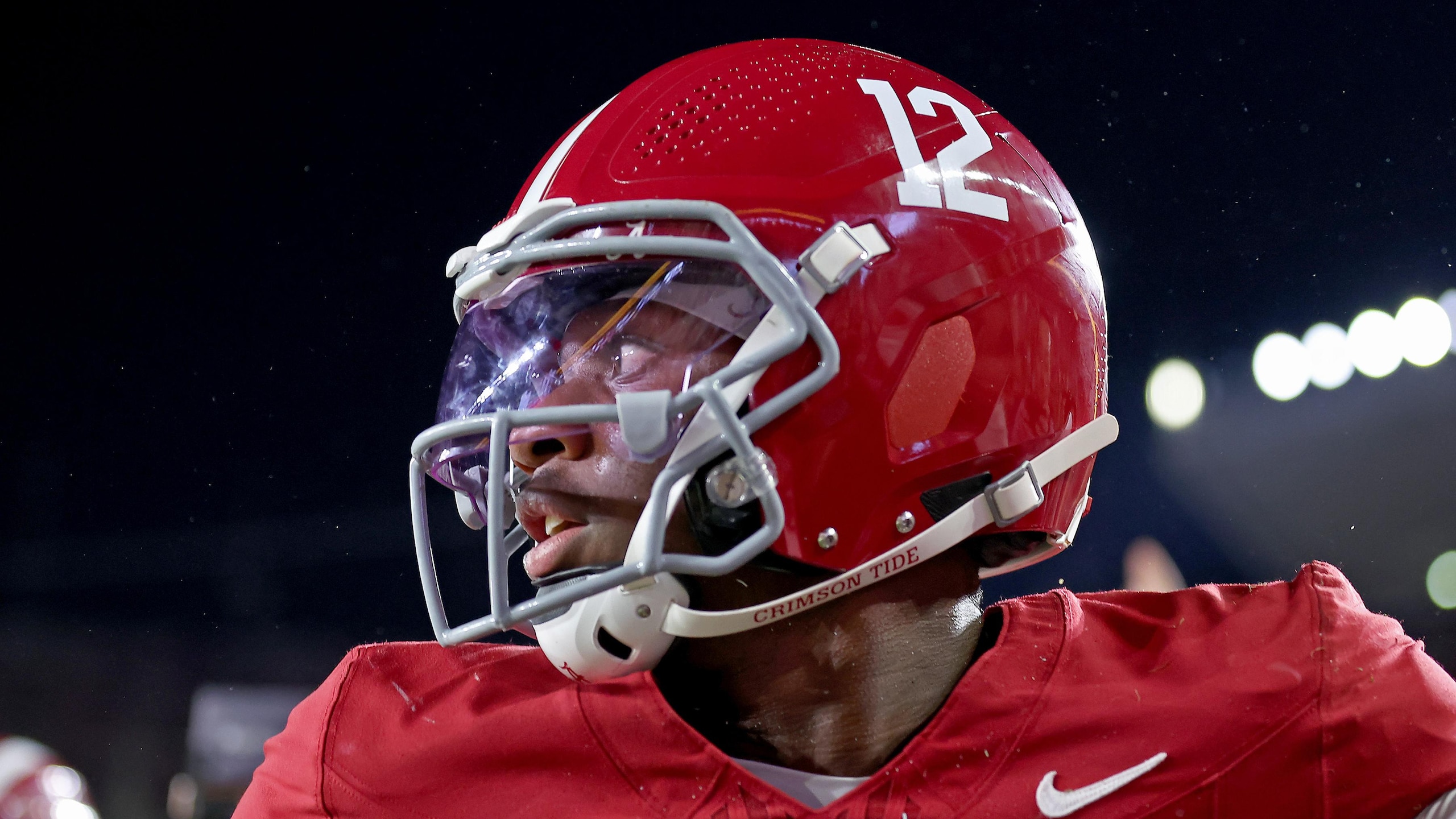
Alabama's assembly line of running backs is still fully operational. T.J. Yeldon has departed for the NFL, but wouldn't you know it, there's another Tide running back waiting to make the lives of opposing defenses miserable.
That man is Derrick Henry.
Henry, not Yeldon, actually led the Tide with 990 yards last season (though Yeldon was just 11 yards behind, so consider all nits thoroughly picked). He also tied with Yeldon for 11 rushing touchdowns, which led the team.
Still, Henry was the "1B" option of sorts, something Alabama has employed for the better part of the last six or seven years. It's been Yeldon and Henry, Eddie Lacy and Yeldon, Trent Richardson and Lacy, Mark Ingram and Richardson—the list goes on and on.
By that pattern, Henry should be the No. 1 option in 2015. A healthy Kenyan Drake, who is returning from a nasty leg injury, should contribute as well.
No. 7 Royce Freeman, Oregon
5 of 11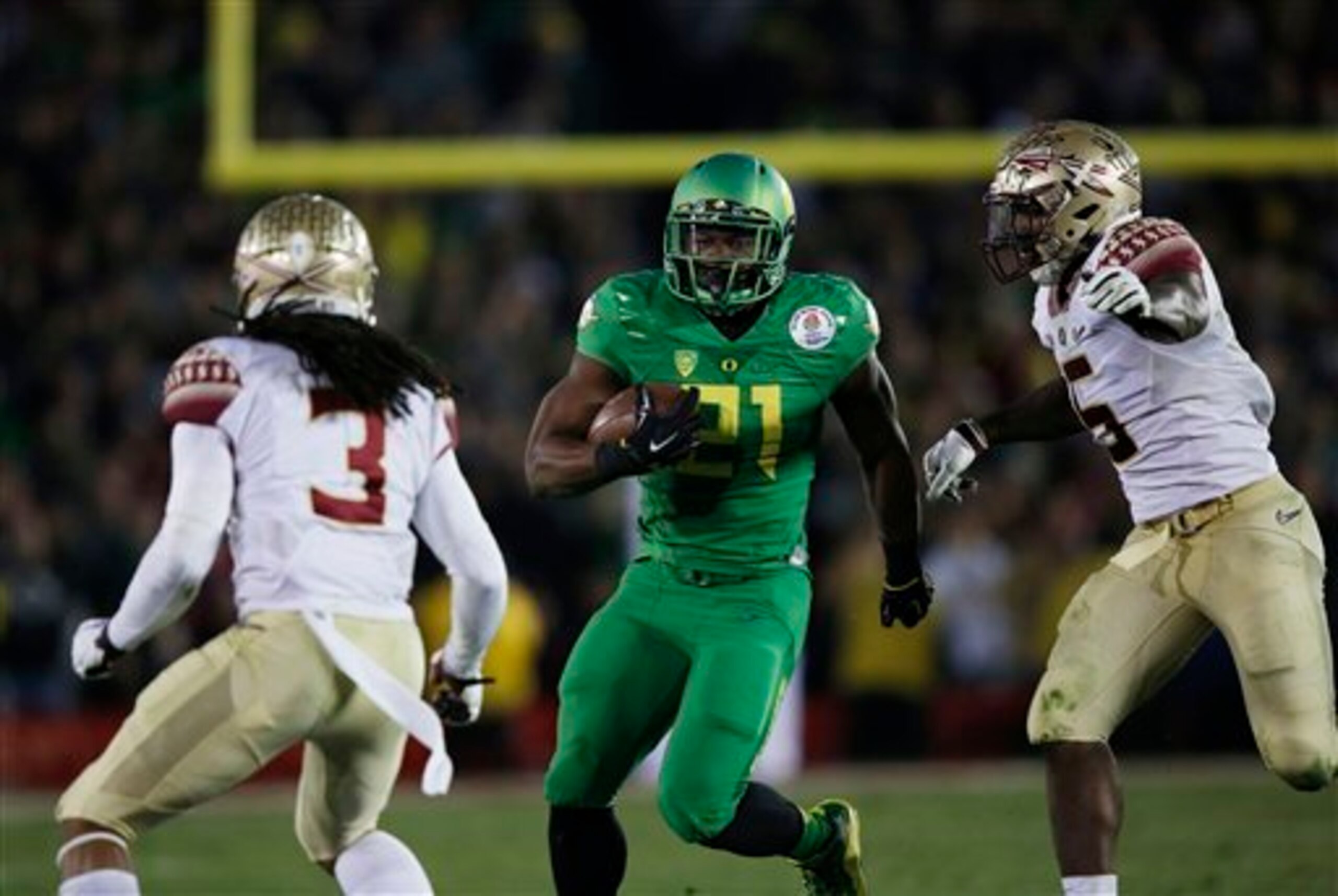
How Oregon will fare in the post-Marcus Mariota era remains to be officially seen. However, the Ducks have running back Royce Freeman, so that's a start.
Freeman proved himself as one of the most valuable, if not the most valuable, freshmen in the Pac-12. The heart and soul of the Ducks' ground attack rushed for 1,365 yards and 18 touchdowns, the latter of which led the conference.
While Oregon's two losses (to Arizona and Ohio State) shouldn't be pinned solely on Freeman, there was a pattern. Freeman wasn't a factor in those games with just 107 total yards and zero touchdowns. When Freeman got going, it was a good sign for Oregon.
What's more is that Freeman doesn't fit the mold of the smaller running back Oregon has used in recent years. At 6'0" and 229 pounds, Freeman is more like a running back you'd find at Pac-12 North rival Stanford. But it works for the Ducks, and Freeman is only going to be a sophomore.
No. 6 James Conner, Pitt
6 of 11
Let's conduct a quick poll. Do you think you'd be able to physically stop a cargo train? Yes or no?
Because that's sort of what it's like trying to tackle Pitt's James Conner.
Averaging 23 carries a game, Conner shouldered the load of the Panthers' rushing attack. In comparison, the next-leading running back, Chris James, had 87 carries all season. Conner was also a touchdown machine with 26 scores. To put that into context, that's exactly 50 percent of the touchdowns scored by Pitt last season.
A change in coaching staff can change the identity of a team. However, new head coach Pat Narduzzi should continue to feed Conner the ball. At 6'2" and 250 pounds, good luck to anyone asked to bring him down.
No. 5 Paul Perkins, UCLA
7 of 11
Because Royce Freeman burst onto the scene as a freshman and was part of a playoff team, he gets a lot of attention. However, the leading rusher in the Pac-12 wasn't Freeman—it was UCLA's Paul Perkins.
Perkins didn't have as many touchdowns as Freeman—exactly half, actually—but he contributed to a higher percentage of his team's offensive yards per game. He also averaged nearly a full yard more per rush (6.27 to 5.42).
From a production standpoint, Perkins has a claim as the most underrated back on this list. Perhaps that's because quarterback Brett Hundley demanded so much attention. We'll find out if Perkins can take the spotlight off the quarterback next season as the Bruins break in a new face there.
No. 4 Devontae Booker, Utah
8 of 11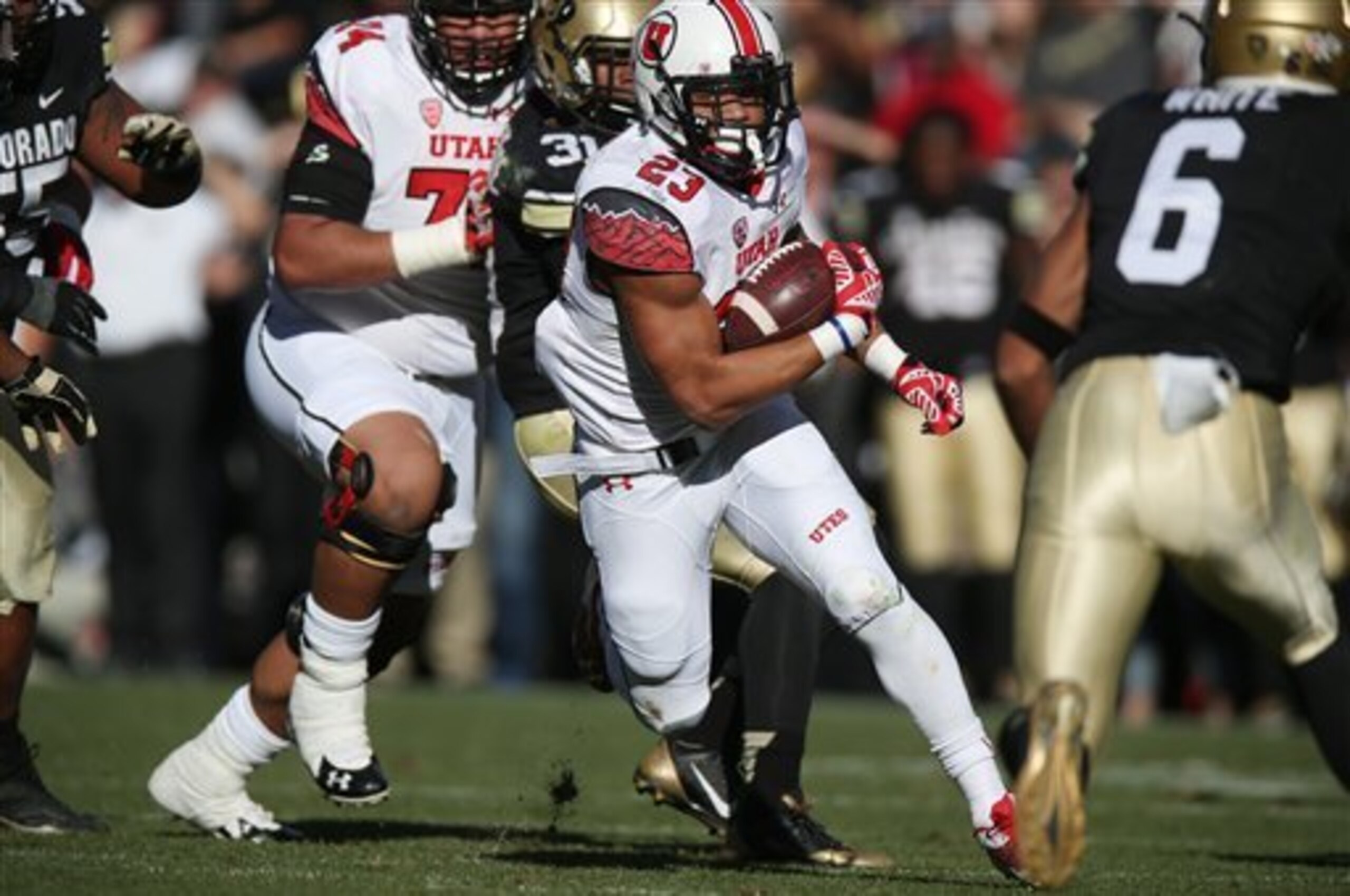
The Pac-12 has been a noted quarterback conference in the past. 2015 could redirect that narrative. Instead, the Pac-12 could be a running back conference.
Freeman and Perkins have already made the list. One or two more probably have an argument. However, Utah's Devontae Booker is the most valuable back in the Pac-12. For one, he was a mere 63 rushing yards behind Perkins, who led the Pac-12. Second, Booker was the face of Utah's rushing attack. The Utes' next-leading running back, Bubba Poole, had 211 yards.
Booker is also extremely versatile, as noted by Bryan Fischer of NFL.com:
"Booker rushed for 1,512 yards and 10 touchdowns while also showing off his ability to catch balls out of the backfield with 43 receptions and two scores through the air.
Because of his blend of size, speed, and ability to flare out as an option in the passing game, Booker has drawn comparisons to Texans' star Arian Foster and former New York Giants tailback Tiki Barber, among others.
"
Booker could have declared for the NFL after one season with the Utes, and no one would have blamed him. Instead, he returns as one of the best running backs in the nation.
No. 3 Ezekiel Elliott, Ohio State
9 of 11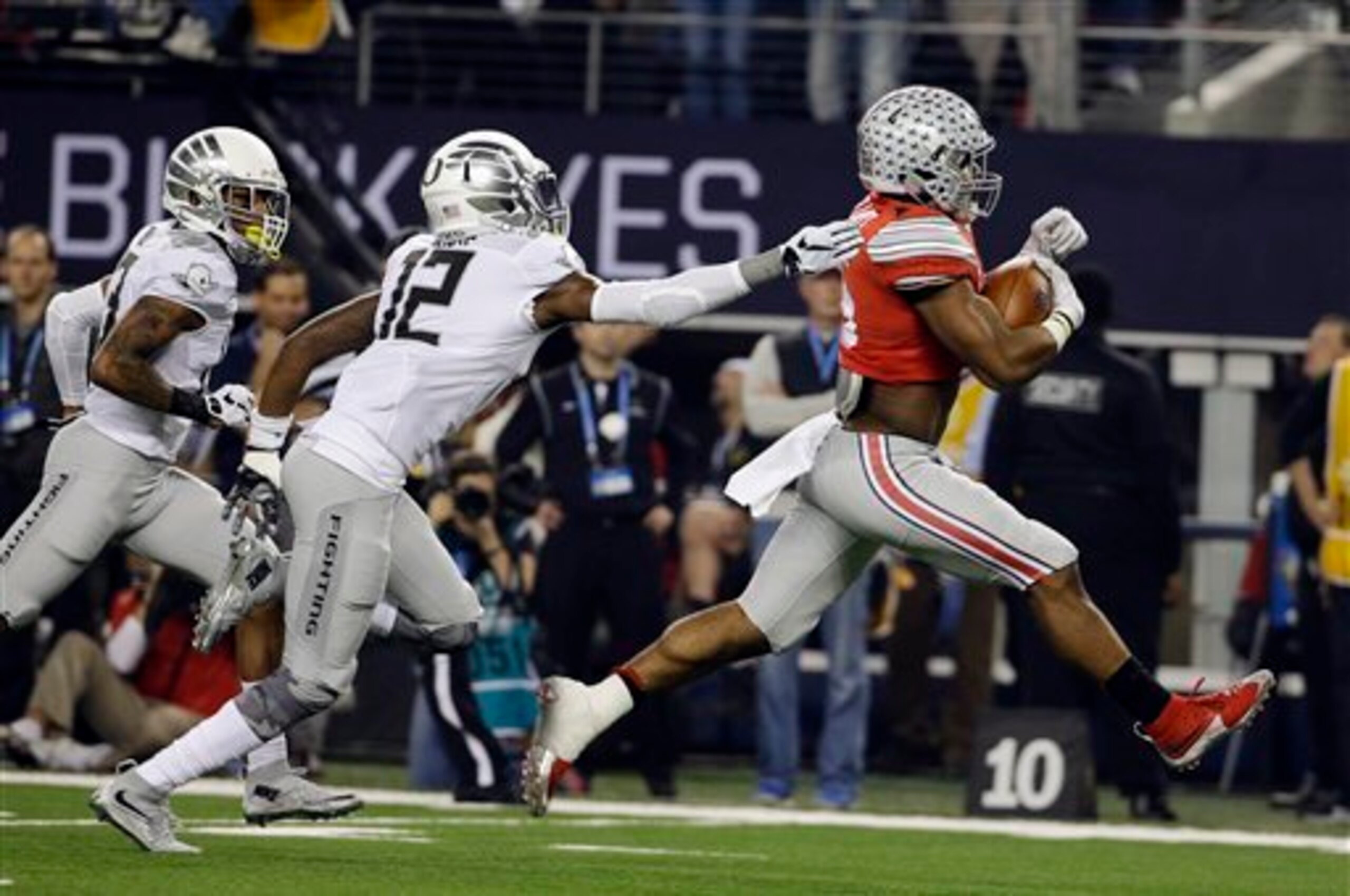
Put simply, no running back finished the '14 season stronger than Ezekiel Elliott of Ohio State.
Elliott was absolutely buried in the running back conversation behind Melvin Gordon, Tevin Coleman, Ameer Abdullah and David Cobb—and that was just in the Big Ten.
In fairness, people began to see Elliott's ability later in the season. His 154 yards and two touchdowns against Michigan State in early November represented the moment others caught on that Elliott was pretty damn good—and so was Ohio State. He recorded at least 100 yards in two of the next three games before going on a real rampage.
Elliott ran for at least 200 yards and scored at least two touchdowns in the Big Ten title game against Wisconsin, the Sugar Bowl against Alabama and the national championship versus. Oregon.
All four of the other running backs mentioned above are moving on to the NFL. Elliott is not only the top running back in the Big Ten heading into 2015; he's one of the best in the country.
No. 2 Samaje Perine, Oklahoma
10 of 11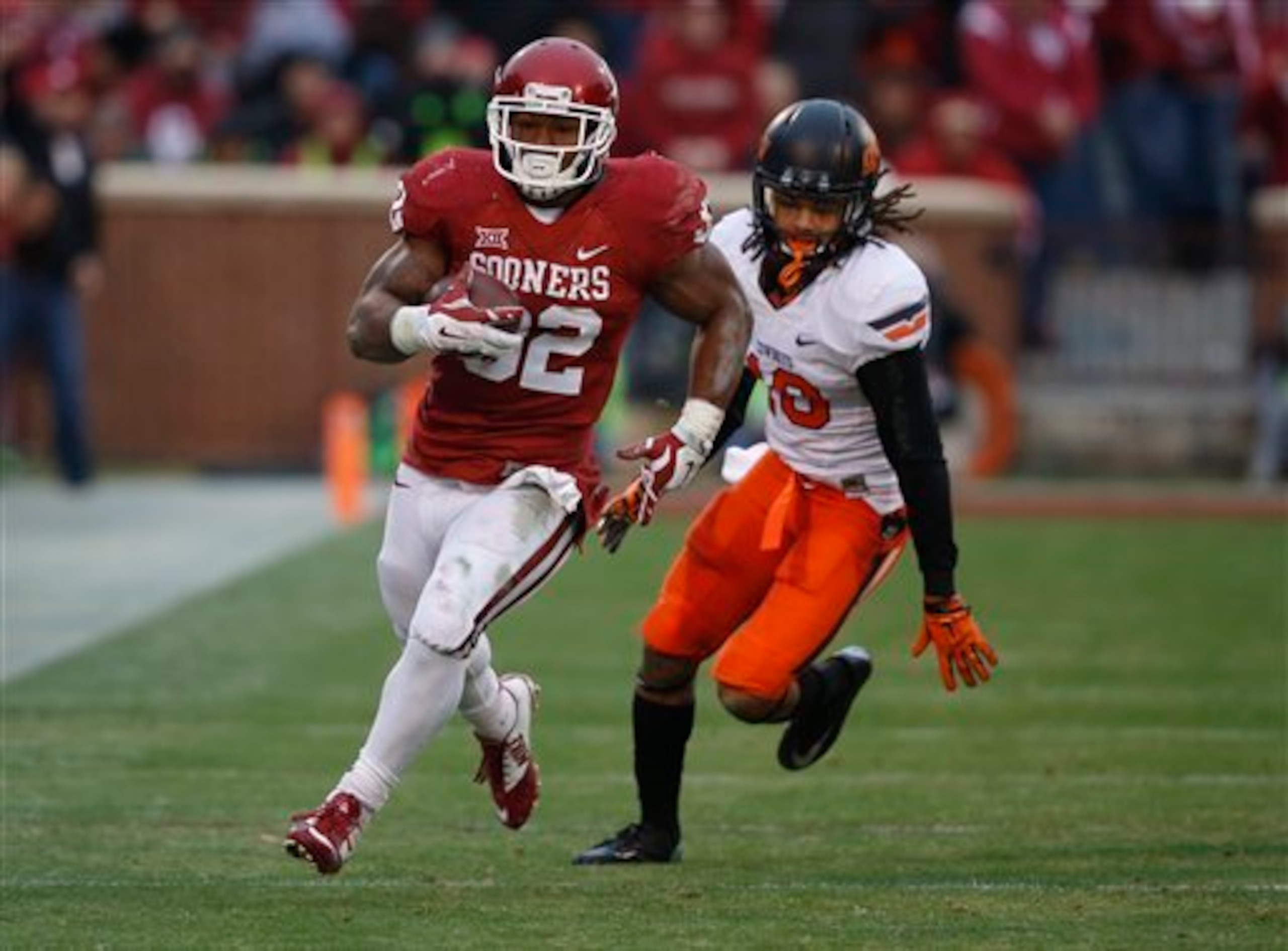
Remember when Oklahoma's rushing attack was supposed to be the Joe Mixon show? A misdemeanor assault charge resulted in Mixon being suspended for the season. That's when fellow freshman Samaje Perine stepped up—and he never looked back.
Perine led the Big 12 with 1,713 rushing yards and 21 touchdowns. His breakout game came in Week 4 against West Virginia when he rushed for 242 yards and four touchdowns. Two months later, he broke Melvin Gordon's one-week-old single-game rushing record with 427 yards against Kansas. It doesn't matter if it's Kansas or Alabama—averaging more than 12 yards per carry is ridiculous.
Perine's numbers were outstanding, but he was also a constant in an offense that struggled to find an identity. The Sooners could hand the ball off to Perine and succeed in a power running game. That counts for something.
Though Oklahoma is moving to an Air Raid offense under new offensive coordinator Lincoln Riley, Perine's touches aren't expected to diminish.
"I believe, with our ability to throw the football in a more positive way, he may have better opportunities to run the football…more room to run the football," head coach Bob Stoops said via Ryan Aber and Jason Kersey of The Oklahoman. “That’s what we are after. I believe that can happen.”
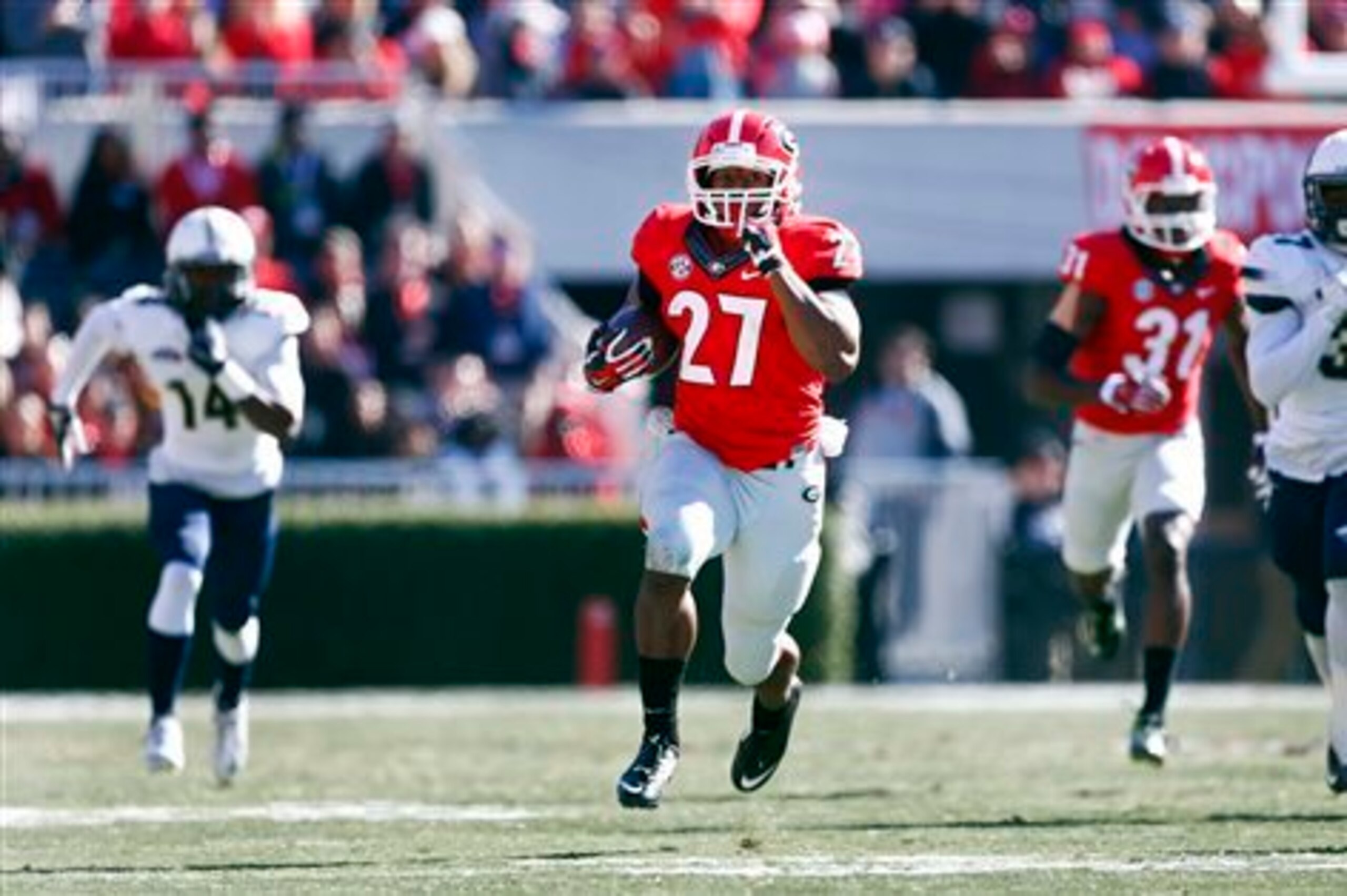
No. 1 Nick Chubb, Georgia
11 of 11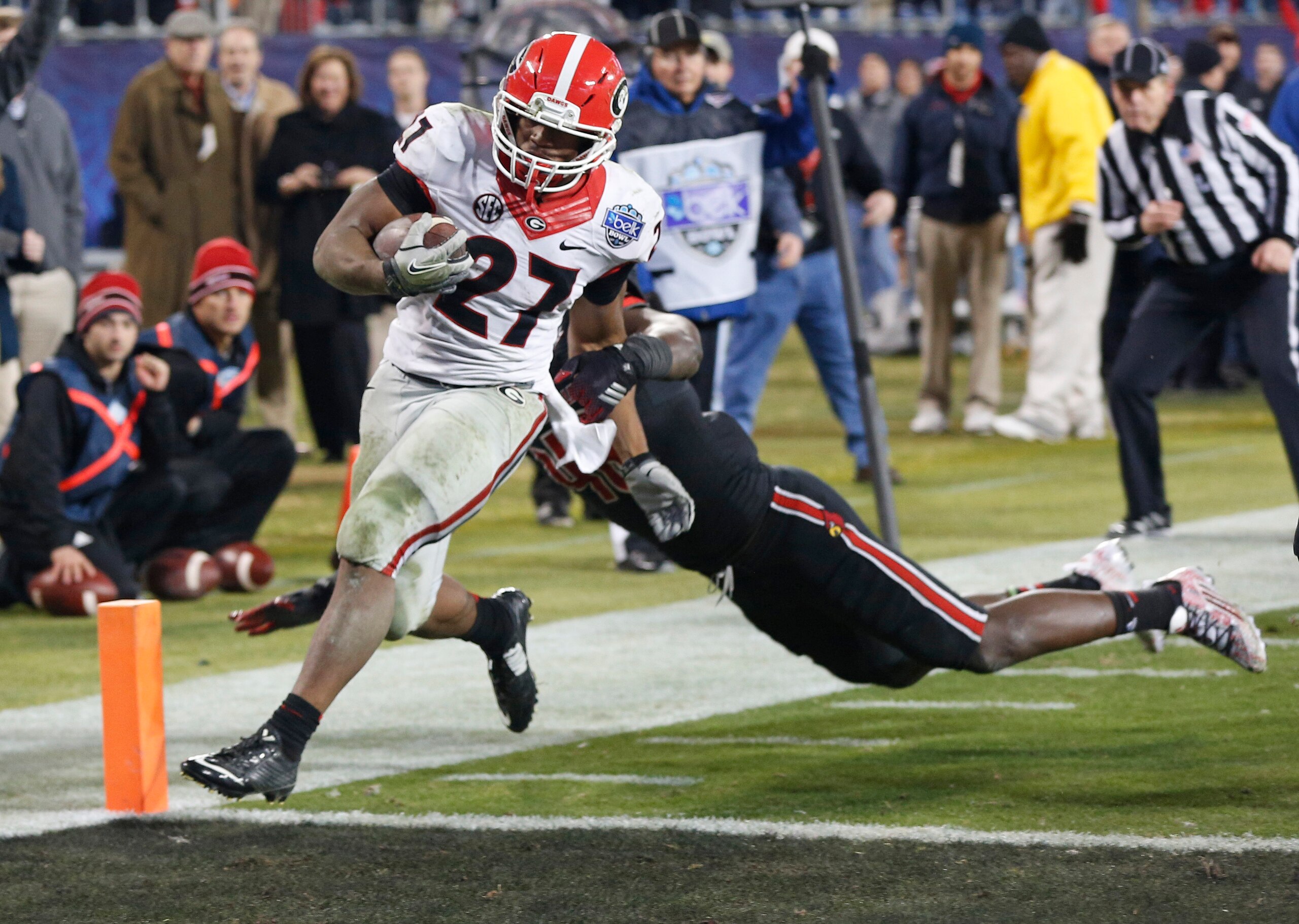
College football will miss Todd Gurley. The former Georgia running back was Marshawn Lynch for the college ranks, going Beast Mode on defenders weekly.
Good thing Gurley's successor, Nick Chubb, is still around.
With Gurley missing half of last season due to an NCAA suspension and ACL injury, Chubb flourished. The freshman finished with 1,547 rushing yards on 219 carries—an average of seven yards per rush—and 14 touchdowns.
Chubb doesn't have the same top-end speed Gurley had, but he's a powerful runner who's almost impossible to bring down on the first tackle. He eclipsed 100 yards in six of the final eight games and surpassed 200 yards in the other two. He was the every-down workhorse who fueled Georgia's offense.
From a production and ceiling stance, it's tough not to go with Chubb as the No. 1 back.
Ben Kercheval is a lead writer for college football. All stats courtesy of cfbstats.com.

_0.png?w=2560)
.jpg?w=2560 "Love's Body Already 'Tired'")
.jpg?w=2560 "Tyreek Deal May Come Soon")
.jpg?w=2560 "Ward Nearly Walks Out of Presser ▶️")

.jpg?w=2560 "NFL investigating 2 referees for separate viral exchanges")