

Did Dallas Mavericks Gamble Wrong on Rajon Rondo, Monta Ellis Backcourt?
The Dallas Mavericks knew that stripping their bench to bring Rajon Rondo over from the Boston Celtics in a midseason blockbuster trade was a high-stakes risk. With the playoffs quickly approaching, it's looking like the gamble might not pay off.
Dallas' offensive onslaught early in the season was beautiful to behold. Even with the now-departed Jameer Nelson (a serviceable three-point shooter but a defensive liability) the Mavs tore teams apart with crisp ball movement and an abundance of scoring threats.
Even so, it's understandable why Dallas pursued Rondo. Nelson worked well within the offense but was clearly the weakest link in an otherwise stacked starting lineup. It's only natural to seek an upgrade in that scenario, especially when trying to climb the ultra-competitive Western Conference ladder.
TOP NEWS
Jokic says booing fans not welcome in Denver
Worst NBA Predictions 🫣

Brown with an all-time summary of relationship with Tatum
The Mavs are 22-16 since trading for Rondo. That's a winning percentage of .579, which, if sustained over a whole season, would barely be enough to grab the eighth seed in the West. Adding a former All-Star next to Monta Ellis has clearly not worked out as expected.
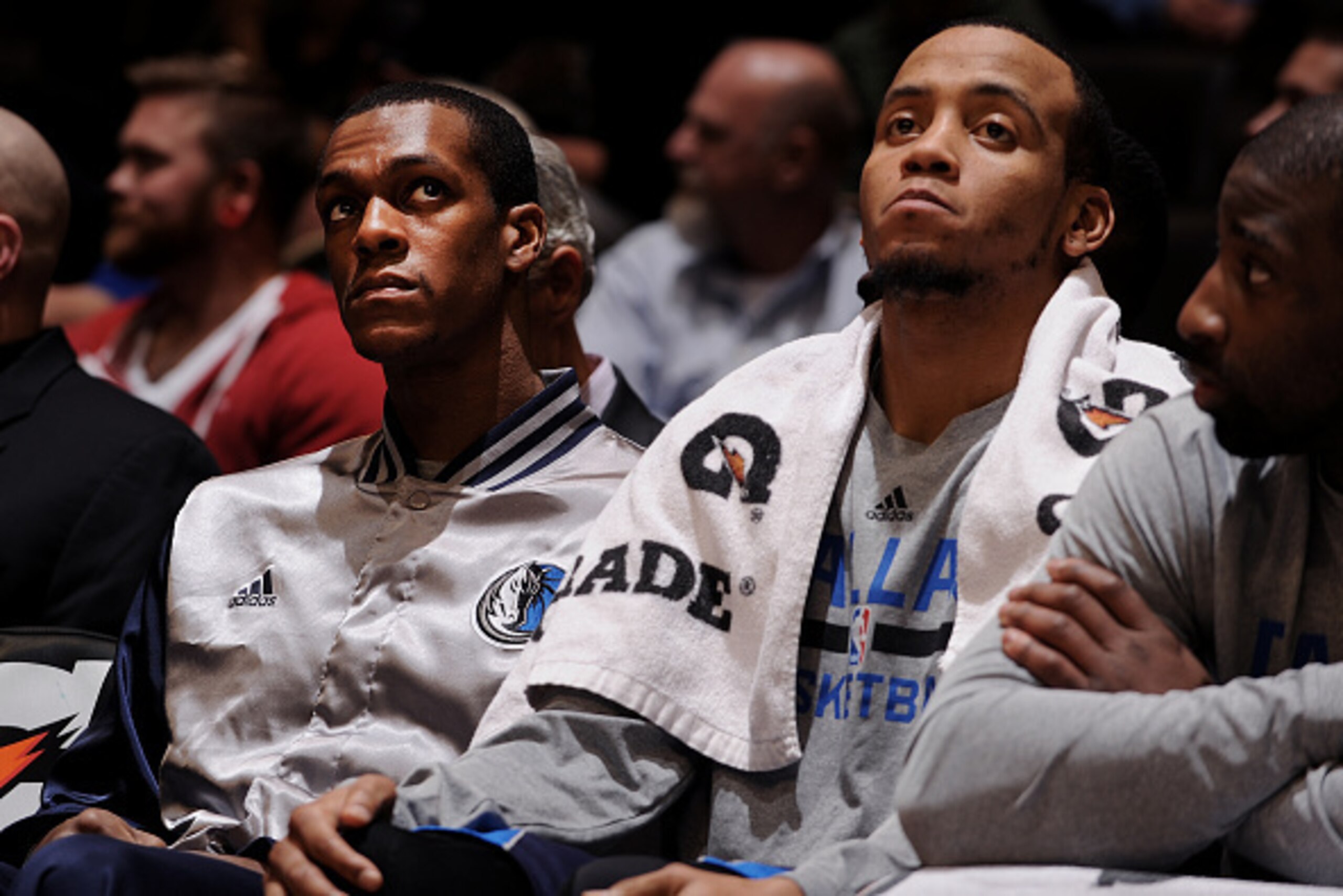
Dallas has gotten better defensively with Rondo, allowing 102.5 points per 100 possessions this season, according to ESPN's Hollinger stats. That's an above-average figure, which is a significant improvement for Dallas after ranking among the bottom 10 earlier in the year.
The biggest concern entering the Rondo experiment was how he would fit next to another ball-dominant guard. Ellis was and remains Dallas' engine, initiating the offense with his explosive assaults on the rim. Even though Nelson didn't possess the exceptional vision or passing prowess of Rondo, his ability to hit shots provided much-needed spacing.
It's not unusual for shooters to boost their three-point accuracy in head coach Rick Carlisle's offensive system. However, even though Rondo is shooting 37.5 percent from deep as a Maverick, he hasn't magically evolved into a reliable spot-up threat.
First of all, the sample size is tiny, as Rondo has only taken 40 threes in a Dallas uniform. Most of them have been wide-open looks, but they haven't necessarily been created through off-ball movement or drive-and-kicks. Rondo sometimes stops the ball in the corner, sizes up his man and heaves a three with the defender sagging off, like he did on this play:
That shot might be falling for him lately, but it's not how Carlisle wants his flowing offense to operate.
With the Celtics, Rondo never had to space the floor. He had always been a floor general with the ball in his hands. It's not unfathomable for him to develop a slightly more consistent jumper, but expecting him to be a knock-down shooter in this year's playoffs based on a temporarily inflated three-point percentage is foolhardy. If he hasn't managed to improve his shot mechanics after so many years in the league, it's hard to imagine a summer of hard work making him an excellent off-the-ball threat.
Regardless, Rondo deserves credit for trying to adjust, according to Marc J. Spears of Yahoo Sports:
"I'm always in communication trying to learn and get better and learn what's better for the team. All I care about is winning. I made a lot of sacrifices, I believe, coming here. I try to give up the ball and move without the ball a lot more. It's hard to adjust. But for the sake of the team to win that's what I'm trying to.
"
Tighter floor spacing has affected Ellis, but not considerably so. His shooting volume hasn't changed much with Rondo on or off the floor, as he takes a similar amount of mid-range and three-point attempts. Actually, he drives to the basket on 24.2 percent of his offensive possessions when playing next to Rondo and on 20.9 percent without him, according to NBAwowy.com.
Even though he has finished attacking the rim more often with Rondo on the floor, Ellis has had less space to work with. Here is an example:

Ellis ran a high pick-and-roll in semi-transition on that particular play, while Rondo's man opted to completely abandon him. This forced Ellis to drive into a very crowded lane, effectively taking on four defenders.
As a result, he is scoring 1.10 points per shot on those drives, and 1.23 with Rondo on the bench. It's understandable, as Ellis never hesitates to go for the finish if it's there. However, he is also more than willing to kick the ball out to open shooters after drawing help. That explains the slightly lower volume of shots finished on drives when he has someone like Devin Harris spotting up in the corner.
Ellis' usage rate drops from 28.9 to 26.5 when he shares the court with Rondo, but he still gets a ton of touches. He is somewhat less efficient, but the numbers still suggest that Ellis hasn't had to adjust his game too much to fit next to Rondo.
Even though Ellis has managed to co-exist with Rondo, it's clear that the new point guard isn't fitting into Carlisle's system too well. This has sparked many rumors concerning whether the Mavs' starting backcourt will live on past this season.
Offseason of Decisions

The playoffs haven't even started, yet rumors are already swirling around the league concerning Dallas' upcoming summer of decisions. Steve Kyler of Basketball Insiders broke down the Mavericks' current backcourt situation:
"Rondo is expected to demand a max contract, which league sources say he’s unlikely to get in a full offer kind of way, suggesting a team might go max dollars on a smaller-year deal. Dallas has said they want to keep him and see him as a long-term fit; however, there is real doubt that’s a smart move.
The big wrinkle for the Mavericks is Monta Ellis, as sources close to the situation believe Ellis will opt out of his deal this summer and seek a new multi-year deal based on his current play.
"
The rumors of Ellis' opting out have caused concern among Dallas fans, but it doesn't come as a surprise. He has a player option for just over $9 million next season, per HoopsHype.com, and has outperformed that figure by a wide margin in his stint with the Mavericks.
Opting out doesn't necessarily mean that he will leave Dallas. He will be 30 this year, and it's only natural for him to look for what will presumably be his last big long-term contract. He will be an unrestricted free agent, but it's hard to imagine the Mavericks not being front-runners to retain his services.
It's unclear what the market for Ellis will be this summer, but the Mavs will likely pay him regardless. The salary cap will explode when the new TV deal kicks in during the 2016-17 season, so a big contract for Ellis wouldn't be too hard to swallow.
When it comes to Rondo, it's a whole different ballgame.

When bringing him in, the Mavericks had every intention of keeping Rondo beyond this season. Giving up a future first-round pick and one of the best backup centers in the NBA (Brandan Wright) for his services certainly reflected that.
Tim MacMahon of ESPNDallas.com suggested that, while the Mavs want to make it work with Rondo this year, he's not in the team's long-term plans anymore, and his tenure is unlikely to extend beyond this season.
It's not unreasonable to imagine that Dallas could simply let Rondo go for nothing this summer, despite giving up assets to land him. He has already had a falling out with Carlisle and clearly isn't a great fit in the offense.
Bleacher Report's Kevin Ding also summed up why investing in Rondo might not be smart, especially considering the amount of point guards available around the league.
"Rondo is 29 and just 6'1" in the first place. He doesn't have the same athleticism (or desire to defend) that he did before his Jan. 2013 ACL tear. He is a mind-bogglingly bad shooter.
In a league where good point guards are everywhere, it's far better business to invest your precious dollars elsewhere.
"
A projected five-year max deal for Rondo would pay him north of $100 million, per ProBasketballTalk's Dan Feldman. That is a massive financial risk to take on a player entering his 30s. Rondo himself has suggested that he isn't necessarily looking for a way out, but any player in his situation would deflect rumors at this stage of the season.
Perhaps Dallas will bite the bullet and try to keep Rondo, but Tyson Chandler will also need to be re-signed. Mark Cuban and Co. have a track record of picking up legitimate role players in free agency, so letting Rondo go while reverting to that strategy could be a viable option.
You can follow me on Twitter: @VytisLasaitis

.jpg?w=2560 "Mahomes Told Teammate to Leave Meeting")
.jpg?w=2560 "🚨 Week 8 AP Top 25 Poll")
.jpg?w=2560 "Baker Gets Glove From Rays 🧤")
.jpg?w=2560 "5 Teams Eyeing Jonathan Taylor")
.jpg?w=2560 "Steelers Roll Saints in Paris")
.jpg?w=2560 "NFL investigating Eagles")
