Arsenal's Big-Game Psyche Has to Change
It's always been more than just a blip. It's certainly now more than just a worrying trend. One good result hasn't solved it, either.
Arsenal's psyche in big games isn't just a problem anymore. It's become a deeply ingrained epidemic that strangles the club's bid for silverware every season.
The most recent example came at the worst moment in the season. That's when Arsenal lost 3-1 in the UEFA Champions League last-16 first leg against AS Monaco.
.jpg?w=2560 "Cardinals Giants Football")
.jpg?w=2560 "Jets Dolphins Football")
Choosing the most inopportune moment of a season to deliver your worst performance is a key characteristic of Arsenal's mental block on the biggest stage. But what are the others?
First, it's a good idea to be clear about what the term "psyche" means. At least in this context.

To put it simply, it's a shorthand way of saying Arsenal's problem in big games isn't one of tactics. It's not necessarily always about how the team is set up or guided in its approach.
Admittedly, I realise that won't be a popular view. Not today, when every television pundit acts as if any attempt by a team to cross the halfway line is tactical naivety.
But the real root of Arsenal's problems when the games really count isn't closing off pockets of space, deploying a high press or staying fluid up front. The issue is a psychological one.
It starts with a frenzied dash to impress, to prove doubters wrong and stave off yet more negative press. In big games, the Gunners are a study of overlapping contradictions.
They go into big matches desperate not only to cross the finishing line in a heartbeat but to do it with style. But that's not how big games are won.
The larger the match, the more lucrative its reward, both in actual terms and prestige. With so much at stake, these type of games are usually nip-and-tuck affairs where teams often play not to lose first, rather than committing to winning.

But while the rewards are great, the damage sustained from defeats on the big stage is even more significant. Consider any postmortem of an Arsenal defeat to a member of the Premier League's top four or the nightmare against Monaco.
To say they make for brutal reading is a massive understatement. How about this from BBC Sport writer Phil McNulty after the fiasco in Europe?
"At the pinch points of pressure, Arsenal's players should remember Wenger's mantra. On this horrendous evidence it flies in one ear and out of the other.
As the leader, Wenger sets the tactics and the tone. Both were a long way short of acceptable here. Arsenal did not even manage a shot on target in the first half.
"
Then there's this from Jack Pitt-Brooke of The Independent:
"While Monaco did lose the Champions League final in 2004, they have not played a knockout game in it for the last 10 years. Yet last night they schooled Arsenal. For all the fears that they would park the yacht, they were always dangerous on the break, waiting for their opportunities, ruthless in attack. It made you wonder what Arsenal had learnt in the last few years, except for how to collapse under the lights, under pressure.
"
There were many equally scathing accounts, but few were as well written.
Every defeat being treated as a death knell for the era of manager Arsene Wenger, or an apocalypse for the club itself, has taken its toll on the psyche of the players. There's only so many bad press cycles players can take, only so many times they can be told they are weak, before they begin to believe it.

If that seems like a stretch, maybe it's not the power of the keystroke that has brought Wenger's players to their knees. Perhaps it's the knowledge that any defeat, even a misplaced pass or inaccurate shot, will incur the wrath of possibly the most vehemently frustrated fanbase in the country.
The divide between the club, its manager, his players and the fans is real. It's real and its lines of divide have been fiercely drawn.
One trophy since 2005, along with seeing bitter rivals succeed, often aided by Wenger-made stars, has had a profound effect on the collective psyche of Arsenal's fans. When you lose every argument with Chelsea, Manchester City and Manchester United fans who simply ask what have you won recently, or tell you to look at the points table, who's left to argue with?
The answer is your own team, the one entity that doesn't want to bite back, wants to protect your feelings. So if it's Wenger being yelled at by so-called supporters at Stoke-on-Trent train station, booed from the stands on opening day in 2013, or Theo Walcott being heckled simply for swapping shirts with an opponent, Arsenal fans need little excuse to turn on their team these days.
Justified or not, that negative atmosphere has an impact on the pitch. First, it creates a palpable tension that looms large over every game, especially the important ones.
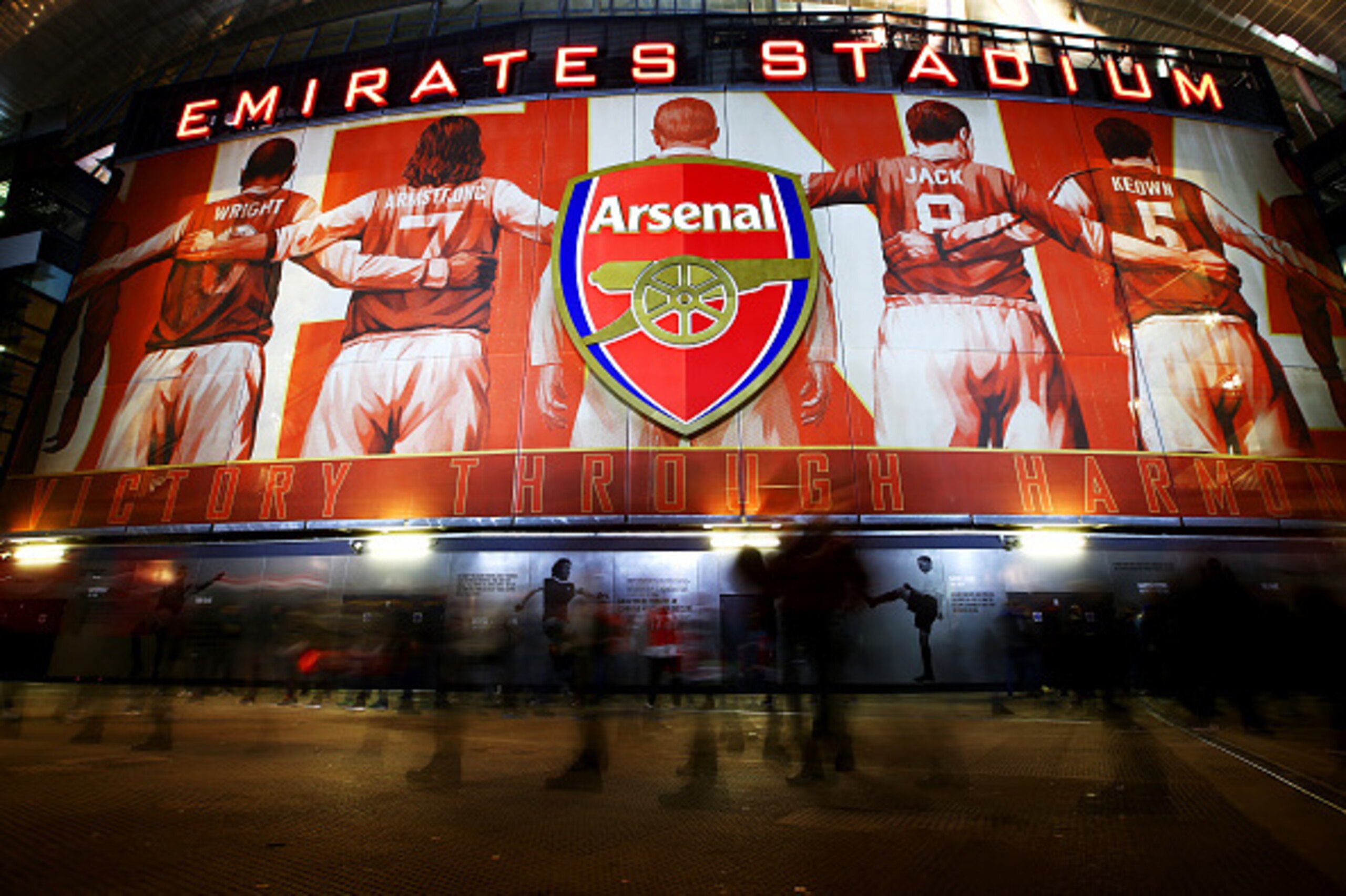
Jason Burt of The Telegraph certainly noted the problem during the Monaco farce:
"It was never going to be a walkover against Monaco even if the French side were depleted by injury but the home supporters really are too keen to express their frustration. No-one could fault Arsenal’s efforts but as each attack broke down that frustration grew. Can it help the players? Surely not. Yet the atmosphere was flat. And even flatter when Monaco went ahead. And further ahead. Did the Arsenal fans need to cheer Giroud’s substitutions after his wretched evening? It did not help either.
"
The outward pressure on Arsenal before big matches, coupled with the players' defiance toward it, creates an odd dichotomy. The Gunners come out gung ho to answer critics before they are heard from, but knowing how fierce any backlash will be, they also often play too scared to make a mistake.
At once, Arsenal are too reckless yet not bold enough. Actually, to be more accurate, the Gunners are not bold enough where they should be and reckless where they shouldn't be.
They attack a little more than they should but never with the same verve, direct pace and incisiveness as in lesser games. Instead, the team that at its best makes a myriad of passes look simple becomes guilty of over-elaboration.
Wenger's players are too anxious to make those final passes count. But the anxiety is sadly never limited to forward areas.
Where they should take more chances up front and settle for a little less exactitude, the Gunners should foster significantly less chaos in defence. But too often, when the game calls for caution, Wenger's players refuse to let go of the desire to please those unhappy fans, to placate a press that will indict them no matter how they approach things.
The desire to answer so many outside forces is influencing the way Arsenal play in big matches more than any tactical instruction. That much was made clear by Wenger's uncharacteristically critical and blunt press conference post-Monaco.
ESPN reporter Miguel Delaney emphasised the disparity between what Wenger wanted and what the players seemed to want:
Arsenal aren't playing smart. Wenger knew that after one more Champions League campaign appeared to be left in tatters:
So that's the problem in a rather convoluted, enlarged nutshell. But what's the solution?
For a start, Arsenal have to stop playing to please people, stop playing with something to prove. It's immature and desperate.
Big-game performances shouldn't be about whether Wenger's latest squad is on a par with Chelsea. Nor should they be about proving how much has been learned since last season's 5-1 drubbing at Anfield by Liverpool.
Instead, they should be about the club clawing its way back to relevance. That's what has to change most.
The Gunners must start settling for what big games give them. Sometimes that's a 2-0 away win, like the one gained at City back in January.
It was a win gained through a certain amount of greater tactical discipline. But it was just as much about City's own frankly diabolical performance.
But when both don't intertwine, the Gunners get a 2-2 draw like the one at Anfield back in late December. Arsenal played with skill and efficiency on the break that day but couldn't quite resist a team as free-flowing going forward—one that physically outmatched Wenger's men with pace.
A late equaliser meant one point instead of two, but 2-2 sure reads better than 5-1.
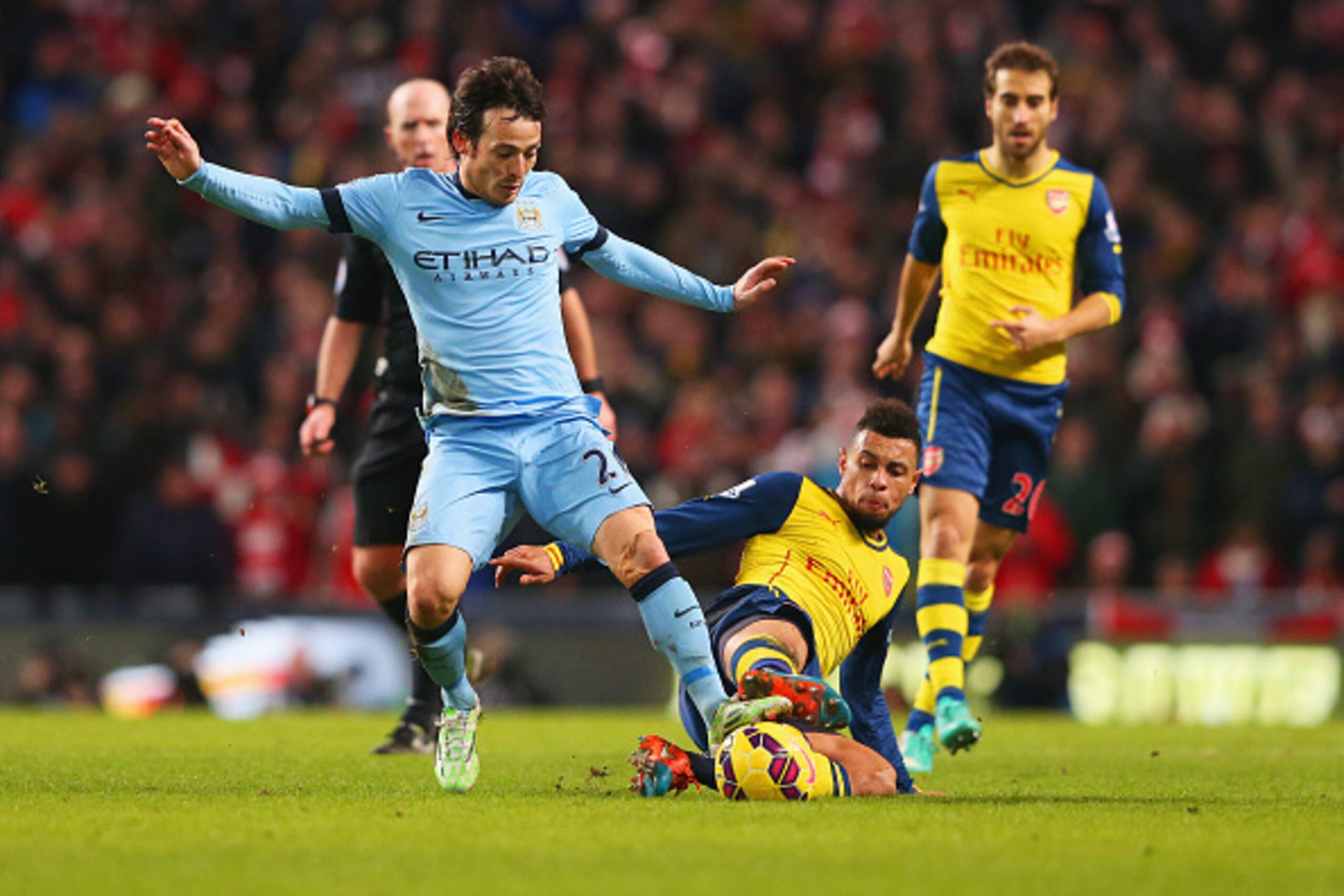
Arsenal could have, and should have, settled for a 0-0 in that home leg against Monaco. Or perhaps even a narrow 1-0 win.
That's the game the Ligue 1 side plays, home and away. But let's suppose for a moment the Gunners had gained one of the two results mentioned above.
Imagine the press response to an Arsenal team that could not, or barely managed, to beat a side many expected them to sweep aside with ease. Imagine the sound of dissent from the stands as the Gunners staggered over the finishing line against perhaps the least fancied team in the last 16.
Actually, you don't need to imagine it. Not when there have been nearly 10 seasons of failures on the big stage.
But Arsenal must stop chasing the perfect result that is supposed to belong on that stage. The others who often vacate it don't chase perfection, they only care about the result.
Of course, coaxing that kind of pragmatism from the Gunners will always be tough. Especially when the man at the top embodies anything but.
Paul Hayward of The Telegraph said it best after Monaco had smartly and ruthlessly trampled on another dream: "Wenger was an idealist when he assumed command of Monaco aged 37 and he is an idealist now at 65."
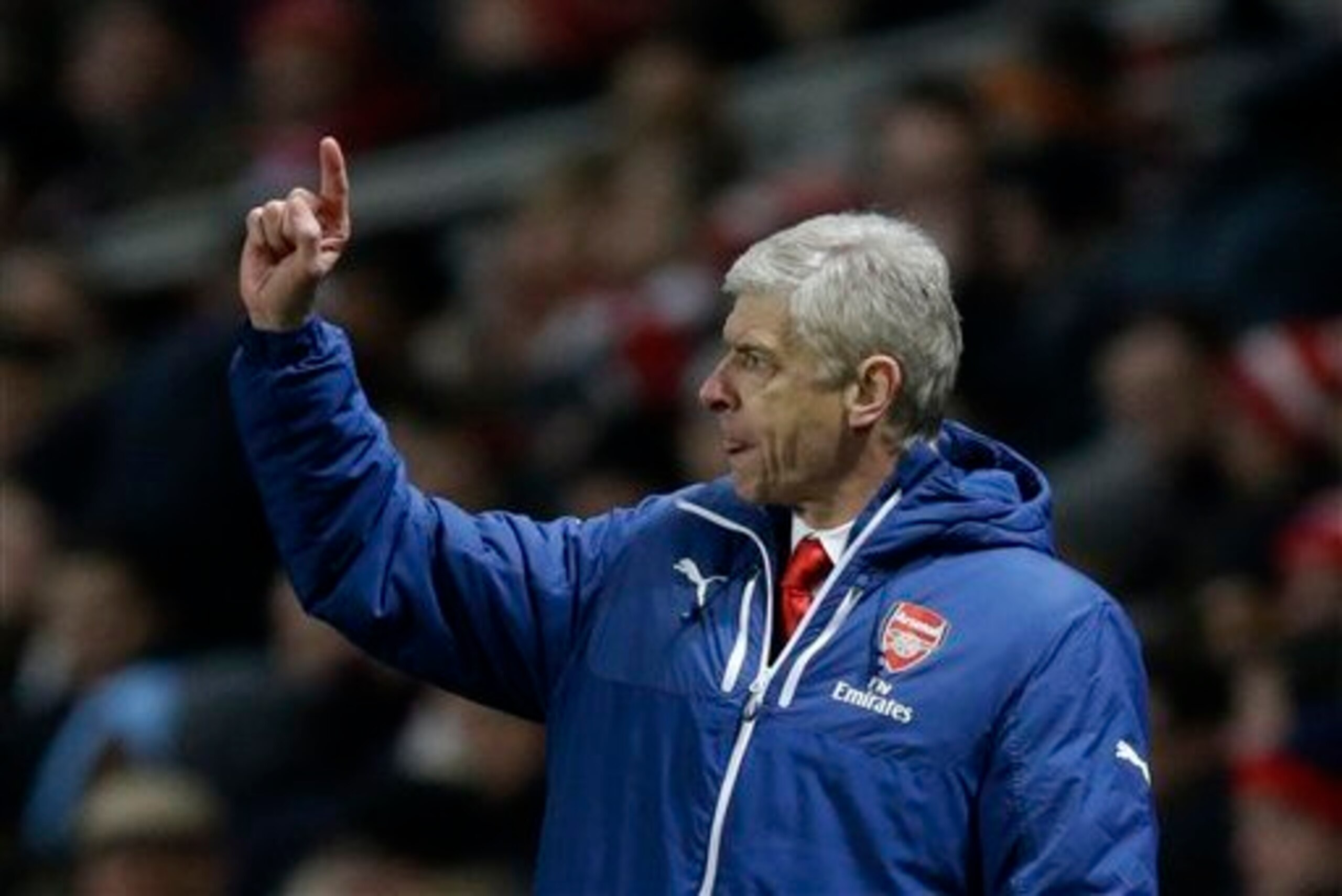
But now Wenger needs his team to stop chasing the ideal. Stop the chase that makes them go gung ho just because they haven't broken down a tough opponent within 20 minutes. Stop the chase that makes defensive solidity an afterthought once more minutes have ticked away and nerves have set in.
That's the chase that cost Arsenal against Monaco. Just like it cost them against United back in November. Just like it's cost the Gunners in virtually every marquee match during the last near-decade.
There are still plenty of opportunities to learn how to give up that chase. An FA Cup quarter-final trip to Old Trafford is the perfect place to start.
Arsenal haven't won at United's home since September 2006. That fact will dominate the build-up. It will be magnified if the streak continues.
If Arsenal don't win that game, the club's big-game struggles will have killed another season.
The time is now to start playing the context of the games that matter more than the expectation and reaction.
.jpg?w=2560 "Titans Ravens Football")

.jpg?w=2560 "NFL investigating 2 referees for separate viral exchanges")