
All 30 MLB Teams' Top 5-Tool Prospect in Spring Training Camp
In the last week Prospect Pipeline has been previewing spring training prospects in different ways, whether it is highlighting little-known players, predicting breakout candidates or even putting together a full team of this year’s must-watch prospects.
With spring games beginning next week, we’ll continue to look at some of the other notable prospects in camp this year with a breakdown of each team’s top five-tool talent.
This article has nothing to do with who is the better prospect or who is most likely to make an impact at the highest level; rather, this is strictly an evaluation of each player’s five tools (hit, power, run, throw and field). And please keep in mind that we only are looking at players who received non-roster invitations to spring training or are already on a 40-man roster.
Instead of rewriting each prospect’s full scouting report, I decided to use some of the scouting notes that first appeared as part of his organization’s top-10 prospects ranking. Unfortunately, not every team has a truly toolsy prospect in camp this year, so in those instances we gave the nod to players based on the quality rather than quantity of his tools.
Here is the top five-tool prospect in spring training for all 30 teams.
Baltimore Orioles: OF Dariel Alvarez
1 of 30
The Orioles don’t have many toolsy prospects in their system, let alone in major league camp this year. Their best two options for this article are Dariel Alvarez and Christian Walker, and since Walker is a first-base-only prospect, we’re going with Alvarez.
Signed during the 2013 season after defecting from Cuba, Alvarez stands out for his 70-grade arm in right field as well as his above-average raw power from the right side of the plate. The 26-year-old saw significant time in center field last season after playing mostly right field in his pro debut, but his fringe-average range and speed will eventually shift him to a corner spot full time.
The biggest question with Alvarez is whether his plate discipline will allow him to make enough contact to be an everyday guy.
Boston Red Sox: C Blake Swihart
2 of 30
Blake Swihart is a switch-hitter with an advanced approach from both sides of the plate, as he tracks the ball deep in the zone and utilizes the entire field. He’s particularly adept at driving the ball from line to line from the left side, which is critical considering he faces mostly right-handed pitching. He features more swing-and-miss from his natural right side, though a whole-field approach is still present.
Swihart’s power emerged in 2014 at the Double- and Triple-A levels, as he reached double-digit home runs for the first time in his career while tallying his usual 20-plus doubles. Though he’s an extra-base machine from both sides of the plate, Swihart has shown more over-the-fence power as a righty, with a fly ball rate that trails his groundball rate only slightly.
Swihart projects as an above-average baserunner relative to others at the position thanks to his athleticism and surprising speed. He won’t steal bases at the highest level, but Swihart’s knack for piling up both doubles and triples throughout his career speaks to his solid wheels.
One of better defensive catchers in the minor leagues, Swihart threw out more than 46 percent of attempted basestealers between Double- and Triple-A last season, per Baseball Reference. Passed balls are few and far between with the young backstop, highlighting his strength as a receiver. Meanwhile, his athleticism and agility behind the plate make him adept blocker, and he should only improve in that field as his secondary skills mature.
Swihart’s impact tools on both sides of the ball should give him the opportunity to become an above-average defensive catcher who hits for both average and power. There’s always an inherent high risk with catching prospects, but the 22-year-old has proven to be durable in his young career, which in turn has helped his bat develop quicker than other backstops of similar age.
New York Yankees: OF Aaron Judge
3 of 30
Aaron Judge improved his prospect stock in a big way in 2014 thanks to an impressive first full season between both Class-A levels. At 6’7”, 230 pounds, Judge is not the poorly coordinated ogre you’d expect him to be. Rather, he’s an impressive athlete with loud tools and promising secondary skills on both sides of the ball.
Judge, 22, moves well in right field, showing solid closing speed in all directions and especially toward the line. He has good range that stems from a combination of average speed and his enormous stride, while his arm strength is ideal for right field at the highest level.
A right-handed hitter, Judge doesn’t have a typical big-man’s swing; he features a surprisingly compact stroke, keeping his hands close to his body throughout, and his barrel stays in the hitting zone for an extended period of time.
Judge’s swing lacks lift, but the combination of his tremendous physical strength, above-average bat speed and huge extension after contact allows him to effortlessly rope line drives over fences to the deepest part of any park.
Both his hit-tool ceiling and long-term durability are question marks, but as long as he stays healthy, Judge has the potential for 20-plus home runs with a high on-base percentage while playing a solid right field in the major leagues.



Tampa Bay Rays: OF Steven Souza
4 of 30
At 6’4”, 225 pounds, Steven Souza is a standout athlete with the potential for four average-or-better tools at maturity, possibly five depending on how he adjusts to major league pitching. The 25-year-old’s carrying tool is his plus raw power, and he’s shown more consistent in-game thump over the last two seasons after tightening his approach.
Souza’s hit tool is still a bit of a question mark, but he should make enough contact to allow his power to translate at the highest level. His slightly above-average speed and strong instincts make him a threat on the basepaths, and it wouldn't be surprising if he continued swiping 15 to 20 bags over a full season.
Souza is the type of player who will surprise people once given consistent playing time, as his combination of size, athleticism, tools and secondary skills profiles favorably in a big league outfield. The 25-year-old’s ability to play all three positions will make him a near-everyday player for the Rays, as he's expected to open the 2015 season as the team's left fielder. Personally, Souza turned me into a believer during his time in the 2013 Arizona Fall League, and I’m excited to see what he can do over a full season in The Show.
Toronto Blue Jays: OF Dalton Pompey
5 of 30
Dalton Pompey is an exceptional athlete with a wiry-strong 6’2”, 195-pound frame that’s ideal for adding more strength moving forward. The switch-hitter’s strong hands and quick wrists translate to plus bat speed from both sides of the plate, resulting in hard contact across the whole field. His swing is geared primarily toward stroking line drives, but he’s added some lift from both sides over the past year and has begun to tap into his average raw power.
Though at age 22 he’s young and relatively inexperienced, Pompey already has a good feel for the strike zone and demonstrates pitch recognition, tracking pitches deep into the zone and working deep counts. His on-base skills also allow his plus speed to translate on the basepaths, where he should swipe upward of 30 bags annually.
Defensively, Pompey profiles as a long-term center fielder thanks to his consistently strong jumps, plus range and closing speed, and his solid-average arm strength is likely to play up at the position.
Slated to open the season as Toronto’s everyday center fielder, Pompey’s speed and defense give him the opportunity to contribute on both sides of the ball as his promising bat continues to develop.
Chicago White Sox: SS Tim Anderson
6 of 30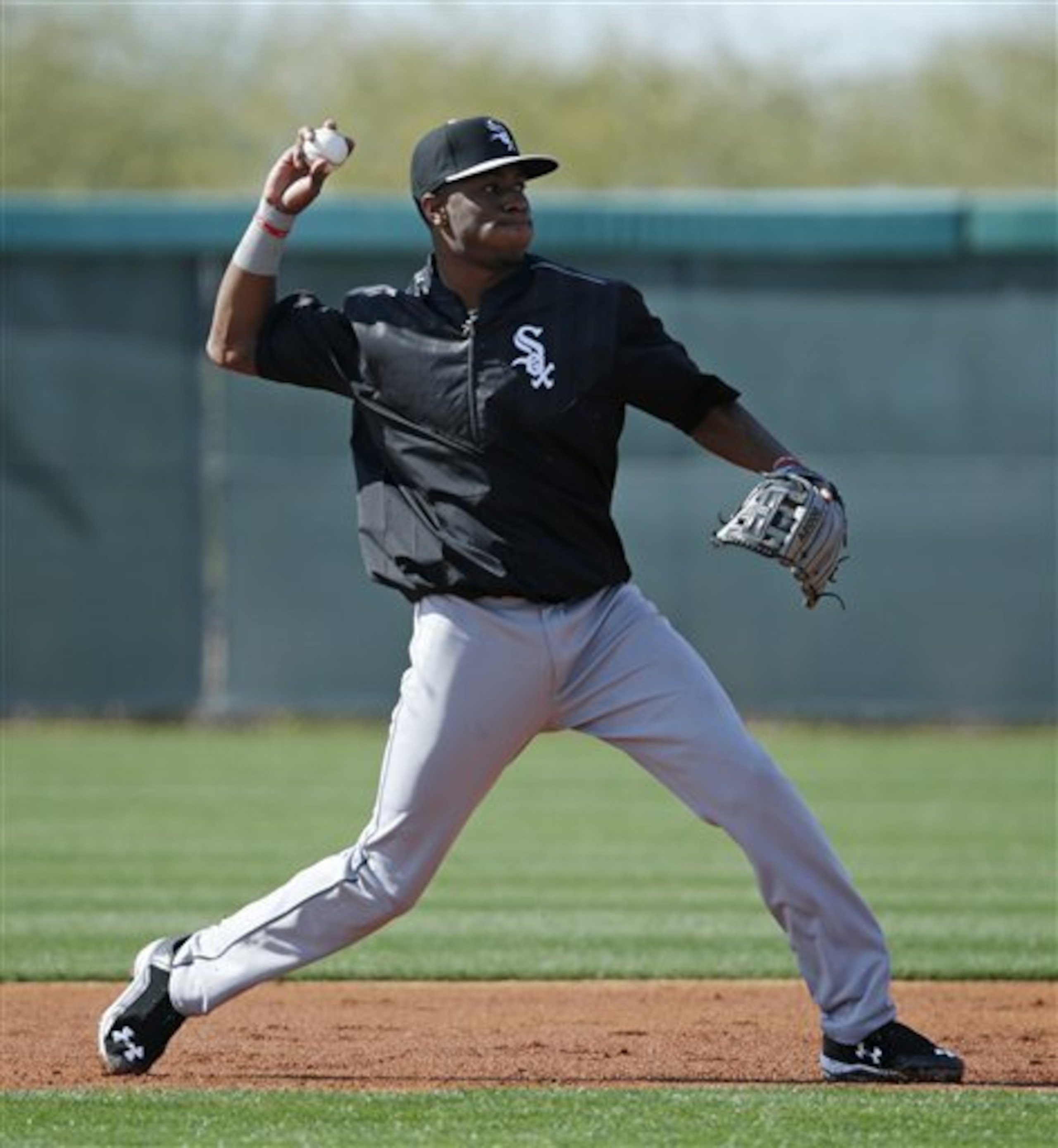
Tim Anderson’s best tool is plus speed, and it plays on both sides of the ball. The right-handed hitter’s stick will ultimately determine his level of success; he shows excellent bat speed and barrel awareness, but the approach is super aggressive and has the potential to be exploited by upper-level arms. The 21-year-old’s in-game power comes mostly in the form of doubles and triples at the present, but his above-average raw pop should translate to average over-the-fence power at maturity.
His defense is also raw and too aggressive, like any young shortstop, but Anderson has the tools to be a first-division player. All he needs now is experience. Anderson is expected to begin the season back in Double-A, setting him up for a debut with the White Sox sometime in 2016.
Cleveland Indians: SS Francisco Lindor
7 of 30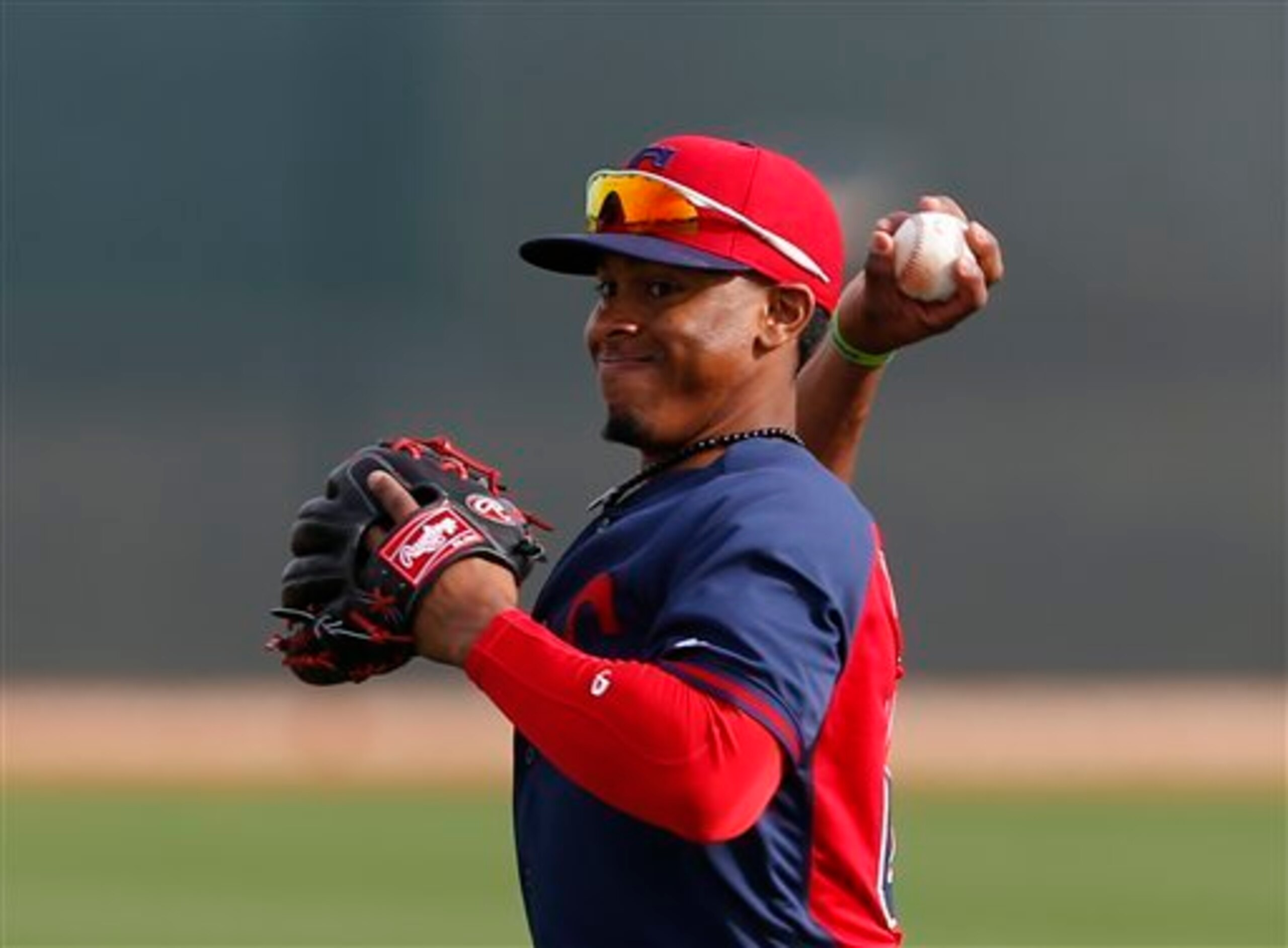
Francisco Lindor's offensive skills have steadily improved over the last four years, as he's developed an outstanding hitting eye and aptitude from both sides. He's also refined his ability to read pitchers and stay within his zone, which in turn has led to him working deeper counts and chasing fewer pitches out of the zone.
Lindor, 21, never will offer much power, but he has enough strength and bat speed, especially from the left side, to hit 10-12 homers at maturity. He's more likely to be a line-drive machine that accrues roughly 20-25 doubles and a handful of triples over a full season in The Show.
Lindor's above-average speed fuels his extra-base hits total, as his wheels and baserunning instincts help him turn singles into doubles and doubles into triples. Lindor is also an adept base stealer who knows how to pick his spots while his on-base skills suggest numerous seasons with 15-20 stolen bases.
Lindor is an absolute wizard with the glove and profiles as an elite defensive shortstop in the major leagues. The 21-year-old's phenomenal instincts always have him in the right spot to make plays, and that doesn't take into account his impressive range and quick feet. Meanwhile, his plus arm strength is ideal for the position.
Even if Lindor's bat doesn't develop as hoped, he still has the potential to enjoy a long, successful career in the major leagues based on his defensive prowess, superb makeup and ability to control the speed of the game. However, even modest offensive production could make Lindor a perennial All-Star.
Detroit Tigers: OF Steven Moya
8 of 30
Steven Moya’s nearly elite raw power has long ranked among the best in the minor leagues, but a rash of injuries—including Tommy John surgery—caused him to fall behind the developmental curve, which is why he reached Double-A for the first time last year in his sixth professional season.
A 6’6” left-handed hitter, Moya’s bat speed, strength and leveraged swing fuel his enormous raw power to all fields, but there continues to be concern about his capacity to hit big league pitching. The 23-year-old’s path through the zone can be long and he still lacks any semblance of plate discipline, which explains his 29.3 percent strikeout rate and 4.2 percent walk rate last season in 549 Triple-A plate appearances. Meanwhile, Moya continues to do the majority of his damage against right-handed pitching.
Moya moves well in right field in spite of his size, showcasing at least average speed and range as well as plus arm strength, but his routes can be inconsistent at times, especially when tracking balls toward the fence.
Kansas City Royals: SS Raul Mondesi
9 of 30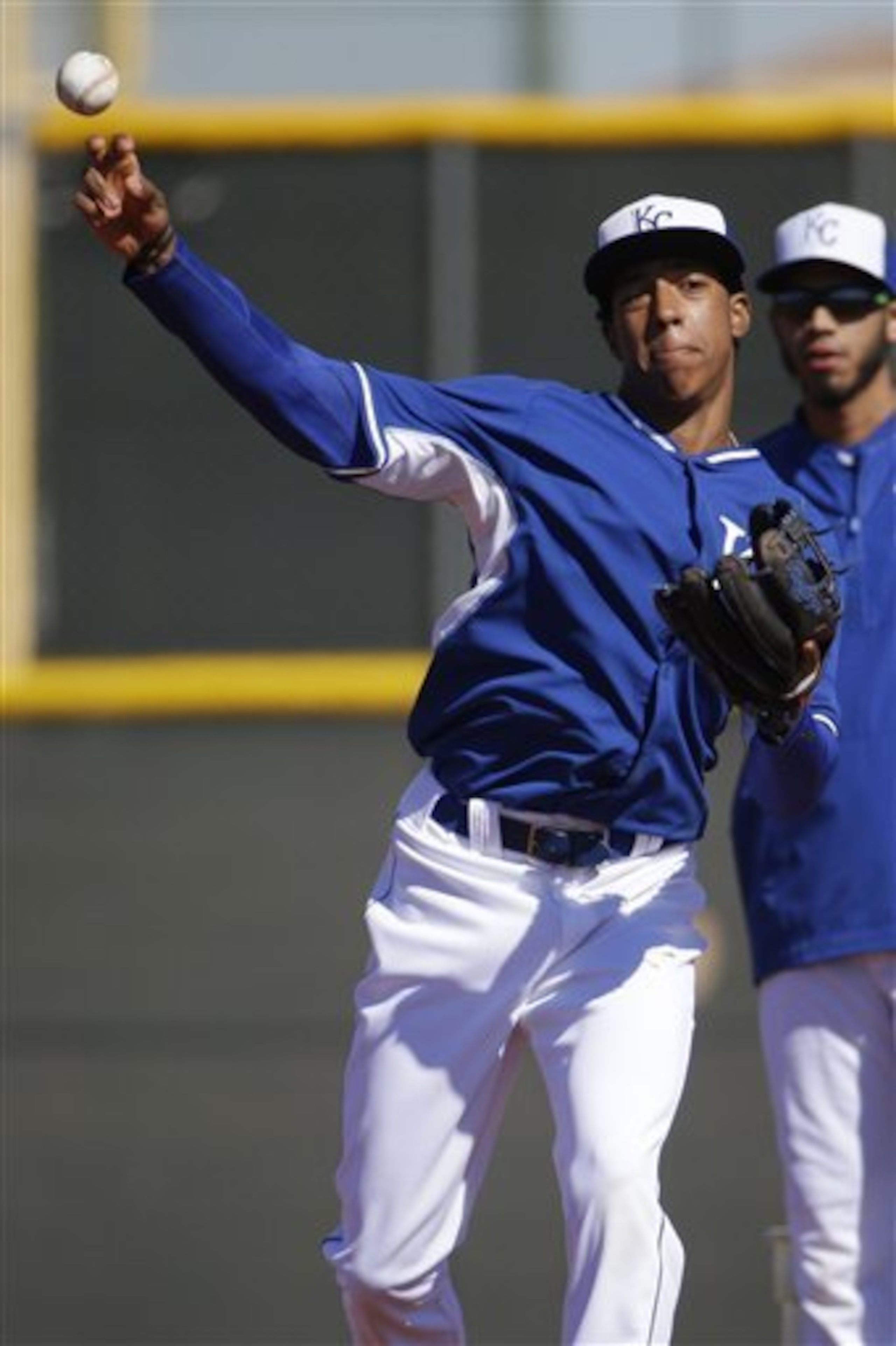
Raul Mondesi was moved up to High-A Wilmington of the Carolina League in 2014, making him the youngest everyday player in his league on Opening Day for the second straight year, but the 19-year-old didn’t progress offensively and finished the season with a .211 batting average and .256 on-base percentage.
The switch-hitting Mondesi has a clean swing from both sides of the plate with bat speed and barrel awareness that suggest a future above-average hit tool. It’s hard to get a read on Mondesi’s true power potential at the moment, as he’s still growing into his 6’1”, 165-pound frame and figuring out his identity as a hitter, but he definitely showed more raw power in 2014, especially from the left side of the plate. Mondesi's plus-plus speed makes him a candidate to steal at least 20-25 bags annually at the highest level, and he's going to see more chances on the base paths as his on-base skills improve.
Defensively, Mondesi’s athleticism and tools are always on display at shortstop, and he has the instincts to develop into an impact player at the position. The youngster will need a few more years in the minors to refine his skills on both sides of the ball, but his ceiling of an All-Star shortstop should make it worth the wait.
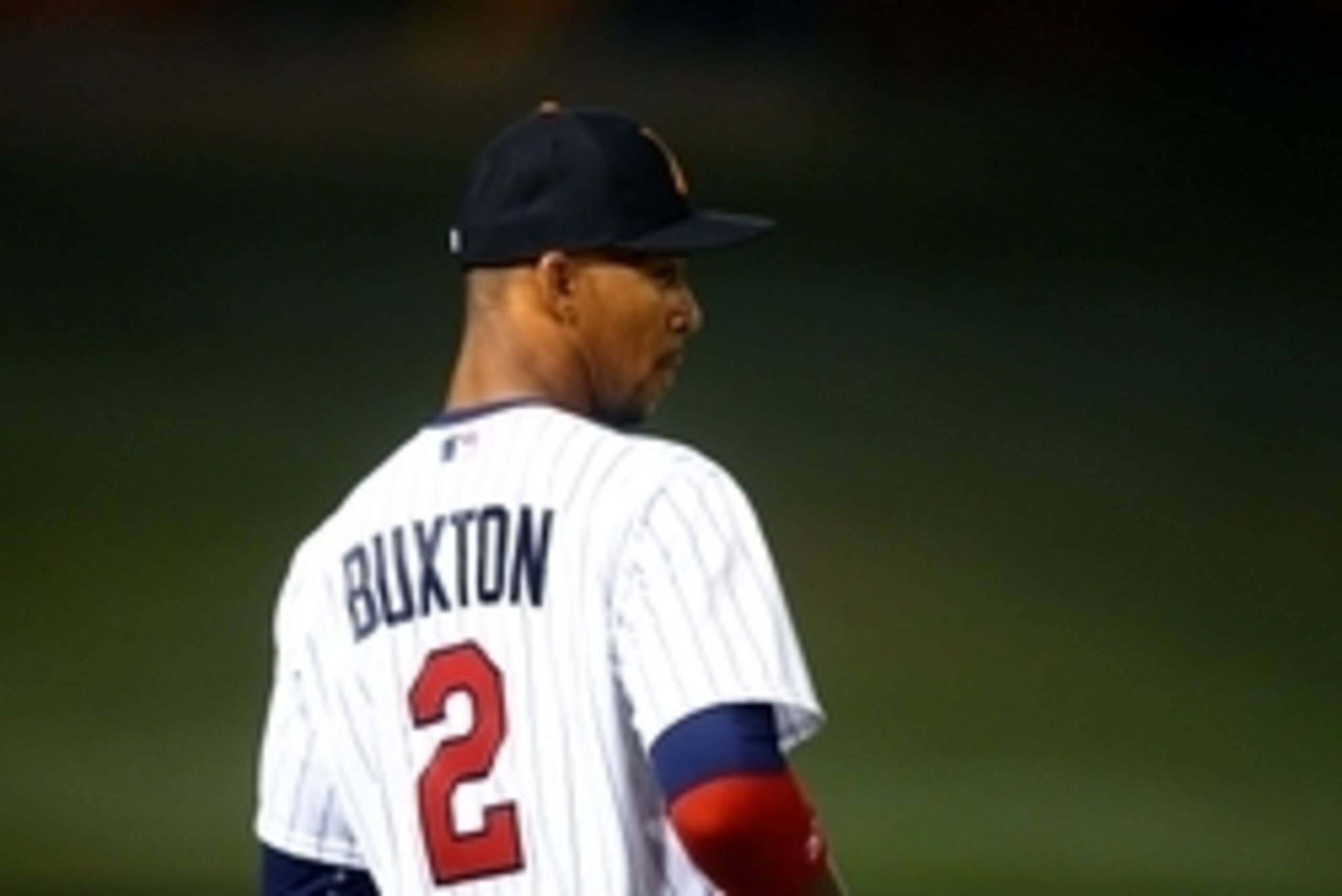
Minnesota Twins: OF Byron Buxton
10 of 30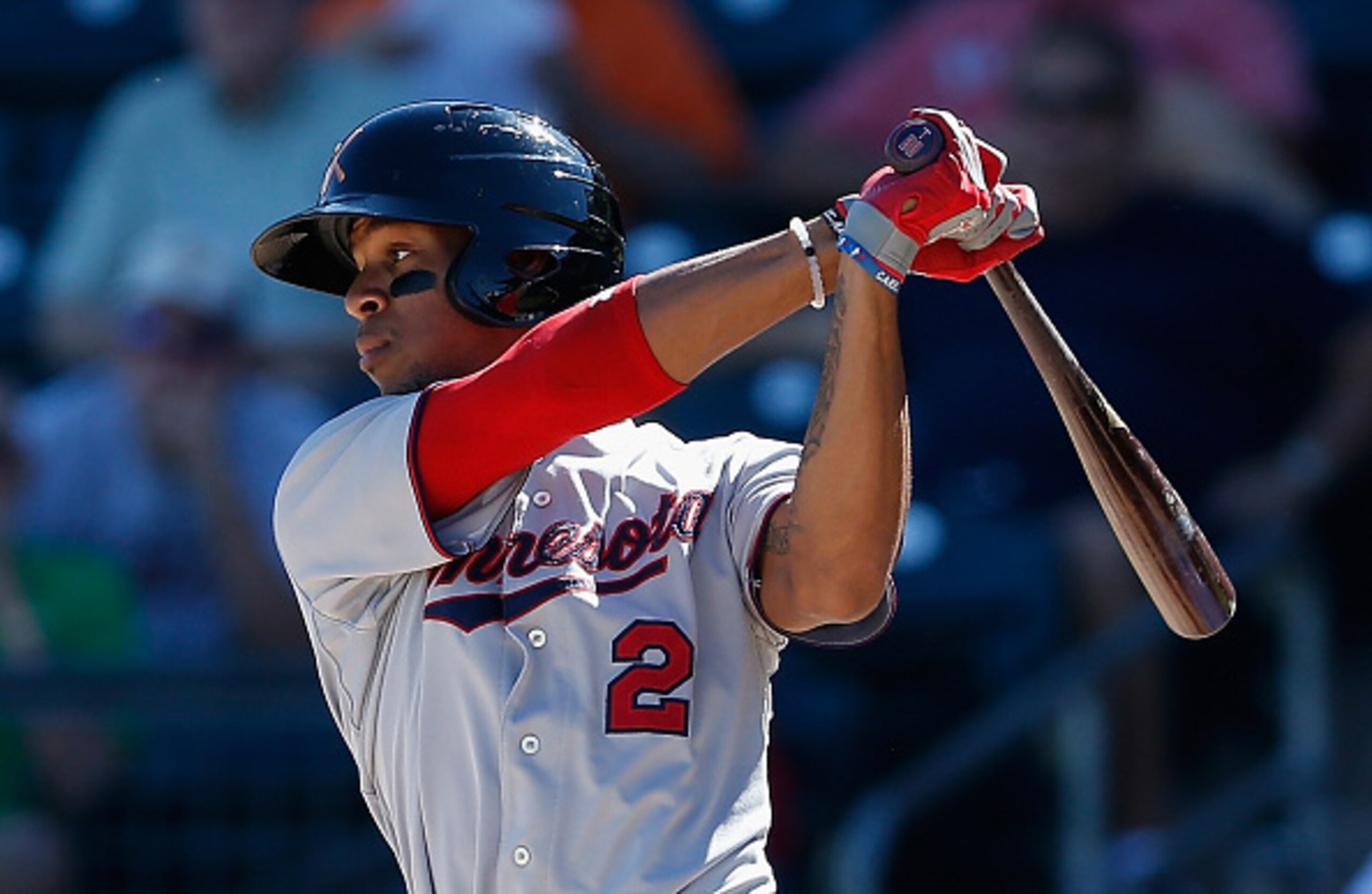
Byron Buxton entered 2014 as the consensus No. 1 prospect in baseball, and all signs pointed to him debuting with the Minnesota Twins before the end of the season. Unfortunately, he spent the season battling one injury after the other, each of them resulting in a lengthy stay on the disabled list, and he ultimately played in just 31 games on the year.
There’s simply no other player who can match Buxton’s combination of elite athleticism, legitimate five-tool potential and advanced secondary skills. He is a supremely gifted athlete with 80-grade speed and the potential to be an elite defender in center field.
At the plate, the right-handed hitter showcases outstanding bat speed and hand-eye coordination, while his mature approach and pitch recognition could make him one of the game’s top hitters. And while he’s already an extra-base machine, thanks to his wheels and whole-field approach, Buxton also has the raw power to produce 20-plus home runs at maturity.
Buxton has the ceiling of an MVP-caliber player in his prime, with five potentially plus tools and a feel for making in-game adjustments. However, after losing nearly all of 2014 due to injuries, the 21-year-old now faces at least some pressure to make up for the lost time.
Houston Astros: SS Carlos Correa
11 of 30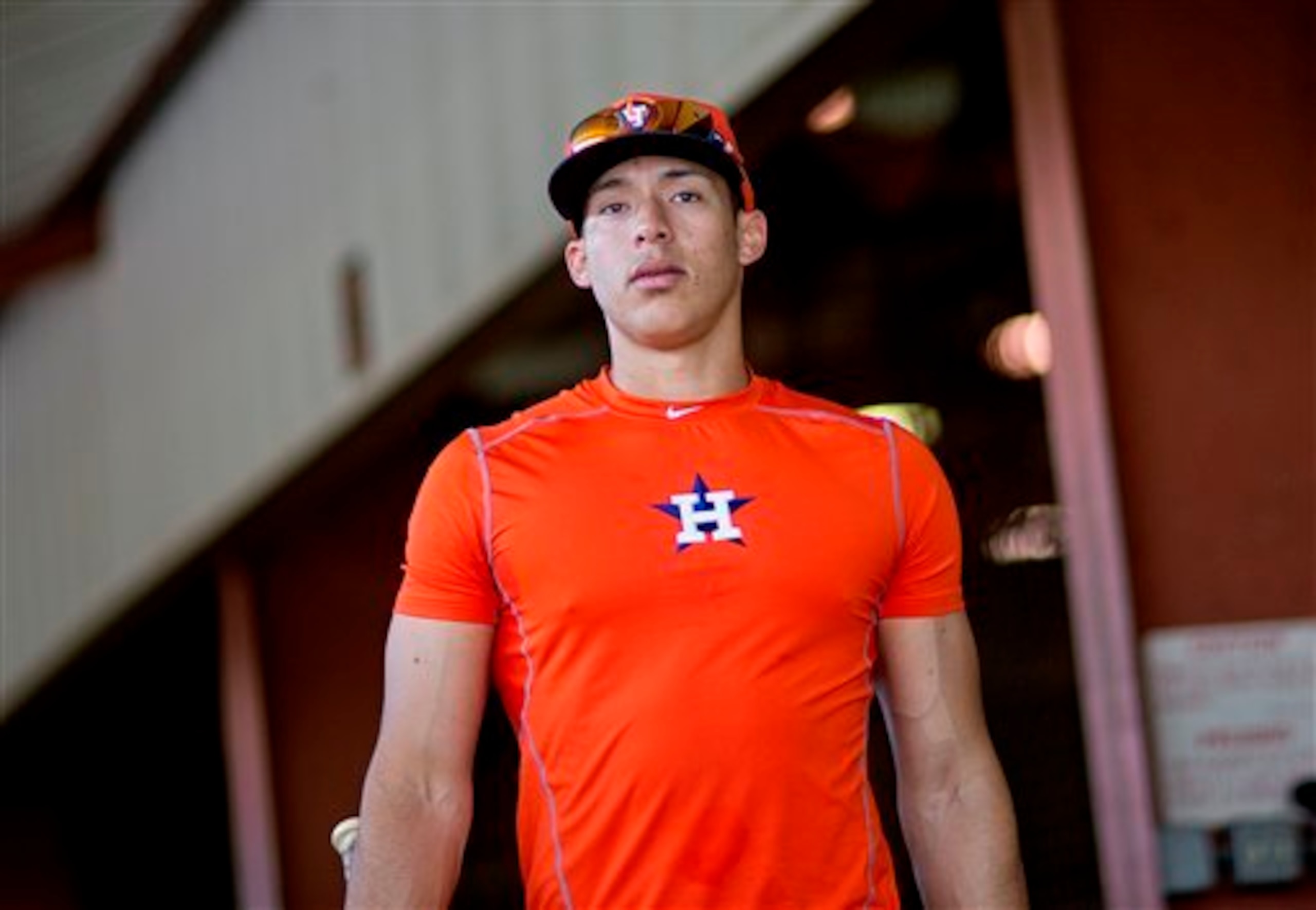
Carlos Correa, 20, has a simple and direct right-handed swing that allows him to stay inside the ball and utilize the entire field. He’s batted at least .320-plus at both Class-A levels over the last two seasons, while his advanced plate discipline and pitch recognition (12.3 BB%, 15.4 K%) have produced on-base percentages consistently north of .400.
At 6’4”, 205 pounds, Correa possesses plus raw power but doesn’t swing for the fences, instead employing an approach that’s geared toward consistent hard contact and getting on base. Considering his age, it’s safe to bet on Correa developing more pop as he fills out, with the potential to hit upward of 22-25 home runs in his prime.
Despite his large frame, Correa is an excellent athlete with the tools to stick at shortstop long term, including soft hands, good range and plus-plus arm strength that produces lasers in the mid- to upper 90s across the infield.
Correa is a physically blessed player with present plus makeup and the potential for five average-or-better tools at maturity, and he’s still on the fast track to the major leagues in 2015 despite the ankle injury.
Oakland Athletics: 1B Matt Olson
12 of 30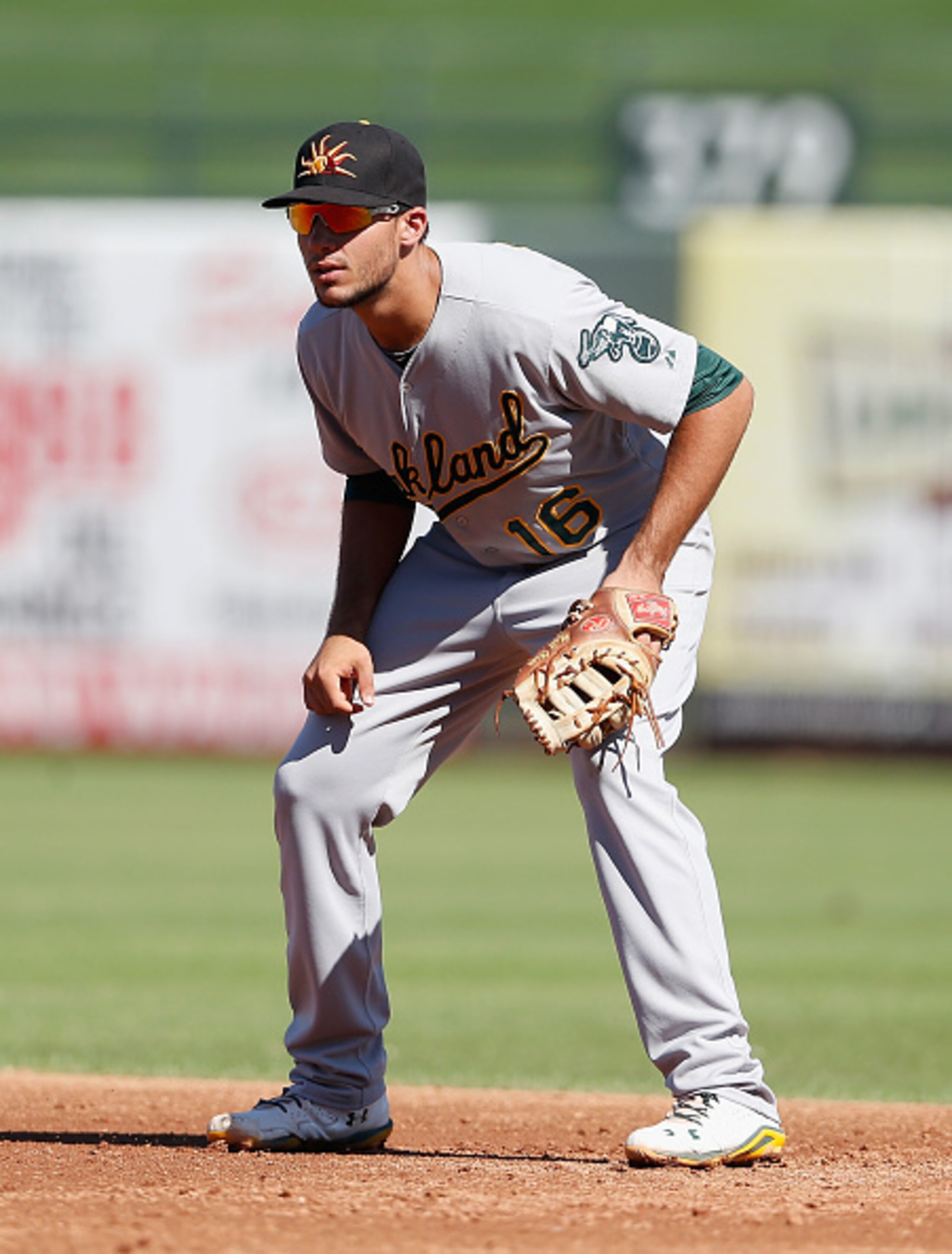
The A’s are one of the teams that lack a toolsy prospect in camp this year, so we’re going to make an exception and go with first baseman Matt Olson based on his prodigious power that produced 37 home runs in 2014, the third-highest total in the minor leagues.
Olson, 20, projects for an average hit tool, as he already displays good feel for hitting with good patience and a willingness to work deep counts. His 6’4”, 236-pound frame and long limbs leave holes in swing and lead to a fair amount of swing-and-miss; however, it also generates the booming, plus power that has translated to 60 home runs with an extra-base hit rate of 51.2 percent in his first two full seasons.
A third baseman in high school, Olson is an underrated athlete at first base with fluid actions and good footwork around the bag, while his solid-average arm serves him well at the position. But while he may be better defensively than the average first baseman, Olson’s future will always be tied to his offensive profile. Luckily, the 20-year-old’s approach and massive power should give him an opportunity to make an impact at the highest level, possibly even earlier than originally expected.
Los Angeles Angels: 3B Kyle Kubitza
13 of 30Kyle Kubitza is a left-handed hitter with a smooth, line-drive-oriented swing as well as a knack for barreling the ball and using the whole field. The 24-year-old Texas native employs a patient approach at the plate and draws his share of walks, though at times his selectivity seems to limit his power potential.
Kubitza’s only standout attribute is his above-average arm at third base, but he still offers value with average tools across the board and has room left to develop. His steady improvement over the last two seasons has him on track to reach the major leagues at some point during the 2015 season, especially after his offseason acquisition by the Angels.
Seattle Mariners: SS/2B Ketel Marte
14 of 30At 6’1” and 180 pounds, Ketel Marte has an impressive feel for making consistent contact from both sides but is noticeably more advanced as a lefty. Meanwhile, the 21-year-old’s combination of on-base skills—a product of his advanced plate discipline and pitch recognition—and speed makes his bat even more valuable as a potential top-of-the-order presence. With one home run in 185 full-season games (which can be seen in the above video), power will never be part of Marte’s game. However, he should have no problem accruing a high number of doubles and triples in a given season.
Though he profiles at either middle infield position, Marte has all the tools to stick at shortstop for the duration of his career, with smooth actions, above-average range and a strong, accurate arm. He’s received glowing reviews for his makeup and work ethic, so expect the Mariners to continue to challenge him moving forward.
Texas Rangers: C/1B Jorge Alfaro
15 of 30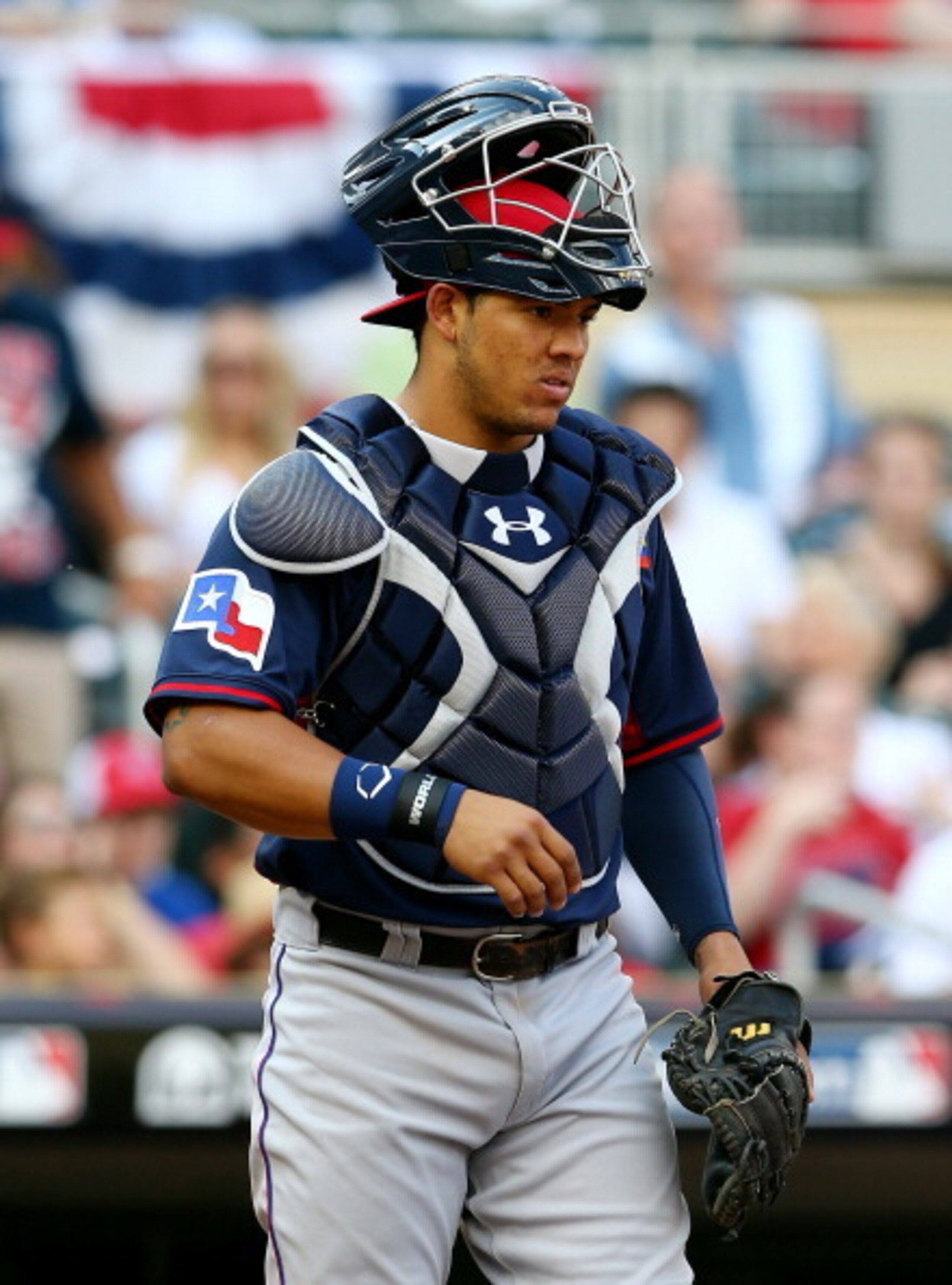
Jorge Alfaro has as much upside as any catcher in the minor leagues, as he’s incredibly agile and aggressive behind the plate with legitimate 70-grade arm strength. However, his blocking and receiving are inconsistent and even sloppy at times, which is why, despite having a cannon on his right arm, the 21-year-old threw out only 28 percent of attempted base stealers last season and committed 23 passed balls in 90 games behind the plate.
Alfaro also logged 18 games at first base last season, though a full-time move to the position at this point in his career would be a waste of his athleticism.
At the plate, the right-handed hitter has the bat speed to turn around velocity but struggles to recognize spin and keep weight on his backside. Alfaro’s above-average speed is a weapon and makes him a rare dual-threat catching prospect, with the potential for 20-plus home runs and double-digit stolen bases in his prime.
If he can remain behind the plate, Alfaro has the potential to be a first-division backstop, possibly even an All-Star in his prime.
Atlanta Braves: 2B Jose Peraza
16 of 30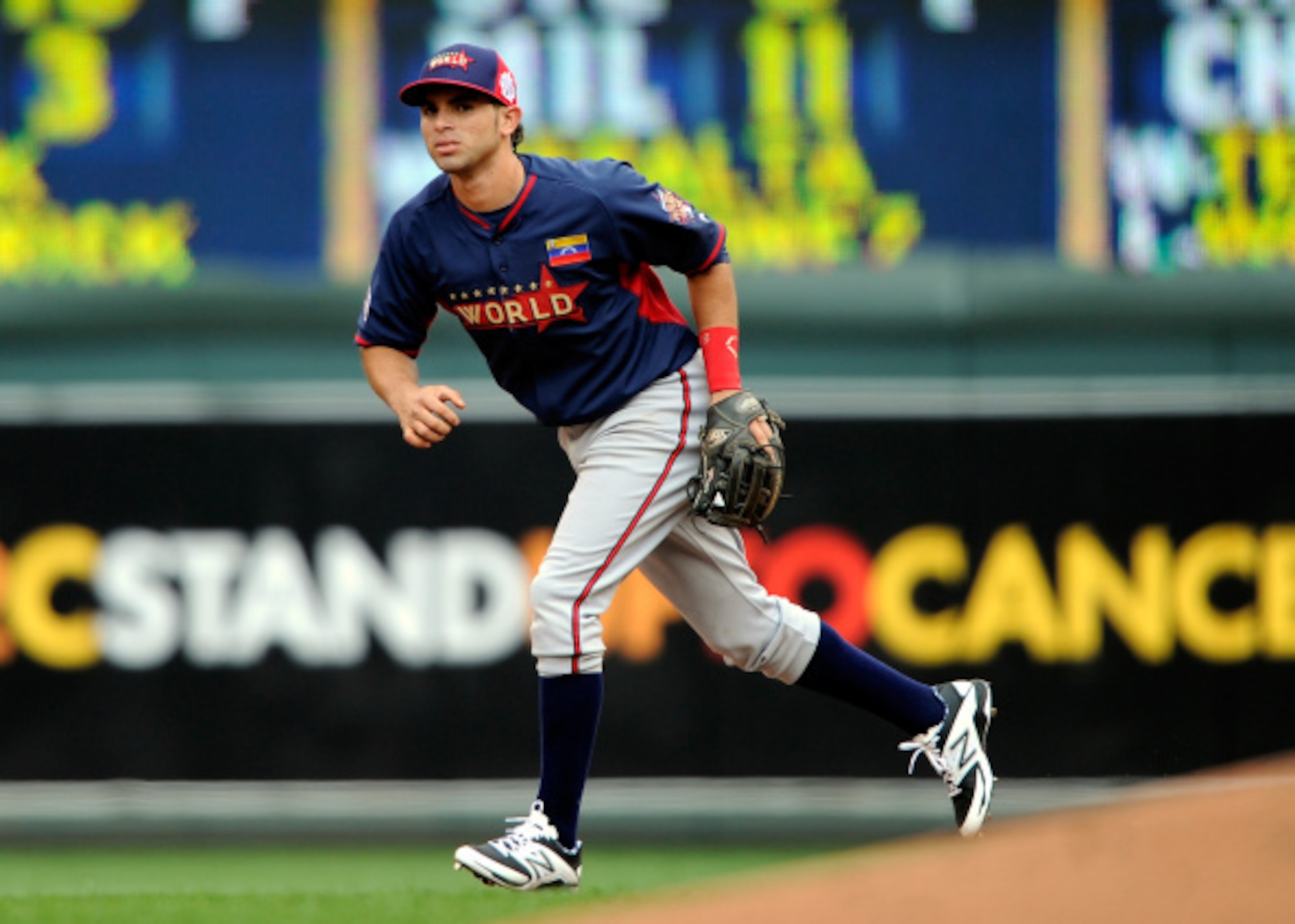
What Jose Peraza lacks in physicality at 6’0” and 165 pounds, he makes up for with speed and quickness in all facets of the game. The 20-year-old has the foundation of an above-average hitter but will need to add strength over the course of his development. A right-handed hitter, he drives the ball from line to line and should amass his share of doubles and triples.
However, Peraza also struggles to drive the ball at times, with the majority of his contact staying on the infield. That’s not necessarily a bad thing, though; Peraza is a plus-plus runner who can burn down the line, not to mention an advanced base stealer who’s already skilled at reading pitchers and picking his spots.
Peraza is an above-average defender with outstanding range at both middle infield positions, and his glove will probably always play up thanks to his instincts and first-step quickness. The Braves shifted Peraza from shortstop to second base last season in deference to Andrelton Simmons, which could give the Atlanta Braves one of baseball's best double-play combinations for years to come.
Miami Marlins: C J.T. Realmuto
17 of 30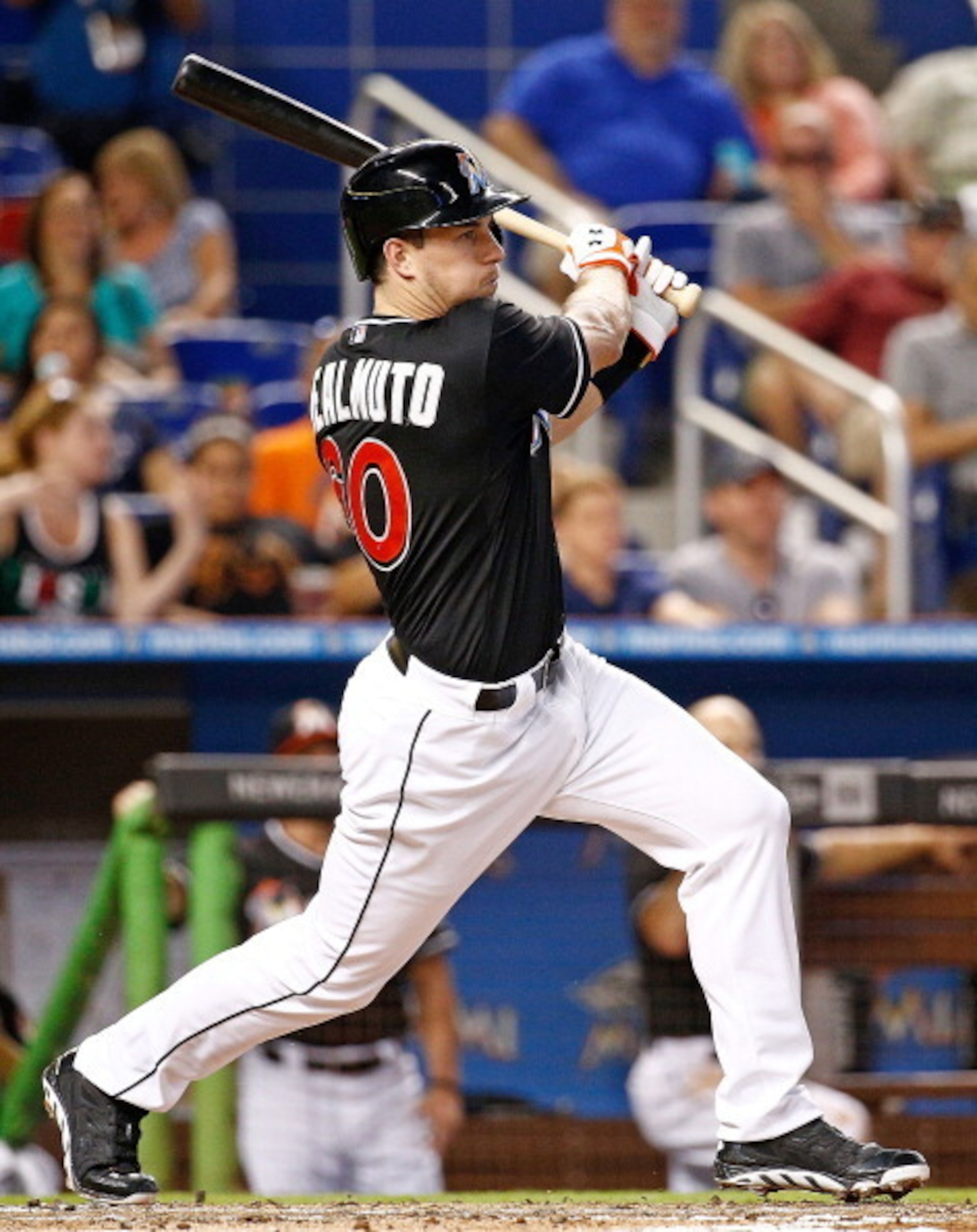
J.T. Realmuto is an excellent athlete who played multiple positions in high school before the Marlins moved him behind the plate following his selection in 2010 draft. The right-handed hitter has the hand-eye coordination, strength and natural talent to hit for both average and power, and he made more consistent contact last season after simplifying his bat path. The 23-year-old is still learning to tap into his above-average raw power, and he shouldn’t be expected to offer more than average in-game power at the highest level.
Realmuto is a rare breed of catcher in the sense that he has average speed and first-step quickness to be a threat on the basepaths. Defensively, he has an impressive catch-and-throw skill set with a quick release and plus-arm strength to produce pop times around 1.8 seconds. At worst, Realmuto should serve as a backup catcher in The Show, possibly as early as 2015. However, further development of his bat could push the 23-year-old into an everyday role.
New York Mets: 2B Dilson Herrera
18 of 30
Dilson Herrera is an advanced hitter for his age, as he’s comfortable spraying the ball across the whole field but also has a feel for when to sell out for power. The 20-year-old has good strength in spite of an undersized frame, a testimony to his bat speed and strong wrists, and a more refined approach should produce at least average power at maturity.
Defensively, Herrera still has some fine-tuning to do at second base, especially when it comes to attacking balls to his left, but he’s a good athlete with above-average speed, good range and more than enough arm for the position.
Philadelphia Phillies: OF Kelly Dugan
19 of 30
At 6’3”, 215 pounds, Kelly Dugan, 24, is an impressive athlete with an ideal defensive profile for right field, including above-average arm strength and average range. However, whether he actually achieves an everyday role at the position will be determined by his bat.
The left-handed hitter showed a much more refined approach last season, as he made more consistent contact and eliminated a lot of the swing-and-miss from his game. The adjustments hurt Dugan’s in-game power, but he still possesses plenty of raw power and should tap into it more frequently as he becomes comfortable with his approach.
Washington Nationals: OF Michael Taylor
20 of 30
Michael Taylor is a physical specimen with an athletic, 6’3”, 210-pound frame that's loaded with quick-twitch muscles. Speed and defense are carrying tools, as he’s a plus runner with outstanding range in center field. Specifically, Taylor, 23, gets terrific reads and routes and goes back on the ball better than many big league center fielders, while his plus arm strength is an underrated weapon at the position.
At the dish, Taylor’s game still features too much swing-and-miss, as evidenced by his 29.6 percent strikeout rate last season in the minor leagues, but his contact rate is still trending up and helped him establish career highs in both batting average and home runs.
His bat has been slow to develop due to inconsistent swing mechanics and an aggressive approach; he has a tendency to overstride and drag the bat through zone, and the timing of his swing is geared toward hitting fastballs. And while Taylor has grown into his frame over the last two years and learned to tap into his plus raw power, his power frequency in the major leagues likely will be determined by the development and progress of his hit tool.
Chicago Cubs: SS Addison Russell
21 of 30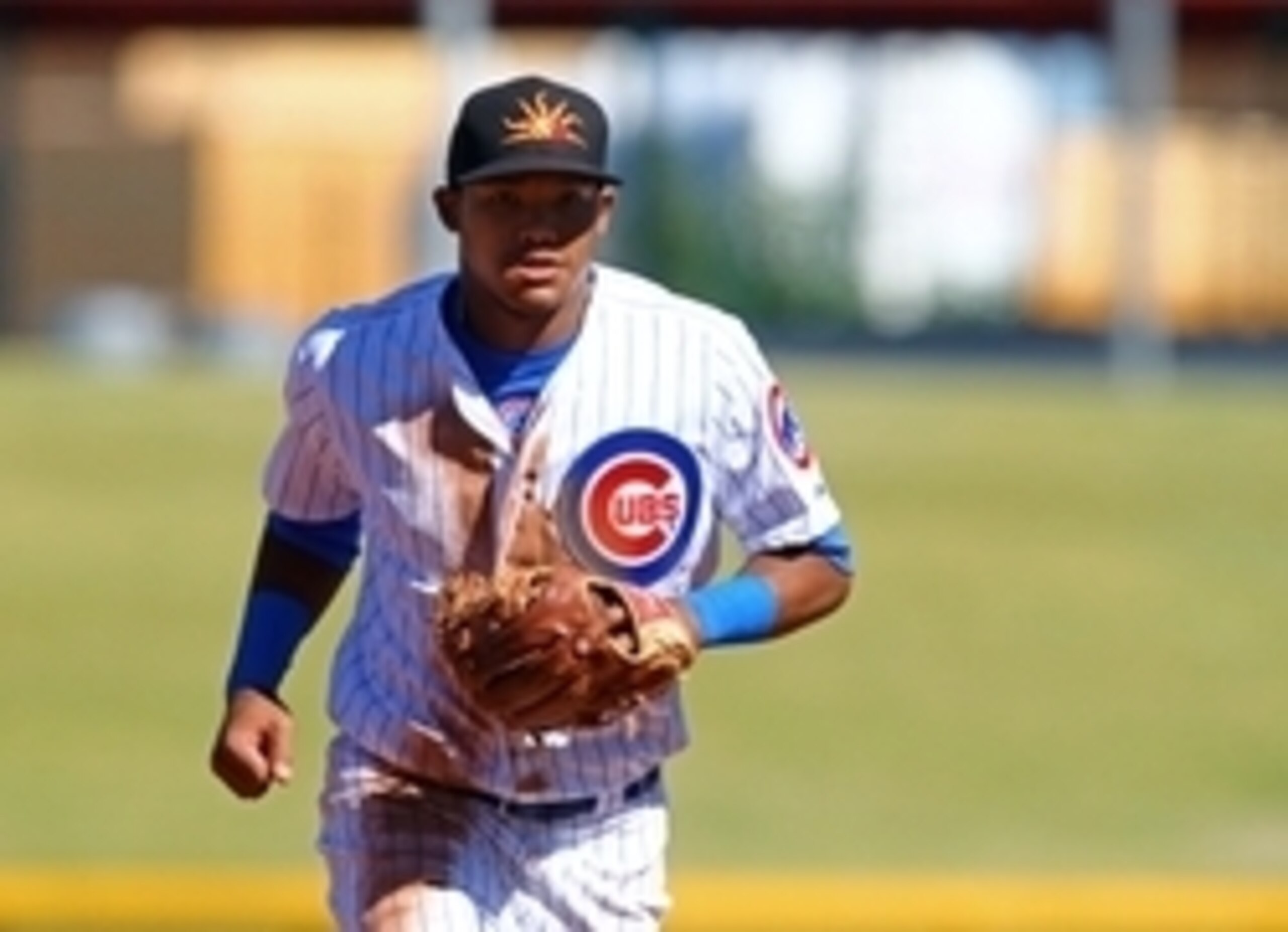
Addison Russell makes a lot of hard contact thanks to his plus bat speed and innate bat-to-ball skills, and he’s really started driving the ball to all fields over the last year. His swing will get long at times, but Russell, 21, gets the barrel through the zone so quickly that there shouldn’t be a lot of swing-and-miss, and his mature approach and pitch recognition will lead to plenty of walks and high on-base percentages during his career.
The right-handed hitter’s combination of plus bat speed and a deep point of contact should generate upward of 20 home runs at the highest level, possibly more depending on his physical development in the coming years. And given his ability to use the entire field, Russell should always tally a high number of doubles and triples. On the basepaths, Russell is an above-average runner with the athleticism and instincts to steal 15-20 bags annually.
Defensively, Russell still has room to improve, though he already possesses incredible range to both sides and is especially slick when charging the ball. His plus arm strength allows him to make throws from virtually anywhere on the infield, but there also are times when he doesn't set himself properly and uncorks inaccurate throws.
Cincinnati Reds: OF Yorman Rodriguez
22 of 30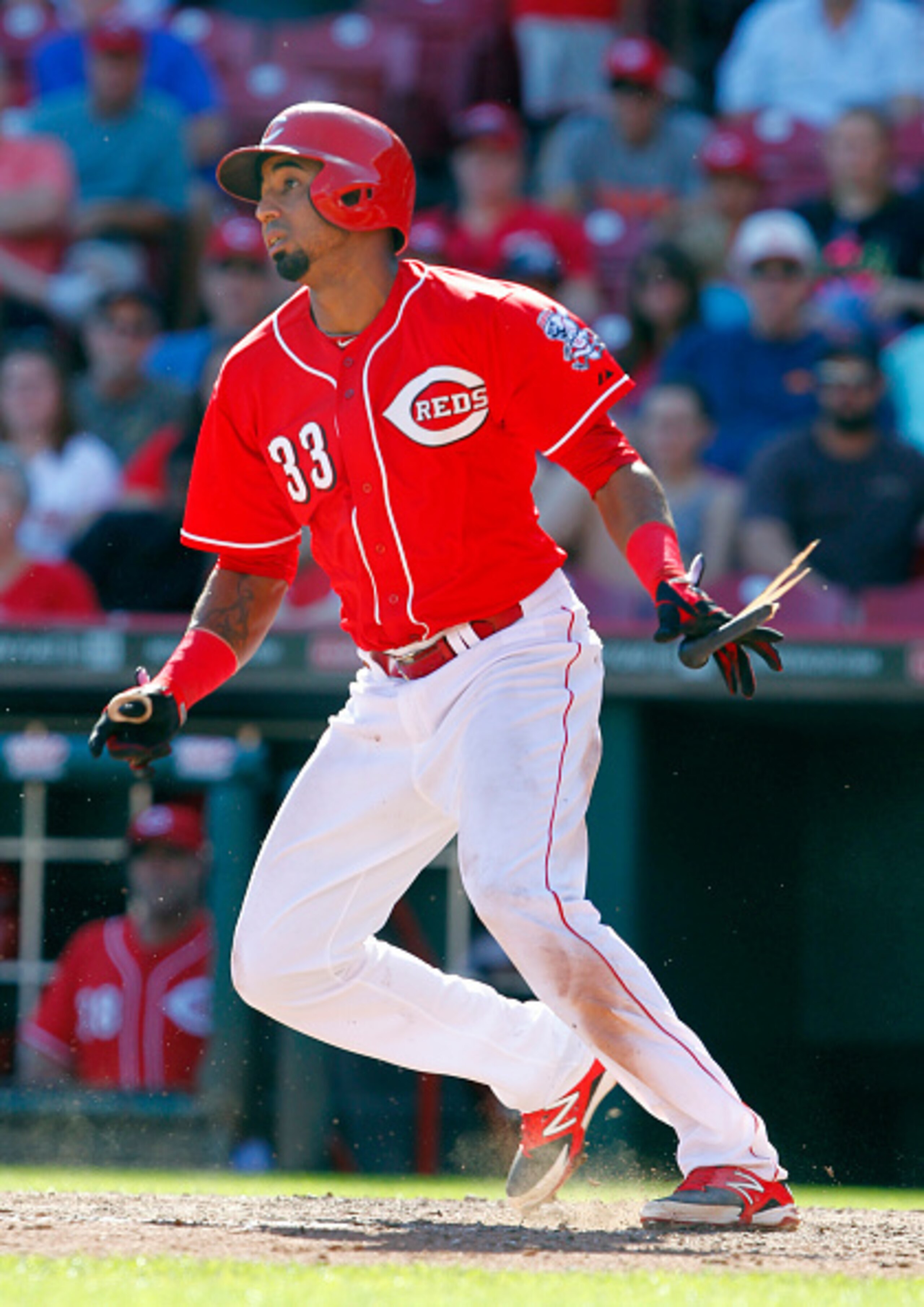
At 6’3”, 197 pounds, Yorman Rodriguez has the tools and athleticism to be an impact right fielder in the major leagues, as he’s an above-average runner with similar range and has an absolute cannon for an arm.
At the dish, the 22-year-old Rodriguez possesses raw plus power to all fields, but he is still figuring out how to utilize it during games. The right-handed hitter’s plate discipline is lacking, as he struggles to pick up spin out of the pitcher’s hand, but he can absolutely destroy fastballs.
Rodriguez’s hit tool may never be better than average, which could limit his power utility and make him more of a fourth outfielder than a starter.
Milwaukee Brewers: SS/2B Luis Sardinas
23 of 30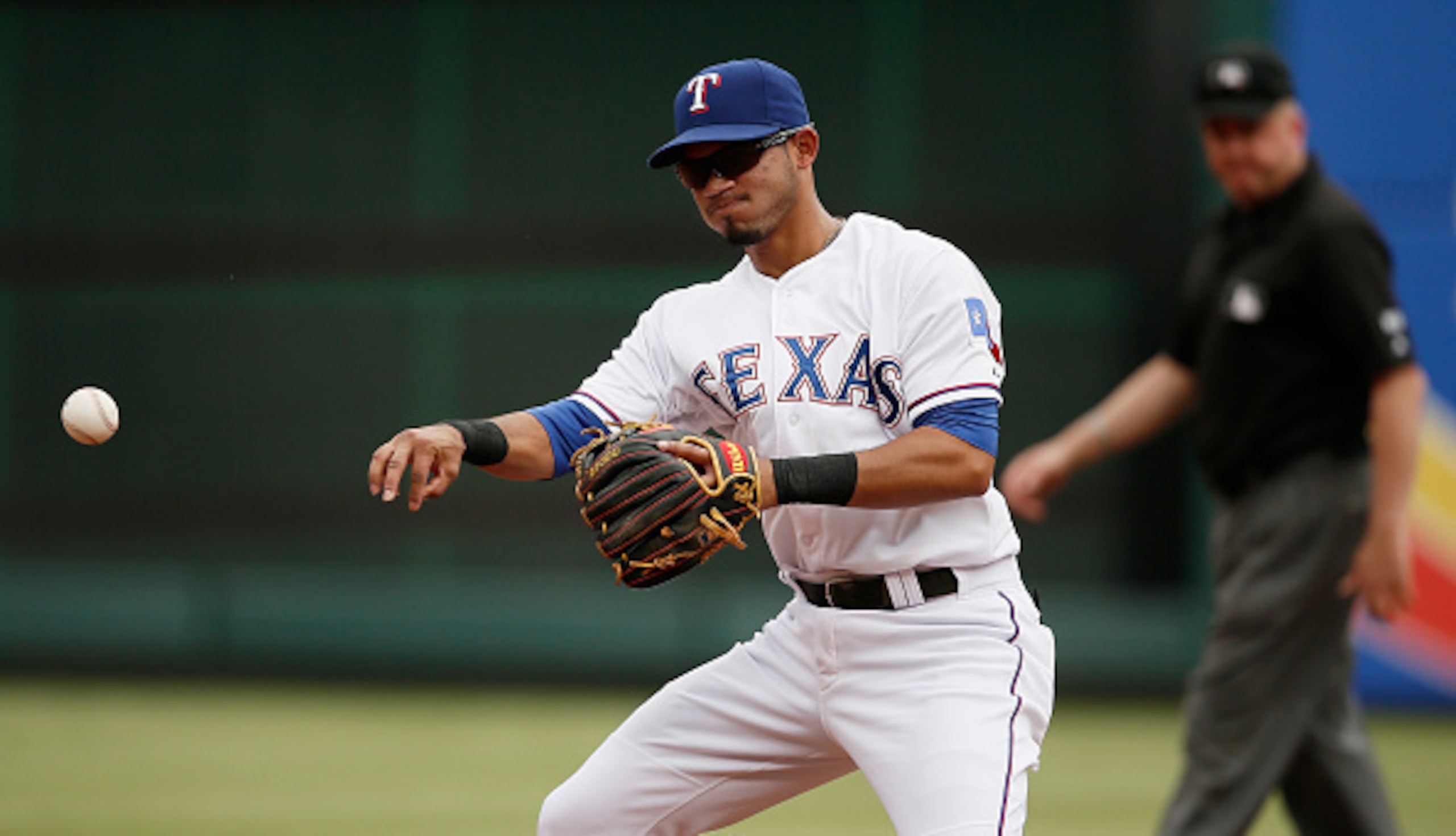
Acquired from the Rangers during the offseason, Luis Sardinas has a solid feel for hitting from both sides of the plate, with bat-to-ball skills that produce consistent contact to all fields and allow him to utilize his plus speed. However, the 21-year-old’s high contact rate also reflects an overaggressive approach that limits his on-base skills, and power has never and will never be part of his game.
On the other side of the ball, Sardinas is an above-average defender at shortstop with smooth actions and good hands, and his above-average arm strength is more than enough to handle the position at the highest level.
Pittsburgh Pirates: 2B Alen Hanson
24 of 30
As a switch-hitter, Alen Hanson has the potential for a solid-average hit tool thanks to his quick bat from both sides of the plate and an approach that enables the use of the whole field. He’s an extra-base machine with average power potential, showcasing more consistent over-the-fence pop from the left side.
Hanson, 22, has a handsy swing at times but still barrels the ball, though his tendency to drift with his hips can make him susceptible to good sequencing and lead to too much swing-and-miss. Hanson is a plus runner, but he’s also a raw base stealer who relies on his straight-line speed rather than instincts.
Defensively, Hanson has spent most of his professional career at shortstop before shifting over to second base last August. He exhibits smooth actions at both positions, with a sound glove and smooth transfer, but his range and average arm strength are better fit at second base.
St. Louis Cardinals: OF Stephen Piscotty
25 of 30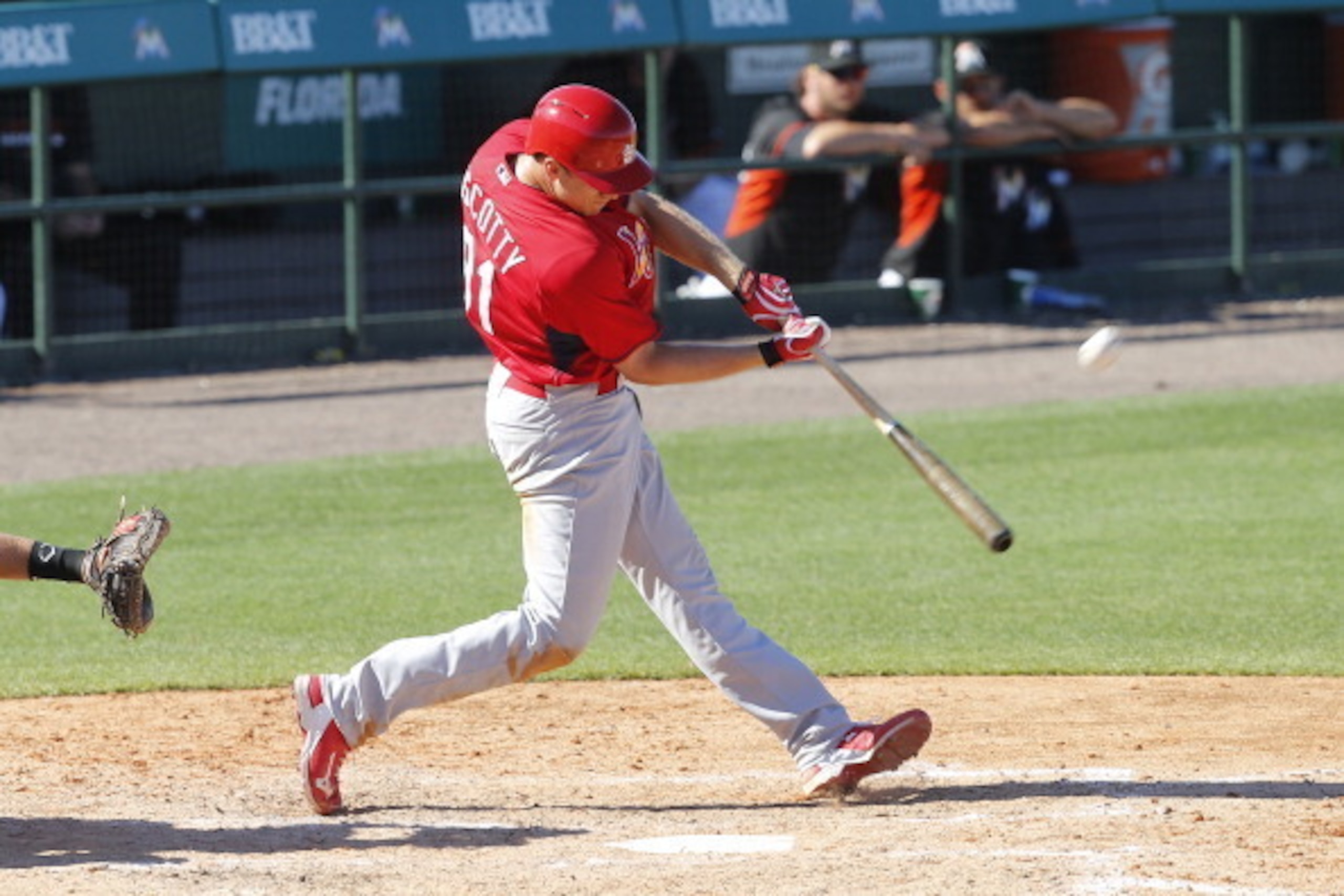
Stephen Piscotty is a smart hitter with a mature approach and consistently uses the whole field, stinging the ball from line to line. The 24-year-old right-handed batter demonstrates patience at the plate as he works deep counts and waits for specific pitches, and he rarely cheats himself by chasing secondary pitches out of the zone.
Piscotty has plenty of gap power, with at least 40 extra-base hits in each of the last two seasons, but he lacks the power frequency commonly associated with a first-division corner outfielder.
Piscotty's speed may be only average, but it plays up on both sides of the ball thanks to his impressive athleticism. A third baseman in college, Piscotty’s athleticism and high baseball IQ helped him make a smooth transition to the outfield in 2013. He profiles as an above-average defender in right field with plus arm strength, and he gets consistently good reads off the bat and takes direct routes.
Arizona Diamondbacks: 3B/2B Brandon Drury
26 of 30
Brandon Drury is a physically strong right-handed hitter with a short but powerful swing, as he laces sharp line drives to the deepest parts of parks—the kind of line drives that make it easy to envision many of his doubles clearing more fences as he develops. Overall, the 22-year-old projects as a .270 hitter with the potential for 15-20 homers and 30-plus doubles.
On the other side of the ball, Drury’s improved defense—a product of endless on-field reps—and mobility at third base last season boosted his projection to that of at least a league-average defender, while his arm strength plays as solid-average across the infield. Meanwhile, the Diamondbacks had him begin working out at second base in the fall to potentially increase his versatility.
Colorado Rockies: SS/2B Trevor Story
27 of 30
A 6’1”, 175-pound shortstop, Trevor Story’s plus bat speed and powerful right-handed swing generate loud contact to all fields, fueling his projection for at least solid-average power at maturity.
The 22-year-old’s swing looked better last season after the organization tried to turn him into Troy Tulowitzki in 2013—which led to him striking out 183 times in 554 plate appearances (33 percent strikeout rate) in the California League. However, his timing and bat path are both still geared toward hitting fastballs, which in turn causes him to get out in front of and lunge at quality secondary pitches.
Defensively, Story’s solid-average speed results in similar range in all directions at shortstop, but he needs to do a better job controlling his body while making plays on the move. He shouldn’t have any problems sticking at the position provided the bat comes around, although his athleticism, tools and baseball IQ could allow him to move to either second or third base if need be.
Los Angeles Dodgers: OF Joc Pederson
28 of 30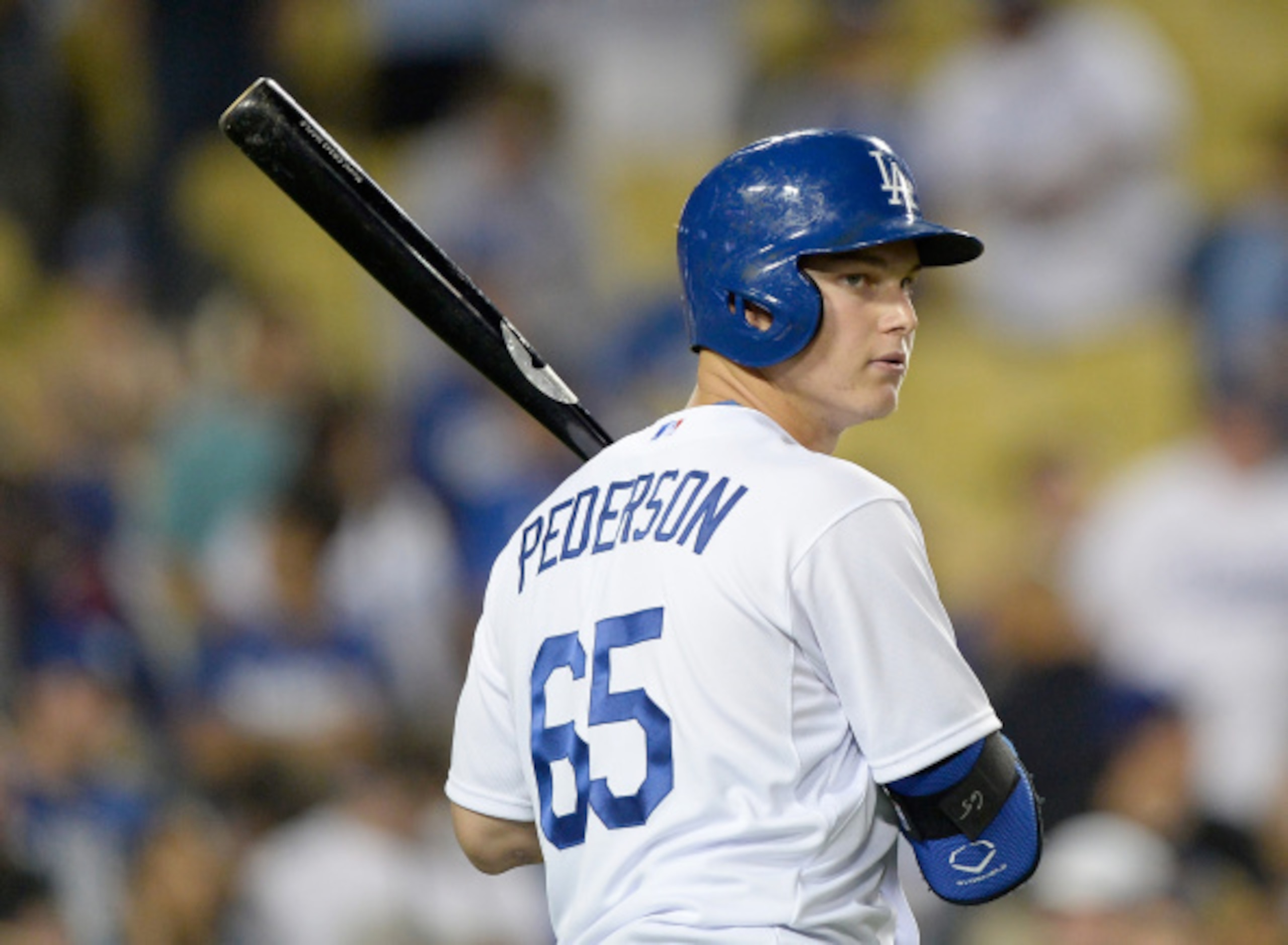
At 6'1", 185 pounds, Joc Pederson is an impressive athlete with excellent secondary skills and a real chance for five average-or-better tools. The 22-year-old projects to be a slightly above-average hitter at the highest level, with a mature approach and line-drive-oriented swing, and he already demonstrates a feel for working counts and getting on base. At the same time, Pederson's increasing strikeout rate over the last three seasons raises some concern about whether he'll make consistent contact in the major leagues.
The left-handed hitter has shown at least above-average power at every minor league stop, as he set a career high in 2014 with 33 bombs. His power will play even if the average doesn’t translate, as he's patient enough to wait out specific pitches each trip to the plate.
Meanwhile, with at least 26 stolen bases in each of the last four seasons, it can be argued that Pederson's consistency on the base paths rivals his power frequency. Beyond that, his knack for getting on base and using his speed to put pressure on opposing defenses should always make him a consistent source of runs.
Pederson is a natural in center field, with plus range, excellent instincts and above-average arm strength. And after the Dodgers' offseason trade of Matt Kemp to San Diego, the position should be his to claim in spring training.
San Diego Padres: OF Hunter Renfroe
29 of 30
Hunter Renfroe stands out for his enormous raw power as well as his ability to punish mistakes, but he also likes to swing—like, a lot—and will probably always strike out at a high rate. The 23-year-old’s approach needs refinement, but he has a true knack for getting the barrel to the ball, and he’s missing a lot of pitches at this point in his career that he won’t in the future.
Renfroe has an ideal profile for right field at the highest level, with solid-average speed, good range and plus arm strength. Unfortunately, the San Diego Padres' acquisitions of Wil Myers, Matt Kemp and Justin Upton during the offseason seemingly hurt Renfroe's chances of reaching the major leagues anytime soon.
San Francisco Giants: SS/2B Christian Arroyo
30 of 30A 6’1”, 180-pound right-handed hitter, Christian Arroyo has good strength for his size, especially in his hands and wrists, to go along with a natural feel for hitting. He employs an up-the-middle approach in order to stay inside the ball, but at times he falls back on a tendency to pull open with his front and roll over hittable pitches to the left side of the infield. His over-the-fence power is limited to his pull side and projects as below average at maturity, but he should always provide a consistent source of doubles.
Arroyo was a decorated shortstop as an amateur and has continued to undergo development at the position since turning pro. The teenager lacks standout athleticism and is technically just an average runner, but he still moves with fluidity on the infield and possesses both the quickness and instincts to handle the position at higher levels.
If he’s forced off shortstop, he'll likely move across the infield to the keystone, where he played mostly last season while at Low-A Augusta.

.jpg?w=2560 "Grading WWE Raw 🔠")

.jpg?w=2560 "Bijan's INSANE 1st Half 🤩")
.jpg?w=2560 "Viral Rams Coach Vid 🖕")
.jpg?w=2560 "Injury-stricken Seahawks signing veteran RB")


.jpg?w=2560 "2 NFL Officials Suspended")
