

Milwaukee Bucks Trade for Michael Carter-Williams Aimed at Future, Not Present
Remember when the Milwaukee Bucks were satisfied with playing for now and didn't mind limping into the playoffs as the No. 8 seed in the Eastern Conference? Well, if the trade for Michael Carter-Williams means anything, those days appear to be a thing of the past.
Prior to the trade deadline, in a three-team deal with the Philadelphia 76ers and Phoenix Suns, the Bucks dealt Brandon Knight and Kendall Marshall and received Carter-Williams, Miles Plumlee and Tyler Ennis in return.
Yes, that Brandon Knight: the one who was on the cusp of being an All-Star and led the Bucks in scoring.
TOP NEWS

LeBron's Special Helicopter Deal

MJ Makes Record-Setting Donation 🙌
Shams: KAT, Hart Could Be Trade Names
While some may still not approve of the move, over the long haul it's one that could potentially pay off in a big way.
MCW's Potential
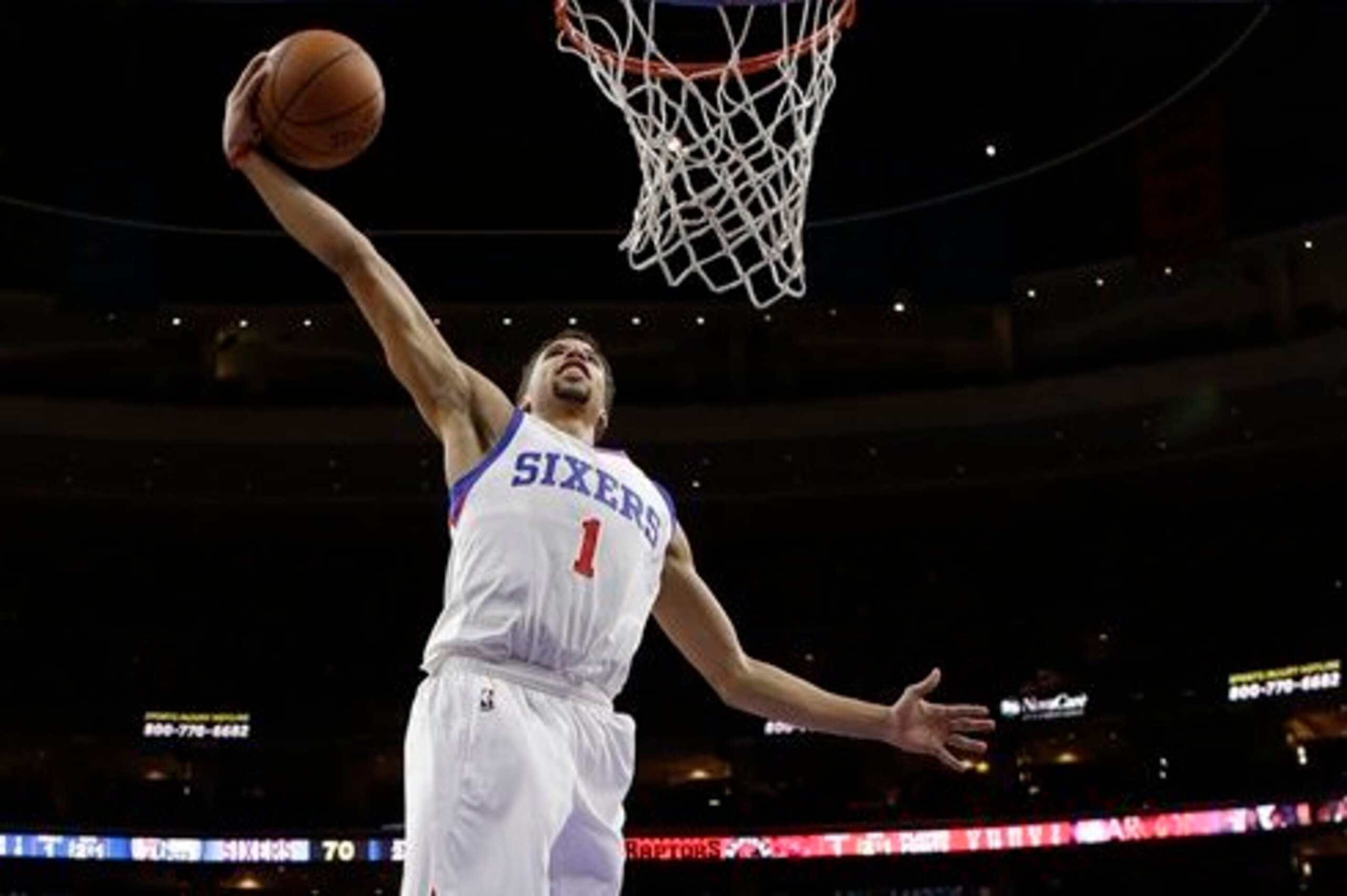
Perhaps this is an unpopular opinion, but Carter-Williams possesses far more potential than Knight does.
Carter-Williams isn't a good shooter and turns the ball over far too often for a point guard, but his upside manages to overshadow any holes that are currently in his game. So why did the Sixers give up on him so easily?
Philly clearly loves its draft picks, and getting another one was probably too enticing. Regardless, would any team not named the Sixers have gotten rid of the reigning Rookie of the Year? Probably not.
One man's trash is another man's treasure, right? The Bucks are certainly hoping so.
At 6'6", Carter-Williams adds even more length to an already-good, already-long defense. Assuming a starting lineup in 2015-16 of Carter-Williams, Khris Middleton, Jabari Parker, Giannis Antetokounmpo and John Henson, the Bucks will feature a ridiculously long squad that is sure to intimidate on the defensive end.
His length is certainly a major benefit, but Carter-Williams can provide much more than that if he reaches his potential.
The point guard had an NBA debut to remember in October 2013, when he dropped 22 points, 12 assists, seven rebounds and nine steals while shooting 60 percent from the floor against the Miami Heat, showing his multifaceted abilities.
He's not as efficient of a scorer as Knight is overall—and probably shouldn't be a team's go-to scoring option—but he can get to the rim and finish there. On the season, Carter-Williams is converting 62.7 percent of his shots at the rim, per Basketball-Reference.com, which is nothing to scoff at.
As expected, given his height, Carter-Williams rebounds at a very good rate for a point guard, hauling in 6.2 boards per game. Getting that kind of production on the glass from a 1-guard is always an added bonus.
But Carter-Williams really brings the Bucks some much-needed help with his capability as a passer.
For the Sixers this season, he had an assist percentage of 41.7. Meanwhile, Knight, who showed signs of improving as a facilitator, was at just 28.5 percent according to Basketball Reference. Carter-Williams' value as a distributor is already clear and, while he does turn it over too much, should only continue to get better under the tutelage of head coach Jason Kidd.
In the end, and even though both players are 23 years old, Carter-Williams has less wear and tear on his body and shows more upside for the future. In that regard, the trade made a lot of sense.
Additionally, it was a smart move from a money standpoint.
The Monetary Aspect

This summer, Knight will be a restricted free agent, and some teams will likely be inclined to pay him a hefty penny. After all, the borderline All-Star is having a career year at the best possible moment.
According to Nate Duncan of Basketball Insiders, Knight will likely see offers ranging from $13 million to $15.9 million per season. That's a lot of money for a point guard with whom the Bucks seemingly weren't 100 percent confident moving forward.
As you'll recall, over the summer ESPN.com's Marc Stein reported that the team was pursuing additional options at point guard:
Going after other players at the same position didn't exactly scream confidence in Knight.
So, then, last week's deal shouldn't have come out of left field for those who follow the organization year round, especially when one weighs the benefits from a cost perspective.
Carter-Williams remains on his rookie contract and is owed just under $6 million over the next two seasons, per HoopsHype, which is a major bargain for a former Rookie of the Year.
Saving money now will allow the Bucks to be competitive in the free-agent market and lock up young studs like Parker and Antetokounmpo.
Trading someone who had been playing as well as Knight may not appear to be a good move. It may seem like penny-pinching. Ultimately, though, it's a move that sets the Bucks up better for the future from both an on-court and a financial aspect.
Most importantly, however, Kidd probably feels like he can mold Carter-Williams because he likely sees much of himself in the youngster.
Teacher and Pupil: Similarities Abound

Knight may have a leg up on Carter-Williams today, but Carter-Williams' potential makes him the better option in the future.
It has been talked about since the trade became finalized, but Sports Illustrated's Ben Leibowitz illustrated it best in a recent article.
Inefficient offensive production has plagued Carter-Williams throughout his first season-and-a-half in the league, and he's not as potent of a scorer as Knight. But Carter-Williams is more capable of making plays and getting teammates involved than Knight ever was.
Leibowitz points out assist comparisons between Carter-Williams and his coach, and while that's treading dangerous water—given that Kidd is a surefire Hall of Famer—it does paint a picture of what MCW could become from a passing standpoint:
"Carter-Williams has been lagging behind his new coach in terms of dishing out dimes, but he’s still a capable passer. With teammates like Giannis Antetokounmpo and (eventually) Jabari Parker in Milwaukee, the Syracuse product will have talented young wing players at his side for the foreseeable future.
Of course, even a superior supporting cast may not morph the young point guard into the same elite passer Kidd was throughout a Hall-of-Fame-caliber career. Where similarities between the new player/coach tandem continue to take shape, however, is on the boards.
"
Frustration over a trade involving the team's most productive player is more than understandable. However, one must also understand that, despite the great first half, Milwaukee is a franchise focused on longevity.
Despite what you may think about the deal, Kidd and the front office clearly have a definitive vision of what they want this team to look like moving forward. And that should be comforting in its own right.
Besides, should we really question the decision-making of someone who has taken a 15-win team from a season ago and cultivated one of the most impressive turnarounds in league history?
Hint: We shouldn't—at least not until there's reason to.

.jpg?w=2560 "Grading WWE Raw 🔠")

.jpg?w=2560 "Viral Rams Coach Vid 🖕")
.jpg?w=2560 "Bijan's INSANE 1st Half 🤩")
.jpg?w=2560 "Injury-stricken Seahawks signing veteran RB")

.jpg?w=2560 "2 NFL Officials Suspended")