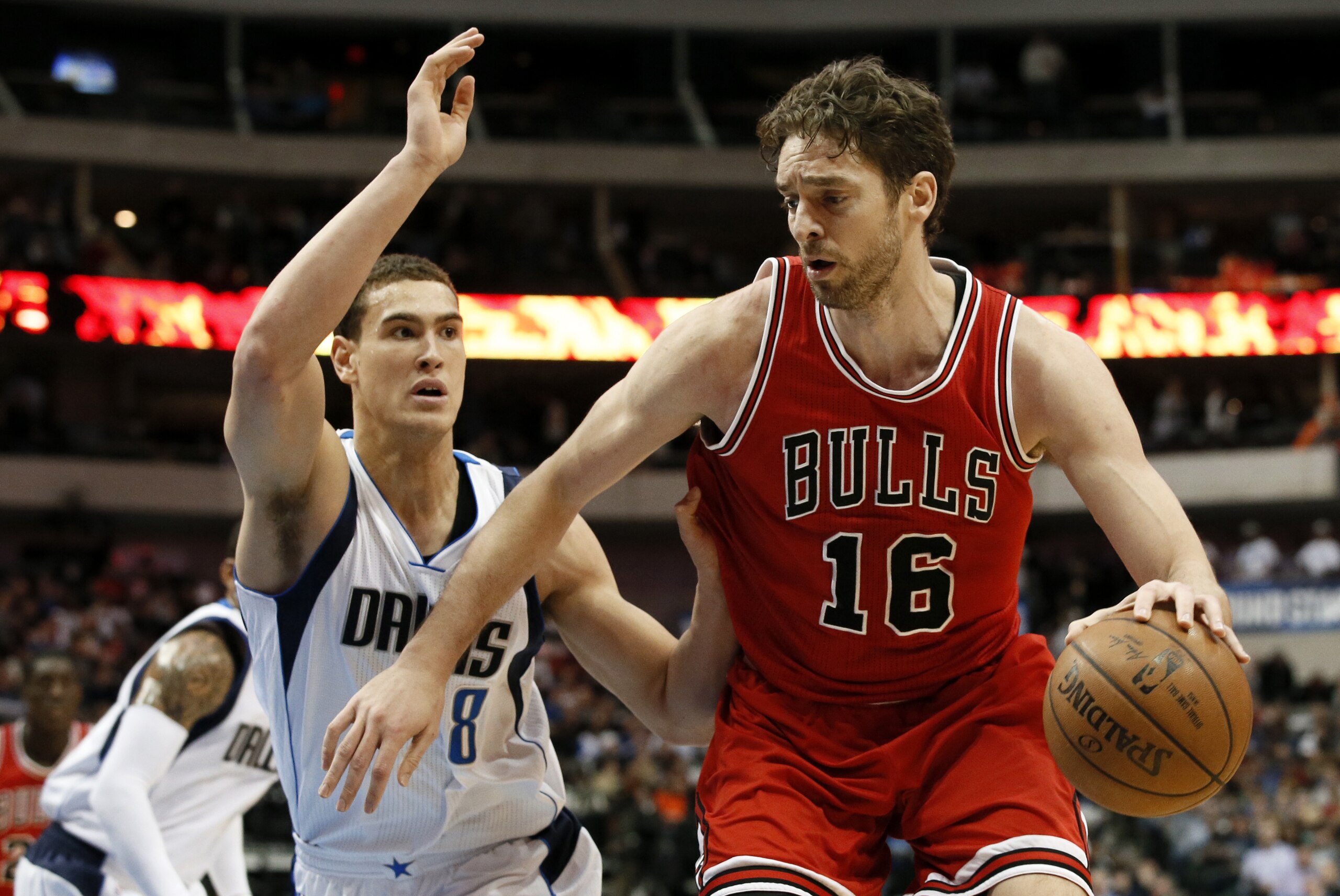

Breaking Down Pau Gasol's Surprising Resurgence for Chicago Bulls
Pau Gasol's resurgence as a top-flight center this year for the Chicago Bulls has been a function of decreased pressure.
As the second-best player for the Los Angeles Lakers from the second half of the 2007-2008 season through 2013-2014, he was expected to produce at an All-Star level. As a sidekick to Kobe Bryant, he was a target of constant criticism by both Bryant and the media for any and all failures.
In the first two years of the Bryant-Gasol marriage, back-to-back championships shaped their perception as yin and yang. While Bryant was the hard-nosed, ultra-competitive will of the club, Gasol added the European, skill-driven flair. The contrasting personalities seemed to complement each other.
TOP NEWS

LeBron's Special Helicopter Deal

MJ Makes Record-Setting Donation 🙌
Shams: KAT, Hart Could Be Trade Names
When things started to go badly—particularly during Phil Jackson's final season as head coach when the Dallas Mavericks swept the Lakers out of the playoffs—the narrative swiftly changed. Soft-spoken became soft. Pass-first became passive aggressive.
Those first two years set an impossibly high standard. Throw in multiple Bryant injuries, a star-studded roster that didn't work out and two years of poor talent, and Gasol was destined to appear a failure.
In Chicago, Gasol isn't the first option. He isn't the second, third or fourth option. He's simply an option. The Bulls, for all their offensive struggles over the past several years, have always shared the ball. Now that they have multiple capable offensive players, that mentality is serving their squad well.
Dylan Hughes of FanSided summed up this identity shift well when he wrote, "To show just how much of an impact Gasol has made on the Bulls this season, he has turned their identify from 'winning off defense' to 'balanced juggernaut.'"
The luxury of this style is that the head coach doesn't have to call sets designed to get specific players a touch. In Los Angeles, Gasol played within the giant shadow of the ball-dominating Bryant. He had to squeeze his touches in when he could, creating a pressure to make things happen constantly.
Gasol doesn't have to do that now. The ball swings from side to side. Guards feed him the ball in the post when he has deep positioning. He can make the right play instead of his own play, and the results have been 18.4 points per game on 49.3 percent shooting.
Gasol, for his part, has admitted, via ESPNChicago.com's Doug Padilla, that he almost feels reborn with his fresh start in Chicago: "I'm definitely energized, definitely rejuvenated, all in, and I have been since I got here, since I made my decision to come here. I've been energized, and mentally and physically engaged, so that's a huge deal for me."
The built-in trust among Bulls teammates is evident in how Gasol operates out of the post. On this play against the Sacramento Kings, Mike Dunleavy dumps the ball into Gasol before cutting through to the weak-side corner. Derrick Rose, who initiated the play with a pass to Dunleavy, fills in as relief from the back side.
Because this is Gasol's first post touch of the game, he sizes up how Sacramento's defense will play him before making a move. As soon as he puts the ball on the ground, Rose's man, Ramon Sessions, digs hard—a defensive action in which a guard from the perimeter stabs at the ball in the post without fully double-teaming the ball.
Gasol takes an extra dribble to suck Sessions farther down toward the baseline before kicking the ball back out to Rose:
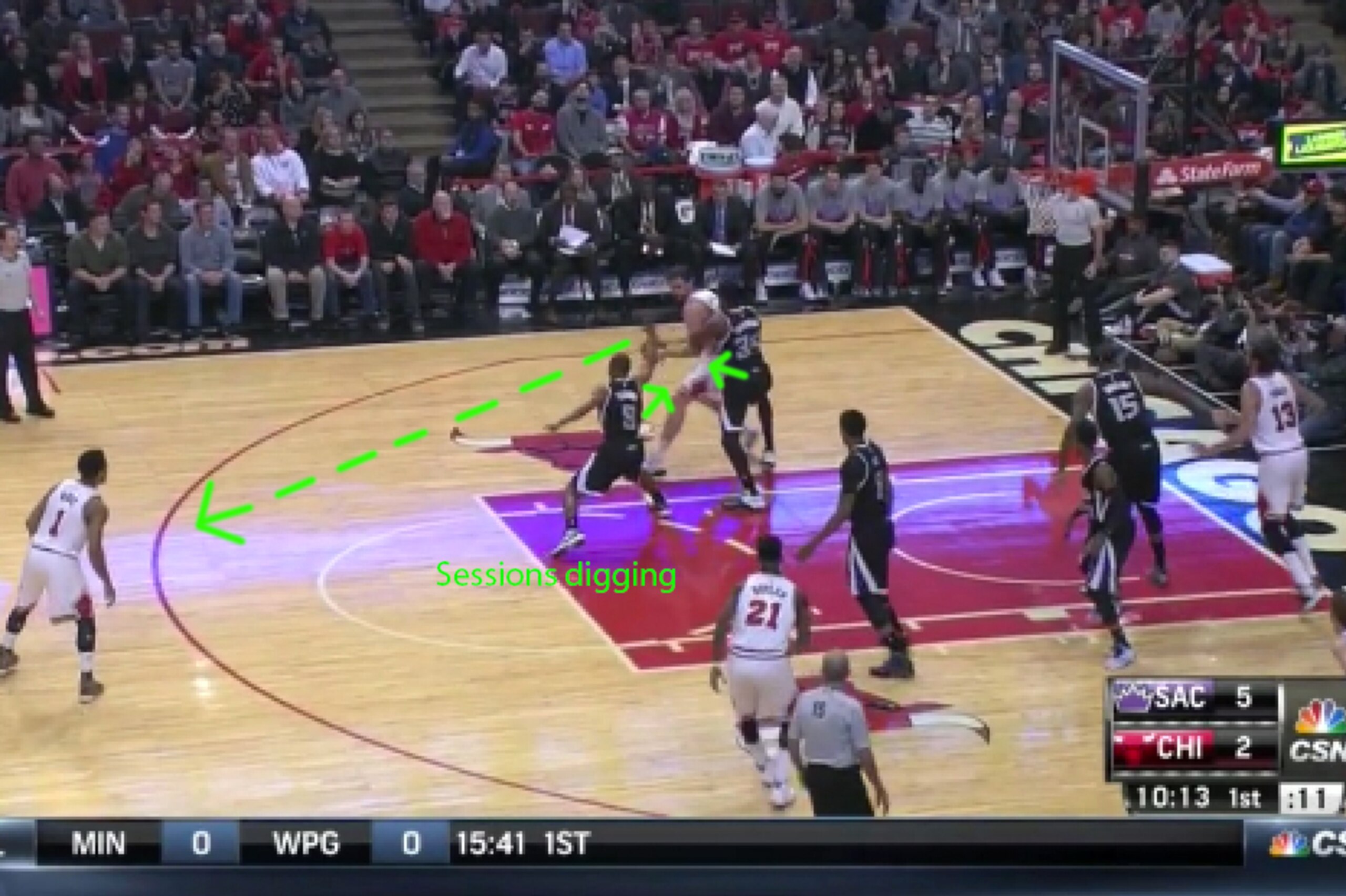
Gasol then re-posts and asks for the ball again. More often than not, the guard will hold the ball and ask for a ball screen. Rose, however, does not hesitate to throw the ball back into the post. Even though Gasol makes the catch 15 feet away from the rim, his understanding of Sacramento's dig-but-not-double strategy informs his decision-making.
That's why he immediately faces up and rips baseline—away from the potential dig—to create a scoring opportunity:
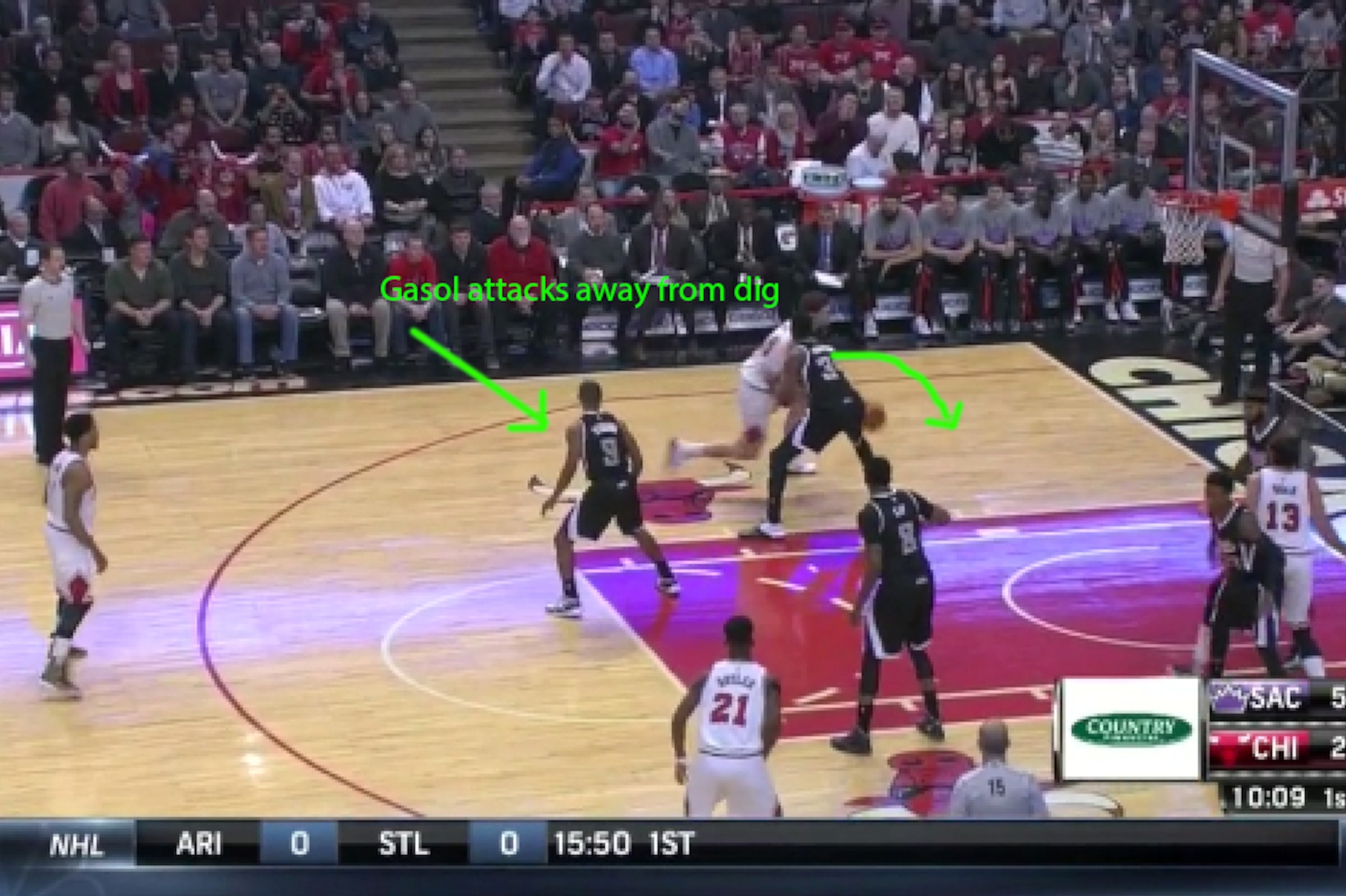
It's not often that a guard will give a big multiple touches on the block on one possession. While guards will sometimes wade through multiple pick-and-rolls until a lane opens, bigs face immediate pressure to create.
This is also a part of why post-ups have become less efficient in recent years. More guard play has led to fewer post touches. Fewer post touches have led to more rushed looks from the block and therefore lower field-goal percentages. Lower field-goal percentages have led to less emphasis on the post. The cycle is difficult to break.
But the Bulls trust Gasol in the post and continually throw the ball down to him. Here he repays that confidence with a bucket:
For the Bulls offense overall, having that threat on the block opens up the three-point line. Instead of having to create three-point looks by penetrating off of pick-and-rolls and finding shooters, Gasol can bend the defense from a different area of the floor.
This makes it extremely difficult to key on one area of the Chicago offense. Defenses have to constantly adjust between perimeter and interior coverages.
The most impressive part about Gasol's resurgence has been his rebounding. His 12.1 rebounds per game are a career high, and his 9.2 defensive rebounds are a significant increase (1.6 more defensive boards per game) from last year.
It's not that he has become an outstanding rebounder out of nowhere. At 34 years old, Gasol's athleticism and strength—two of the most basic components of rebounding—aren't increasing with age. They're probably heading the other way, in fact.
So what's changed?
Gasol's teammates.
Taj Gibson and Joakim Noah are not only two of the best rebounders in the league, but they're two of the best defensive bigs. Whereas during his Lakers days Gasol was often tasked with guarding the opponent's best big, he's rarely handed that task in Chicago.
Noah and Gibson, due to their defensive prowess, take care of that responsibility for the Bulls. The assignments drag them all over the floor to guard post-ups, pick-and-pops or pick-and-rolls. Gasol, meanwhile, handles the less mobile big and hangs around the rim.
That proximity to the rim grants him more rebounding chances. According to NBA.com's player tracking data, Gasol averages 18.3 rebounding chances per game—when Gasol is 3.5 feet or less from an available rebound. Noah, meanwhile, only averages 15.5. This accounts for the dip in Noah's rebounding numbers from last year (11.3) to today (9.7).
So it isn't a matter of Gasol being a better rebounder than Noah. The difference between the percentage of rebounds they grab (66.5 percent for Gasol, 62.2 for Noah) is negligible. It's a matter of scheme and opportunity.
Here's an example of that dynamic from a recent game against the New Orleans Pelicans. Tyreke Evans and Anthony Davis run a pick-and-pop, with Evans dragging the screen out to the corner before kicking it back to Davis.
Davis immediately attacks one-on-one, and Noah does an excellent job contesting the shot without fouling:

With Noah sprawled out mid-air, Gasol readies a box out on Omer Asik to grab the ensuing miss:
Noah has no shot at this rebound because of his defensive responsibilities. It's Gasol's job to clean up the glass, which he does.
It's rare that a free-agent signing fits so seamlessly onto a roster, but Gasol is one of those players. Part of that is the way he plays, constantly passing the ball and giving himself up for others. Part of that is the culture within the Bulls, one of defense first and playing for teammates.
All of that has culminated in the Bulls improving as a team. And Gasol has been a beneficiary of that team success, recapturing a portion of what used to make him an elite NBA center.
For the Bulls to win the title, they'll need his A-plus game to persist for the entire season.

.jpg?w=2560 "Grading WWE Raw 🔠")

.jpg?w=2560 "Viral Rams Coach Vid 🖕")
.jpg?w=2560 "Bijan's INSANE 1st Half 🤩")

.jpg?w=2560 "Injury-stricken Seahawks signing veteran RB")
.jpg?w=2560 "2 NFL Officials Suspended")