

Arsenal vs. Middlesbrough: Tactical Review of FA Cup Game
Arsenal avoided an FA Cup upset at the hands of Middlesbrough on Sunday, downing the Championship side 2-0 thanks to a clinical performance from Olivier Giroud. First-half strikes from the Frenchman ensured passage to the quarter-finals after a dominant display.
Formations and XIs

.jpg?w=2560)

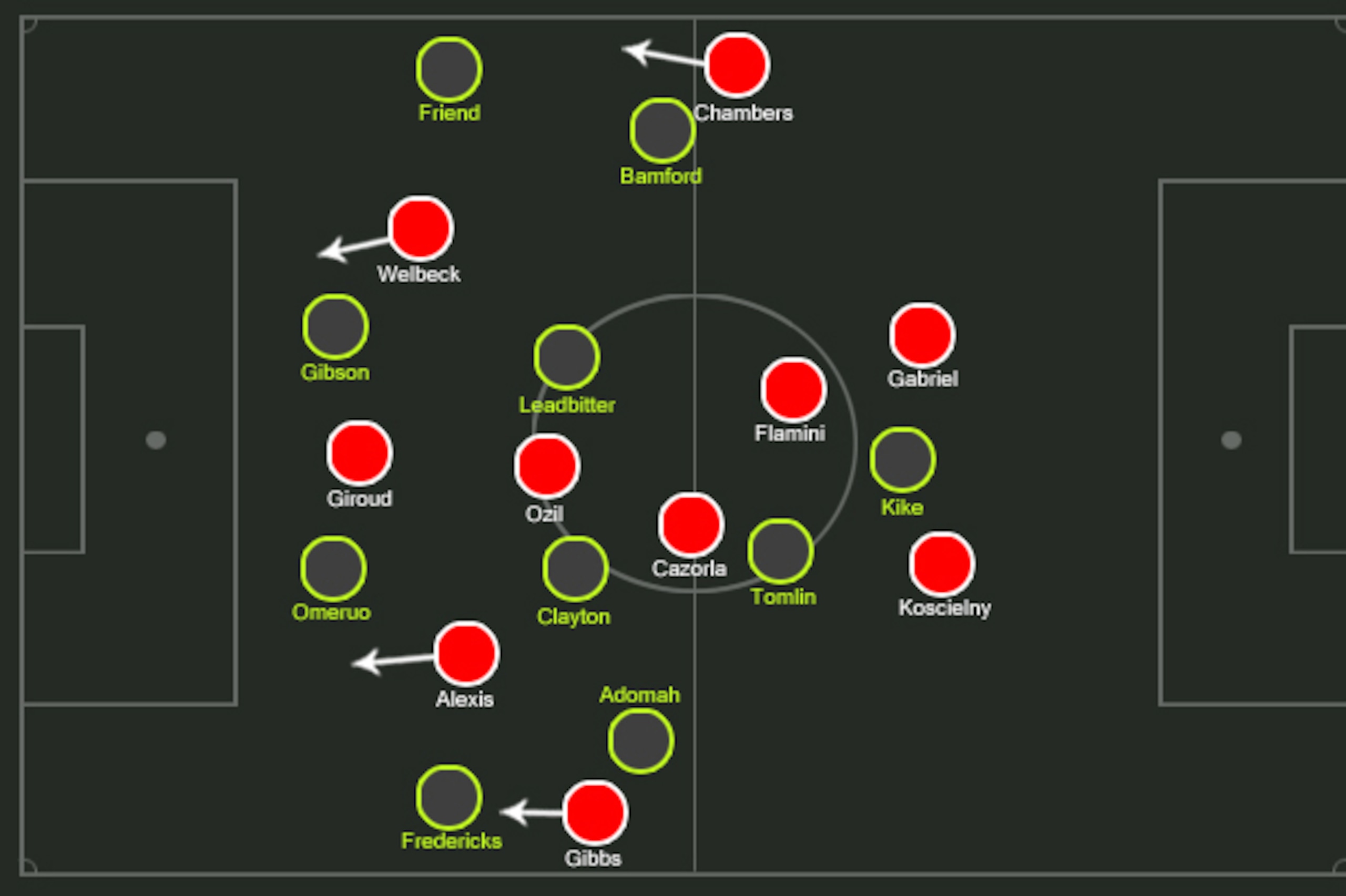
Arsenal began in a 4-2-3-1-esque formation with Mesut Ozil central, Alexis Sanchez left and Danny Welbeck on the right. Gabriel Paulista came in for a debut at centre-back, while Calum Chambers and Mathieu Flamini were given a run at right-back and holding midfield respectively.
Middlesbrough began in a thoroughly defensive setup verging on 4-4-1-1, with Lee Tomlin off the front man, Kike, and eight back to defend with regularity—wingers goal-side of the full-backs where possible.
1. Boro Under the Cosh
Across the opening 20 minutes or so, Arsenal racked up an astonishing 78 percent of possession, per WhoScored.com. Those are Pep Guardiola tiki-taka numbers, and they indicate just how tough Boro found it early on.
The visitors defended deep and found it difficult to string more than three passes together coming out of a low block. Arsenal pressed their full-backs high, played with three penetrating the box and monopolised possession via some studious work in the central zones by Santi Cazorla.
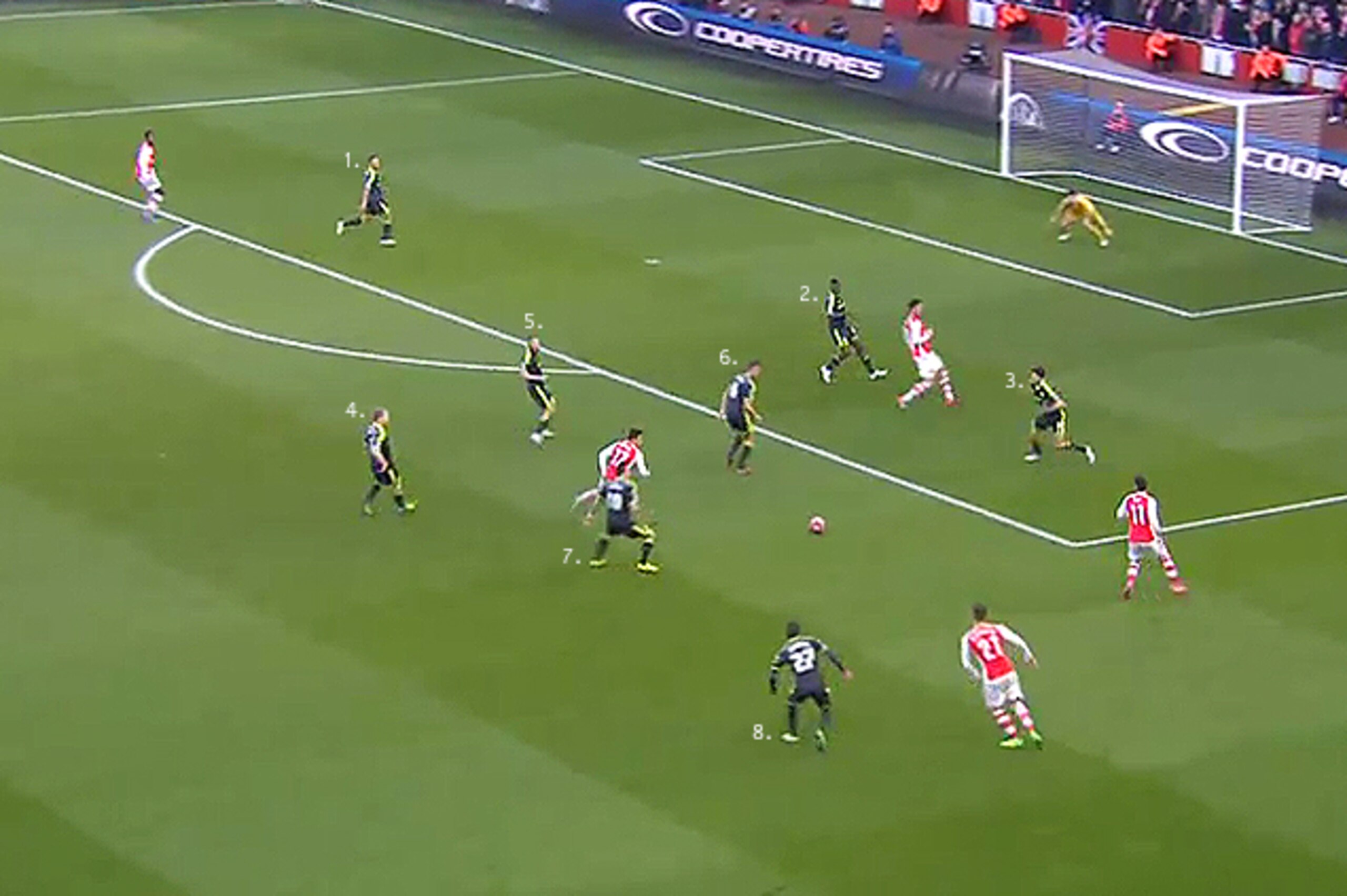
The Gunners nominally played from a 4-2-3-1 with Ozil in the No. 10 role, but Cazorla crept right up to help spread the ball from side to side and left defensive duties solely to Flamini. Adam Clayton and Grant Leadbitter chased shadows all half.
Middlesbrough had no out ball to lean on with both Kike and Lee Tomlin thoroughly isolated up top, and they weren't able to bring the ball down under pressure when the defence cleared. They were trapped and being forced into heroic defensive action—be it a Kenneth Omeruo block or yet another save from Tomas Mejias—every few minutes.
2. Boro Improvement
After Giroud notched his second goal things did improve for Aitor Karanka's side, and at half-time his encouragement message was short and simple, meaning Boro were back out ready for kick-off very early.
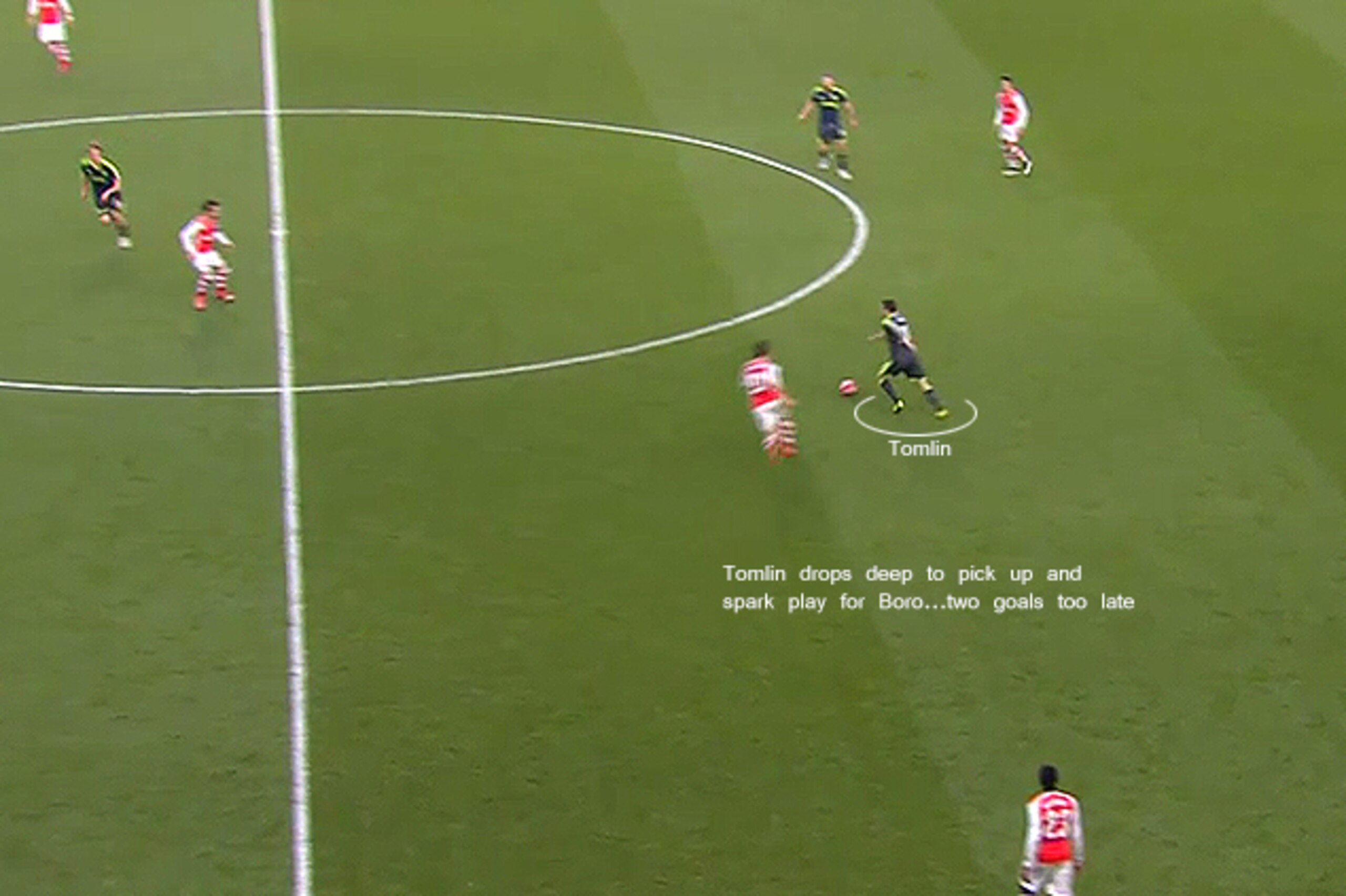
Much in the same way Paul Lambert's Aston Villa had been playing throughout January, it took falling behind to get them in gear. Tomlin dropped a little deeper to link play, Albert Adomah got his foot on the ball far more regularly and Boro were able to start surging forward on the counter.
Getting Adomah the ball in space turned out to be a strong tactic, with the winger surging forward and worrying his marker whichever wing he was on. Adam Reach replaced the disappointing Patrick Bamford in the second period, and the first thing he did was stretch the pitch with a great run that forced Gabriel Paulista into a professional foul.
Tomlin began dropping deeper to find the ball and push forward too, often doing a bit of a Wayne Rooney and ending up near his centre-backs out of sheer frustration.
The damage was already done, but the outfit from Teesside perked up in the second half noticeably.
3. Multifaceted Arsenal Attack
The issue for Boro was that, once their attacking game kicked into gear and they began countering, Arsenal were able to open the pitch up for themselves and counter back.
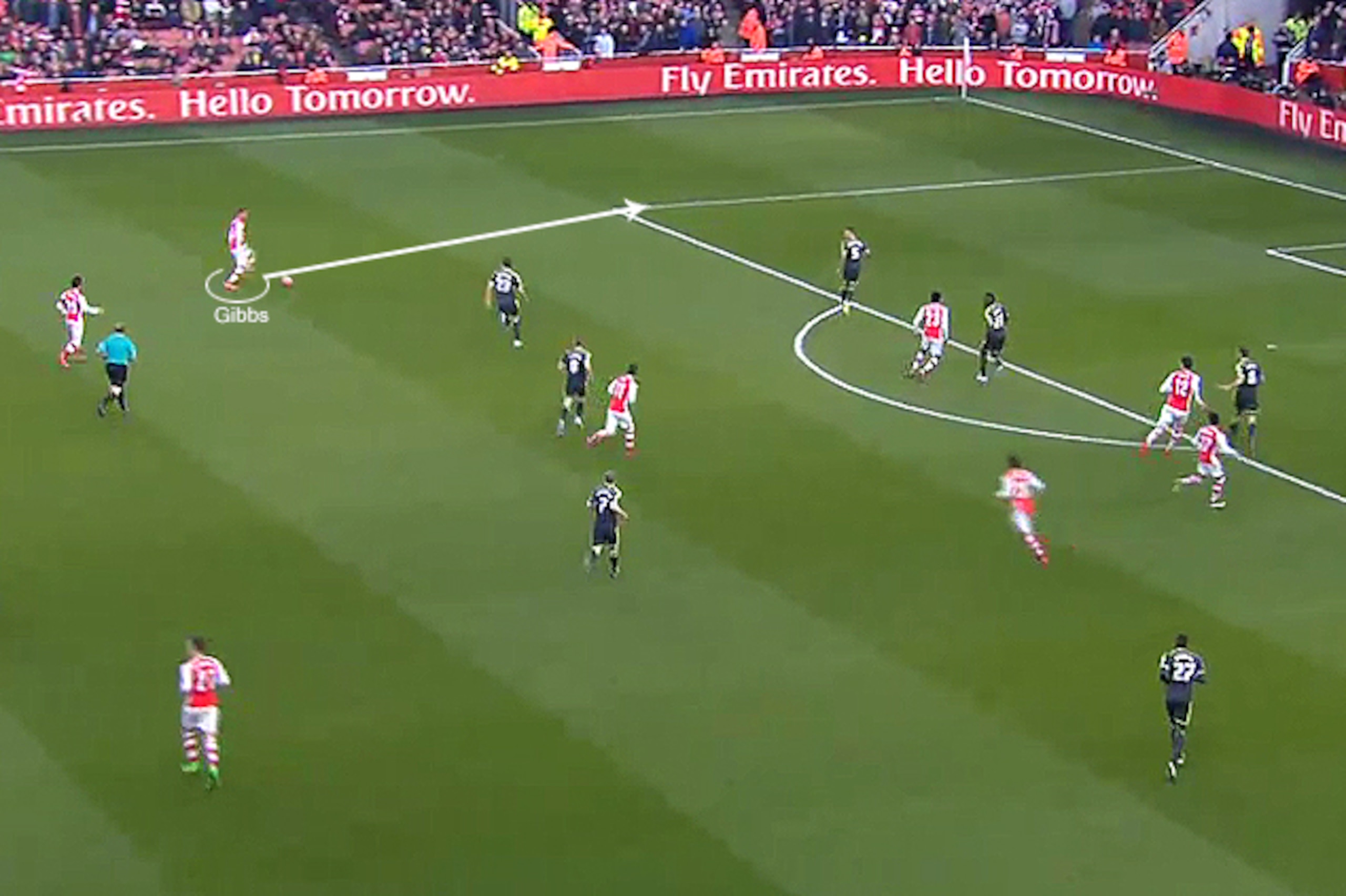
Against both Manchester City and Villa and for patches against Tottenham Hotspur, the Gunners showed some sparks of excellent transition-based football, and said sparks came to the fore here. Having Cazorla and Ozil to launch passes into the path of runners Danny Welbeck, Theo Walcott and Alexis Sanchez in space is a deadly cocktail if used correctly.
Add that to the dominant showing on the ball—largely utilising Ozil's pinpoint passing and Welbeck's delicious movement inside the box to create space for colleagues—and you've got a multifaceted attack. Giroud scored from a corner to confirm this side's threat from every and any situation.
4. Mesut Ozil
The case of Ozil in 2015 has been a very interesting one; he's been sublime in four games and poor in one (though he did score in the poor one), and it's notable that said game came against what many would consider to be a "good" side in Tottenham Hotspur.
Against Leicester midweek he was sublime, while he also ran riot against Brighton, Villa and Boro here. The common factor? Barring parts of the Villa game, these were 90-minute spells in which Arsenal were very much on top and dominant on the ball. The one game they surrendered possession, vs. Spurs, Ozil was ineffectual and quiet.

He is undoubtedly the key to breaking down low blocks and tight defensive structures, but his form over the past month hasn't revealed anything new. He will torture a poor side like Villa, but how will Arsene Wenger use him in bigger games? Can he be of use to the Gunners against the likes of Bayern Munich or Chelsea?
Finding a place for Ozil in a game where Arsenal do not dominate remains difficult, but what a joy he is to watch when putting "lesser" sides to the sword.
.jpg?w=2560 "Falcons Saints Football")
.jpg?w=2560 "Rams Eagles Football")
.jpg?w=2560 "Injury-stricken Seahawks signing veteran RB")


.jpg?w=2560 "2 NFL Officials Suspended")
