

Zach Randolph Proving He's Never Been More Valuable to Surging Memphis Grizzlies
Memphis Grizzlies power forward Zach Randolph is 33 years old and rumbling through his 14th season as one of the NBA’s roughest hurricanes. His consistency and overall effectiveness defy Father Time, but what makes Randolph so remarkable is how valuable he still is to one of the league’s top-tier title contenders.
Randolph’s overall averages have dipped a bit since February 1, but he ripped a hole through the league in January, averaging 19.3 points, 13.8 rebounds and 2.8 assists per game. His true shooting percentage was .602 in those 12 games—just a little short of what Anthony Davis has posted this season.
TOP NEWS

LeBron's Special Helicopter Deal

MJ Makes Record-Setting Donation 🙌
Shams: KAT, Hart Could Be Trade Names
Z-Bo leads the league with 20.1 rebound chances per game (the number of times a player is within 3.5 feet of a potential rebound). He trails only Andre Drummond, DeAndre Jordan and DeMarcus Cousins with 5.2 contested rebounds per game (the number of rebounds gathered when a player is within 3.5 feet).
As a team, the Grizzlies are most effective at grabbing their own missed shot when Randolph plays. They’re less capable when he’s not on the floor.
But Randolph’s real value becomes evident after peeking at Memphis’ on/off numbers. According to NBA.com, the Grizzlies score 108 points per 100 possessions with Randolph on the floor and 100.3 points when he sits. Their opponent never has it easier than when he’s not playing, outscoring Memphis by 1.6 points per 100 possessions, which is highest (or lowest?) on the team.
When any one other player isn’t on the court—including Marc Gasol and Mike Conley—the Grizzlies are able to withstand pressure and, at the very least, break even. But they really struggle when Randolph isn’t mixing it up down low. He's irreplaceable.
Part of the reason is Memphis’ bench and how quietly thin its frontcourt still is. Gasol has Kosta Koufos come in and give quality minutes when he rests. Randolph doesn’t have an equivalent. Jon Leuer’s outside shot is broken and he’s a problem defensively. The front office has tried to find another option—JaMychal Green’s 10-day contract proves so—but no obvious answer has emerged.
This isn’t the only reason, though. Randolph is that good, that controlled and that dominant. He’s the best overall third option (despite posting about the same usage percentage as Conley and Gasol) in basketball right now, and here’s why.
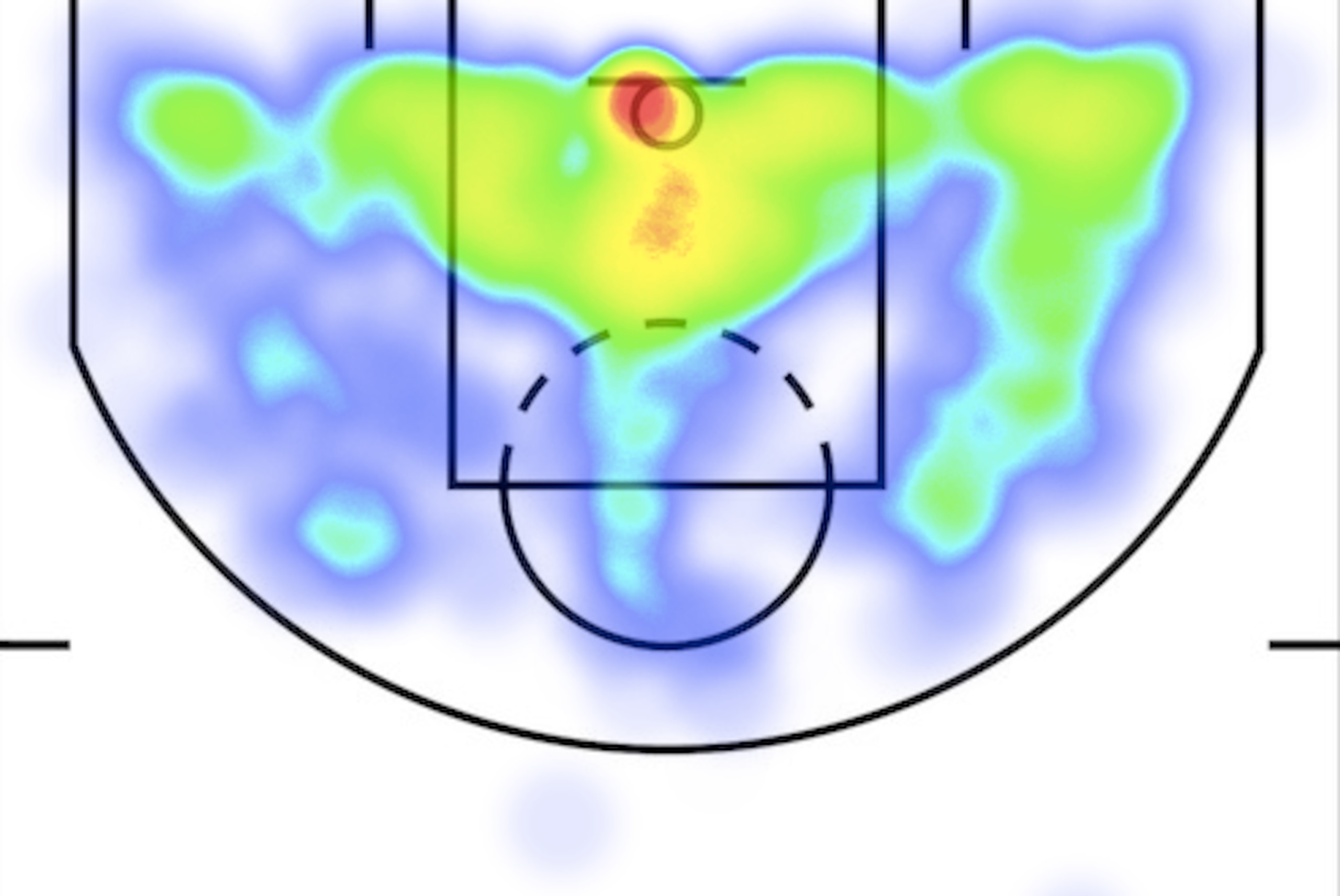
This is Randolph’s heat map from 11 years ago—his third season and first averaging 20 points and 10 rebounds per game. It’s all over the place. He’s inside a bit, but also floating outside the paint, ineffectually trying to impact the game from areas where he maybe wasn’t the best.
Here’s his heat map from this season.
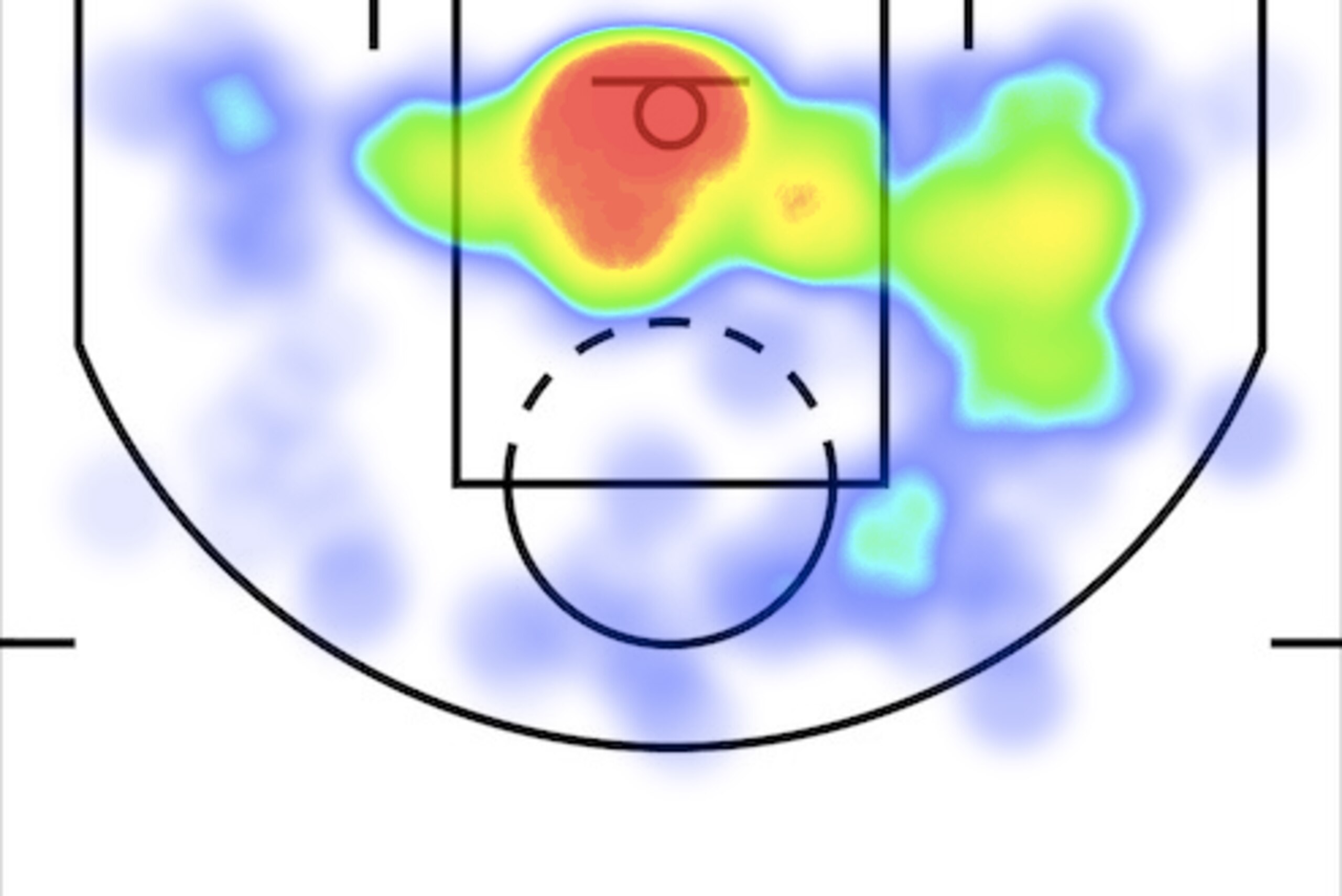
Notice the difference? Randolph knows where’s he’s comfortable (the right side of the floor) and where he can do the most damage (at the rim).
All this speaks to the evolution of one of this generation’s most underrated power forwards. He may have posted more impressive per-game numbers in the past, but it’s hard to argue with how comfortable he looks on the floor right now.
A lot has to do with the teammates Memphis’ front office has surrounded him with over the past few seasons. Gasol is the world’s most complete center. Conley is a point guard who doesn’t let Randolph get hungry. Tony Allen is a gritty defender who routinely keeps the other team’s best scorer out of the paint. Just about everyone else has done a fantastic job fitting in around the margins.
Here’s Grizzly Bear Blues analyzing why Randolph is such an integral piece this season.
"What gives the Grizzlies’ offense its jet fuel is having a player of Z-Bo’s caliber willing and able to do the dirty work: crashing the boards, bodying up the best defenders, mopping up missed bunnies from his Bizarro Brother Tony Allen, and doing so with an energy and focus that haven’t been seen for years. The Grizzlies’ offensive rating has perennially been near the bottom of the league, but this year, it’s jumped all the way up to the top 10, and it’s not because the team is getting up and down the floor (their pace is still the third slowest in the league).
"
It’s meaningful that Randolph doesn’t have to worry about anybody but himself. According to NBA.com, he’s averaging 0.89 points per possession on post-ups, which places him right around the 60th percentile. Really impressive considering only six players have used more post-up possessions than he. And Randolph’s post-ups do damage in more ways than one. Whenever defenses come down to double, he easily swings the ball to an open teammate. It’s extremely difficult to stop.
On defense, Randolph is no rim protector, but he’s also not a liability. He tries extremely hard and even occasionally shows off his quickness on the perimeter. The days of singling him out as a weak link are over, especially when he’s locked in.

Here, Randolph shows on a pick-and-roll between Jeff Teague and Mike Scott. He forces the pass to Scott, then scrambles back in time to prevent an open three. Nick Calathes eventually ruins the play by getting out of position and fouling Teague, but Randolph prevented the Atlanta Hawks from doing what they wanted to do.
The Grizzlies are an assembly of puzzle pieces that fit with ease. But right now, Randolph is the one whose absence most makes everything deteriorate. Memphis can’t win it all without him operating like the brute force of nature he’s been.
All statistics are courtesy of Basketball-Reference.com and NBA.com, unless otherwise noted.
Michael Pina is an NBA writer who’s been published at Bleacher Report, Sports on Earth, Fox Sports, Rolling Stone, Grantland and a few other special places. Follow him on Twitter @MichaelVPina.

.jpg?w=2560 "Grading WWE Raw 🔠")

.jpg?w=2560 "Viral Rams Coach Vid 🖕")

.jpg?w=2560 "Injury-stricken Seahawks signing veteran RB")