

Why the Washington Redskins Must Target a Nose Tackle in 2015 Free Agency
If he comes out of free agency having acquired a mainstay nose tackle, new Washington Redskins general manager Scot McCloughan can consider his first market in charge a major success.
This team's commitment to the 3-4 defense will never work until the front is anchored by a powerful and disruptive presence in the middle. It's the one inviolate law of a three-man front base defense.
Yet Washington has labored through five seasons playing the 3-4 without its most important piece. Is it any wonder the defense has been bad for that long?

.jpg?w=2560 "Rams Eagles Football")
.jpg?w=2560 "Falcons Saints Football")
McCloughan, head coach Jay Gruden and new defensive coordinator Joe Barry have to snap that cycle this offseason. The first step is deciding exactly what type of chunky disruptor they want over center.
There are two distinct types. The choice will depend on the true nature of the defense under Barry's stewardship.

Gruden has already offered a key description of what 2015's scheme will look like, per Mike Jones of The Washington Post:
"You know, we’re gonna mess with the way we do the 3-4, you know? There will be some different ideas that we have, as far as it’s not a two-gap 3-4. It might be more of a shoot-the-gap-type of 3-4, a get-up-the-field-and-rush-them 3-4, you know what I mean?
"
Gruden is hinting at a one-gap style of 3-4. Real Redskins blogger Rich Tandler stated how linemen will be expected to get into the backfield more often in the new system.
That's a key distinction because it means the Redskins may shun the mass of humanity prototype most 3-4 teams have come to rely on at nose tackle during the modern era. You know the type, the 330- to 350-pound house-sized behemoth who plugs up the guard-center-guard box and constantly absorbs double-teams.
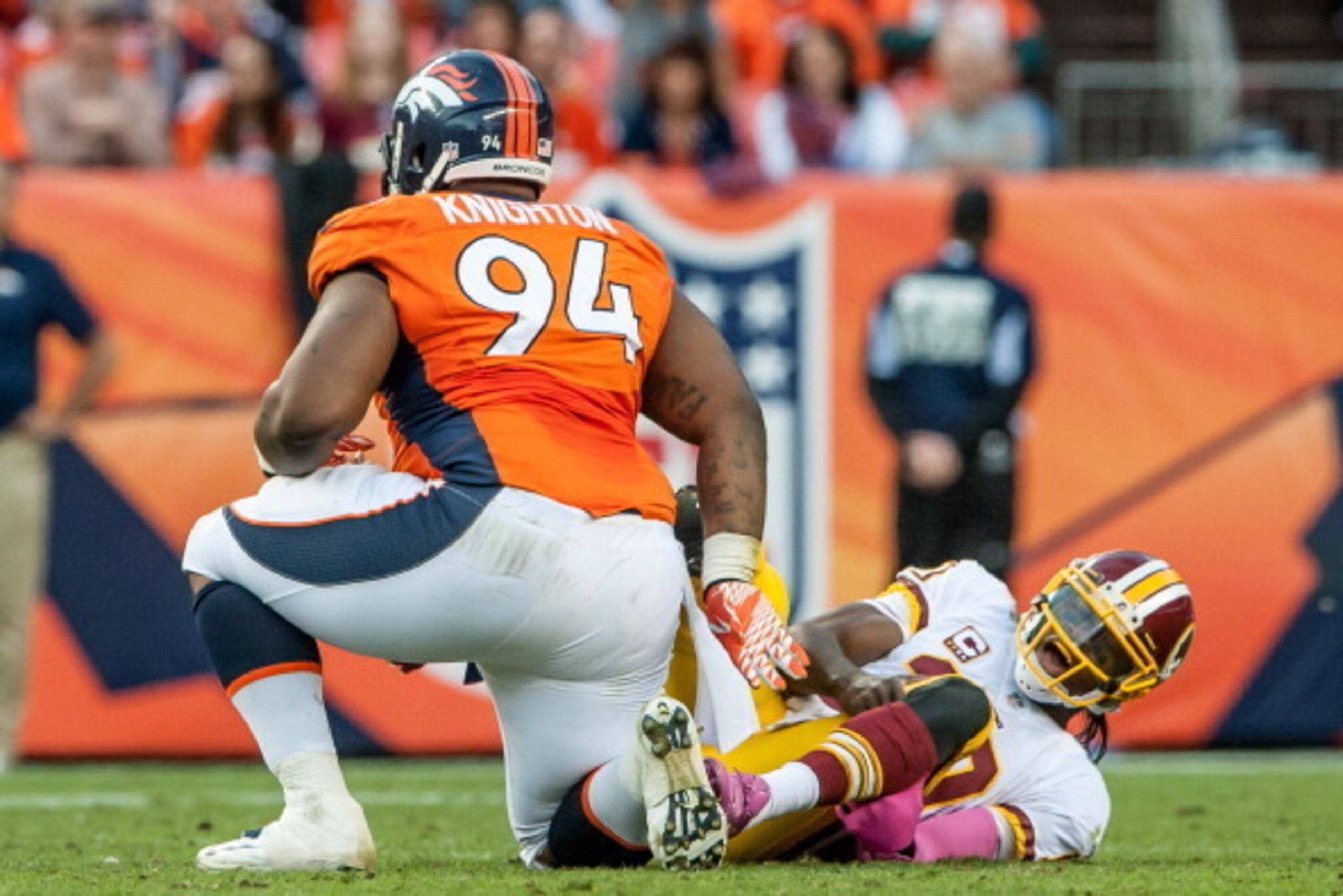
The standard-bearers for this kind of man-mountain in the middle are the likes of Kansas City Chiefs star Dontari Poe and pending free agent Terrance Knighton. But the "shoot-the-gap-type," as Gruden puts it, is cut from a different mold.
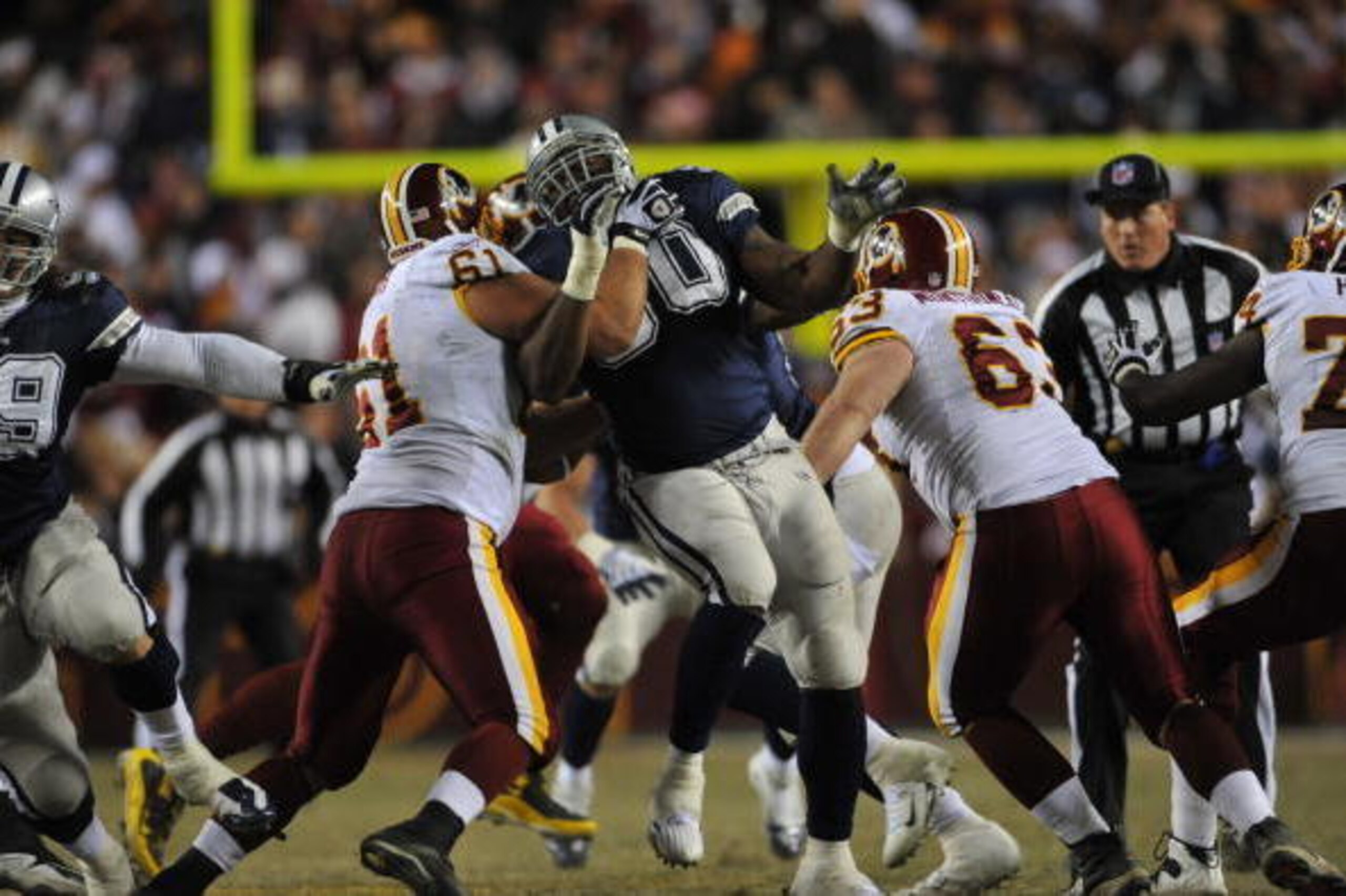
Naturally, the demands of splitting gaps rather than controlling them, requires a lighter player who's quicker out of his stance and more athletically dynamic. Think Jay, now Jeremiah, Ratliff at his peak for the Dallas Cowboys from 2007-11.
Ratliff was undersized at 6'4" and generously listed as 303 pounds. But he was nimble enough to slide across the line. He could split the A-gap between a center and guard with a quick move, but he was still strong enough to overpower a blocker one-on-one.
Ratliff is, or certainly was, the benchmark for the 1-gap nose tackle. That type of player gives a 3-4 base more pressure potential, as well as a nose tackle who can stay on the field in passing situations.
Most sumo-style 2-gap nose men leave the field whenever the defense switches to nickel. Their bulk simply isn't suited to a more obvious pressure front.
Given how often defenses play and stay in nickel in the modern, largely pass-happy NFL, the traditional nose tackle position has become a little undervalued as a result.
But there are still two major advantages to having a beefy plugger in the middle. The first is providing a defense with a focal point for stopping the run.
When a talented behemoth puts his hand down in front of center, an offense pretty much knows there'll be no running room inside. That automatically lets pursuit defenders at the second level know they can attack the outside lanes and spill a runner laterally.
In this simple sense, a massive and truly dominant nose tackle lets a defense dictate what an offense can do, at least in one half of its attack. Washington ranked a solid 12th against the run in 2014, but there is still plenty of room for improvement.
That ranking came with a revolving cast of characters auditioning over center. But none of Barry Cofield Jr., Chris Baker, Kedric Golston, Frank Kearse or Jarvis Jenkins made the grade.
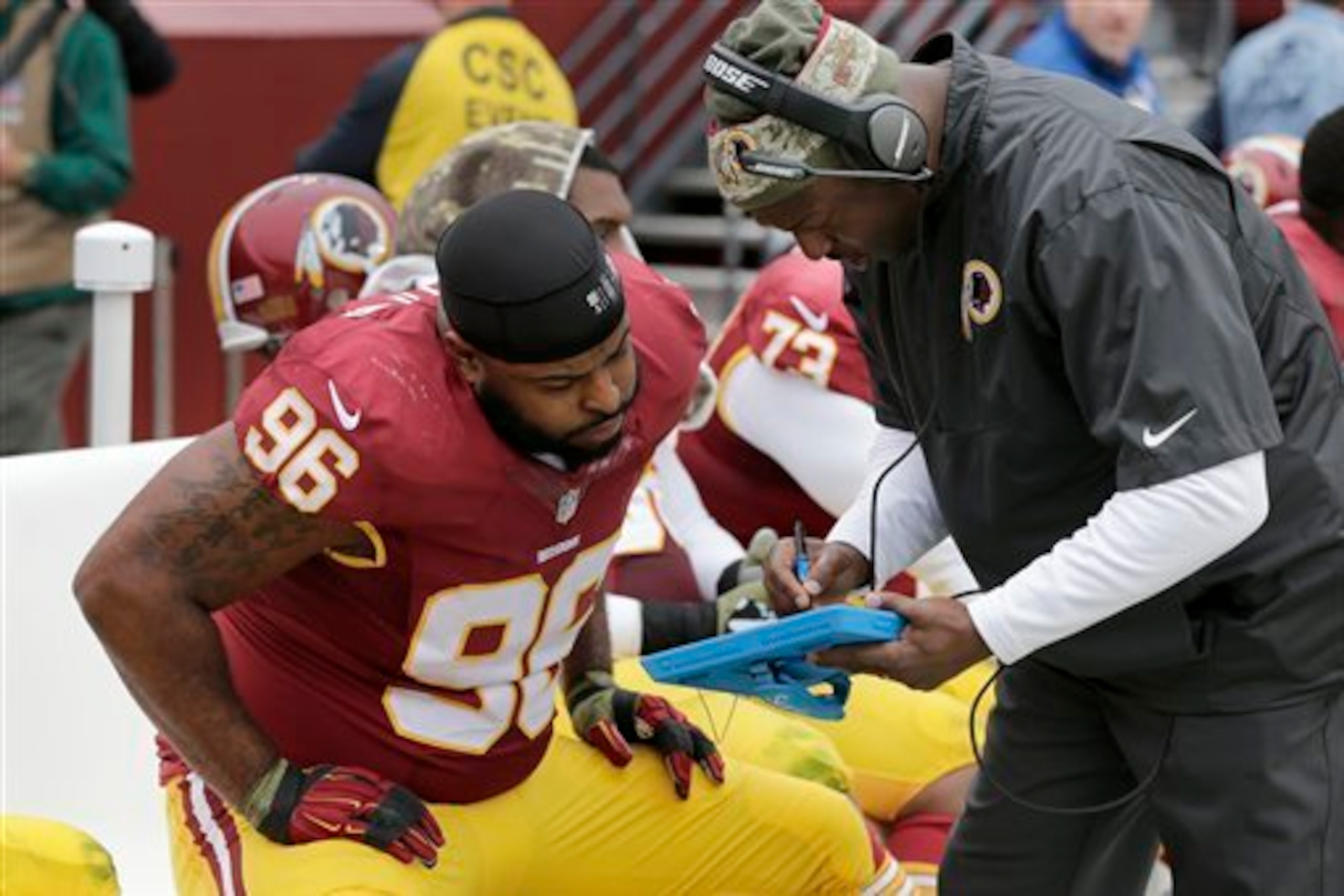
Jenkins and the oft-injured Chris Neild are the closest to true 2-gap players on the roster. Yet both are headed for free agency, per Spotrac.com. Washington's defensive front needs a nose tackle who will seal up the middle and keep inside linebackers Keenan Robinson and Perry Riley Jr. clean.
It's been too easy for opponents to get blockers on Washington's middle 'backers in recent seasons. That explains why that seemingly decent rush defense still allowed 4.1 yards per carry and nine runs of 20 yards or more, per statistics via NFL.com.
In fact, two slightly shorter runs from Week 11's dire 27-7 home loss to the Tampa Bay Buccaneers brilliantly illustrated the problem at the heart of Washington's defense.
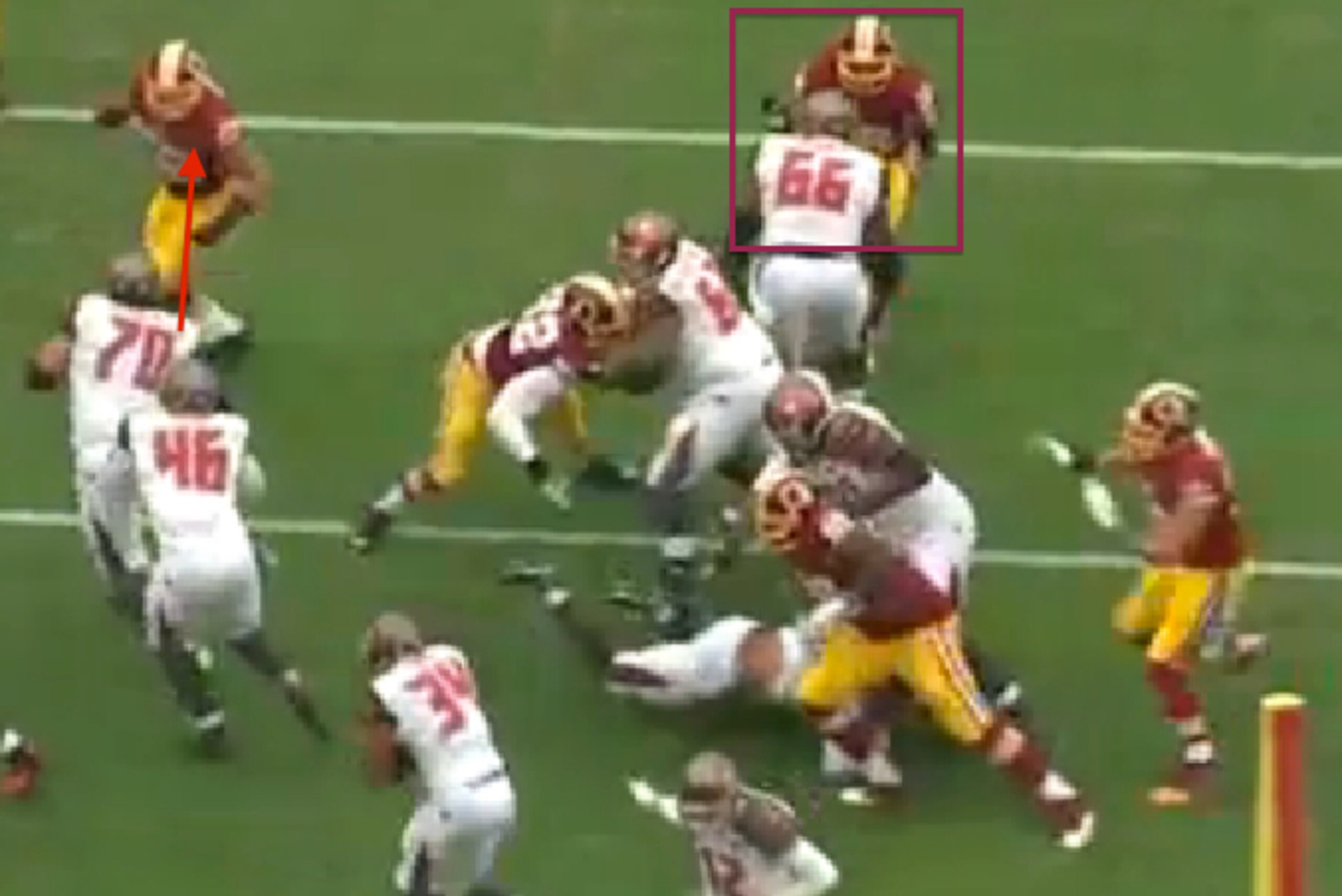
The first was an 11-yard dart up the middle from Bucs rookie Charles Sims. The play began with Baker on the nose, aligned over Tampa Bay pivot man Evan Dietrich-Smith (62):

Baker was too easily overpowered. He conceded ground and was soon moved off his spot:
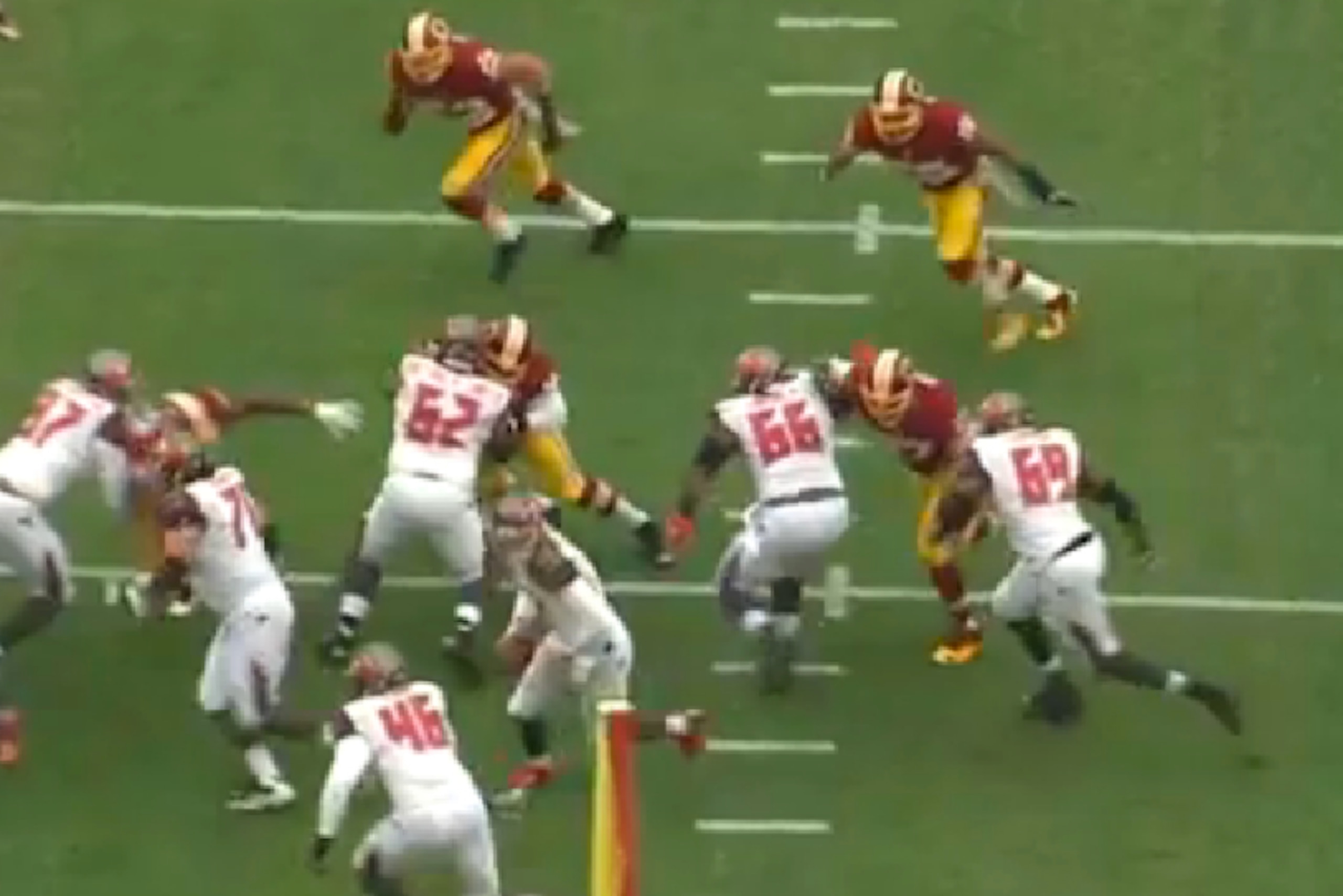
With Baker turned and unable to beat single blocking, the Bucs soon absorbed Robinson and Riley. Veteran guard Logan Mankins (70) zeroed in on the former, while Patrick Omameh plastered onto the latter:
This left Sims with an easy cutback lane, one leading to acres of open field because Baker had literally been dragged out of the middle:
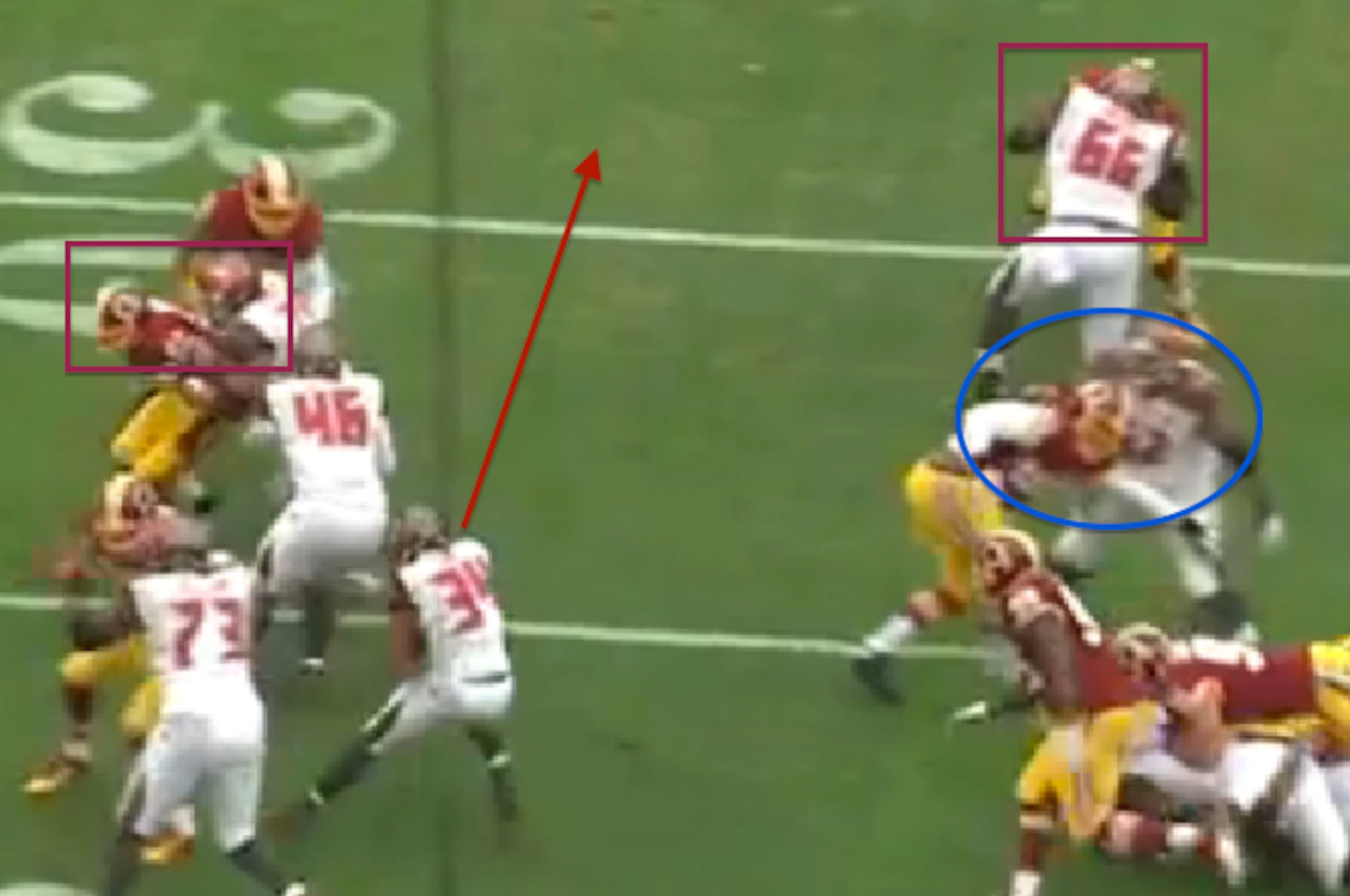
The play wasn't an isolated incident. The next snap saw Sims scamper off the right tackle for 12 yards thanks to Baker failing to shed a reach block and instead letting Dietrich-Smith move onto Riley and eliminate the backside pursuit.
No 3-4 defense can adequately function this way. The system needs a nose guard who will clog running lanes and keep blockers off the inside linebackers.
That's why Washington must find a legitimate option for a position that's been manned by many but mastered by none.
That solution should come from the veteran market. Right now, maybe more than a few readers are screaming the name Danny Shelton at whatever device they're viewing this article from.
While the hulking member of the 2015 NFL draft class is indeed an intriguing prospect, there are a couple of reasons to be skeptical. For one thing, should McCloughan really use a top-five pick on a nose tackle? It's possible he can trade, but even so, it's a reasonable assumption Shelton won't last beyond the top 20.
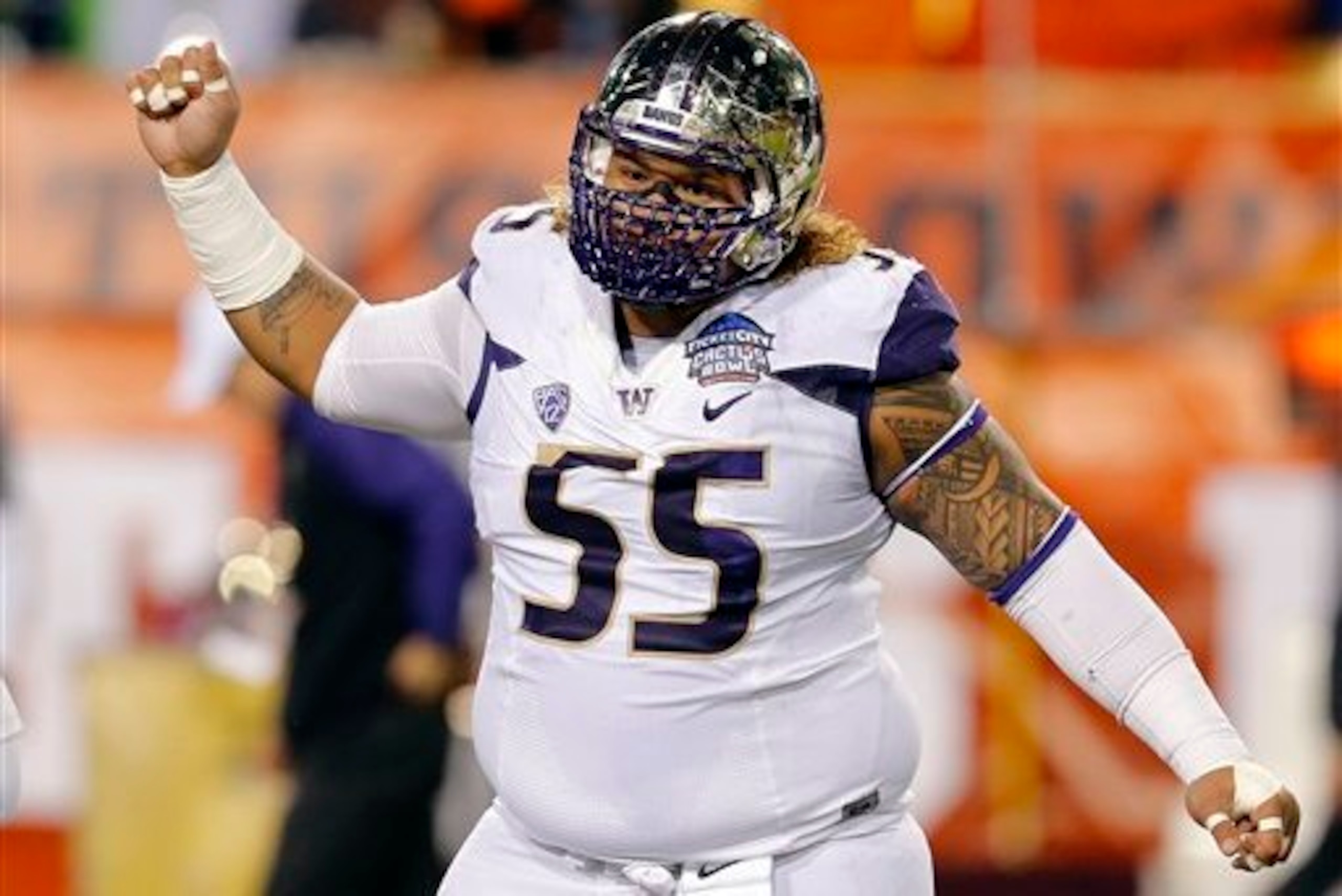
That's a high cost for a player who may leave the field on third downs. It's especially high when this team has so many other pressing needs, such as the secondary and offensive line.
The equal risk comes from how quickly Shelton would adapt to the pro level. Poe was a top-15 pick when the Chiefs took him in 2012. But it took one indifferent rookie season and a change in defensive philosophy for him to finally make the grade.
Coming off a 4-12 season, Gruden and Barry don't have that sort of time. The only way Washington's defense hits the ground running once the new season begins is with an experienced and capable nose tackle.
Fortunately, there are plenty to choose from in this year's market. Here's a handy top 10:
| Name | Team | Age |
| Terrance Knighton | Denver Broncos | 28 |
| Dan Williams | Arizona Cardinals | 27 |
| Ahtyba Rubin | Cleveland Browns | 28 |
| Jerrell Powe | Houston Texans | 27 |
| Terrence Cody | Baltimore Ravens | 26 |
| Colin Cole | Carolina Panthers | 34 |
| Ryan Pickett | Houston Texans | 36 |
| Alan Branch | New England Patriots | 30 |
| Pat Sims | Oakland Raiders | 29 |
| B.J. Raji | Green Bay Packers | 28 |
The list has been kept to those who can fit a 3-4 scheme. So there's no place for Detroit Lions monster Nick Fairley, who's spent his career in the 4-3 and would likely require breaking the bank to sign anyway.
That's not to say there aren't issues with some of the names on this list. Colin Cole is a fine 2-gap nose tackle. But his 34 years would likely deter McCloughan, who has an aversion to adding veterans over 30, per ESPN Redskins reporter John Keim.
Meanwhile, Knighton would command a fee similar to Fairley. He would also be difficult to acquire since he has an obvious preference for working with new Oakland Raiders head coach Jack Del Rio.
B/R analysts Chris Sims and Jonathan Vilma recently discussed the possibility of Knighton donning Silver and Black in 2015:
Meanwhile, Raji, while supremely talented, missed all of 2014 with a torn bicep. That's a bad injury at a position as reliant on arm strength as much as any other quality.
Ultimately though, there are enough to choose from in this year's market. The likes of Dan Williams, Ahtyba Rubin and Alan Branch ought to be particularly intriguing.
The only way the 3-4 will ever work in Washington is if the defense boasts a dominant, all-round nose tackle. One who will not only tie up blockers and create space for others, but will also be disruptive enough to collapse the line of scrimmage and cause negative plays of his own.
Five seasons waiting is long enough. This is the year Washington must find the right player for the most important position on its defense.
All statistics via NFL.com.
.jpg?w=2560 "Texans-Mixon Released Football")
.jpg?w=2560 "Commanders Eagles Football")

.jpg?w=2560 "Grading WWE Raw 🔠")


