

2 Simple Keys to Securing Arsenal's Top-4 Premier League Future
Arsenal’s disheartening 2-1 defeat at White Hart Lane has left some Gunners fans fearing Tottenham may crash their top-four party like Kanye at the Grammys. With Chelsea seemingly cruising toward Premier League victory, there are only three Champions League places remaining for the likes of Arsenal, Tottenham, Manchester City, Manchester United, Liverpool and Southampton.
While Arsenal (currently in sixth) will undoubtedly hope their closest competitors slip up and tumble down the table of their own accord, the Gunners’ chief concern will be getting the most out of their own players to ensure they don’t slip into the dreaded Europa League spot (shudder) or out of Europe entirely.
TOP NEWS

Final Men's Ballon d'Or Rankings 📊
Highlights and Viral Moments 🍿

J-Dub Suffers Gruesome Injury
Here are the keys to ensuring Arsene Wenger retains his Champions League qualification streak—and Gunners retain bragging rights over their north London rivals.
Players Must Commit to Their Positions
Versatility is an invaluable asset both in life (see: duct tape) and soccer (see: Stewart Downing’s renaissance at West Ham). Wenger is a firm believer in signing versatile players—like Alexis Sanchez—whom he can move around the field in any number of positions.
This philosophy allows the manager to fill in gaps when his first-choice players are injured and adapt to changes in opponents’ tactics more readily to turn games around on the fly. It also makes business sense, in that a club (hypothetically) gets more for its money by signing a player who can occupy many positions instead of just one.
In short, it would be reasonable to say versatility is a good thing for any side…except Arsenal.
Let me explain. The January transfer window has long since closed, so the time to plan for future contingencies is over until the summer window opens. Now is the time for Wenger to take stock of what he has and maximize the performance of his players in every position. This means allowing the regular starters to settle into their positions and embrace the mentality associated with playing there for the rest of the season.
The season is far enough along that Wenger should now know the best position for each of his players. With the FA Cup field narrowing, the race for next year’s Champions League places heating up and the current Champions League knockout stage quickly approaching, the Gunners need to consolidate and solidify.
The players need to be able to perform their designated roles in their sleep if they’re to compete with the big boys in Europe, and that kind of confidence and second-nature feel for a position can only come from consistent minutes in a consistent role.
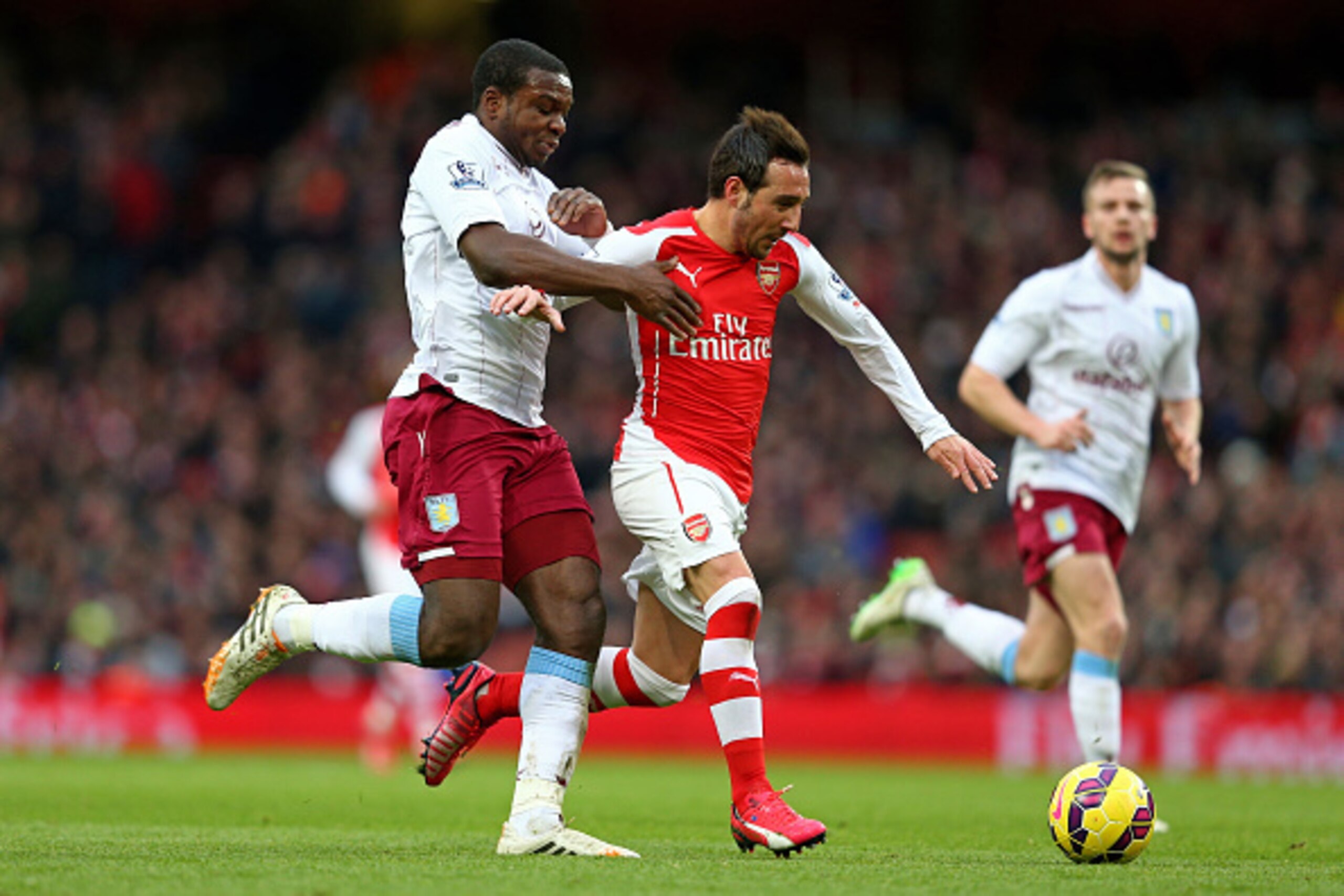
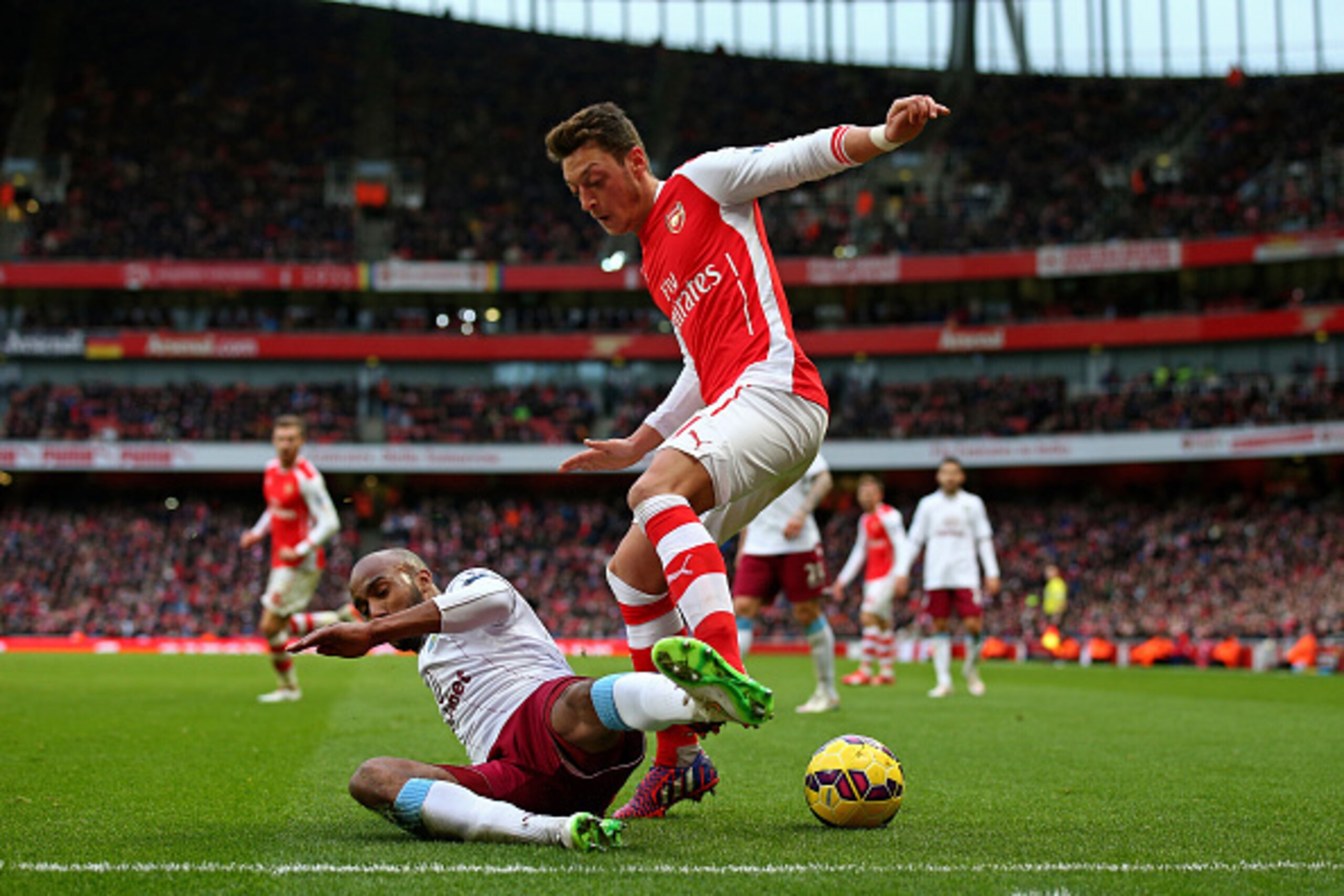
For example, Mesut Ozil and Santi Cazorla are central attacking midfielders who should not be played anywhere else on the pitch. Do they sometimes play on the wings on a 4-2-3-1? Yes. Are they better suited to play that position than Sanchez, Theo Walcott or even Danny Welbeck? Not by a long shot.
Though they may be more technically gifted and experienced than Welbeck, Ozil and Cazorla are most effective—by far—in a central role. It may unnerve Wenger to leave his record signing on the bench in favor of Welbeck out wide when Cazorla’s sterling form has earned him the starting CAM spot, but the Englishman’s superior athleticism on the wing is more of an asset than the German’s isolated playmaking (and poor/nonexistent marking) in most situations.
If Arsenal are to grind out the results they need, then Wenger must put out the best players for each position, rather than the best 11 players he happens to have at his disposal. That means starting four defenders, two defensive mids, one attacking mid, two wingers (who are hungry to track down the ball) and a striker in a 4-2-3-1. That is the only way that formation will consistently work.
If Arsenal start three CAMs (Ozil, Cazorla, Tomas Rosicky) and two undisciplined defensive mids who often play like CAMs (Jack Wilshere and Aaron Ramsey), then they’ll be overwhelmed in defense when the wingers don’t track back and the defensive mids are caught out of position on the break.
Granted, there will likely be more injuries and a general need to rotate players to alleviate fatigue, but those challenges need to be met with the appropriate tactical alterations to get the most out of the players Arsenal have.
Against a weaker opponent who sits back, it would be fine to play the aggressive Wilshere in a 4-2-3-1 that is effectively more like a 4-1-4-1 in motion (he might even create a goal). However, against stronger teams, Arsenal need to stick with a dependable player like Francis Coquelin (though he’s less experienced) because he knows his role and is willing to stick to it to support the structural integrity of the team.
In other words, it’s better to have a blue-collar car with functioning parts than a Porsche that’s missing its engine.
Speaking of car metaphors…
Arsenal’s Parked Bus Is in Danger of Stalling
I applauded Wenger for finally altering his tactics against Man City on January 18th and grabbing Arsenal’s first win over a top EPL side in what seemed like ages. Too often the Gunners stubbornly persisted with an open and attacking style against big teams only to get torn to shreds on the scoreboard (the 6-0 loss to Chelsea is still the stuff of nightmares).
Against City, however, Arsenal’s consolidated defensive effort stifled their opponent’s attack and allowed them to execute threatening counterattacks against the Sky Blues. It worked because City—thanks, in part, to Jesus Navas’ woeful crossing—were forced to march down main street, where they could easily be smothered by Arsenal’s diligent defensive lines.

The deep-seated Gunners didn’t give Sergio Aguero a chance to slip in behind their lines and run on goal. So Aguero’s inability to play his favored game, the lack of wing production from Navas and Yaya Toure’s absence for the Africa Cup of Nations meant that City were without the necessary keys to unlock Arsenal’s parked bus.
Now fast forward to the Gunners’ Saturday loss to Spurs.
They employed a similar defensive style but lost 2-1 this time around. What went wrong? Surely if a more conservative approach worked against City (currently second in the table), it also should have worked against Tottenham (currently fifth in the table)? If Arsenal could silence Aguero (14 league goals), then they could also blank Harry Kane (10 league goals before the derby), right?
Well, that’s apparently what Wenger thought. True, the absence of superman Sanchez hurt the Gunners’ chances from the start, but the biggest difference between the City match and this one was the tactical mismatch. Like a hammer seeing all problems as nails, Wenger treated Spurs like just another big club and paid the price for the indiscrimination.
He directed his side to play conservatively out of respect for Tottenham’s quality players—just like he did against City—but he failed to modify his tactics to anticipate Tottenham’s unique threat from the wings.
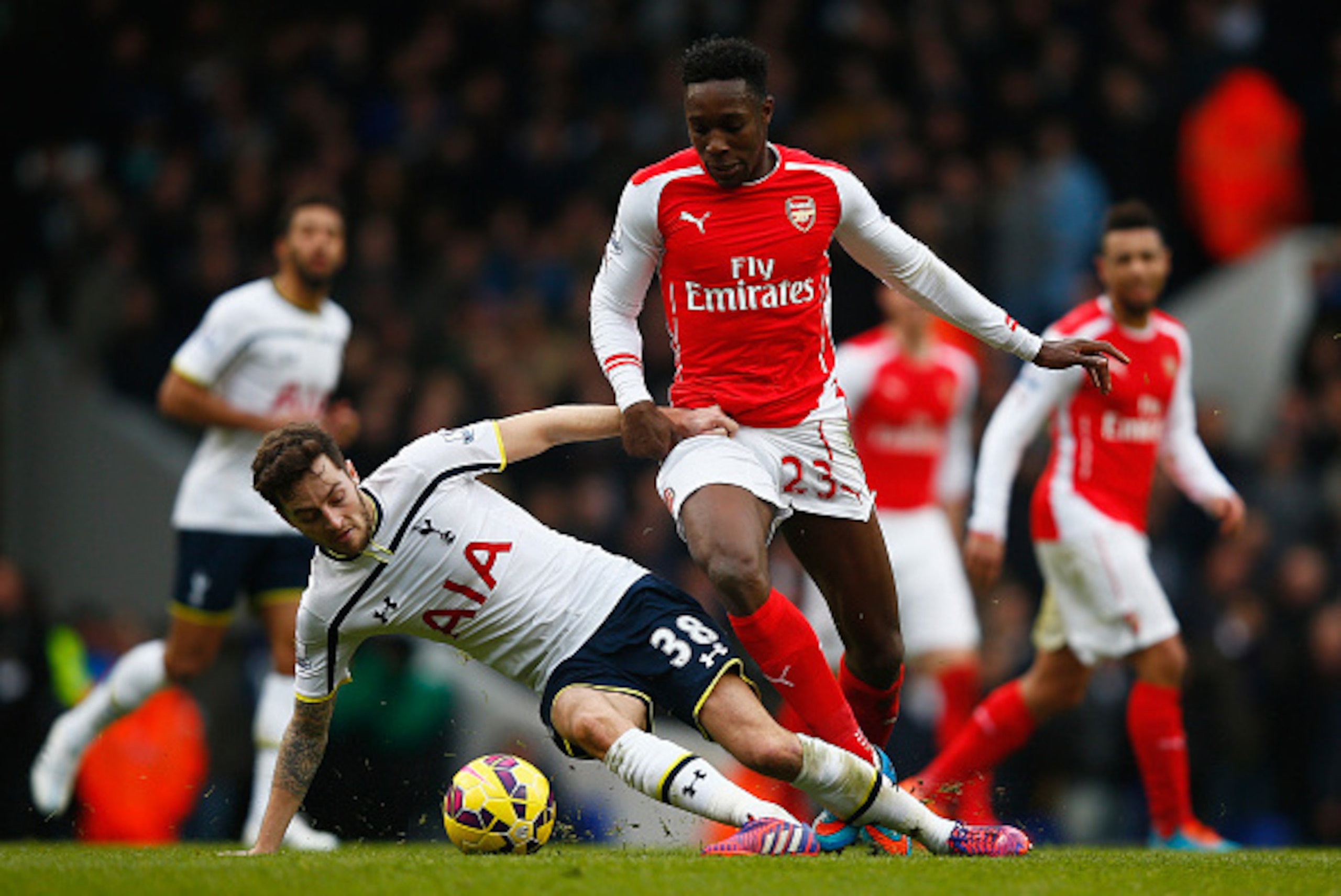
Spurs stormed the wings with relentless runs by Danny Rose and Ryan Mason, stretching Arsenal’s back line and leaving the center more vulnerable to crosses. Those same wingers (most notably Rose) also managed to occupy Welbeck on defense with their deep runs, leaving Arsenal with one fewer passing outlet in attack.
Without effective pressure release valves up top, the Gunners had the poorer share of possession and could not give Cazorla the time, space and options he needed to create scoring opportunities.
This is not to say playing the more open and attacking style of last year’s Arsenal would have saved the Gunners, but realizing that Tottenham’s strengths are considerably different from City’s would have helped immensely in pre-match preparation.
Parking the bus is a tried and true tactic, but it cannot be the be-all, end-all for any team. Jose Mourinho basically invented the modern style, but his teams went a step further by fouling opponents in the midfield before they could expose Jose’s Chelsea/Madrid/Inter with quick, incisive passes into the final third.
Jose’s teams defended not just in the final third, but also throughout their whole half of the pitch to give themselves a buffer. Wenger’s team will have to embrace parking the bus wholeheartedly if they want to make it a reliable option in the future.
If Arsenal hope to beat Liverpool, Chelsea and United in the coming months—matches that could certainly determine their top-four finish—they’ll have to alter more than just their attack-to-defense mentality.

Having do-it-all Sanchez back in the side will help, but Wenger needs more in his matchday packet than a 4-2-3-1. Olivier Giroud needs wingers to feed him crosses, and Cazorla (or Ozil) needs those wingers moving at a moment’s notice to receive his passes in dangerous areas. Neither of those things can happen when Arsenal are stalled in the defensive third.
Final Thoughts
There is not a cure-all solution to Arsenal’s problems, as each new opponent brings a unique challenge. However, what is certain is that the Gunners will only find success in the coming months (and trio of competitions) if they commit wholeheartedly to their tactics as individuals and as a collective.
Restricting players to a single position (CAM, CDM, winger, etc.) could lead to frustration on the bench, but it will also foster a greater degree of intra-squad competition for the starting spot. Having players of Ozil and Cazorla’s quality pushing each other to become even better is the only way the Gunners will be able to make a deep run in the Champions League against the likes of Real Madrid and Barcelona.
Additionally, having those players focused on a clearly defined role will make it easier for the rest of the squad (also playing in defined roles) to work through them in the most uptempo matches. Success at the highest level requires not only tremendous skill, but also teammate chemistry and awareness that must be second nature to beat the best.
.jpg?w=2560 "Rams Raiders Football")



.jpg?w=2560 "Rodgers Iced Out on Plane 💎")
.jpg?w=2560 "🚨 Week 8 AP Top 25 Poll")
