

College Football's Final Realignment: Forming 4 Conferences for 4 Playoff Spots
Five power conferences, four spots in the College Football Playoff. It doesn't take Pythagoras to see the problem.
But even though the math works improperly, the CFP will not change its numbers. "It's a four-team tournament for 12 years," Executive Director Bill Hancock told Barrett Sallee of Bleacher Report. "There hasn't been any discussion in our group about expanding."
Wait, wait, wait. Who said anything about expansion?
TOP NEWS

Week 5 AP Top 25 Poll 🔢

Updated CFP Bracket Projections 🔮
Top Overreactions after Week 5 of CFB Season 😧
Two or four more playoff spots would make room for every power conference, but they'd also bring their own set of problems. In a six-team playoff, which conference sends two representatives? In an eight-team playoff, which two conferences send one?
The only fair solution to the playoff problem is the one that will never happen: downsizing. Five power conferences don't fit in four spots, six spots, eight spots or 16 spots; they only fit in factors of five. And factors of five don't make good playoff brackets.
But what if the Power Five became the Power Four? Again, it's unrealistic—there's way too much money at stake—but why not conduct the thought experiment?
Welcome, one and all, to the offseason!
Guidelines For Realignment

Five things to keep in mind before we get to the Power Four:
1. No original conference names. Creating four leagues from the ACC, Big Ten, Big 12, Pac-12 and SEC would have meant destroying one of them. So instead we've used the same designations as the NCAA Men's Basketball Tournament: East, Midwest, South and West.
2. Each conference has 17 teams. For the time being, let's pretend we can work out scheduling. I know that would be an issue (it's one of the many reasons there aren't four power conferences), but try to suspend your belief. If you can't, this article is not for you anyway.
3. How we got to 17: There are 64 teams in the five power conferences, and I'm not in the business of relegation. That works out to 16 teams per conference…or at least it does until you factor Notre Dame. Can't leave out the third-winningest program in NCAA history. So we added the Irish along with three more non-power-five teams.
4. The two biggest factors in aligning the conferences:
- Competitive Balance
- Geographical Location
Those factors are in order of importance. The primary goal was creating four balanced leagues, ones in which all four champions would deserve to make the playoff. We tried our best to keep teams lumped together, so they wouldn't have to fly across the country. But certain cases demanded we sacrifice geography for balance.
5. How did we determine Competitive Balance? Two major factors:
- Five-Year F/+ Ratings (via Football Outsiders)
- Four-Year Recruiting Grades (via 247Sports)
The F/+ ratings are an opponent-adjusted metric for team performance. You can read more about them here, but the most basic thing to know is this: a score of 0.0 percent is the FBS average. The higher a team's rating above 0.0, the better they have been than the average. The lower a team's rating below 0.0, the worse.
In a broad sense, the five-year F/+ ratings reflect where a team has been, while the four-year recruiting grades reflect where a team is going. They are obviously imperfect indicators, but they're the best we've got.
Eastern Conference

| Florida State | 35.20% | 280.9 |
| Georgia | 23.40% | 269.8 |
| South Carolina | 19.50% | 236.6 |
| Clemson | 18.70% | 253.6 |
| Florida | 14.10% | 268.7 |
| Georgia Tech | 10.10% | 170.4 |
| Miami (Fla.) | 10.00% | 246.5 |
| West Virginia | 9.10% | 199.3 |
| Pittsburgh | 7.70% | 185.3 |
| Ole Miss | 7.00% | 237.6 |
| Cincinnati | 7.00% | 166.2 |
| Penn State | 6.50% | 214.2 |
| Rutgers | -0.50% | 183.2 |
| Boston College | -0.90% | 152.7 |
| Syracuse | -2.10% | 162.9 |
| Maryland | -2.60% | 189.5 |
| Virginia | -3.20% | 202.2 |
| AVERAGE: | 9.35% | 212.9 |
Immediate Playoff Contenders
- Florida State
- Georgia
- South Carolina
- Clemson
- Ole Miss
Not much change for Clemson, which has played Florida State, South Carolina and Georgia in each of the past two seasons. Now it has all three (as opposed to just FSU) on its conference schedule. The only new face for the Tigers is Ole Miss, a rising Southeastern power.
Looming Playoff Contenders
- Florida
- Miami (Fla.)
- Penn State
The second Eastern tier includes three of the proudest programs in America—all of which have fallen on hard times. But Florida and Miami have recruited in the 75th percentile (out of the 68 teams on this list) since 2012, and Penn State likely would have if not for sanctions.
If Enough Things Break Right…
- Georgia Tech
- West Virginia
Georgia Tech and West Virginia have upward mobility; both have won BCS/CFP bowl games since 2011, and both beat a one-time playoff contender (Mississippi State and Baylor, respectively) last season.
Never an Easy Win
- Pittsburgh
- Cincinnati
Pittsburgh is a sleeping giant on fertile recruiting ground that has struggled to keep consistent leadership. If Pat Narduzzi stabilizes the program, he can build something in the mold of Michigan State (where he served as defensive coordinator from 2007-14). Cincinnati, meanwhile, has seven nine-win seasons since 2007.
Midwestern Conference

| Ohio State | 27.80% | 290.2 |
| Wisconsin | 23.90% | 188.0 |
| Michigan State | 23.10% | 210.3 |
| Notre Dame | 19.60% | 264.5 |
| Missouri | 16.50% | 202.5 |
| Virginia Tech | 15.40% | 220.0 |
| Nebraska | 15.20% | 208.4 |
| Kansas State | 15.20% | 162.2 |
| Louisville | 14.20% | 192.5 |
| Michigan | 12.10% | 248.4 |
| Iowa | 6.10% | 176.2 |
| Northwestern | 0.90% | 176.0 |
| Illinois | -3.40% | 168.0 |
| Minnesota | -4.10% | 163.6 |
| Iowa State | -6.30% | 160.7 |
| Indiana | -9.10% | 179.0 |
| Purdue | -12.20% | 164.4 |
| AVERAGE: | 9.11% | 201.2 |
Immediate Playoff Contenders
- Ohio State
- Wisconsin
- Michigan State
- Notre Dame
Ohio State is the reigning national champion. Wisconsin ranks No. 8 in five-year F/+ rating. Michigan State just finished back-to-back top-five seasons. Notre Dame played for the national title in 2012-13. Suffice it to say, there's quality at the top. And there's a lot of it.
Looming Playoff Contenders
- Missouri
- Virginia Tech
- Michigan
Missouri has played in consecutive SEC Championship Games. Virginia Tech had eight straight 10-win seasons from 2004-11. Michigan is the winningest program in NCAA history. Suffice it to say, there's potential on the second tier. And there's a lot of it.
If Enough Things Break Right…
- Nebraska
- Kansas State
- Louisville
Nebraska has finished 9-4 or 10-4 in each of the past seven seasons. Kansas State was No. 1 in the BCS rankings (for a brief second) in 2012. Louisville won the 2013 Sugar Bowl. Suffice it say, there's upside in the middle of the conference. And there's a lot of it.
Never an Easy Win
- Iowa
Confused by the defensive tone in this section? That's because the Midwest hides a dirty little secret: It's bottom third is brutal. Only Iowa (and, once in a while, Northwestern) bridges the gap between a strong Top 10 and a weak bottom five/six. And there was no way to move such distinctly Midwestern teams as Illinois, Indiana, Iowa State and Purdue to other leagues for competitive balance.
Southern Conference

| Alabama | 44.40% | 315.1 |
| LSU | 28.00% | 278.3 |
| Texas A&M | 20.50% | 265.5 |
| TCU | 20.30% | 196.1 |
| Baylor | 15.60% | 209.9 |
| Auburn | 15.00% | 266.8 |
| Arkansas | 11.50% | 217.5 |
| Mississippi State | 10.40% | 218.9 |
| Texas | 8.20% | 260.9 |
| North Carolina | 4.30% | 207.3 |
| NC State | 2.20% | 187.4 |
| Tennessee | 2.20% | 253.4 |
| Texas Tech | 0.30% | 197.8 |
| Duke | -0.50% | 191.1 |
| Vanderbilt | -2.90% | 199.5 |
| Kentucky | -10.90% | 159.1 |
| Wake Forest | -11.30% | 160.7 |
| AVERAGE: | 9.25% | 218.9 |
Immediate Playoff Contenders
- Alabama
- LSU
- Texas A&M
- TCU
- Baylor
- Auburn
Yes, the South is stacked. Don't blame us: it's geography. Baylor and Auburn rank higher on a two-year sample than a five-year, so the top of the South is even stronger than it looks on paper. Any of these teams could win the national title next season.
Looming Playoff Contenders
- Arkansas
- Texas
- Tennessee
Texas and Tennessee are longer rebuilds than Arkansas, the latter of which looks ready to compete next season. The Longhorns and Vols have higher ceilings, though, considering the prestige of their programs and the moth-to-flame way they recruit.
If Enough Things Break Right…
- Mississippi State
Mississippi State had enough things break right last season and still missed the playoff. Head coach Dan Mullen called it "a lateral move" when defensive coordinator Geoff Collins left for Florida, per Michael Bonner of The Clarion-Ledger; but that's simply not the case. Still, as long as Mullen stays in Starkville, the Bulldogs are frisky.
Never an Easy Win
- n/a
If the top 10 teams don't cannibalize each other, there are wins to be had at the bottom. North Carolina, NC State and Texas Tech have their moments, but none of those teams is consistent. Duke still feels like an aberration (the same way Vanderbilt did before them), and Kentucky and Wake Forest have been conference bottom-feeders.
Western Conference
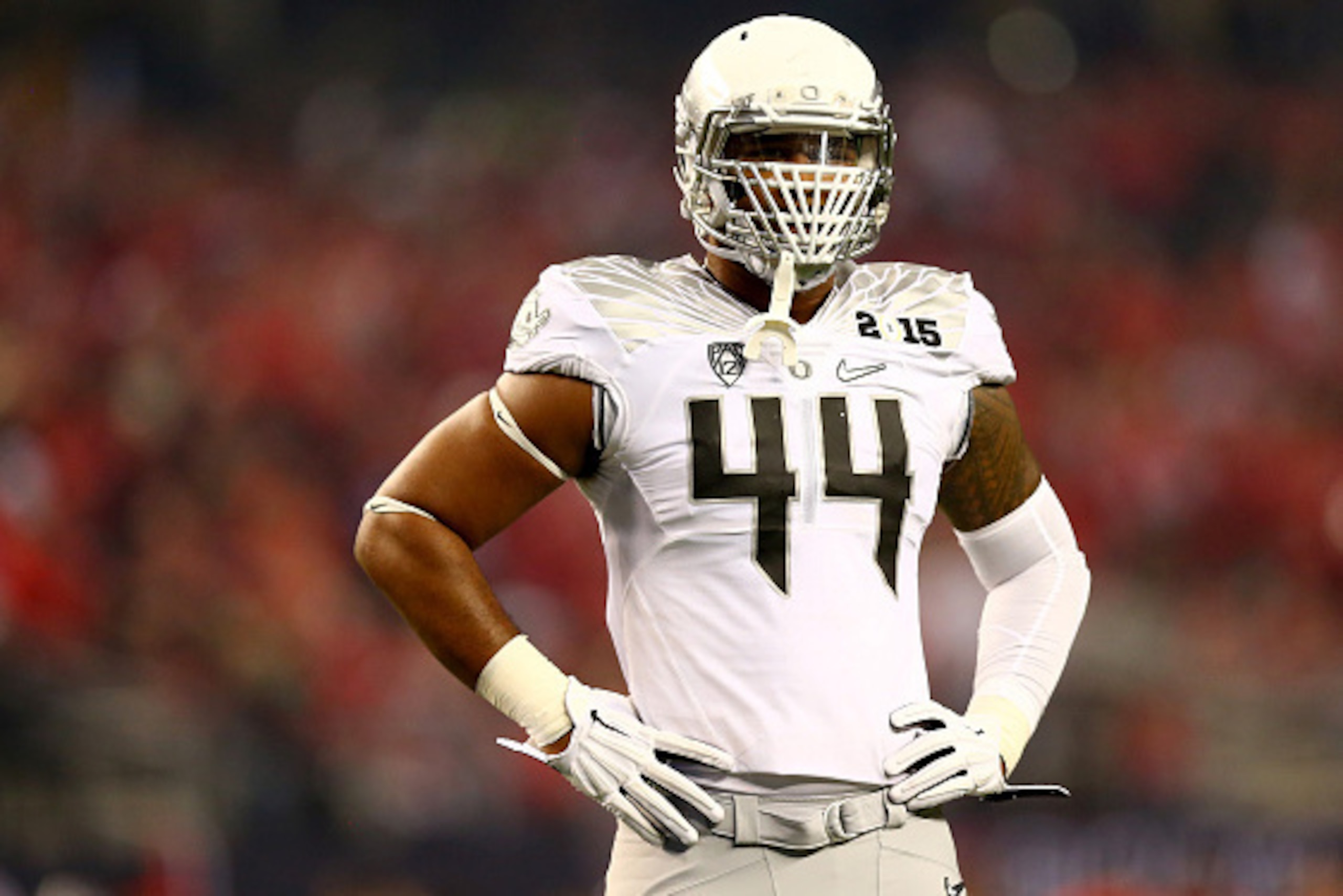
| Oregon | 33.60% | 238.3 |
| Stanford | 29.20% | 229.4 |
| Oklahoma | 25.40% | 247.4 |
| Oklahoma State | 23.20% | 204.3 |
| Boise State | 22.70% | 167.6 |
| USC | 18.70% | 273.9 |
| Arizona State | 13.10% | 212.9 |
| BYU | 9.40% | 156.1 |
| UCLA | 7.90% | 259.2 |
| Arizona | 7.90% | 195.3 |
| Utah | 7.20% | 181.7 |
| Washington | 5.20% | 217.2 |
| Oregon State | 3.40% | 177.2 |
| Cal | -5.60% | 192.3 |
| Washington State | -11.60% | 174.4 |
| Colorado | -17.20% | 163.7 |
| Kansas | -20.40% | 160.7 |
| AVERAGE: | 8.98% | 203.0 |
Immediate Playoff Contenders
- Oregon
- Stanford
- Oklahoma
- UCLA
- USC
Stanford and Oklahoma underachieved last season, but they're still two of the most consistent winners in the country. With those two always competitive, Oregon at the top and UCLA and USC on the rise, there will never be a shortage of playoff contenders out West.
Looming Playoff Contenders
- Oklahoma State
- Boise State
- Arizona State
Oklahoma State is the same deal as Stanford and Oklahoma; the only reason it ranks lower is because it (a) underachieved even more last season, and (b) recruits at a lower level. Still, OSU and Arizona State are annual contenders in the Big 12 and Pac-12, respectively, and Boise State ranks No. 12 in five-year F/+ rating.
If Enough Things Break Right…
- Arizona
- Washington
Rich Rodriguez and Chris Petersen are two of the…let's say 15 best head coaches in America. Their teams will always have a chance to string wins together, especially now that they're rooted in their jobs and recruiting players who fit their systems.
Never an Easy Win
- BYU
- Utah
Of all the "Never an Easy Win" teams in this article, BYU and Utah are the hardest (never-easiest?). Barring something unforeseen, neither is a legitimate playoff contender, but each can spoil other teams' playoff hopes. No one wants to travel to the Beehive State.
Side-by-Side Comparison
| 1 | FSU (35.2) | OSU (27.8) | ALA (44.4) | ORE (33.6) |
| 2 | UGA (23.4) | WIS (23.9) | LSU (28.0) | STAN (29.2) |
| 3 | SCAR (19.5) | MSU (23.1) | A&M (20.5) | OKLA (25.4) |
| 4 | CLEM (18.7) | ND (19.6) | TCU (20.3) | OKST (23.2) |
| 5 | FLA (14.1) | MIZZ (16.5) | BAY (15.6) | BSU (22.7) |
| 6 | GT (10.1) | VT (15.4) | AUB (15.0) | USC (18.7) |
| 7 | MIA (10.0) | NEB (15.2) | ARK (11.5) | ASU (13.1) |
| 8 | WVU (9.1) | KSU (15.2) | MSST (10.4) | BYU (9.4) |
| 9 | PITT (7.7) | LOU (14.2) | TEX (8.2) | UCLA (7.9) |
| 10 | MISS (7.0) | MICH (12.0) | UNC (4.3) | ARIZ (7.9) |
| 11 | CIN (7.0) | IOWA (6.1) | NCST (2.2) | UTAH (7.2) |
| 12 | PSU (6.5) | NW (0.9) | TENN (2.2) | WASH (5.2) |
| 13 | RUT (-0.5) | ILL (-3.4) | TTU (0.3) | ORST (3.4) |
| 14 | BC (-0.9) | MINN (-4.1) | DUKE (-0.5) | CAL (-5.6) |
| 15 | SYR (-2.1) | ISU (-6.3) | VAN (-2.9) | WSU (-11.6) |
| 16 | UMD (-2.6) | IND (-9.1) | UK (-10.9) | COLO (-17.2) |
| 17 | UVA (-3.2) | PUR (-12.2) | WAKE (-11.3) | KAN (-20.4) |
| AVG: | 9.35% | 9.11%| 9.25% | 8.98% | |
Every conference has its strengths.
The West, for example, has the lowest total F/+ rating, but its top two, three, four, five and six teams are deeper than those of any other league. Its score is dragged down by Kansas, Colorado and Washington State—three of the four worst teams since 2010.
Conversely, the East has the highest total F/+ rating, but it's top two, three, four, five, six, seven, eight and nine teams are shallower than those of any other league. Its score is buoyed by the strength of its worst teams, none of which are actually terrible.
We did our best to keep the conferences equal—different, but equal—without forcing anyone to fly cross-country. Oklahoma and Oklahoma State drew the short straw with the Western Conference, but because of how few west-coast teams there are, that was inevitable.
Sound off below and tell us which league you think looks best.
Follow Brian Leigh on Twitter: @BLeigh35
_0.png?w=2560)

.jpg?w=2560 "Grading WWE Raw 🔠")

.jpg?w=2560 "Bijan's INSANE 1st Half 🤩")
.jpg?w=2560 "Viral Rams Coach Vid 🖕")
.jpg?w=2560 "Injury-stricken Seahawks signing veteran RB")


.jpg?w=2560 "2 NFL Officials Suspended")
