

Roberto Martinez Exclusive: Everton Boss on Merseyside Derby and Club's Future
It is “Inside Everton Week” on Bleacher Report. On Thursday, we speak to the man directing the whole project, manager Roberto Martinez, as he discusses his footballing philosophy, the youth development at the club—and in English football in general—and the power and passion of the Merseyside derby.
FINCH FARM, HALEWOOD — If you want to get away from football for a while, it is safe to say Liverpool is probably not the best place to do so.
Football seems to dominate the cultural conversation to the extent that getting into a taxi anywhere in the city seems to automatically invite you into a dialogue about the sport.


.jpg?w=2560)
Saying you want to go to Everton’s Finch Farm training complex invites one of two responses: If the driver is a Red, thinly disguised disgust at being asked to head into enemy territory will come back to you; but if the driver is a Blue, a thorough, startlingly complex critique of recent results and performances is the likely retort.
The game runs in the blood, with every kick and tactical decision analysed with a passion and knowledge that few other cities can match.
In that context, therefore, it is fair to say that Everton Football Club have the right manager in charge. For Martinez the job is as all-consuming as the club is for the fans: The Spaniard is invariably the first one to arrive at the training ground each day and always one of the last to leave. When we met he was the only one there—a day off for the senior players does not extend to him.
Martinez's time with the senior squad out on the pitch is always his priority, but he considers his role and responsibility to extend far beyond that—offering large parts of his time to Everton's many charitable endeavours as well as constantly monitoring the progress of the various academy age groups.
“He’s always sending his staff to the [under-21] games, or he’s at the games,” 17-year-old midfielder Ryan Ledson, who made his senior debut earlier this season, says. “I’ll tell you now he’s watching every DVD, every game we play. You know you’ve always got to perform.”
“He’s a manager who wants to know constantly, daily, how the boys are doing,” Ledson’s under-21 manager, David Unsworth, agrees. “I don’t know many top managers and many top clubs who involve their under-21s quite as much as Roberto and his staff do with us.”
It is this inclusive ethos that is perhaps the hallmark of Martinez’s managerial approach. Many Premier League managers focus exclusively on first-team affairs, reasoning—rightly or wrongly—that it is those results that define their job security. But Martinez has long since resolved to pay attention to all areas, even those where the rewards may not be immediately evident for three or four seasons.
“Every manager will tell you the time you are going to spend with a player on the football pitch is probably the closest you get to when you were a player, and that is a feeling that you want to have every day,” Martinez tells Bleacher Report. “Obviously as a manager you need to cover many other aspects as well, away from the players: preparing for the games, seeing how the recruitment is going, and making sure that the players we have here can test each other and progress."
There is always more to do, though. "Sometimes you don’t get enough hours [in the day]," he admits. "But it's always an enjoyable day."
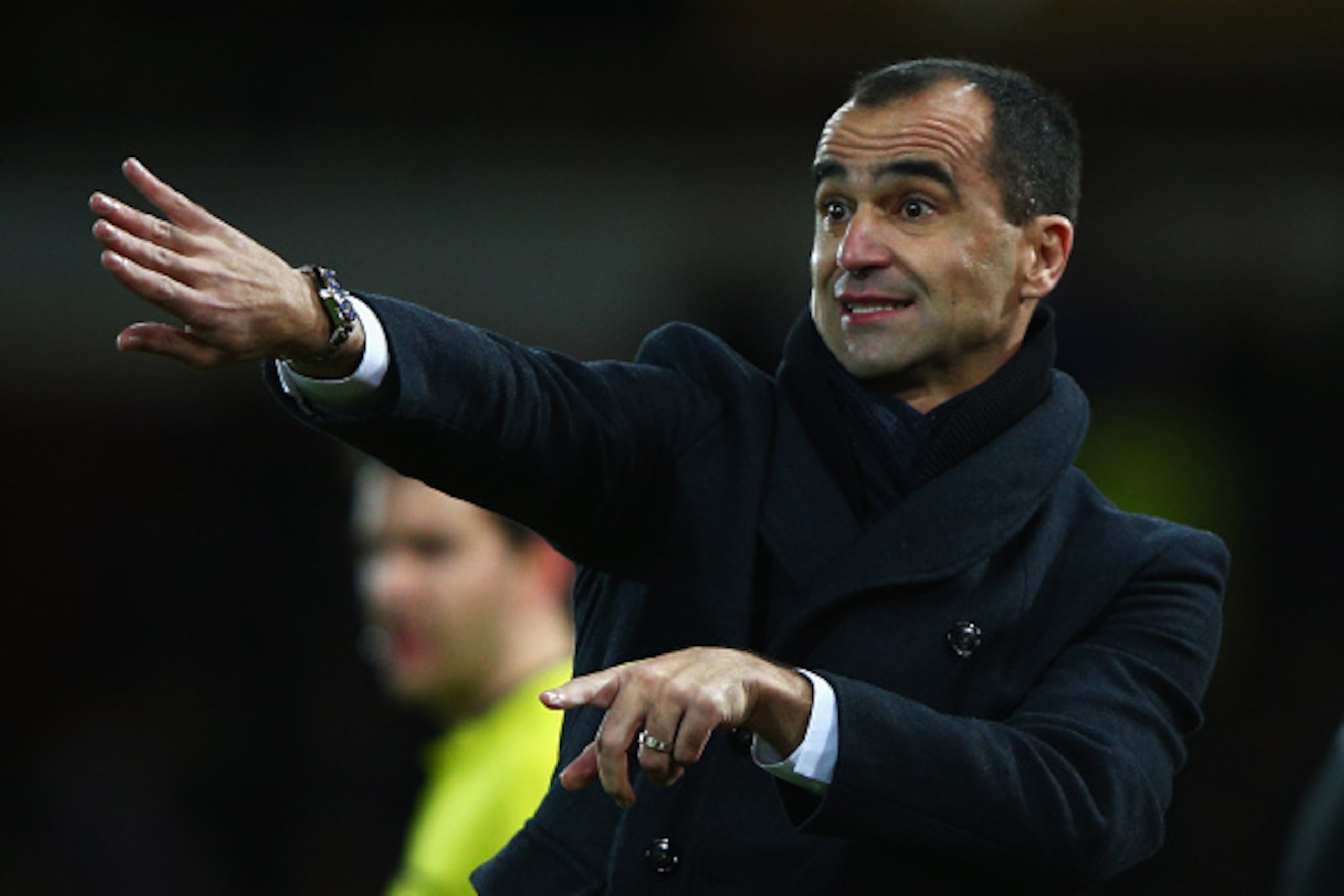
Taking over from David Moyes, who enjoyed 11 successful years on Merseyside, would be a daunting task for any manager. But since arriving in the summer of 2013, the 41-year-old has seemingly been unafraid to do things his own way, showing interest in all aspects of the club and, when it comes to the first team, installing a possession-based, proactive style of play that seems to have invigorated many of the players.
“When Roberto came in it was a lot of new ideas, and a lot of things that we had to change,” left-back Leighton Baines says. “It worked well. In the first season we were trying to adapt to some of the manager’s ideas, and we got some really good results with it. It was a good experience.”
Martinez, as one might expect from one raised in the Spanish way of playing, puts a premium on his side controlling the ball, approaching games on the proverbial front foot rather than reacting to what the opposition does.
He feels that philosophy is one that marries well with the reputation Everton, a club with nine league titles to its name, have created for themselves during their 137-year history, with the club’s manager and its supporters united in the way they want to see the team express itself.
“[It is] very much based in winning football games by controlling the football, by trying to have a high pressing game and a dynamic game,” Martinez says. “I think that you need to be very flexible—we like to be a team that can play in different ways, use that to our advantage—and what I’m really excited about is the team that we have, that we can do that in an Everton way.
“I think Everton as a football club has an incredible history, incredible moments of real success, and I feel [those moments] bring a clear identity of how the fans want the team to play, and I think that feeds into the way I like the game to be played.
"It is a bit of a fusion of the days of the ‘School of Science,’ with the talented players we have got now I think we have seen a team performing in a manner that the fans are extremely excited and proud of, and that would fit into my philosophy.”
Those talented players include 21-year-old Romelu Lukaku, Ross Barkley (also 21) and John Stones (20), three promising individuals whom Martinez hopes will form the core of his side for years to come.
While the talent and potential of the trio is there for all to see, Martinez believes it is their mental attributes that differentiate them from the pack and enabled him to rely so heavily on them at such an early stage in their professional careers.
“Romelu Lukaku, John Stones and Ross Barkley are very much in that bracket of elite footballers,” he says. “Everton have got a real good reputation, a deserved reputation, of producing good young players, and I think the big difference [at that age] is the character.
“You see straightaway a talented footballer on the pitch; what you don’t see is the way that they can take information in, the way they can be coached, the way they want to listen, and that character of being able to cope with the expectations. Probably that is the biggest difference, at that age, between a player of the calibre of Ross Barkley and John Stones and Romelu Lukaku, and other youngsters.”

Martinez’s willingness to promote youth is well-known—this season alone he has given debuts to the likes of Ledson, Tyias Browning and Chris Long—so a major part of his job revolves around ensuring that production line remains in place.
To that end he welcomed former manager Joe Royle back to the club last year. The club's 1995 FA Cup-winning boss was responsible for liaising with clubs throughout the English (and Scottish) football pyramid to find suitable landing spots for the handful of youngsters Everton will look to loan out each season. Howard Kendall has also been seen around the training centre, giving the current boss two former Toffees managers to seek advice from.
Martinez believes the loan has become the crucial last stage in the development of a young player, the moment where he and his fellow coaches will learn whether a nominated individual is ready—and has that character—to become a full part of first-team plans.
“There is a moment, after playing under-21 games but before you can be ready to fulfill your potential, where you need to go out on loan and play first-team football—which is a real necessity, but in the same way a real danger of losing the identity, the way that you want to develop a young player,” he says.
“There is an element that you cannot control: how the player is going adapt, how he is going to be able to survive in a different environment—a very, very competitive environment, with a lot of older guys.
"That in itself it is a very interesting experience—not from a footballing point of view but from a human point of view.”

Unsworth, Royle and the other coaches help with this selection process—“we have all got a bit of a say in making sure we reduce the margin of error,” Martinez notes. But Martinez believes it is still something of a lottery, that it is perhaps the stage where English football lets itself down in comparison to youth development systems elsewhere in Europe.
“You very much need to be perfect to impress in the Premier League,” he says, highlighting the technical, tactical and physical demands of top-flight games. “Our setup to the under-18s is the best in the world in terms of the academy system and the way we give youngsters a good training programme...but from 19 to the first team is a big void.
“The under-21s league is something that the Premier League and the FA have put a lot of efforts to make competitive, but I think we fall short and behind the B sides and the competitive leagues that they have around Europe. Spain, Italy and France—even Germany—have all found a system that suits the development of the young player, and I think it is unfair on our youngsters because they find it very difficult.”
Things are improving, albeit slowly.
“We have seen a big difference in the last 10 months with the FA programme putting a lot of emphasis on trying to develop the youngsters and helping the youngsters and giving them a clear way of playing, developing a type of player that suits English football. I think we have all got a responsibility as well as a football club to bridge that gap.”
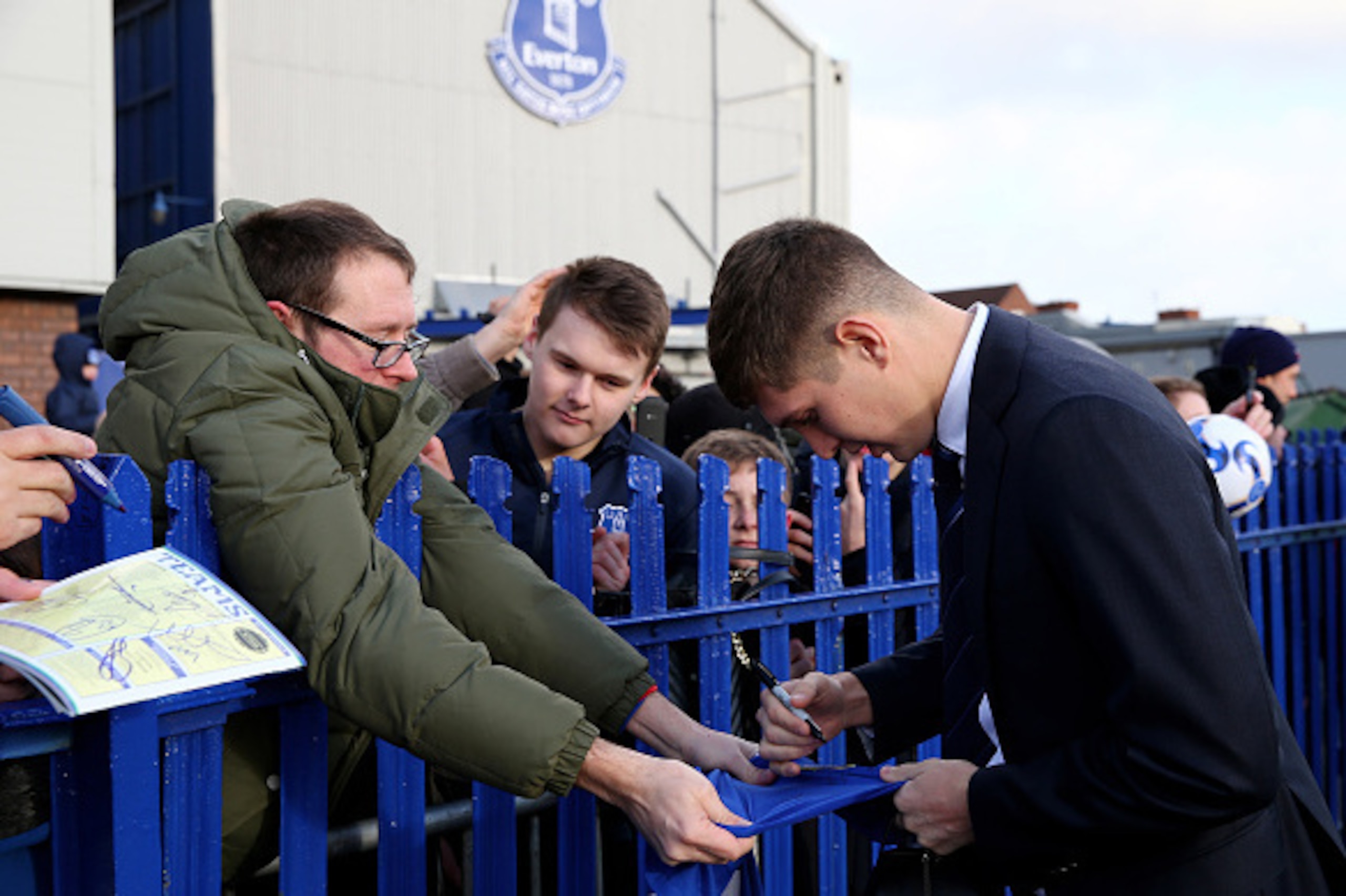
Martinez is confident, at least as confident as he can be, that Everton have found a way of doing that and now have a system in place that will soon start delivering polished young players able to join Lukaku, Barkley and Stones in his first-team squad.
“We have a group of players that are going to have an opportunity in the first team,” he says. “I really think we are producing very good youngsters at the club. I think those three that you mention, they are players that you can build a very successful team around.”
"There are numerous players who I expect to be in our first-team squad at some point in their careers," Unsworth says of the various academy cohorts. "The biggest thing that this great club does is that it gives young players opportunities."
That is not to say experience is undervalued or disregarded at Goodison Park. Far from it, as Martinez is well aware that the youngsters he invests so much time in can never flourish without experienced players—Phil Jagielka, Tim Howard, Leon Osman—around them.
“We will always be brave in giving youngsters an opportunity,” Martinez says, “but in the same way you need a balance to be competitive.
“It is always getting the right balance—you cannot rely on young players all the time, the same way you cannot rely on experienced players all the time, because you need to be dynamic on the pitch and have that energy—but without direction and know-how that bravery doesn’t win you enough games.”
Winning enough games has been an issue for Everton this season. After impressing many observers as Martinez released the shackles from his side in his debut season at the club, this season opposition sides seem to have taken appropriate countermeasures, with fans starting to grow increasingly frustrated as the Toffees have struggled to react to the different questions now being posed.
Pre-season hopes were that the club would again be contending for Champions League qualification, yet as we enter February it is the other end of the league table that fans are looking nervously at (Martinez himself admitted only last week that the club was in a relegation battle).
The mood around the club is one of determination, however, a conviction that recent results are not indicative of overall progress and that an upturn in form is around the corner as long as everyone sticks to the process.
“We hoped, coming into this season, that we would [contend for European qualification] again, but we’ve faltered and haven’t quite managed to do it,” Baines acknowledges. “So we have to keep working. The manager has said he will never change his philosophy and his style; it is something that served us well last season, and we have to try to get back to where we were.”

Martinez admits results have not been ideal this term—although in the Europa League the club has thrived—but believes he and his team have learned a lot from the adversity and will come through the other side much stronger for it.
It is perhaps interesting to note that Moyes had a similarly difficult second full season at the club, finishing 17th, before the club accelerated to a fourth-place finish 12 months later.
“It has been very exciting to try to develop a way of playing that can make us a winning team again,” Martinez says, when asked to reflect on his 19 months at the club. “I think we have had some phenomenal experiences, phenomenal games—in Europe we’ve had some outstanding moments—and then we’ve had some difficult periods in terms of results, which made us even stronger internally.
"[It] has given me a lot of information and a clear idea of what is needed to go forward and make sure that we get in that position where we can become a winning football club again.”
In that regard, the club’s next game could not be a better moment to turn the corner, as arch-rivals Liverpool come to Goodison Park on Saturday afternoon.
Derby games can be a double-edged sword for managers; form and recent results go out of the window, but the stakes are also elevated to astronomical levels.
“It’s in everyone’s life,” Martinez says. “Families are divided by the red or blue colour. It is the only game where many fans would not be too bothered about how you play; it’s the end product [that counts].
“I think last year we showed that the rivalry Everton and Liverpool has helped both clubs to have very good seasons, and I think to become a very good team you need a very good rival.
“It is clear that you won’t need to get any player up for the occasion. In some cases it is a game they have been waiting for all their lives. So you can imagine that building up to that week it is about trying to do the opposite than you try to do in other games; you are trying to keep them calm and relaxed and just concentrate on playing the game—rather than being involved in a derby, which is hard enough.”

After a midseason break to Doha, Quatar’s Aspire Academy that Martinez believes achieved the desired effect of refreshing and refocusing his players, a hard-fought victory over Crystal Palace last weekend has alleviated some of the pressure on Martinez’s shoulders.
Nevertheless, after some disappointing recent performances at Goodison Park—to learn more, ask a Liverpool taxi driver—it is a victory over their oldest and closest rivals that could really help propel the club to a strong finish to the season.
“You can see the repercussions of a good performance or a bad performance,” the Spaniard agrees. “I think being able to win a derby with style, it can be very beneficial, in the same way not being able to perform in a derby can have a very damaging effect.
"But they are the events as players, and everyone involved in the club, you want to be involved in and you really, really look forward to being in that football ground. So we are very much looking forward to ours.”

And in the longer term, Martinez has every confidence that his all-encompassing approach to his job will pay off handsomely, enabling him to emulate Royle and end Everton’s 20-year wait for their next trophy.
“I think there is a perfect way of us developing into a team that can win a title,” he notes. “Working with the young players and working with a certain way of playing that will make us different to other clubs are the two main ingredients of that, and that’s what we have.
“It has been a terrific, terrific experience so far. It feels home; it feels a perfect fit, and I’m very much excited about what’s in the future.”


.jpg?w=2560 "Viral Rams Coach Vid 🖕")

.jpg?w=2560 "Injury-stricken Seahawks signing veteran RB")
