

Super Bowl Saviors Provide Example, Template for Future Undrafted Free Agents
The two most valuable participants during Super Bowl XLIX were a pair of players no one spent a single second analyzing—or even mentioned—during all of the obligatory hoopla entering the game.
Despite being overlooked on draft day and during Super Bowl preparation, the New England Patriots' Malcolm Butler and the Seattle Seahawks' Chris Matthews proved to be the biggest contributors on each side of the ball.
Each is also an example of a team's scouting staff going above and beyond. It's why aspiring athletes who aren't drafted should never give up and continue to work hard.

.jpg?w=2560 "Rams Eagles Football")
.jpg?w=2560 "Falcons Saints Football")
All Pro Sports Performance's Greg Brookey illustrated exactly how predominant these unheralded players were on each roster:
That number of former undrafted free agents equates to 40.4 percent of the teams' combined rosters.
Some of the game's headline participants—Michael Bennett, Doug Baldwin and Brandon Browner—weren't selected when they were eligible for the NFL draft.
In the end, Butler rose to the occasion and provided the play of the game with an interception to seal Seattle's fate and become the game's MVP.
OK, technically, Patriots quarterback Tom Brady received the award for Super Bowl XLIX, but everyone knows exactly which individual player proved to be the most valuable with his game-sealing interception. It wasn't "Tom Terrific."
Even if Butler and Matthews fade into obscurity and never make another meaningful contribution to an NFL team—like former New York Giant David Tyree after "The Catch"—each left his mark in the annals of NFL history. Each also provided individual templates for the type of players teams should search for once the NFL draft concludes.
The man of the hour is certainly Butler.
However, the West Alabama product didn't turn any heads during the NFL draft process. The Patriots were the only organization to show any interest in the cornerback, according to ESPN.com's Michael Reiss:
There really wasn't any reason whatsoever why Butler should have caught anyone's attention. A combination of inferior level of play plus poor athletic testing generally doesn't warrant such consideration.
Butler finished a decorated collegiate career with the Tigers football program. However, the leap from the Division II level to the NFL ranks is immense. And the unheralded cornerback prospect didn't blow anyone away with his athletic prowess.
During his pro day workout, according to NFLDraftScout.com, Butler measured under 5'10" and less than 190 pounds. As a smaller cornerback, Butler surely ran a fast 40-yard dash time or jumped through the roof with his vertical. Neither was the case. He posed an unofficial 4.62-second time and a pedestrian 33.5-inch vertical jump.
The Patriots still saw something in him, though.
Desmond Lindsey, who helped recruit Butler to West Alabama, described the scouting process for the cornerback, per FOX Sports' Bruce Feldman:
"During the (pro scouting) process we had 25 NFL teams come through and we heard a lot about how he's an in-between guy. Some guys would say he can't play at our level. But the Patriots with the great organization they have, they saw some things other people couldn't see. They realized with his heart and with his ball skills, he has the kinds of things that you can't coach.
"
While a player's mental makeup and inner drive can't be quantified, a defensive back's ability to make plays on the football can certainly make him a valuable commodity. Also, a player's work ethic quickly shines through to his coaches.
"Butler got the nickname 'Scrap' for being a scrappy player in mini-camp, not backing down," SI.com's Peter King relayed in his post-Super Bowl version of the MMQB. "The coaches liked him because when they’d quiz players about assignments, they could tell he’d been studying tape and knew how to anticipate what was coming."
Scouts can search forever to find that one-in-a-million prospect who can step in, despite having the odds stacked him, and eventually contribute.
There are, however, a couple prospects that should invoke similar comparisons to Butler.
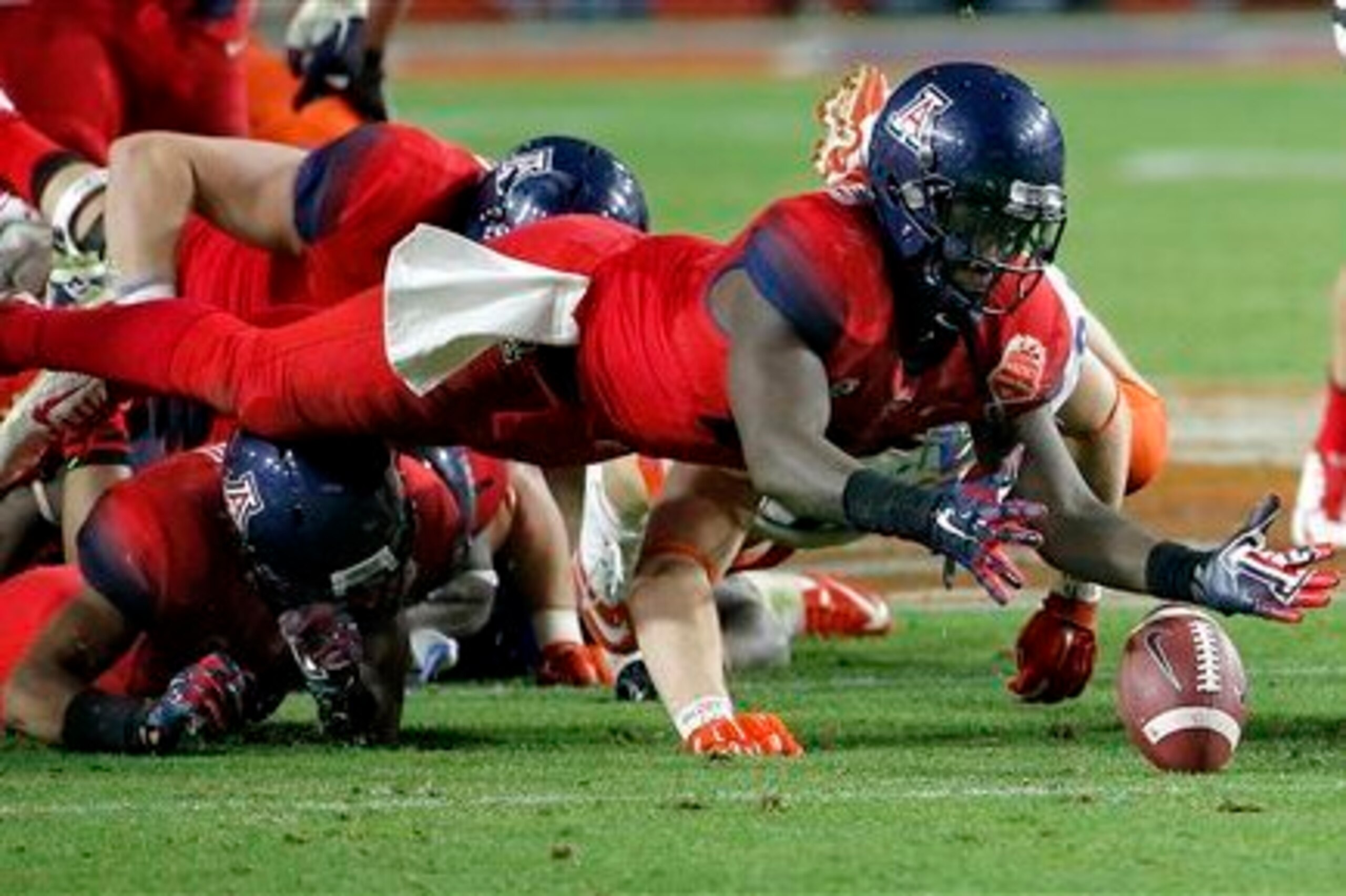
Arizona's Tra'Mayne Bondurant may have played in the Pac-12 Conference, but his natural instincts and incredible ball skills despite less-than-ideal measurements make him an intriguing talent.
At a listed 5'10" and 216 pounds, Bondurant isn't built like a traditional safety prospect. He also doesn't present the raw coverage skills to move to cornerback. In fact, he was a high school linebacker that played the position during his first season in Tucson.
During his senior campaign, Bondurant registered two sacks, snared a pair of interceptions, broke up eight passes and forced five fumbles. He was regularly in position to make a play and often did so with spectacular results, as the Tucson Star's Zack Rosenblatt can attest:
While Bondurant's knack for making the play is reminiscent of Butler's, his experience playing at the highest level of college competition also doesn't make it a perfect comparison.
Last year, five defensive backs from non-FBS schools were selected in the draft. It proved a difficult transition for all of them. Thus, similar prospects who aren't drafted shouldn't quickly give up hope.
Northwestern State's Imoan Claiborne is generally considered the top small-school prospect at the cornerback position after participating in the Senior Bowl. While Claiborne is expected to be drafted in April, Adams State's Cariel Brooks closely resembles Butler due to his situation and style of play.
Like Butler, Brooks is a former JUCO transfer who landed at a Division II program. The Grizzlies cornerback also doesn't possess ideal size at 5'10" and 200 pounds. However, their final seasons on campus were nearly identical.
Both only intercepted a pair of passes, but each led their team in passes broken up. Butler registered 16 passes broken up in 2013, while Brooks managed 14.
Another Division II product, who is undersized but drew some interest from NFL scouts prior to the start of the season, is the Walsh Cavaliers' Jamaris Brown.
On the opposite side of the field, Matthews developed into quarterback Russell Wilson's No. 1 target in front of an entire nation despite not registering his first NFL catch until Sunday's Super Bowl.
Matthews took the long road to the NFL.
The talented 6'5", 218-pound wide receiver originally signed as an undrafted free agent with the Cleveland Browns after the 2011 NFL draft. After being released by the Browns, Matthews eventually found his way to the Arena League to play for the Iowa Barnstormers. He then traveled north and became a member of the Winnipeg Blue Bombers. In his first season with the club, Matthews won the CFL Most Outstanding Rookie of the Year in 2012.
The Seahawks finally called Matthews out of the blue while he was working at a local Foot Locker.
After only playing in three games during the regular season, Matthews provided the boost the Seahawks desperately needed on offense during the Super Bowl with four receptions for 109 yards and a touchdown.
Matthews' value to the Seahawks is simple. His size presents a constant mismatch against much smaller defenders.
It was never more apparent than when Wilson threw a back-shoulder touchdown pass to Matthews with six seconds remaining in the first half over 5'11", 191-pound cornerback Logan Ryan. Part of the reason why Butler received a bigger role in the second half was due to Ryan's inability to cover Matthews.
Scouts missed on Matthews because he only produced for the Kentucky Wildcats during his senior season. After transferring from the JUCO ranks, Matthews caught 32 passes for 354 yards as a junior. As a senior, the Long Beach, California, native improved with 61 receptions for 925 yards and nine touchdowns. But he was still overlooked to a degree with Randall Cobb on the roster.
Sizable wide receivers also have to prove they have enough quickness and flexibility to get off the snap and run efficient routes. It can prove to be troublesome for lankier targets like Matthews.
If teams are still looking for a tall red-zone target or someone who can present a mismatch downfield due to his size, multiple prospects without draftable grades fit the bill.
Georgia's Jonathon Rumph is an overlooked prospect with the size to make an impact at the next level if given the opportunity.
After transferring from Holmes Community College, Rumph's career at Georgia never fulfilled expectations. It wasn't due to disappointing play, though. The wide receiver generally produced when he was on the field, which was a rare occasion.
“Rumph has proven that if we throw him the ball, he’ll catch it and make some plays," former Georgia offensive coordinator Mike Bobo told The Macon Telegraph's Benjamin Wolk in November. "He’s done a nice job of after the catch. He’s not a blazer, but he’s a big, big man that’s a big target, done a nice job and gained the confidence of his coaches and quarterback.”
During his two years in Athens, the wide receiver only played in nine games due to lingering hamstring and groin issues. He will leave the University of Georgia with 18 career catches for 297 yards.
If a team could harness his natural ability and Rumph stays healthy, he could develop into a true diamond in the rough.
Other receivers 6'3" or taller who aren't currently expected to be drafted include Wisconsin-Whitewater's Jake Kumerow (6'4", 208 lbs), Tulsa's Keyarris Garrett (6'3", 206 lbs), BYU's Ross Apo (6'3", 207 lbs) and IUP's Drew Carswell (6'4", 220 lbs).
A wide receiver with size always has a chance to make an NFL roster as long as he works hard on the little nuances of the position that will allow him to create separation.
While the draft process is exciting for everyone, it doesn't actually equate to having "made it" in the NFL. It's merely an opportunity for talented athletes to prove themselves. If they don't, there are always those who weren't drafted hungry for the chance to make a team.
As the cases of Butler and Matthews clearly show, talent can be found anywhere. It's merely up to the players to take advantage of their opportunities.
“Since we got here in 2010, we lead the league in rookie free agents in playing time,” Seahawks general manager John Schneider told The Seattle Times' Jayson Jenks last year. “That’s a tribute to bringing guys in and having open competition where they are not looking at names on the back.”
In a game that featured some of the biggest stars in football, it was the the least known players who made the biggest impact. The names on the back of their jerseys didn't matter. Whether or not they were drafted was inconsequential. All that mattered was that two talented players stepped up when their teams needed them most. It just happens that both of those players went undrafted.
Everyone now knows the names of Butler and Matthews. And these are the types of players any team can acquire with solid scouting and proper roster moves.

.jpg?w=2560 "Texans-Mixon Released Football")
.jpg?w=2560 "Grading WWE Raw 🔠")


.jpg?w=2560 "2 NFL Officials Suspended")
