Washington Redskins Cutting Final Ties to Mike Shanahan Era
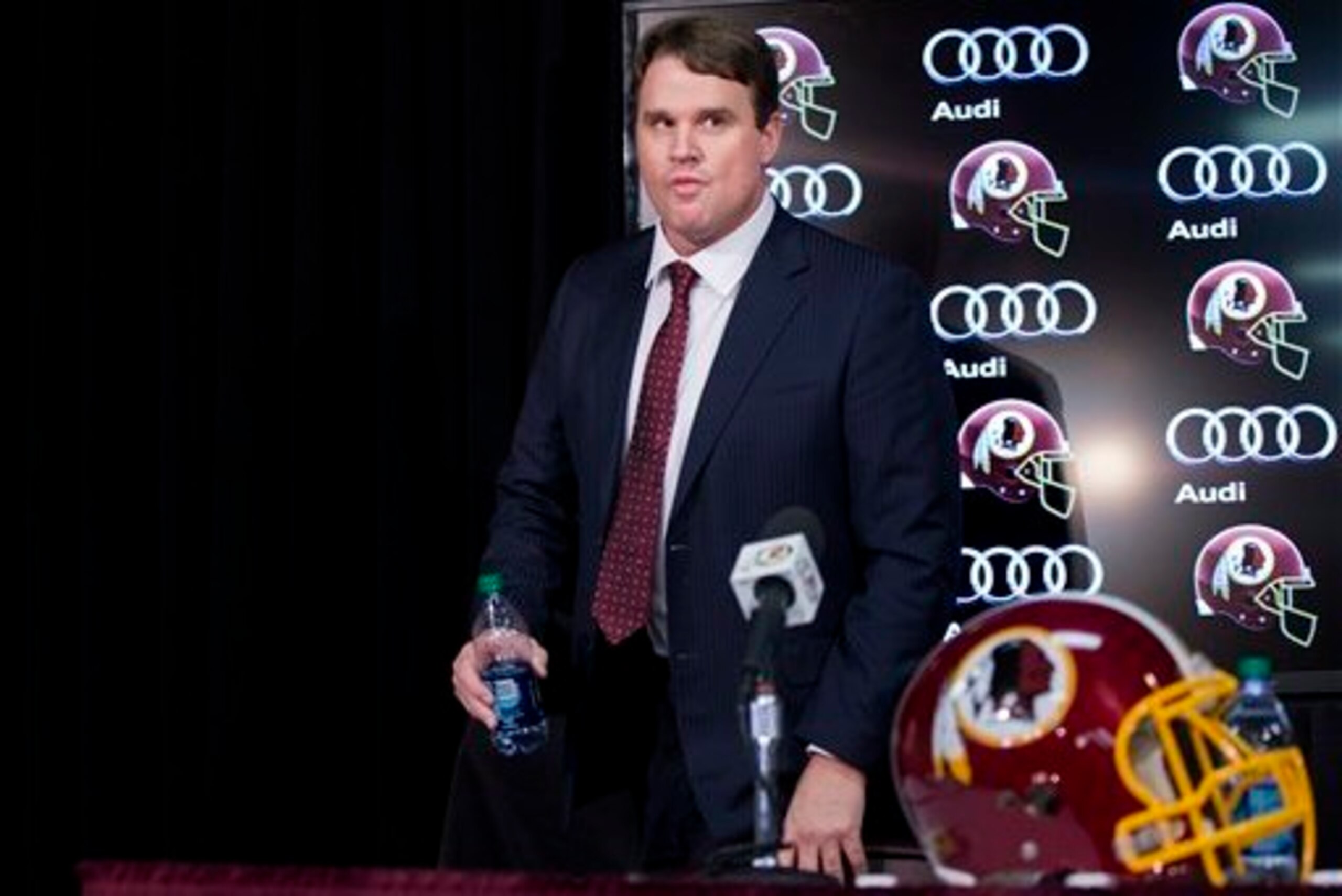
Maybe Jay Gruden thinks he went 4-12 in his first year with the Washington Redskins because he didn't get to do things his way. After all, he was still living with the decisions made by predecessor Mike Shanahan.
Those decisions naturally impacted personnel. But more importantly, they also dictated what schemes Gruden used on both sides of the ball.
Think about it. The coach with a preference for pocket-based passers was forced to run his offense with a read-option quarterback.
.jpg?w=2560 "Seahawks Chiefs Football")


A play-caller with a fondness for power running behind a big offensive line instead had to call the zone-style stretch scheme blocked for by Shanahan's nimble-footed dancing bears.
Even defensively, Gruden lived with Shanahan's perspective. He stuck with a version of the 3-4 that was still largely traditional and two-gap based.
But all of that is about to change. It's about to change because Gruden's Redskins are systematically cutting the final ties with the Shanahan era.
The process has been the defining feature of the early stages of Washington's offseason. It's most obvious along both lines.
They are where schematic changes have been signaled by coaching decisions. New personnel are sure to follow.
Both changes are significant. But the one likely to be tracked the closest will be the move away from the highly successful zone blocking on the ground.
Moving to hat-on-hat blocking carried out by beefy road-graders will ensure two things. First, it will heap pressure on running back Alfred Morris.
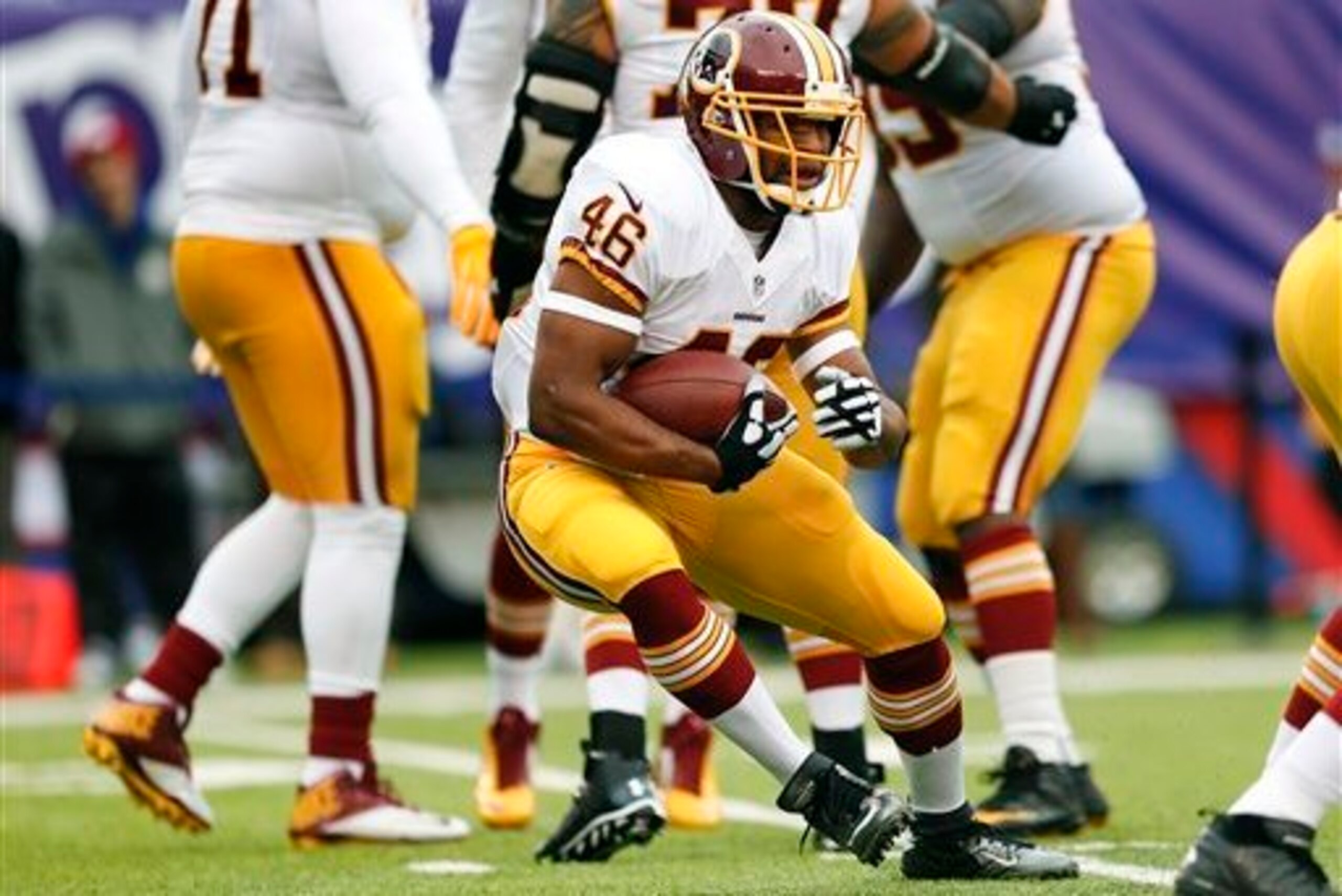
The 2012 sixth-round pick has tallied three 1,000-yard rushing seasons in a row behind zone blocking. But skeptics will argue the ex-Florida Atlantic ace is merely a product of the famed Shanahan scheme.
After all, it's a system with a well-established pedigree for turning unknown and unheralded ground hogs into overnight stars. Shanahan was a virtual running back whisperer during his stint in charge of the Denver Broncos.
Terrell Davis, Olandis Gary, Mike Anderson, Reuben Droughns and Clinton Portis all topped 1,000 yards when sprinkled with the Shanahan magic dust in the Mile High City.
Although only Morris made the grade in D.C., it's easy to believe others might have done the same. Ryan Torain and Tim Hightower both looked impressive in the scheme in 2010 and 2011 before injuries struck.
Then there are 2011 draftees Roy Helu Jr. and Evan Royster. Both produced 100-yard games as rookies and were unfortunate only because of Morris' emergence the following offseason.
So it's clear that in this case the scheme does make a difference. That will put Morris under the glare of a potentially unforgiving spotlight.
If he can't still thrive behind the gap blocking and running the power plays Gruden likes, per CSN Washington writer Rich Tandler, he'll fade into obscurity as quickly as Anderson and Droughns did.

Morris' consistency might be at risk, but there's one significant silver lining to Gruden ditching this particular Shanahan-esque philosophy. It virtually guarantees an overhaul of a pitiful O-line.
A power-based offense demands bigger blockers than those currently on the roster. From the front office to the sideline, Washington's decision-makers haven't been shy about their desire to get bigger up front this offseason.
It started with the arrival of new general manager Scot McCloughan. In the same report that discussed Gruden's preference for power, Tandler recounted McCloughan's belief that football is a "big man's game."
In case you had any doubt what he meant, McCloughan made it clear:
"I think at any position, all the sudden you get to February and January and stuff – especially playing in this kind of climate – you need big guys up front. There’s going to be bad weather games where you have to run the ball 30-35 times.
"
What McCloughan envisages will never happen with the mighty mites who currently call the offensive trenches home in Washington. It certainly wouldn't happen with Chris Foerster continuing to coach the line.

He was a Shanahan hire brought in to make zone techniques the fashion up front. Enter Bill Callahan, the line guru poached from hated NFC East rival the Dallas Cowboys.
Callahan spent his last season in the Lone Star State directing the league's second-best ground game. The foundation of the DeMarco Murray-led attack was a massive line loaded with size and former No. 1 picks.
Here's how the Cowboys starters in 2014 compared to the Redskins:
| Player | Team | Position | Height | Weight |
| Tyron Smith | Dallas Cowboys | Left Tackle | 6'5" | 320 pounds |
| Zack Martin | Dallas Cowboys | Left Guard | 6'4" | 310 pounds |
| Travis Frederick | Dallas Cowboys | Center | 6'3" | 315 pounds |
| Ronald Leary | Dallas Cowboys | Right Guard | 6'3" | 320 pounds |
| Doug Free | Dallas Cowboys | Right Tackle | 6'6" | 325 pounds |
| Trent Williams | Washington Redskins | Left Tackle | 6'5" | 337 pounds |
| Shawn Lauvao | Washington Redskins | Left Guard | 6'3" | 315 pounds |
| Kory Lichtensteiger | Washington Redskins | Center | 6'2" | 296 pounds |
| Chris Chester | Washington Redskins | Right Guard | 6'3" | 303 pounds |
| Tom Compton | Washington Redskins | Right Tackle | 6'5" | 308 pounds |
There's not a massive difference, but it's significant that all five of the Cowboys starters weigh 310 pounds or more. Three even come in tipping the 320 barrier.
That's the kind of size Callahan will need to make his power-based blocking schemes work. One unnamed NFL executive told ESPN Redskins reporter John Keim that Callahan is "heavier on the power and gap scheme. He excels at power, but he knows zone stuff, too.”
In another report for CSN Washington, Tandler stated how power blocking has been the mode of choice for Callahan throughout his career:
"Although Callahan knows the zone, it is something that has been more of a change of pace for him. His preferred style is to have his guys push the other guys out of the way and create a hole for the runner to go through. That meshes well with McCloughan’s and Gruden’s philosophies.
"
So you should expect to see a few larger linemen in front of Morris during the 2015 season. Big guys blocking man-for-man, driving defenders back through the mud while Morris plows the dirt behind them. That's probably as anti-Shanahan as it gets.
So is a more attacking, unorthodox version of the 3-4. That's what Gruden hired new defensive coordinator Joe Barry to put in place ahead of the new season.
Shortly after the hire, Gruden made it clear what type of defense he expects in his second year, per Mike Jones of The Washington Post: “It’s not a two-gap 3-4. It might be more of a shoot-the-gap-type of 3-4, a get-up-the-field-and-rush-them 3-4.”

That would be a refreshing change from the intermittently aggressive but mostly passive version of the defense Shanahan insisted on. The type of defense that was mostly still evident last season.
Playing a one-gap style will make greater use of the two main advantages of a 3-4. Namely, its hybrid flexibility and moving pieces.
Barry has just come from a San Diego Chargers scheme that let talented, athletic linemen such as Corey Liuget and Kendall Reyes attack. You know the Redskins want their linemen to do the same when one of the first moves made after hiring Barry was to dismiss Shanahan's line coach, Jacob Burney, per ESPN 980 (h/t Mike Jones of The Washington Post).
A more daring philosophy will make better use of a player like veteran defensive tackle Jason Hatcher. Signing the aging but still effective 3-technique last offseason was a pretty good indicator of what Gruden wants from his three-man line.

Hatcher gets through gaps rather than simply occupying them. Turning him loose more often will make his disappointing first year in D.C. look like nothing more than a blip.
Gruden will be hoping the same perception is given to his four-win dismal debut season. He has the look of a coach who's experienced an early scare and is now determined to do things his way.
That way first requires significant changes up front. The lines are the foundation of their respective units and dictate how they play. They defined what Shanahan wanted and what Gruden had to live with in 2014.
But in 2015, they're set to be the foundation of a team that no longer resembles Shanahan's Redskins.