
5 Biggest Takeaways from Los Angeles Clippers' 1st Half of the Season
The Los Angeles Clippers are in the midst of a crazy-weird season. It seems like everything we're hearing about this team is negative.
The Clippers can't play defense. The Clippers have no bench. The Clippers have no depth at small forward.
Yet, L.A. somehow sits at 31-14, fourth in the Western Conference and just 1.5 games back of the Memphis Grizzlies for second.
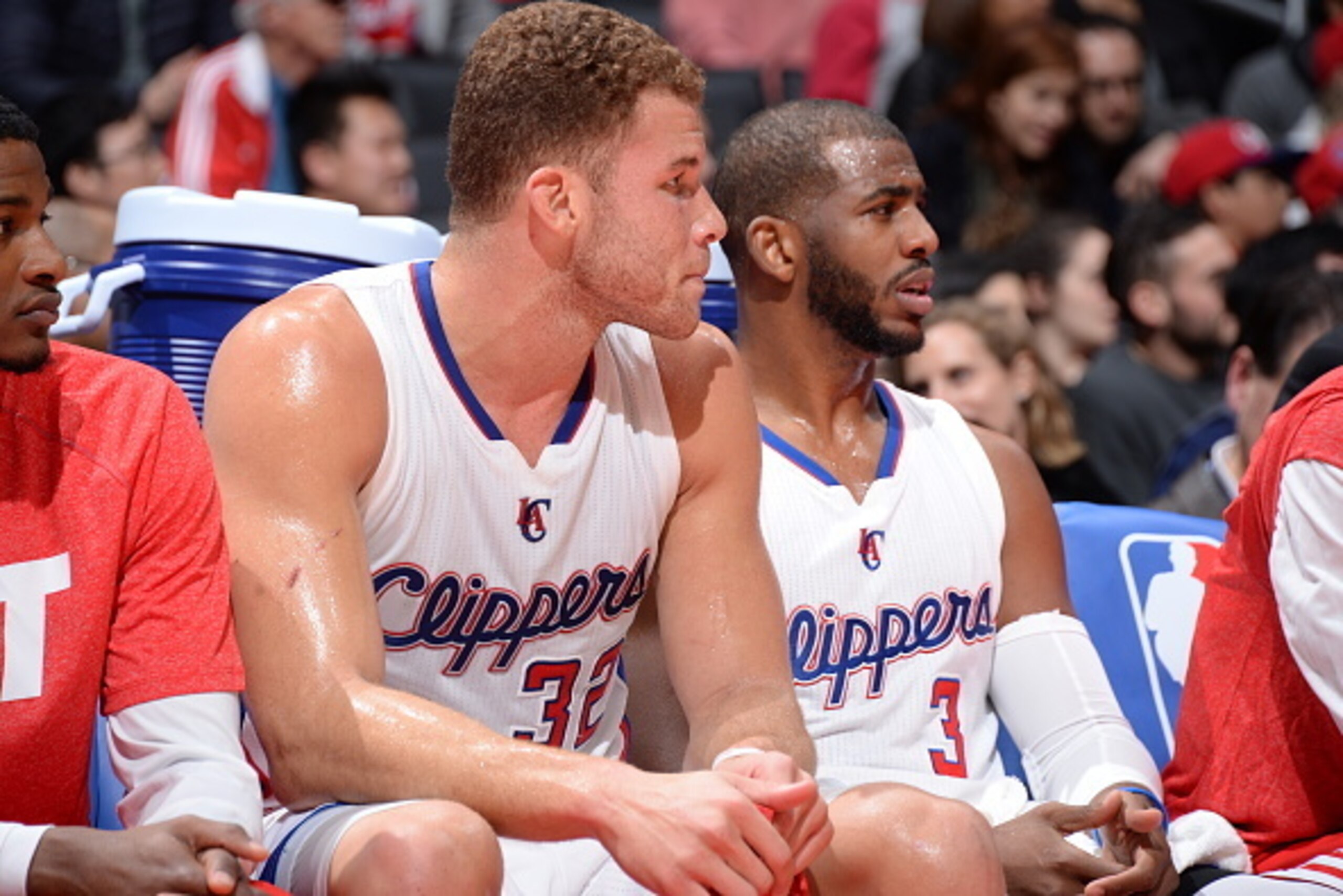
The Clippers do a lot of good too, as you'd expect from a team that houses Blake Griffin and Chris Paul, two of the 10 or 15 best players in the NBA.
Still, through a little more than half the year, we know the Clips are good enough to feast on the poor, but they don't look like contenders. And considering the expectations placed on this team coming into the season, such a statement is disappointing.
Shooting Is Better
1 of 5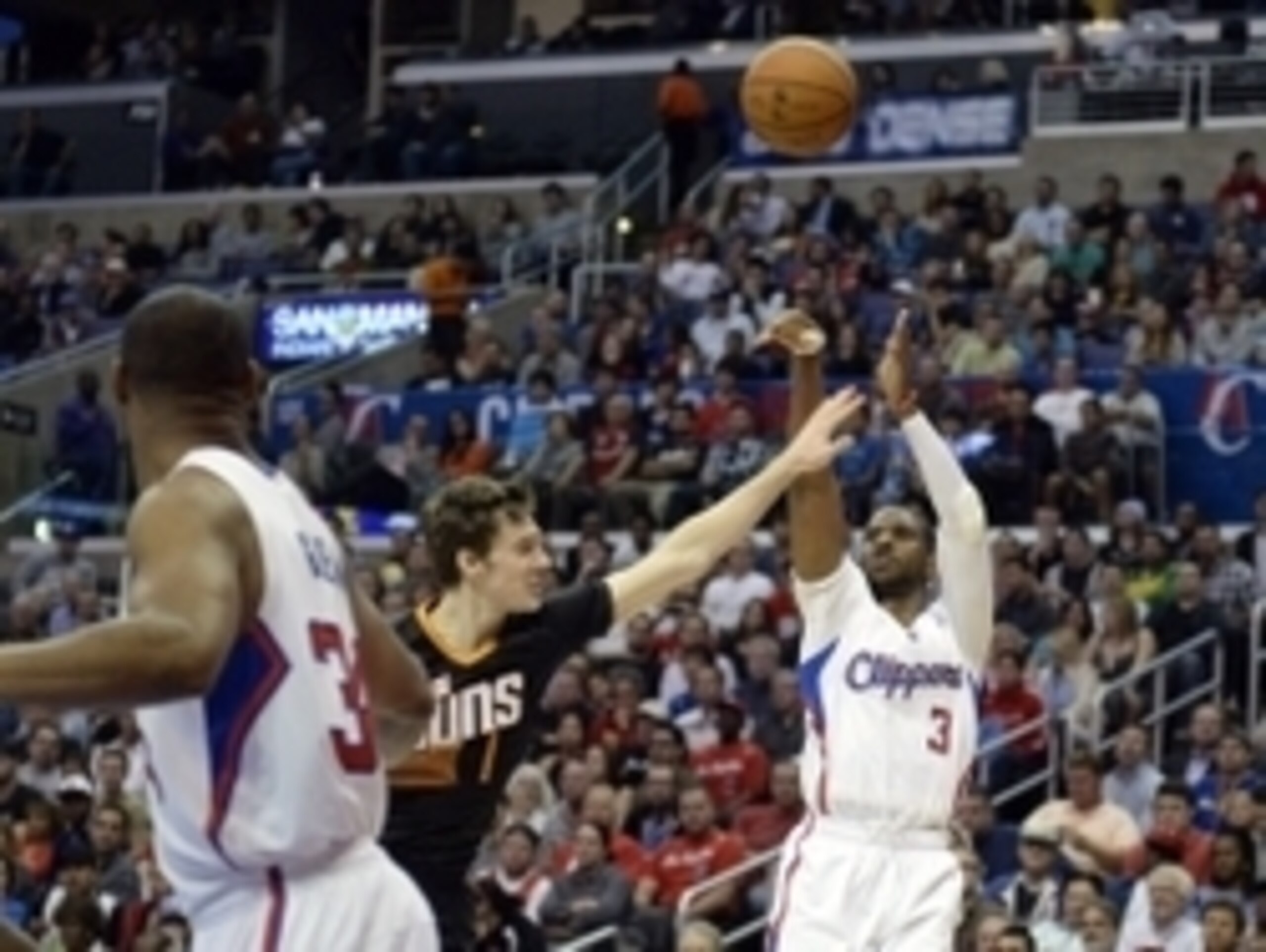
The Clippers were one of the more fascinating statistical case studies last year.
(I know if you really want someone to read an article, you make sure the opening line involves the phrase "statistical case study.")
L.A. held the No. 1-ranked offense in the league on a point-per-possession basis, but here's the weird part: The Clippers didn't actually shoot well at all.
Los Angeles made just over 35 percent of its three-point shots, seeing a few guys have down shooting years. And the Clips rode those results all the way to the 22nd-best three-point percentage in the league.
This year, that's all different.
Paul is hitting 40 percent of his long balls. Sharpshooter J.J. Redick is at a career-high 44 percent. Matt Barnes is sinking a career-high as well, knocking home 39 percent of his attempts.
Now, the Clippers are owners of the NBA's third-best percentage from beyond the arc—quite the difference.
Once again, the offense ranks best in the league. The points are just happening in a different way.
Blake Isn't the Same Style
2 of 5
At the beginning of the year, the talk about Blake Griffin surrounded his improved jump shot, but it quickly changed.
His developing outside game turned from an extreme positive to a slightly above-average one with criticisms about his reliance on the mid-range game coming with each 18-footer that would slip off his fingertips.
Thirty-eight percent of Griffin's field-goal attempts have been from 16 feet out to the three-point line this season. Those shots have never made up more than 27 percent of his attempts for a full season. But what if this is what Blake is now?
We thought this was a phase at the start of the year (along with the decreased rebounding), but Griffin could just be a mid-range-oriented player at this point (and he is hitting an above-league-average 41 percent of his attempts from that area).
If the Clippers are preferring to lock up DeAndre Jordan, a 2015 free agent, come this summer, it may not be the worst thing in the world for Griffin to work on finding comfort in an expanded game.
Jordan loves to hang around the rim. It's all he can do. If Griffin is there all the time too, then you have to deal with the spacing issues those two provided circa 2011.
Griffin taking mid-range shot after mid-range shot is hardly ideal. You still want to see his explosion around the rim in the pick-and-roll. His post game, meanwhile, is one of the best in the league. You don't want dominant facets of basketball offset by the least efficient shot on the floor. But tales of his regression may be a tad exaggerated.
What if this Malonian style is part of his journey to becoming a three-point shooter (something that's very possibly going to happen down the line)?
It's not preferred that Griffin continues taking his mid-range shots, but it's something we can learn to live with.
Defense Isn't the Same
3 of 5
For all the flack the Clippers defense got a year ago, it was actually one of the better ones in the league.
Jordan helped lead his team into the NBA's top 10 in defensive efficiency, turning it into a legitimate contender. But the defense has been way worse this year.
It's not necessarily the fault of Jordan, who finished third in Defensive Player of the Year voting a season ago. He's been about the same, leading the league in rebounding for the second consecutive year while blocking 2.4 shots a night and acting as the Clippers' best rim protector and help defender.
We've all said it before, and we'll all continue to spew the same statement for the whole season: The Clippers need wing defenders.
Barnes is still a quality defensive player, but he has the athleticism of a 34-year-old, as he should. Redick isn't a bad team defender, but he struggles guarding better athletes in one-on-one situations. Jamal Crawford's game has always been offensive-minded.
Reggie Bullock is gone. C.J. Wilcox doesn't exist. Austin Rivers is...we're not getting into this.
The Clippers defense now ranks 15th in points allowed per possession, as average as possible, a noticeable drop and a sign of the inconsistency we've seen all season. Even Paul hasn't been quite as solid a defender on the year.
Everyone's just slipped a little bit, and the Clippers have collectively dropped because of that.

Bench Needs Fixing
4 of 5
This is where it gets hard to watch.
It's an unspeakable problem if you can't play your bench unit together. And Doc Rivers is still doing that, but not with much confidence.
The main theme of the season has been the starting lineup building up big leads only to give them away once it hands the game over to the bench. Clippers units with three or more reserves haven't had much success at all. You can just tell from the on/off court numbers.
The team is an absurd 13.9 points per 100 possessions worse when Spencer Hawes is on the floor. And...oh my gosh, it's 18.9 points per 100 (18.9!!!!!) worse when Glen Davis plays. What is that?
There's a reason the Clippers starters have played 839 minutes together, 269 more than any other five-man unit in the NBA: Rivers can't trust more than six players (his starters with Crawford off the bench).
Maybe this won't be as big a deal as everyone thinks.
After all, you want continuity and familiarity in the playoffs. The Clippers are getting that with the amount their starters have played together. Benches also tend to matter less come the postseason, when rotations shorten and the best players begin to play more minutes.
Still, one injury and the Clippers are finished. One situation where they have to show off Hawes, Rivers, Davis and Hedo Turkoglu, and they'll get rocked by a better team. If the starters are gassed by playoff time, it's an unfixable problem. The bench is a concern, as is the man who pieced it together.
Bad Move After Bad Move from Rivers
5 of 5
Where should we start?
We could begin at the Eric Bledsoe trade, when Doc Rivers started the chain of events which would lead to many of his poor acquisitions as the Clippers' de facto general manager, but let's not beat a dead horse.
We could talk about the Jared Dudley deal from over the summer, when the Clippers included a first-round pick to unload Dudley, who has promptly had a solid comeback season acting as the type of the player the Clips miss: a wing who can shoot and play a little defense. But in order to do that, we'd need to discuss the Spencer Hawes deal, which hard-capped the Clippers and sent them into salary-cap hell.
(The Clippers received Miroslav Raduljica and Carlos Delfino in that trade, both of whom they waived immediately to create cap room. In a Gchat the other day, ClipperBlog's Andrew Han casually mentioned the irony that had Delfino not been hurt, those are two players who fit two of L.A.'s biggest needs.)
The Clippers used cap room from the Dudley trade to sign Ekpe Udoh, who never plays, Turkoglu, who shouldn't play, and Chris Douglas-Roberts, who was traded to create cap room for Austin Rivers.
So, the Clippers traded a helpful piece and a future first-rounder to create space for a guy they would bench after three games and then trade to create cap room? How many times do I have to italicize the phrase, "trade to create cap room?" Can we talk about how little sense this makes?
Actually, let's not. I'm about to pop a blood vessel.
Fred Katz averaged almost one point per game in fifth grade but maintains that his per-36-minute numbers were astonishing. Find more of his work on ESPN's TrueHoop Network at ClipperBlog.com. Follow him on Twitter at @FredKatz.
Unless otherwise noted, all statistics are current as of Jan. 27 and are courtesy of Basketball-Reference.com and NBA.com.

.jpg?w=2560 "Chiefs, Steelers Eye WR Trades")