College Football Rules That Need to Be Changed
After shooting wildly with the targeting rule, college football hit the mark for the 2014 season by making a change to its controversial penalty calls.
No longer would a player called for targeting—only to have replay officials determine that wasn't the case—still get hit with a 15-yard infraction after his ejection is overturned.
There are still several other rules the game continues to swing and miss on, however. Some are cosmetic, while others would clear up some big differences between the college and pro games.
Until these changes are made, these outdated or inscrutable rules will remain a source of great consternation.
Check out our suggestions for six college football rules that need an upgrade.
Allow Slogans on Backs of Jerseys
1 of 6Names are not required on the backs of jerseys in college football, so why have a rule legislating what can be written in the space?
The NCAA only allows three FBS schools—Air Force, Army and Navy—to put something other than a player's name on the space above the numbers on the backs of their uniforms. Yet for every other school it's a surname or nothing at all.
A handful of teams wanted to go with non-names in 2014, yet each was rebuffed. Vanderbilt still went ahead and wore its "Anchor Down" jerseys for the season opener against Temple and nearly paid a steep price.
"We sent an email design concept to the NCAA football rules committee, got a cursory response which says, 'It looks good to us,'" Vanderbilt athletics department spokesman Rod Williamson said via David Climer of The Tennessean. "We thought that meant every piece of the communication was fine."
Initially, officials working the game announced that the Commodores' uniform violation would result in a loss of a timeout for each quarter those jerseys were worn. That ruling was quickly overturned, though it didn't help Vandy in the long run, as it was blown out 37-7 in its first game under new coach Derek Mason.
This isn't a matter of schools wanting their players to stand out, like with the old XFL and its use of nicknames on jerseys. Instead, it's meant more to inspire camaraderie and solidarity, as with South Florida coach Willie Taggart's (disallowed) wish to have "The Team" on the back of the Bulls' tops.
Apply NFL's Two-Feet-Down Rule for Catches
2 of 6College sports are becoming pseudo-professional outfits, with power conferences' autonomy rights paving the way for players to eventually be compensated for the services they provide. In that respect, why don't we make college football a little more like the pro game and have some of the differing rules become more aligned?
Ones dealing with player safety will be harder to change, such as allowing a player to return kickoffs fielded in the end zone or not ruling a player down if he went to the ground untouched. Yet there's nothing keeping college football from adopting the NFL's two-feet-down rule for catches along the sideline and in the end zone.
As it stands, college players only need to get part of one foot down (while having control of the ball) for it to be ruled a reception or touchdown. In most cases, the receiver ends up getting both down in some capacity, but he doesn't have to.
Knowing they only need to drag a single toe across the turf for it to count as a catch in college, some receivers could develop techniques that won't fly when they get to the pros. Suddenly, a guy who was a master at navigating the sideline tightrope won't be able to make a big catch.
Make the receiver get both feet down for it to be a catch. He'll thank you later.
Create Early Signing Period
3 of 6
In less than a week, thousands of 17- and 18-year-olds will be signing national letters of intent with the schools at which they want to spend the next three to five years. For a great number of these future athletes, their decisions were made long ago, but they couldn't make them official until Feb. 4.
This often leads to other prospective schools bombarding long-committed players during those final weeks to sway impressionable teenagers into "flipping" to their program from the one they've been pledged to for quite some time.
Had there been an early signing period in college football, like there is in nearly every other sport, a lot of this last-second craziness wouldn't happen.
"The current recruiting model is hamstrung by archaic rules that fail to account for the changes that have occurred to the process in recent years—most notably the acceleration of the timeline between when prospects are offered and when they commit," Bleacher Report's Sanjay Kirpalani wrote. "The early signing period would eliminate the clutter for recruits who have already made their decisions a long time ago."
A formal proposal to add an early signing date has been made, with a vote possible this spring. It would allow high school players to sign beginning Dec. 16, 2015, the same date that junior college players can first sign, while the existing signing day on the first Wednesday of February would remain.
While this change would take away some of the drama that comes from national signing day, it would also take a lot of stress off players who aren't interested in remaining on the recruiting trail long after making their college choices.

Institute Coach-Player Electronic Communication
4 of 6
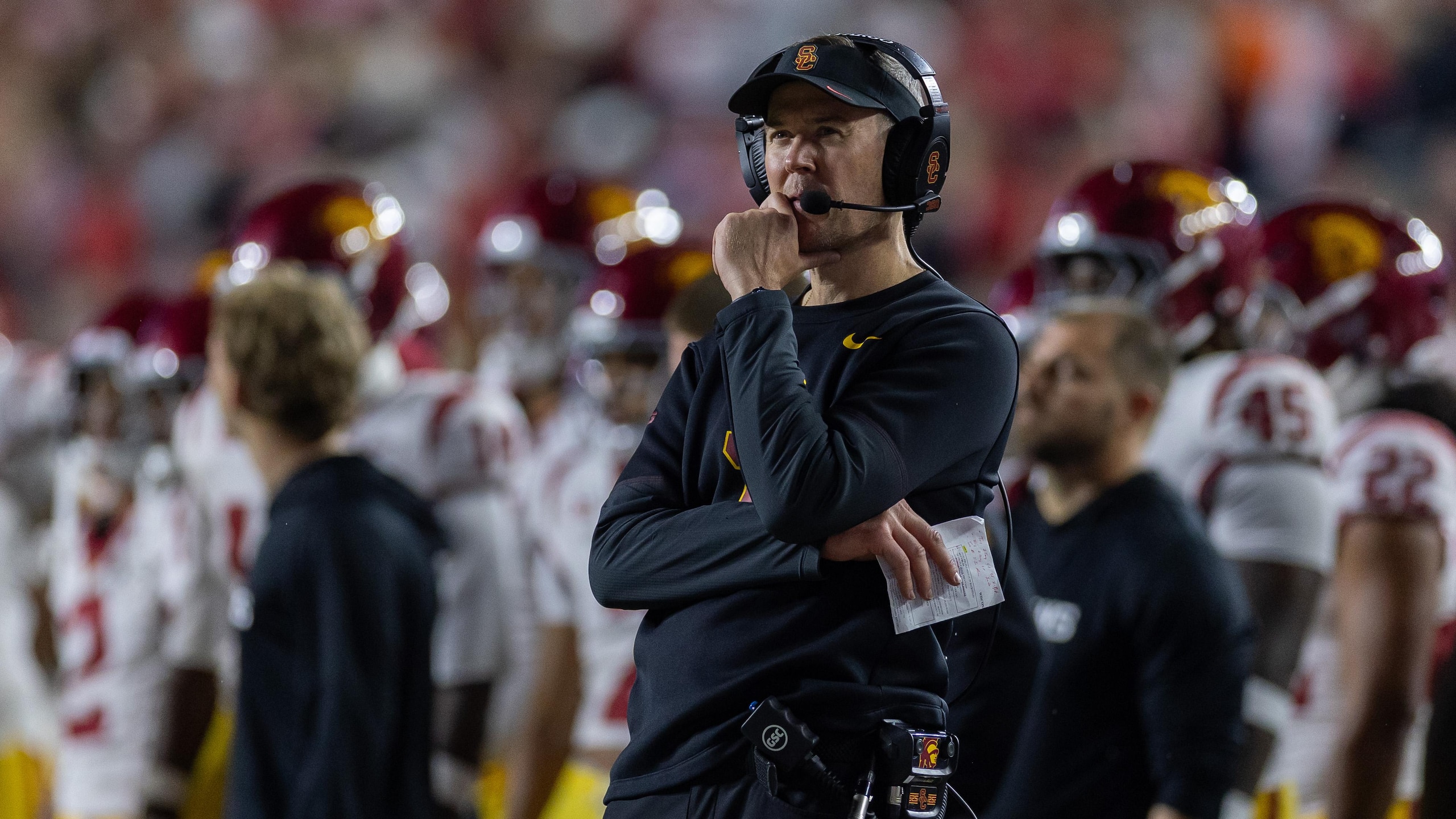
As entertaining as it is to see assistant coaches and student managers holding up large signs with four seemingly random pictures on them—while others on the sideline flash various hand signals—does sending in a play to the quarterback have to be such an intricate process?
It used to be that teams would send in their play calls with a substitute who ran onto the field after the previous snap had ended, but the advent of hurry-up offenses and minimal subbing has made this process way outdated.
So too is the approach of having the quarterback run toward the sidelines after each play to get a verbal directive from the head coach or offensive coordinator, then hustle back to the huddle (remember those?) to give that information to the rest of the team.
Now it's all hand gestures and giant signs with food, shapes and headshots of ESPN personalities.
Why not allow for one player on either side of the ball—the quarterback and defensive captain would make the most sense—be fitted with communication equipment in his helmet so he could hear (and talk with) coaches and get plays? Teams would still likely throw in some plays via the sideline, especially when it comes to audibles, but it would make for a much better flow to the games.
Leave Conference Title Game Determination to the Conferences
5 of 6
In order to have a conference title game, a league has to have at least 12 teams and separate them into two divisions. The division champs then play to determine a winner, which in many cases earns an automatic bid to a major bowl game (or could earn a spot in the College Football Playoff if the team is ranked high enough).
There are 10 FBS conferences, and only seven meet these criteria. An eighth, the American Athletic Conference, is adding Navy for 2015 to get to 12 teams and have a title game between its East and West Division winners.
This process isn't flying with some leagues anymore, particularly the ACC and Big 12, which have submitted proposed legislation to eliminate the requirements for number of teams and who plays in the game.
The 10-team Big 12 is the only league in which every team plays each other, prompting the use of "One True Champion" as its conference slogan, yet when neither Baylor nor TCU got an invite to the first playoff semifinals, one of the reasons given for the Big 12's snub was the lack of a 13th (read: conference title) game to enhance those teams' resumes.
The ACC would prefer not to make it automatic that the Atlantic and Coastal champions meet for the conference title. This past season was a great game featuring the league's top two teams, defending national champion Florida State and Georgia Tech. The year before, however, the two best clubs (FSU and Clemson) were in the same division, but only the Seminoles got to play for a title by virtue of their regular-season win over the Tigers.
Ideally, the ACC would like its two highest-ranked teams playing for the championship.
The NCAA doesn't have a say in which teams play in which conference, so why should it get to decide how each declares its champion? In college basketball, the Ivy League is allowed to award its automatic NCAA tournament bid to its regular-season champion, while every other conference goes with its league tourney champion.
The ability to have varied championship criteria should also exist in football, especially as long as winning a conference remains an achievement of such great importance.
Require Goal-Line Cameras
6 of 6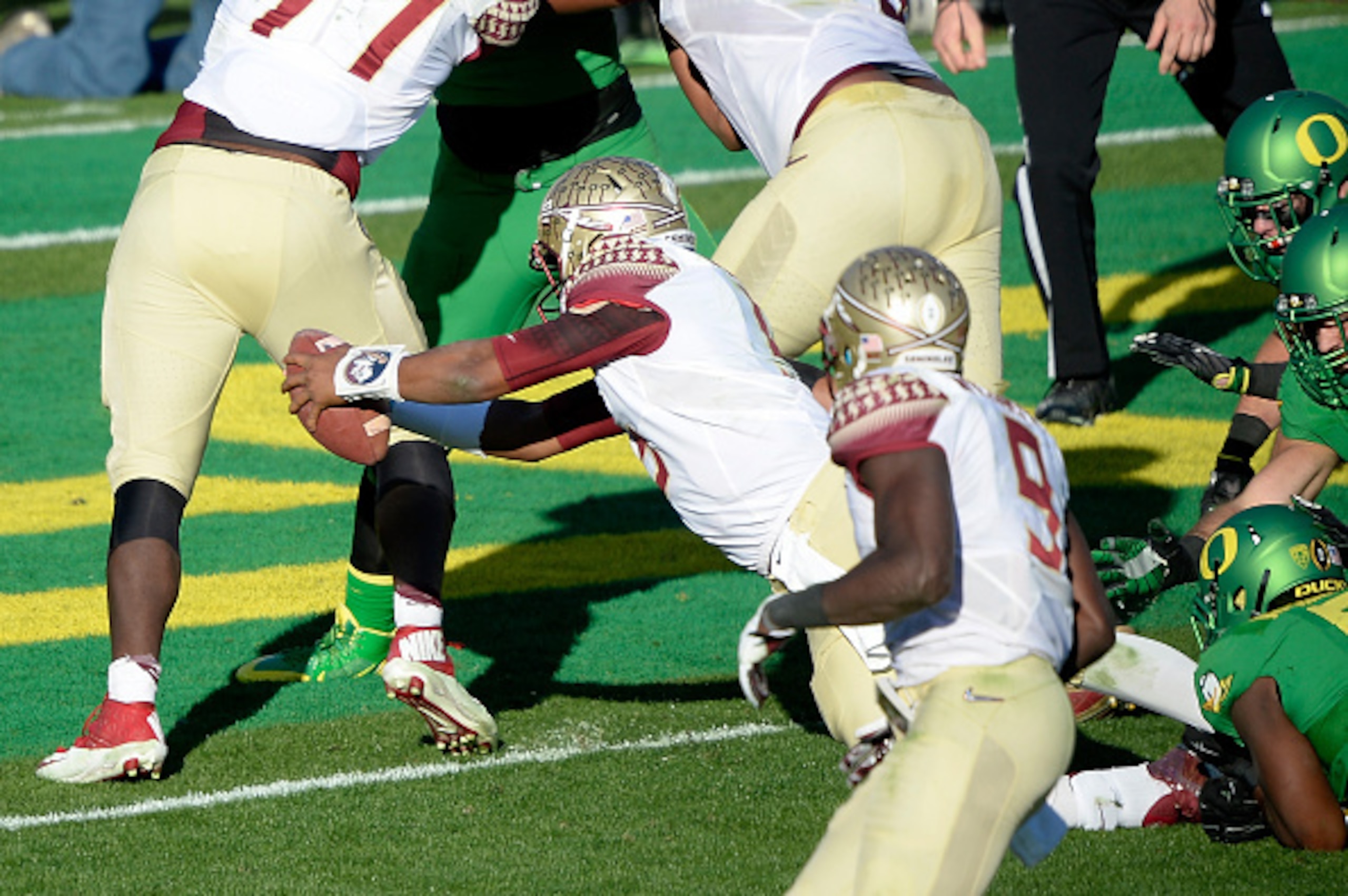
The year is 2015. While the hoverboards or self-tightening sneakers that Back to the Future Part II promised us haven't come to fruition, that doesn't take away from the fact that we're in an age of nearly constant technological advances that keep making life easier.
Yet we still haven't managed to make it the industry standard to put a camera on the goal line.
"In this day and age with the technology available, there is simply no excuse for the lack of goal-line technology to help make the correct ruling in a football game," Kevin McGuire of NBC Sports wrote.
Keep your fingers crossed, though. During the national championship game between Ohio State and Oregon, ESPN put a tiny camera inside the pylons at the front corners of the end zone.
Considering the amount of money that networks like ESPN and others pay to broadcast college football games, it doesn't seem too outlandish to think some of that revenue could be used to install these cameras at every game.
Follow Brian J. Pedersen on Twitter at @realBJP.
.png?w=2560)
.png?w=2560)
.jpg?w=2560 "Chiefs, Steelers Eye WR Trades")