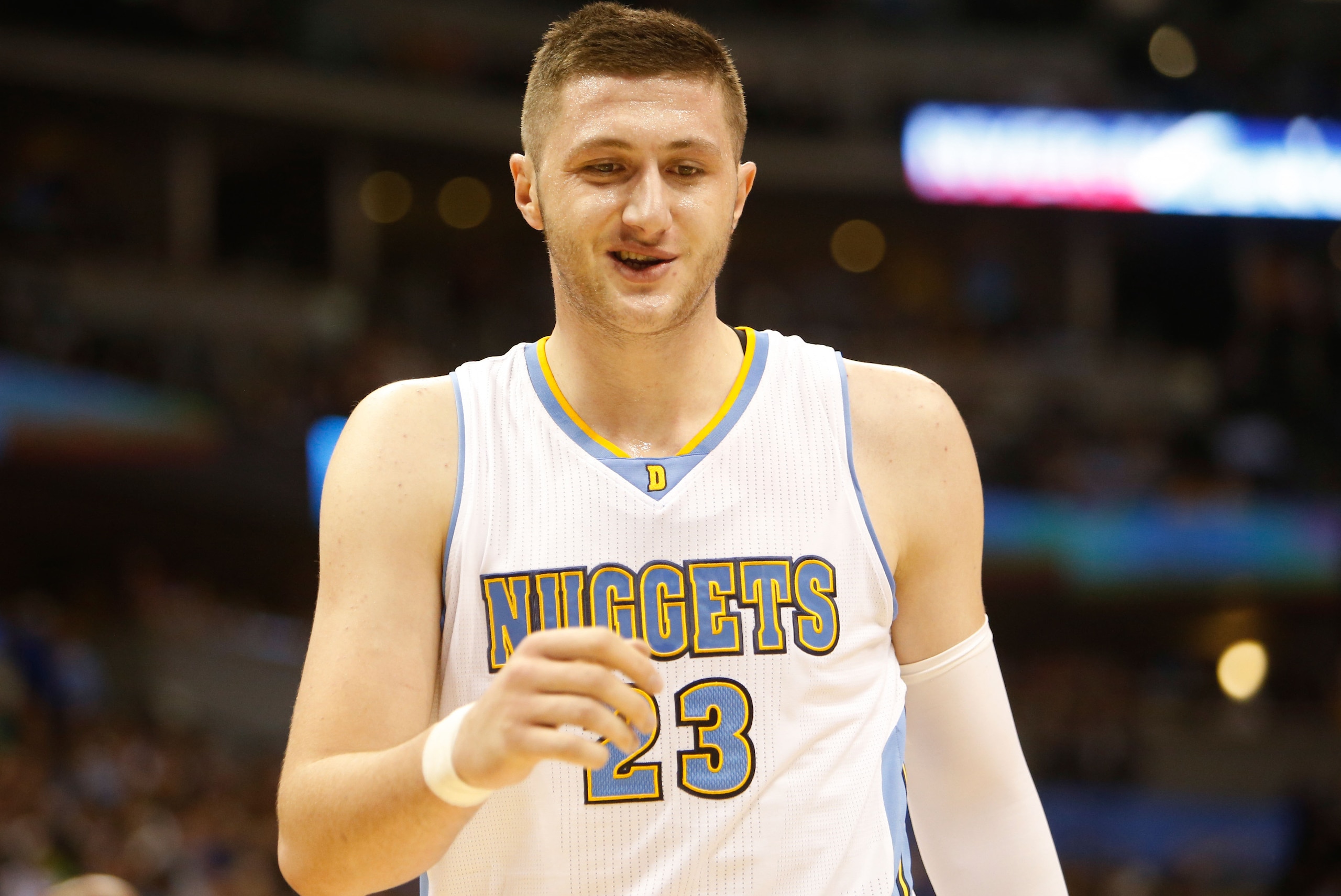

Re-Drafting the 1st Round of the 2014 NBA Draft, Midseason Edition
What if NBA teams had a chance to redo the previous draft midway through the season?
That's what we'll simulate as we unveil a first-round re-draft of the highly anticipated 2014 class. It's an opportunity for these clubs to change their picks based on what we've seen from the top prospects so far.
This was a messy group to assess, however. That's partially due to the group underachieving, but it's largely due to widespread injuries.
A slew of promising studs have been hit with some sort of affliction: Jabari Parker, Joel Embiid, Aaron Gordon, Marcus Smart, Julius Randle and Doug McDermott have all been sidelined with significant wounds at some point.
Where would everyone land if we reset the draft-night clock? We mapped out whom each team would choose, based largely on how the prospects have performed this season and also on teams' fluctuating needs.
Based on finalized 2014 draft order, including draft spots that were traded on draft night.
1. Cleveland Cavaliers: Andrew Wiggins, Kansas SG/SF (6'8")
1 of 30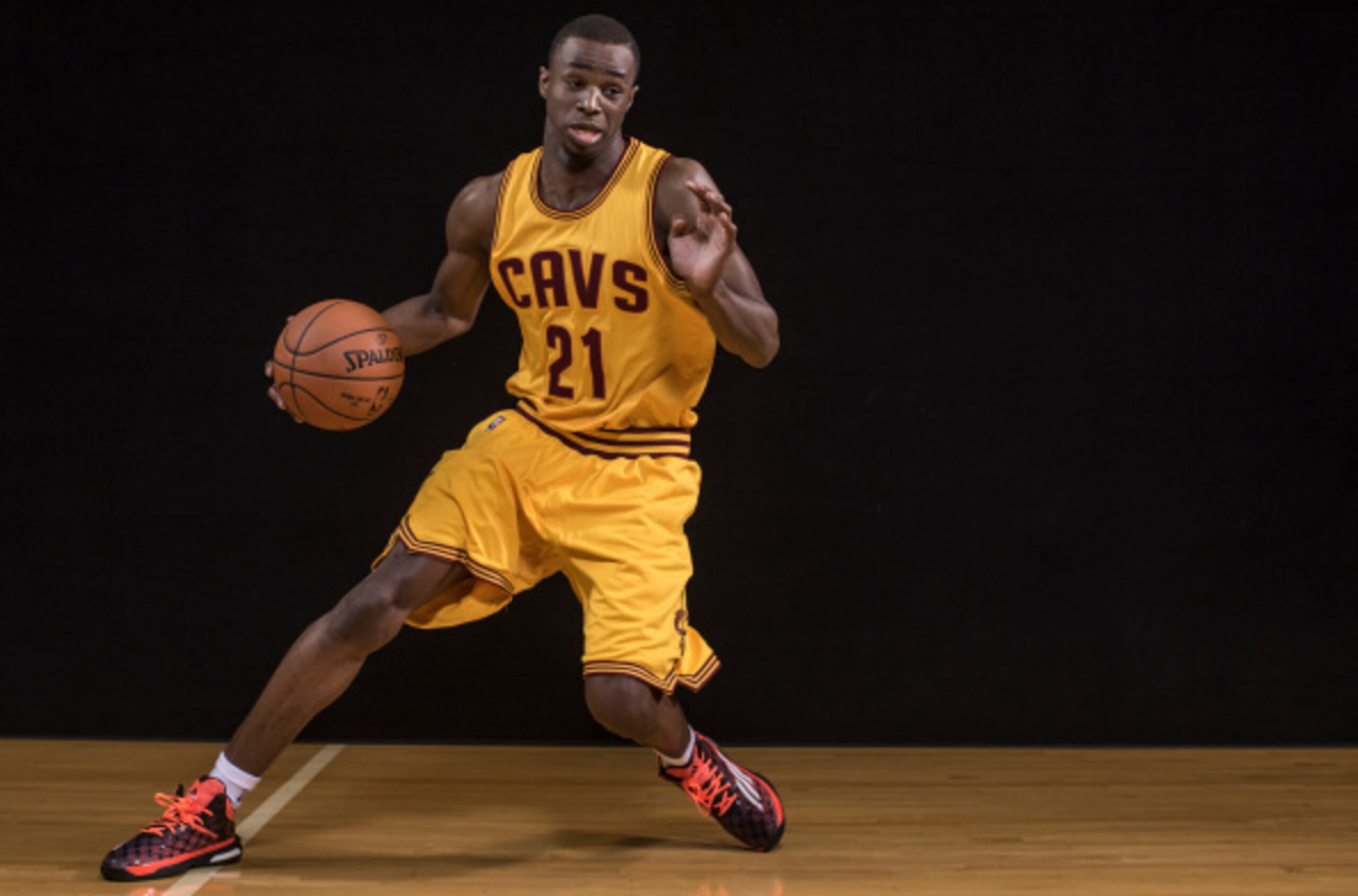
Original 2014 Draft: No. 1
Few teams have transformed as much in the past half-year as the Cleveland Cavaliers.
Their selection of Andrew Wiggins at the top of the 2014 draft was shortly followed by an avalanche of moves: the return of LeBron James, the trade for Kevin Love, the shipment of Dion Waiters and the acquisition of Timofey Mozgov.
It's still too early to judge the Love trade, but regardless of their late-summer movements, the Cavs would pick Wiggins again in a re-draft scenario.
So far, he stands out as the best asset in this young crop, and he certainly holds the most value when it comes to tangible potential. Wiggins has thrived in the NBA's uptempo style, and he's shown increasing confidence as a scorer and playmaker. In January, he's averaging 19.2 points and 2.5 assists per game.
His phenomenal athleticism and quickness is aiding him on defense and in transition as well. Wiggins clearly has the tools to become a versatile stopper, and his open-floor exploits are dynamic. There's really not much of an argument for anyone to go ahead of him.
2. Milwaukee Bucks: Jabari Parker, Duke F (6'8")
2 of 30
Original 2014 Draft: No. 2
Armed with smooth offensive skills and a strong, agile body, Jabari Parker is one of the most talented one-and-done prospects you'll find outside of megastars such as Carmelo Anthony, Kevin Durant and Anthony Davis.
While his upside is a notch lower than Andrew Wiggins', it's still quite lofty. And although his athleticism is also not in Wiggins' stratosphere, he's extremely quick and agile for someone his size. Parker can do a truckload of damage in the open floor, and he can create buckets from a variety of half-court sets.
Prior to his ACL injury, the Duke star was having a less-than-amazing rookie campaign. He wasn't dominating many games or shooting with much accuracy. However, his December numbers were better than his November marks, and it's probable that he'd find a groove later in the season if he wasn't sidelined.
When you watch some of his better rookie performances, you can tell he's got the moves and court sense to become a featured option and a consistently productive offensive anchor. He remains the clear-cut No. 2 pick from this draft class.
3. Philadelphia 76ers: Joel Embiid, Kansas C (7'0")
3 of 30
Original 2014 Draft: No. 3
Yes, Joel Embiid's pre-draft navicular bone injury makes him a gamble. And there were reports from Keith Pompey of Philly.com of him skipping conditioning sessions and weighing nearly 300 pounds recently. However, he has since denied those reports, admitted to weighing 275, according to Dei Lynam of CSNPhilly.com.
He's a risky pick, one whose rehab requires patience.
Fortunately, the Philadelphia 76ers are a franchise with a rebuilding timetable. And let's not forget, Embiid is the type of risk/reward specimen who could pay huge dividends in the frontcourt.
Given Nerlens Noel's disjointed offensive game and Philly's need for dependable frontcourt production, the Cameroon native is a worthwhile investment. For those who have forgotten about Embiid's appeal and versatility, enjoy a refresher in the form of his two-way dismantling of New Mexico or his eye-popping pre-draft workout.
The big fella's size, blossoming skills and unteachable instincts are too good to pass up at No. 3.

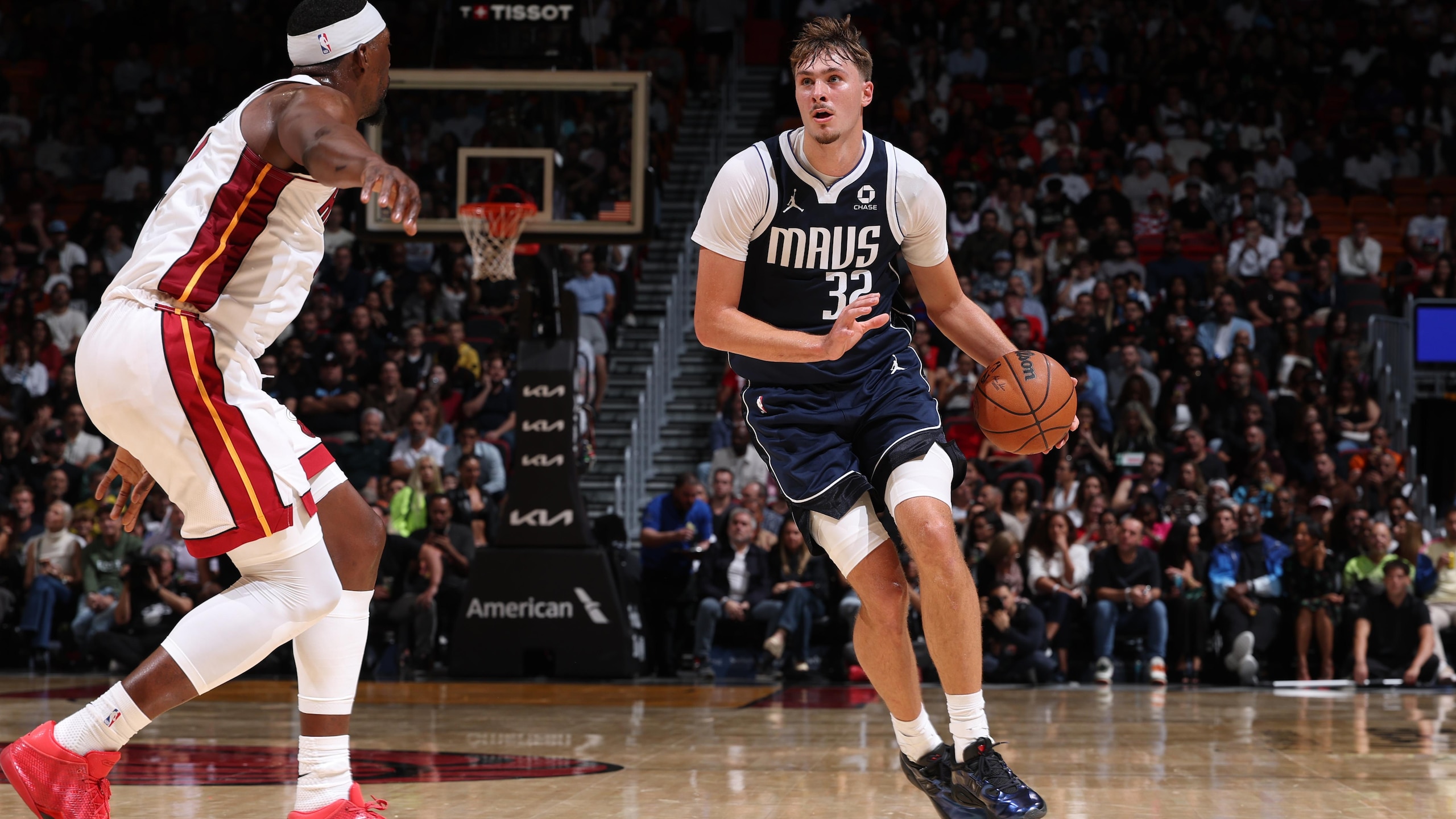
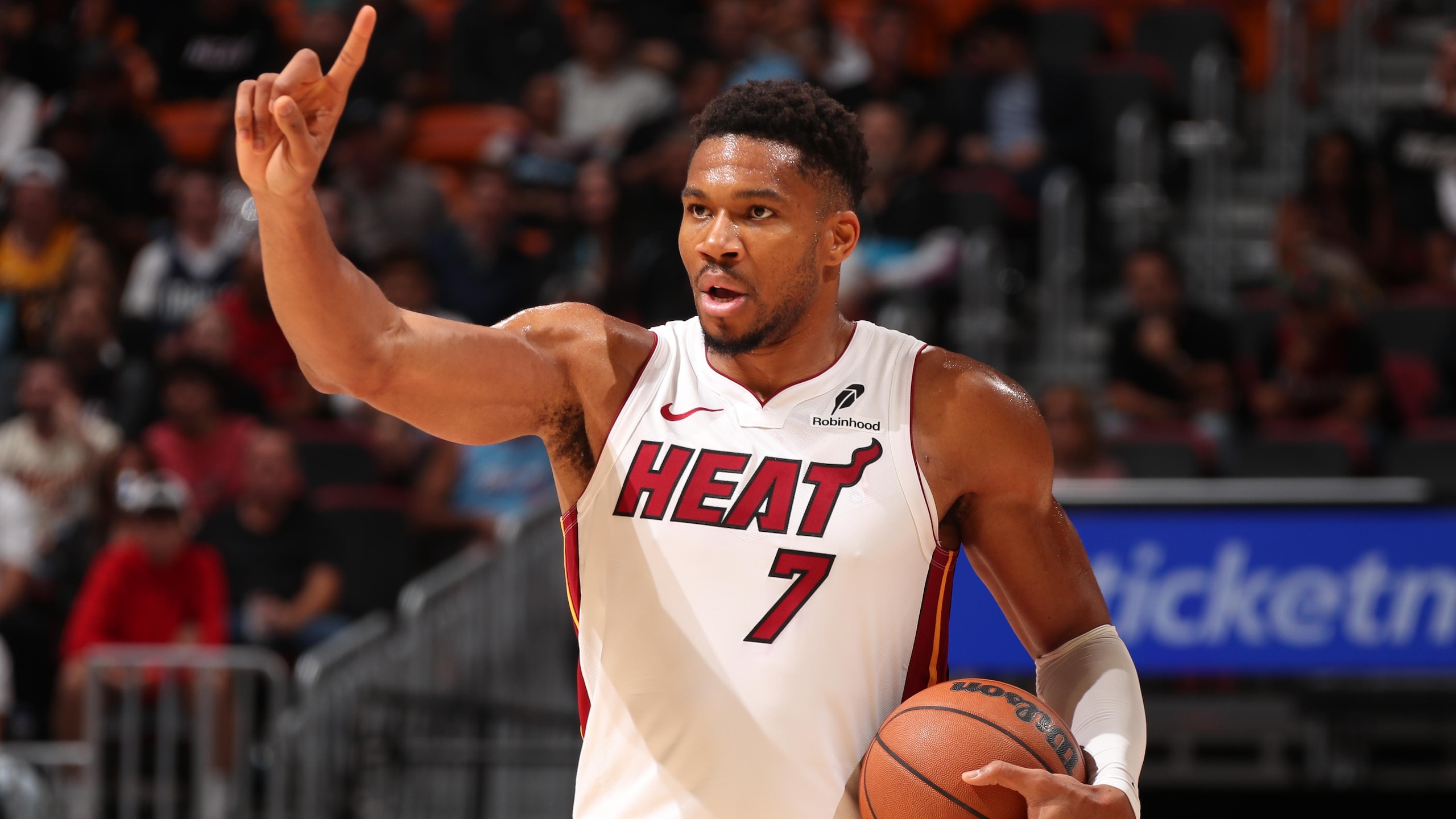
4. Orlando Magic: Elfrid Payton, Louisiana-Lafayette PG (6'4")
4 of 30
Original 2014 Draft: No. 10 (traded from PHI to ORL)
With apologies to Aaron Gordon, Elfrid Payton is a more uniquely essential part of the Orlando Magic rebuilding process. Now that he looks like the real deal at point guard, they would be willing to take him as the first floor general off the board.
As he prepared to enter the league, defense was his signature strength, and it's been as potent as advertised thus far. He can contain or pressure opposing ball-handlers and already exhibits outstanding instincts and timely aggressiveness as a ball hawk.
At the helm of the offense, his playmaking has been impressive for a youngster coming from a mid-major. He makes calculated slashes, consistently sets up his teammates (7.5 assists per 36 minutes) and is gaining confidence as a mid-range shooter.
While his three-point stroke is still a project, he gives the Magic tons of value on both ends of the floor. Two-way guards like him don't grow on trees, so they should snatch him up early in the re-draft.
5. Utah Jazz: Dante Exum, Australia PG/SG (6'6")
5 of 30
Original 2014 Draft: No. 5
Dante Exum has had an underwhelming and rocky rookie season, but it's too early in his career for the Utah Jazz to pass on him our re-draft. The 6'6" Australian prodigy has shown enough glimpses of brilliant passing, shooting progress and defensive tools to warrant the investment.
Due to his length and instincts, he's already enhancing the team as a defender, distributor and shooter. He can guard many opponents that Trey Burke couldn't possibly check, and he can shoot or pass over people in ways that Burke-sized players cannot.
We thought he would be more of a slasher than a shooter to start his NBA career, but it's actually the other way around so far. Once Exum drives with more confidence, he's going to be a multifaceted offensive threat.
On defense, he's already making a huge impact for Quin Snyder's unit. The Jazz give up 105.2 points per 100 possessions when he's on the floor, and they plummet to 114.4 when he's sitting, per 82games.com.
Fellow rookie Marcus Smart summed up Exum's situation simply and succinctly, telling Ben Dowsett of Salt City Hoops: "He’s playing very well on the defensive end, and his offense is going to come."
6. Boston Celtics: Marcus Smart, Oklahoma State PG (6'3")
6 of 30
Original 2014 Draft: No. 6
Speaking of Marcus Smart, he also gets re-drafted to the same squad.
Given what's already transpired in our re-draft, the Celtics should feel fortunate that a strong, talented competitor like Smart is still available. And their inclination to trade Rajon Rondo makes this a rock-solid pick.
Even though his offensive production isn't outstanding in box scores, his recent shooting improvement and passing efficiency are tremendously encouraging. Cleaner shooting habits have yielded 44 percent shooting on catch-and-shoot triples, and he's sporting a pristine assist-to-turnover ratio of 5.3 in January.
And Smart's defense doesn't look like a 20-year-old's either. He's got a great feel for guarding playmakers, and his relentlessness and physical wares will make him one of the NBA's top stoppers for the next decade. Boston has several other spots to shore up in addition to point guard, but it can't let him slip away.
7. Los Angeles Lakers: Julius Randle, Kentucky PF (6'9")
7 of 30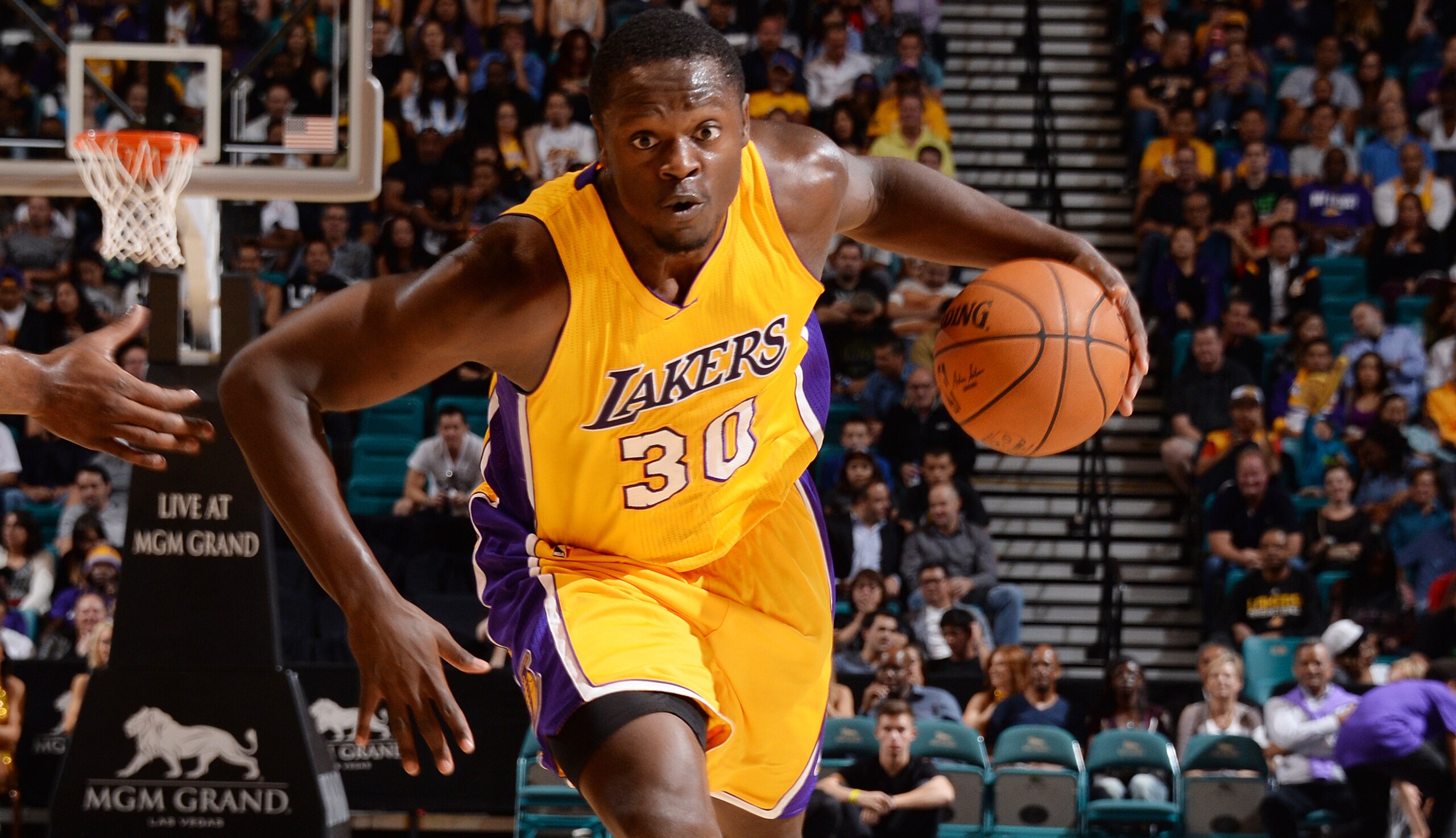
Original 2014 Draft: No. 7
With all the top floor generals off the board, the Los Angeles Lakers are looking for the best wing, forward or center available at No. 7.
With no home-run wing in the mix, the decision likely comes down to Bosnian center Jusuf Nurkic or Kentucky star Julius Randle. Nurkic has been surprisingly effective as a rookie, but Randle's dynamic, budding versatility edges him out.
Thanks to his broken tibia suffered on opening night, the selection of Randle is clouded. We haven't seen him battle full-fledged NBA competition. However, he showed enough creativity and power in the preseason to indicate he'd be in the Rookie of the Year conversation.
During several exhibition stretches, he emerged as the best player on the floor. His ability to post, face up, rebound and go coast to coast is exactly what L.A. needs moving forward.
8. Sacramento Kings: Dario Saric, Croatia F (6'10")
8 of 30
Original 2014 Draft: No. 12 (traded from ORL to PHI)
This pick is not really about what the Sacramento Kings would do; it's more about what they should do. Instead of trying to figure out what the heck is going on in their collective front office, let's talk about who's the best prospect for them.
Regardless of whether Dario Saric would remain in Europe after being drafted by Sac-Town, he's a valuable asset in its quest to be a perennial contender.
The two-time FIBA Europe Young Player of the Year and 2014 Adriatic League MVP is only 20 years old, and he'll be ready to contribute whenever he enters the league. He possesses great size, ball-handling prowess and a promising shooting stroke.
He'll serve as a unique point forward at times, and sometimes he'll be a stretch 4. Those tasks and roles are both desperately needed in Sacramento.
9. Charlotte Hornets: Doug McDermott, Creighton F (6'8")
9 of 30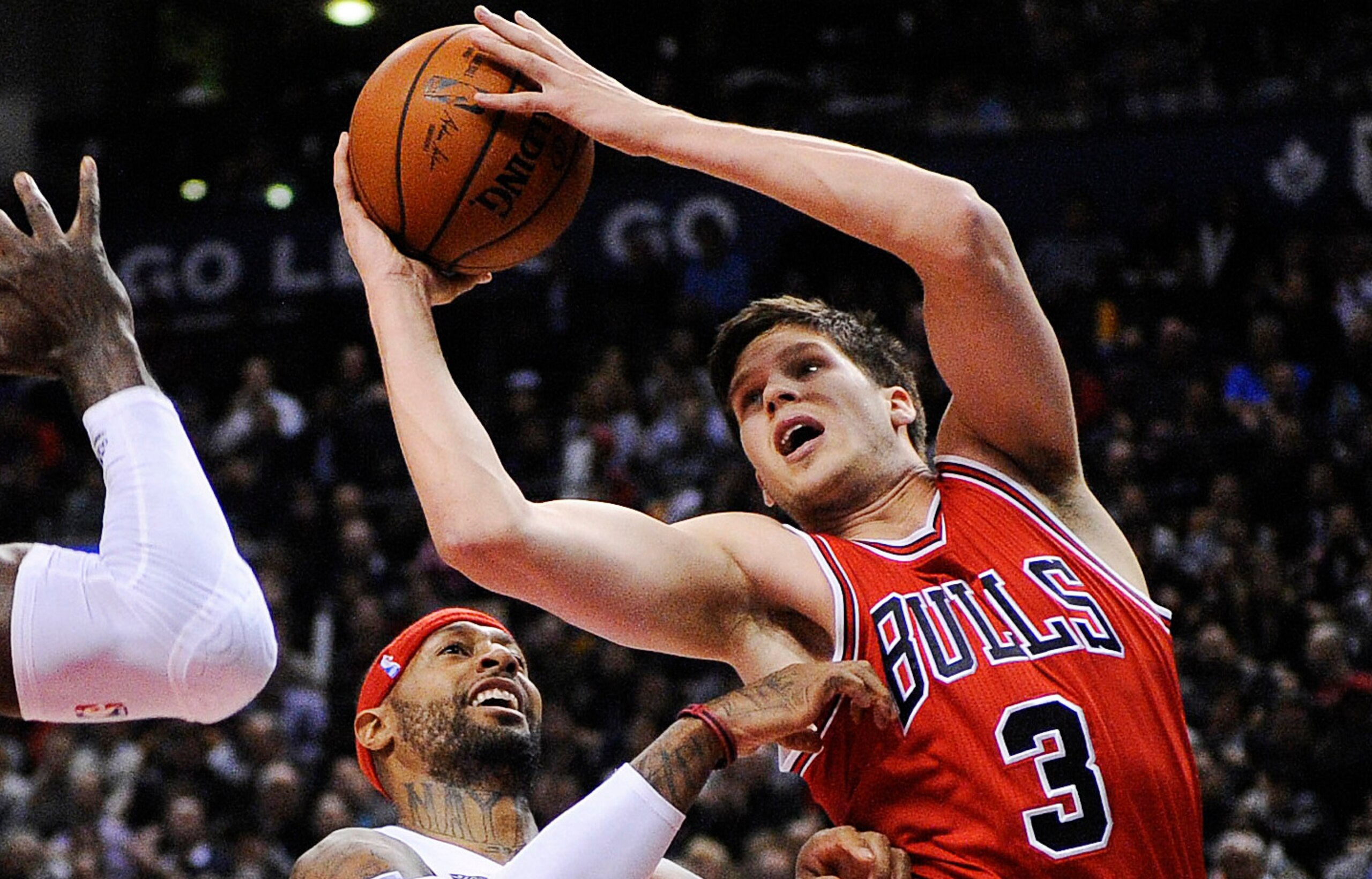
Original 2014 Draft: No. 11 (traded from DEN to CHI)
The Charlotte Hornets are drafting based on need here. Instead of choosing a risk/reward power forward, Steve Clifford's crew adds a well-equipped small forward shooter with size on the wing.
Doug McDermott would provide Buzz City with something it's been woefully lacking: perimeter production and efficiency. Clifford's offense is a bottom-five unit in three-pointers and three-point percentage.
McDermott won't just give the Hornets confident, steady outside shooting—he'll also make solid decisions with the rock and connect from mid-range. The now-23-year-old had a relatively uninspiring month-and-a-half before arthroscopic knee surgery sidelined him, but his playing time would be more consistent in Charlotte's lineup than it was in Chi-Town.
It doesn't look like he'll ever be a great defender, but it's not for lack of effort. It's something the Hornets can deal with while he supplies long-range ammunition.
10. Orlando Magic (via PHI): Aaron Gordon, Arizona F (6'9")
10 of 30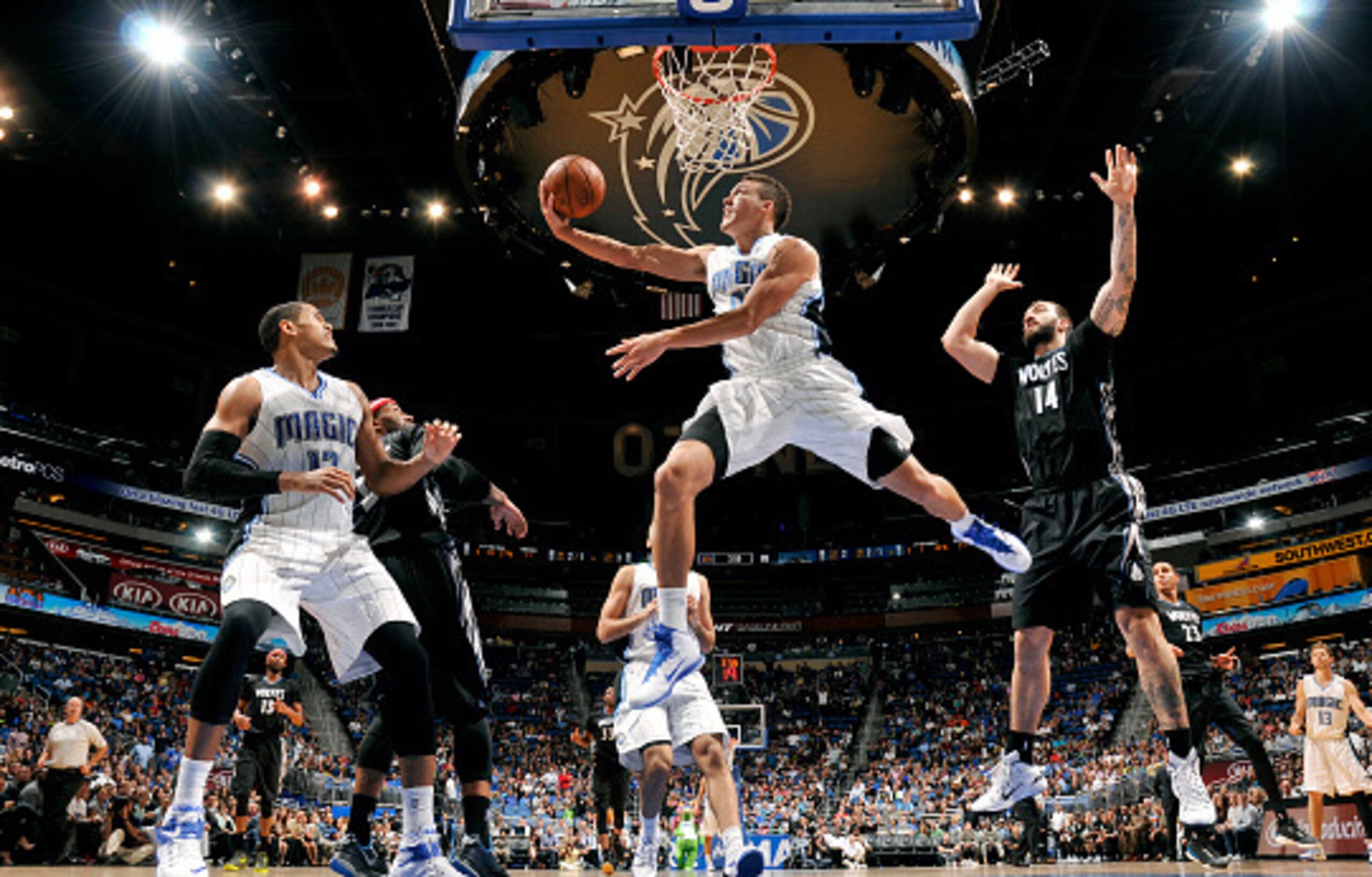
Original 2014 Draft: No. 4
Not all teams are this fortunate in the re-draft. The Orlando Magic got to reclaim both of their promising lottery picks, nabbing Aaron Gordon after Elfrid Payton this time around.
Gordon is a terrific value selection here at No. 10. He's the type of versatile forward who will bolster Orlando's frontcourt defense, and his magnificent basketball IQ helps him maximize his athletic tools on the offensive side.
The Arizona standout hasn't really played enough as a rookie to find his niche, as he missed two full months due to his broken foot. But in limited time, the springy power forward has shown he can impact the game all over the floor; he's not just a defender who attacks the rim, as he can also make difficult passes and shoot from three-land.
With more experience and more confidence, he'll rapidly become a crucial, multidimensional cog for this up-and-coming Magic club.
11. Chicago Bulls (via DEN): K.J. McDaniels, Clemson SF (6'6")
11 of 30
Original 2014 Draft: No. 32
Tom Thibodeau's Chicago Bulls are well-stocked in the frontcourt (when healthy), so their re-draft target would most likely be a guard or wing. Their original pick, Doug McDermott, is already gone, so they need to find a new face to plug into their playoff-caliber rotation.
Instead of reaching for an unproven underclassman playmaker (such as Zach LaVine, Gary Harris or Tyler Ennis) or a shooter with suspect defense (Nik Stauskas), the Bulls should take the prospect who best fits their system. Enter Clemson product K.J. McDaniels.
The 6'6" wing has emerged as one of the best rookies in the 2014-15 class. His numbers are tricky to judge because he plays for the bottom-feeding Philadelphia 76ers, but the eye test shows he's a defensive stalwart and an athletic specimen in space.
With a healthy dose of Thibs' guidance, McDaniels would fit in extremely well in Chicago's system.
12. Philadelphia 76ers (via ORL): Jusuf Nurkic, Bosnia C (6'11")
12 of 30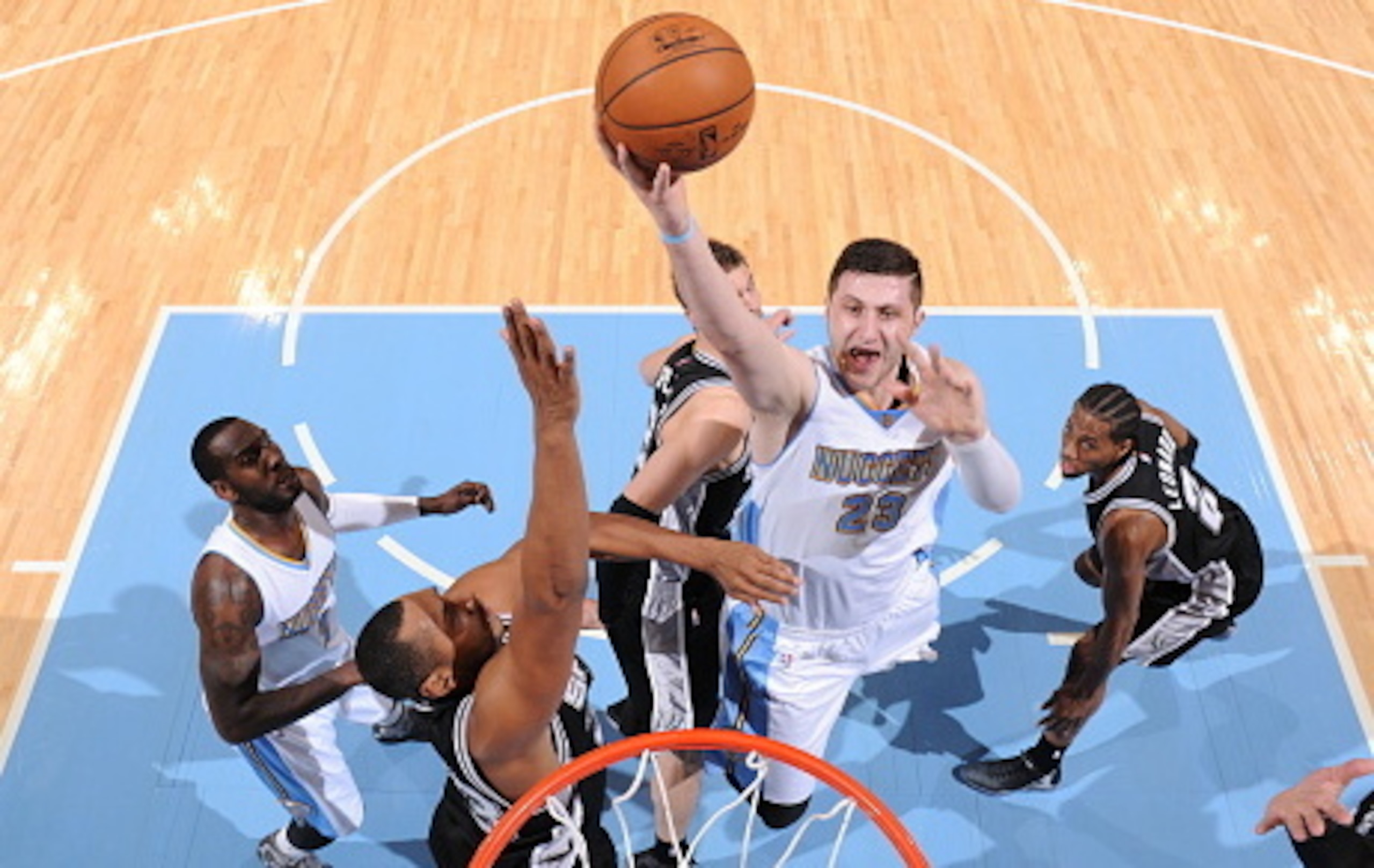
Original 2014 Draft: No. 16 (traded from CHI to DEN)
That's right, the Philadelphia 76ers will take another big man in the lottery.
First, this pick is about taking the best player and top asset available, even if it means taking centers with back-to-back picks. Joel Embiid's future remains risky, and Nerlens Noel has come up short offensively, so Nurkic is a nice insurance policy with upside.
The Bosnian big fella is ultimately the most valuable prospect at this juncture of the draft, especially based on what he's done compared to the rest of the 2014-15 rookie class.
"(Nurkic) was still considered a raw talent last June, one that may struggle to compete in the NBA right off the bat due to his youth and body type," said CBS Sports' Sam Vecenie. "But this season, Nurkic has shown that we may be watching a budding star at the center position. To this point, Nurkic has been a per-minute monster."
His bruising frame and sneaky-good skills have yielded 14.9 points and 13.5 rebounds per 36 minutes. Nurkic has the mindset and talent to hold his own against almost anyone in the paint, even if his efficiency and defensive discipline require polishing.
13. Minnesota Timberwolves: Noah Vonleh, Indiana PF (6'9")
13 of 30
Original 2014 Draft: No. 9
Noah Vonleh hasn't proved anything at the NBA level yet.
However, his upside is too mountainous and his skills are too useful for the Minnesota Timberwolves to pass at this stage in the draft.
Flip Saunders' squad could use a stretch 4 who can shoot over opponents from inside and out, and it would also benefit from a rim protector in the frontcourt. Vonleh can help in both areas.
As he learns the nuances of NBA defense, the teenager will alter plenty of shots near the basket and employ his rebounding capabilities. Meanwhile, his offensive game includes a jump shot that extends out to the three-point line.
He's not ready to excel yet, but the T-Wolves aren't exactly hunting for a title in 2015...or 2016. He's worth the risk and the lengthy development process.
14. Phoenix Suns: T.J. Warren, N.C. State SF (6'8")
14 of 30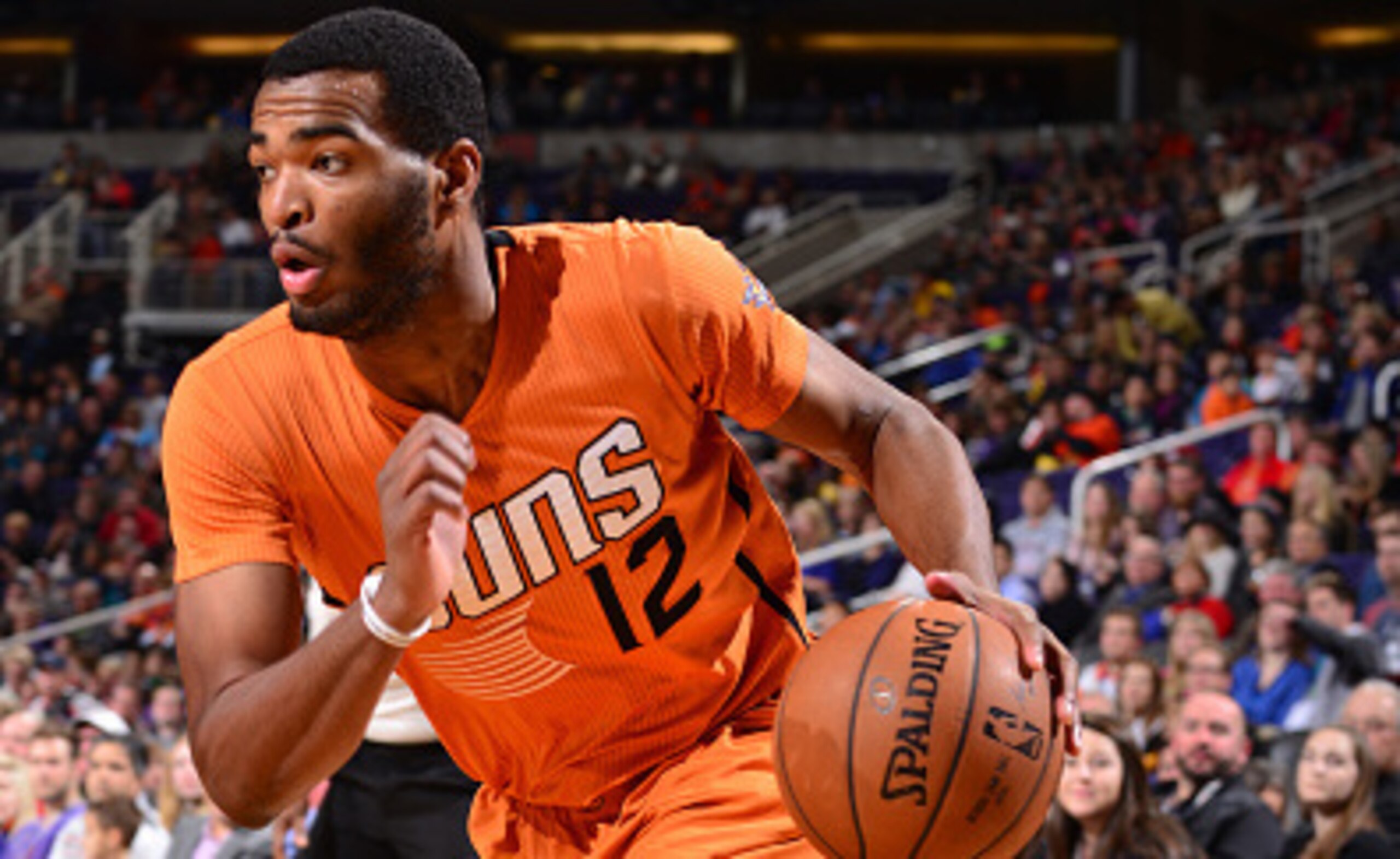
Original 2014 Draft: No. 14
At the original draft, the Phoenix Suns' selection of T.J. Warren seemed like a slight stretch considering the tempting options that were still on the board at the time.
After seeing the 2014-15 rookie class fall short of expectations, it doesn't seem like much of a stretch at all. The 2013-14 ACC scoring champion is arguably the most gifted offensive weapon remaining on the board, even if he's only notching a modest 13.8 points per 36 minutes as a rookie.
Due to Phoenix's depth and Warren's youth, he's split time between the big leagues and the D-League. But he's definitely more than a D-League player, as he's tallied 29 or more points in five of his seven tilts with the Bakersfield Jam.
Warren shot an unsightly 27 percent from the college three-point arc in 2013-14, but he's hitting 33 percent of his triples this season for the Suns and the Jam. If he can continue to refine his perimeter firepower, then his mid- and close-range games will become even more crippling for opponents.
15. Atlanta Hawks: Adreian Payne, Michigan State PF (6'10")
15 of 30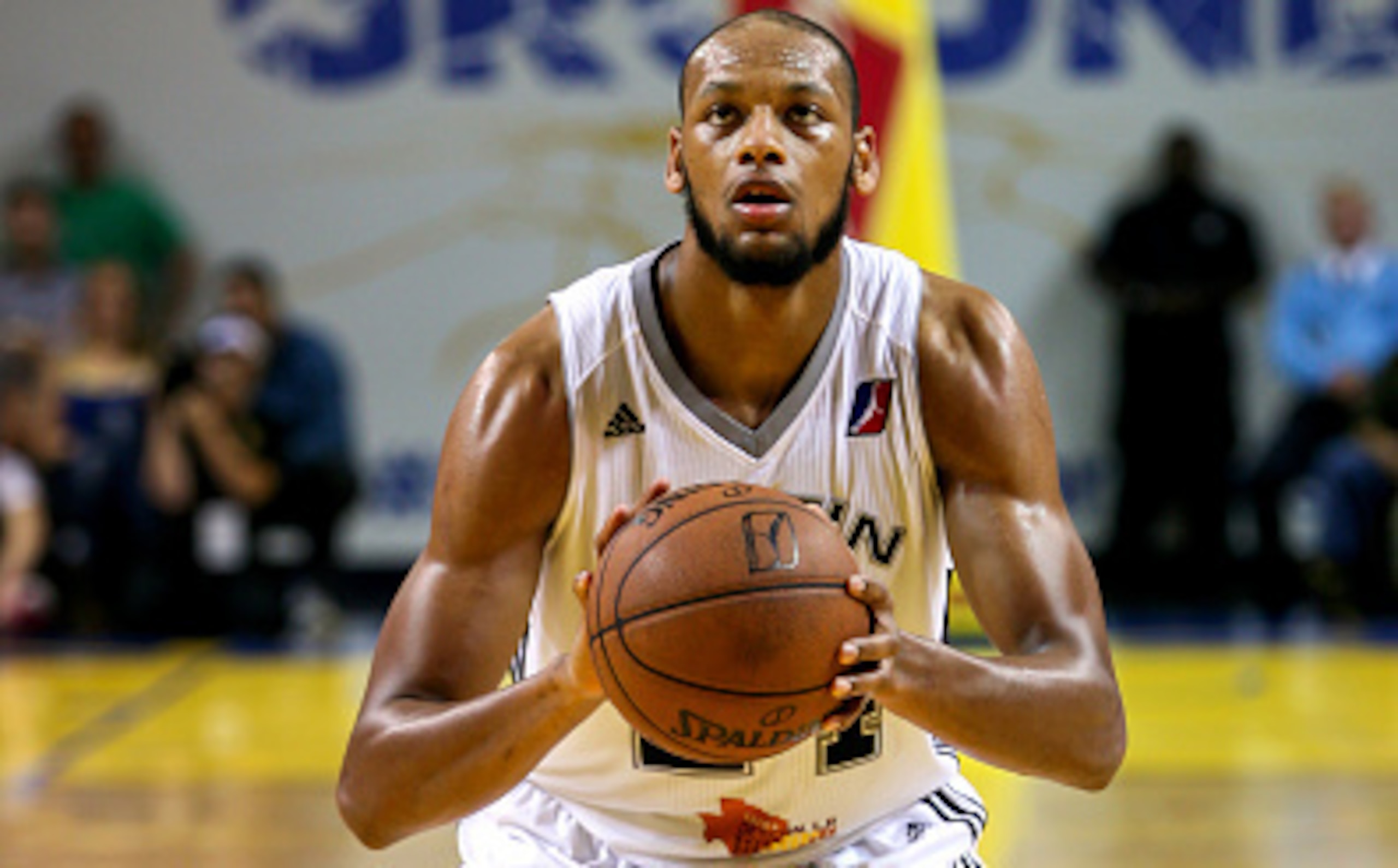
Original 2014 Draft: No. 15
Apparently, the Atlanta Hawks didn't need to add any rookies to their East-leading rotation in 2014-15.
However, their 2014 draft pick is an important one for the future, especially because a couple different power forwards might find new homes. Both Paul Millsap and Pero Antic could leave via free agency in 2015, so the Hawks need to shore up their 4-man depth.
Even though Adreian Payne has bounced in and out of the D-League, he's a solid bet for the future.
He's an unselfish player who has the length to rebound, score over opponents and hit outside jumpers. Payne is still adjusting to the NBA arc, but with increased touches and confidence, his smooth shooting motion will start to crank out efficient results. Atlanta's hoping he can be a key rotational stretch 4 down the road.
16. Denver Nuggets (via CHI): Zach LaVine, UCLA G (6'5")
16 of 30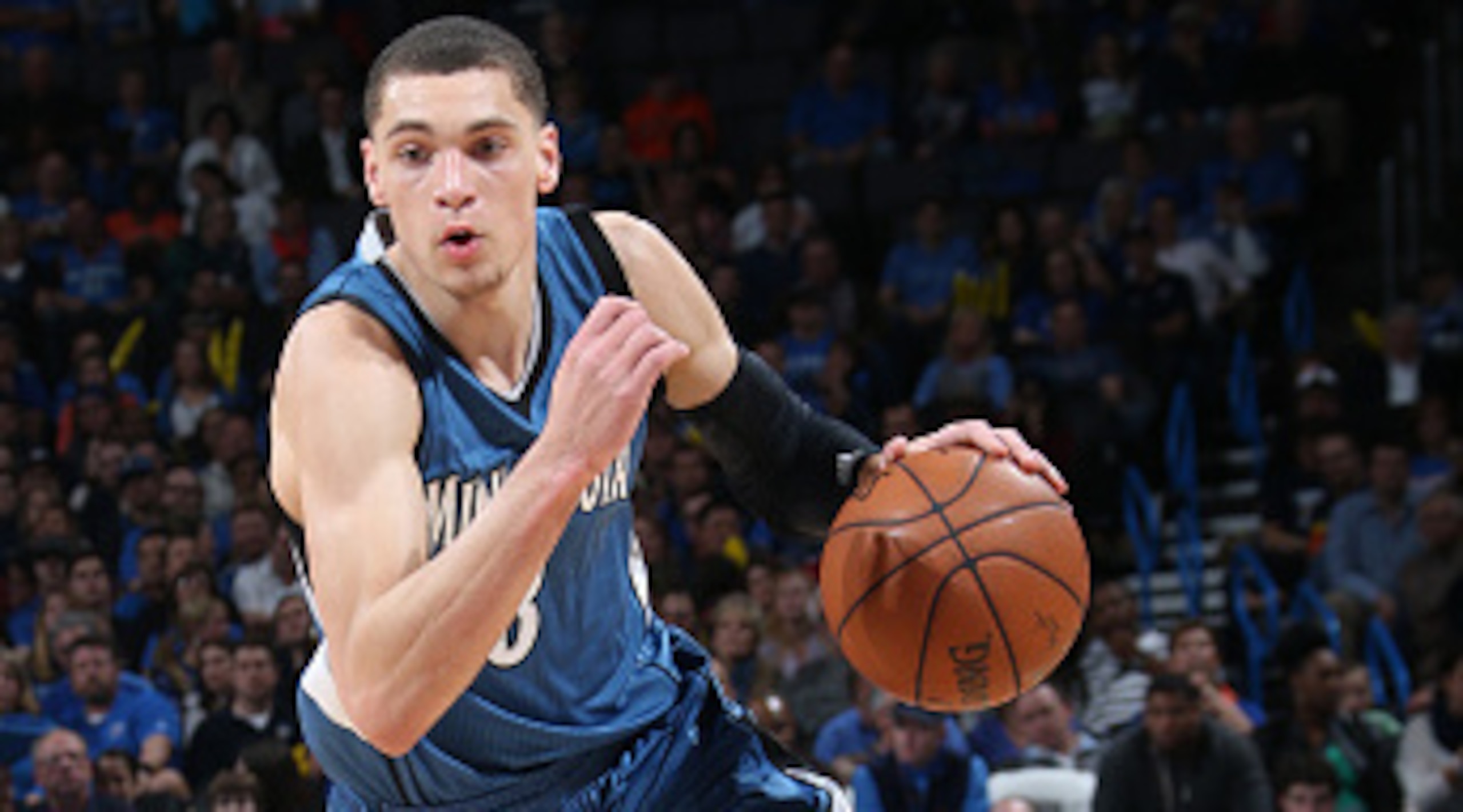
Original 2014 Draft: No. 13
Due to our late-lottery shakeup in the re-draft, UCLA's spring-loaded youngster Zach LaVine slips to No. 16.
The Denver Nuggets should be delighted to see him fall this far. His explosiveness and potential stardom are well worth the risk outside the lottery, and Brian Shaw's club needed to boost its backcourt depth and creativity anyway.
LaVine's 8.0 points and 3.4 assists per game aren't astounding, but he's shown glimpses of brilliant playmaking and scoring prowess for the Minnesota Timberwolves. He can blow by opposing defenders and dish to teammates, and his combination of leaping and shooting makes him an inside-out threat.
He's not even close to being a dependable player yet. LaVine must finish stronger and more efficiently, and his floor-general skills have to improve. However, his open-floor agility and combo-guard upside are enticing.
17. Boston Celtics (via BKN): Nik Stauskas, Michigan SG (6'6")
17 of 30
Original 2014 Draft: No. 8
Nik Stauskas is suffering through a grim rookie season for the Sacramento Kings so far. His defense has been sieve-like through the first couple months, and a lack of playing time has hurt his chances to gain any offensive confidence.
That being said, someone had to take a flyer on him in the first round of the re-draft. That someone is general manager Danny Ainge of the Boston Celtics.
The Shamrocks are leaning too much on forwards and bigs for shooting, so the arrival of Stauskas should enhance the whole team's perimeter production and accuracy. That is, if he sees 15-20 minutes per contest.
He'd eventually share backcourt rotation minutes with Marcus Smart, Avery Bradley and Evan Turner, which means he won't have to worry about copiously creating off the bounce.
18. Phoenix Suns (via WAS): Mitch McGary, Michigan PF/C (6'10")
18 of 30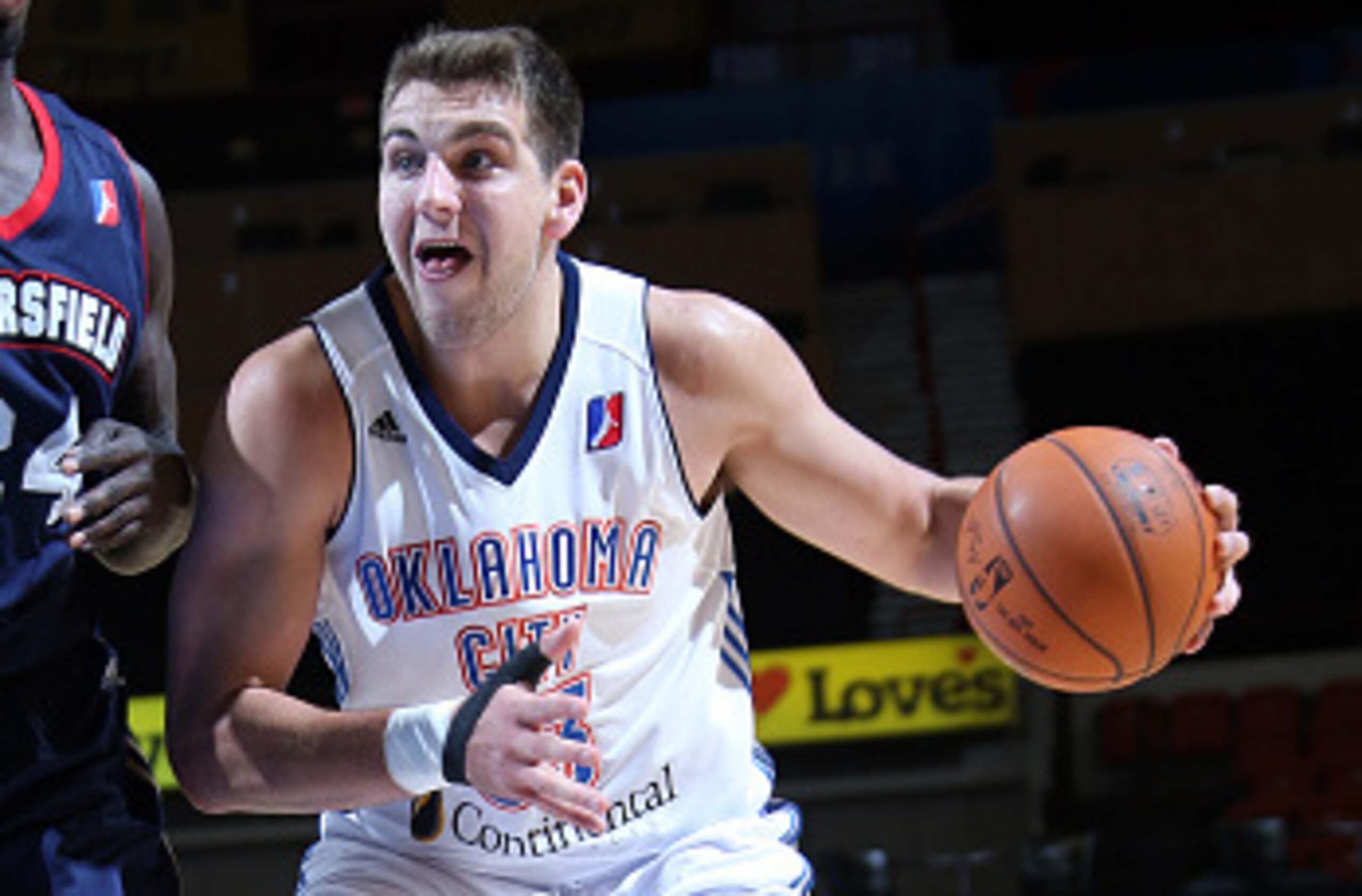
Original 2014 Draft: No. 21
If it weren't for his back and foot injuries, Mitch McGary might have landed higher in this 2014 re-draft. At any rate, he's got a chance to be a steal for the Phoenix Suns.
Few big men have the combination of a sturdy frame, end-to-end mobility and crafty ball skills like McGary. He doesn't have ultra-advanced creativity or ridiculous athleticism, but his footwork, strength and instincts enable him to thrive in any situation.
McGary's stint in the D-League for the Oklahoma City Blue proves that he's ready to mix it up on the big stage. He's averaging 17.8 points and 8.0 rebounds during just 25.4 minutes per game in the minor leagues.
Phoenix's young frontcourt is promising, but it could use some help and production.
19. Denver Nuggets (via CHI): Clint Capela, Switzerland PF/C (6'11")
19 of 30
Original 2014 Draft: No. 25
Mitch McGary would have been a superb pickup for the Denver Nuggets here, but the Phoenix Suns already scooped him up.
Just like they rolled the dice with Bosnian big man Jusuf Nurkic in the original draft (at No. 16), they'll take their chances on Swiss tower Clint Capela.
The one word most commonly used to describe Capela is "raw," because his skill set is so limited and he feasts predominantly via his length and athleticism. However, he's acquiring a feel for the game stateside and shined with the D-League's Rio Grande Valley Vipers before being recalled recently to the Houston Rockets.
His per-game numbers with the Vipers: 20.0 minutes, 14.8 points, 8.7 rebounds, 2.8 blocks and 61 percent shooting. That's enough for Denver to add him to the frontcourt based on tangible potential.
20. Toronto Raptors: Bruno Caboclo, Brazil F (6'9")
20 of 30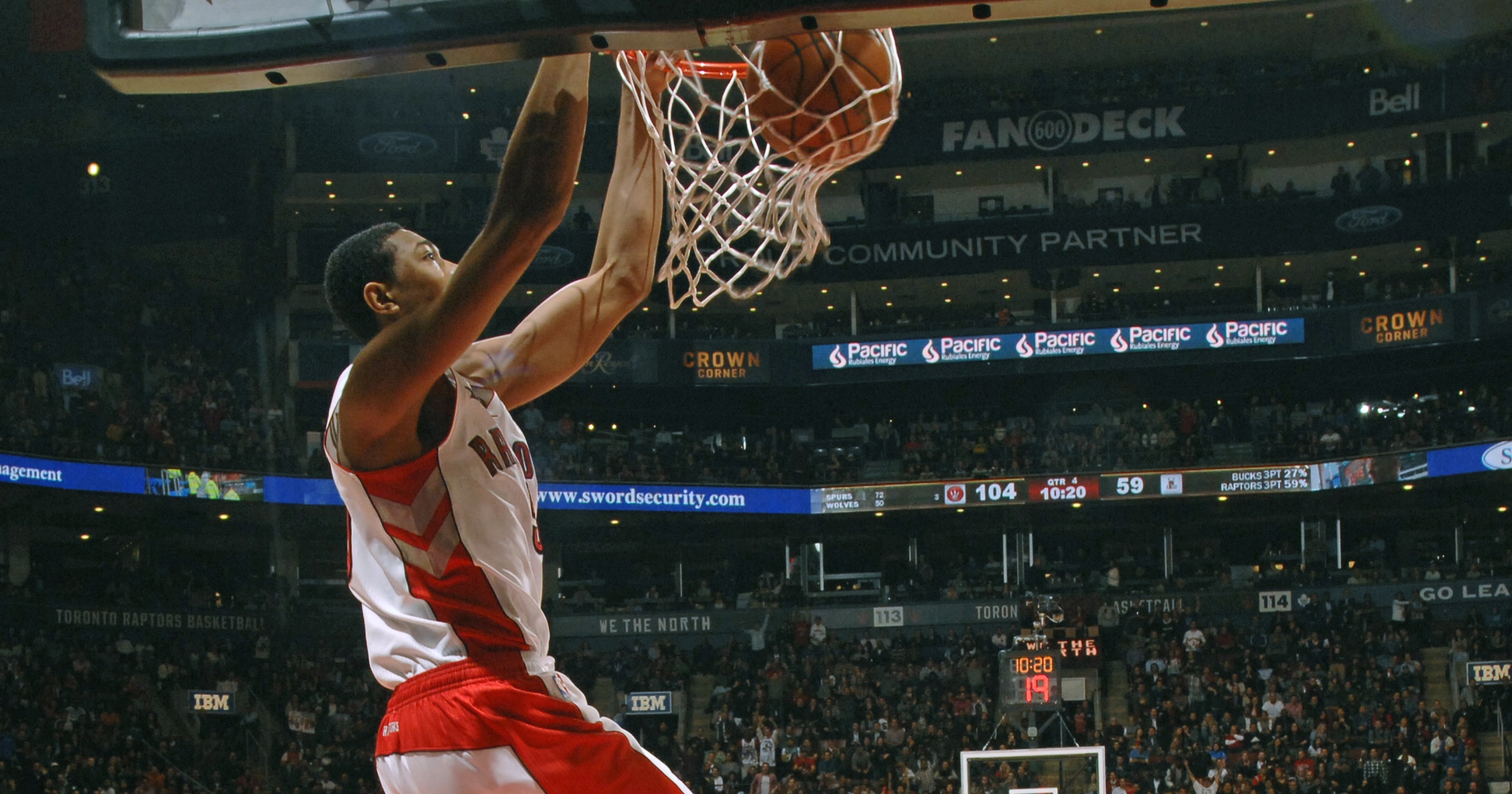
Original 2014 Draft: No. 20
I don't have a problem with Toronto re-drafting Bruno Caboclo, even though he's a project.
Why? Because he has a decent chance to become much better than anyone else left on the draft board.
Caboclo's other-worldly wingspan and long strides are paired with a fluid jump shot and agile slashing potential. He can connect from three-point range, swoop to the rim and guard multiple positions with his physical tools. Scott Rafferty of Upside Motor illustrates Caboclo's appeal:
"He still has a lot of developing to do before he can be thrusted into a complementary role but his raw tools mirror those of the Milwaukee Bucks’ Giannis Antetokounmpo...Caboclo’s 7-foot-7 wingspan serves him well on the defensive end by being able to wreak havoc in passing lanes and isolation. His long strides help him weave his way around defenders, and his lanky arms allow him to finish over the outstretched arms of the opposing team. Combine that will guard-like fluidity and he makes for a tantalizing prospect.
"
Think of a blend of Giannis Antetokounmpo and Nicolas Batum. That's the kind of rangy forward Caboclo can be once he becomes stronger, more refined and assertive.
21. Oklahoma City Thunder (via DAL): Spencer Dinwiddie, Colorado PG/SG (6'6")
21 of 30
Original 2014 Draft: No. 38
On draft night, potential suitors were scared a bit by Spencer Dinwiddie's ACL injury suffered in February 2014, and they were more preoccupied with players who had shown something more recently.
If Dinwiddie didn't have the knee injury concerns attached to him, he would have likely landed somewhere in the 20s. So his re-draft landing spot isn't so much about 2014-15 production; rather, it's because he passes the eye test as a healthy and talented combo guard.
The Oklahoma City Thunder were (and still are) in need of power forward insurance and point guard depth. There aren't any must-have big men worthy of a first-round selection, so general manager Sam Presti will set his sights on the best point guard available.
With apologies to Tyler Ennis and Shabazz Napier, the best mix of size, creativity and two-way upside resides in Dinwiddie. Standing 6'6" with shoes on and blessed with a 6'8.25" wingspan, according to DraftExpress, and fluid footwork, he can create separation offensively and corral opponents defensively. He could be a dependable backup and also step up when Russell Westbrook needs a rest day.
22. Memphis Grizzlies: James Young, Kentucky SG/SF (6'6")
22 of 30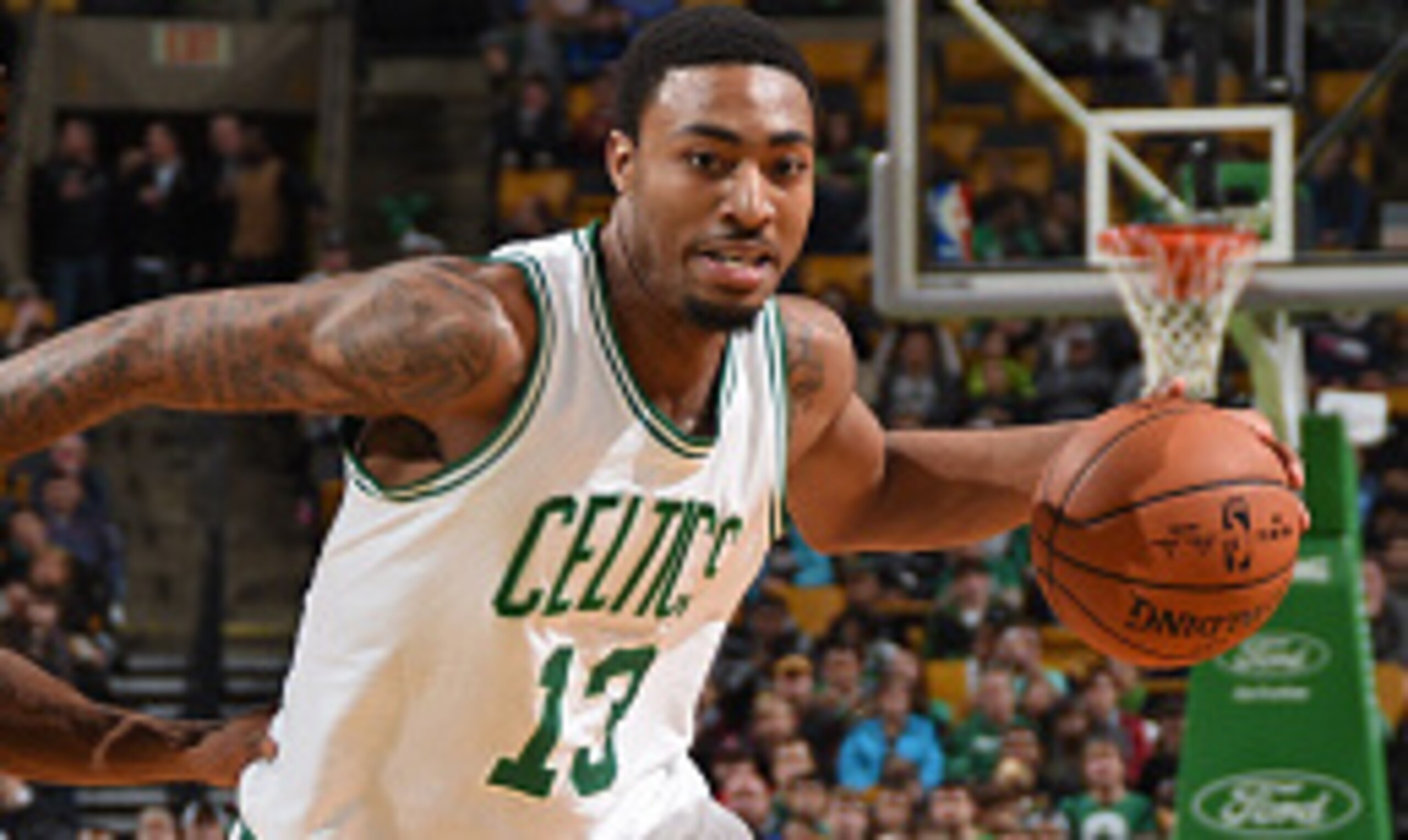
Original 2014 Draft: No. 17
James Young slipped from 17 to 22 in the re-draft, but that was more about the domino effect of team needs. He still has intriguing potential as a lengthy, athletic and smooth-shooting swingman.
Instead of taking UCLA's Jordan Adams, their original draftee, the Memphis Grizzlies should strongly consider the Kentucky product. His ceiling is a couple notches higher, as his physical profile complements his southpaw perimeter skills extremely well.
Still a teenager, Young has seen sparse time on the floor for Brad Stevens' Celtics. However, he has frequently torched D-League foes during his run with the Maine Red Claws. Young is scoring 22.4 points per contest on 51 percent shooting, including a blistering 48 percent from beyond the arc.
And that 48 percent from three-land isn't on a small sample size; he's hoisting 9.1 triple attempts per night. As he sharpens his handles and learns more about operating at the NBA level, he could be a nice asset in a couple of years.
23. Utah Jazz (via GSW): Cleanthony Early, Wichita State SF (6'8")
23 of 30
Original 2014 Draft: No. 34
Although he doesn't possess intricate ball-handling skills or electrifying shot creativity, Cleanthony Early has exhibited enough long-range shooting and open-floor athleticism to earn a first-round spot in the re-draft.
The Utah Jazz are starving for more wing depth, particularly at the 3, and Early is a strong, springy option to assume a modest role. He can fill the lanes and finish ferociously when afforded the opportunity and can stretch the floor as he shoots over adversaries (38 percent on three-pointers).
He slipped into the second round, partially because people questioned whether his Missouri Valley Conference dominance would translate. Teams wouldn't make the same mistake a second time around.
Rodney Hood wasn't a bad pick for Utah in the original draft. At the time, he was considered a potential steal. But Early has a more ideal frame and athleticism to match up with opponents as a swingman defender and scorer.
24. Miami Heat (via CHA): Gary Harris, Michigan State SG (6'4")
24 of 30
Original Draft: No. 19
Instead of going with a point man, Pat Riley and the Miami Heat would be better off pursuing a shooting guard to help relieve Dwyane Wade.
Other than Wade, the only other true 2-guards to log minutes for Miami are Tyler Johnson and Andre Dawkins, combining for a total of five games. The Heat need someone who has instincts and skills on both ends of the floor, which brings us to Gary Harris.
The Michigan State star doesn't look like he'll be as formidable in the Association as some had hoped. Thus far, he's struggling to get minutes and become comfortable, and he's shooting just 26 percent from the field. But he still has the wherewithal to create on the wing, knock down open jumpers and defend most 1-guards and 2-guards.
25. Houston Rockets: Jordan Clarkson, Missouri PG (6'5")
25 of 30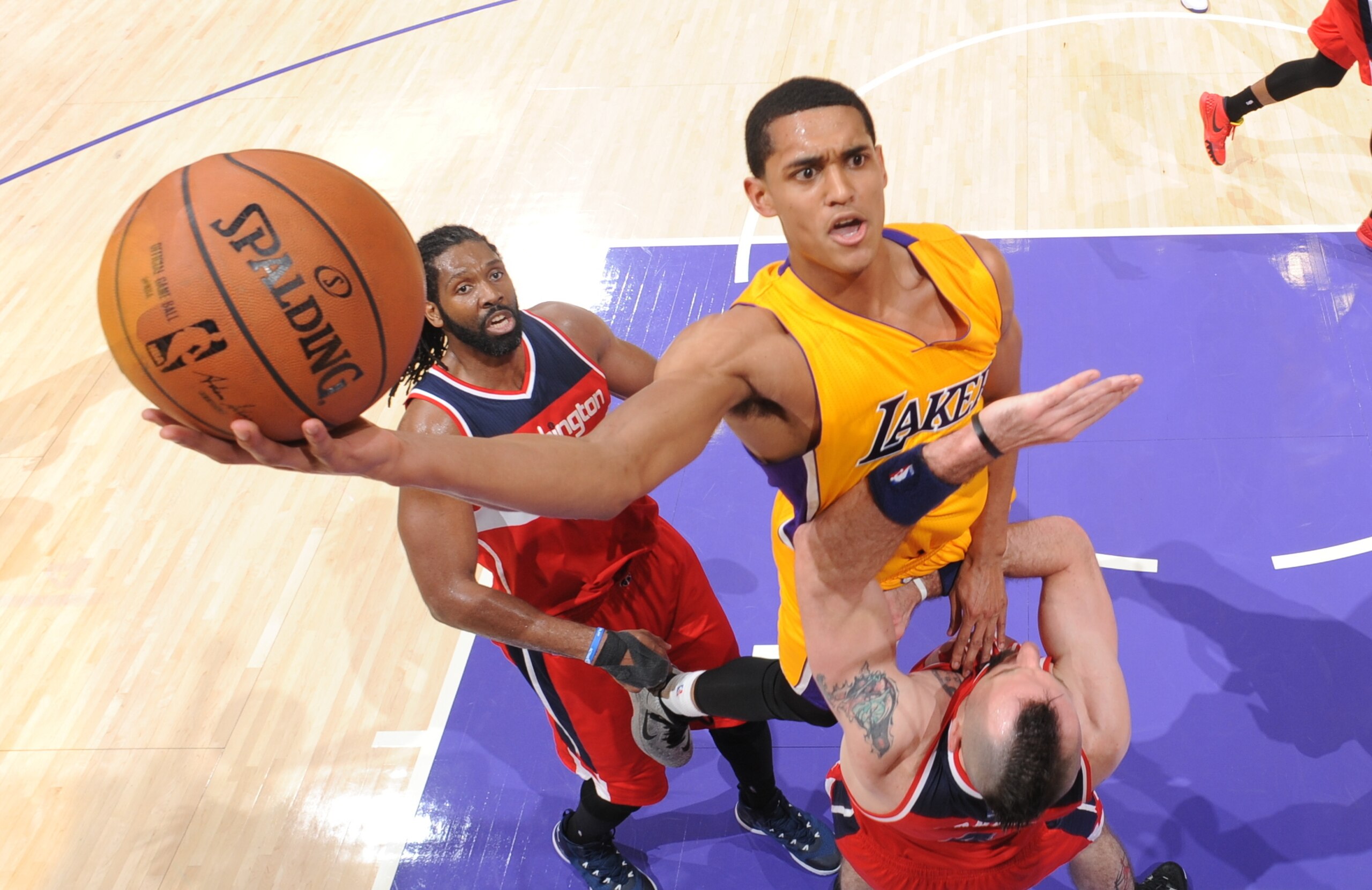
Original Draft: No. 46
Bolstering the point guard situation is Houston's aim in this re-draft. Missouri's Jordan Clarkson would be a useful addition for the Rockets, as he could share minutes with Patrick Beverley and supplement James Harden's playmaking production.
In his most recent audition for a first-round spot, Clarkson scored 18 points and dished three assists for the Los Angeles Lakers against the Washington Wizards on Tuesday night. His slashing ability and ranginess in all phases has helped L.A.'s bottom line in offensive and defensive efficiency. According to 82games.com, the Lakers score more points per 100 possessions when he's on the floor than when he's sitting, and they surrender fewer opponent buckets when he's in action.
Kobe Bryant knew all along that Clarkson was undervalued in the original draft.
"I think that was a steal of a pick," he told Serena Winters of Lakers Nation. "Great pace, great feel for the game."
In our reshuffled version of the draft, Clarkson winds up in the top 25 on a Western Conference contender.
26. Charlotte Hornets (via MIA): Tyler Ennis, Syracuse PG (6'2")
26 of 30
Original Draft: No. 18
After tabbing Doug McDermott to enhance their outside shooting, the Charlotte Hornets seek to add passing efficiency and some creativity from a point guard. Steve Clifford's crew is 27th in the NBA in assists and points scored.
Brian Roberts is a decent rotational guard who can spell Kemba Walker for a bit and knock down some shots. But there are only 7.2 assists per game between the two of them.
Pairing a guard like Tyler Ennis with Walker would increase that two-man total, and Ennis would also supply more dynamic (yet efficient) scoring chances. He won't solve all of Charlotte's offensive shortcomings, but he'll become a trusty reserve.
27. Phoenix Suns (via IND): Bogdan Bogdanovic, Serbia SG (6'6")
27 of 30
Original Draft: No. 27
Instead of drafting someone who would marginally influence their deep 2014-15 roster, the Phoenix Suns could do exactly what they did last year: draft and stash.
Serbian shooting guard Bogdan Bogdanovic is a promising, up-and-coming European, and he might be hard to pry away from Europe. It's a good investment this late in the first round, however, especially because the payoff could be sweet.
Bogdanovic is holding his own in the backcourt for Turkish club Fenerbahce Ulker, as he's scoring double figures while dishing two to three assists per game and connecting cleanly from deep. His length and fluidity as a 2-guard will aid him tremendously whenever he makes the jump across the pond.
28. Los Angeles Clippers: Rodney Hood, Duke SG/SF (6'8")
28 of 30
Original Draft: No. 23
Duke's Rodney Hood was considered an incredibly valuable pick for Utah, perhaps even a steal. After shooting 32 percent from the floor during the season's first half, that's not quite the case anymore.
However, he slid down to No. 28 in the re-draft and could end up bringing critical impact and production to the Los Angeles Clippers. If Hood can find ways to score or operate inside the arc, he'll be able to shoot from distance more effectively and get that three-point rate back above 30 percent.
Unlike some of the shorter wings and guards L.A. has drafted or acquired in the last couple of years, Hood is 6'8". He can see and shoot over opponents when he catches in rhythm.
Hood would bring the Clippers a proven shooter, and someone you can trust with the ball in a key bench role.
29. Oklahoma City Thunder: Jarnell Stokes, Tennessee PF (6'8")
29 of 30
Original Draft: No. 35
The Oklahoma City Thunder opted for skill and finesse with their first 2014 pick. Now they pick up some power.
Jarnell Stokes is one of the shorter power forwards you'll find in the NBA, but he uses his wide base and strong upper body to carve out space for rebounds and post-ups.
Stokes' minutes for the Memphis Grizzlies have been minimal (just 5.6 minutes per game), which is understandable. For the D-League's Iowa Energy, however, he's posting 14.1 points and 8.6 rebounds in just 27.4 minutes per night.
Steven Adams, Serge Ibaka and Nick Collison provide OKC with plenty of length for defense, rebounding and putbacks. But you can't expect strong, fluid pivot moves on the block from them. Stokes can fill that void.
His recent fight with Energy teammate Kalin Lucas is nothing to scoff at, but it's not enough to keep the Thunder (and their well-established locker room) to pass on him.
30. San Antonio Spurs: Kyle Anderson, UCLA G-F (6'9")
30 of 30
Original Draft: No. 30
When taking stock of who's left on the board, it's tough to find anyone who better fits the San Antonio Spurs' needs, style and culture than Kyle Anderson.
They're not re-drafting a defensive superstar, and they also know he's not going to shake every opponent when he's driving the ball. He can compensate in other ways, as his size, shooting and passing are impressive.
Just as he did during his transition from high school to college, Anderson is finding ways to deal with the increased athleticism at the next level. His change of pace and timing allows him to maneuver with the ball, and he uses his height and length to make plays over opponents.
As his game continues to adapt, San Antonio will discover more ways to plug him into the rotation and maximize his contributions.
All statistics gathered from NBA.com and Basketball-Reference.com, unless noted otherwise.
Follow @DanielO_BR for more NBA Draft coverage.

.jpg?w=2560 "Chiefs, Steelers Eye WR Trades")
.jpg?w=2560 "WWE Raw Live Grades 🔠")

.jpg?w=2560 "🚨Jay-Z Headlining Super Bowl")
.jpg?w=2560 "Cowboys Handle Eagles on MNF 🤠")