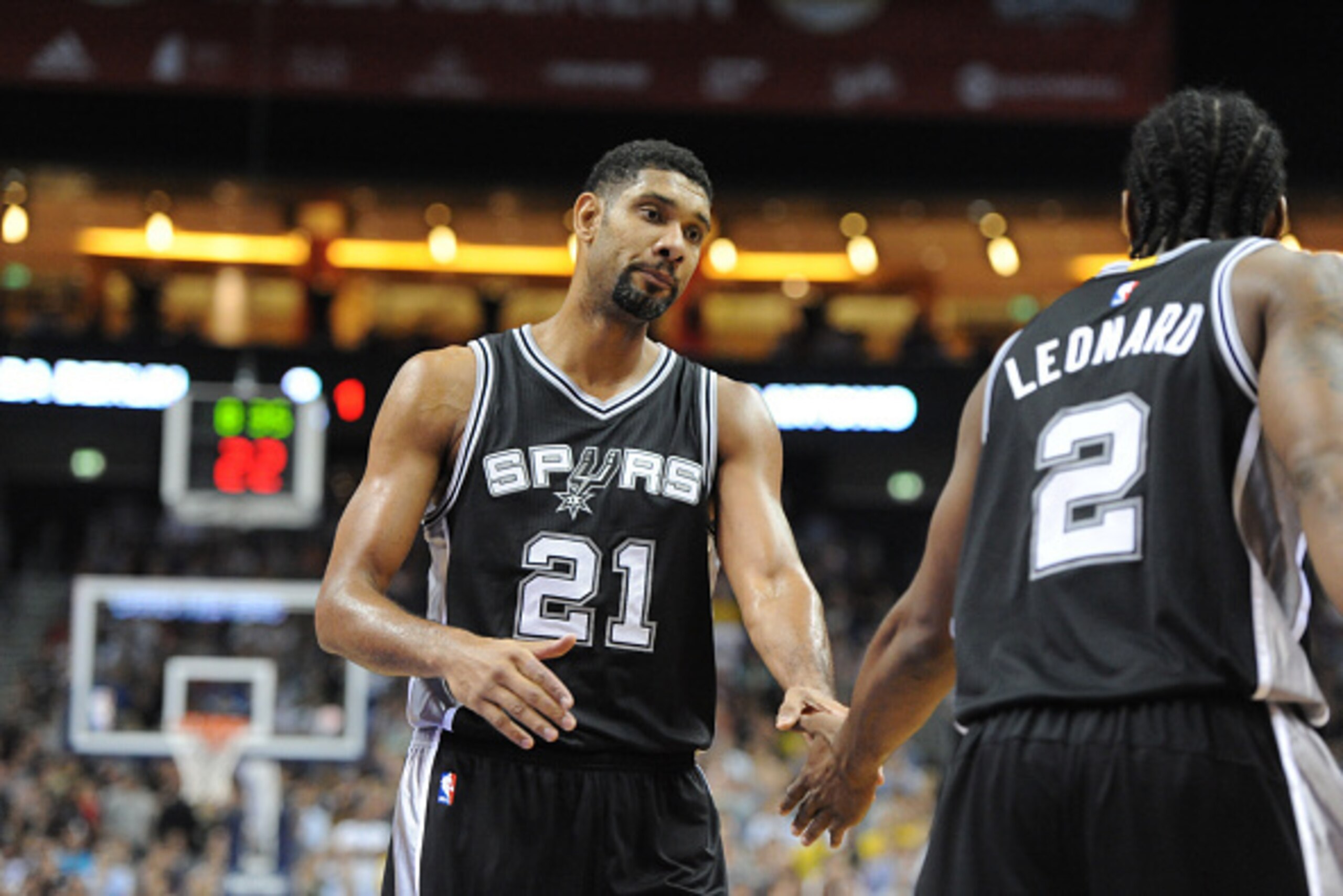

Midseason Report Cards for Every San Antonio Spurs Player
It hasn't been an ideal start for the San Antonio Spurs, who have seen more than one key player miss extended stretches as they've fallen to the bottom of the Western Conference's playoff pool.
However, the absences have given individual players the chance to step up while proving to fans the true value of others.
For some, it has been a breakout season. Several of the team's younger assets have made unexpected jumps, while others have seemingly regressed.
And for some, not much has changed, as many fans have come to expect from this consistent ballclub.
Either way, the start of the season—though far from perfect—has been especially telling.
Note: Grades are based both on current value to the team as well as performance relative to expectations.
The Other Guys
1 of 10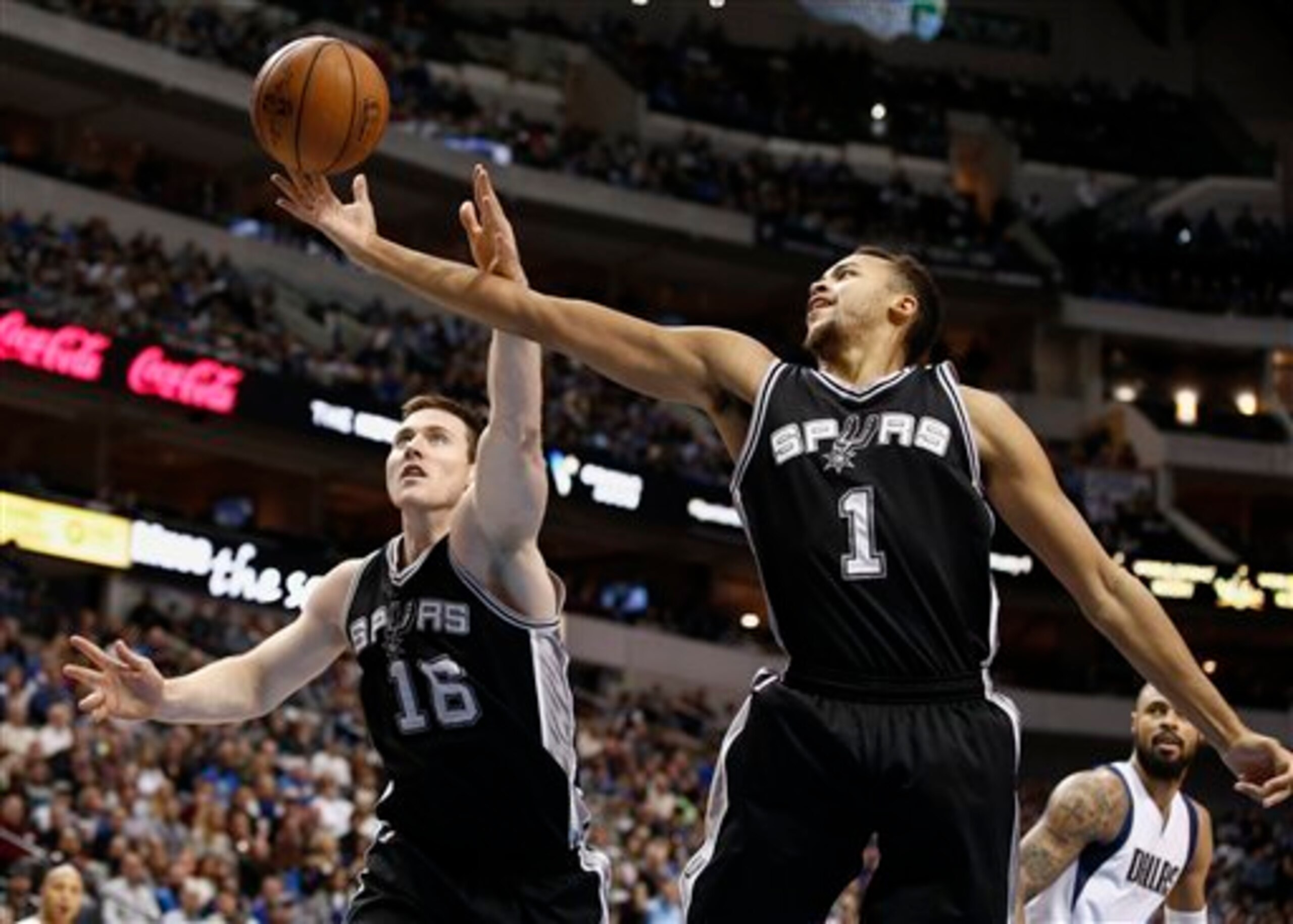
Matt Bonner
Not that San Antonio would legitimately consider trading away a guy with Matt Bonner's level of locker room value, but at this point in his career, Bonner's best asset is his expiring contract.
Though he is sinking 37 percent of his three-point attempts, Bonner brings very little to the table, with San Antonio needing size and a third rim protector, not an oversized three-point specialist.
Grade: D
Jeff Ayres
Sure, Jeff Ayres might dunk more than any Spur not named Kawhi Leonard in his rare court appearances, but don't be fooled—he's little more than San Antonio's human victory cigar at this point.
With just two memorable performances so far, Ayres is next in line if San Antonio wishes to shed more roster space as the trade deadline approaches. Though he hasn't been nearly as difficult to watch compared to last year, the 2014-15 version of Ayres has done little to warrant any increased playing time.
Grade: D
Kyle Anderson
Perhaps expectations were too high for Kyle Anderson, as he joined the roster as the most San Antonio-ready rookie in years. So far, the UCLA product has been extremely quiet. Even when he found himself sporadically starting in the wake of Leonard's injury, the first-year forward failed to make any lasting impressions.
He has struggled to shoot the ball, currently knocking down shots at a 36 percent clip, and hasn't eased any pre-draft concerns that questioned how his unique skill set—he's an underweight, 6'9'' point guard—would translate to the NBA.
Luckily, the team has plenty of time to develop Anderson's talents. Currently playing with San Antonio's D-League affiliate, the rookie will get his chance sometime down the road. It's just not now.
Grade: D-
Aron Baynes
Aron Baynes still isn't seeing consistent playing time, but his improvement since last season is noticeable and deserves its fair share of praise.
Baynes' big opportunity came at the season's start when Tiago Splitter went down with injury. Filling in as the team's second true center, he solidified himself as a legitimate rotation player. Though raw, he has displayed a versatile inside game and brings unmatched strength in the post on offense, defense and the boards.
Since his initial role increase, Baynes' playing time has fluctuated, but after missing several games to injury, San Antonio's newest benchwarmer-turned-rotation guy has picked up where he left off, scoring 12 and 15 in his past two contests. As he continues to set new benchmarks for his own success, Baynes is certainly trending upward. While he's still a far cry from being starter material, his 2014-15 campaign has been successful to date.
Grade: B+
Marco Belinelli
Marco Belinelli's season has been somewhat underwhelming. After enjoying a remarkable first half to the season in 2013-14, he returned to earth and has since stayed grounded. A capable scorer and distributor, he simply hasn't emerged as anything more than a role player, which isn't a knock, but it also doesn't put him ahead of the host of Spurs guards improving with each passing game.
Belinelli hasn't been inefficient—he is shooting 37 percent from deep—but he hasn't been remarkably efficient either, sinking just 43 percent from the floor. His production, as a whole, has been extremely average, and with injury issues having kept him off the court for extended stretches, Belinelli's start to the season has been forgettable.
Grade: C
Cory Joseph
2 of 10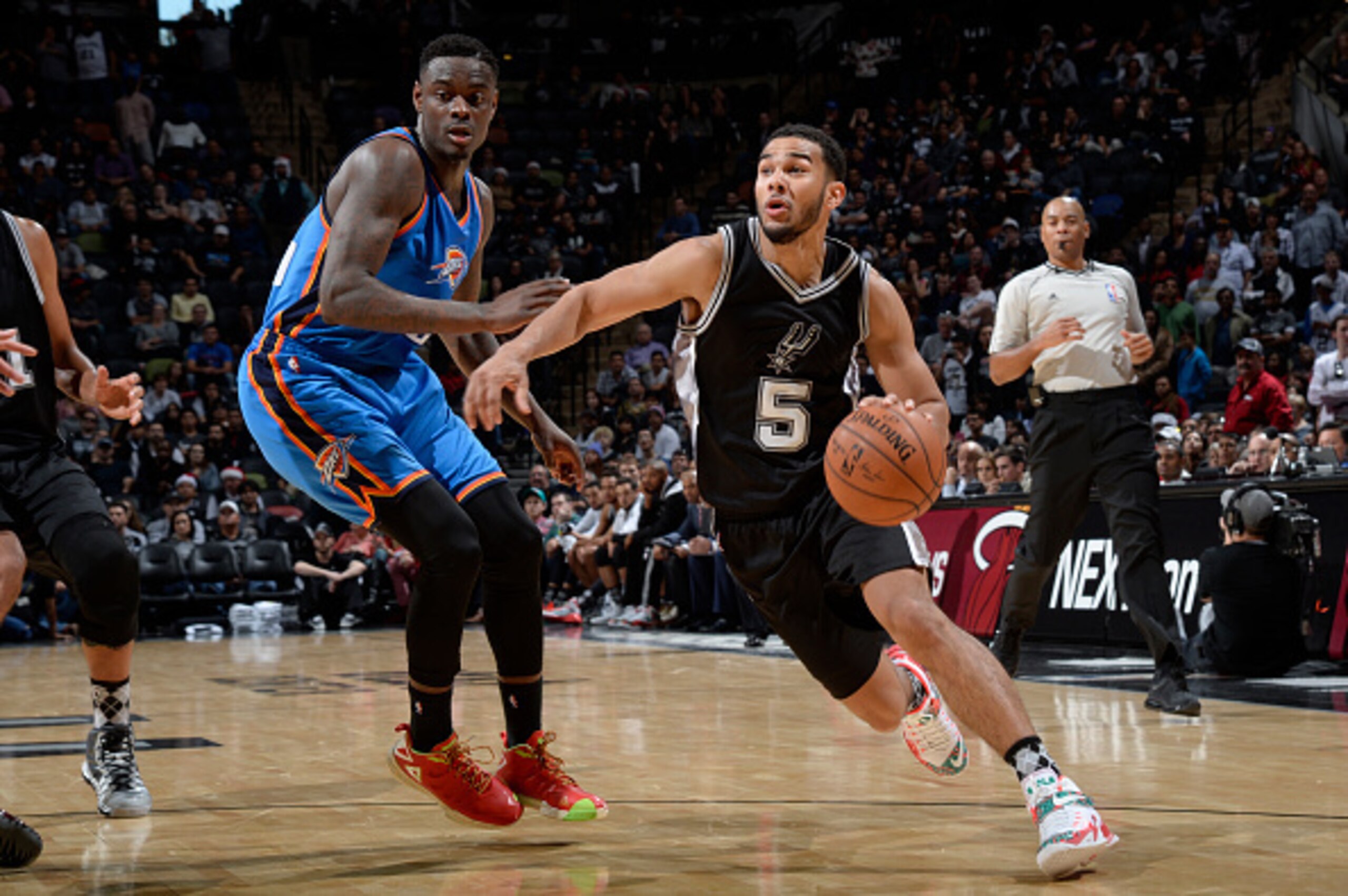
San Antonio is currently in a predicament, though it's a problem that many teams wouldn't mind having.
It has too many quality point guards and not nearly enough playing time to allocate. It's an issue that has risen in the past, but it's become even more extreme this year, thanks to Cory Joseph's breakout campaign.
The team knew that it had found a gem in Patty Mills, and Tony Parker is among the league's best at the position. But with both floor generals having missed time to start the season, the road was paved for Joseph to make an impression.
And he did just that.
Averaging career highs across the board, the fourth-year pro is the league's most overqualified third-string point guard. He's an above-average defender and has become a confident orchestrator and reliable finisher.
Even during the team's darkest hours, Joseph has come through again and again, making the Spurs' playing-time situation that much more difficult.
As head coach Gregg Popovich noted in an interview with Jeff McDonald of the San Antonio Express-News:
“He always impressed me with the way he plays,” coach Gregg Popovich said. “He is not blessed with the most talent in the world, but I don’t think there is anybody on the planet who gets more out of what he’s got.”
Joseph has been the team's most pleasant surprise thus far, and though he still has plenty of unreached potential, 2014-15 will go down as the season when he began to tap into it.
Grade: A-
Boris Diaw
3 of 10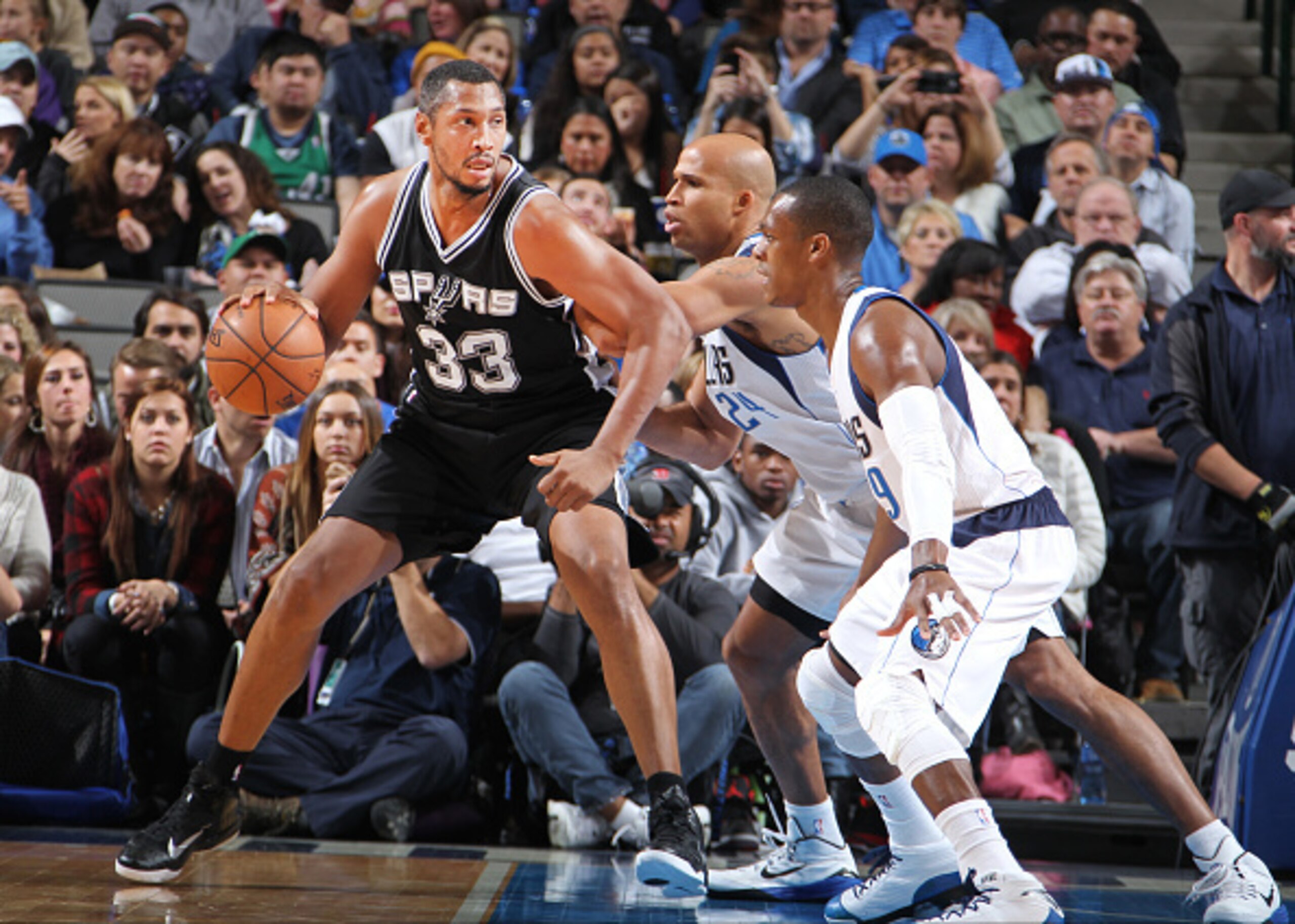
The 2014 NBA playoffs may go down as the peak of Boris Diaw's career.
Since starting anew in San Antonio after his failed experiment with the Charlotte Bobcats, Diaw's career slowly built up to last year's postseason. There, his stellar play in the Western Conference Finals solidified the team's victory, while his all-around contributions in the subsequent series against Miami proved crucial as San Antonio cruised to its fifth franchise title.
However, he's been on a decline this season, and while the versatile big man is still making strong, widespread contributions, he simply hasn't matched the high level of play that was seen on a nightly basis last year.
After posting shooting clips of 58, 54 and 52 percent in his first three seasons as a Spur, Diaw is now shooting just over 46 percent. From beyond the arc, he's still hitting a third of his attempts but isn't nearly as reliable as he was in 2011-12 when he shot 61.5 percent from deep, in 2012-13 when he shot 38.5 percent or in 2013-14 when he notched a 40 percent mark from long range.
And to make things even worse, he's shooting more often from downtown than he ever has while in a Spurs uniform.
Even so, his production hasn't been bad. His other numbers have risen slightly, and his scoring still hovers just below 10 points a game. He's a top-notch backup and can fill just about any gap necessary.
But as we approach the All-Star break, it's evident that Diaw's shot simply isn't what is was during his first few seasons with the team.
Grade: C+
Patty Mills
4 of 10
The jury is still out on Patty Mills, who has only played in 12 games this season.
He has gone back and forth since he returned, either looking like the second-unit star he proved himself to be last year or a player who has yet to shake off the rust.
He's already had more than one dominant game, but he's been a virtual zero in a handful of others.
Overall, he's averaging double-digit scoring on 43.5 percent shooting, while his three-point clip hovers just under the 40 percent mark.
As the season progresses, it will be easier to pinpoint where he stands in relation to last year, but so far, he seems to be on the right track.
Grade: B
Danny Green
5 of 10
People have been waiting for Danny Green to make "the leap" since he broke out on the NBA scene as the prototypical three-and-D player.
However, prior to this season, he remained an offensive specialist in every way, shape and form. Not only did he seemingly shoot a better percentage from deep than he would at the rim, but Green often struggled to get to the rim in the first place.
Regardless of his past struggles, it seems as though Green has taken a step forward, expanding his repertoire and proving himself less of an offensive specialist.
"But the three-and-D asset has made a few improvements to his game, most notably as a dribbler. This season, Green isn't entirely inept when putting the ball on the floor. He's obviously not Tony Parker—or even Cory Joseph for that matter—but Green is no longer a complete liability.
"
Green's other talents have been showcased, too, with his three-point shooting becoming more important with Mills out to start the season and his perimeter defense growing more valuable as Leonard was forced to miss extended time.
He's still streaky from long range, though his 40 percent mark is a strong clip overall.
He isn't playing perfect basketball by any means, but he has made a critical jump, one that has paid off thus far and will continue to down the road.
Grade: B+
Tiago Splitter
6 of 10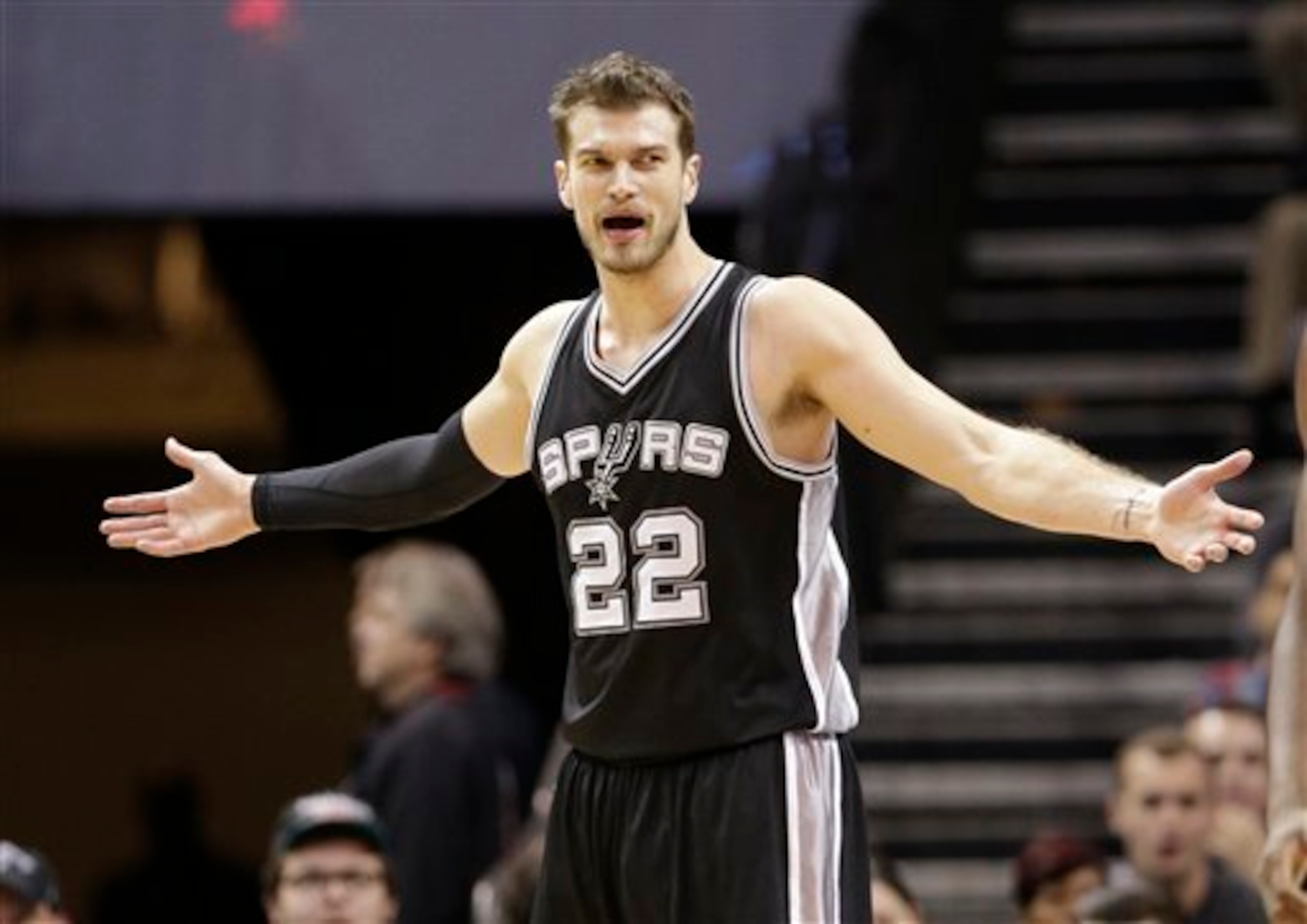
As with Mills, Tiago Splitter offers a relatively small sample size to scrutinize, after missing 22 games and playing limited minutes since his return.
However, the 21 games in which he has appeared have given us enough time to make preliminary judgements about the 2014-15 version of the Spurs' starting center.
Though Splitter has matured greatly since he entered the league, he is currently posting scoring and rebounding totals lower than any season averages, excluding those from his rookie campaign.
Though he is logging less court time than he did in his previous three seasons, his current average is nearly equal with his career while his scoring and rebounding numbers on the season rank lower than his career figures.
However, he has most noticeably taken a step back on the defensive end—the side of the court on which he is usually looked toward as a leader.
"This season though, you'd think there's an impostor in [Splitter's] jersey. His defensive rating is 102.8, which ranks ninth on the Spurs, never mind the league leaders. His net rating is a paltry 3.3 and the team's defensive efficiency without him on the floor is 100.2, with a 4.6 net, meaning that the Spurs have been 1.3 points worse per 100 possessions with Splitter than without...
The most damning numbers of all are his defense at the rim. Splitter is allowing an obscene 61.0 field goal percentage to opponents at the basket, 3.6 makes in 5.9 attempts per game. Contrast that to Tim Duncan, who's allowing opponents to convert at just 46.6 percent, 4.2 makes out of 9.1 attempts per game.
"
As a whole, Splitter's return has been somewhat of a disappointment. He hasn't necessarily regressed—his reduced numbers could very well be indicative or lingering rust from his extended absence and his overall reduced role—but he also hasn't made a jump, either, something we had come to expect from him annually.
There's plenty of time for him to bounce back, and doing so would hardly be a surprise once he's fully integrated into the lineup. For now, though, Splitter has work to do on both ends of the court.
Grade: C+
Manu Ginobili
7 of 10
Whereas Green and Joseph have taken steps forward and Diaw and Splitter have been struggling, Manu Ginobili still looks like Manu Ginobili, naturally.
If there's anything that the Spurs veteran guard has proved over the years, it's that he is entirely capable of making the most critical mistake in a game, only to make amends for it by hitting the contest's most important shot moments later.
Such has been the case this year, with Ginobili proving himself volatile but nevertheless a key component of the team.
His role has remained critical, especially with Tony Parker having missed time as the team's primary ball-handler and Patty Mills absent as a second-unit spark. He's still their go-to guy off the bench, capable of scoring and facilitating with the best of them.
However, his shooting percentage is still characteristically low, and playing-time restrictions have prevented his numbers from rising. His 12.5 points and five rebounds are solid, though he has broken out on more than one occasion with a vintage stat line.
Overall, though, it's been the Manu that fans know and love, and the team can live with that as it looks to make another title run.
Grade: B
Tony Parker
8 of 10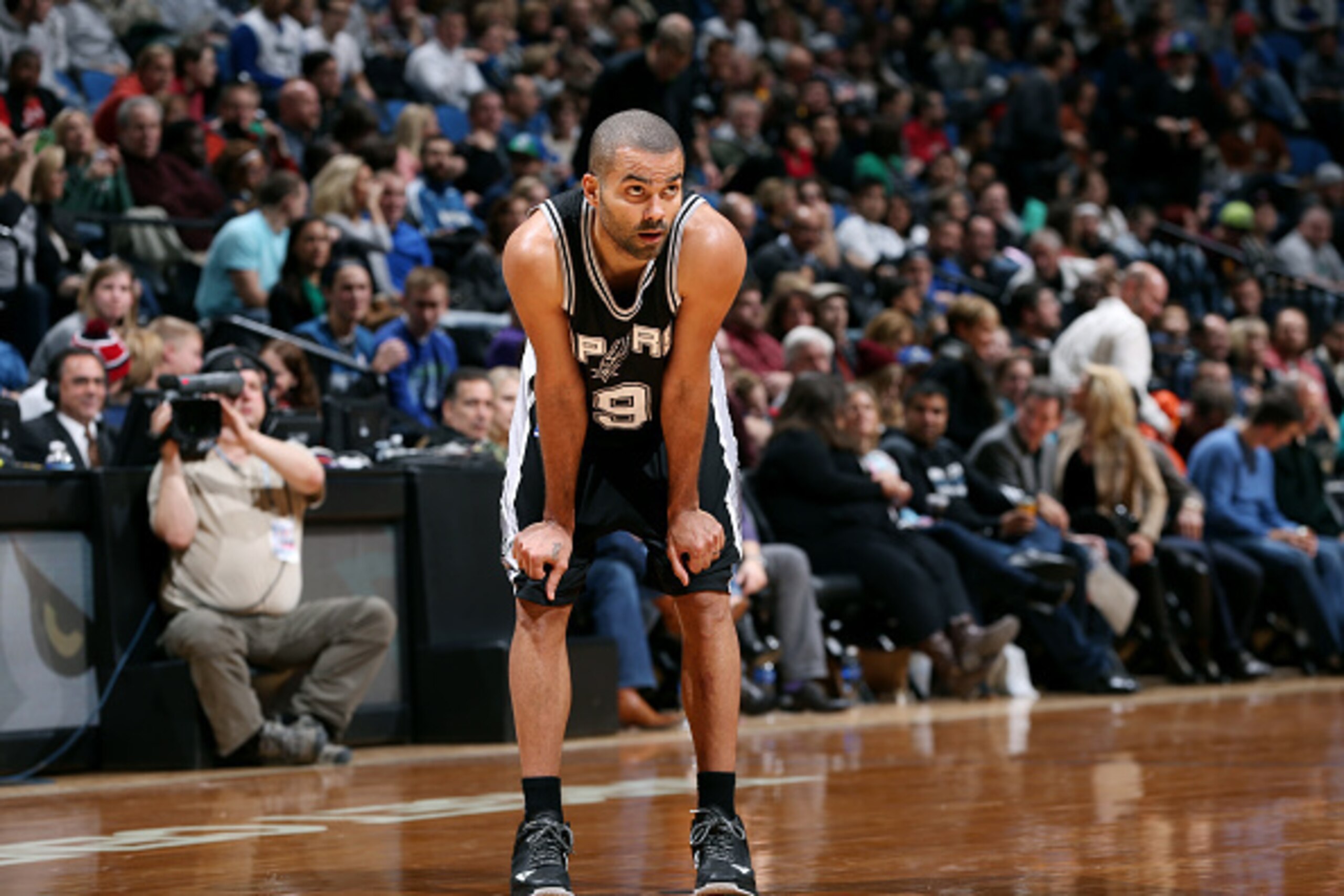
There is no shortage of superstar point guards in today's NBA, though it's still surprising to see Tony Parker being considered a long shot to make the 2015 All-Star Game.
In fact, the majority of the San Antonio floor general's season has been surprising.
Having featured its fair share of ups and downs, Parker's 2014-15 campaign has been disappointing, as it has been apparent from the start that his health hasn't been perfect. It's been an even greater adventure with the veteran point guard having recently returned from a lengthy absence due to injury.
"His nagging hamstring issue — which cost him 13 games overall — has made that impossible.
“He’s got to get in basketball shape,” said guard Manu Ginobili, no stranger to the travails of returning from a long layoff. “He’s not playing at his best, but he’s a big contributor. Those 20, 25 minutes or whatever he’s giving us are important.”
The Spurs’ leading scorer in each of the past four seasons, Parker ranks third behind Leonard and Duncan at 14.8 points per game.
"
As Ginobili noted, it hasn't been all bad from Parker. In fact, much of what we've seen from him has been great. He can still control the floor like his superstar self and has expanded his arsenal to include a deadly three-point shot.
However, we have all been forced to temper our expectations a bit, at least until Parker returns to full health.
Grade: B-
Kawhi Leonard
9 of 10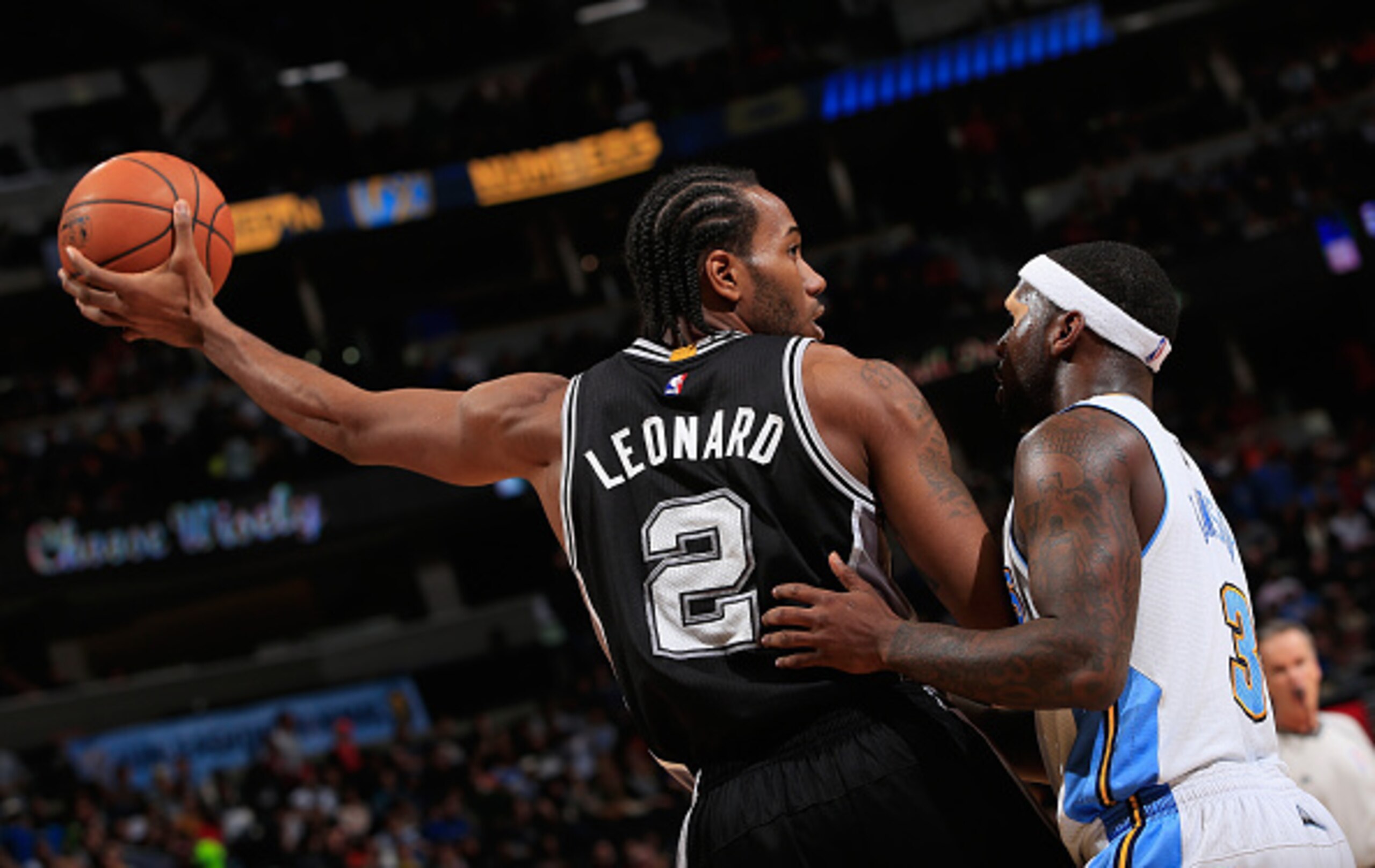
In case it wasn't already abundantly clear, Kawhi Leonard is extremely important to the Spurs.
He's more important than Parker, more important than Ginobili and, quite possibly, more important than Duncan. It doesn't necessarily mean that he's a better player than the aforementioned trio, but a quick glance at the team's performance during his absence is enough to reveal how valuable the fourth-year small forward is to the defending champions.
Posting a below-.500 record without the reigning NBA Finals MVP, San Antonio currently sits toward the bottom of the West's playoff pool.
Without his services, the Spurs fell apart defensively, as noted by Spurs Nation's Dan McCarney, and stumbled through one of their roughest months of the Tim Duncan era:
"That much is clear on the stat sheet, where the Spurs’ defensive rating has ballooned by almost eight points per 100 possessions since Leonard first suffered the right hand injury that has forced him to miss 11 of the past 13 games, with no public timeline for his return.
There’s no way to easily determine where his individual rating ranks among the NBA via the league’s media portal, but the Spurs’ drop of 10.4 points per 100 when Leonard is on the court this season as opposed to when he sits is an absolutely massive number.
"
But following Leonard's lead since his return, the team has dominated in three straight contests and looks far more like its title-winning self.
Prior to his injury, it was easy enough to see how crucial Leonard's contributions were. He's an elite defender by all measures and has grown his offensive game to the point where he now leads the team in scoring. An above-average rebounder, he also logs nearly eight boards per night.
The extent to which he has grown into an all-around star is remarkable, especially given the one-dimensional label he was stuck with as a rookie when he entered the league without a refined offensive game.
Critics are silent now, though, as Leonard has not only established himself as a superstar but has managed to stand out on a team already overflowing with talent.
Grade: A
Tim Duncan
10 of 10
At 38, Tim Duncan is the second-oldest active player currently playing, but he certainly doesn't look like most 38-year-olds while on the court.
Though age may limit his athleticism, it hasn't kept him from dominating as a two-way force in what might be his final season. He's averaging a double-double, and while his field-goal percentage has dipped below his career 50 percent mark, he is among the league's best offensive players in the post, both due to his versatility as a scorer and his unparalleled ability as an interior facilitator.
However, his presence as a defensive anchor has been his greatest contribution thus far.
With Splitter injured and struggling and Kawhi having missed an extended stretch, Duncan wasn't simply the backbone of the team's post defense; he was the cornerstone of the defense altogether.
And though the Spurs struggled with limited defensive resources, few can fault Duncan.
According to Basketball Reference, he ranks sixth in blocks per game, fifth in defensive win shares and second in defensive rating. He's among the league's top 20 in PER, win shares per 48 minutes and plus-minus and has been, on his last legs, an All-Star-caliber player on both sides of the ball.
Duncan may have handed over the reins a few years back to Parker, but there's little question as to who the Spurs' best player is at the moment. The veteran big man isn't simply having a great campaign relative to age-related expectations.
He's having a great season, period.
Grade: A+

.jpg?w=2560 "Chiefs, Steelers Eye WR Trades")





.jpg?w=2560 "Raiders Sticking with Cousins")