
Predictions for Each Top Offseason Acquisition's Career with Chicago White Sox

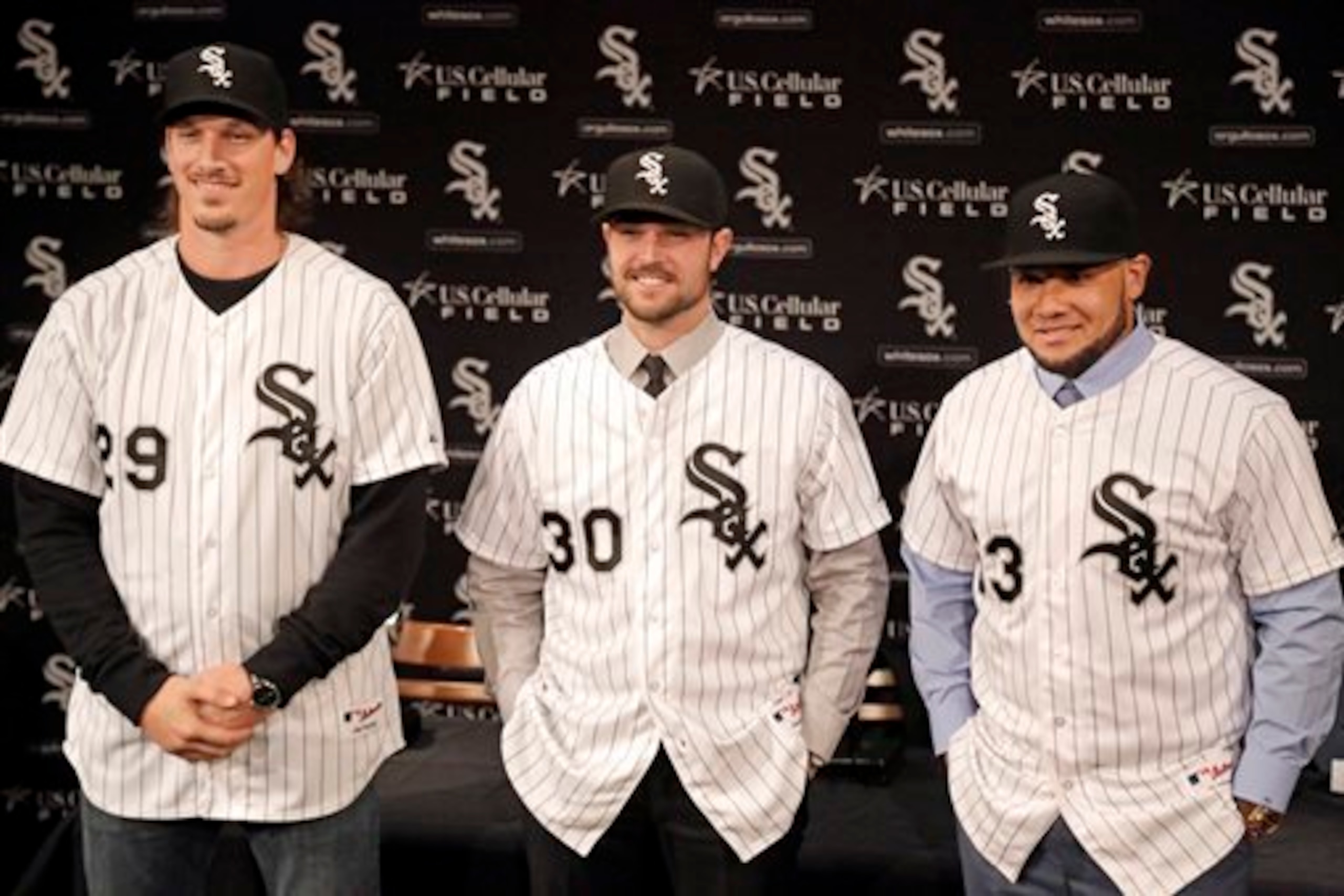
There is no doubt Chicago White Sox general manager Rick Hahn earned his pay this offseason. In all, he added seven impact additions to the 25-man roster, catapulting his club into next season’s postseason conversation.
But how will the newest members of the White Sox—Dan Jennings, Jeff Samardzija, David Robertson, Zach Duke, Melky Cabrera, Emilio Bonifacio and Adam LaRoche—fare over the course of their careers on the South Side?
It’s a tricky question to answer.
Frankly, even the most trusted forecasting model (ZiPS) is oftentimes far off when it comes to accurately predicting final numbers. There are simply too many variables for the algorithms to fully consider.
Last season, for example, ZiPS predicted a 3.17 ERA and a 3.23 FIP for Chris Sale, via FanGraphs’ Carson Cistulli. Well, Sale logged a 2.17 ERA and compiled a 2.57 FIP en route to a third-place finish in the Cy Young voting.
So instead of predicting exact numbers, let’s take a broader look at each player’s future with the franchise.
For the most part, each one looks like a solid acquisition that isn't being asked to have a career season in order to positively impact the team's performance.
Staying within the parameters of past production is all it takes. There is one notable outlier, which we will get into, but by and large, each guy fills a demonstrable need.
In alphabetical order, here are our predictions for each new arrival’s career with the White Sox.
Emilio Bonifacio, UT
1 of 7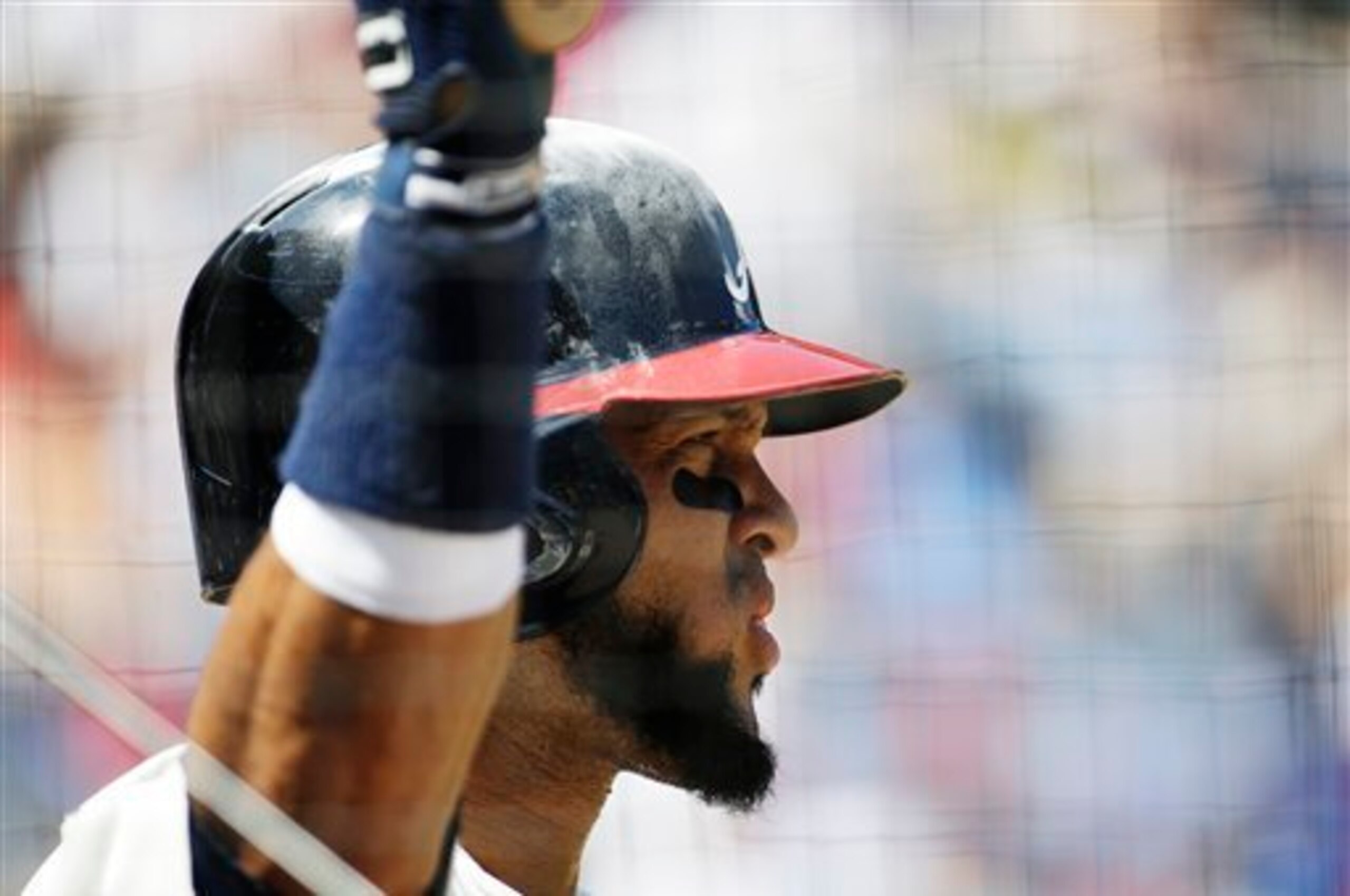
Chicago White Sox general manager Rick Hahn said when he announced the free-agent acquisition of Emilio Bonifacio that the switch-hitter “brings an excellent mix of versatility, speed and experience to our club which will provide (manager Robin Ventura) with additional flexibility with the roster this year,” per the Chicago Tribune’s Colleen Kane.
That’s about right, Rick.
To be sure, there are concerns. Look no further than the .212/.273/.280 slash line he put up following his trade to the Atlanta Braves for an example.
But even if his overall batting statistics are below average, his ability to play up to six positions well, run the bases and his splits against lefties (.365/.411/.548 in 2014) are surely going to help the club win games.
Either way, living up to his career slash (.262/.319/.341), positively impacting run creation and playing all over the field is to be expected from Bonifacio. And when that happens, expect the White Sox to pick up his $4 million option next season.
Melky Cabrera, LF
2 of 7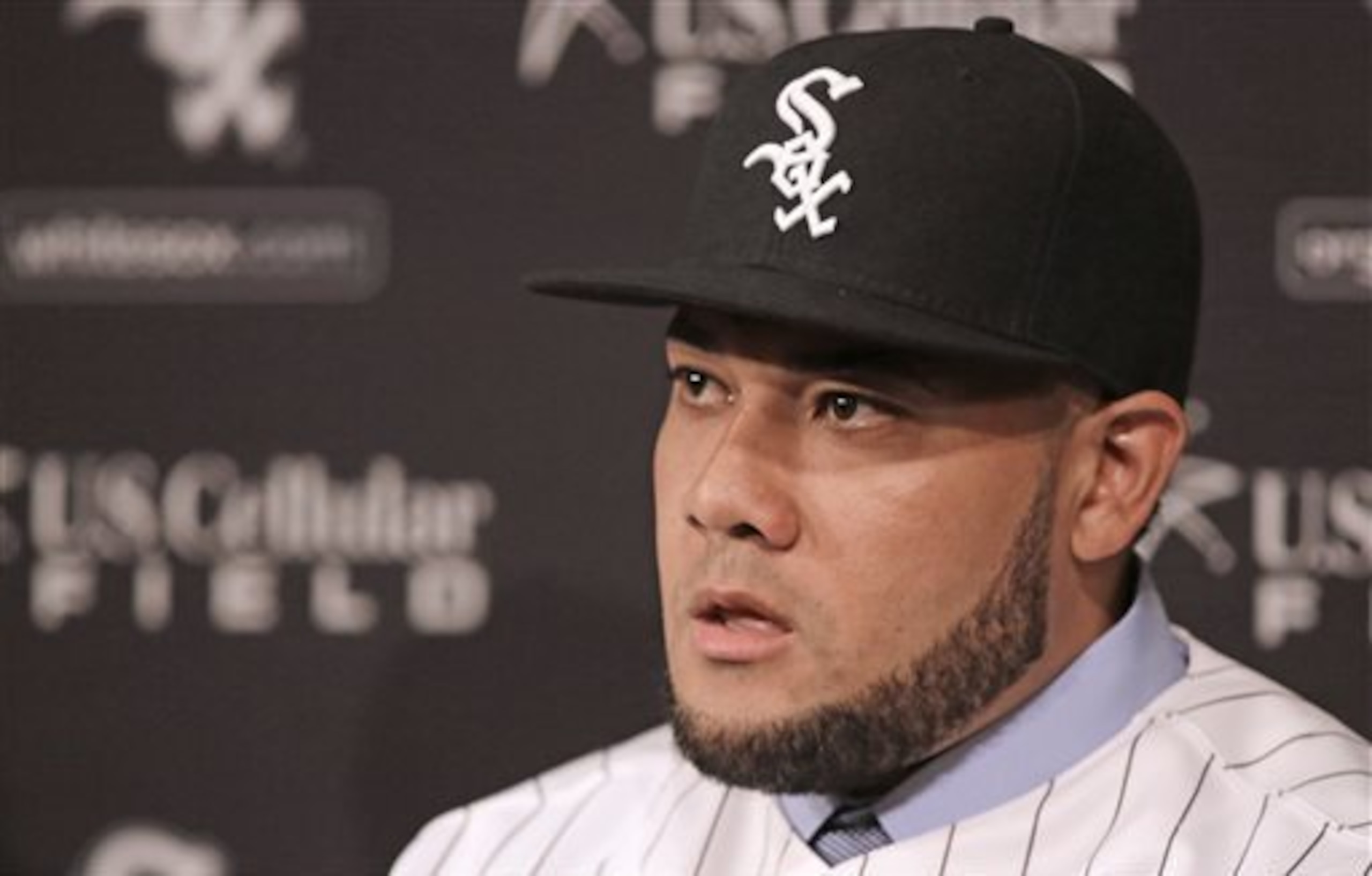
If there is a concern about Melky Cabrera, it has to be his ability to stay on the field. It’s simply impossible to overlook the fact that since 2012, he has not finished a season on an active roster.
When he is healthy, however, there is little argument that Cabrera is a special talent at the plate. He brings a blend of speed, power and the ability to reach base to the top of the order. Each attribute is an area the White Sox needed to improve upon after last season’s woeful results.
And like others on this list, the length of Cabrera’s contract is a reason to be optimistic about how he will be remembered. With only a three-year commitment, GM Rick Hahn has limited the chance that the switch-hitter will overstay his welcome or perform so poorly that fans question Hahn's three-year, $42 million investment.
It must be noted that Cabrera isn’t exactly Alex Gordon in left field, but he's certainly an improvement over Dayan Viciedo. And either way, the White Sox’s pitching staff is sufficiently improved that his defensive liabilities won’t be what fans are left remembering. That would be his bat.
Expect some bumps and bruises along the way, but Cabrera will do exactly what he was brought here to do—get on base and drive the ball to the gaps in front of Jose Abreu.
Zach Duke, LHP
3 of 7
Three years and $15 million is a hefty investment for a left-handed reliever who only recently discovered how to pitch effectively at the major league level. Yet that is exactly the length of contract and dollar amount the White Sox gave to Zach Duke.
Don't take that the wrong way. It’s just that if we exclude his eight appearances during the 2012 season, Duke set career marks in ERA (2.45), FIP (2.14), strikeouts per nine innings (11.4) and strikeout-to-walk ratio (4.35) in 2014.
Expecting him to repeat the feat is unrealistic. That doesn’t mean it’s impossible, of course.
See, if we’re going to fear Duke turning into Scott Linebrink (who was a disaster after signing a four-year deal), we have to consider Jesse Crain (who tossed two-and-a-half seasons of exceptional relief and earned an All-Star nod in 2013).
As Jim Margalus from South Side Sox correctly noted, Crain and Duke both revitalized their careers with an overhaul in pitch selection, and in Duke’s case, the reinvention of his mechanics.
So as far as predictions go, the safe bet is that Duke will fall in the middle of Linebrink and Crain. He will regress a bit, but he won’t be an unmitigated disaster during his time with the White Sox.
Either way, his presence (along with David Robertson’s and Dan Jennings’) gives pitching coach Don Cooper a relief corps that can be counted on.
And flat-out, Duke was the best available lefty not named Andrew Miller, meaning that GM Rick Hahn was wise to go above and beyond to fill the setup void in the bullpen.



Dan Jennings, LHP
4 of 7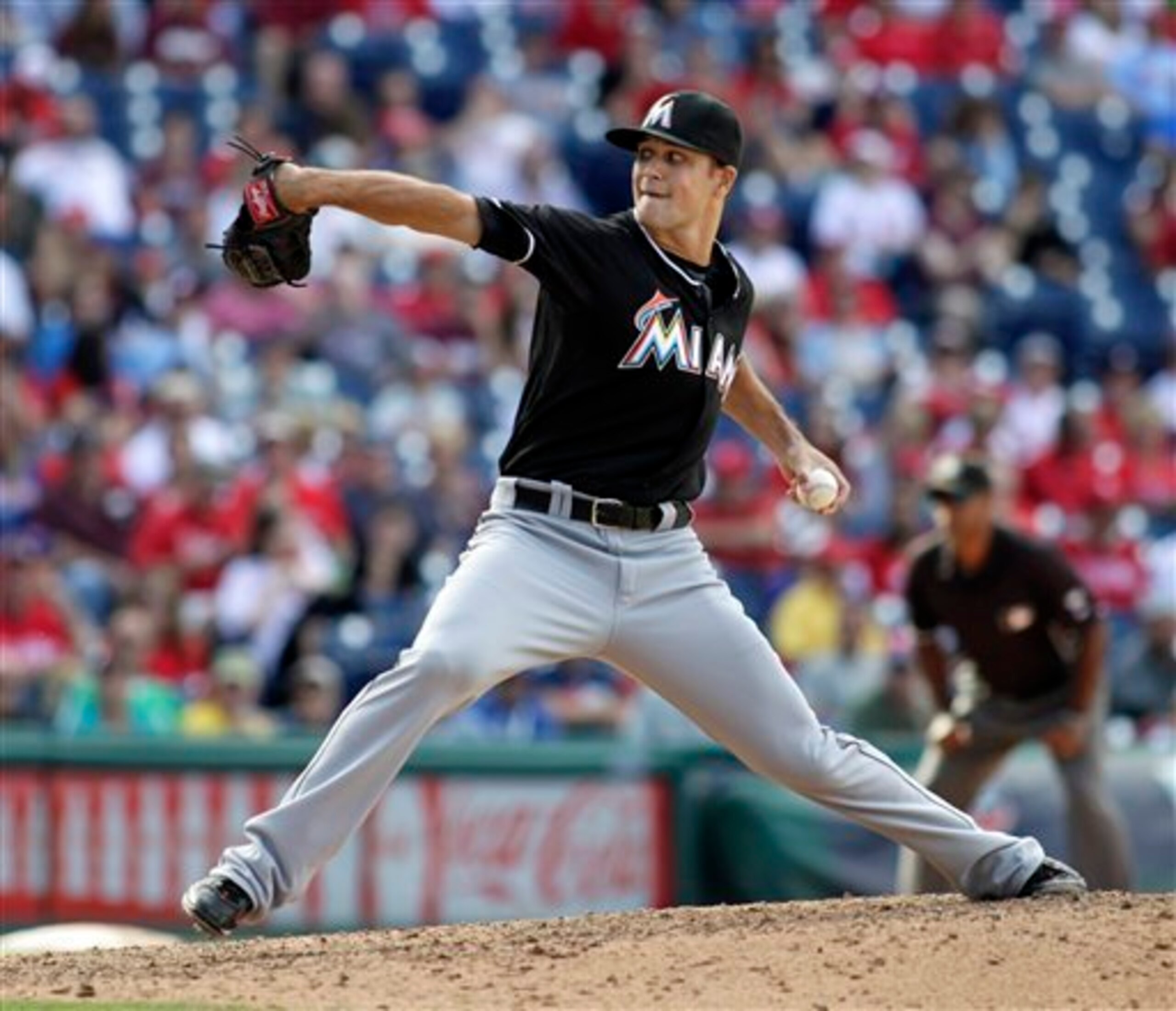
No doubt, Dan Jennings is better than any of the left-handers the White Sox had on the roster last season.
After all, he put up a 1.34 ERA and 3.48 FIP over his 47 appearances. Each of those stats would have led manager Robin Ventura’s club in 2014. To be sure, the bar is low, but Jennings is an improvement.
There are warning signs, however.
He posted a 1.537 WHIP last season over his 40.1 innings and allowed 10 hits and 3.8 walks every nine innings. And in high-leverage situations, he's allowed a .316/.417/.456 opponents slash line in 13 games over his three-year career.
Simply put, those peripherals will be problematic in the American League.
If, however, Ventura uses him in medium- and low-leverage situations, he will provide a lot of value, as those are where he is most effective. Respectively, he's allowed a .254/.333/.373 and .257/.323/.390 career slash line in said situations, per the above-mentioned splits.
And if we consider that he isn’t eligible for free agency until after the 2019 season, it is safe to say that Jennings should fare quite well during his time with the White Sox.
Adam LaRoche, 1B/DH
5 of 7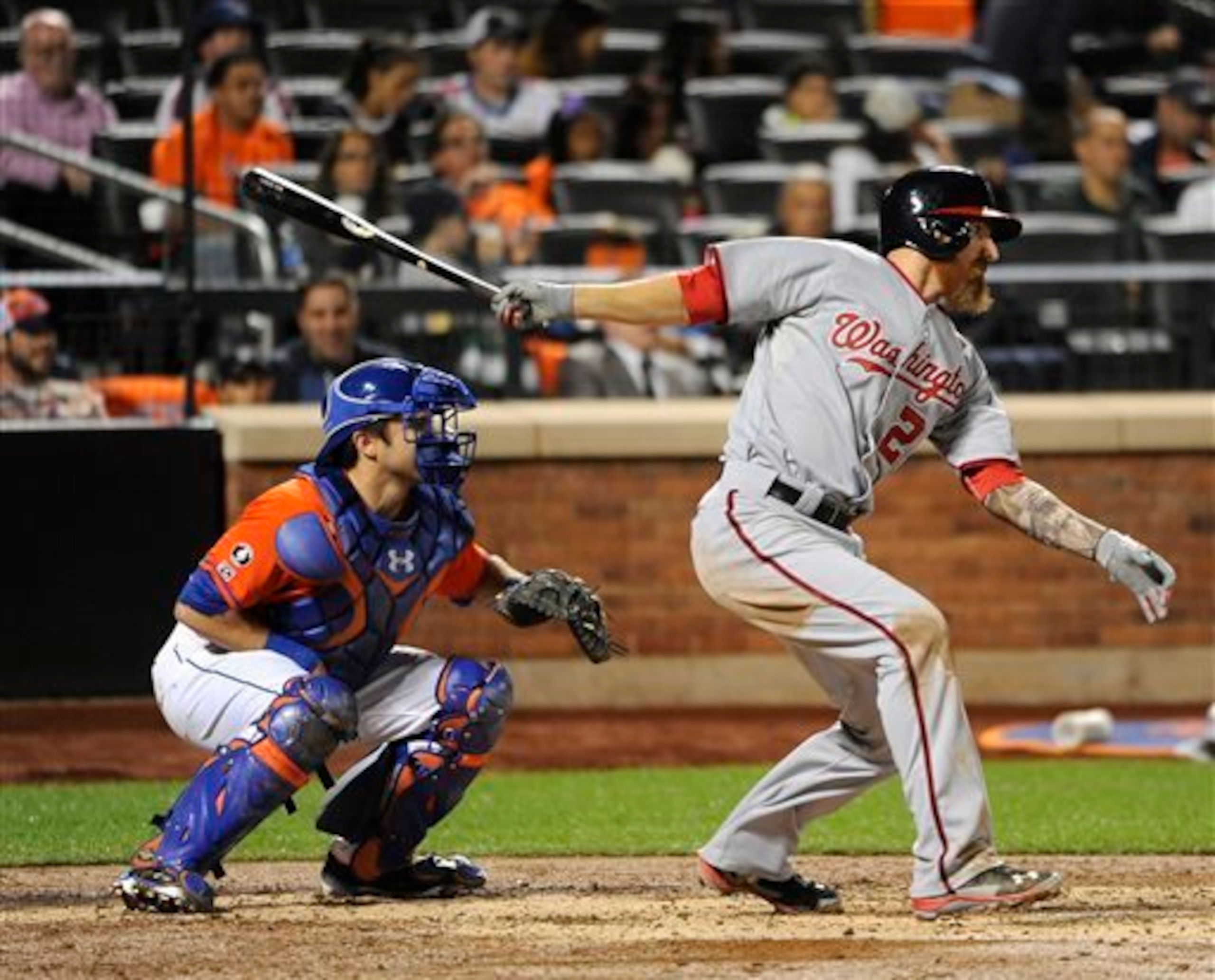
When analyzing the White Sox's needs at the end of the season, a left-handed slugger with the ability to get on base was at the top of the list.
The reasoning was twofold.
First, someone needed to provide legitimate protection for first baseman Jose Abreu. There is only so much the man can do on his own, and, frankly, it is amazing that he was able to accomplish all he did with Dayan Viciedo and Adam Dunn hitting behind him most of the year.
Second, the lineup woefully lacked balance. Too often, opposing managers could play pitching matchups to their advantage, putting White Sox manager Robin Ventura in an unenviable position.
Well, Adam LaRoche and his career .264/.340/.472 slash line fits the bill perfectly. And the fact that he only signed a two-year deal increases the chances that his time with the club will be remembered fondly.
Look for LaRoche's on-base percentage to dip slightly but his power to remain constant at U.S. Cellular field. He also has the added bonus of not being a liability in the field, which gives Ventura the ability to rest Abreu, thereby preserving his ankles from the rigors of first base.
Barring injury, LaRoche will live up to expectation with the White Sox.
David Robertson, CL
6 of 7
Like the contract given to Zach Duke, David Robertson was given a king's ransom to close out games for the White Sox.
Unlike Duke, however, Robertson has a lengthy track record of excellence, posting a staggering 2.20 ERA, 2.40 FIP, 1.097 WHIP with an average of 67 appearances and 12.3 strikeouts per nine innings over the past four seasons.
True, the 3.3 walks he’s issued every nine innings during that stretch are a bit concerning, but he’s been able to overcome them by inducing ground balls and piling up strikeout numbers.
And while anything is possible, it's reasonable to believe that Robertson will continue to produce similar results.
What about regression, you ask? It’s a valid question given the amount of money and number of seasons the club committed to. The research, however, indicates that Robertson’s contract will expire right around the time his metrics deteriorate enough to become problematic.
As Bill Petti from FanGraphs noted, “relievers don’t lose a mile per hour against their peak fastball velocity until their age-32 season,” and “by their age-34 season, relievers lose more than two strikeouts-per-nine against their peak.”
Seeing as how Robertson is entering his age-30 campaign and his related metrics are still quite strong, the expected decline in production is rather light.
Expect numbers similar to those of Jonathan Papelbon, who has put up a 2.45 ERA, 2.82 FIP, 1.030 WHIP and is averaging 35 saves since signing a four-year, $50 million pact with the Philadelphia Phillies prior to 2012 when he was entering his age-31 season.
Jeff Samardzija, RHP
7 of 7
It’s not a stretch to say that the addition of Jeff Samardzija puts the White Sox rotation firmly among MLB’s best. As CBSChicago.com’s Bruce Levine noted, “With [Chris] Sale, [Jose] Quintana and Samardzija, the White Sox’s top three starters can rival that of any team’s in the majors.”
Levine is not alone. From CSNChicago.com’s JJ Stankevitz to CBS Sports’ Mike Axisa, columnists have raved about what the acquisition of Samardzija means for the rotation and the club’s postseason chances.
To be sure, there is a very real chance that Samardzija fails to live up to his production of this past season. Frankly, a bit of a regression should be expected. After all, he set career marks as a starter in innings pitched, ERA, FIP, WHIP and strikeout-to-walk ratio.
And we’d be remiss if we didn’t mention the 3.8 walks he’d issued every nine innings prior to the start of the 2014 season, per Baseball-Reference.com. Yes, he lowered the mark to 1.8 last year, but control must be taken into consideration.
In other words, there needs to be a bit of realism injected into the optimism, but that won’t stop us from saying that Samardzija will be remembered for having one heck of a season.
Unfortunately, 2015 will likely be his only season with the White Sox. If (as expected) he delivers a superb effort, he will likely price himself out of the club’s plans for the following seasons.
Unless otherwise noted, all traditional, team and advanced statistics are courtesy of FanGraphs and Baseball-Reference.com. Contract information pulled from Cot's Contracts. Transaction, injury and game information are courtesy of MLB.com.
Follow @MatthewSmithBR

.jpg?w=2560 "Chiefs, Steelers Eye WR Trades")