

College Football Teams in Dire Need of a Facilities Upgrade
College football isn't always about the plays and the players. Success comes from a variety of factors, including an area that some major programs still lag far behind in: facilities.
From run-down stadiums to inadequate (or nonexistent) practice areas, several schools that want to be known for having big-time football still find themselves with small-scale facilities. Plans are in the works at some places, but what's proposed or under construction still might not be enough.
The college football facility arms race is a never-ending battle, with schools constantly trying to upgrade in an effort to keep up with the competition. Florida is one of the latest to make a major investment, announcing this week that it is spending $15 million to build an indoor practice field—and that the school plans to have it done by September.
Who else needs some major upgrades? Check out our list of college football teams desperate for some facility improvements.
Colorado
1 of 7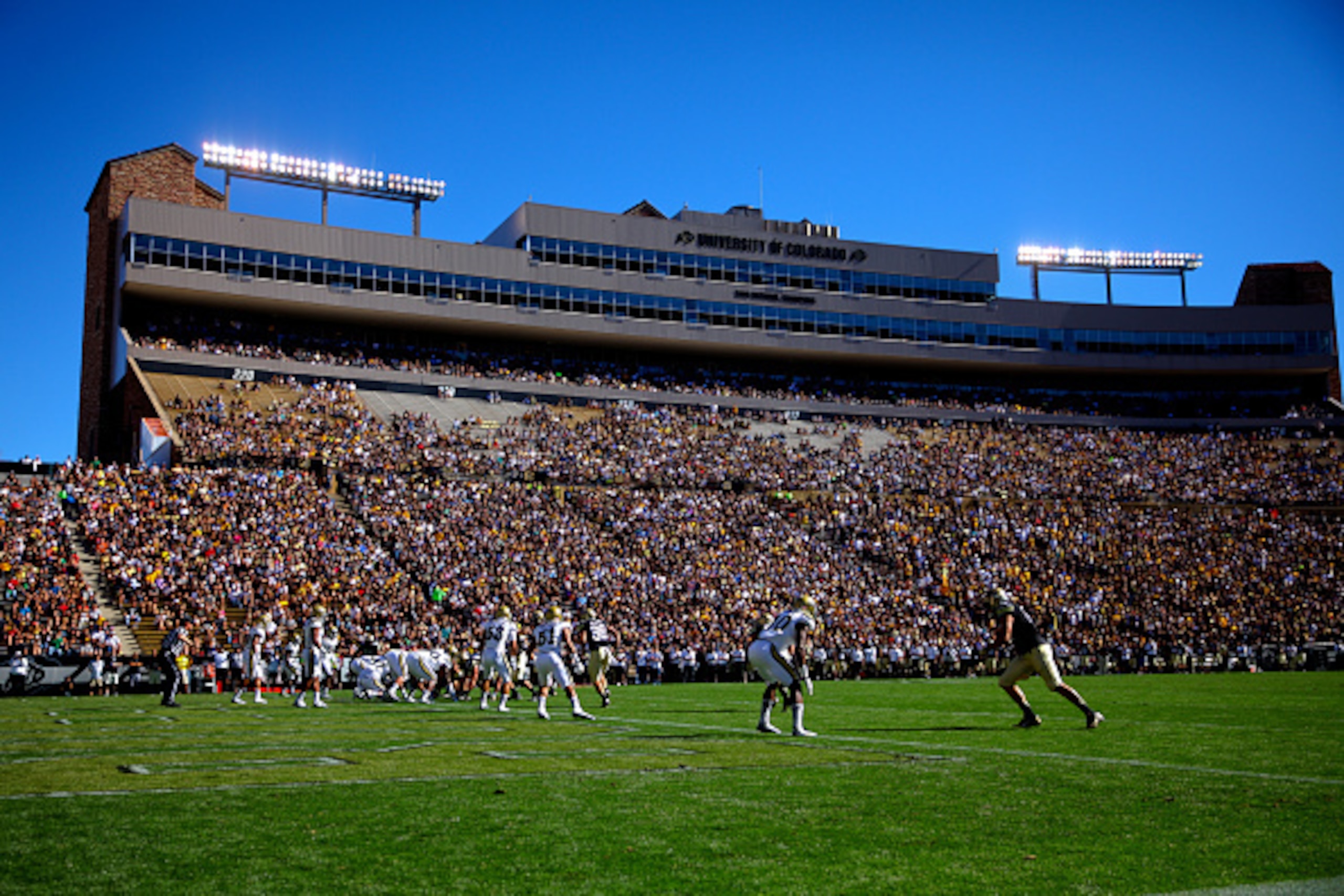
Colorado won a share of a national title in 1990 and was a regular among the top-ranked teams throughout that decade, doing so in roughly the same facilities that it operates out of nowadays. Not surprisingly, the Buffaloes haven't had a winning season since 2005.
While little tweaks, here and there, at 89-year-old Folsom Field have been tantamount to a different shade of lipstick, the wrinkles are still noticeable. A more comprehensive makeover has just gotten started, though, and includes some of the more pressing upgrades, such as an indoor practice facility and better support services.
In December 2013 a $142 million project was approved by the school, but work wouldn't begin until at least one-third of the necessary funds had been secured. That didn't happen until April, when official groundbreaking began in conjunction with Colorado's spring football game.
Colorado is a long way from having the kind of bells and whistles that Oregon and some other Pac-12 schools have, but at least it's starting to move in that direction.
Duke
2 of 7
No longer just a basketball school, Duke has shown over the past three seasons that it is ready to compete at the highest level in college football. To help with that effort, the Blue Devils need their football facilities to be a lot more enticing to the kind of recruits needed to stay in the game.
Wallace Wade Stadium, which opened in 1929, holds less than 34,000 but just began undergoing a renovation that will up capacity to about 44,000. Work includes removing the track around the field and moving the stands closer to the field as well as closing the bowl to have seats all around. It's part of a $250 million athletics initiative first announced in October 2012.
This follows the opening in 2011 of Pascal Field House, an indoor practice facility built adjacent to the football stadium.
After going 18 seasons without posting a winning record, Duke has reached a bowl in three straight years and won the ACC's Coastal Division in 2013. The facilities are in the first stages of matching the on-field results, but they can still stand to do more if the Blue Devils hope to make their recent performance become the standard.
Georgia
3 of 7
It's hard to believe an SEC school would be lacking in anything even remotely connected to football, but that's the case with perennial power Georgia. Now that Florida has announced that it's building an indoor practice complex and South Carolina is in the process of constructing one, the Bulldogs are all on their own in terms of not having a full-scale place to train without worrying about the elements.
There's a small indoor field available, but by no means is it big enough to handle full practices. Georgia defensive coordinator Jeremy Pruitt compared it to the size of a living room back in November, at the same time that he indicated the school was close to getting a full-size facility built.
"You know how you used to play football in the living room? You knew not to run it over there to the coffee table where it had pointed edges," Pruitt told Seth Emerson of the Macon Telegraph.
At this point, though, all that's been done is approving $400,000 for "exploratory work," according to Gentry Estes of Dawgs247.com, while Georgia athletic director Greg McGarity told Emerson that an architect was hired in November and the next step was to provide the school's athletics board with an update in February.


Marshall
4 of 7
Marshall isn't in a power conference, but it could end up moving to one if another wave of realignment sweeps the Thundering Herd up in the mass of movement. If that happens, though, the football program is going to need some major facility upgrades.
The school just opened a $24 million indoor practice complex in September, and the team took advantage of it throughout the season when the weather around Huntington, West Virginia, got out of hand. It also came in handy when the Herd prepared for the Boca Raton Bowl, allowing them to "simulate Florida weather for a December bowl practice," per Derek Redd of the Charleston Daily Mail.
The next step would be getting Joan C. Edwards Stadium up to snuff.
According to the school's athletic website, the stadium built in 1991 holds about 38,000 now but is "designed so that future expansion can bring capacity to 55,000." No plans are in the works to take on such an expansion, but if Marshall were to secure an invite to a bigger conference, that might need to get going.
Miami (Florida)
5 of 7
Miami has had two of ESPN's 30 for 30 documentaries produced about the program's heyday from the 1980s until the early 2000s. Other than the scenes that took place inside the now-demolished Orange Bowl, everything else could have been filmed at the school's outdated practice and support facilities and passed for back then.
While the owners of the Miami Dolphins are spending $400 million to renovate and upgrade Sun Life Stadium, where the Hurricanes play 20 miles from their Coral Gables campus, little activity has been made by the school itself to enhance what the football team uses on campus. There's a lot of hope and optimism, particularly for an indoor practice field, but no action.
"Athletic director Blake James has been talking about building one on campus for the last two years and remains optimistic the plan will come to fruition soon," wrote Andrea Adelson of ESPN.com. "Yet he has no timetable, leaving Miami further behind in the arms race."
Adelson noted that the Hurricanes face three major hurdles in getting such a project done: the lack of a healthy booster group to fund construction, the lack of available land on campus and the difficulty that comes with getting Coral Gables' city officials to sign off on anything.
"It took six years for Miami to break ground on its on-campus basketball arena," Adelson wrote.
Northwestern
6 of 7
In 2011, the Chicago Tribune reported that Northwestern's "No. 1 priority" for its football program was to build an on-campus practice facility, followed by a major renovation of Ryan Field.
A year later, the school announced such a practice facility, which would prevent the Wildcats from having to practice at or next to their off-campus stadium, yet no timetable for construction was mentioned at the time.
Then, in March 2014, the Tribune's Teddy Greenstein reported that Northwestern was finally ready to get around to building this project, thanks to receiving a $40 million donation to the school's athletic initiative. A vague projected start date of 2015 was given.
Meanwhile, 89-year-old Ryan Field continues to get older and more antiquated, with its 47,130 seats being among the least enticing of those at a power-conference football program.
UCLA
7 of 7
If UCLA wants to decrease the chances of losing coach Jim Mora, without at least getting something back in return, it better get those shovels into the ground.
The Bruins have a $50 million football facility project approved and nearly funded, but if construction on the Wasserman Football Center does not begin by October 1, then Mora's contract will no longer have any buyouts attached to his leaving, according to Jack Wang of the Los Angeles Daily News.
While UCLA's stadium—the iconic Rose Bowl—is more than 20 miles from campus, there's no impetus to do anything about that. The focus has been on taking care of the day-to-day needs, which would be addressed with this new facility that is set to include better workout and equipment rooms, improved meeting areas and more of the enhancements that will get recruits to want to come to Los Angeles for something other than the nice weather.
It will be adjacent to Spaulding Field, the football practice field that mostly avoided damage last summer when a water main break flooded parts of the UCLA campus.
Follow Brian J. Pedersen on Twitter at @realBJP.
.png?w=2560)
.png?w=2560)
.jpg?w=2560 "Chiefs, Steelers Eye WR Trades")