
The man who once fought against a college football postseason with every bone in his body stood on the sport’s brightest stage imaginable, smile engaged, celebrating his masterpiece.
Bill Hancock, former architect of the BCS and current executive director of the College Football Playoff, looked like a man comfortable in his new life. The beaming expression on his face was genuine; his presence, although bizarre given his evolving agendas, was strangely comforting. Even with his history taken into consideration, it felt like he belonged.
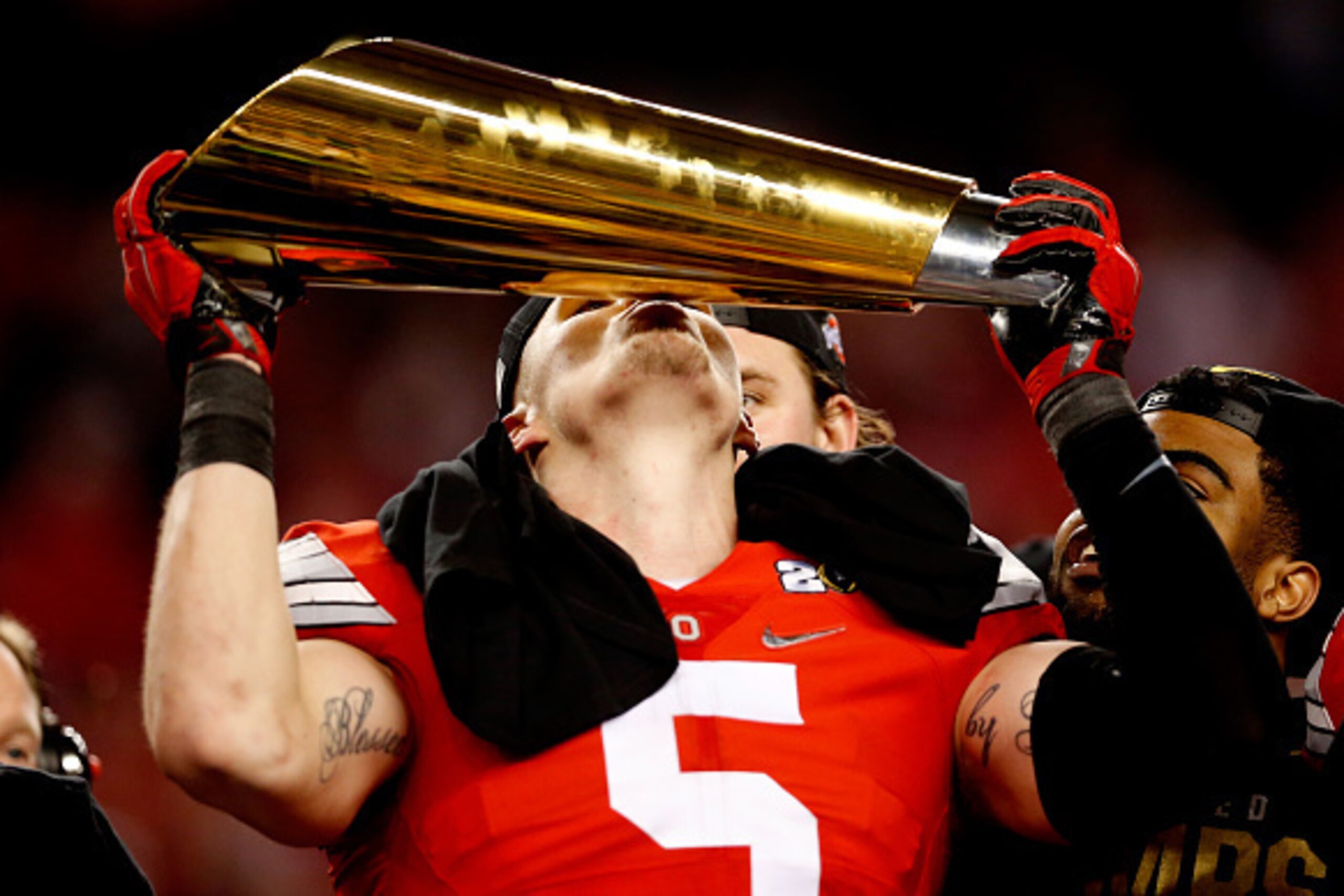
As confetti deluged Ohio State following its 42-20 win over Oregon Monday, Hancock handed over the awkwardly shaped ice cream cone to Urban Meyer. Or perhaps the new trophy is more torch-like in shape, the kind of object that fits well in one’s hand and can be easily hoisted.

Given what this moment represented, a golden torch is probably a more appropriate symbol. The way the Buckeyes passed it freely around the stage marked a significant moment in college football history; this was more than just a celebration of one particular program.
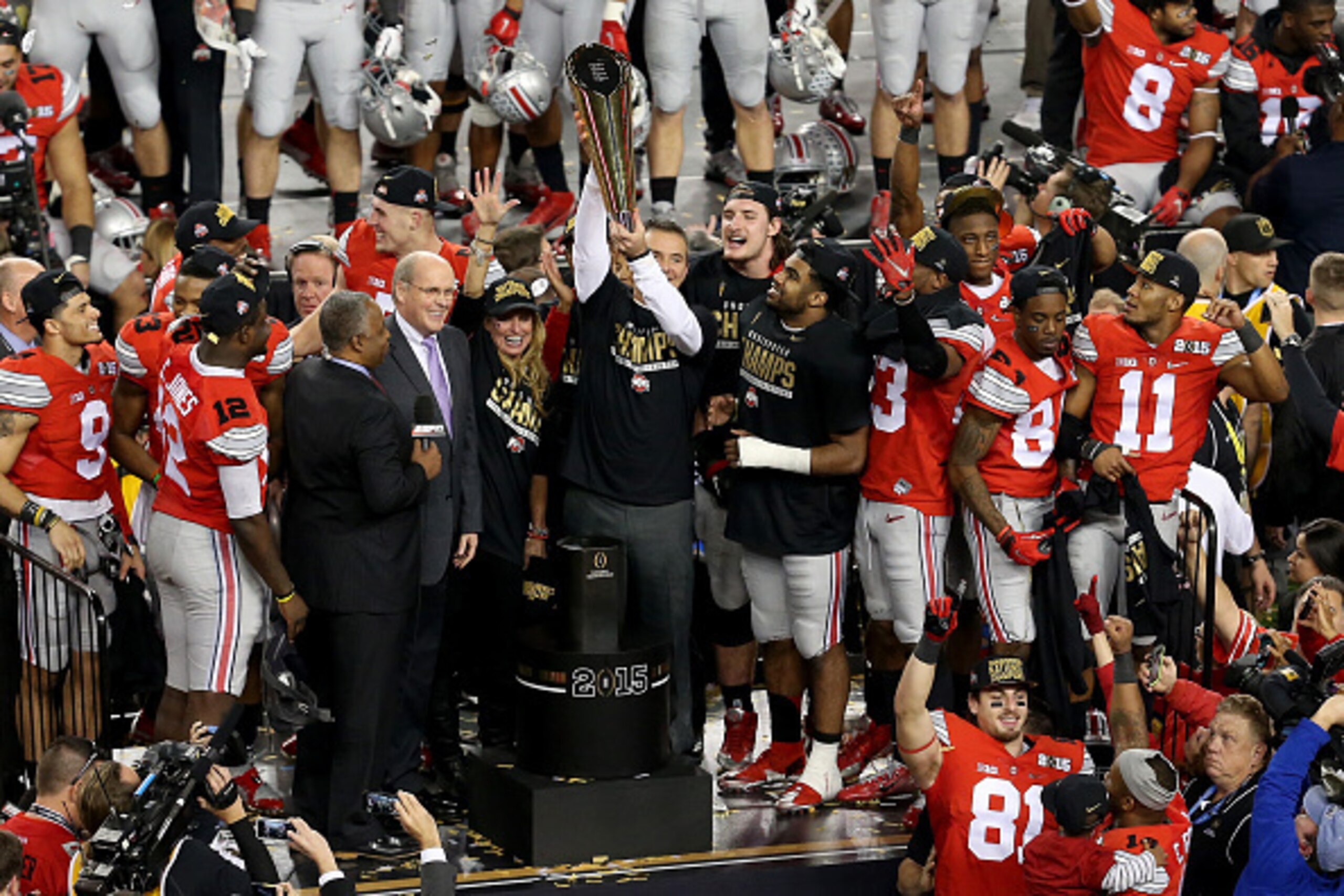
Under Jerry Jones’ spaceship scoreboard at AT&T Stadium, in front of a Columbus-heavy crowd soaking in every word and the largest viewing audience in ESPN’s record books, Hancock enjoyed a much-deserved victory lap.
“It validates what we’ve known for the last month,” Hancock said to the crowd, preparing for his full flex-down. “That the [selection] committee got it right.”
Sure it does. But this moment was far more significant than the inner satisfaction of members of the group that served up our first playoff teams. While the College Football Playoff selection committee saw its tireless work validated when the No. 4 seed stood alone atop CFB’s mountain, this was a culmination of something more.
You can start with the numbers, the most tangible way to quantify the first-ever College Football Playoff as a success or failure. Coming off two semifinal matchups that saw viewership comparable to most national championship turnouts—games that competed with and even surpassed mighty NFL viewership—Ohio State and Oregon posted the largest overnight rating in ESPN’s history.
"Monday night’s inaugural College Football Playoff National Championship Presented by AT&T (8:30 p.m. – midnight ET) — Ohio State’s 42-20 victory over Oregon at AT&T Stadium in Arlington, Texas – generated a 18.5 overnight rating, the highest metered market ever for ESPN according to Nielsen. Last night’s National Championship game was a 21% increase over the 2014 BCS National Championship on ESPN (Florida State vs. Auburn, 15.3). Also, the final game of the new College Football Playoff format surpassed the 16.1 overnight rating for the 2011 BCS National Championship (Auburn vs. Oregon) which held the previous best in cable history.
"
None of this should be at all surprising. While the numbers will undoubtedly generate a few straggler Bristol fist pumps—the next in the line of many—these gaudy, eyeball-popping figures were almost guaranteed heading into Monday evening.
With so much momentum leading to New Year’s Day and even more emerging out of it, you knew this would be one of the most watched sporting events of the year. This was a national championship decided between two ravenous, anxious fanbases. And as for the rest of us, we were happy to tag along for the ride.
A national championship was decided, certainly. But a new era of the sport unfolded before our eyes right as the torch was passed to a dedicated man so willing to embrace it. All we could do was sit in awe and marvel at the power of an unprecedented national championship run made possible by an actual college football postseason.
Without it, none of this ever happens.
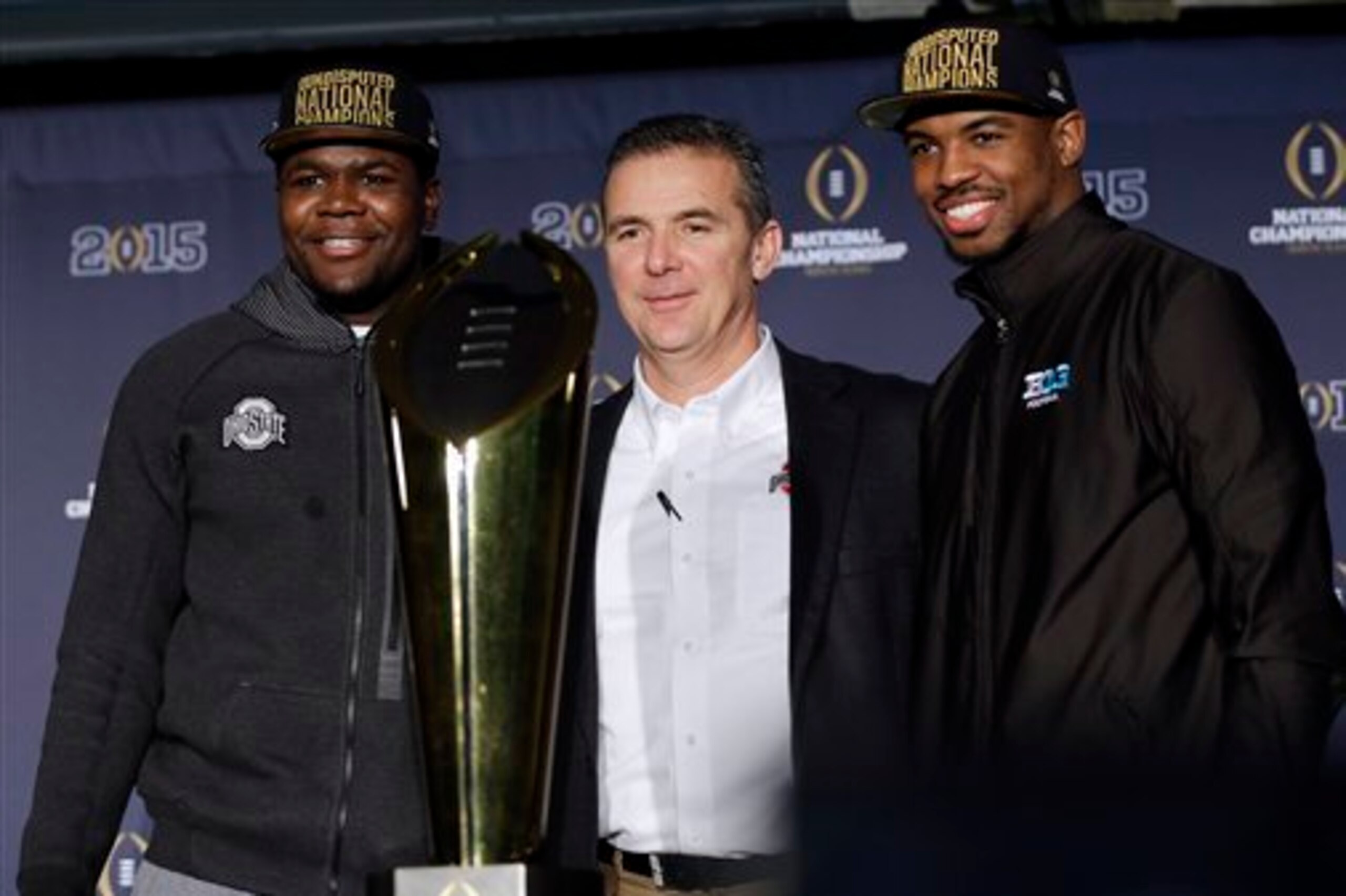
Cardale Jones never enjoys the breakthrough of all breakthroughs at quarterback, shedding a “third-string” label that is now hovering somewhere in space. Ezekiel Elliott never becomes a star, a Heisman favorite and a legend in the state of Ohio; his final three games will now be celebrated around Columbus fireplaces for decades to come.
Meyer’s legend as all-time great doesn’t take a dramatic leap forward. More significantly, Ohio State doesn’t win a national championship because it never would have had the opportunity. It never makes football history, becoming the first team to exhaust all quarterbacks en route to becoming a national champion.
The fourth seed in the BCS era got you nothing more than some bowl swag and an exhibition game. Now, if you can be just good enough, you have a chance at football immortality.
That, in its purest form, is why the College Football Playoff was necessary. A results-oriented sport got the results-oriented system it deserves. It took years to implement, a few more to plan and one more to complete the first-ever season with a bracket attached. Goodness, it was worth the wait, even if we had to wait longer than expected.
The talk now, of course, will turn to the obvious: How can we fix something that isn’t broken?
It’s a question the sport has seemingly mastered, oftentimes seeking out the appropriate next steps rather than celebrating the moment itself. There are tweaks to be made within the new system, small changes that selection committee chairman Jeff Long confirmed to Bleacher Report and that will be discussed in the coming months.
These adjustments have nothing to do with doubling the playoff field, so don’t get your hopes up (or down). These will involve the finer—but still critically important—matters that we'll surely dissect at length with nothing but time on our hands.
With perspective gained, however, our approach to the new, improved system will drastically change. Like Hancock, the former College Football Playoff brick wall, all we can do now is smile.
It doesn't matter that the moment has passed and we'll soon fall into the dark offseason abyss; the foundation for the future has never looked so bright. As a result, you should let this one linger for a while longer.
Now, if only we had a golden ice cream cone. Or, better yet, a torch.
.png?w=2560)
.png?w=2560)
.jpg?w=2560 "Chiefs, Steelers Eye WR Trades")