Seahawks' Title Hopes Rest on Shoulders of Marshawn Lynch, Power Running Game
The Seattle Seahawks are the NFL’s heavyweight champion because of their approach on both sides of the ball that centers on a key characteristic: power achieved through physicality.
Defensively, the Seahawks win games with swinging haymakers, punishing the opposition after every yard. Basically, they’re George Foreman, always searching for the knockout punch and often connecting. They make football hurt a lot.
But points still need to be produced, and that’s where the challenge lies against the Carolina Panthers in a divisional-round matchup. The Panthers have their own Foreman approach, and their own havoc-causing haymakers.
.jpg?w=2560 "Seahawks Chiefs Football")


If you were to say Luke Kuechly and Thomas Davis are the best linebacker tandem in the NFL not named NaVorro Bowman and Patrick Willis (when healthy), that would get little argument. Davis finished the regular season with 53 defensive stops, according to Pro Football Focus (subscription required). Meanwhile, Kuechly yawned while recording a league-leading 153 tackles.
They form Carolina’s counter punch to running back Marshawn Lynch, a mighty one that’s held the Seahawks to just 189 rushing yards over the last two meetings between these teams. The deep underdog Panthers (they’re 10.5-point underdogs at most online betting sites according to Odds Shark, and 11-point dogs in some places) will rest their upset hopes primarily with wide receiver Kelvin Benjamin’s ability to create mismatches, and fighting rushing power with run defending power.
Benjamin duplicating his Week 8 performance is possible but difficult, because catching footballs is always difficult against Seahawks cornerback Richard Sherman. But the Panthers have the ability to limit Lynch, and by extension slow the entire Seahawks offense.
Offensively the Seahawks’ power can be more methodical but still very much present in its own heavyweight champ way. There’s jabbing and circling, and eventually a well-timed take down when the opponent has been lured into a vulnerable position.
Lynch may be contained for much of the game. Then suddenly he’ll burst free while tossing aside tackle attempts, just as he did in Week 16 on a 79-yard run against the Arizona Cardinals. Combined with quarterback Russell Wilson’s 849 rushing yards (the fifth-highest single-season total in league history for a quarterback) that element of surprise is always present.
The concern surrounding the central rushing element of Seattle’s offense (172.6 yards per game during the regular season) is there will be far more swarming and fewer knockout blows against the Panthers.
The Panthers allowed over 100 rushing yards only once during a five-game win streak that clinched a playoff berth and led them past the Arizona Cardinals during Wild Card Weekend. You’ll note the general odor of the rushing offenses they opposed during that stretch. Of the five offenses, three had rushing attacks ranked 24th or worse during the regular season (Atlanta Falcons, Tampa Bay Buccaneers and Arizona Cardinals).
But at some point, what a unit has accomplished over a prolonged period is so impressive the quality of opponent begins to matter less.
| Week 14 (@ Saints) | 92 |
| Week 15 (vs. Bucs) | 151 |
| Week 16 (vs. Browns) | 84 |
| Week 17 (@ Falcons) | 63 |
| Wild Card (vs. Cardinals) | 23 |
That’s an average of 82.6 yards allowed per game, with the only stumble of significance coming against the Bucs.
Of course, measuring the Panthers’ effectiveness against a premier run defense is only a matter of going back a little further in their schedule to Week 8. That’s when they faced a rather formidable running foe: the Seattle Seahawks.
During that game Lynch was held to 62 rushing yards, nearly 20 yards lower than his overall per-game average this season (81.6). He managed to break off a 25-yard run in the third quarter. But when that outlier gallop is taken away he averaged 2.8 yards per attempt. Fellow running backs Christine Michael and Robert Turbin also did little while combining for 22 yards on six carries.
Lynch had five carries when he gained three or fewer yards. One of those stuffed runs came early in the fourth quarter when Davis blitzed from the right side, timing it perfectly.
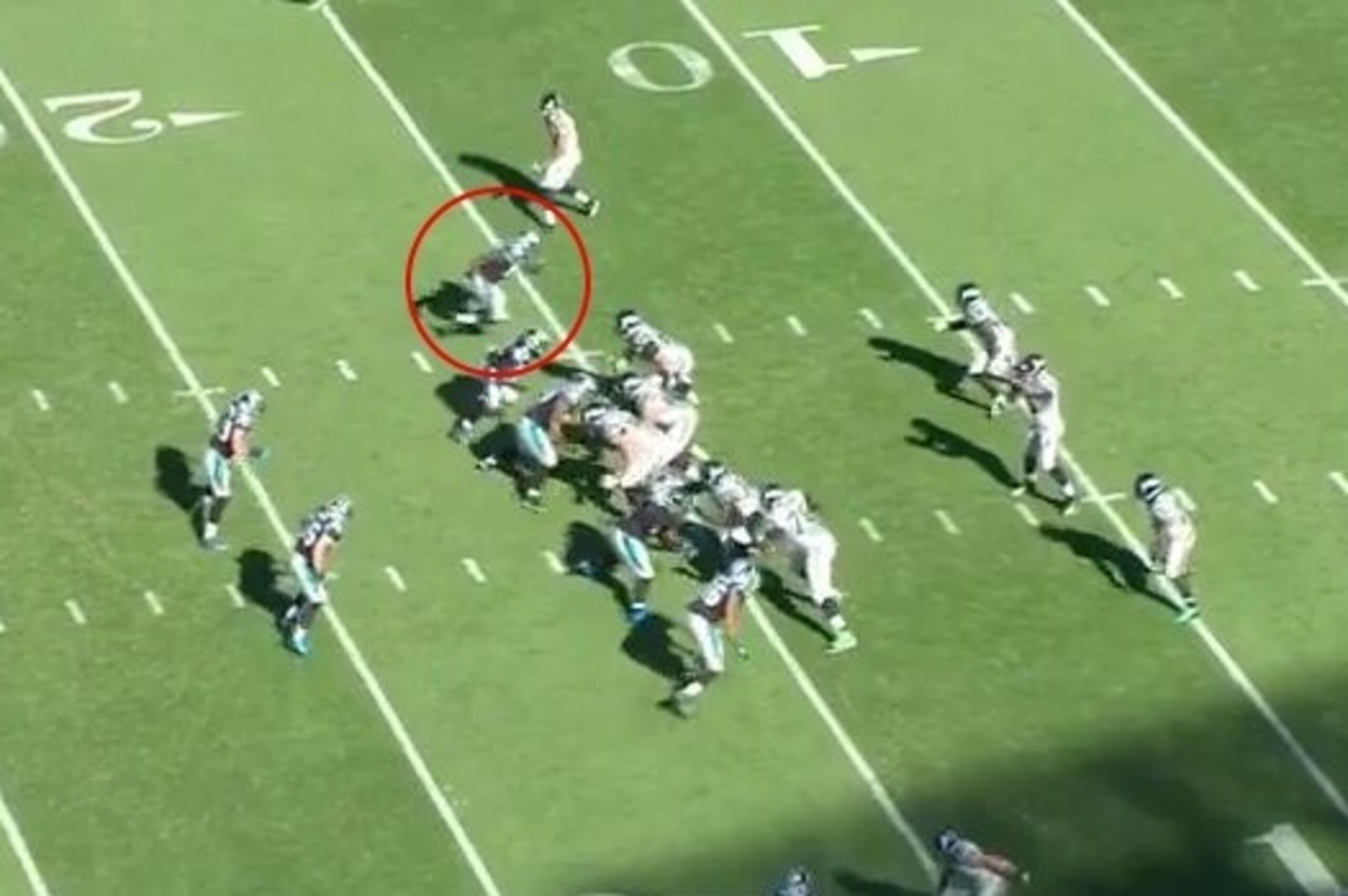
Wilson was in shotgun between Lynch and Turbin, and the Seahawks' lead running back was looking to find a hole on the right side. Which was also the side Davis was charging in from, and that doesn’t usually end well.
As is often the case with this play design, Turbin was assigned to block or at least sufficiently slow Davis. Asking a running back to do either or those things against Davis typically ends in failure too.
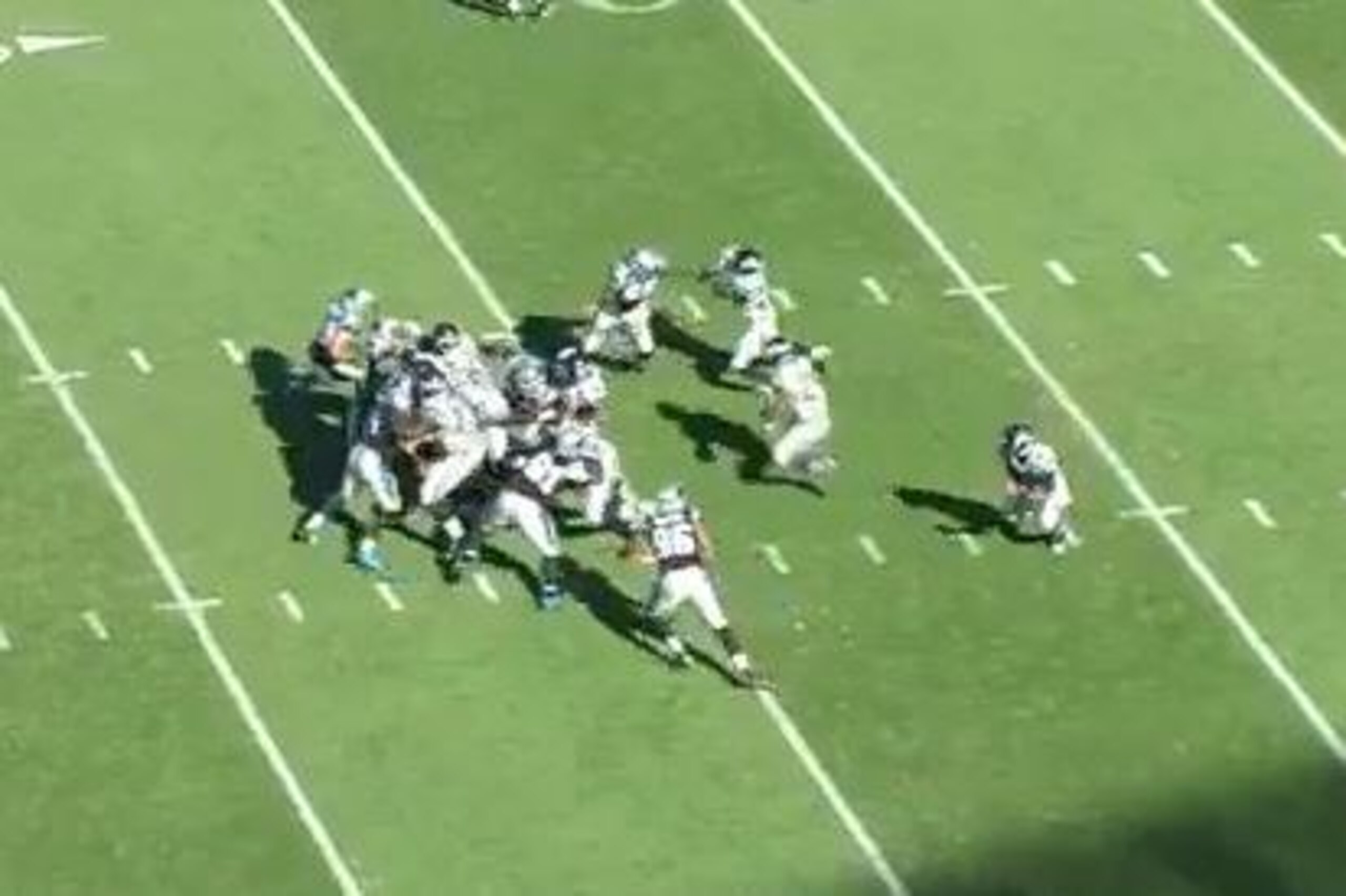
Davis quickly overpowered Turbin, bouncing off him before tackling Lynch at the line of scrimmage. He showed both his keen instincts and strength at the point of attack.
Another erased run came earlier during the third quarter. The Seahawks were attempting to run off tackle to the left, and that meant getting bodies to the second level fast. The gap-filling ability of Kuechly and Davis needs to be neutralized for any power run to be successful.
The problem begins, however, when that sense of urgency leads to a complete neglect of the also large and athletic Panthers defensive linemen. The play became an example of Kuechly and Davis becoming a distraction.
In this case it was Seahawks guard Alvin Bailey who barely touched defensive tackle Kawann Short while pursuing Kuechly instead, giving the tackle a free run at Lynch.
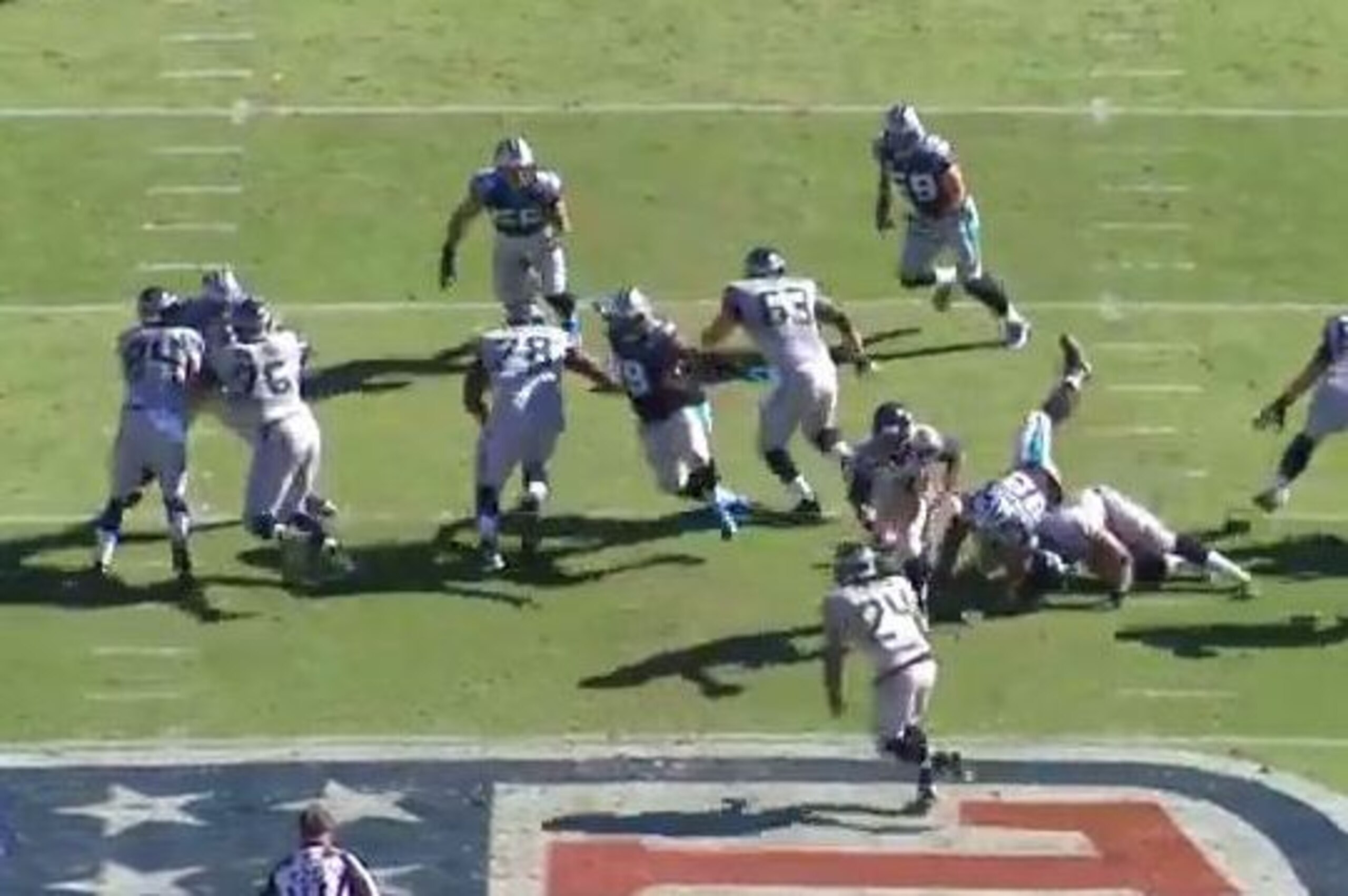
Short was barreling into the backfield before Lynch even took the handoff. He made the initial contact that halted the running back’s forward momentum immediately, resulting in a three-yard loss.
Bailey was in the game because starting guard James Carpenter suffered a back injury. Which brings us to the matter of healing and hurting during the rematch.
Carpenter is fine now and has been for quite some time, and the Seahawks will also get center Max Unger back Saturday. He’s struggled through injuries for much of this season while appearing in only six games. But when healthy Unger is among the league’s best centers, as Pro Football Focus gives him a run block grade of 14.0.
Opposite Unger the Panthers are dealing with a major loss. Defensive tackle Star Lotulelei—who’s sizzled with 11 tackles and two sacks over his last two games—will be out because of a broken bone in his foot.
He often occupies multiple blockers to clear gaps for Kuechly and Davis while also powering into the backfield, forcing opposing runners to stop and change direction. That’s usually the first sign of death for any ambitions of long runs into the open field.
But although the anchor of their defensive front will be sorely missed, the Panthers still have quality depth beyond Lotulelei. Dwan Edwards recorded 21 stops even while being on the field for only 55.3 percent of Carolina’s defensive snaps, per PFF. Colin Cole will lead the defensive tackle rotation now, and at 325 pounds he carries plenty of girth to toss around, just like the man he’s replacing.
As long as Davis and Kuechly are fully functioning, the heartbeat of a unit that’s held Lynch to only 3.4 yards per carry over the past two games between these teams is alive and well too.
That matchup will be the main event in this heavyweight clash. It will play a large role in determining a winner between one defense that’s given up an average of 11.8 points over a five-game winning streak (Panthers), and a team that’s outscored opponents 134-69 during a six-game streak of its own (Seahawks). It will determine whether the Panthers can respond to Seattle’s expected defensive power punches, making the game a slugfest for field position.
Most of all, it’ll determine if the Seahawks allow an upset bid to have any life whatsoever, or if a steep underdog is quickly put to rest.