

Steven Gerrard Proves Difference for Liverpool in Favoured Attacking Role
In a week dominated by Steven Gerrard's announcement that he is to leave the club at the end of the season, the 34-year-old captain provided a taste of what Liverpool will miss once he departs across the Atlantic for America.
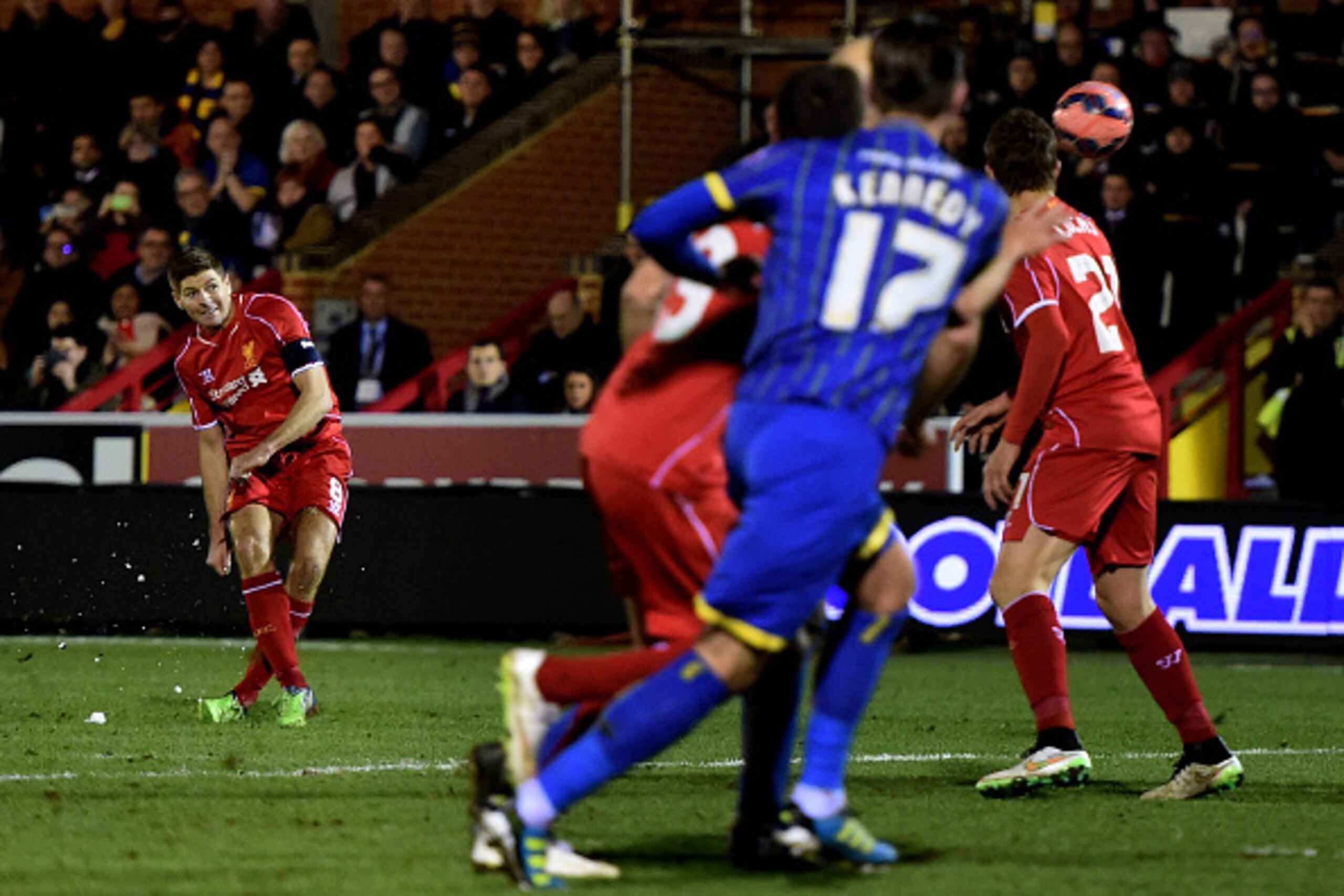
Gerrard headed the opener and then curled a trademark free-kick in the second half, which proved the winner against a valiant AFC Wimbledon side in the third round of the FA Cup.
Inevitably, Gerrard will take the headlines and questions will be asked as to why Liverpool are allowing arguably their greatest ever player leave the club. We'll come to that later.


.jpg?w=2560 "Seahawks Chiefs Football")
Brendan Rodgers opted to move Gerrard into a more advanced midfield role, replacing Adam Lallana alongside Philippe Coutinho behind the centre-forward—in this case Rickie Lambert.
That attacking midfield role is where Gerrard has spent the majority of his career and where he will be remembered long after he departs Anfield for creating and scoring goals (182 and counting). He's proven the match-winner and the man for the big occasion time and again.
This is his final FA Cup foray, and with the final to be played at Wembley on his 35th birthday in May, there would be no finer way for one of England's greatest midfielders ever to depart the country for new pastures.
Position
Gerrard's position has been much changed this campaign, with Rodgers seeking how to use his captain despite teams seemingly having targeted him when he began the season continuing as a deep-lying playmaker in midfield.
Initially, Rodgers sought to have Jordan Henderson alongside Gerrard and for the two of them to rotate who was deepest.
It didn't work, much as it didn't for England at the World Cup, and both of them dipped in form.
Then, in late November, Rodgers finally moved Gerrard into a more advanced role behind the forward as Liverpool traveled to Bulgaria to face Ludogorets Razgrad in the Champions League—the miserable defeat to Crystal Palace days earlier seemingly being the final nail in the idea of Gerrard as a deep midfielder.
It was a changing point for Gerrard's season and arguably his career.
Having barely missed a minute of action this season until that point, Rodgers rested the captain for the Reds' next game at home to Stoke. He clearly needed the rest. Gerrard came off the bench and was used in the advanced midfield role, helping the team to a 1-0 win.

Next up was Leicester City, and Gerrard returned to the side, scoring one and assisting another again in the attacking midfield role.
The next game, Sunderland at home, saw Gerrard return to the bench. Gerrard, for the first time in his career, was being rotated. Not many—or any—can play an attacking role every game at age 34.
The problem is that playing in the more advanced role demands more running, more pressing, more energy, and Gerrard isn't the 28-year-old we saw laying on goals for Fernando Torres every week in his prime. To play in the attacking role, Gerrard has to be rotated—just as we saw with Frank Lampard in his final two years at Chelsea and now with Manchester City.
The change to 3-4-2-1 formation, implemented at Old Trafford in mid-December, then saw Gerrard return to a more orthodox role in midfield until Monday night against Wimbledon.
Rest of the Season
It's in this position that Gerrard is still at his best, and where Rodgers must play him in the final months of his Liverpool career. Playing him there will ensure we get to see Gerrard scoring and assisting, writing more chapters and creating more memories as he departs Anfield—not chasing shadows in midfield.
The problem, of course, is that Gerrard has indicated his desire to be playing every week, and he simply cannot play every game in that role. Gerrard said the following in an interview with the club's official website:
"Yes. There was more than one moment that has made me come to this decision, but I think the key conversation or moment was with the manager when he sat me down not so long ago and said it was time to manage my games for me and for the team. I'm bright enough to realise it is the right thing for everyone, but when you've been a starter and a mainstay in the team for such a long time, it was a very difficult conversation to have with the manager. I accept it and I'll continue to give everything I've got, whether I'm starting, coming off the bench or whatever, but that was the key conversation that swung me to deciding to come away for a short while.
"
Gerrard accepting to playing less but in a more attacking role would be best for him and the team. It's why Paul Scholes, Ryan Giggs and Lampard all accepted bit-part roles in their latter years. Gerrard, like Jamie Carragher, doesn't seem prepared to accept that.
Liverpool and Gerrard must embrace the bit-part but attacking role during these last months. Hopefully, his final memories will be positive, typical Gerrard ones—just like we saw against Wimbledon.






